ruggers
-
Posts
326 -
Joined
-
Last visited
Everything posted by ruggers
-
@Johnny Jekyll thanks for the info. I don't see an insulated room built around the MVHR unit in a cold loft being much different to a warm loft if the roofs insulated too, so I can only assume the ducts must be affected the greatest from this unless, it's the surrounding temperature of the remaining cold loft design would affect the room built within it.
-
I agree with what your saying but I think in a cold loft, well insulated ducting would manage ok in winter especially with 400mm of mineral wool over it as Johnny is is doing, but summer would become the issue as the tiles/slate heats up from solar gain, it then warms everything with it and if the heat can reach the ducting, your going to get hot air blowing into the rooms even in summer bypass mode. If the unit manifolds and ducts can't all be within the thermal envelope, there has to be a trade off, so to minimise that It's important to keep loft duct runs as short as possible, and individually lag them. Some companies say the loft insulation over the ducts is enough and it certainly isn't. Adding some roof vents and gable end vents will help in summer to add cross ventilation but it's probably never going to be enough. It will certainly help move some of that hot air though. Have you tried contacting some reputable installer companies and asking this question, the two I've spoken to will answer this for you. Even if you add them to the walls but have to do the ceiling vents for the bathroom and ensuite if it's best, it's a small trade off in not doing all of them this way?
-
Hi, interested to know, was the loft option a bad idea for the MVHR unit, the ducting or both? I plan to have mine in the loft but the pipes will mainly be short runs in the loft then right into the thermal envelope. I might try making a little insulated room within the loft to house the unit and the manifolds and monitor the temperatures within as an experiment. I won't know the results of this until built and too late but hoping it might help.
-
Face brick water absorption below DPC advice required
ruggers replied to ruggers's topic in Brick & Block
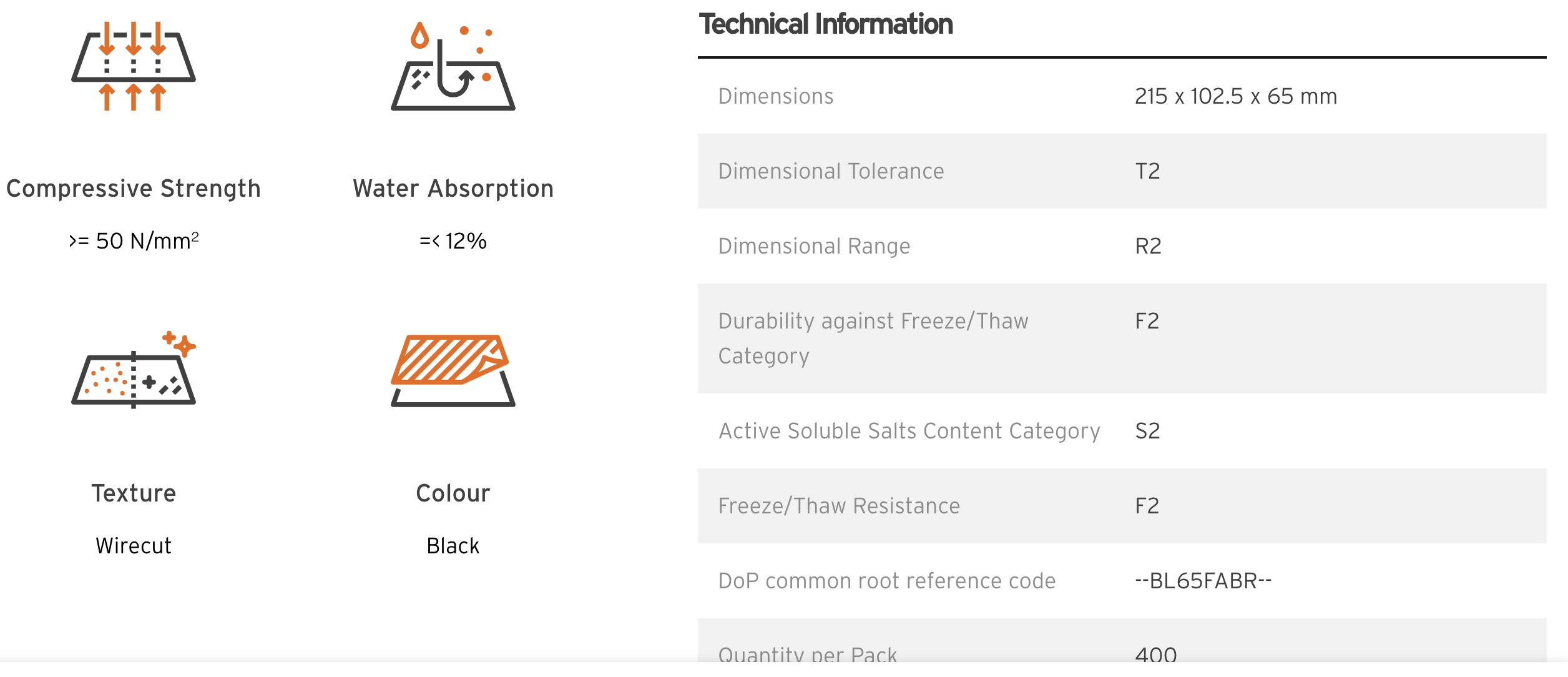
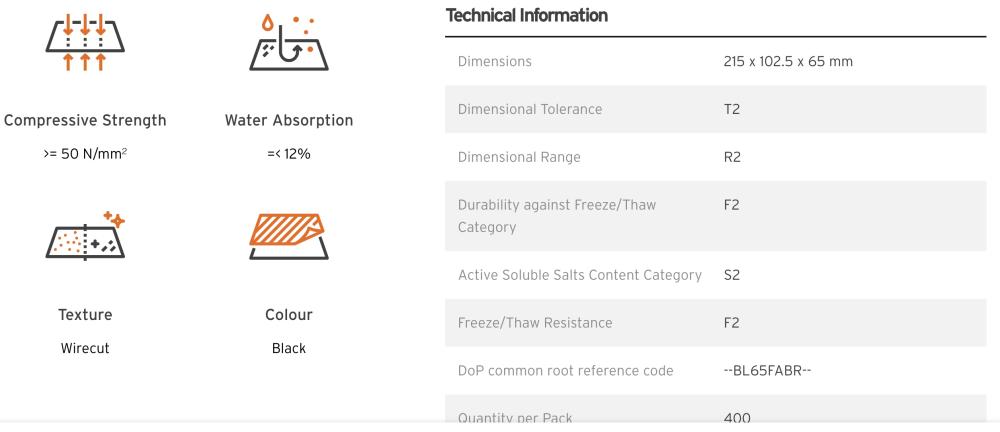
This is the only small problem, I asked the person who sources the bricks at competitive rates for our local merchants for a certain amount of engineering bricks like staff blues from a brand that is close to the amount i require, so I'm not buying packs and having hundreds spare and they came back with the the above brick saying as long as they're S2 F2 they're all suitable. I think I need around 900. The light grey brick I chose for the house is F2 S2 and 10% but I can tell it would be crap if used below DPC so I just wondered if theres more to it. A Staff blue you can tell just holding it. -
Could someone advise on the best type of brick to use below DPC on a house. I need to select a black brick for 3 courses below DPC, 1 course will be under the side path level and the other two courses will be above finish ground level. Some searches say 4.5% and others say 7.5% water absorption. I was recommended the following brick which is 12% absorption, and is F2 S2. My facing bricks above DPC are <10% and F2 S2.
-
Rockwool alternatives for internal floors, walls & loft?
ruggers replied to ruggers's topic in Heat Insulation
I didn't think RB would support the weight of 2 boards hanging from it. When RB is screwed to joists and then you screw the boards to it, is there any movement if you press the ceiling upwards or is everything as solid as board direct onto joists? -
Rockwool alternatives for internal floors, walls & loft?
ruggers replied to ruggers's topic in Heat Insulation
Your going to mount the resilient bars onto a double boarded ceiling then hang a third layer of board off the bars? Some people add green glue or a cheaper equivalent between double boards. Not sure how effective it is. -
@joe90 Thanks Joe, 150mm is a decent amount too, I'd be disappoint to and wasn't going to put any more in. I'd be interested to know if doubling up the boards would make a lot of difference or if it's just expected to make an improvement, I've added much thicker boards in the past 25mm and wasn't overly impressed. Sound bars are supposed to really help, maybe even work out the same as double boards. Are your rooms above carpet & underlay or hard floor?
-
Rockwool alternatives for internal floors, walls & loft?
ruggers replied to ruggers's topic in Heat Insulation
I've seen a few comments on old posts mentioning doubling up the plasterboards. I wasn't sure if it's worth it for the cost vs difference it would make. I've used 15mm sound block before and in an old house lined a floor & neighbouring wall with 25mm plank which is just a 25mm thick x 600 x 3000mm plasterboard. I didn't find it too effective. I've just contacted Knauf about their products this afternoon, they seem much more reasonably priced for the loft & possibly floor void too. Was the iso roll for the stud walls and intermediate floor? I've never added slab or iso roll to an intermediate floor from the ground floor, I was lucky enough to drop it in from above and then lay my floor years ago. Is it hard to keep it in place until the plasterboard ceiling goes up? I have a 250mm posi joist void but have heating pipes to run, and then in the kitchen will have down lights sticking up into that space so it's where to position the 100 or 150mm insulation. Top, middle or lower part. 600mm centres. -
Hi Joe, a bit of an old post, but out of interest, what did you add between your floors to be disappointed with the results? I have a similar post looking at decent ways to reduce sound between floors and stud walls without going over the top.
-
I'd be interested to know how good the drop seals work and with a good self closer and a threshold door seal that the door closes up to, can a decent seal be made around the whole perimeter? I don't have a drop seal but haven't been very successful in getting a good seal with a standard fire door between my utility room and garage. Maybe a good frame, seal and decent joiner would do better.
-
Rockwool alternatives for internal floors, walls & loft?
ruggers replied to ruggers's topic in Heat Insulation
So the extra cost of increasing a sound slab from 25mm to 50mm or 50mm to 75mm thick is very minimal in terms of sound absorption? I understand that sound reduction is bit of a minefield and you can double up on plasterboard, use 15mm soundboard, resilient bars on ceilings etc. but it can get out of hand cost wise for a full build. What I don't want is to be able to hear every noise in a room above or below or through a wall and regret not doing that little bit more but I also don't want to spend £1000's more for very little gain. Areas for the best sound reduction I need are, one bedroom above a main living room and the main bathroom which is between two bedrooms and above a kitchen diner. Also the ground floor bathroom. In my current 1960's house with nothing between the floor, if you have a pish in the upstairs bathroom you can hear it in the kitchen like thunder 😀 -
Certainly isn't cheap at all. Temps is a better price but still expensive. Anything fire rated = double the price.
-
I'm pricing up various internal insulation for a self build and wondering if there's any good cheaper alternatives than the Rockwool brand for use stud walls and intermediate floor to reduce sound or is it the best? Also any good brands of mineral wool for a cold loft floor/upstairs ceiling. Stud walls specified - 75mm Rockwool RWA 45 - 45kg/m3 Intermediate floor specified - 100mm Rockwool flexi - 33Kg/m3 Loft - 400mm no brand specified. The Rockwool flexi seems to be a lot more expensive than RWA45 and the RWA45 is denser so surely better for sound absorption?
-
Just reading some old posts to gain some info. before I make a post of my own. I agree with what you say about the lower heat loss the lower the flow temperature can be. But why do people always say with low temperature systems to go for as close spacing as possible so you can get the heat into the room with it being at reduced flow temperature. I've completed all heat loss calcs for a self build and know that I'll be aiming for 37.5C MWT on weather compensation so this will vary the flow. Indoor designed to 21°C at outdoor -3.6°C. I will probably have the house running at 19°C air temperature but if designed higher it allows some headroom. I'm not sure if I go with 100mm centres throughout the ground floor 50mm screed or I have different spacings for the different heat loss rooms.
-
Trench block or cavity with infill below DPC advice required?
ruggers replied to ruggers's topic in Brick & Block
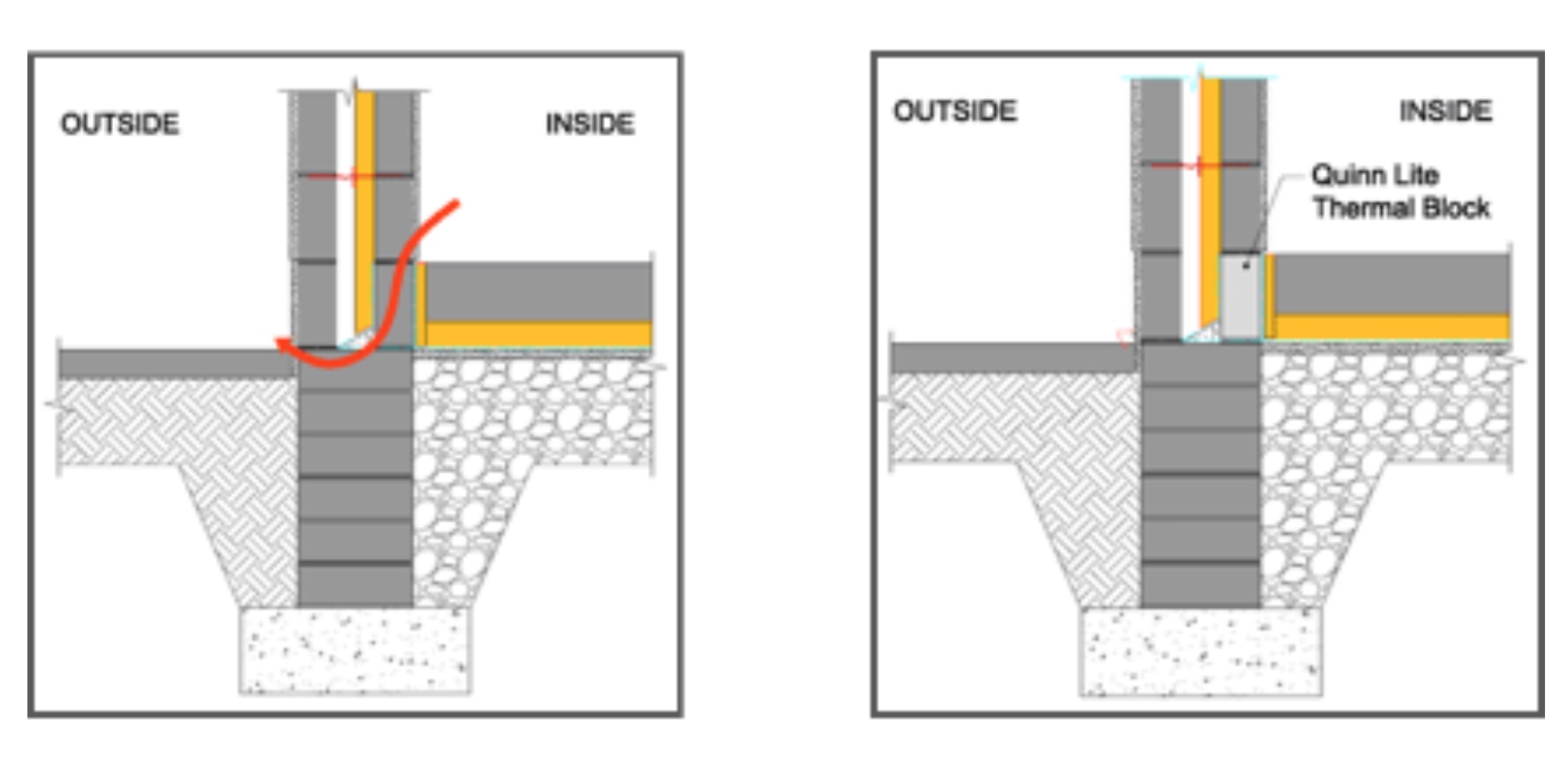
I'm all for simplicity at this stage, not yet broke ground but too far to make any big changes. Building regs are passed we are just swapping over from slab to B&B on the plans for a spring start I hope. No one seems overly concerned about adding or taking away a course in height as long as it's all vented correctly & following the standard construction. When you refer to a course of aerated block, do you mean like this image attached, or one of the below DPC courses?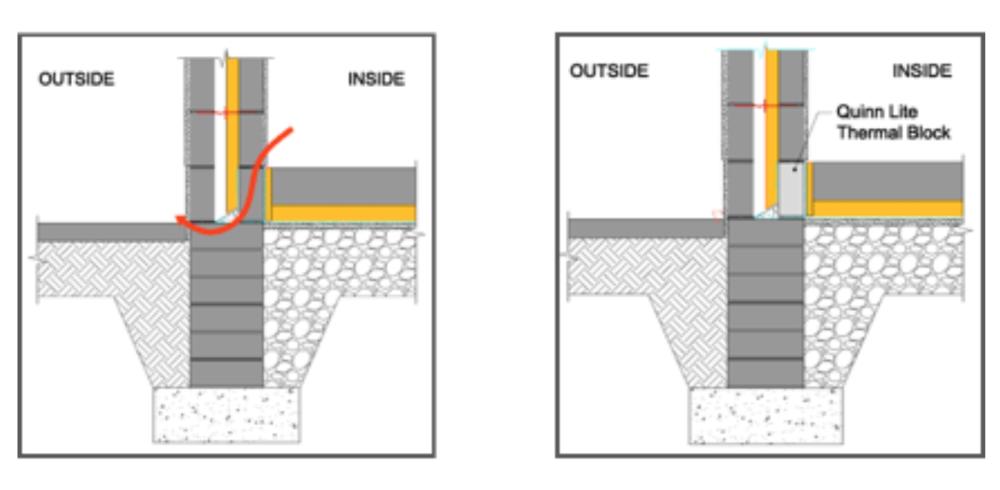
-
Trench block or cavity with infill below DPC advice required?
ruggers replied to ruggers's topic in Brick & Block
I was just focusing on the block selection rather than the correct detail for floor insulation. I understand that but haven't worked with foundation blocks before. All the ones online seem to have strange sizes. I was hoping to just find some foundation blocks 440mm long x 215mm high in varying widths to suit my walls, 350mm, 300mm & whatever will go under the walls supporting 100mm beam ends that will only have single load bearing walls built above them. Most foundation blocks seem to be 3.6Kn not 7.2Kn and made from aerated material. Are these ok to use or problematic like the aerated blocks used above DPC which always have cracking issues? One of the builder I was looking to use still use the double dense block with infill method. Other than time, are there any cons to using this method nowadays? I just had a quick look, jablite 70 at 240mm would probably save me £700, the 160mm PIR was going to cost £1800. I''d need to raise the internal garage floor up by 75mm though to keep the heights correct between the house and garage step down. Jablite customer service staff were the least educated of any company I've ever dealt with in my life. Two women taking calls who said they have no training and no data at all on their own product. -
Trench block or cavity with infill below DPC advice required?
ruggers replied to ruggers's topic in Brick & Block
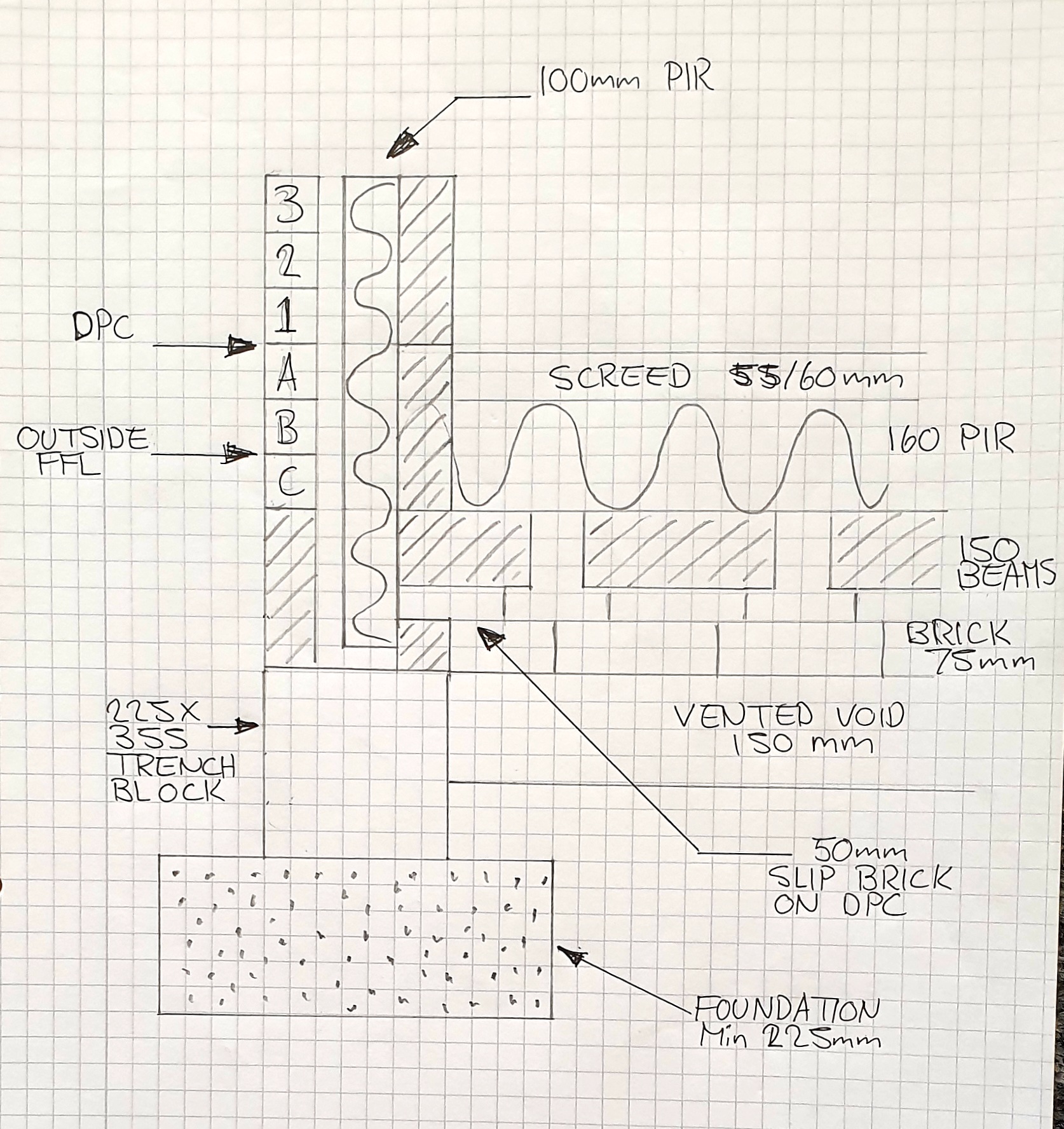
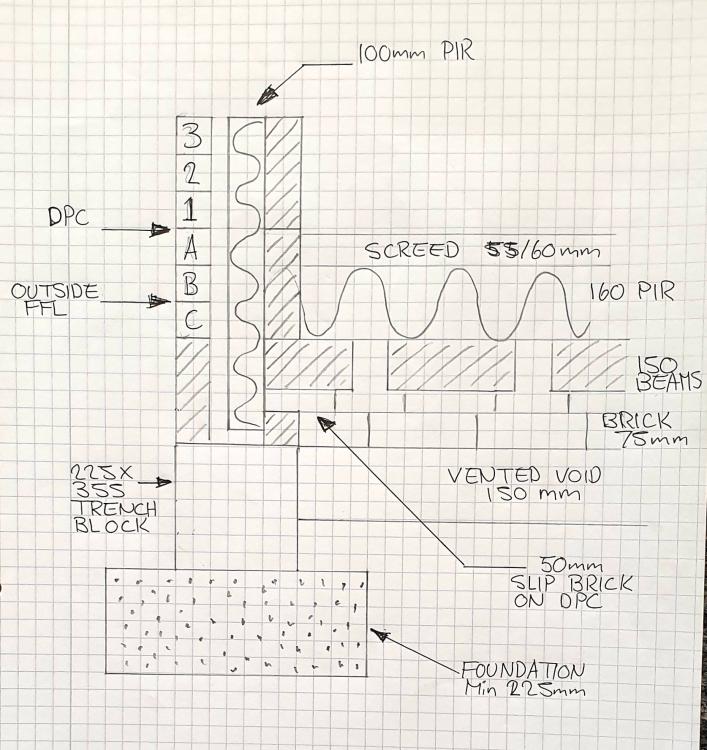
Would the telescopic vents install ok as per sketch where the T beams & slip bricks are set on a course of brick? -
Trench block or cavity with infill below DPC advice required?
ruggers replied to ruggers's topic in Brick & Block
Meaning keep the B&B height the same height but add more insulation to build up to a higher FFL? I'll be installing wet UFH yes, was going to be 165mm PIR & 55mm cemfloor = 0.12W/m2k. It could be upped to 250mm & 50mm screed, it's just so expensive even EPS doesn't seem much cheaper by the time you go 50% more. Yeah my drains are all taken from FGL minus 300-320mm for the first chamber invert which is the shallowest I can have. I've just got the terminology wrong on here. There will be a 150mm step dow from inside FFL to outside FGL path with exception of the low threshold front door. Basically the reason I was working from FGL down, is because I have a set height that FGL needs to be at for all drainage to work, then knowing how deep my soil is, and where my clay levels are, I need to either go down a course deeper because of the lowest ground point, or we don't remove as much soil from that lower side so the founds have a natural shutter but are still laid onto solid ground. It might just be a case of factoring in the cost and seeing what it's like during the dig. -
Trench block or cavity with infill below DPC advice required?
ruggers replied to ruggers's topic in Brick & Block
Thanks Russell. FFL needs to be at a certain height to achieve a drainage fall on a pre existing main. I've got a site that at the back slopes 315mm from one back corner to the other side of the build. The structural engineer has set a dig depth of 750mm from FGL to the invert of the foundation on the higher side for a 225mm concrete strip. I have a couple of areas that need to go down much deeper where trees were to avoid heave, these will be mass filled to bring the foundation top back up to match the standard depth for the rest of the build. Theres 450mm of top and sub soil to be stripped to take it down to clay level ready to mark out the foundations, this will then be returned with a little more to build up to the new FGL at a later date once the build is at DPM or beyond. Due to stripping this 450mm off, it means at the lowest corner, the concrete foundation could be above ground level, so options are to either dig a course deeper so its underground again, shutter the lowest corner until ground around it is replaced which seems a messy idea, or add compacted stone (150-250mm) across the area that the house will sit on, then the foundations to be excavated through it so it acts as a retainer for the concrete on the lowest corner & keeps the site clean when digging out I'm advised. It seems strange to cover a site in stone to then dig back through it & have it taken away. The house needs built up one course to level it with the surround area & road access regardless, but the other issue is potentially needing the foundations to be another course deeper because some points are low. The trench blocks I seen were W355 x H215 x L440mm. Not physically seen them yet, are these usually aircrete & a bad idea? Are the ones you mention 355mm wide x 100mm height x 440mm long? -
Looking for some advice for a self build. I need to raise the height of the house including floor level by 225mm which will include raising the outside finished floor level (FFL) around the house. As per sketch, would it be best to add another course of 225mm trench blocks on top of the existing course, or would it be better to add 2 rows of 225x100mm wide dense solid blocks and infill the 150mm cavity with a lean towards the outside? Cost wise theres not a lot in it, Trench blocks will be quicker for a builder, but I'm thinking of whats best for the construction & are trench blocks ok closer to the surface with freezing? They'll be out of the ground for a good few months before the outside ground is build up to the new FFL.
-
Not from me, I wasn't able to obtain a price being out of their delivery zone. Contact them you'll have a price within a day and post up up the reply.
-
Seems irrelevant, but 6 years ago. When the stat fails on the car its usually in the half open position and stops the engine every fully warming up or takes a very long time, it doesn't blow the engine. If it fails closed you'll have a nice warm engine and cold cab. The anti freeze valves are a pressure relief system that stops your 4 grand bit of kit being damaged in the rare instance theres a power cut and the outside air temperature is 3°C or less. Thats the only reason I asked if they are servicable. These things tend to never need to activate and if they haven't, but in 5, 6 8 yrs time they need to but have sized isn't good. I've never seen them to make a judgement on whether they would fail closed or not.
-
I wasn't aware of them, everyone always say fit 2. Are they a serviceable part because there's a lot riding on them working if it's fit and forget and you get a power cut in 8 yrs time on freezing day. TBH I can't think of the last time there was every a power cut in 15 years, but we do get -5°C periods every year for a few days/week. Did you just mix regular antifreeze used for something else and fill your whole system with it, so it's in your radiators and all pipework? I was hoping not to include any inhibitor in a new install and apply VDI 2035.
-
I'd probably go for the Flush or the esprit 3L, but I made enquires the past week and found that they won't deliver to North England. They asked me to get in touch with Birtley group but I'm waiting on them confirming they have more range than the 3 doors they sent over which weren't very nice.