craig
-
Posts
1119 -
Joined
-
Last visited
-
Days Won
5
Everything posted by craig
-

Rain water coming in between window and window cil
craig replied to mfmcdonagh's topic in Windows & Glazing
I'd like to see a picture from the outside with a clear picture of the gap at the bottom but it looks like their has been no sealant added at all. It also looks like the window is sitting directly on the stone cill with no upstand for fitting a stub cill? -
What Nick said.
-
Design loadings of first floor low level windows
craig replied to Dan F's topic in Windows & Glazing
They are, I supplied them 😉 -
Design loadings of first floor low level windows
craig replied to Dan F's topic in Windows & Glazing
Fingers crossed, if I need to go back to the glass manufacturer/supplier I will but current info indicates it should be everything that's needed. -
Design loadings of first floor low level windows
craig replied to Dan F's topic in Windows & Glazing
Nothing as far I know, other than the specs dictate inner and outer should be the same size for barrier loading. -
Design loadings of first floor low level windows
craig replied to Dan F's topic in Windows & Glazing
Don't know the answer to that I'm afraid but regs are clear that either or is fine. -
Design loadings of first floor low level windows
craig replied to Dan F's topic in Windows & Glazing
I'll put my hands up, this is for me. The glass is all marked with the EN norm 1279:5 and EN:12150-2 but the documents which have been supplied haven't been accepted (yet) and I'm not entirely certain why but the BC may be wanting an exact report. Exactly, to be honest, all the BC should need to do is look at the glass, the CE performance declaration if/when supplied and the glass datasheets for the EN norm of 1279-5 and that should be sufficient. Doesn't actually take away from them being robust though and stringent, which is a good thing. A pain in the ass but a good thing. The inner and outer pane should match in thickness (as close as possible) and your 4mm should be 6mm. I disagreed with a structural engineer recently, he was insisting that we should be adhering to table A3 and for some units, it should be 8mm outer, 8mm inner and in some cases 10mm inner/outer. The client has to pay for this at the end of the day and when it was highlighted that he was wrong and using the wrong table. He fully accepted that the correct table is A4. The only thing he disagreed with, was my take on the m2 requirements going from 4+4 to 6+6 for example. I say it's from and to i.e. 0.15m2 for 4+4 to 3.2m2 - he says that if it's above 0.15m2, it needs to be 6mm glass. Just for a side note at 0.15m2 for the glass unit, we're looking at 390mm x 390mm and anything above that needs to be 6mm to act as a barrier. Which is wrong IMHO. I'm not a specialist on the subject, but hopefully, the issue should be resolved fairly soon. No, toughened both sides is fine for class 2 building occupancy (a house). -
We’re dropping 2g next year, just won’t be available from us.
-
If it’s the same price as double, then go for it. As has been mentioned check frame values, glass value and glass thickness. Some will supply 36mm or 44mm glass units, which is Krypton filled on poor frame values to achieve the A rated window. Which is complete and utter bollocks tbh. but somehow allowed. A frame value of around 1.2W/m2K will be a decent enough window, 1.4/1.6W/m2K is likely what will be offered.
-
Window drain / cill detail in tilt and turn units
craig replied to MrMagic's topic in Windows & Glazing
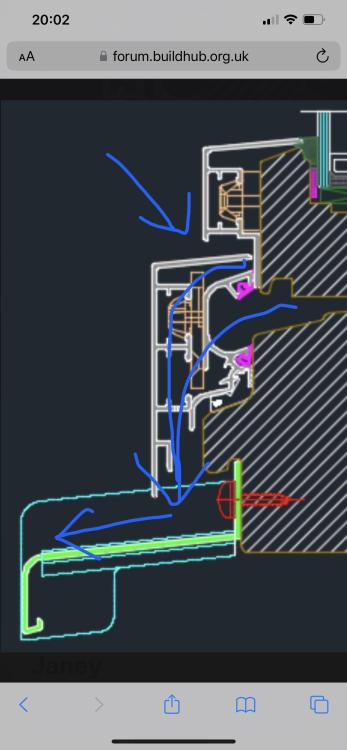
-
Get that bad boy posted 😉😂
-
Window drain / cill detail in tilt and turn units
craig replied to MrMagic's topic in Windows & Glazing
Timber alu clad, generally speaking no, the water is allowed to drain behind the cladding and the window cill sits further back (always refer to manufacturer or supplier for clarity on product you're looking at). -
@SuperJohnG may be able to help recommend someone in your area for the soil survey.
-
UK based or Europe?
-
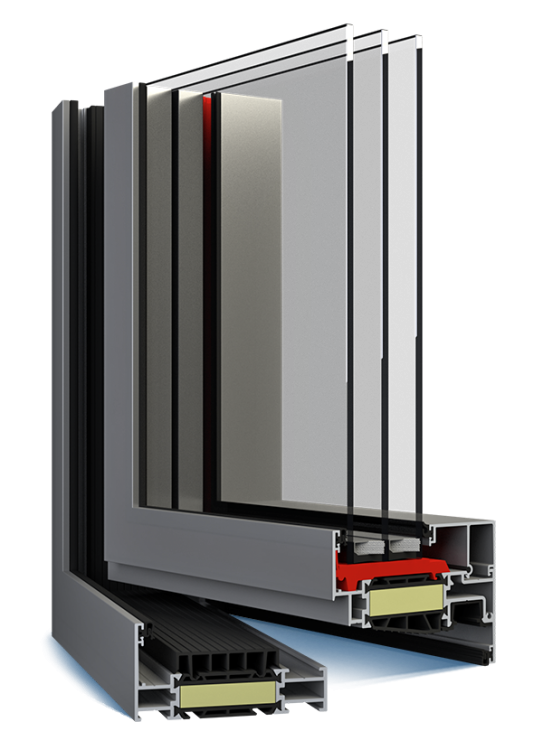
Not yet but I know them and it’s decent system but I haven’t fully investigated them yet. In discussions at the moment with a manufacturer to supply these along with Aliplas and Aluprof. I’m liking the Decalu 88 but I haven’t visited the factory or had samples etc. They are only as good as the manufacturer that produces them.
-
No comment.
-
Large pane bifolds: Schuco ASS 70 FD.HD or Express Bifolds XP Vision?
craig replied to JCB400's topic in Windows & Glazing
Really depends on the profile, they have sleek systems as well that don’t perform as well as a bulkier system. Bulky is down to two things, the eye of the beholder and how it is detailed. -
That’s tiny tbh.
-
Large pane bifolds: Schuco ASS 70 FD.HD or Express Bifolds XP Vision?
craig replied to JCB400's topic in Windows & Glazing
Very, you’re not getting a 3 leaf at that size. 4 yes but not 3, that’s 1.46 (slightly less when frames taken into acc) per sash. -
Large pane bifolds: Schuco ASS 70 FD.HD or Express Bifolds XP Vision?
craig replied to JCB400's topic in Windows & Glazing
Schuco, definitely. Worth the money. -
Not when you see the cost increases for manufacturing, gas, electricity, fuel as an example. I know one of our manufacturers electricity and gas doubled from Dec to Jan. Take that into account with the increased cost for timber, aluminium, hardware, glass etc. who all have increased costs to produce. Pass that onto the companies buying, who have increased costs to manufacture. I’ve yet to see any evidence of anyone taken advantage of it. Everyone I have spoken too are concerned with the continued increases but also note that it’s business as usual, if not better than pre covid.
-
Yip. Worth noting what we basically received from our suppliers. This gives some indication as to why everyone's costs are increasing. It makes for some grim reading & later this year could be much worse.
-
Just received the communication from factories of increases, this is across the board, all products, all materials, including transport as a result of gas, electricity, raw materials. Everyone in the chain is basically facing increased costs and having to pass them on. Up to 18%, with transport costs subject to revision prior to dispatch and every project needing repriced before any orders being accepted by any of the manufacturers I use. Best checking with your suppliers, they may not be increasing at the moment but it will definitely be pending. Our increases are immediate.
-
Inward-bowed glass in a 3G sealed unit - is it possible to repair?
craig replied to lineweight's topic in Windows & Glazing
I’d say it’s a glass supplier issue from what you’re saying. Has it just been installed or installed for a while? It should be covered under warranty. Firm yourself up with GGF guidelines. https://www.ggf.org.uk we all follow them even if not a member. I’d expect a manufacturer claim with the glass supplier, unless the manufacturer got specs wrong which then means their issue. -
Hi Gareth, Apologies for delay, we have to wait for the quote to be returned from factory. You’ll receive early this week. I have a meeting on Monday and will push them to process asap.