Carrerahill
-
Posts
2122 -
Joined
-
Last visited
-
Days Won
10
Everything posted by Carrerahill
-
Right this is a bit of a ramble - every time I thought it was ready to post I decided I had forgotten a variation or difference I thought should explain in better detail - lets call this a concept stage reply! I think to do this properly it would need to be a fairly lengthy article - it's like trying to explain something quite detailed in 2 or 3 paragraphs - you just can't. However here is my attempt. By staging I mean if you are following a true construction stage framework i.e. RIBA stages. Being a self build it could be done with no particular structured stages and it's all a bit off the cuff - which may be the result of ever changing budgets and evolving design or just wanting to be as fluid with the build as possible - or total disorganisation! So to answer your question directly: Planning drawings are really quite lacking in detail but warrant drawings are usually good enough to build from. In a nutshell yes tender and construction drawings are more or less the same assuming everything is as you want it and you know details such as fittings and fixtures from a spec doc etc. So if you get drawings done to planning and warrant stage then no longer hire any more professionals for the design aspect then your final drawings really will be the warrant drawing and that is you. Technically you can just use your warrant drawings from here on - for a builder to price and indeed build. The details of the build can be built, hopefully, by a competent builder (or yourself) who knows what he is doing without any more drawings. A typical build with no difficult structural or glazing or cantilever details for example would not really need further detail. Your builder knows how to build the walls and roof and floors and he will price accordingly knowing what he is doing - he will adhere to spec within the warrant drawings i.e. roof to be C24 timbers on 600mm spacings etc. but that is just specification of materials and doesn't require a drawing. However, if you retain pro's (or even do it yourself) to the end then you may then take drawings to tender stage which is just to as the name suggests get main and sub contractors to tender for - prices may come back high and you may have to VE (value engineer) it thus the drawings will change again and may keep changing until something that you are going to construct is drawn. Or the prices may come back as you expected and the tender drawings will really just become construction drawings. A tender package will usually include makes and models of fittings and fixtures or a well written spec of these items to keep the quality high. At this point it depends on how the project is being run and the contract. You could build from tender drawings using the spec document, to be honest they are detailed enough for most builds and I would happily rename good final tender drawings "Construction" - remember drawings should always be viewed in conjunction with specification documents.
-
Perhaps in some circumstances where for example it is a fully stripped PDF and there is no scale and no dim's on the drawing, but to date we have never had an issue with a PDF and re-scaling it once converted to ACAD. Thinking about it almost all PDF's need to be scaled properly once brought in because dim's are almost never picked up. Remember a PDF is a printed view at a scale, so you sometimes need to know paper size and scale but it's not the end of the world.
-
None of these methods are unsurpassable. You can un-tick "Read Only" in windows and that's that. A PW protected PDF (in terms of read only) only locks up fully in some PDF editors - we use 3 or 4 PDF editors including BlueBeam, Foxit, Adobe and another to allow us maximum abilities. For example I can have a locked PDF made in Adobe and BlueBeam will just open it. One of our CAD tech's is a bit of a whizz at cracking and opening just about anything we need. We recently got a drawing package in PDF from a building built in 2005 it was PW protected so we could not even read it, half an hour later I had a set of ACAD drawings in my inbox from him! The client was even delighted as he had forgotten the passwords! It was epic as the other option was to have a costly survey done and draw the whole building. We don't ask any questions.
-
If you have the PDF's you basically have the CAD drawings. ACAD 2017/2018 (maybe earlier versions I cannot remember) etc. can convert PDF to CAD - as of ACAD 2018 full text conversion exists too.
-
It depends how you are staging it I guess. The first drawings to a builder may be "Tender" or if you were sure that was what was to be build we would call them "Construction Drawings". Then on commercial projects we then would create "As Built". RIBA has the stages all listed with details.
-
It really depends on many many factors, the simplest obviously is to have the window of the room facing the sun - generally we say South facing however it depends on the use of the room. Often a well designed building will make good use of natural daylight (where requested extensive 3DS Max (or similar) daylight modelling is carried out) for the particular room in question, hotels may have breakfast room facing East and evening dining areas West. The next thing is overhangs, a high summer sun may be partially blocked by deep roof overhangs but a low winter sun may penetrate well - the size of the opening and the placement within the wall is important to counteract a deep overhang on a sun facing wall. So it's a how long is a piece of string sort of a question. Your possibly better to suggest your requirements and or parameters and then it can be answered from there. Your room is already built, but are you looking to add remove change doors, windows, skylights etc. can you improve natural daylight by adding glazed doors? Light finishes on surfaces help to reflect light, natural or artificial. Also bear in mind that a domestic kitchen shouldn't really need to think too much about glare as you are not likely to be sitting working at a PC or watching TV or spending long periods of time sat in one place with the sun bothering you so my thinking is include loads of natural daylight, get it all in and then design in appropriate shutters, blinds, curtains etc. to suit.
-
All of these 'professional memberships' and "councils" are just clubs to make money for the boys. I have spent my entire professional career avoiding them to the best of my ability. RICS and Engineering council etc. are slightly different as they allow professionals to be chartered, but if I don't renew my subscription am I any less of an engineer? They offer nothing in return. Not being a chartered surveyor will probably be cheaper as he is not paying membership fee's etc. ask what his credentials are, maybe he was with a firm, went out on his own and decided not to sign up to the "clubs" I bet he is just as qualified, potentially better, than someone who comes with all the RICS stamps and accreditation. Look at the background of almost all these associations and it started out with a couple of people deciding to set up an organisation for "insert profession here" and offer some so called "service" for a fee once a year - then with good marketing have people believe that they must have said membership or they are no good.
-
Feel sick with worry about escalating build costs
Carrerahill replied to Jude1234's topic in Costing & Estimating
I am sorry to read this, this sort of thing can indeed cause someone a great deal of stress and anxiety. Sadly this is a fairly typical story in the construction industry be it domestic or commercial projects. Usually it starts with the client asking for the highest quality build with lots of high spec fittings and fixtures, then through budgeting (QS), planning etc. it can get whittled down to what can actually be afforded but sometimes, it all makes it through to near completion before the client starts to take an interest in costs and invoices for things - contractors love this as they just go for it and do what they were told, sadly they also often neglect to tell the client what it is now costing (they don't want to cut off their open bank account), so they just keep spending your money. I think it is safe to say you didn't have a strong grip of this project and it sounds like your main contractor (single all trades?) or contractors have just gone for it to get it done for you, possibly, they thought, in your best interest or possibly they just want to take as much money as they can and give you the spec you asked for. I would not worry too much about some brushed chrome sockets and switches as in reality the cost increase from a decent quality white socket/switch is not massive - overall in the whole build it may cost you an extra £300-600 depending on what they bought you. Here are my thoughts on what your immediate actions should be. Call a meeting with your builder, I would also call in any other professionals you have appointed, do you have an architect or any engineers? Just tell them it is a Progress Meeting - give them an agenda and put into it anything you want to discuss and slot in Cost Reports into the itinerary somewhere! You can also discuss 'Issues that may impact on costs' 'Warranties' all sorts. Kick off the meeting, you are in charge, I don't know your background but this meeting is your chance to be CEO at a boardroom meeting and get some answers, tough but fair attitude. Don't show your cards, don't outright suggest budgetary issues, when it comes to costs you can bring up the garage, why is it costing an additional 8k and can anything be done to mitigate these costs. Why are things going over budget and work through them all - frankly they always do and no plan survives first contact, unless it is a very well detailed and quantified program has been put together, but even then, there are factors beyond our control. Make sure you give them an agenda say today and call the meeting for Friday AM or Monday next AM - by telling them you will want to hear a cost report you are effectively asking them to bring budgetary information - make sure they know this - i.e. suggest they bring all supporting documentation as you don't want any "I'll need to find out answers" they MIGHT bring quotes and invoices for materials but it depends if they are incorporating a cover for themselves into them, then they may not want to. Take all your budgetary information, your quote from the builder etc too and have your facts and figures hand written in front of you in a big A4 note pad - this is a good trick as people often cannot read handwriting easily across a table, it also looks like it may just be your notes and that you actually know all the information you are discussion off the top of your head putting you in a stronger position. -
A 240V supply is a 240V supply regardless of how it gets there so the flexed up to a plug option is a perfectly acceptable test means for this device. Sounds like a PCB issue if it will not go through self-test - take a look at it - often damage will manifest as corroded solder joints, blackened components etc. One thing I would consider is how you have installed it and the associated ducting. Have you installed it as per an approved method, reason I ask is often these fans can die if condensation can run into them from inappropriately angled/connected duct runs etc. In some of these circumstances a 12V version with remote PSU is a good idea as the fan is then just a simple 12V fan - but try and iron out any install issues first.
-
We need more details on your Honda genny. Check the rated load (i.e. continuous), it may be 1000W - but they often con you and say 1000W but that is only peak and the rated load is 850W or something. Now, the mixer will be 550W load, however startup will probably be about 1100-1200W for a split second for a motor of that size as I doubt they will have soft start so it is quite possible your Honda will trip out or go into over-current on startup meaning you can't get it going, however, if you are lucky and the Honda can take that load for the split second (it probably will actually as it's not going to overload the winding or inverter circuit - assume it has one as it's a suitcase gen) during that length of time it will start it and once spinning even if you load it, the mixer should not pull more than 550W as that is the loaded motor rating - it will run at much less during empty running.
-
Static caravan = no probs. Humble shed = noooo.
Carrerahill replied to epsilonGreedy's topic in Planning Permission
This is a good idea. I have done this. My garages first job is to serve as a extension build storage area and workshop. -
Using "off the shelf house plans" yes or no?
Carrerahill replied to Olly P's topic in New House & Self Build Design
Odd comment, frankly very odd! Bit of a chip? It seems you have an issue with professionals in the construction industry, the professionals who design aspects of of the built environment. I was approached a couple of weeks ago by a women who wishes to build a large extension, she is unsure how to go about it and the way to get best value for money. I suggested that I would have her planning permission drawings produced and I would have various details drawn up by our structural engineer and the building warrant drawings I would produce using the material produced from various sources including the "standard text" which is part of our library (roof makeup, renders, fire stops, drainage etc. which as you know is not detailed as a drawing but often just provided as text which specs the makeup). We would then obtain her permission/warrant. This will give her a full design and PP and building warrant when complete and will cost her little more than £1500.00 for our fee. She is not buying a comfort blanket, she is buying security and she is buying detail that we will insist her extension is built to. This gives her a high quality well designed build without "professional builders" erecting some cheap tat with poorly or non-designed aspects. If anything goes wrong due to the detail provided then it is our practises liability, for which we have insurances which will protect her and she is aware of this. We as a firm would protect her and would even step in to cover costs if we made a mistake that cost her or her appointed builder due to our negligence - we will also plan to PM the build for her and provide a site PM who will keep an eye on details as the build commences and allow for variations to be produced if anything must change due to our error or factors beyond our control which we may or may not change for. What you possibly don't understand is the RIBA/CIBSE stages and how a building design evolves. Clients will have ideas and this allows a design brief to be produced, the client will then agree or disagree with this and it is revised until the client is happy - this then may end our involvement and gives them something to go and tender the design stages to several firms. Then the original or new firm will undertake a concept design which as the name suggests is just the concept then the process goes through similar stages as the DB and if all is approved will go onto detailed design - at this stage it is entirely possible things will be designed and detailed that will never make it to the final building but that is due to many many factors, almost always the client seeing something new they want during the design stages. What may end up on construction drawings may not resemble the concept design at all but that is how buildings evolve, if everyone knew what they wanted from stage one then we would go directly to construction drawings but the chances of us designing exactly what the client wants would be slim, therefore we have stages. We do not aim to rip people off and often trades resent professionals because they don't like being told how to do their trade - I can see this from both sides of the fence, but a consultant engineer sitting with for example with a DuPont technical representative and discussing precise use of a product and specifying all the sundry products to go with it will often ruffle the feathers of your roofer who wants to go and use Fakro Eurotop because that is what he uses and he can get a deal on it at his favourite merchants. The client then may end up with a mongrel of a roof. The roofer may be a brilliant tradesman with excellent skills but they might not actually know how all the materials precisely go together for that guaranteed 30 year roof. Pro's might not be able to fit it, but the chances are we know damn well how it should go together. The roofer can go about this the correct way and ask if they can apply for a variation but they often don't and if they are met with resistance by the engineer due to DuPont being used for a particular reason they go in a huff. It's an age old issue. Designed detailed building built to spec should and in almost all cases will work properly, most issues we read about on this forum and see in shows like Grand Designs you will often note are due to lack of design and planning. Pro's and trades will never see eye to eye, simple as that. I argue with very skilled electricians weekly - usually because they didn't read a spec properly and or made a colossal mistake. Look at Grenfell, penetrations in service riser fire stopping... 1 of two things happened here: 1. Someone didn't read the spec or neglected the spec, written by an engineer. 2. A "pro builder" decided to undertake it himself with no design and decided not to carry out remedial work on the penetrations or simply didn't understand what it was for. -
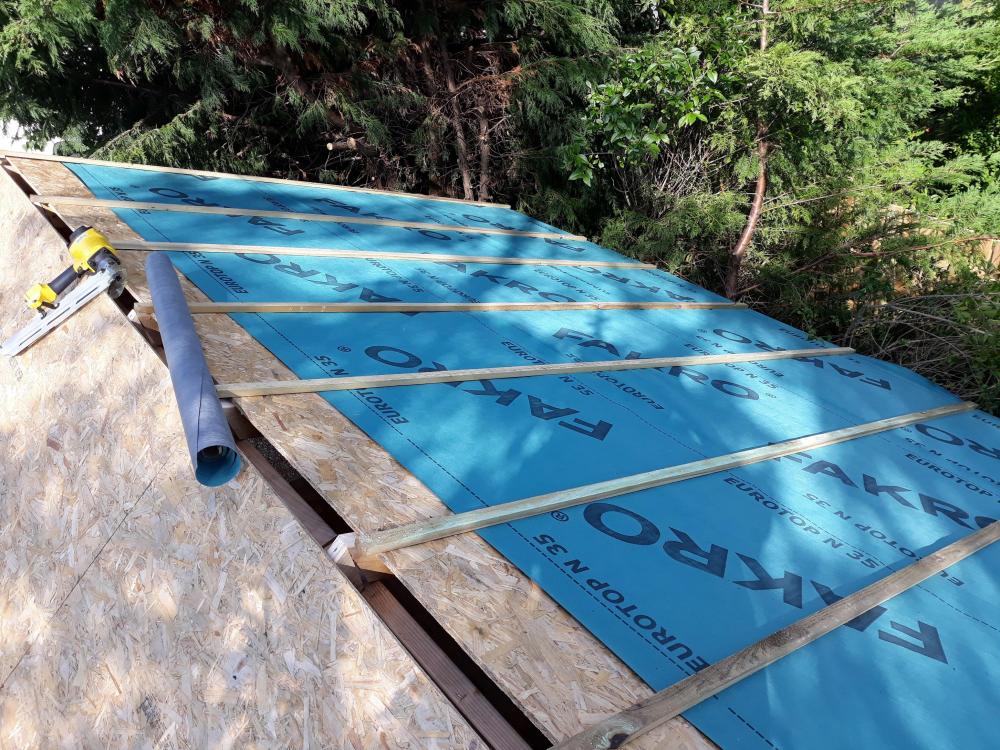
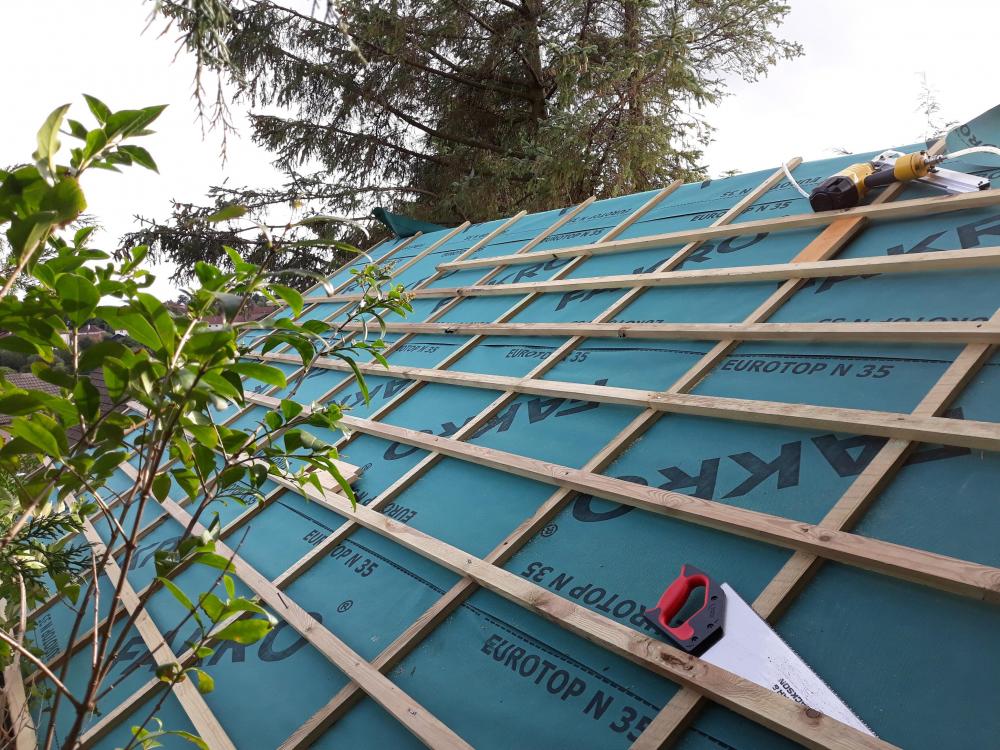
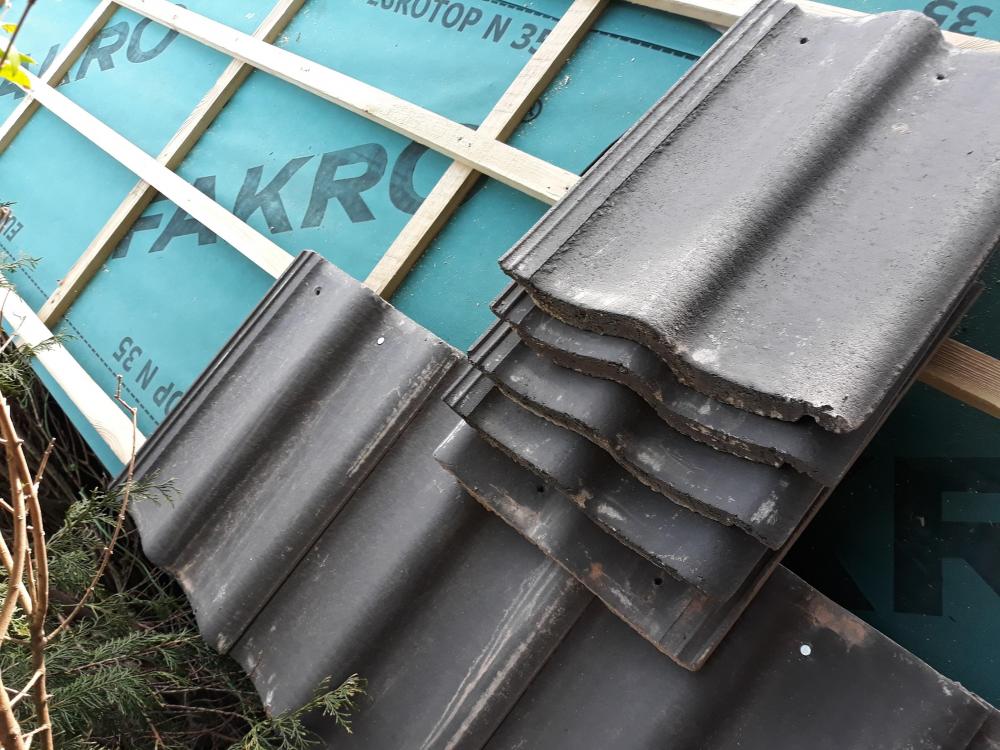
So, here we are as of just now... As of last night I had 10 tiles fixed. The garage is now at least bone dry!
-
Sounds far too long to me! Even the original 3-4 weeks seems too long!
-
Your understanding here is slightly flawed so tread carefully. Those voltage pens are a bit limited in that they only show there is AC electricity present not continuity of wiring etc. and should only be used as a basic check and test - they also don't tell you if there if full 240V etc. so they can actually detect e.g. 50V and will still imply there is voltage - there is but not enough to do much on a 240V circuit. If you meter across the switch (Com and L1) and there is an open circuit elsewhere (probably is as your light doesn't work) you would see 0V between common and L1 - which in your current thinking would probably cause you to think there was a fault there. First thing I would do is see if you have 240V between Live and Neutral at the terminal block of the light fitting, or 240V at the lampholder assuming it is a standard B22/E27 lampholder fitting (take care not to short the lamp holder with your probes) if the fitting is an LED etc. then you will need to probe at the terminal block or feed to the driver etc. It matters not a bit if you use the red or black probe on live or neutral. If you see no voltage between line and neutral then try between line and earth - if you see voltage between line and earth then you probably have a break in the neutral or a loose/pulled out connection. If you see nothing there try between neutral and earth (just in case!). If the supply at the fitting seems totally dead then assume a broken wire or missing/loose connection somewhere before the light. At that point go back to the switch and prove voltage, if it is just a switch drop then you may only have feed and switched lives with no neutral, in which case you can meter between the live and the earth to prove a feed - check for 240V. If this checks out you will need to find the junction box where the switch drop is taken from and start to meter out the supply and check the neutral. Don't undo or move anything at this point - assuming it worked before then moving things will not help if you don't know what you are doing you could create a dangerous situation.
-
Not necessarily a plumber only job - could just need reset for example. Why did it stop working is the question - it may just have gone into lock-out. The light on these will usually flash a sequence or colour to indicate the fault and display a letter or number in the temp gauge like F1 or something. I have seen this boilers bigger brother go into lockout for a low pressure issue - cycling the main power with a 30 second pause sorted it, other issues can be high pressure, over temp, flue issues etc. If the manual is in the front panel then the faults should be listed.
-
Hats off! Nice work. Yes to the drill bits but hopefully people would stop and think if they hit metal in a solid wall... maybe me just being hopeful!
-
Perfect!
-
No secret, it's all outlined in BS6761. If in doubt buy a copy and use it - especially for self builds where you want to run all your own wiring etc. All electrical designs (i.e. via consultancies) are designed to the standards and regs, we often confuse electricians as they only go by what is written in their copy of the reg's but often they don't realise that their book is just a small snippet of the full CIBSE regs and they neglect to realise that anything can be designed as long as it gets approval or is backed buy evidence, science, proven theory or a report outlining the reasons, safeguards etc. We once designed a BP office using full petrochem, ATEX regs (even though it was in the middle of a city! - BP also use some American regs! They do this so worldwide their estate is all the same) - some of which actually contradict BS6761 - M&E contracctor on site wired it as they were taught and thought and ignored the design - cost the contractor a lot to rectify it. What the OP proposes to do should be fine, 200mm is so little that if they were to bring the wire down vertically and then take it in the side then the wire would probably still sit straight - fact is anyone working on that wall in the future will note the socket and should take a zone of about 200mm either sided of the socket and out horizontally, thus even if the wire is a little diagonal it should be fine. I agree, these long up and down drops are stupid - for many reasons including length of cable runs and high possibility of a snagged cable as it passes up and through more framework. If it was my own house I would go horizontally and run metal conduit between the lot in inaccessible areas.
-
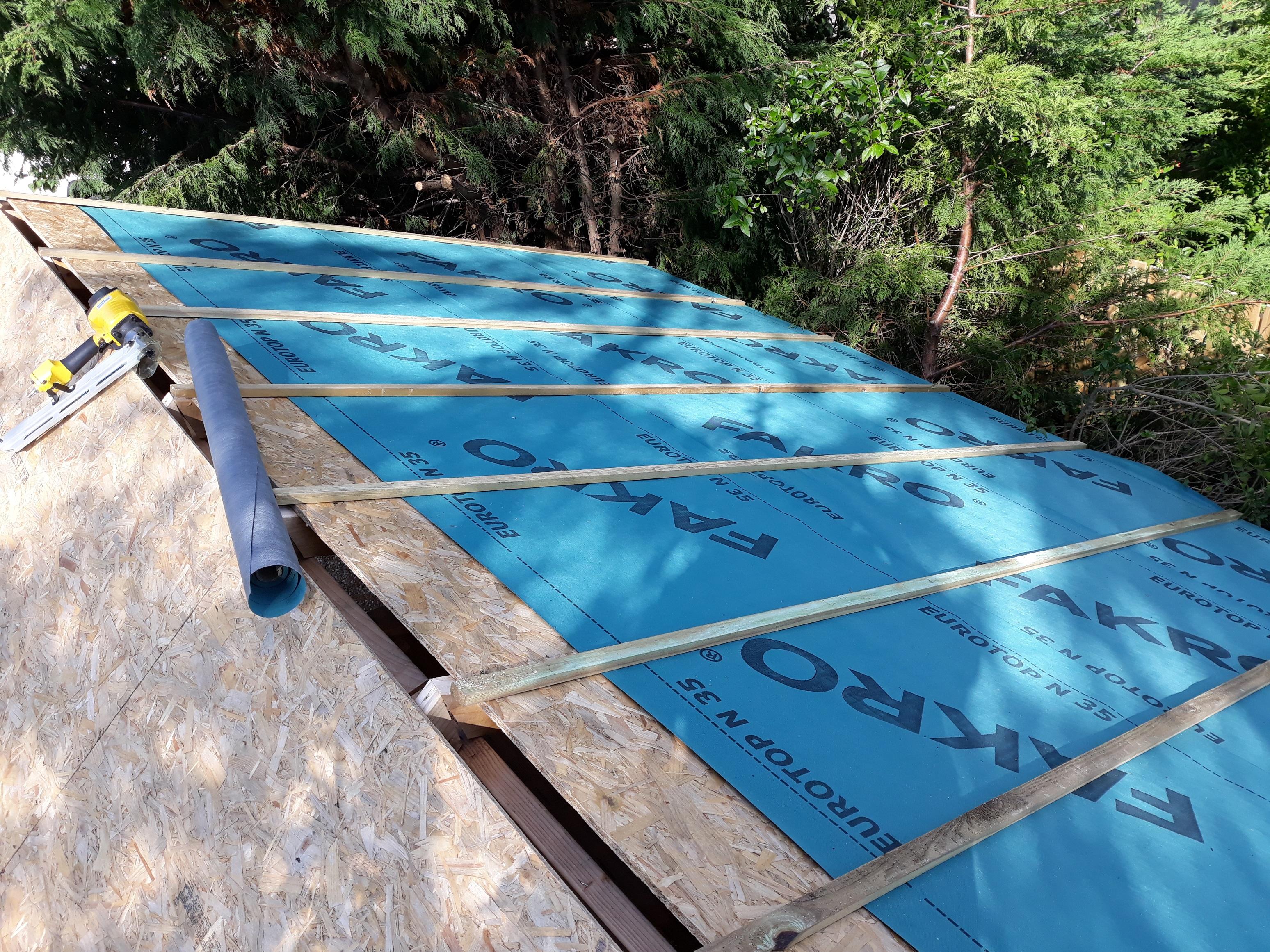
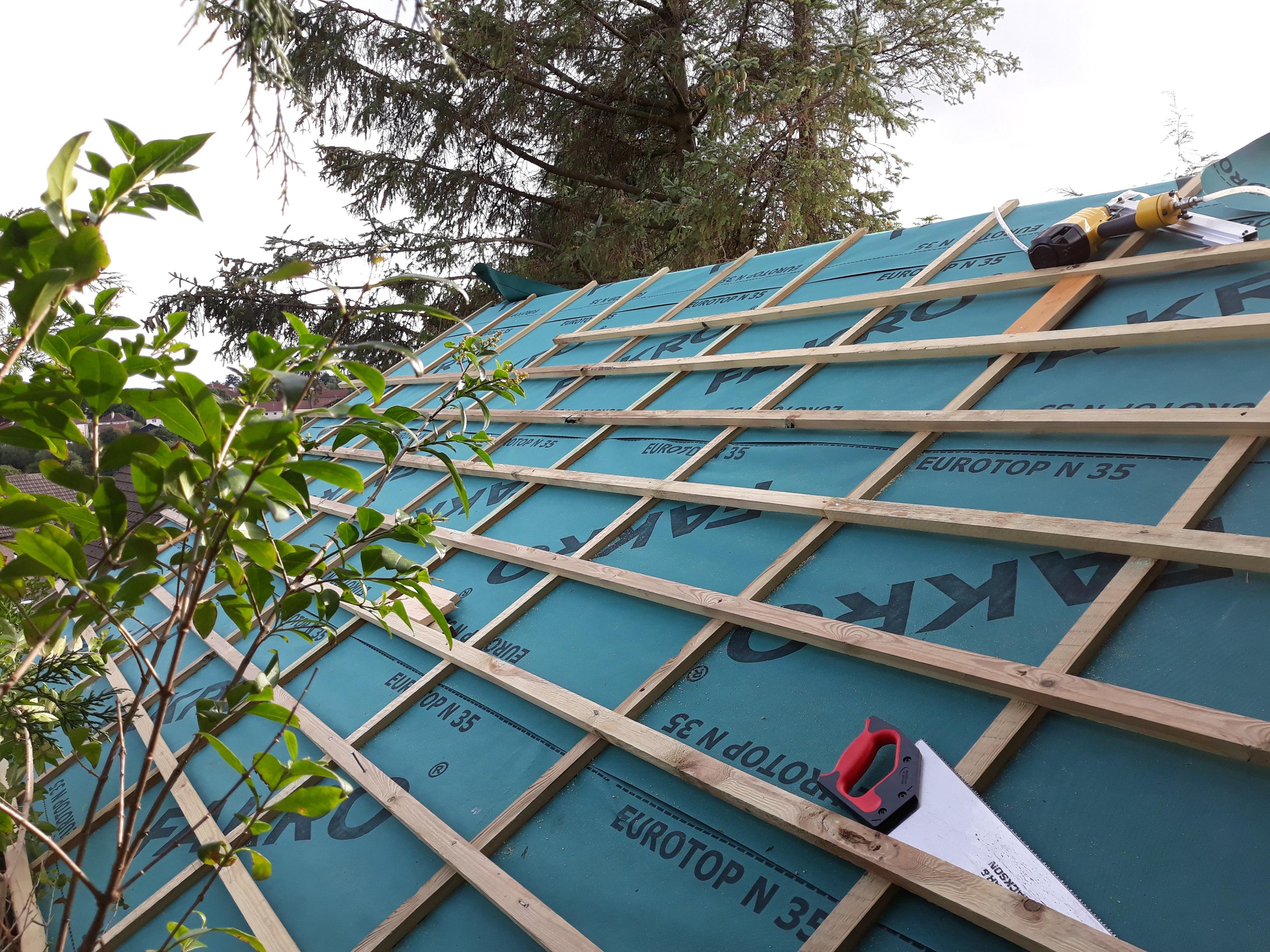
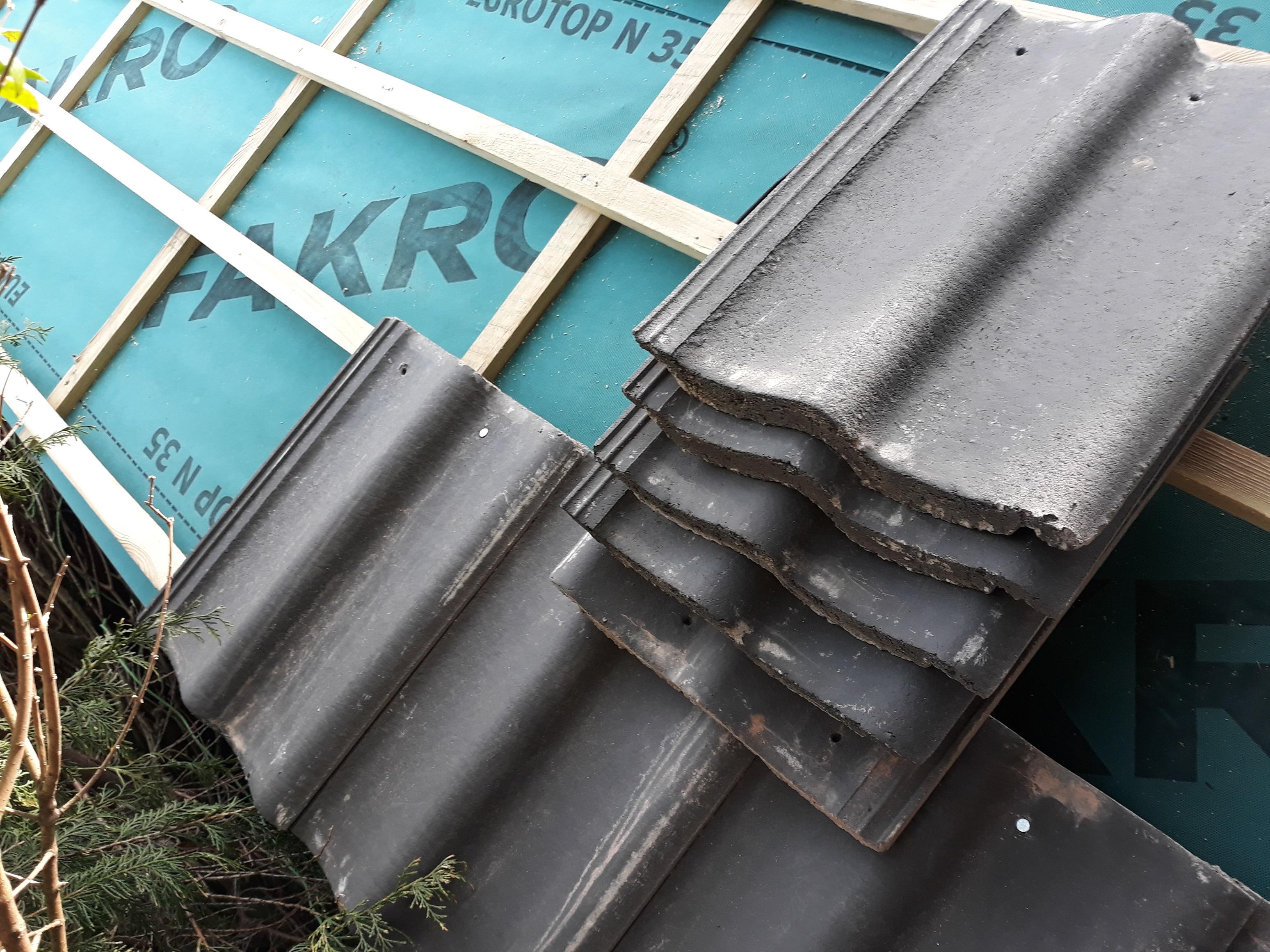
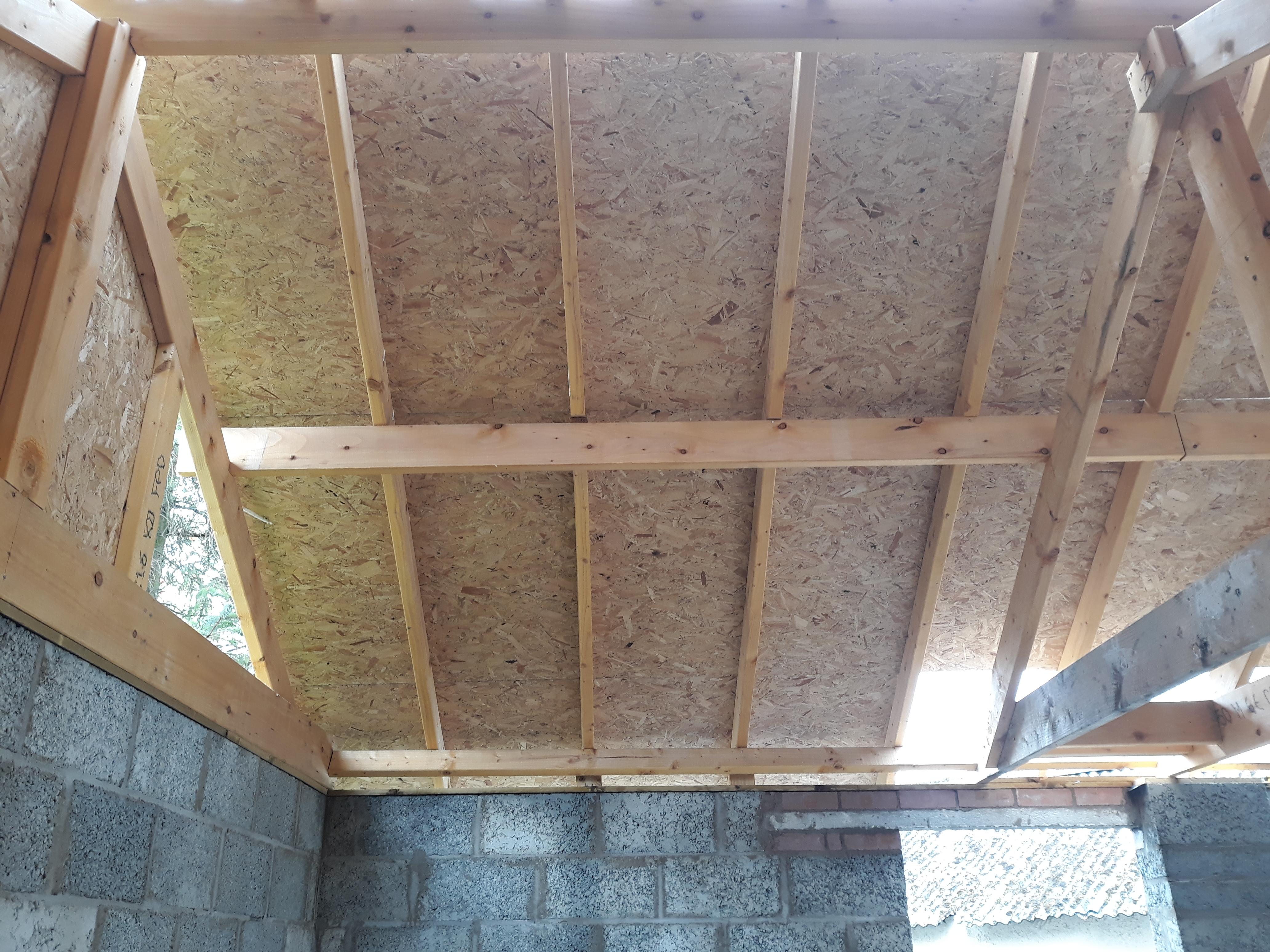
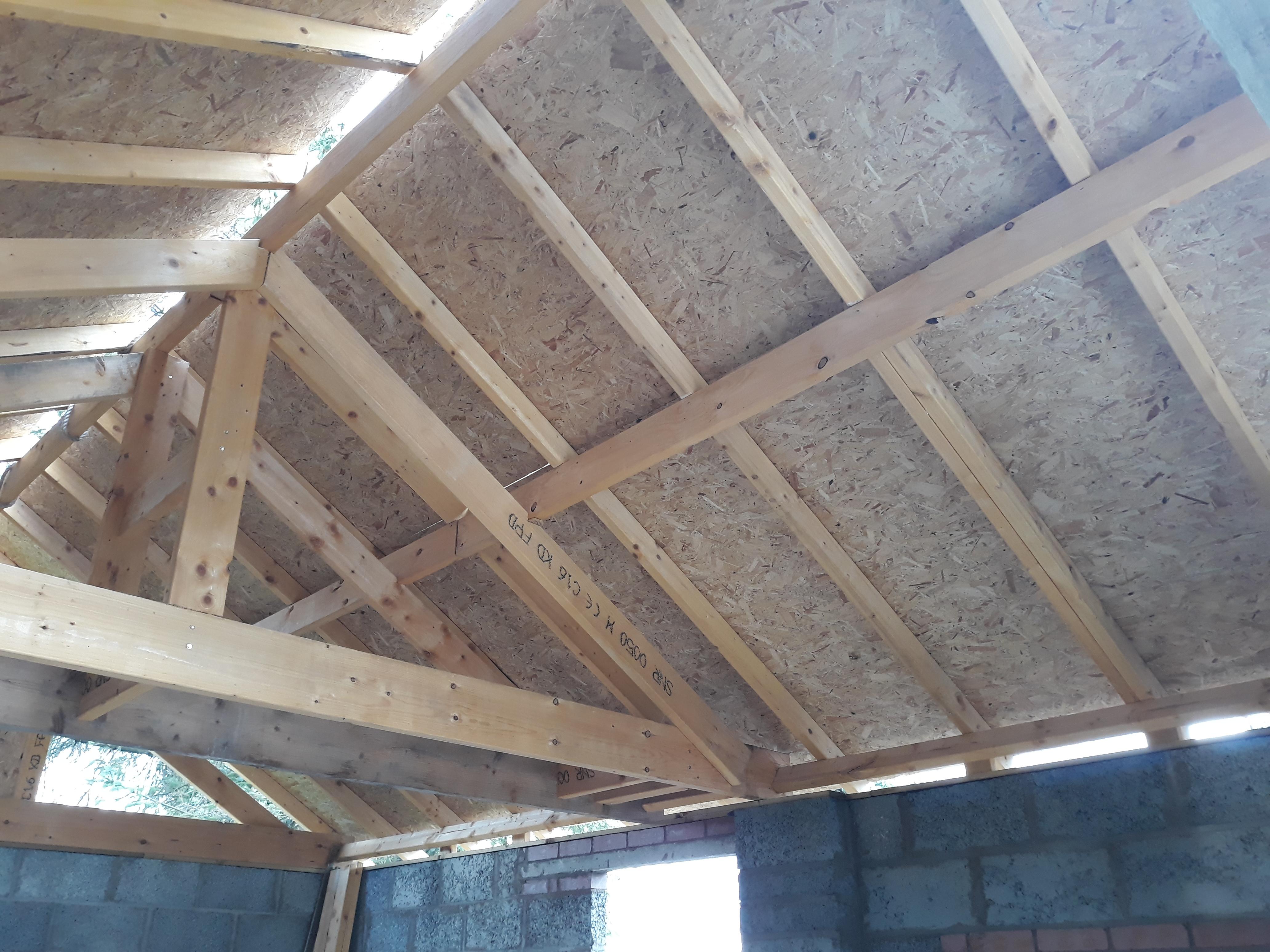
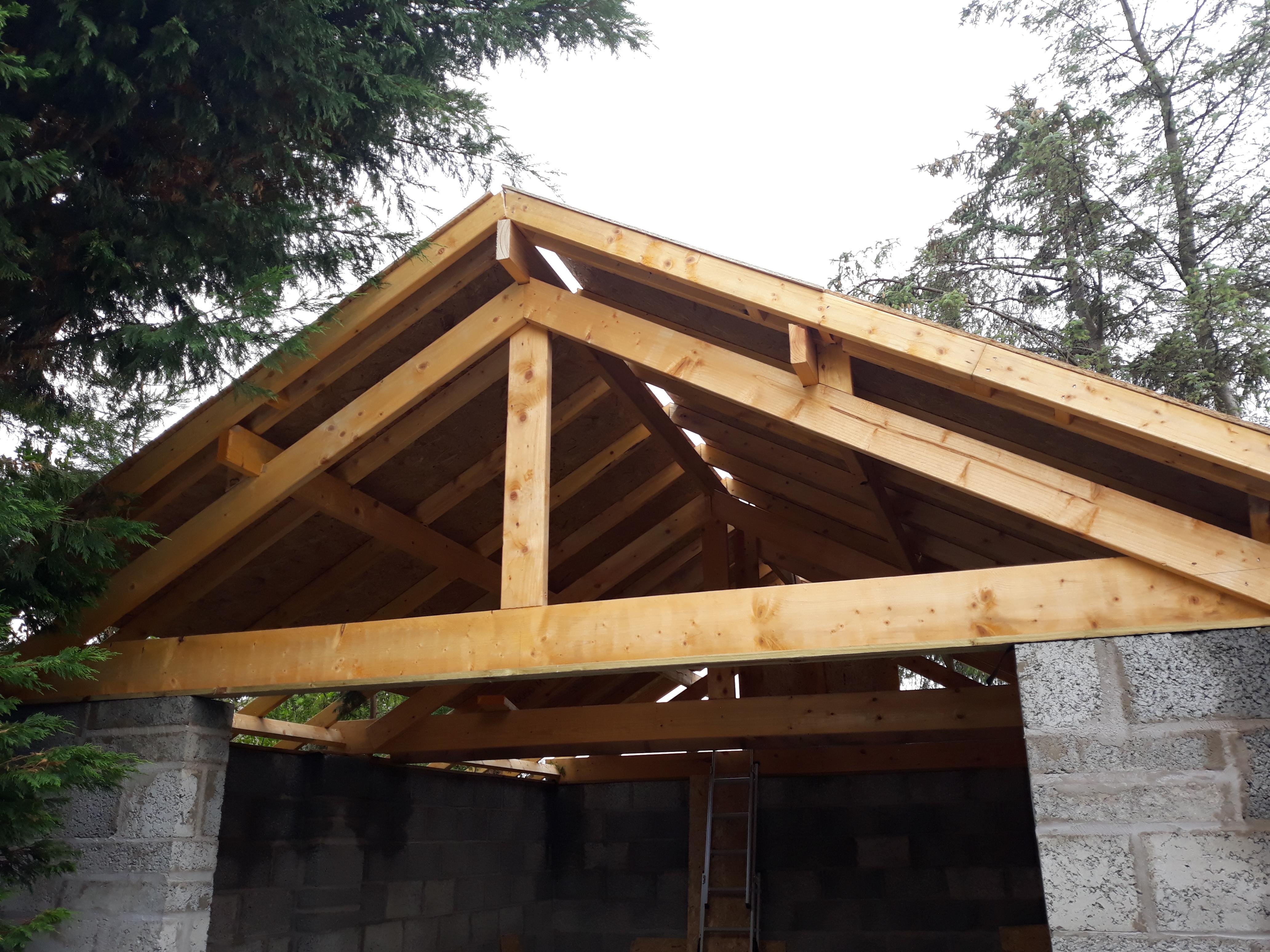
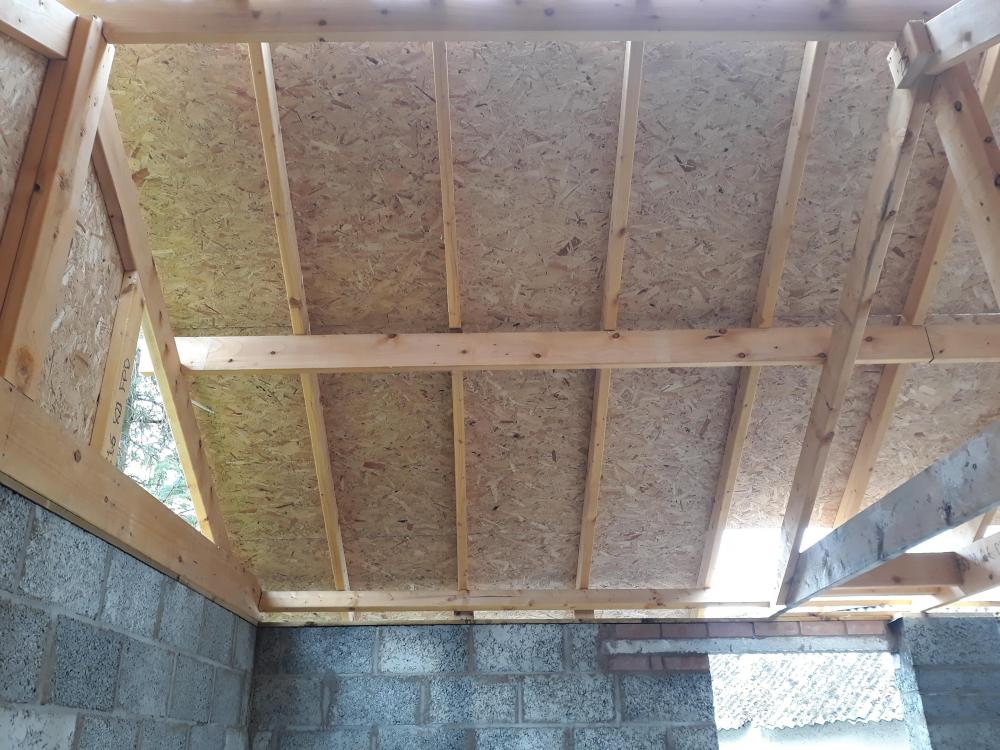
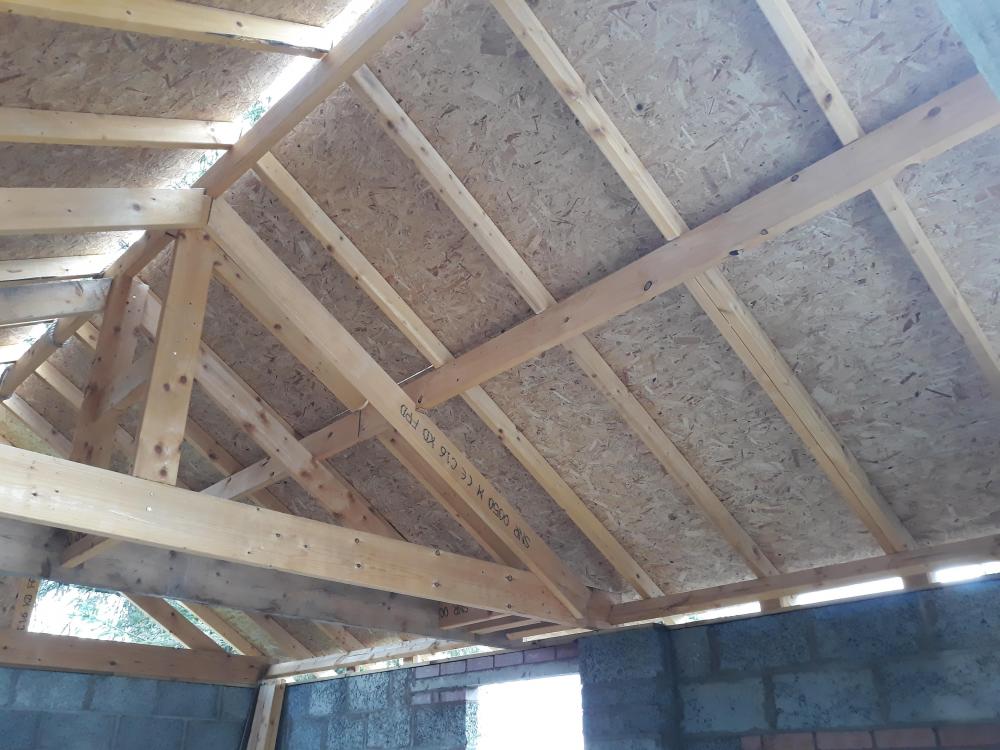
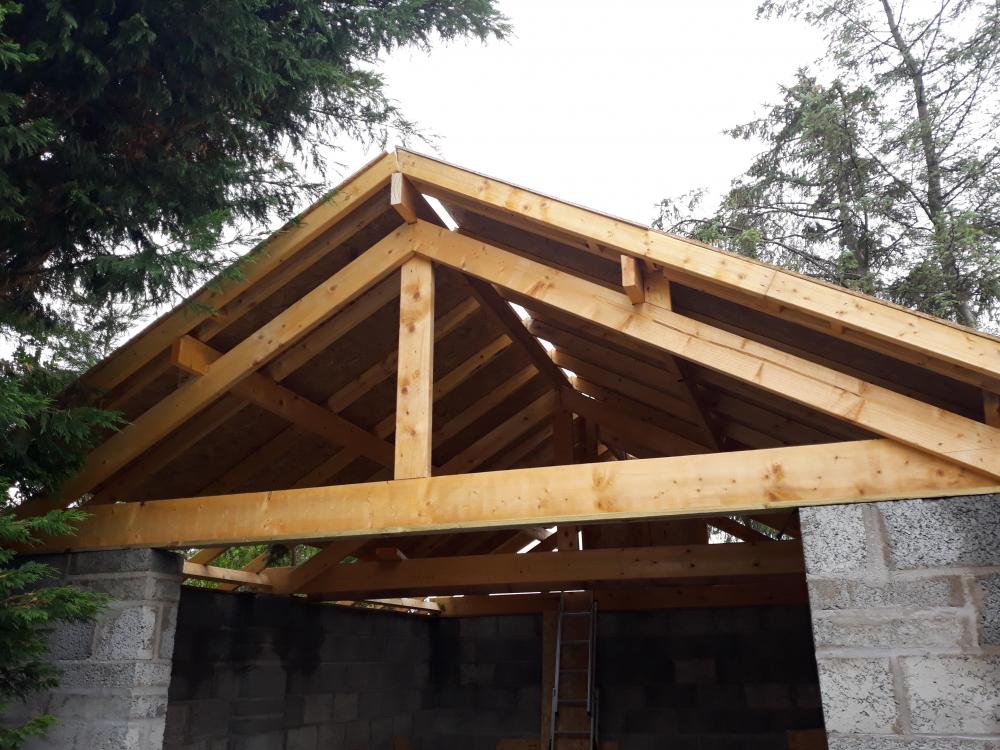
Roof is taking shape, photos below are a little old now as the roof is fully sheeted, the gables are sheeted and the overhangs have been covered in OSB. So I am ready for fascias and soffits and then I can get the membrane and battens on ready for tiles. I picked up just short of 600 Russel Pennines last night. I am just back from the guttering and fascia supplier who has given me away a dry verge section and gutter bracket so I can mock-up all my heights and sizes. I am going to buy vented soffit boards, and fascia boards from him along with my dry verge and eaves protectors. My plan is to saw up a load of 4x2's or similar to make a mounting piece to nail to the rafter ends to mount the soffit boards, I can get them done tonight I think. I will then get the UPVC stuff next week and get that all pulled together. With any luck I can possibly start tiling next week.
-
Should I switch off the boiler in the summer?
Carrerahill replied to Mr Punter's topic in Boilers & Hot Water Tanks
She is that! She is floor standing but she isn't on the floor, there is a plint built into the house at about 800mm AFFL which it sits on as this made for easier access for maintenance etc. That 938 looks pretty good and being wall-hung will make it more appealing to many. -
Hot water tanks, Temperature and Legionella
Carrerahill replied to ProDave's topic in Boilers & Hot Water Tanks
In commercial calorifiers they are set to run a pasteurisation cycles every so often. It usually depends on several factors, but for discussion sake and because I was involved with the design and O&M manual creation, a major bank's head office in the UK runs a pasteurisation cycle twice a month - the controls take the water up to 70° for about 45 minutes. Legionella dies, as you quotes at about 60° odd after 30 minutes, so for liability issues we go higher and longer and this also creates a tolerance in case of sensor faults etc. Also, interestingly and this is known to me from my M&E background and from working with FM managers over the years, there has never been a recorded case of a legionella outbreak in stored hot water tanks in the UK. So, can you run a pasteurisation cycle with your controls - from what you have said it already does - leave well alone and don't worry too much to be honest as it sounds like the manufacturers have incorporated this cycle for this reason! -
Could you remove that plasterboard, and install a T just after the shower tray, then run a pipe to a higher location? As for differing AAV air volumes, not really, a very small opening will allow a lot of air to pass, if it was undersized, i.e. a 40mm AAV on a soil stack it would just make a air woosh/whistle noise and it would not be correct, but an AAV for a given size of pipework will be adequate to drain that size. I suspect that your issue is that the placement is not correct and that the vacuum with the AAV installed is not great enough to pull the diaphragm down and thus let air enter - with it removed you said it drains a treat, which means that the system is wanting air but the placement is wrong. Judging by the location of the boiler I assume the LHS is an external wall? Could you T off under the shower tray and run a pipe to the outside of the building and deal with it there?
-
Should I switch off the boiler in the summer?
Carrerahill replied to Mr Punter's topic in Boilers & Hot Water Tanks
Mr Punter, it was said with a comedy satirical tone when I said "I love that your reply is only in response to the throwaway comment about stored hot water! Not the oodles of advice and answers to your question..." if we had been face to face it would have been of a friendly nature. Nickfromwales pointed out it sounded abrasive and I didn't mean it like this. -
Should I switch off the boiler in the summer?
Carrerahill replied to Mr Punter's topic in Boilers & Hot Water Tanks
OK, tarring everyone with the one brush situation here. Fair enough if you are generating hot water or electricity and need storage, or if you are building a larger house, but as a general argument, i.e. across the general house building industry of the UK, for a typical house with a couple of bathrooms then I can't understand why they bang in tanks (well I can - because [ certain large scale developers ] can get away with those little junky GlowWorm boilers that cost £450 and a £180 tank). I'd say generally self-builder houses do require storage because by nature of what we are doing we are going to put in solar and we are building bigger houses etc. but we are the minority and we do things quite differently but not all of self builders are building big houses, yet these calorifers appear as commonly as a roof on a house! We have the W/B Highflow boiler on the first floor to reduce runs and the kitchen is directly below it, the bathrooms are arranged so that services are back to back etc. and to minimise pipe runs, hot water can be delivered comfortably to 2 showers simultaneously at good pressure and heat.