Carrerahill
-
Posts
2132 -
Joined
-
Last visited
-
Days Won
10
Everything posted by Carrerahill
-
Not necessarily a plumber only job - could just need reset for example. Why did it stop working is the question - it may just have gone into lock-out. The light on these will usually flash a sequence or colour to indicate the fault and display a letter or number in the temp gauge like F1 or something. I have seen this boilers bigger brother go into lockout for a low pressure issue - cycling the main power with a 30 second pause sorted it, other issues can be high pressure, over temp, flue issues etc. If the manual is in the front panel then the faults should be listed.
-
Hats off! Nice work. Yes to the drill bits but hopefully people would stop and think if they hit metal in a solid wall... maybe me just being hopeful!
-
Perfect!
-
No secret, it's all outlined in BS6761. If in doubt buy a copy and use it - especially for self builds where you want to run all your own wiring etc. All electrical designs (i.e. via consultancies) are designed to the standards and regs, we often confuse electricians as they only go by what is written in their copy of the reg's but often they don't realise that their book is just a small snippet of the full CIBSE regs and they neglect to realise that anything can be designed as long as it gets approval or is backed buy evidence, science, proven theory or a report outlining the reasons, safeguards etc. We once designed a BP office using full petrochem, ATEX regs (even though it was in the middle of a city! - BP also use some American regs! They do this so worldwide their estate is all the same) - some of which actually contradict BS6761 - M&E contracctor on site wired it as they were taught and thought and ignored the design - cost the contractor a lot to rectify it. What the OP proposes to do should be fine, 200mm is so little that if they were to bring the wire down vertically and then take it in the side then the wire would probably still sit straight - fact is anyone working on that wall in the future will note the socket and should take a zone of about 200mm either sided of the socket and out horizontally, thus even if the wire is a little diagonal it should be fine. I agree, these long up and down drops are stupid - for many reasons including length of cable runs and high possibility of a snagged cable as it passes up and through more framework. If it was my own house I would go horizontally and run metal conduit between the lot in inaccessible areas.
-
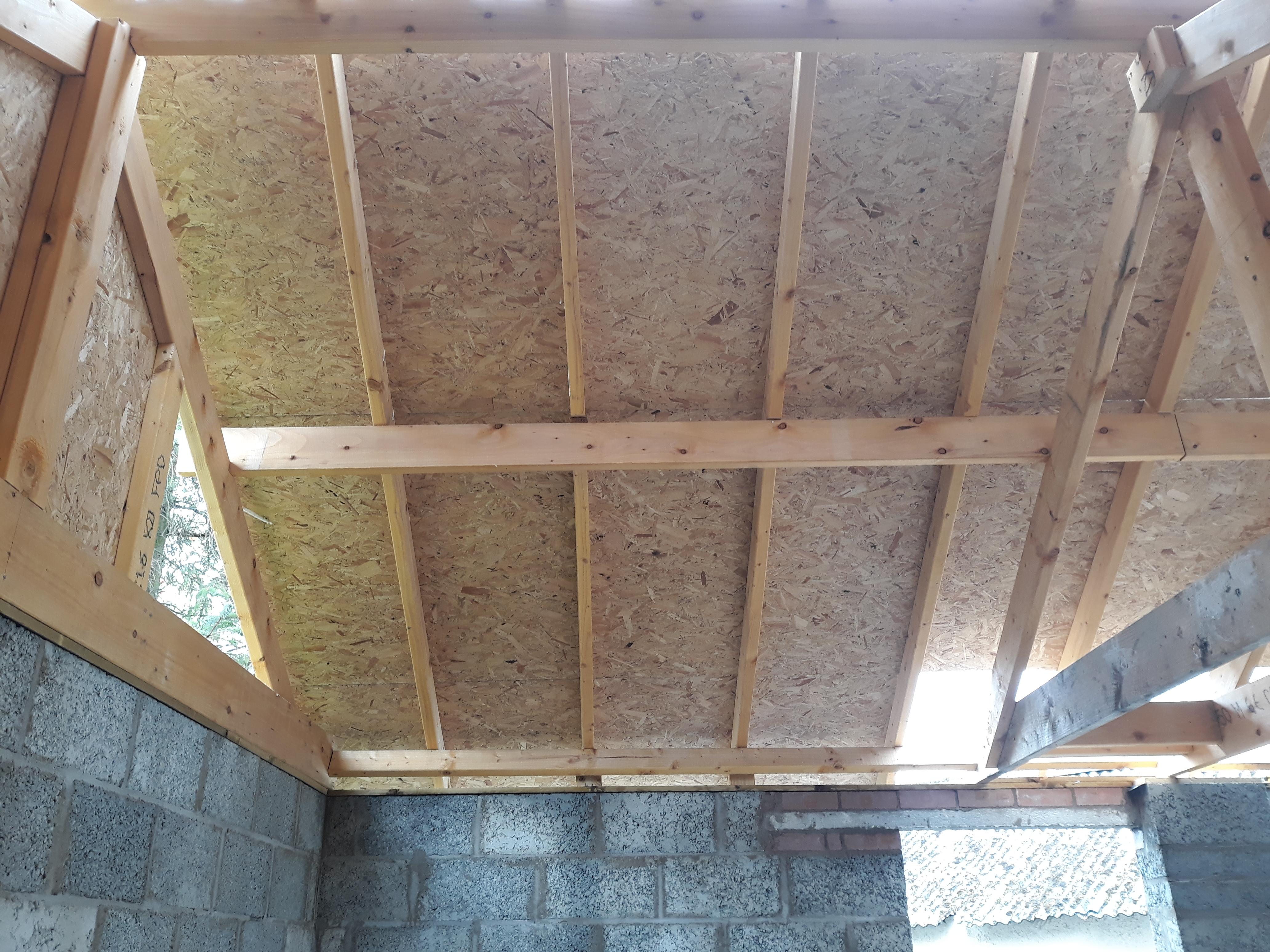
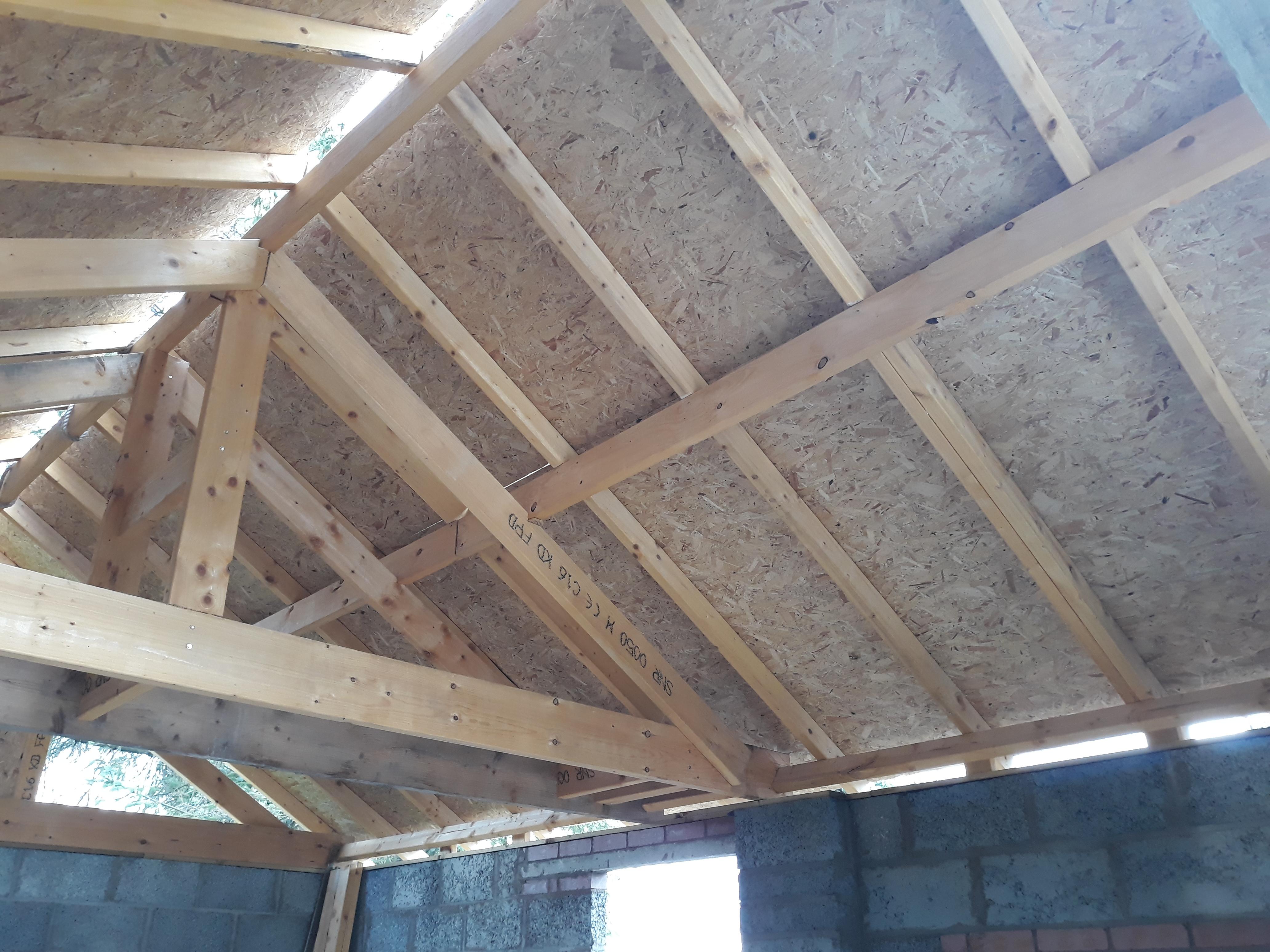
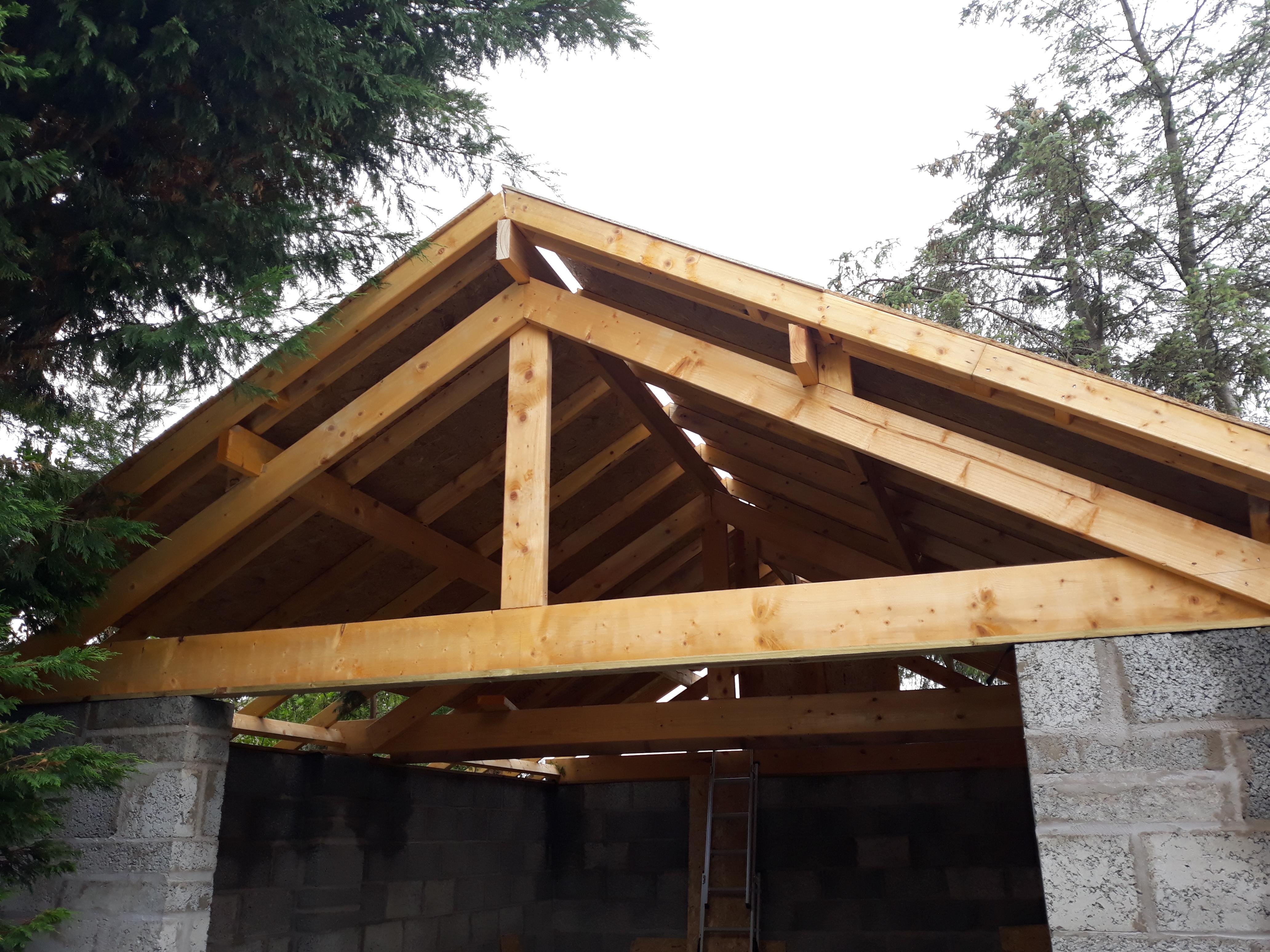
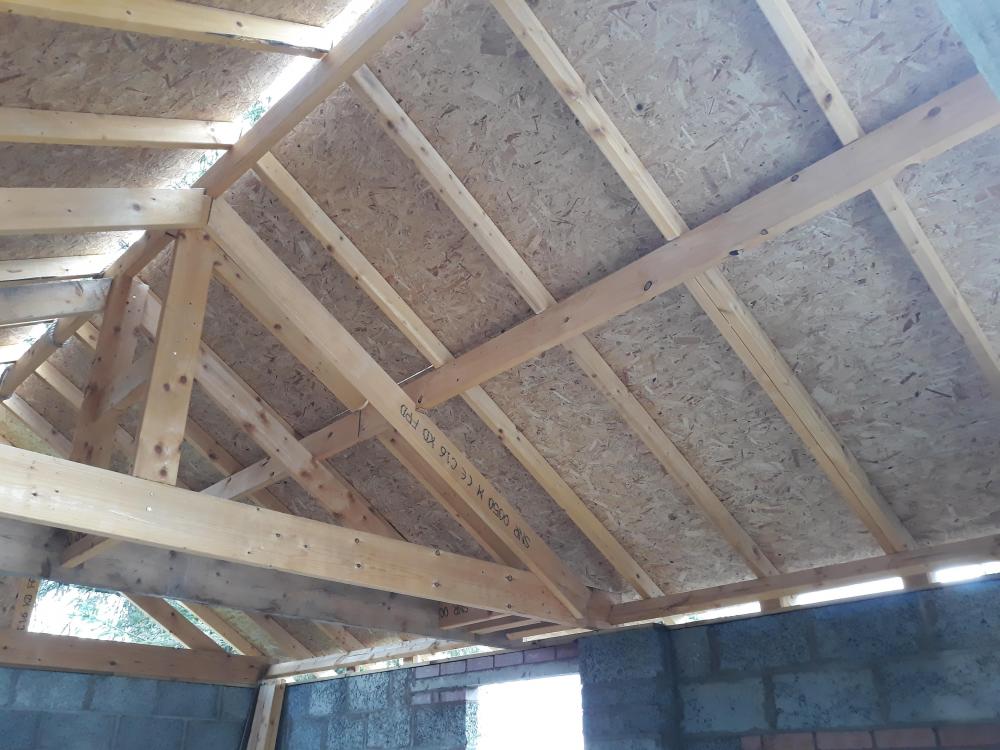
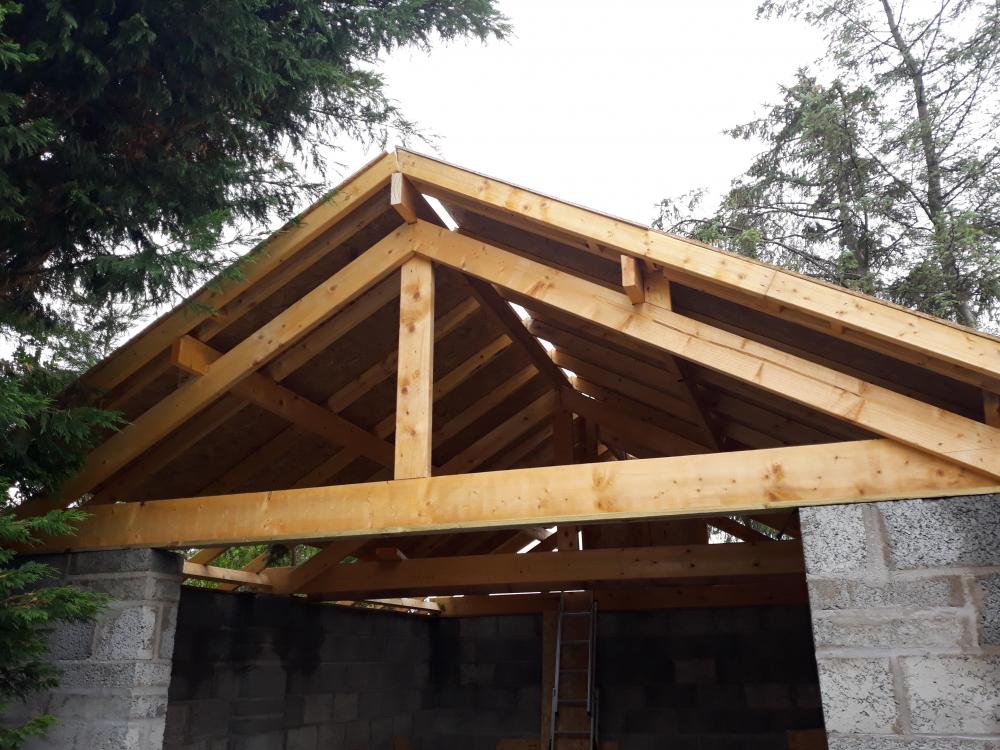
Roof is taking shape, photos below are a little old now as the roof is fully sheeted, the gables are sheeted and the overhangs have been covered in OSB. So I am ready for fascias and soffits and then I can get the membrane and battens on ready for tiles. I picked up just short of 600 Russel Pennines last night. I am just back from the guttering and fascia supplier who has given me away a dry verge section and gutter bracket so I can mock-up all my heights and sizes. I am going to buy vented soffit boards, and fascia boards from him along with my dry verge and eaves protectors. My plan is to saw up a load of 4x2's or similar to make a mounting piece to nail to the rafter ends to mount the soffit boards, I can get them done tonight I think. I will then get the UPVC stuff next week and get that all pulled together. With any luck I can possibly start tiling next week.
-
Should I switch off the boiler in the summer?
Carrerahill replied to Mr Punter's topic in Boilers & Hot Water Tanks
She is that! She is floor standing but she isn't on the floor, there is a plint built into the house at about 800mm AFFL which it sits on as this made for easier access for maintenance etc. That 938 looks pretty good and being wall-hung will make it more appealing to many. -
Hot water tanks, Temperature and Legionella
Carrerahill replied to ProDave's topic in Boilers & Hot Water Tanks
In commercial calorifiers they are set to run a pasteurisation cycles every so often. It usually depends on several factors, but for discussion sake and because I was involved with the design and O&M manual creation, a major bank's head office in the UK runs a pasteurisation cycle twice a month - the controls take the water up to 70° for about 45 minutes. Legionella dies, as you quotes at about 60° odd after 30 minutes, so for liability issues we go higher and longer and this also creates a tolerance in case of sensor faults etc. Also, interestingly and this is known to me from my M&E background and from working with FM managers over the years, there has never been a recorded case of a legionella outbreak in stored hot water tanks in the UK. So, can you run a pasteurisation cycle with your controls - from what you have said it already does - leave well alone and don't worry too much to be honest as it sounds like the manufacturers have incorporated this cycle for this reason! -
Could you remove that plasterboard, and install a T just after the shower tray, then run a pipe to a higher location? As for differing AAV air volumes, not really, a very small opening will allow a lot of air to pass, if it was undersized, i.e. a 40mm AAV on a soil stack it would just make a air woosh/whistle noise and it would not be correct, but an AAV for a given size of pipework will be adequate to drain that size. I suspect that your issue is that the placement is not correct and that the vacuum with the AAV installed is not great enough to pull the diaphragm down and thus let air enter - with it removed you said it drains a treat, which means that the system is wanting air but the placement is wrong. Judging by the location of the boiler I assume the LHS is an external wall? Could you T off under the shower tray and run a pipe to the outside of the building and deal with it there?
-
Should I switch off the boiler in the summer?
Carrerahill replied to Mr Punter's topic in Boilers & Hot Water Tanks
Mr Punter, it was said with a comedy satirical tone when I said "I love that your reply is only in response to the throwaway comment about stored hot water! Not the oodles of advice and answers to your question..." if we had been face to face it would have been of a friendly nature. Nickfromwales pointed out it sounded abrasive and I didn't mean it like this. -
Should I switch off the boiler in the summer?
Carrerahill replied to Mr Punter's topic in Boilers & Hot Water Tanks
OK, tarring everyone with the one brush situation here. Fair enough if you are generating hot water or electricity and need storage, or if you are building a larger house, but as a general argument, i.e. across the general house building industry of the UK, for a typical house with a couple of bathrooms then I can't understand why they bang in tanks (well I can - because [ certain large scale developers ] can get away with those little junky GlowWorm boilers that cost £450 and a £180 tank). I'd say generally self-builder houses do require storage because by nature of what we are doing we are going to put in solar and we are building bigger houses etc. but we are the minority and we do things quite differently but not all of self builders are building big houses, yet these calorifers appear as commonly as a roof on a house! We have the W/B Highflow boiler on the first floor to reduce runs and the kitchen is directly below it, the bathrooms are arranged so that services are back to back etc. and to minimise pipe runs, hot water can be delivered comfortably to 2 showers simultaneously at good pressure and heat. -
Should I switch off the boiler in the summer?
Carrerahill replied to Mr Punter's topic in Boilers & Hot Water Tanks
I love that your reply is only in response to the throwaway comment about stored hot water! Not the oodles of advice and answers to your question... -
Sorted. If you order it etc. let me know how you get on as I am shopping about for one too.
-
Should I switch off the boiler in the summer?
Carrerahill replied to Mr Punter's topic in Boilers & Hot Water Tanks
This will take some meter readings to get your real life costs and work out which is cheaper. Gas (assume gas boiler?) is far more efficient for heating than electric. Let's say the boiler is using a unit of gas per heating cycle at 3-4p and the immersion heater takes maybe an hour at 3kW at 12p an hour then you need to work out how often does the immersion come on i.e. would 1 hour at 3kW (36p lets say) heat you enough water for the average day? Or would it be better to blast the boiler a couple of times a day but it only costs a combined 24p? So how do you do this real life check. I would take both meter readings at say midnight tonight and again at midnight tomorrow using the gas boiler, then kill the boiler and switch to immersion and do a 24hr period meter read again - I would try and do it on a standard weekday and try and keep costs similar - so for example cooking a full roast with the oven on for 4 hours on one of the nights is going to give you a false reading. I don't know what your household is like and how many of you there are but another option is to wait until you can more or less control all the variables and try and replicate similar loads on the electric in particular each night. As for gas it's easy, you could probably do a day with only hot water and don't use gas for anything else so you know your gas consumption is only hot water. Another option is to take both readings today with gas boiler, and then take the readings again same time in 1 week and then switch to electric and then do another weeks readings - a weeks view would probably be more accurate and would account for variations in cooking habits etc. Another thing to bear in mind is that boilers like to be used, leaving a boiler off all summer can also lead to issues. I cycled my boiler last week for 10 mins just to get a flow through the system and actuate all the valves etc. We have a combi-boiler so the boiler is on demand and is in use everyday anyway but the CH circuits are not. I don't actually understand why anyone would install anything but a combi setup. The idea of stored hot water in this day and age seems madness. -
Electric roller door with fob will be about £750.00 for that size.
-
Assuming the concrete oversite was laid properly, i.e on compacted sub base etc. then the additional weight will not be an issue, the additional weight will be nothing over that footprint. I would be looking very carefully at the existing concrete, you want to look for cracking, separation, sinking etc. if any of these exist then you should not start to add more weight without investigation works or taking precautions. So here are your options: If the oversite concrete looks undisturbed and in good condition then I would be happy to pour over site, don't let the new concrete touch the existing wall, create a expansion gap with thin (10mm) EPS or dense foam (you can buy rolls specifically for this) this will stop the new concrete potentially causing damage to the walls. I don't know what your current oversite has in terms of a DPC but if it is already sealed then you don't need to add any more, simply roughing up the old concrete surface, cleaning it, removing all dust will then give your new concrete something to bond to, alternatively you can use an agent to ensure good bonding. Then pour to required FFL. If there is no DPC (but what is stopping damp coming up into the floor area now anyway?) then I would be putting a DPC in much like you would when putting it over a new site ready for the dwarf walls to be flooded, again use a EPS or foam around the edges to minimise contact with the wall. Then pour. If the oversite concrete is showing signs of cracking, sinking etc. then I would cut out 350mm squares of the existing concrete every 1200-1500mm, and dig down till you reach compacted hardcore or if none, soil, repack properly, and pour strong piers with re-bar, your new concrete will then essentially sit on these piers, go for about a C35 and this concrete will then be self supporting on your new piers. You can do this pour all in one and I would strongly advise just getting the concrete delivered rather than mixing by yourself.
-
Can't you have the floor diamond polished?
-
Ceiling height for open-plan room
Carrerahill replied to Dreadnaught's topic in New House & Self Build Design
2100 & 2400 are too low, in a room like that it will feel more like an attic conversion or something. I think 3000 would be your bare minimum, however I would still push for higher, even another 250mm would be good. -
Nothing "professional" about CCTV wiring to be honest. A lot of trades will make you think there are secrets and special ways to try and make their trade seem more complicated and thus you pay them to do the job but not much complication about CCTV - this coming from someone who was involved in the CCTV electrical design for a major city! The most specified CCTV cable for commercial applications is still RG59 coaxial "shotgun". It is a robust cable and carries power too. Some "professionals" don't have the proper snap n'seal F connectors that crimp on and offer a waterproof connection because they won't buy the tool - decent one is £80. I bought one as I used it for my CCTV (planned) and RF distro and all my connections are now watertight and can even be pulled without coming apart. Some CCTV systems are CAT5/6 which does mean some local power most of the time but again nothing complex.
-
I am a consultant electrical engineer working in the construction industry, I deal with all sorts of building related issues (even non-electrical) and the thing I come across weekly is bloody electricians who think they know best. I think the issue with most of them, not all I hasten to add, but most, is that they don't have the imagination to foresee requirements such as data and signalling etc. I have a young chap who we use to do remedial work where the electrical contractor cannot be trusted to fix things properly. He will take instruction well so it works out, but he cannot understand why anyone would want lighting controls, he cannot understand why anyone would want data in every room, his reply, "I have wifi in my house, does my phone and my laptop" . I explain to him that I have a media/data server in my loft, I have lighting control, I have a network of laptops and PC's throughout the house, I have ability to have a landline phone in any and all rooms in the house (including the garage when it is done). I have 6 and 8 core cable running everywhere for wired TRV's etc. Only then he can begin to see why throwing all this extra cable in for such a small outlay is worth it. I hate and love wifi - but I would not have it in my house at all if it was not basically necessary for iPad's and things. I don't like wireless control, I like copper! I would say for your house as a bare minimum at least 2 maybe 4 at your TV area, 1 or 2 in the kitchen where you may want to temporarily plug in laptops or a phone, 1/2 in each bedroom, 1 the hall next to where tables or sideboards etc. may be located, more in offices or dens, some to the loft even if just coiled up for now, you may opt to put in NAS units or something up there. It may only be 100m of cable and 6/7 runs in your case. I would also make sure they are near power.
-
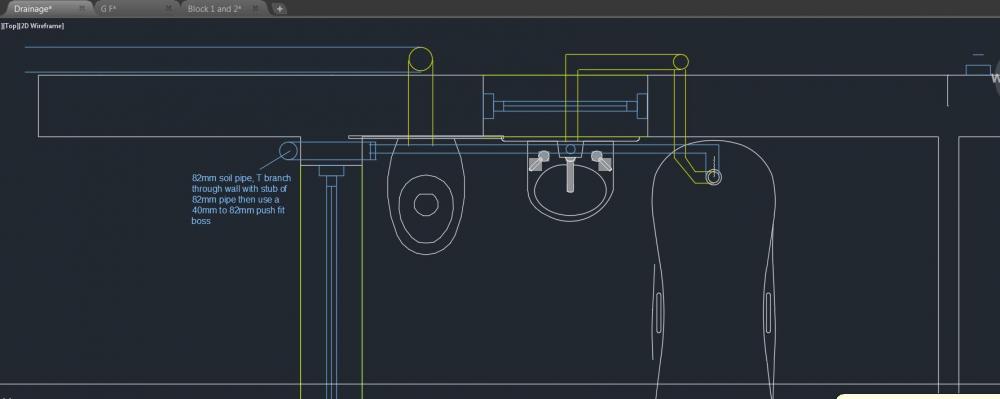
Hi All. I was speaking to the building control officer this morning and discussed altering the soil stack and relocating the waste stack on the back of the house so I do not need to have penetrations through my new extension roof. He agreed that I could take my main roof gutter water over the new roof (as long as I show the area and check the gutter pipe sizing tables etc.) he also agreed I could cut my soil stack low, take a 92.5° bend from above the T jct. where the WC is connected, run it along horizontally within the extension roof void and pop it out the wall rather than via the roof - that is easy and will mean just boxing out the pipe within the extension which is not a big deal. I MAY move it round the corner too but for now, that is the plan. So the next pipe to deal with is the 3 inch cast iron waste stack, as I can run gutter water over the new roof I can therefore take the waste stack down lock stock and barrel, this services the main gutter, bath and sink. Looking at the bathroom wastes and with some PB removed in the kitchen below it looks like I could run a piece of waste pipe between 2 floor joists, pickup the bath and sink and core through the wall and come out on the wall round the corner from where the waste currently exits - within about 750mm of this is the waste pipe from the kitchen, so some digging will soon reveal a pipe I can build a manhole onto and connect the new waste pipe. See sketch attached, yellow is existing, blue is proposed, NTS and just rough... I don't really want to add a 110mm stack down the side of the house, to catch a sink and a bath I think it is just excessive anyway, so I would like to use 82mm pipe, it doesn't appear that common and there are not many parts available for it but it looks like I can get all the bits I need. Plan would be, new 82mm waste pipe on the outside wall, then a T branch (if I need air admittance) or 92.5° deg bend through the wall, mortar that in, then push a stub of 82mm into that and then downsize the rest of the run with a 40mm to 82mm pushfit boss, I would also run the 40mm pipe further into the 82mm than needed so that it effectively just poured down the external pipe and reduces any likelihood of leaks from the boss in the future. How does this sound? This is simple and non invasive enough that I could do this little project almost immediately so I am not faffing about with pipes when trying to put up my timber kit. What are you guys doing for your external bath and sink wastes when not using 110mm? Most google hits show these huge ugly 110mm stacks... The other option being considered is move the soil stack round the corner (much more digging) and then tying in the toilet and the bath and sink into the one pipe, but that is another story.
-
In a word, yes. It won't cost you much for a drum or two - you only need to terminate if you decide to use! I have points that are not opened up, I know where the cable is and if I want to use it I simply get my padsaw out and fit a back-box and faceplate. Put in a good deal of home runs to a location you can have a patch panel and switch, ideally all your comms will run back to this same area, including TV, any controls etc. When I renovated my 1960's house I ran in CAT5E into every room, roughly 2 points per room. Ideal for printers (wifi printers are usually rubbish in my experience) and computers, media servers - (I like to limit wifi traffic in my house) I can patch phone in, I can use USB over network, I can patch in controls to things and I think it cost about £90 all in!
-
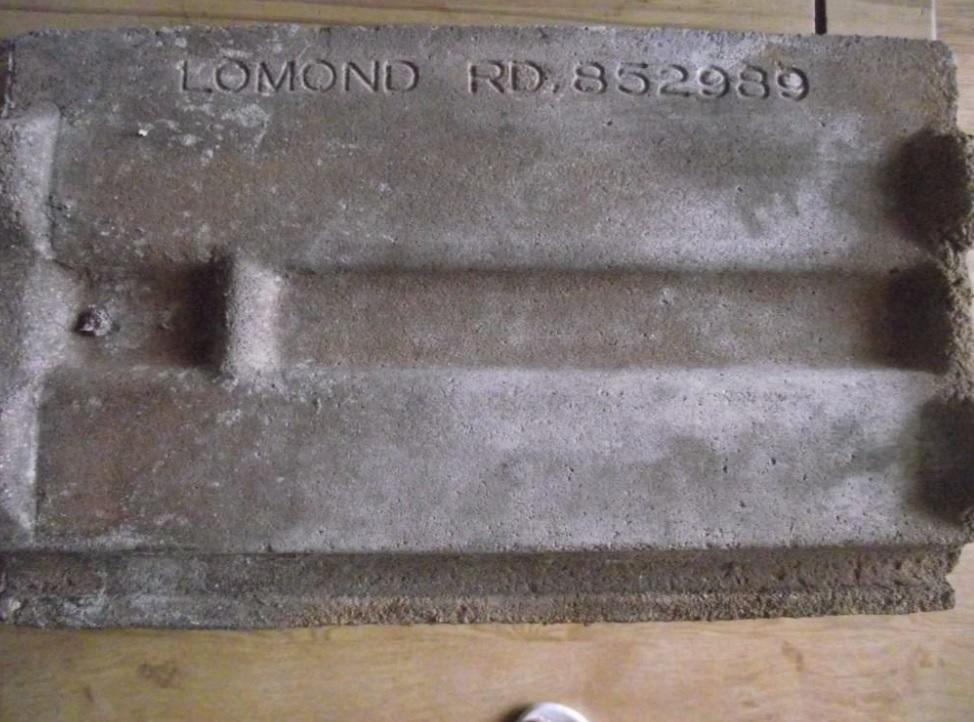
Found it! Well the name! Lomond RD852989 Not believed to be a Redland or a Russel, don't think it is a Marley although I have not called them yet to see if they did make it, roofing supplier thinks it was ScotCem who are now gone. At least if I can prove they are not made anymore then I can go similar in tile. I have also spoken to my architect who says use Major's and be done with it - so I am happy!
-
I think so. I will need to get my crowbar up there! I will go now if I can find my crowbar!
-
It doesn't really matter, this first lot are for my detached garage! As for the extension roof tiles it is only single story so it is a separate roof and with all the tree's and what not around the house it is actually difficult to stand in such an area as to see both roofs simultaneously as you would need to stand far enough back to see the main roof and extension roof which means you would be standing in dense hedge or tree's.
-
Length of time for planning app with Cat C listed areas
Carrerahill replied to Square Feet's topic in Planning Permission
Statutory period is 8 weeks - so expect something less than that. Our council left me hanging till the 8th week and I called them to have a gentle prod. I had the head of planning dealing with me within minutes, apologising and basically saying she would put it through right away but neighbour notification had to go in first and we had to wait out the 14 day period. They agreed it in principle within about 1 day and had the planning officer out that week, we waited our 14 days and as soon as the neighbour notification period was over they called and said you're fine. JCB rolled in the following morning. So lesson learnt here: I would never let planning simply sit now, about a week after I submitted anything I would always check it has been assigned to a planning officer and I would make contact with them just so I know what is what. So really they should have it done in 5-7 I think is normal, which means they come in under the statutory period (13 weeks if it's like an office development!) - no mention for any other categories so regardless of your CatC listed status it is still just a planning app. Bear in mind the CatC stuff will just mean they adhere to a slightly stricter rule-book.