


Gus Potter
-
Posts
2383 -
Joined
-
Last visited
-
Days Won
34
Everything posted by Gus Potter
-
The FMB is a trade association, by subscription. Make of that what you like. This is good you have seen other work, but check that was not for a relative. Check Face book and other social media for suspicious connections. Don't assume all builders are there to rip you off, many are good honest hard working folk. Just browse and if there is a rat you'll likely smell it. A fatal mistake here is to fall under the builders "charm".. you like them but don't want to uncover bad news. Be brave and grasp the nettle. You don't have to tell them you have checked them out! If you struggle on social media then get say your kids , nieces and nephews etc to check this stuff for you, they will do it in a fraction of the time! Do more due dilligence. Check companies house if they are limited. See what other links the directors have. If not limited then this can be an advantage. If something goes horribly wrong then sometimes you can chase the builders own personal assets. Check to see where they live, go to the land registry and see if they own the home (in Scotland this cost me £3.00) and how big their mortgage is. Check to see if they hold it in joint names. You can't chase easily (and nor would you probalby I hope) if the house is in joint names and you end up putting a family out their home. If vat registered then you can check their registration. If not vat registered then you need to ask them why. If their turnover is that low then how do they build houses? Once you have done this kind of due dilligence then you need to sort out a contract that is fair to all parties. To finish on a light note. I have posted this kind of stuff before. Last year a Client engaged me and told me they had followed my advice and done the full due dilligence on myself! I thought... well at least I passed and if you want to dish it out then expect the same in return!
-
Looks like the party is over....
Gus Potter replied to Beelbeebub's topic in Air Source Heat Pumps (ASHP)
Agree, your statement is however cleverly worded, what you say is generally accepted as correct. But you are making a straw man arguement. Have you explored the potential of the Rosebank oil field? That is because we keep shutting them down. Have a look at what Ineos have been doing for many years in Fife Scotland. One reason it did well in the past was because it used sweet Brent crude oil from the north sea, more plastic and base chemicals, less heavy crud ( the crap) that is expensive to get rid of. No it won't in the grand scheme of things, anyway if we make the tax system attractive it's the oil and gas companies that will fund it. If we give them the same security as we seem to hand out willy nilly to the wind folk this should be welcome. It's accepted that to develop say the Rosebank field will take 10 - 15 years. Again here you are making the straw man argument. Even the development will create well paying jobs in the UK. It has less nasty stuff in it that is bad for the environment. I'm not saying this is not achievable, but it will be very much less achievable over say 30 years if we don't develop and maintain our oil and gas industry and collect taxes to fund it. As an Engineer I think you are economically naive. There is a reason for this. Brent crude is what we call a sweet oil, it has lots more useful and valuable compenents and less rubbish in it. That is why you often see it as the bench mark oil price. We have down the list a bit WTI (West Texas Intermediate) which sells for less. Then you have the stuff the Middle east sell. Again you are making a straw arguement as you are comparing apples with oranges. We have some of the best and most valuable oil off the shores of the UK. Again you just can't see the woods for the trees, mention Reform and some folk just can handle it. Is that the best you can do? But see that gas.. it does not magically come out the sea bed ready for use. It needs processed and use made of the other components. If you really are worried about the environment then we should be spending money developing our own access to sweet crude oils just 80 miles off our shores. We take them and process them responsibly. So please can you dispense with your straw man arguments as while some may fall for that type of deflection I won't. -
Hang on here before you chuck in the towel. It's quite usual to find no membrane or bituminous felt under an old slate / clay tiled roof. Can you post some photos so we can have a look at what you have from the inside and the outside. In a new build yes, but when we are considering old buildings and upgrading it can actually be an advantage. The old traditional roofer ( 100 years ago) did not have access to felts and membranes so they gave their slates / tiles more head lap. We can use this to our advantage at times as the roof is really drafty, every cloud has a silver lining!
-
Agree a bit of air can cause havoc. One way to purge this is to shut off the other loops and open the air vent. You'll need a bucket and a few towels to catch the water. Give it a good go and don't forget to top up the inhibitor once you have finished.
-
Looks like the party is over....
Gus Potter replied to Beelbeebub's topic in Air Source Heat Pumps (ASHP)
Ok that is settled. First paragraph. The UK oil and gas energy resource is not "fininite" in terms of the next 50 years. There is plenty! It's just that the UK tax system makes it less attractive to extract. If we use our own resource that satisfies and mitigates your point of despot regimes, blatent abuse of human rights. Cut off their money! That is why we need to be relying on the West of Scotland oil and gas fields and fracking. Schiehallion, Loyal, and Foinaven fields. This gives us national energy security in the short to medium term and delivers well paying jobs and income taxes etc from that. . The money we get from this can then be used to drive towards zero carbon emissions. If we just import oil and gas we are paying the Arabs instead, for no benefit to ourselves. You have to remember that us Brits are great innovators, we can't do that if we have no cash! Unfortunatly we have the Greens in Scotland who don't know what a woman is, so we have much doubt about their ability to make evidenced based decisions on the oil and gas industry which impact on all of the UK. You see they can control this through the planning system not least! One of my pals is an SE who is working on this, the actual design of the rigs and how you extract oil and gas in deep water and then get it to shore. It's also to do with the quality of the oil. Much of the oil from the Middle east is a bit crap to say the least and really churns out some nasty stuff during the refining process. Ok, fair enough. But this is a typical response from lefties, mention Reform and you are far right. I mention them as an Engineer. Tice and Farage have said in their speaches that they recognise that they don't have the strength and depth within their party to run the country. But they have said that they will second people from indusrty, Engineers, Doctors to support them where they are weak. Take some time and listen to some of their speaches before you come back for a second time and ask me for evidence. In the round though I think we are of the same mind. Here you make a good pragmatic conclusion. Lastly is ok to disagree! -
Looks like the party is over....
Gus Potter replied to Beelbeebub's topic in Air Source Heat Pumps (ASHP)
There you go, how easy was that! Ok to kick this off what is your opinion on nett zero? Here is roughly what I think in broad scoool terms, call it that for now. 1/ The world is an unfavourable place. We are actually lucky in the UK that we have not had a war that has really threatened out soil since 1945. I'm an SE but was trained primarily as Civil Engineer, we have a duty to the public to secure our infra structure for the next at least 50 years and dams above cities for 100- 200 years. 2/ Nett zero in the UK serves to destabalise our economy and reduces our ability to innovate. 3/ You have got yourself into a funk because I mentioned Reform! -
Looks like the party is over....
Gus Potter replied to Beelbeebub's topic in Air Source Heat Pumps (ASHP)
I'm not sure if I want to engage with you as I get the feeling you are not technically minded. If you want to use abbreviations then use your abbreviation, put in brackets what that means so the rest of the folk on BH can understand and easily follow the discussion. Do that first, plain English is required at all times. To wet your apetite for discussion I'll make my case as an Engineer who has a Civic responsibility, you might find that interesting? -
I think you made the right descision to step away from this. However the seller may sort it out and come back to you. At the end of the day they took your offer seriously. You wanted to by the place / fell in love with it? They have two or maybe more choices, realistic ones are: 1/ Wait for someone daft to by it. 2/ Smell the coffee, sort it out and do a deal with you. They may well come back to you as if they thought you were not serious they would have binned you earlier as a purchaser. Technically yes. But this is what we call an accidental load case. If we designed everything based on this accidental case then the cost of building would become excessive.
-
Looks like the party is over....
Gus Potter replied to Beelbeebub's topic in Air Source Heat Pumps (ASHP)
Perhaps read more widely. -
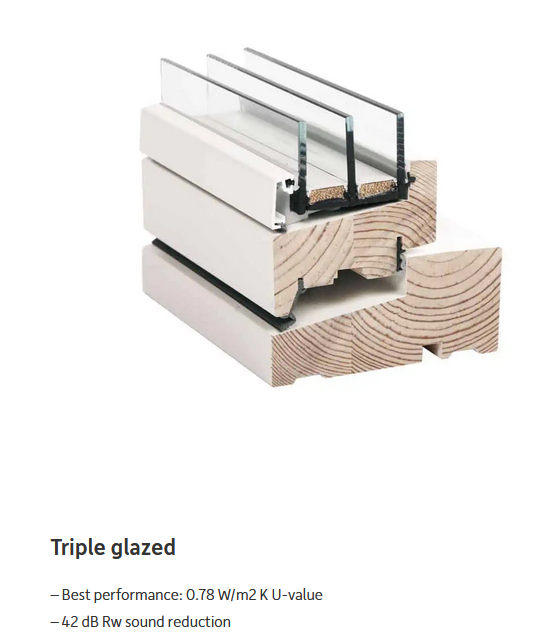
Ok what I can tell you is that I have designed as an SE a few insulated rafts over the years, once you get down to the engineering there is no ideal world, there is a trade off between engineering cost and satisfying the window suppliers " best performance". Building houses is an art where you have to make informed compromises. You have to recognise that if you go for the best value it will dictate everything else you do and that can come at and often nasty hidden cost. If you pair everything down now when doing you basic costing it will come back to bite you. The best advice I can give is to think about who might build this for you and sound out MBC on their caveats on the ground conditions, if you need steels and so on, point loads from the structure etc. MBC are by all accounts good at what they do but they will charge you for every extra! be that funny loads or funny geometry of you house. Also, sound out local Contractors, they may tell you, keep it simple and stupid, spec stuff we can source easily, and we will deliver an air tight structure. Oh and on a light note. If you are a doggy person then leave an unheated bit in the floor so your dog goes there for respite! UFH is not good for dogs!
-
Looks like the party is over....
Gus Potter replied to Beelbeebub's topic in Air Source Heat Pumps (ASHP)
Interesting thread. When I was a young lad I worked at Torness, nuclear. When I went to uni at 40 my degree project submission was on nuclear and compared that with other energy sources. I got an understanding on how the western system is skewed, basically by politics and realised that is a price you pay for democracy. Cf how they work in China, no democracy, their energy policy is driven by engineers with a remit to make as much money as they can for the system, the populase come last. Later I did some design for the decomissioning at Bradwell and I revisited what I had learnt. In summary, UK policy has been driven by totally the wrong people for decades. As someone said earlier, if your vote actually mattered they would take it away from you. Reform UK at the moment. They seem to be the only party that are going to get professionals into sort out out energy market and policy, we have tried everthing else and it has failed. We need to take radical steps to safeguard our energy security not least. -
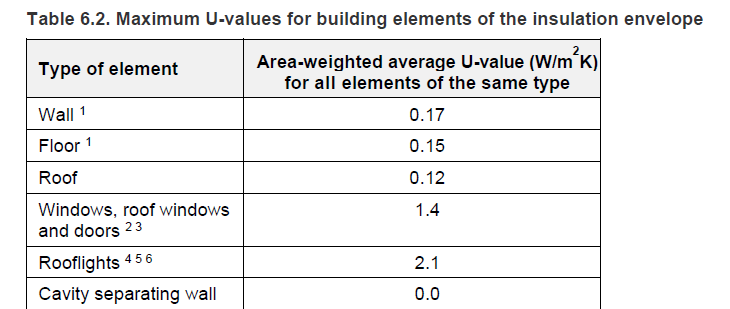
Hi Don. Admire the effort you are putting in, you will be rewarded. Jeremy Harris is an icon on BH, I've learnt a lot from his posts. His spread sheet is a good aid, a great tool to use as a sense check. I've opened up the spread sheet to see what inputs you are using. I do a quick sense check, mainly to see if the numbers look ok and where you are pushing the U values to think.. how much is this going to cost, get a supplier and so on. Your inputs are screen shotted below: So to compare with the Scottish target U values, which are quite stringent but will serve you well if living further down south. The objective of my comment is to get you to think.. how much is this going to cost us to build, get local contractors interested in competing for you job and, can we spend our money in a better way. I wonder, where did you get the values you are using for your inputs? and can you post some details on how you are going to construct the basic elements of the fabric. The U values for the glazing look a bit optomistic. Best to be pragmatic and conservative at this stage to avoid disappointment later.

-
Cavity Gap between new and old slab
Gus Potter replied to Galgt4's topic in House Extensions & Conservatories
Hiya. A few observations. Your temporary propping looks potentially dangerous. There is no bracing to the props and the needles appear to be not able to carry the roof load, never mind any internal floor load. It may be the way the photo is taken, but please, contact your SE tomorrow or NOW, DO NOT believe your BUILDER or BC! Your gable wall is not braced so any shift in the temporary load could shove the gable wall out (all it needs is 25 - 50 mm) and that leads to an excessive / uncontrolled collapse. From the photos I see this look dangerous. The prop and the needle on the right side of your photo will be carrying a lot of load as the lintel over the first floor window will be shedding load towards it. Seriously, please get your SE out to the job as this could be massivley unsafe! BC are NOT Structral Engineers and often won't understand (justifiably) the nuances. You are potentially taking your life and family in your hands here! I don't make such comment lightly. Get your SE to not just check the temporary works but also the building sideways stability in terms of what you are building. Are you sure this is what the SE is telling you and do they know, what you are actually doing on site, and if you have deviated from their design in any way? Please take my advise. Any SE is going to help out here if there is a safety issue. -
Lengthy wood flooring (Dinesen alternatives)
Gus Potter replied to allthatpebbledash's topic in Wood & Laminate Flooring
Yes, treat all this with a big pinch of salt, check their fine print. You must look at their technical spec, the range of moisture content, expansion edge gaps and so on and make sure that the way you want to live fits. In other words, say you bail out to Spain in the winter and turn the heating low.. or rent it out and folk dry their washing! -
Looks like the party is over....
Gus Potter replied to Beelbeebub's topic in Air Source Heat Pumps (ASHP)
I'll try here to give a bit more info. I can see why you may think I'm being a bit rough, but with 40 years experience in the construction industry I've seen stuff, not all good. But some designs are very elegant, clever and you'll often see these cropping up on Build Hub first. What makes a bad designer is someone who thinks they know it all. I don't and one great learning resource for me is Buildhub. As a member of BH you really have access to a lot of clever folk who are innovative. I'll try add some detail. Remember though you can ask ten different designers and you'll get ten different answers. Your job is to work out what best suits you. My own view in design is to provide Clients with information so they can make an informed judgement. If they don't take my advise then that does not mean the job is going to be a disaster! Call this differential settlement. To avoid one big crack we design the building with movement joints in the external walls and try to position these so we get more cracks but smaller ones. Then we need to make sure our internal walls are not introducing stiff points that stop the external walls from moving about. In doing so we have to consider the Architectural constraints as SE's. Then just as we feel we are getting somewhere in the design we have underfloor heating that often needs to be zoned. There is a heirarchy in the design process. We are mixing up all sorts of different materials that repsond in different ways and then asking a builder to execute all of that at a reasonable price while taking cognisance of air tighness and ensuring the cold bridges are built as the design. Now all that is a big ask! This can be achieve but along the way you always find you have to make compromises. There is no "perfect design" in practice. That is one reason I ecourage more loops as it lets us introduce more movement joints in the floor if we need to. This is a really good question and observation. Here is a basic explanation about concrete with some numbers. When designing say a concrete slab, could be a first floor slab or a ground bearing slab. The first thing we want to ensure is that it does not fall down or in the case of a ground floor slab suddenly fail. Call this designing for safety. The next thing is that we want to know how concrete shrinks. There are two main types of shrinkage. When you first pour it we get what's called plastic shrinkage. This is the phase where all the chemical components in the concrete are reacting to "make" the concrete. Now your UFH pipes are in the slab so the plastic shrinkage can start to introduce tensile stress in the UFH pipes at this stage. Next we have drying shrinkage. The concrete dries out and this causes it to shrink more. Again more tensile stress. But in all cases the shrinkage causes "micro cracks" and all these induce tensile stress in the UFH pipes. They can cope with this. Now we know about the above so as concrete designers, even for screeds we ask ourselves.. can we put a number on that.. and yes we can. The starting point is to say lets design our concrete so no cracks exceed 0.3 mm. For say an ICF basement wall where the ground water is at ground level our starting point is 0.2mm. Now for UFH design we can do a big slab / screed with lots of rebar / fibres, to control this shrinkage, or smaller, movement jointed slabs with no reinforcement. This is more practical and achievable given my earlier point. It also means we can use self levelling scredd and so on. To sumarise. Yes you are correct to say that UFH pipes can tolerate shrinkage but they are absolutely not able to tolerate potentially 5 - 15mm of stretching over a localised area. Ok. The surveyor turns up, values the house on the basis that the heating works, they make this clear. You move in and say on day two you find the house is not warm enough. You call someone like @Nickfromwales who really knows his stuff. He crawls over it, provides an evidenced report that says... it does not work, and never will work well enough to comply with the building regs. So as a consumer you have been sold a pup. Nick then says in his report. Ah, to fix this you have a number of options.. none are going to be cheep. You can open up stuff and put in some supplementary radators, but that will mean opening up walls and possibly floors. Then you need to reinstate, make good, alter the boiler plumbing, add more components and find space for the radiators. Or you can start digging up floors to try and find the problem. Now that is going to be expensive! But UFH is becoming more main stream. At some point the RICS and insurers are going to say to their members.. look we really need to be taking this risk into account as we are supposed to be giving professional advice that keeps up with the times. We can't just keep saying to folks and thier lenders.. you have 7 days to report a problem with the heating. I'll stand by my point.. if your heating does not work as sold then expect at least a 5% write down. You counter my points well. Yes, there is more conjestion at the manifolds. As I said earleir there is not perfect solution. But I always come back to this. What buried in the floor is "forever". Once you get the pipes out the floor you can change the controls and boiler mechanics to suit the technology as it develops, or you can just stick with simple stupid. Ok so say you want to run your pipes in cooling mode. In the UK the weather can change rapidly. The thing about the UK is that the sun can be full on, but go 50 miles up the road its a dull day. Your weather compensation is not going to help you here. The solar gain can be rapid, thus you need ability to cool rapidly. This supports my approach towards redundancy. Ok I've had a go at responding to some of your points. Main thing is to have fun at this stage and enjoy the design process. One main reason is that when you have finished you can look back and say quietly to yourself. I made a bloody good job of that! -
Looks like the party is over....
Gus Potter replied to Beelbeebub's topic in Air Source Heat Pumps (ASHP)
Ok it looks like we are still in love but just disagree on some points. That is the great thing about BH. Ah, but as an SE's we design for around 25mm settlement, often differential settlement over a 50 year period. This is a common value for most UK house builders. I design raft ( semi passive) slabs for intitial plastic and drying shrinkage, on a standard smallish house this can be 10 - 15mm. Unless you really know how your SE has designed the slab / foundation then your UFH pipes are vulnerable. You can't have you cake and eat it! To expand. The concrete found / slab moves so it is a "bigger issue". What it means is that you need to know and understand what you are putting your UFH on and account for that. Unless you want to pay a lot more for your underbuilding.. which is nuts. I love the challenge.. design and who is availble to build it. I can design lots of stuff but if the Client can't find someone to build it at a reasonable cost then it's a waste of time. Funnily enough it's not that hard if you look and understand how the structure acts as a whole.. but the big problem in the market is that every designer is acting in isolation. Often they are conservative which drives up the cost of the build. But if they work together then the cost should go down! It's mostly to idiot proof it! The UFH design look great on paper but life on site and a bit of rain makes for potential problems. If you are willing to stand over the Contracotr on site, then yes you may realise the design. No it's actually really high as unless you have put in the pipes yourself, contractors don't give a shit. If they kink the pipe they will just straighten it out so it looks good. You won't see it. That is why you see lots of regular and experienced members saying their UFH works well, as they are aware of the pitfalls and have supervised it the right way. I can tell you I also work with UFH that has been put in by developers and the pipes, radius bend are a complete disaster. But you can't design for low and slow when you then put rugs on the floor! This means you need to up the flow temperature which technically can breach the design values for the rest of the floor finishes, say engineered timber. Do you know how much a large sofa insulates UFH? It's a lot but no one on BH has acounted for this. Ok to complete, see if you get a joint leaking in the middle of the floor.. that is going to cause complete havoc! You can't easliy fix this! As a designer I design from the ground up, I have my SE hat on, my cost hat on and my Architectural hat on. I look at all the variables, how folk want to use the house. You have to have a deep understanding of how all the components fit together, the materials and so on. But as self builders you ain't going to be doing this as your day job. But it is well within you remit to think.. see this stuff I'm installing.. will if still be ok in 15 -50 years time ot more and if not is some surveyor going to come round and knock value off my house. No, as you have to run pipes to it. One of the great things about UFH is that it frees up wall space. So retro fitting a rad can be much harder than you think. Also rads tend to run at a higher temperature.. how are you going to make that work? From my end on the face of it your quick retort sounds good but practically.. just how are you going to execute that? and how much do you think that will cost? Why not just follow my advice and put in an extra loop, redundancey. My gut feeling is I'll never convince you... but hey ho, it's your money, not mine! -
Who has experience with graphene infrared underfloor heating?
Gus Potter replied to JKami84's topic in Underfloor Heating
This is brilliant, great explanation of the fundamentals. -
Good post. Hope my comment help rather than hinder. The law in Scotland is differs from the rest of the UK. Your starting point is to check that the existing tank has been registered with SEPA, your Solicitor should check this, you can also do this yourself. It's worth doing your own due dilligence. Now it gets a bit more complicated / political. The tail pipe seems to extend onto land you don't own and yes this is likely too short for a soak away. Also if you extend then you'll maybe need to discharge more. So putting my crusty Scottish hat on, like Yorkshire farmers, I think, do I smell a rat? Has the seller fallen out with the farmer / owner next door or is it just benign? Why have they not shown how the soakaway works and the location of the drainage field. I suspect that once you delve down you may find that you are exposed risk wise. Push your solicitor to get the the bottom of this. Now some folk may just buy this, maybe get stung. But also look to see if you can do a soakaway in your own land. Make no mistake, when it comes to farmers / rural Scottish sellers most are well clued up and if they can pass the buck to you they will. One way is to think, can I do my own soakaway in my own land and negotiate a discount on the price.
-
Asking builder for steelwork invoice?
Gus Potter replied to NCXo82ike's topic in General Self Build & DIY Discussion
Apologise for being a bit rough. Had not recognised your previous posts. That's good, the contract will have a contingency? Maybe let this one slide in the interests of goodwill, but record. If it becomes a pattern where the goodwill is only one way street then post and you get some ideas. All the best and hope it keeps, from the sound of it, going well. -
Looks like the party is over....
Gus Potter replied to Beelbeebub's topic in Air Source Heat Pumps (ASHP)
Yes. If I've not articulated well that then the fault lies at my end. I've copied your post below in plain text and comment in line. I'll have a go at the good points you make. Main thing is that BH is a place where you can discuss without having to watch every P and Q. To quote you: You've said stuff like this a few times and everytime I try to understand what you are getting at but I'm afriad I'm not really getting your point. In case it doesn't come across in the way I indend, the below is not having a go, just trying to understand your argument. Gus: You're welcome to question me, I don't see it as you "having a go" rather just entering into a conversation, a design discussion. If we agreed all the time then that does not bode well in terms of good design. It's OK to disagree! BH is a place where you can explore ideas and sometimes these can be very different view points. Without the mods on BH this wouldn't happen so thanks to them. The pipes buried in concrete (at least in low energy houses) are going to be able to cope with almost anything thrown at them and will last a very very long time.* Agree with the first bit. I did my first UFH system about 30 years ago and from what I hear the pipes have maintained their integrity. I also look after another self build (circa 30 years) house with a similar system and have not observed pipe material degredation, say like Upvc that can deteriorate under UV light. The second part.. you need to be careful as if you don't have good filters / competent maintenance then you can introduce "gunk" i.e bits of rust, a flake off a cast pump that can just put a spanner in the works. And that is why you'll often see me arguing for more loops. If one gets totally buggered then you still have a fall back. A lot of what we discuss here is how to get the maximum efficiency out of a system and the theme here to achieve that is minimum controls, low water temperature, system on most of the time with weather compensation (a technology that has been standard in all heating systems in other countries for literally decades). Agree with the headline points you make. Your first point.. maximum efficiency, I agree.. but efficiency has to be measured over say 50 years. You have to recognise that over time that can drop off a bit. Yes low flow temperatures, this encourages boilers to work in condensation mode. Minimum controls.. totally agree.. but you have to have a flexible loops in the floor which can, as you best guess cope with controls that migh be developed in the future. Weather compensation. Yes that has been around for a while, but I see fundamental problem with this. The first is the cost of updating the software, much is now an app on your phone! The second is that young folk with busy lives don't have the time to fanny about with it. We live in the UK! Our weather can change rapidly , four seasons in one day..where in many other countries it is often more predictable. The response time of UFH makes weather compensation less reliable. Now you may live in a benign part of the UK but there a lots of folk that don't. Even if you add lots of fancy controls on top of the basic system, the fundamentals of the system are such that you should be able to remove those controls and still get a very functional system. Agree. This is the point I've been putting forward, but I've maybe not made it that well. To to reiterate. Build in redundancy in the UFH pipes in the floor and that gives you flexibility as technology changes in the future.. it's called future proofing. Similarly, if the heat demand of the house increases then worst case you need to up the flow temperature in the pipes to compensate. Again, most of the designs talked about here for new builds are based on very low temperature heating. If you can output sufficient heat with the water in the pipes flowing at less than 30oC then if some cataclysimic climate change happened and suddenly we were all living in -20C then upping the temperature in the pipes to 40-45C should still be able to adequately heat the house. You are talking sense here! Yes I have experience of this in the past. The average outside temperature was about minus 20 deg for three days in a row, that was preceeded by a week or so of below zero so things got well cold. Solution was to bump up the flow temprature as you say. Now some may say.. oh it will cuase havoc with our timber floor finishes. I doesn't as generaly in the autumn the moisture content drops! In the summer often you have the heating turned off. Obviously if people want to extend the house then any extension would need work, but thats no real difference to any other system. If you have a low and slow design the system shouldn't care too much where the walls are if they needed to be moved. I do think that any 'smart' stuff added to a house should always be removable while maintaining the basic function of the house. Maybe you lose convenience or a little efficiency, but things should still work. Again, in the vast majority of cases, the systems discussed here are of the type that could be removed without significantly reducing the basic function of the house. Therefore, it is easy to offer any future buyer of the property the option to have all smart systems removed before they complete any purchase. So these shouldn't have a negative impact on the price of the property. More sense! Smaret sytems. I have two zones in my own house. One zone is radiators, the other UFH. I control these with the Hive sytem.. I think most folk can cope with that. What they can't cope with is lots of home automation. * Plastic pipes don't corrode and UFH systems should have much less metal in them overall reducing corrosion of other parts and build up of gunk. They can be flushed if there is a problem. Even in the unlikely event of the pipes developing a problem, retro fitting radiators or even electric heating to affected rooms would be unlikely to dramatically change the sale price of the house. Ah.. if you have to retro fit rads that is going to be expensive.. My own house is designed with areas of glass. there is not that much room to retro fit rads.. that is the beaty of UFH as it keeps the wall clear. Also retro fiting rads can be very expensive.. how to you get the pipes to the rads? I do see a concern about whether rafts can be relied on to last as long as traditional foundations, but this has nothing to do with UFH. This is an interesting question. The first thing I would say is that common to popular belief SE's / insulated raft specialist that do this kind of design in the evolving self build market don't rush out to pick faults in others designs, or claim to be the best. A good example is Advanced Foundation Technology (AFD) and Tanners in Ireland. I have been deisgning rafts for a long time, decades, so kind of know what I'm doing. In summary though there is a time and a place for a raft foundation. Sometimes the ground moves and the last thing you want is a strip foundation. A well desinged raft can perofrm just as well as a strip foundation if noit better. The big and evolving challenge for me as a raft designer is to deal with the thermal bridging, how and where you set up the UFH. Do you integrate in the "raft" or put it in say the screed. Each site is often different so you need to try and sort that while making the raft structurally ok. Much of the time it comes down to the way self builders are set up and the sequence of works. This actually often drives the desing cost wise. To finish. Hope the above helps, if not keep asking. -
Looks like the party is over....
Gus Potter replied to Beelbeebub's topic in Air Source Heat Pumps (ASHP)
I wish BH had a spell checker. I just can't be arsed checking my dyslexia bit and spelling when I'm writing about stuff as a hobby. For all, my grammer and spelling may be a bit off when I'm off duty.. but neglect what I'm saying at your peril. -
Looks like the party is over....
Gus Potter replied to Beelbeebub's topic in Air Source Heat Pumps (ASHP)
Hi all. The party is over indeed. I'm going to lay this on thick as it's time. I've picked UFH first but will turn to PV in another post. But to wet your aptetite! I've argued on this forum for a long time that underfloor heating is the bees knees. I've done this and worn the tee shirt. Long before most of you were in short pants. So if any of you can tell me how you installed and designed an UFH 22 years ago on a self build then I'm all ears! I would love to hear from you how we all flew by the seat of our pants at that time. I do hope that there may be one person. Many think they have invented the UFH wheel.. well you have not! The Scandinavians were at long time before the Brits.. I've made the case for simplicity and the need for UFH (the pipes in the slabs) to last the lifetime of the building, the cost of maintenance, reacting to how technology will evolve in terms of boilers etc. BUT what is in the concrete floor is a FIXED ASSET! Just like the walls and the roof! I also happen to be an SE who has actually been designing these slabs, insulated rafts to work with UFH for decades. So If there are any on BH that want to have a serious structural discussion with me then I would welcome that. You can ponce about with your weather compensation as much as you like, the flow rates.. your controls and buffering.. but see.. your heating has to work for 50 years so until you can make that arguement fdor life time performance, then I'll write down the value of your house if the pipes in the floor are not designed to adapt. SO GET A GRIP! I can and estate agents will also take a dim viw on a house value! Now some may just want to have a house that is a hobby, that is fine and I'm ok with that. But actually that may also make your house unsellable! Seriously.. you need to WAKE UP and smell the coffee, surveyors et al are clocking this so your hobby might come at an unexpected expense! Don't trust me. maybe ask a valuer? What I'm not OK with- if your house gets a loss of value as you have played with (and it is playing) home automation / complex UFH controls then that is a price you pay. But if you try and sell your house to some unexpecting young couple.. you can f... off., and I'm going to go hard on you! You are not going to sell your house to my kids! Advance Foundation technolgy have grasped some of it, Tanners in Ireland are competant SE's but no one has actually put all the bits together! The thing for me is that I want to design and build stuff that lasts, that delivers profit for self builders and that encourages young folk to enter the market, that benefits society. It's not a big ask? But as a designer with lots of real life experience I want to help young folk see the wood for the trees. I want them to get on the self build ladder on the self build ladder, I did it on a shoe string and that is why I keep pushing the simple stupid... as that means you can get a wider coice of Contractors.. which drives cost down. That is why I often push against the UFH complex thing and other stuff. It's also basically bonkers, but a lot of tecky folk on BH can'r see beyond 5 years.. So in summary I would like to see a lot of experienced folk on BH saying.. this works and if you are young folk embarking on a self build, on a limited budget this can work for you to. OK this is not going to go down well. But the life and future of BH is in the young folk, that are strapped for cash.. This for me and is why I'm still here.. I want to help and this is my hobby. To enthuse young folk, we need to solve problems, use our experience to say this can be not as hard as you think, if you take our advice, but at the same time give a bit of tough love if need be. PV is following much the same cycle.. -
Asking builder for steelwork invoice?
Gus Potter replied to NCXo82ike's topic in General Self Build & DIY Discussion
Nick. I made my last post as I got a feeling that something was not right, it smells bad to me. I think why did NCX.. come on BH in the first place with some random generated name? Yes, we have not seen the drawings, the steelwork may be a small element. So here is a thing. Say we can save NCX five grand or potentially a lot more. and then say.. you got lots of help on BH so make a donation of 20%.. -
Installation of a Clenviro STP In a High Water Table
Gus Potter replied to Arrenite's topic in Waste & Sewerage
Each to their own Russell. Pesonally it looks like you have gone well over the score. Never mind so long as it works.. that is the main thing. -
Asking builder for steelwork invoice?
Gus Potter replied to NCXo82ike's topic in General Self Build & DIY Discussion
Ah, I'm going to take wide view on this, a bit brutal at times but I've put my claims hat on and explore if you have grounds for pushing back. I'm going to make some assumptions, but these you can explore yourself / mull over. First thing is I'm assuming you are a domestic Client, you have an element of protection under the consumer protection act. If your builder has worded their contract unfairly then they can be a bit stuffed as the law in the UK is more supportive than not. Next. Did your drawings show an opening with some steel? As you are a domestic Client and probably don't have; detailed drawings, a QS, probably not a recognised building contract then you still have a bit of protection as again.. your are a domestic Client. There is an argument in law that says.. as a domestic Client you can reasonably expect that a competant builder should be able to account for all the work even if it's not shown on the drawings. I do this as a day job (SE / designer and while we can be nice we don't take pish from folk when they step over the mark) and that includes a clause that says.. not every bit of (down to the last nails etc) the design is shown in detail. But even if that clause is not there you still have protection! OK that's the legal kind of bit. But how to you go about ascertaining if the builder has charged you too much? The steel cost may vary a bit but the big costs lies in how you tie the steels back to the building and any foundations below.. these bits can be very labour intensive and that is where the real cost lies. This cost can far outweigh an increase in steel weight. To dispute this you need to be able to look at these ancilliary bits and compare with what it would be a reasonable expectation from a competant builder. I'm just letting you know what has worked for me in the past when representing Clients when questioning builders costs. Now that is a lot of money when you look at the way it's presented! For all DIY folk.. the amount of money is relative in my book, I started out in life a bit skint so every pound was a prisoner. So I wonder is ( £28k + 10k ) plus vat in the grand scheme of things something you can live with or is it really going to hurt you? Do you feel you are getting ripped off? or do you feel that your builder in general has done a good job.. there is good will on all sides and it might not be worth not rocking the boat? Now is the time to maybe say to your builder.. and tie them down to their guarantee for the work. There are a number of ways of skinning this cat! If you feel you are getting ripped off then the first thing is to ask.. how much by and how do you go about getting a reduction in the invoice? Well, you have to be brutal if you can. Get them to finish as much as they can, for the least payment, then argue about the final payment. There are no friends in the desert!

