


Gus Potter
-
Posts
2383 -
Joined
-
Last visited
-
Days Won
34
Everything posted by Gus Potter
-
You make a good point. An oak frame building is constructed from green oak. I have a farmer pal who bought a log cabin kit house to rent out out as part of the farm business. The oak frames shrink a bit.. the log cabins.. we are talking 50 - 100mm! I'm fine designing this way provided you design for the movement. This is very much different from what we have been discussing where we want to have strict control over shrinkage. As an SE / designer we need to understand how the different materials move / shrink / expand as it can have a big impact on how we connect things together. For the self build market we need to recognise that self builders often don't get economy of scale like the big builders when buying stuff. The economy of scale also applies to hard / complex details and the labour cost to execute these. On a big job with many houses you work with the Contractor on a template, resolve the buildability problems. In other words the folk on site practice on one house and then get faster at it. But you don't have this luxury on a self build. @saveasteading is into lean and cost effective design. The original barn steel frame is having to pay it's way, no free lunch for it! I've seen some posts where folk in England are converting agricultural buildings to homes. The planners suddenly think they are SE's / designers and insist that the steel frame of the barn is a structural element before they can approve. Now this can be done and often a design case can be made that satisfies the planners and the Clients design intent. The basic appoach is to analyse the existing agricultural frame, which 99% of the time fails under the more onerous domestic loadings, then transfer the excess vertical and sideways wind loads to the new timber frame shell inside and connect it all together. Good to have you on board and good comment. There are things you can do on site when drying timber, on the FLAT, not vertically. It takes time but you stack the timber, batten it to let the air through. Then every week you lift the timber off the top. Turn it up the other way and turn it end for end and put it on the bottom of the pile. Do this with every second row vetically , then alternate. The way this works is that as the timber wants to bow and twist it is resisted by the weight of the pile. You can add extra weight to the top of the pile by stacking some concrete blocks or anything heavy that distributes an even load.
-
Contractor drilled through Electrical Cable
Gus Potter replied to Jothetaxi's topic in Electrics - Other
John, your experience is showing, admire, one sentence only! Take John's advice and see how it pans out. The builder may just chuck in the towel. At the end of the day they knew there was a cable somewhere, the depth is a bit of a moot point. -
Internal insulation for block cavity walls
Gus Potter replied to Julestools's topic in Heat Insulation
Hiya @Julestools interesting thread and good questions. The following is a bit of back to basics, for the less initiated, maybe new folk to Build Hub. This is a very rough run down but intended to introduce folk to something that may be less familiar. When we insulate walls we want to make sure that any water that condenses in the wall can be expelled outwards or inwards before it causes any damage. When you cook or breath out you expel "water gas". This does no harm. The harm arises when the water gas turns to a liquid.. water droplets. Mould, dry rot, wet rot, most bugs / fungie need liquid water. At the bottom of a wall we often see damage due to freezing water (spalling of bricks / render) when it becomes excessive. For the water gas to turn to a liquid it needs to hit what we call the dew point. This varies depending on how much water gas is in the air and the air temperature. For example if you live in the tropics the warmer air can hold much more water gas, lower the air temperature a little and you get heavy rain. In the UK it works the same way, but a bit less dramatic... but the UK weather is it's own animal, I'm not covering this just now. If you have a 1970's brick cavity wall to start with with say 15mm of plaster on the inside and roughcast on the outside then the dew point is likely on the inside of the outer leaf of masonry, the obvious cold surface. The cavities are often drafty so lots of water gas will get vented. You can analyse this but in most UK weather conditions the water gas condenses on the inside of the outer leaf of masonry. Any condensation was designed to run down the inside of the outer leaf. In actual fact in the 1970's there was no condensation "analysis" as we now know it.. it just worked! These houses were designed based on the knowledge at the time and proven to work in most cases. If left alone they will continue to perform as originally designed, although not meet our modern insulation expectations. Cavities at the time had residual air circulation. But now we want to make them warmer! To get a handle on this it's often a good idea to research what the designer at the time was thinking and what knowledge they had at their disposal. I love this stuff! Miss Marple! @Julestools "The cavities were filled with a mineral wool type fluff in the 90's." That has two immediate knock on effects. The natural / residual air circulation in the cavity is blocked off. The cavity insulation moved the dew point inwards, so you no longer have the really cold surface of the inside of the outer leaf of wall acting as the dew point surface. The cavity wall insulation installers often sold this as they say the insulation will "wick" the water away safely downwards and not come inwards! Make of that statement what you will as adults. @Julestools " I'd love to hear your thoughts and knowledge on this approach to internallly insulating cavity walls." You are fortunate not to have any timber ( floor joists say) near the bottom of the wall. If so it becomes very tricky as the ends of the joists are more prone to getting wet. For all, BE VERY CAREFUL IF YOU HAVE TIMBER IN THE WALL! You want to improve the U value of the wall. You insulate on the inside. You shift the dew point further inwards. Qualitively, if you improve it a lot you will shift the dew point further inwards, maybe even to the inside of the inner leaf or in it. Don't forget.. the calculations in the design codes are theoretical.. we need to apply common sense, this is most important! Given the above lets take a pragmatic view. The first objective is to control the humidity in the house. Bathrooms and shower rooms need extra ventilation.. we know that. Next question is... we can select breathable insulation.. but the critical areas are bathrooms, kitchens. Folk paint them and tile walls. Say you sell the house or some really "keen" BC officer pulls you up as they say someone may use the wrong paint on the walls.. it's a fair question. Putting my SE hat on.. it is important! In some ways I think your are over thinking this! The first objective is if you are going to create excessive water gas then you need to expel that as soon as you can, but you need to have a certain humidity in the house to stop your sinuces playing up. A house that is too dry is a nightmare! In the round, if you are air tight, particularly in the wet areas, have good room ventilation then it may work. If you have ANY timber in the dew point zone then that is trouble. Yes to be CLEAR if you insulate on the inside you WILL shift the dew point inwards. Look to see what you could damage if you do this. To summarise. There is no point in trying to model the whole house, you'll drive yourself nuts! Just have a think about how a basic wall might work the way you are proposing, be conservative at this stage. Make sure you have no timber in places where water may condense. Make sure you can stop moist air by way of ventilation getting into the walls in the first place. I'm a desinger and SE in my day job.. there is a place for calculations and a time for pragmatism when dealing with older structures. @Julestools hope this helps, check you are spending your cash in the best way! It may be that you are not seeing the woods for the trees? To make a point.. if someone paints the walls with the wrong paint then all you efforts are moot. -
That is a bold statement to make! The design of the links can be complex, depends on the level of shear stress, usually in and around the pile heads. I won't comment further as I don't know what loads are on the beams / piles. Plus one to that, good advice. This is what often happens, sometimes a quick phone call between the engineers can sort it all out. Oh, it's ok to design to BS 8110, so long as you are aware of any parts of the more modern Eurocode that superceed the older BS 8110 code.
-
Internal insulation for block cavity walls
Gus Potter replied to Julestools's topic in Heat Insulation
I assume you have a suspended timber ground floor with timber joists. Take a step back and check that what you are doing will not compromise these joist ends or any joist running parallel to the external wall. If so by how much and what are the risks. The basics of timber preservation are; keep it in the dark, cold and with plenty air circulation (drafty!). Once you get a handle on this then the rest of the insulation strategy / air tightness is based around that. -
outer hebrides it seemed like a good idea at the time…
Gus Potter replied to Chris HB's topic in Introduce Yourself
I read your blog a while back, onwards and upwards, well done!- 56 replies
-
- 1
-

-
- western isles
- isle of lewis
- (and 2 more)
-
Enjoy your holiday., but see you are still monitoring comments. So in that context hope this helps. Agree. I've put my day job hat on and thought, how would I go about sorting this out, bring discipline to the process? You mention that you are keen to avoid stressing your personal set up, that is a material consideration and probably the most important one. The rest is just building mechanics, how much it's going to cost to build and recognising that at times you need to make reasoned design compromises in places and then compensate where it is easy to do so. As I've said before I like your design, not everyone will but beauty is in the eye.. Now as a word of encouragement, you are not the first to experience this, and you won't be the last! If I was going to tackle something like this I would probably just spend half a day, may take two goes at this, say a day, listening to your journey, trying to understand what you actually want from the build, how you got to where you are. Often when I go to an initial site concept design meeting I try, insist, that all parties are there. So that would be you and your partner. This works well as I have the "day job" advantage, if there are two of you then less chance something gets missed, questions not asked by you. I would ask questions as prompts, let you talk and from that it lets me build a picture of your basic requirements, the things that really matter to you. The conversation needs to be general, technical stuff comes later. One of the things I do it to assess what time you have, your skills, where you lack them, where you need help, where you can learn and help yourself and how that help gets delivered. Now all that sounds wishy washy and a bit woke, but once I get a handle on your capability and situation it lets me put together a costed design brief after figuring out what needs to be done to bring order to the project. Yes you don't "want to go back to the beginning". The next step is to look at what you have, what is useful, viable, what relationships can be salvaged and what can't. What do you need to do to get BC approval, an approximate build cost. A bill of quantities (BOQ) is a different animal. @Tony L I think you'll get there in the end so keep your head up! For all, this is worth a look at as there is often confusion about what all this means. The following is a bit of a summary, not perfect mind! Often self builders on BH will employ an Architect / designer to get planning permission. The same will produce a set of drawings with sufficient detail, thermal calculations and the like to get BC approval and many use these drawings as the "construction drawings". Sometimes it's fine bit other times it leads to dispute about money, lack of fit up on site, changes made by the builder (as they go off piste) that compromise the structural design big time. Some divide the design into work packages, say the foundations, a timber frame, but the interfaces never get thought through, again money and time is lost as these interfaces never get properly designed. The Client is left disappointed as they can see they are not getting what they think they are paying for. Client may then go back to the designer and might say, your drawings are crap, the designer then says, I was only contracted to produce sufficient info for BC approval, and I have excercised reasonable skill and care in the sense that a competent builder should be able to fill in the gaps, my drawings are not detailed construction drawings, see my terms and conditions!. Cost is not a primary consideration, safety is, no one can run about designing stuff that has no chance of getting built safely! The next step up is to produce a full set of detailed construction drawings. This is kind of the level that @Tony L is going into at the moment. From that you can generate a respectable bill of quantities (BOQ), on Tony's job it will be lenghty, cost a fair bit and this falls much within the remit of a Quantity Surveyor. There is no point in spending loads on a comprehensive BOQ unless that is coupled with a recognised form of building contract that eveyone signs up to., or at least something similar, a bespoke contract, risky though! Few domestic self build Clients do this, unless it's a mansion and you have loads of money! So say you have a set of construction drawings, a BOQ and a recognised building contract. You now need someone to Admimister the contract. They may or may not be the principle designer. Story for another day. But the new PD rules now require in essence a much more hands on approach to what is going on on site and ensuring that the builders / Client does not go off and do there own thing.. which they often do! The risk for the administrator is that if you authorise a payment to the builder and it turns out you have authorised too much then you are on the hook and liable. Most adminsitrators will authorise payment but caveat, from what we can see visually the works are at this stage. They do not certify the quality or accuracy of the work for example. This is a key thing. What is NOT offered it seems, is what we would call a traditional Clerk of works service. A traditional Clerk of works is on site pretty much all the time and they are responsible for standing over the builder at every stage, absolutely nothing gets covered up.. every thing is checked for workmanship, level, setting out and consitency for example. My own PI insurance covers me for SE design, Architectural design and contract admin, it explicitly says that Clerk of works function is excluded, and for good reason.
- 77 replies
-
- 1
-
-
- flat roof
- condensation
- (and 2 more)
-
Tony, what's done is done, anyway, there are occasions where you may for one reason or another needed to get some sub structure in place, it's called speculative desgn. That's actually ok! You have an outside envelope into which you need to fit structure, the external appearance and materials have been established, happens all the time so take that as a positive. The first thing and I'll say again, what you are doing design wise is really hard especially the detailing! This cavity tray detail for example does not work, not least as the piece of masonry on the inner leaf will just come loose when you bed the cill, probably before that, there is no insulation under the cill. The shaped insulation is not achievable. What will happen is that you will end up paying for something that does not get delivered on site. I've looked over your thread and conclude. You have set you heart on the outside, it looks great. You have an established plan for the general internal layout and finish, again good! But you are struggling with the structure, how you insulate that, do the interfaces work thermally but also provide the lateral structural restaint and connections to the main structure. Now I've distilled your probem down. So all of a sudden that looks a bit more hopeful! What has happened is that as you have learnt more about the bit inbetween the outside and the inside you are discovering that it is hard and often I think the case here with you is.. you can't see the wood for the trees. This is not uncommon so don't take this as bad. It happens to many people, even those who do it as a day job! You are not alone! Consider trying to find someone who has the skills to review your design in the whole, identify a way forward that is buildable, knock heads together when required. That includes knocking you into shape. Many self builders are stubborn! That is ok at times but from time to time it can be to their own detriment. They pay professionals, but only from the neck down! Someone like this will work with you very closely and explain where your ideas are good and where you are going wrong. At the end of the day it's you paying the wage, it does work! Now that will cost you but for that you get not least, an advocate, a friend and someone on your side. In my experience the fee you pay is often offset by the savings made and enjoyment you get when someone says.. you are on the right track, always have been, but we need to add this critical bit. I'll leave these thoughts with you.


-
Post overlapping here Tony. I'm trying to warn you of the challenges you face. I have not considered your internal ventilation, only that the structure is going to work insulation and ventilation wise. The fire protection is always a challenge. Your house is only two stories and detached so pretty benign. In your case so long as any roof steels are not contributing to the stability of a floor or structural load bearing wall they may only need minimal protection. Talk to your SE and you may find it all works boxed in by ordinary plasterboard and buried in the roof dpeth.
-
Hi Tony. I can see you are putting in a lot of effort into this. I appreciate that your teck may have not "captured" the complexity, but how much are you paying? You get what you pay for to some extent. You sound like a hands on person so if you have just paid you technician from the neck down then what do you expect? This is a hard thing to learn, it takes years. To provide a bit of context. I was a building Contractor for 20 years, went to uni at the age of 40 to become an SE did training and now I've progressed to the point where I'm confident / competent in both SE, Architectural design, whats buildable and cost aware. That is a 40 year journey and every day is a schoolday for me. BH is a great resource. There are folk like you proposing this kind of innovative design. Your sketchup model looks brillaint! It's not that hard if you go about it in the right way. Your SE sounds experienced, pragmatic, some SE's are actually sympathetic! We are not all horrible, sometimes we dish out tough love when it's clear that is what is required to give the Client a bit of a jolt and protect their interests. So what to do? If you want to keep the rest of the team on board then in your own head go back to basics. Bluntly you can probably fix it by reconfiguring what is going on under the bonnet. The planners have no interest in the structure, insulation or what's going on inside the building. All thye are interested in is what it looks like from the outside. If you increase the occupancy that is material as it could impact on the parking provision, but all we are looking at here is seeking a buildable, cost effective design that is not going to fail due to say condensation, water ingress etc. You asked about cold formed steel joists. You are right they can be a bit of wicked cold bridge, but on a warm roof you keep them on the warm side of the insulation. Dormer roofs tend not to be that big span wise. SE wise we need to check the bearing on the dormer face. But here we only need about 50 - 60 mm, this is driven by the fixing requirement into timber to get enough timber edge distance. The bearing strees does not govern usually on a msdest dormer roof. You can get some insulation in to stop the ends of the joists getting cold. Also the cold formed joists may be only 1.2 -1.5mm thick. So while the rate of heat transfer in steel may be much more than a timber if you look at an exposed timber joist end which may be 45mm thick cf a 1.5 mm bit of steel exposed is not as bad as you think. Most folk think about big universal steel beams.. but here we are using thin steels that have a small expose cross section.. it's ecclectic but part of the art of design. I think you can and you need to find a diplomatic way of doing so. It's just a move from the concept to detailed design stage after all! Detailed desin always uncovers unexpected cost elements, design is an itterative process. I pointed out why I think you are going to suffer, all your are doing is developing the design and details as you learn about the best and most cost effective way of achieving what you want.
-
By all means do. I suspect that my post has not floated your boat! Time will tell though. If you have the will to live with this then keep posting your details as interested in how you are going to overcome the interface details and ventilation challenges that lie ahead for you for the different types of roof construction. I'll say again. What you are doing is very hard. Some of your detail shows what we call a hybrid roof. You have to be very careful here as others have warned. If you shift the dew point to the wrong side you are in trouble and BC will knock you back not least. This detail looks simple as a general detail, but you have to ventilate the cavity area under the sloping portion. Have a go at detailing that out, try and work out how much that is going to cost build wise, what happens at the transition zone. There is no point in drawing the easy cross sections, the devil and cost comes at the interfaces. Be alert to this! I'm not trying to pour cold water on your efforts, you have done well, I'm warning you that unless you have loads of dosh, a huge amount of patience in finding a builder.. it ain't going to happen!
-
Very risky! If you have enough money to lose and the time to do it then fine. It's a big learning curve. If you have that much money to lose then why not pay someone that carries PI insurance and use the same float to take risks that you are more familiar with, more certain return, play to your own skills. To put this into context. A skilled trades person may charge £250-300 a day. You only need to save two weeks by taking time to understand what you want to build and that will go a long way towards covering the conveyancing. Self building / extending economically is about playing to your strengths, not taking silly risks where you could lose your shirt.
-
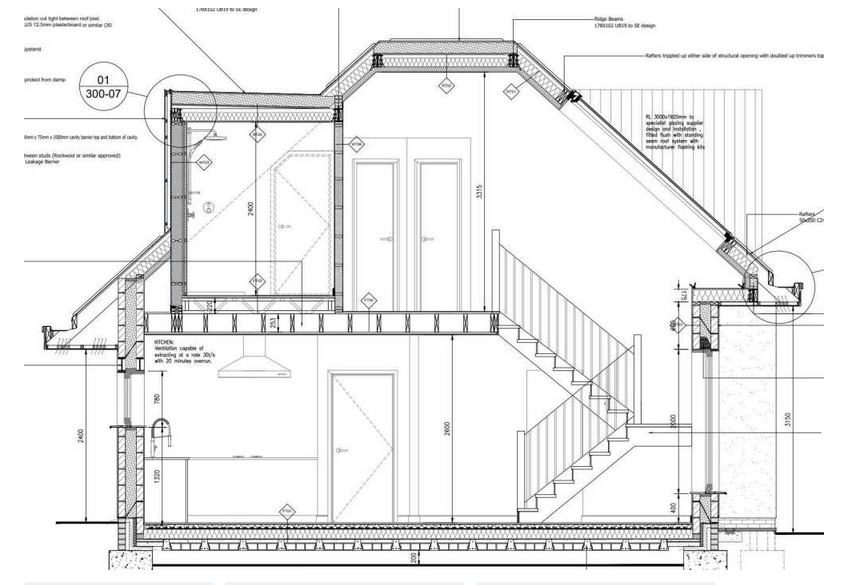
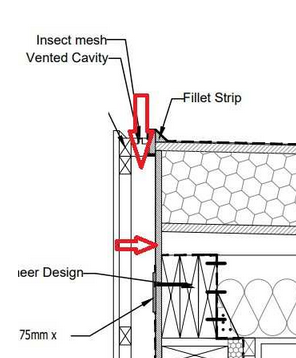
Critical and non negotiable design constraint. Very helpful intro as it helps folk like me visualise quickly. Tony. I looked at this and I think what you are trying to do is too hard. To design something like this is really at the high end of technical design ability, it takes years of experience and a wide range of skills. I've thought, could I technically make this work including the SE stuff. I doubt it. Anyway, it's never going to get built as drawn unless you have a huge amount of money, an experienced Clerk of works and you can find a Contractor that is minded to do it and has the skills required. It is in my mind not going to happen and you will be chucking your money down the drain and experience huge frustation as that happens. To take this on as a designer and warranty my design I would be looking for a fair bit of the design fee up front. It's tough love but I think you are likely on a hiding to nothing. I love taking on challenging design but this one in it's current form is not going to work. The design insulation envelope and being able to achieve ventilation where you need it is in my view fundamentally flawed. This does not fly.. the rain will fall straight into the the cavity. The fundamental and most importantly, the practical installation / ventilation details are missing and these are the key elements in getting the whole thing to work. To draw well at this stage you need to know where the hard parts are, you can't kick them down the road and hope it will all sort itself out later! To summarise. There have been lots of useful and helpful suggestions from BH folk but I think you need to go back to the drawing board. First sit down with your SE and ask what structure do we need and check to see that you have enough slack to satisfy the planning constraints and the internal clearance for stairs, ventilation at window heads and maybe fire escape / protection for example. Then look at your roof coverings, can you simplify (make it more buildable) while not compromising the Architectural intent. Where the standing seem zinc needs ventilation and how you do that, how you go about detailng basic interfaces, say between the flat roof and the pitched zinc. These are very hard to do properly, often you need to make compromises using engineering and technical judgement, then justify to say BC. Once you get a handle on that then you can look at the insulation. You mentioned the joist depth on the dormer. From time to time if I need less depth I just swap the timber for a cold formed Cee section, can shave off 50mm depth at a stroke. But this is the least of your worries! Please take a first step back and ask yourself, can I get someone to build this and at what cost. Don't feel embarressed, you have had a good go at you first concept design, got your head around how you insulate, you have learnt a lot.. It's OK to go back and review the whole design as the second time you have a much deeper understanding of the issues. My gut feeling is that if you go back to the drawing board and first principles you'll end up with a much better house, not compromise the Architectural intent and maybe at the same cost in the round, with less grief from a Contractor. You may be reluctant but ask yourself, say if I go back to the beginning, how much will that cost me compared with blindly trying to make what you have work, if your nature is to be stubborn then there is a price to pay for that privilage.
-
Floor slab insulation. Test my logic please?
Gus Potter replied to saveasteading's topic in Barn Conversions
On my phone but quickly. He went to Strathallan so his weight may be under estimated.. Yes technically the screed will crack further. The screed had no residual tensile strength due to the UFH pipes. So it really works in direct beating only. On balance the packaging is likely not suitable. The screed has a small aggregate and thus aggregate interlock is less reliable. But the shrinkage still remains. -
It does to the lay person.. but to the electronically and folk minded to treat their heating system as a hobby it's not.
-
This is the key safety control. That needs to be coupled with a safety device that stops the cold feed exceeding the safe working load of the cylinder and an expansion vessel if need be. Ideally the flow pressure regulator should be set to say 2/3 of the safe working load top to prevent over stress in the rest of the system. In my view you can play with your electronic controls as much as you like, as they are not safety critical. As always,I mention that at some point you may not be able to maintain this, say you go senile! At some point you may wish to sell the house and if you want to maintain the asset value you'll have to make a case for that. Remember to earth everything electronically.
-
Floor slab insulation. Test my logic please?
Gus Potter replied to saveasteading's topic in Barn Conversions
Interesting! In SE terms. For fun let's take a grand piano. That weighs about 550 kg and has three legs. Thus about, say 183 kg per leg. A "20 -22 stone" rugby prop can in the modern fast game can be 110 kg, but say the team just needs dead weight, so take the prop as 140 kg. Not far off the load from a grand piano leg. But the piano does not walk about, the prop does so lets add a bit of dynamic load to their foot fall. Say 20% thus 1.2* 140kg = 168kg. And all of a sudden we realise that locally on a screed a big lad has something to say and a point to make! Welcome @rjclark71 to BH! To delve into @saveasteading question do we put EPS on top or below the PIR? In this case we are looking at a ground bearing slab that is not supported by (at the edges) or transferring load to the perimeter foundations. There is a cement based screed with underfloor heating pipes (UFH) embeded in it. Now we have a point load ( a piano has a larger foot than a shoe, take the shoe heal as this load is more concentrated. The load from the heal of the shoe gets spread out at roughly 45 degrees down through the screed and onto the first layer of insulation. It then gets spread more down through the insulation thickness. Therefore the compressive stress gets less the deeper you go as the load is spread out more. In conclusion it makes sense to put the weaker insulation on the bottom as the loads are more distributed. -
The basic architect questions thread
Gus Potter replied to SilverShadow's topic in Surveyors & Architects
Onwards and upwards for you this year then! Main thing is to try an have fun, enjoy the design process. Keep us all posted on BH as you go as everyone learns from your journey. -
The basic architect questions thread
Gus Potter replied to SilverShadow's topic in Surveyors & Architects
Hope you had a fun time toooo! These sketch drawings are very good! Well done. In terms of the daylight to next door you're allowed a certain reduction before it becomes material. It's somewhere in the docs I think. The overshaddowing of the neighbours doesn't seem to be much of an issue, yet to see the rear elevation, I suspect that may well be ok. Your house is significanlty lower. This is a good observation. But the houses are still well separated and you're proposed new roof still significantly lower. If you project a roof line of the terrace down the hill what you are proposing is stil below that. If push comes to shove you could set back the face of the extension a little and / or tweak the roof so the gutter is a little lower than the main house, makes it more subservient / less mass. Usually 1.0m is accepted but I would go for 500mm if pressed as a first offer. Don't offer this up to start with, stick to what you want. If you can sketch like this then have you thought about doing you own scaled hand drawings and submitting a planning application under your own steam? This at least will let you see, what if any, concerns the planners may have and leaves you in full control over the design process at your end. If you do your own application then there is other stuff you need to submit, but that applies in all cases. Here is a quick, but not comprehensive list of things that help build a planning application like this. 1/ A site location plan, OS or say from UK Planning Maps etc, main thing is that it has a copyright number, address and a grid reference. 2/ A block plan showing the site and as you have trees you need to identify these, both within and adjacent your site. Also hedges, fences and heights. I often do a little table and annotate the drawing. Also show existing parking and proposed parking provision, bin storage area and access (also width) to rear garden. The block plan should also show the neighbours with some basic dimensions where the planners might be interested.. You also need to show the garden area and that there is sufficient garden (curtilage) left after you have built the extension. You'll find a guide in the permitted development (PD) guide. In this case you may need to do a block plan on elevation similar to what I posted earlier. Like this: 3/ Site photographs. 4/ Drawings as a minimum. All existing and proposed: Elevations, ground and first floor plans with the rooms annotated, associated with parking provision not least. A roof plan with the roof slopes indicated. Make sure you add a drawing title box, scale bar, a north point on the plan drawings and identify each elevation clearly. 5/ Some water boards are a bit touchy about adding a roof area and connecting the rainwater run off into the existing drainage system. Do a bit of research on this and keep your findings under your hat for now. 6/ Try not to be overly helpful and avoid highlighting things that "might" be debatable say if you were trying to argue some wierd technical planning detail down the pub. Let the planners do their job and come back to you with any requests for more detail. If you fancy doing the drawings yourself then you'll get loads of tips on BH about what and what not to do and, also how to avoid excessive work.

-
Did anyone open doors in the house, go out and get mucky and need a shower, was it a windy day or not, have you moved the furniture about or got a new sofa. Nice idea but at my end it's just like a theoretical, like structural design model, it's there to inform, and only that.
-
That's good news. If you both work together then it should work out ok. Don't forget to enjoy the build, few folk get to do this kind of stuff.
-
I'll address this first. I've been in the construction industry for about 40 years, first as a building contractor, doing house extensions and self builds for folk, reinvented myself at 40 years old, went to uni to become an SE and fallen into the architectural design side. So I've got a varied experience, still learning though! The main thing is that I've been self employed / ran a building business with employees for most of my working life and have met lots of different types of customers. What I can say is that over the last 40 years I've met some customers that are demanding, hard to work with and at times we just don't gell. We are not going to go to the pub at the end of the job, but you need to be professional and suck it up. The trust issue is a major thing, once that is lost it's hard / impossible to recover. @frslam Looking at the quality of work in your photos, the way you have presented on BH, I think you are justified in losing trust in the roofer. My gut feeling is that it's got nothing to do with your personality and much more to do with the fact that the work is shite and the roofer has tried to pull the wool over your eyes. It's messy the situation you are in. But at the end of the day from what I've seen the roofer does not have a leg to stand on at times, but what we need to show is if this a material detriment. In design terms we need to go back and check that the slates, laps are suitable for the exposure conditions. That the flashings and Velux are ok for this roof pitch and so on. Ok the legal stuff. This is good. You are forensic. It seems you are due money to the roofer. Your starting point here is to say, what if this ends up in court! Everything you do from now on has to be structured on that premise. You have to be able to show that you have sought resolution at all times. Let the roofer throw their toys out the pram. Ignore the threat of legal action from the roofer for now. Just ask them to demonstrate and evidence that all the work they have done is compliant with the manufacture's recomendations and the building regulations. Explain that at some point you are going to have to get a completion certificate from the council and when doing so someone (probaly you) is going to have to certify that the work has been carried out to the Scottish Building Standards. Express some concern that Building Standards may ask for record photographs. At this stage do not contact Buildings Standards, PM me first! If that is not forthcoming then they (roofer) are on a shoogly peg.
-
The big question is here is your friend going to be doing the work? A word of caution. Friendships can end quickly if there is a disagreement about money. I can see you have got all the major design elements in place and put that into work packages. You have to double check all setting out, where the design interfaces stop. I work from time to time as a lead designer / Structural engineer and the problems often arise at the interfaces between the different design packages not marrying up. Some are downright dangerous. This is where your risk and unforseen costs lie. Neglect this at your peril. Be blunt and ask each work package provider if what they are doing is going to fit with the next part of the structure. I bet your SIPS supplier has made caveats, DO NOT bury your head in the sand. Provide them with drawings of the interfaces and ask them specifically "IS YOUR DESIGN COMPATIBLE" with the proposed interface and what structral forces need to be transferred. You'll see they caveat stuff. That is fair but you MUST understand what the caveats mean. The fact that you are on BH suggests to me that while your friend may be experienced they may be missing something. Diplomacy is going to be required here.
-
John is right. Once the SIPS are fabricated there is no turning back without potential big cost. In my experience of self builds the design does get changed more often than not. It is often a small thing, an unforseen event. .That said, if you have really been this through this and looked at the savings / vs change risk then ok. But you have to have every service position thought out, boiler flue.. everything, a detailed an dimensioned foundation design and so on. There is no margin for error on SIPS. SIPS work say on the Athletes Village in Glasgow where they had a few house types but built many. I have have Clients that want to adapt and they are a nightmare. The designer could afford to go into every last detail as there was economy of scale. On a self build to get this to work you need to pay your designer enough to ensure every last bit fits together, is regs compliant and both of you need to work together very closely. I suspect you have not done this. Paid them enough? Get to the bottom of this. Your Architect may be a little unsure, they may be nervious as lack experience. It's not a bad thing, everyone needs to learn and work together. You may be a bit of a "scary client" and to your own detriment you may be forcing the design when actually you should not. This is business and if I get a Client that just wants to "pay me from the neck down" I'll warn them of the risks, usually twice... what comes after is for another day. This is some of the best advice you will ever get! Also check you window order, opening direction is a common mistake, hard to believe but it happens on a regular occurance.
-
Rear extension into a garden with a swimming pool
Gus Potter replied to Sidd's topic in House Extensions & Conservatories
Yes indeed. I should have said, most Structural Engineers and competant Contractors (like you) will take this in their stride. II liked your idea and it is so obvious.. with hind sight empty the pool first but choose the time to fill it back up as the ground works progress. It sounds like an interesting project, opportunity to value engineer. But can't say much more without drawings.




