


Gus Potter
-
Posts
2383 -
Joined
-
Last visited
-
Days Won
34
Everything posted by Gus Potter
-
The basic architect questions thread
Gus Potter replied to SilverShadow's topic in Surveyors & Architects
Interesting comment. In a previous post I copied in a design brief as a rough guide. Many on BH know I come from a contracting background and have run a larger contracting business before I reinvented myself as an SE / Designer. I now work for myself as a designer and compete with Architects for work. To enable that I have to generate business and make no mistake this domestic building game is very much a people and a competetive business and I'm up against Architects most of the time. But they don't have the SE knowledge and the younger ones lack the hard nosed business and practical skills. One Key one here is to recognise in this day in age is design flair is not enough, we need to let our Clients see we can deliver boots on the ground and control cost. There are members of BH that are chippies, brickies, trades people. The expectation of customers is that trades folk will come to site, look at their drawings, spend time quoting which can take lots of unpaid hours, the customer milks the good ones for their knowledge and then selects the cheapest quote. I charge a fee for an intial consultation mainly because I feel that it encourages folk to take the process seriously. If you look on the internet you see that Architect's might want £750.00 to have a chat (initail consultation) with you. I just use a different business model that suits me. Now funnily, some Clients ask how much do you think this will cost. I can often give them a ball park figures but then say.. I can offer you two options if you want more certainty. First, I work with a QS so you'll get a high level cost breakdown ( good if you need lending) for a fee or I can ask one of the builders that I work with regularly to spend say half a day putting a price on it... but you'll need to pay them for their time. This also means that when I go to tender the builders and Clients have confidence in me that I will be fair when asked to arbitrate any contract. The builder is happy as I have recognised their skills. Some of the builders I work with are qualified engineers, expert trades people andhave extensive experience , in certain areas, lots more than I have. But I can tell you this.. see when I want a design brief, I usually get it. There is a common law of business that applies to small builders / trades folk contracting. If you are pricing jobs from unsolicited enquiries and you get 50% then you are too cheep, if you are pricing and not getting 1 in 4-5 then you are loosing money and expending too much resource. @saveasteading, @nod , @ProDave et all may be able to add a bit here. @ETC my work is also my hobby and I schedule my consultations in the evenings, you get out the office, meet folk, it's not a bad life. So add up a few £100.00 and.. if you are a budding Architect that want's to set up on their own then maybe my set up might suit you? In the round though. A good Architect will posess all the design and business skills I have, yes they won't be an SE but they should be able to make a go of it if they set up on their own and are able to get along with folk. They key is often to get the basic bread and butter work that pays for the cad license, insurance, the mortgage and then you can look for the profitable jobs. -
Floorplan help for new build
Gus Potter replied to Sophiesbuild's topic in New House & Self Build Design
Hi Sophie. You are not the first and won't be the last to encounter this. There is a huge resource available to you on BH from folk that have been there, worn the tee shirt as self builders. You have access to; Architect's, Civil Engineers, Quantity Surveyors.. many many heating, ventilation, glass experts, brickies, roofers etc with many builds under their belt.. the list is extensive! If you want the best help and suggestions then you need to be open, provide all your plans so BH folk can see how your house is put together. Also fesse up your budget. Importantly also make a list of the things that are most important to you, ring fence them. All you need to do is make sure you don't give away you name and details unless you are ok with that. If you make a mistake the site mods look after you anyway. -
The basic architect questions thread
Gus Potter replied to SilverShadow's topic in Surveyors & Architects
To add a bit. There was some smart arse on BH that moaned about me disclosing my rates a while ago. The above fees at £275 a day covers all the extra hours (I charge more when working as an SE, but less when I've got my "architect" hat / drafting and drawing hat on) I need to run the business so my actual time on the job is less, as I have admin, I have to generate new work and so on. But in the round any good business needs bread and butter work to keep the wheels on the bus. @ETC yes folk take the piss, just ask how much it costs to get a "washing machine" engineer on a call out! -
Floorplan help for new build
Gus Potter replied to Sophiesbuild's topic in New House & Self Build Design
Nothing is perfect, that is life. Do you have enough money to build it or do you need to make savings? -
Ta for that. When designing diaphragms we often need the larger sizes. Ta for also mentioning the extra width option.
-
The basic architect questions thread
Gus Potter replied to SilverShadow's topic in Surveyors & Architects
This is a good response. I'll come to this later. The following is a bit of a summary, but provide a bit of context and I've included a nugget at the end for those that take the time to read this post all the way though. For folk that are not VAT exempt also see end. I'm an SE that also does Architectural design, oh and I was a Contractor for the first 20 years of my carear. In the round I probably know more than most about what an Architect does, how they behave when under pressure for example. If you pay an experienced Architect a fair rate for a fair days pay then you will benefit. I'm not bad at Architectural Design and I work with Architects that not that bad at SE design! The process is collaborative and after you have done it for a while it's inevitable that a good Architect will have a good feel for the SE stuff. It's not a competition between SE's and Architects and we all love seeing stuff we have had a hand in designing getting built. On the face of it it takes a university degree and a further 3 -4 years to become an Architect.. and then you have a lot more learning to do, experience to gather. During that time you learn the craft of how planning, BC compliance works, get to know builders, when they try and pull the wool over your eyes, we learn a LOT of stuff; could be about heating systems, glazing, tiling @nod.. the nuts an bolts of how you build stuff and make it look good! Ok lets delve a bit deeper. When I was a builder the BC officers used to come out and inspect my work. But now we speak as I'm now the agent gettting planning and BC permissions for my Clients. There is nothing underhand here.. it just I know who to phone, where to to apply pressure and write in a way that sort planning and BC issues. An experienced Architect can do the same. That has value.. you pay for one professional to sort things out with one another. I agree. But in fairness on BH there are also many who will pay you a reasonable rate for a fair days pay. There are indeed some vocal folk on BH who view designers as just a tooL, to abuse to get BC / planning permission. But many will end up paying too much for their build as they were not willing to say.. hey this designer might be able to save me more than their design fee or maybe have somne contact that they can introduce me to. In England you have this building notice system.. it looks like a good deal but is it really? If you cut corners at the deisgn stage then it could come back to bite you big time! BH is by it's nature probably populated by folk that have an element of common sense and experience of the construction industry so what you see on BH is not truly reflective of real life. So @ETC, you can lead a horse to water! Keep your head up! Ok you mention fees! The fundamental problem as I see it is that Architects / desingers/ SE's (probaly the worst communicators) have not got with the programme and explain to Clients what they do, the spin off tacit benefits, contacts, after sale support (phone friend if you build starts to play up and in general that we want to help get stuff built. Over the last few years I've included when I think it will help the Clinet in my design brief the time it take me to complete each element. From the dimensional survey to getting BC approval. For all on BH here is how you can do a designer quote for an extension. Dear xx Thank you for inviting me to xx last week to discuss making alterations to the house. I've partitioned the design brief below based us taking down part or all the wall between the existing kitchen and dining room, installing French type doors in the east gable wall (off the dining room), possibly infilling the existing back door, changing the general arrangement of the kitchen and lastly considering a porch type extension at the front which would include a wc and whb. As discussed the council permissions can be split into two areas, planning and building warrant. For the French doors and altering any of the openings on the rear elevation I recommend that you first apply for a certificate of lawfulness as the gable can be viewed from the road. The same would apply for a front porch type extension. Taking down the wall internally only requires a building warrant. For transparency I've shown my allocated times. Should you accept my brief then the initial consultation fee of £100.00 will be waived. Initial design and planning approvals: Stage 1: Site visit to carry out a dimensional survey, initial structural inspection. I anticipate that this will take me initially 1.5 days. Draw the floor plan of the two floors (this allows me to calculate the structural loads) and two elevation drawings with some ideas based on your initial requirements (3 days). Return to site to pick up other detailed dimensions (that come to light) as necessary when preparing the first set of drawings and meet with you for a concept design discussion. (0.5 day). Stage 2: Revise the drawings to account for stage 1 design meetings and meet with you again. (1.0 day). In terms of the kitchen unit detailed design I would leave the detail to you but would show the basic outline on the drawings necessary to support any council applications. Stage 3: Complete the drawing work up to a stage where we could seek a planning certificate of lawfulness for all or part of the work. Act as your agent and make a certificate of lawfulness application on your behalf. (0.5 days). Currently the council fee for a certificate of lawfulness is £178.50, i.e. 50% of the full planning fee. Any council fees are over and above my design fee. Total time for stages one to three inclusive = 6.5 days. Building warrant application: The above stages provide us with a pretty good set of layout drawings that then get worked up with more detail to support a building warrant application. In terms of structural design. Stage 4: Prepare a set of drawings, structural calculations and structural drawings to support a building warrant application. At this stage we don't know the extent of the works but taking the key elements: (a) Take down the wall between the kitchen and dining room for the calculations and drawings etc (2 days) (b) French doors and external landing, calculations and drawings 2.0 days (c) Front porch 4 days, essentially a small extension. (d) Design meetings, 1 day Act as your agent and make a building warrant application on your behalf, 0.5 days. The above time span would then be either 2.0 + 2.0 + 1 + 0.5 = 5.5 days for items a,b and d or 2.0 + 2.0 + 4.0 + 1 +0.5 = 9.5 days. Time range for stage four 5.5 to 9.5 days. The Council fees for a building warrant application vary depending on the value of the builder work excluding VAT. For example work valued at: £15,001 to £16,000 fee is £558.00 £20,001 to £30,000 fee is £728.00 £30,001 to £40,000 fee is £806.00 £40,001 to £50,000 fee is £884.00 Stage 5: Provide an element of assistance and advice on selection of a building contractor and be available to answer any queries as work progresses on site. My design fees: I would request the following design fees. VAT is not applicable to my fees. For transparency I've taken an average of the Structural design rate and the Architectural design rate as £275.00 per day. Stages 1 to 3 and 5 inclusive 6.5 days x £ 275.00 = £1787.50 Stage 4 and 5 range from 5.5 x 275 = £ 1512.50 to 9.5 x 275 = 2612.50 I would request that payment of stages 1 to 3 inclusive is made within 14 days from the time that this design work is ready for submission to the council. Stages 4 and 5 paid within 14 days from the time that the building warrant application is ready for submission to the council. Design information will be provided in electronic format, usually pdf. Now my lovelies on BH. This works for me. The above is written as I've already spent time with the Clent. But what I have done by being transparent is to make the Client aware what a fair days work entails and what I also bring to the table. Note my terms of payment. But it's not often I lose a job that I want to do. @ETC I don't want to hear you have been trousering a £100.00 five nights a week consulting but not actually doing any jobs! I often charge £100.00 as lots of folk.. like some on BH will milk you and they can f off! -
The selection of ply is a bit of minefield. Alan. I think you are taking the right approach. Your starting point is to ask what do we need it to do structurally then make sure you achieve the durability that your require. Brace yourself sir.. there is a bit too it when navigating the selection of ply vs cost. One thing to also look at is if you are using the cassettes to act as a stiff diaphragm then you might want to source 3.05m in length rather than the 2.4m UK size or 8 foot US size as you want to avoid joints in the diaphragm layer. In theory it all is easy anough until you add in windows and doors to diaphragms.. also read as SIPS panels. Main thing though is to look at the off cuts and see if you can turn them into brackets. @saveasteading is doing something a bit similar to you, he has higher walls, internally and externally his wall heights are long span and is taking advantage of the extra stiffness of the ply skins to reduce deflections. For all when we go off piste like this we need to do two things. The first is to make it safe. The next is to manage how much the wall is going to bend by and how much it will vibrate when you shut a door. The selection of ply and fixing is critical to this. OK cost and sourcing material and getting another opinion. You could PM @saveasteading, he is a Chartered CE, also doing a massive project and is as hard nosed as it comes for getting material at the right price.
-
GRP kiosk for sewage treatment compressor?
Gus Potter replied to flanagaj's topic in Waste & Sewerage
Ok the key thing is to get your tank fitted and make sure it does not pop out the gound if you have made a mistake with your ground wate level . Stop poncing about worrying about the sound, you still have a house to build! I gave you a bit of free heads up advice about your stair.. so the above is another bit! -
Aye, but feedback is that you are, under the bonnet, an ok bunch. Good humour often is based on a fair bit of slagging off, in fact major slagging off ... you seem old school and that floats my boat! xxx
-
Catching things early is key.
-
Will red flags stop me getting buildings insurance?
Gus Potter replied to YorkieSelfBuild's topic in Self Build Insurance
The Brokers I use are: https://hamiltonleonard.com/ Ask for Alan Burns or Michael Hamilton and mention my name. You'll get to speak to a real person and if they can't help you directly then I'm sure they will give you some guidance. They do my PI insurance as an SE ( I do a lot of timber frames, some in England! ) so are familiar with the construction process. -
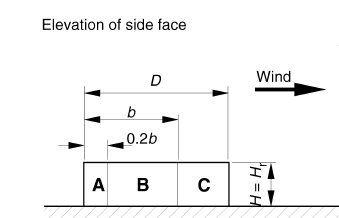
Just as a comment as a philistine. Why on gods earth are you sticking you ASHP in a recess. It's retarded and I think that is what you have clocked! Do you smell shite? Oh yes your ASHP installer says it's ok! .. how much have they evaluated the wind in the winter (when you need it most) and the geometry of the building and how the wind flows around it locally? As an SE I am interested in local wind loads and often see ASHP insatallers are talking pish. Look ASHP's needs in the winter a bit of fresh air and free flow of air around the building is essential. Next is why are you locating it near a window that let's sound in, more retard. If I was you I would think.. I'm spending a lot on an ASHP so let's think about where the prevailing wind comes from in the winter/ defrosting and see how we can get the best air flow. If you can't get to this level of thinking then you are just chucking your money away and when it gets proper cold your heating won't likely work as well as you expect. Advice.. go back to basics, recognise that if you want an ASHP there might be an Architecutral compromise. So get the thing out the recess and place it where you get some wind in the middle of winter. Or you buy some electric heaters. |I made another post about wind uplift on roofs. But here is a diagram about how how wind work on walls. Ideally you want to place an ASHP where it gets some residual wind even on a cold daydue to the geometry of the house. The best wind flow Zone A is near the corners of the building. Another way, my sister has two tandem ASHP's on the island of Tiree which faces into the prevailing wind. But it is not always mega windy. The ASHP's are placed about 1/3 from the corner walls. When you do a wind analysis you'll find that 90% of the time you get a flow over the ASHP. That is clever design.. understand how the winnd flows around the building and postition your ASHP in the best place. If there are any ASHP designers out there let me know. @Nickfromwales Just to name check you, would welcome your professionall comment, am I being to practical or not? They cost a shit load, so why tie your hands at the outset by putting them in the wrong place? I've given pelters here but it would help a lot if you posted a plan view of your house so we can see the orientation and size of the house with dimensions. My gut feeling is that you may be paying for something thta may not perform as well as you expect.
-
Great stuff folks, I live in Scotand but would be nice to have attended. Now, it's a small world, have heard reports that you are all a nice bunch!
-
Ok on the face of it, does not look promising. My first question is how did you find this out? Do you have some photos? Before I was an SE I used to be a builder and often we would form cavity trays with DPC , fold them at the ends correctly and provide weep vents. I often work on older buildings. In the 1950's to 1960's the cavity trays were often formed from heavy duty bitumen felt that is still often hanging in to this day and age. My guess is that your builder has made a bollocks of it as the cavity tray is up a slope and stepped. I always smell shite here as cavity trays take a lot of time = labour cost to install. Remember I'm a poacher come gamekeeper! Ask the builder for an elevation detail showing how the cavity tray is stepped. My guess is that these will not be forthcoming, next ask for some photographs, they may not be forthcoming either. Now look at your contract.
-
Labour only. What are my obligations?
Gus Potter replied to flanagaj's topic in General Self Build & DIY Discussion
@flanagaj The above is blunt. As a word of encouragement |I've got a couple of self build projects on my books in England, they are of high value, very complex design, carry extra risk and probably subject to local scurtiny by BC and the passing public. I've seen photos of their sites and the set up looks great and safe. I ask, has that cost you lots? the answer is, we budgeted for that and it's not as hard or expensive as you think. The guys on site love it and that leads to harmony, everyone enjoying thier work. I understand that they have an element of labour only and that the extra insurance cost is not too onerous. But they are both the Principle Designers and I act in support. Are you seeking a warranty from say Protek? If so read the fine print of their offer. If going the warranty route then labour only needs to be supervised. I've recently had a run in with ProteK as they were blatently passing liabilty, but it seems to be sorted now. They got far too anal about passing risk to me as a PD and SE, they were, I think, just chancing thier arm, but turned out is was admin error? It's stuff you have to navigate and make the best choice for yourself. -
Every day is a school day, did not know that, ta!
-
Labour only. What are my obligations?
Gus Potter replied to flanagaj's topic in General Self Build & DIY Discussion
To give yourself some cover then you might want something in writing, with a valid name and address (think how the VAT man may take a view on your zero rated build) that they have stated that they are a contractor on a self employed basis and providing a service on a labour only basis. And here it gets tricky and you are potentially out on a limb. @Nod mentions public liability. I have public liabilty insurance.. this covers me if I walk out with my ladder and scratch the home owners car, cause someone to fall over in the street. It costs me less than £200.00 quid a year. I also hold PI insurance and that costs thousands. In an ideal world (which it's not) your direct labour should hold Contractor's insurance which would cover you if they burst a pipe just before going off site and flood the works during the night. Now let's face it.. you are looking for savings via labour only. The reality is stuff like this happens more often than you would wish for. Who do you sue? your direct labour probably have no assets. I'll be the devils advocate here. If you are employing direct labour then you well and truly fall under the CDM regulations and likely under the statutory Principle Designer rules as you are directing site operations. I've made some posts about this recently. To finish, the least of your worries is being treated as an employer in terms of tax, think safety.. it's all fine until something goes wrong and someone gets hurt. Often labour only stuff has folk that are less experienced and thus the risk of an accident is much higher. I'l make a point here. Just say you had a young son or daughter setting up on their own in the building trade, they need the bread and butter work so labour only is great work. But they go to a site that you have not set up safely, you're not properly insured and they get hurt due to your negligance, lack of insurance. I'll tell you this, most parents will take you to the cleaners if that happens. You can take out insurance for this. Have a look on the internet for contracts works insurance, you can exclude tools / plant and so on. The above is tough love but when you do labour only it can work.. and you save money but you need to understand the risks and manage that to suit your circumstances. -
And here is the crunch. I made what was a admittedly a rambling post a few days ago about principle designers in response to a thread by @Oceanjules. One point here is that it's not what you can get away with.. much more about designing safely and the onus is now much more on the designer and everyone involved in that process, the liability has now much been past to the designer. There are two key principles. 1/ If a fire starts the occupants need to have time to exit safely. 2/ That the fire fighters should not be put at risk. But here is the business case. The onus is very much more on the designer. One thing my PI insurer broker pointed out to me when we were talking the extent of my fire design liability is, hey Gus.. from the underwriters perspective.. a fire does not need to occur, all it needs is for a Client to potentially later say.. your design could be flawed and it's up to you to prove it's not! This liability does not lie with BC anymore but with the designer, although to support our case we may refer to BC regs and manufacture's data. But as soon as we go off piste life becomes a design and cost adventure!
-
Steel pipe retaining wall
Gus Potter replied to flanagaj's topic in General Self Build & DIY Discussion
Is the wall near your boundary? This is a key consideration. It's a low retaining wall so you have lots of options if away from the boundary. You'll be surprised how deep you need to knock in tubes to get them to work as the soil contact surface to resist the rotation of the wall is low. Some basic options and things to consider and rule in or out are; soil terracing with or without careful selection of planting to stabalise the soil, gabion baskets, Universal beams as a king post retaining wall with sleepers, if you have the room in your site then tying the head of the retaining wall back into the soil behind.. basically long rods with a big end plate.. like a tent guy rope but more beafy. You could go masonry reinforced like hollow block or a thicker masonry gravity wall.. but they can be expensive. Post a photo or two so we can see what you have to work with and what you would like to see in terms of appearance / material finish... the look.. cottage garden or contemporary for example. -
Well done, bit of belt and braces works.. it would look a lot worse if the roof blows off! You mention 45 deg roof slope, these in general tend to be less vulnerable than roofs with a 5 -10 degree pitch for wind uplift. Much depends on the wind direction. For a bit of fun and to cut short the wind calculation we first calculate the site wind speed and then convert that using factors for the height of the building and orientation and so on. The worst case wind load often comes from 240 degrees and in terms of roof orientation we look at how the roof faces and apply a direction factor. I screen shotted some tables from the British standard that lets you see how we reduce the wind load depending on which face of the building / roof we are considering and the wind direction. NOTE here I'm not considering a quatering wind like the Citicorp building as has featured on BH... and I'm assuming the topography is reasonable benign.. ie you are not at the top of a cliff or on the upperside of a hill. But it's an old house you've got so let keep things simple and qualitative. In the above you can see that a 240 degree wind gets no reduction but a North wind gets reduced by a factor of 0.78. Now if you have a look on U tube ( and I've have seen myself) at videos of roofs getting blown off, intially you often see some rippling movement at the edges / verges or ridge of the roof.. it's often tiny but here the high local suction lifts an edge, the wind gets into the roof which increases the roof internal pressure that cause the drama of the whole roof flying off. To stop that we need to keep the vulnerable edges and occasionally bits around chimneys well tied down. Roughly to calculate the wind load on small parts of the roof we take the wind pressure and multiply it by a local coefficient to give the local pressure, in this case we are interested in the local suction loads. Below is a diagram that shows the wind directions and the notation for a due pitched roof. The above lets you understand the table below which shows the external coefficients that are applied to the wind loads for a duo pitch roof. In the table above the positive values indicate wind pressure.. a downwards load on the roof zone.. which is beneficial. The negative values are the suction coefficients. The wind load in the tables above is calculated as being applied perpendicular to the plane of the rafter (snow loads and roof access loads are on plan load so applied differently) thus the we need to calculate the vertical uplift component of load when designing the holding down straps. We take the perpendicular load and divide it by the square root of 2 = 1.41. One thing you can easily take away from the above table 10 is that flatter roofs are more onerously loaded in suction than a roof in the region of 45 degees. But the 45 degree roofs are still vulnerable when the wind is blowing on the gables or quartering to some extent. If you have a study of this Roger it may hopefully inform and you can have a bit of fun looking at the values. The roof ventilation effective area is probably small, call it more trickle ventilation and thus is unlikely to dominate the internal roof wind pressure which gets added to the roof external suction. One word of caution again, if you have some significant topography then this can be significant. From time to time if say building near a big farm shed we may need to look at any wind funneling effects, but this mostly applies to walls.


-
Architect won’t sign Completion Notice Form
Gus Potter replied to Oceanjules's topic in Building Regulations
Some approximate general comment, I don't touch on all the facets only some, but try and write in the context of self build. The CDM 2015 regs tried to reduce the amount and severity of accidents on site. I remember in the early days before 2015 CDM folk were saying to designers.. look you can't do your "Concept design" and bury your head in the sand. You must now introduce the concept of safety to your Clients pretty much at stage Zero. It was good practice as if a Client gives you a funny look at this stage it does not bode well for fee generation. The reason for this was to encourage Clients to set aside an element in their budget for health and safety on site and enough to cover the professional design fees / early engagement with Contractors and so on to enable this. A common figure that was suggested at the time was 3 -5% of the budget. Now that kind of worked ok to drive down the number of site accidents as the CDM 2015 caught in the net some of the smaller Contractors who were winging it. Architects got used to it and folk became a bit more responsible, not much but it helped.. there is still a way to go but the CDM 2015 did reduce the accident rate on site. Grenfell tragedy changed things a lot in England BC and in the UK in general. In Scotland we have a slightly different and nuanced set of building regulations, but these were still open to abuse after 2015. In Scotland when you apply for a completion certificate you have to sign it to say that what you have designed and what you have built is compliant with the building regs, you need to sign off on that. But the BC regs were open to abuse by corporate interests not least. OK to stop this becoming tooo lengthy.. the CDM 2015 got you to the place (with a fair wind) where you built something where no one got hurt during the build. But now after Grenfell folk as asking designers.. now that the building is occupied is your design safe! It's a fair, reasonable and moral question. This could be in terms of structural safety, fire and seviceability for example? What this means to me is that when I design something as a lead designer I carry the can. I'm responsible for ensuring that if for example a sub designer submits a glass design package I am experienced enough to say.. that looks ok. If an Architect or TF manufacturer submits a design the same applies. If I am not experienced enough ( happens from time to time) in a particular field then I must alert the Client to my lack of experience and make recommendations. In summary the lead "New Principle Designer" is now responsible for ensuring the future performance of the building to a greater extent in terms of design, safety and seviceability than before. They are not responsible for the quality of work on site in terms of "supervision ~= a traditional clerk of works function). @ETC has posted about this. But on the other hand Designers are responsible now for not designing something that is so difficult to built it introduces a safety risk in the short and in long term, once the building is occupied. Personally I think this is a good thing as you should be held accountable for what you design. Here is an example of how I'm navigating, in a pratical way, the change in regs for self builders. I have a number on my books all over the UK but one in particular is a great example. Their design is complex with different materials that behave in very different ways and this extends below the ground with the associated geotechcal and ground water excitement. The Client is the Principle Designer and we have this recognised in writing. I'm in principle the lead SE and have a level of checking control, but also part of my "tacit role" is to support the Client ( self builder) in fulfilling their responsibility, call that hand holding for which I get paid for. The Client can point to the chain of communication and say.. I have made a big effort to fulfill my Principle Designer Duty as a self builder. With my SE hat on I design the bits and coodinate the interfaces, often connections that the work package suppliers don't want to design. Now this role I perform comes at an extra cost to the Client. But what I try and do is mitigate that by saying see if we knock a few heads together you might even make my fee cost nueutral! In self building and I see this all the time.. work packages are procured but no one designs an coodinates the interfaces, calls out the Architect, Contractors go off and do their own thing, you as Clients start to "fall in love" with your builder and take their advice without question, it's not uncommon to see fore protection getting changed and so on. As a point of note.. I have had some recent dealings with Protek, the warranty provider and, they are asking some deep questions about this design liability in terms of the new "Principle Designer Role". My own PI insurance is coming up for renewal soon so no doubt there will be another page of questions about what I'm up to! In summary I don't think this is insumountable if self builders are willing to adapt and start ot think about keeping a professional on board during the build to hold their hand. And here lies the fundamental issue! Self building is often traditionally about getting prices for work packages; the founds, timber frame, roof, and so on and you sort the bits out in between. In the old days you could still make a tidy profit by doing it this way as a novice sefl builder. My own gut feeling is that I can see how self builders are finding it more and more difficult and costly to navigate Planning, BC and now the Principle Designer stuff. From my end I think.. ok this "Principle Designer Role" is not scary provided your Client is willing to pay a bit more. In return I think.. now I have more to contribute to the project and I can chip in more and mitigate my "principle Designer fee". Every cloud often has a silver lining for everyone.
-
Yes, stunning view so worth paying a bit more to get the large uninterrupted opening. Do that out of interest. It could be you have a height restriction over the head of the opening which would make the rebar in the ICF too congested for example. One question that can be a bit of an elephant in the room is fire protection and here ICF has advantages at times over steel. With that view come weather exposure no doubt so it's really important to get the weathering details nutted out. All the best and keep at it!
-
Ok you say reasonably exposed. The vulnerable points are the eaves, verges and roof ridge. Say you don't live in the north of Scotland, Islands. Very quick sum and to cut a lot of the maths out. The wind load uplift will be about 100 - 150 kg/ m^2 (working load on a 50 year return period) at the exposed edges of the roof. But as you move towards the middle of the roof it will be less as an area average., the design codes call this roughly "non simulataneous action" as the wind is made up of vortices, big and small, that don't act on a roof evenly. The original part of the house is probably ok? How old is it, if it's been ok up till now then is that ok? Think about this another way. On new build stuff as an SE I design to the codes but when assessing existing historic houses we need to be pragmatic. If the wind gets up it often blows the tiles / slates off at the edges of the roof; verges, eaves or around chimney stacks. There used to be guidance on this in the old building codes. Yes, but the quality of roof tiling workmanship would have been good. The key here is to not let tiles get blown off in the first place as as soon as that happens you lose the dead weight resisting the wind uplift. And here the quality of the extension roof needs to be examined. This is obvious.. if you prevent the tiles / slates getting blown off at the edges of the roof and thus prevent progressive peal back of the tiles / slates then you, maintain the dead weight which resists the uplift. Your big purlins will not be contributing much unless the ends are well strapped down to the gables. Go back to basics and think.. what has been changed in terms of wind loading. The extension is the obvious thing.
-
Trench fill acceptable tolerance in level and dip
Gus Potter replied to Stu84's topic in Foundations
Hiya. I get @Stu84's disappointment. But as others have said, and which I design for, is to be able to level things out with the masonry underbuilding. You can often go for a 20mm thick mortar bed with no detrimental effect. Thicker mortar beds can be ok but you thicken the wall base on the first couple of courses.. it's still economic. A few SE / Geotek comments for all. Trench fill is a rough business. Often we need to do it in sections, dig a hole and get the concrete in rapidly to stop the sides of the excavation falling in and, in sensitive clays, stop it from getting compromised once you expose it to air and let the pore water pressure change. There is no time to work to 10mm tolerances.. it's like trying to polish a jobby (shite) , what is under the skin is the vital thing. Pore water pressure? Some clay soils are quite happy to bear load until you change the water pressure, by digging a hole and disturbing them. Sometimes digging a deeper hole is counter productive. Now there are lots of photos on BH where folk are doing trench fill. very badly.. They worry and sometimes try and shutter the sides of the founds, the ground water is rising and it all turns into a mess. Think.. if we need to excavate for a rear extension and doing trench fill.. how do we get rid of the extra muck in a hurry? As an SE often what I want to see is you leaving the sides of the trench rough as we get a tacit beneficial key up the sides. Occasionally, if in made ground that may settle I'll say, drape some plasic down the sides so the settlement does not "drag down the founds", this is standard procedure in pile design. This sounds rough but it works and in the heat of battle on site when the weather is bad.. it's a pragmatic option. Now can I ask. Just say you had added the cost of a site visit to your SE design brief? Say that would top out at £500 quid. Usually that will be about £200 as for the SE what they charge as a headline rate ( graduate Engineer cost at "£90.00 an hour) you get back in recommendations.. it's good for business to provide "after sales service". -
Basement excavation - safely retaining earth banks during works
Gus Potter replied to Ed_'s topic in Basements
Do you fancy sharing your ground investigation results. Over lay that with your site boundary and then give us some section details so we can see what you want to build in the excavation. A few good and clear drawings are worth thousands of works. Once we know a bit more then you'll get more targetet advice and suggestions. You'll probably get the most impartial advice on BH. Yes, it may be that there is a way of executing your design with limited support but we can't comment properly unless we have access to all the information.




