


Gus Potter
-
Posts
2383 -
Joined
-
Last visited
-
Days Won
34
Everything posted by Gus Potter
-
Fair point! But we both wear our hearts on our shirt pocket! Yes do that. I'll chip in when I get the chance as others will do. What you will find is that we on BH are like a family.. we don't always agree!. Your job is to distill the info you get, rule stuff in or out and make an informed judgment. Once you do this then you are well on your way! Some, maybe me, will give you tips on how to bring your Architect to the table, hopefully that will not need to happen.
-
It will take you a bit of time but you can just post them on this thread. If you feel you have made a mistake, just ask the MODS to help you, they are great! If you accidentally post confidential stuff they will remove it. I think there is a Mod on duty pretty much all the time. The main thing to recognise is that BH folk are not going to jump down your throat, you are not going to get pulled up on your spelling.. you will get pulled up if you try and work a flanker! Give BH a go. But remember what you are doing is not that easy! In fact it is technically challenging. You are mixing up fire design, different roof construction and ventilation strategy. Look at it this way.. you have got so far in the design process, recognised that there is a design fit up and insulation / ventilation / fire compatibility and you are dealing with it by coming on Build Hub.
-
Low points: and how to get out of them
Gus Potter replied to ToughButterCup's topic in General Self Build & DIY Discussion
Ok fair enough. Hope I've not caused offense, it was never my intention. @jack has allayed any concerns I had about BH getting sold.. but I do think it is fair enough for me to ask the question in the first place! I also think it is fair for me to make suggestions about fund raising. I made my case, that is all. Nick, if you have a problem with me then you have my phone number, lift the phone and lets chew the fat. Gus. -
Hello Jamie. My last post was intended to see if you were serious, bit of tough love! Ok now you are among lots of kindred spirits on BH. Everyone has to start from somewhere, don't whatever you do feel embarrased! What you are doing is not easy! The hard part is the interfaces. These ccan take lots of time and expense to sort out. This is very much up to you. I do this as a day job..there are other folk like me but also lots of folk that have forgotten more than I know! On BH there are contractors, glazing specialists, Architects @ETC for example..that are all chipping in with their professional knowledge and practical construction advice. This is up to you but the best thing to do would be to get all the info and drawings you have., bundle that up. Remove any personal details and identifying marks an post the whole lot on BH! I'll, when have the time chip in.. but the other members will really give you an insight and help. It's kind of a come to "Jesus" moment.. you post the lot and get lots of expert advice..straight off the batt. Some suggestions you get will be off the wall, some not viable as we don't really know what you want to do. But that is part of the desing process.. which is often about ruling out the things you DON'T want to do.. I'm a big advocate of this! Story for another day. I'll give you mine as an SE / Desinger but I can't spend time playing detective with you, if you hold back. Some sugestions you get will not be applicable but will help just generally inform you. BH members really do what it says on the tin! There is the odd wanker but the Mods sort them out quickly. To finish Jamie.. It's ok to not have a clue! I didn't when I first started out! Welcome to the club! Main thing is to enjoy the design and learning process. Remember it's your money so every pound is a prisoner!
-
Low points: and how to get out of them
Gus Potter replied to ToughButterCup's topic in General Self Build & DIY Discussion
Indeed Nick. In the past the was a tab where you could, if a validated member, make a donation via bank transfer.. but that is going back a bit. But now we have to be really careful about data protection. All I'm saying is that there is not even a tab to make a pay pal donation for example. I do think BH are missing a trick where folk can just spontaneously donate.. But easy to say, not so easy to set it all up IT wise, maintain data protection etc. If the forum management want to set this up properly then that is going to cost, it will take up Mods time. The forum management may need to pay to farm this out. I'm more than happy to chip in with donations if it keeps the BH show on the road. -
Low points: and how to get out of them
Gus Potter replied to ToughButterCup's topic in General Self Build & DIY Discussion
Hi Ali. I've PM'd Jack so you can see that. I have expanded in a bit of detail. Again a great thanks to the Mods. But as a philistine. Yes there is concern at BH dropping off the rankings. I joined BH in 2020, so that puts me still in primary school in BH terms. Now my head does not zip up the back. To keep a show on the road like BH takes a lot of work and folk are doing this voluntarily! All organisations like this from time to time have to go an element of turmoil. The Forum management are not always going to get on, some may become unwell or just move on, life takes over. When I joined Jeremy Harris was a guy I loved.. he had a hand in writing design codes, as an SE that interests me, but he left.. Please can you mods put back in place the option to make a quick contribution, say just a tenner. I have BH bank details but now with banking security that is not a good option to post bank details in public. Sometimes I make I post that I know is going to save folk thousands and then suggest.. just make a donation. Yes I do it for free, as do many others, but we can't do that without the BH platform. Sometimes I say.. we have as a Bh group saved you loads.. for free, so make a contribution to BH. BH need to strike while the iron is hot and folk realise that their arse has been saved! They ain't going to come back if you have a fund raiser every six months! If BH end up with too much donations in the bank then that is a problem for another day! -
Jammy. You are winging it mate. You have posted no drawings for example. I do this as a day job. From the questions you are asking it is clear you have no clue, not even taken the time to talk to your designers. But you maybe did not pay them enough in the first place and are now chasing you tail and trying to get a fudger by milking the good will on Build Hub. Accept that you need to pay for professional advice here. You might get away with this stuff to start with but is going to come back and bite you in the arse!
-
Lets see some drawings and details. Plan views and cross sections. I do this as a day job and can tell you it is much harder than you think. Forget the BBA stuff, material selection at this stage and concentrate on the basics first. First step is to understand how your new stuff fits into the old. Then design something that your builder can build without pulling your pants down cost wise. You don't really know the setting out of your existing roof and wall head detail.. have you surveyed this critical bit yet? At the end of the day the objective is to produce some drawings that your builder and you think.. how simple and chep is that. But to get there you and your designer are going to have to put in a fair bit of work. If you post the drawings you have then folk like me may chip in with some suggestions.
-
Low points: and how to get out of them
Gus Potter replied to ToughButterCup's topic in General Self Build & DIY Discussion
To post this was a great idea. I've been browsing through the responses and made an earlier post myself. Collectively can you all take a like as a given from me. This has prompted me to write the following, partly in the context of what it looks like from a designer's perspective. I'll try and link this with what @ToughButterCup and all are discussing. As a quick refresh of my background. I did a selfbuild in my 30's, really got up every day in the country and built a bit of the house, three years later it was nearly finished, we moved in. Folk stopped by and said.. would you do my house next, I built a business in the Scottish Border area as a building contractor. When about 40 my wife and I parted and with that went the house we had built together, achieved our dream. My German Shephard dog died.. I sold up and went to uni to become an Engineer. Now 20 years later I'm an SE and Architectural designer. Lots of my work is domestic work. The key thing is that doing what I do now means that I'm often involved at the start of the Client's journey, there is cash in the bank and even when having a battle with the planners.. things still generally look ok. If I was to make a quick and not comprehensive list of the things that go wrong on a self build or say a house extension these would be.. I've tried to order them a bit. 1/ Money, lack of allowing for contingency. 2/ Designers not producing enough information that protects the Client which they often use to enter into some form of contract. Few domestic Client's want to pay for a formal recognised industry contract. They get swayed by the builder to entering into something that often leads to trouble later. Designers should be able to assess to some extent the Client's unspoken needs. Even if this risks losing the brief! What I'm saying is that everyone involved in a project has a duty of care and that now starts right at the beginning of the design process, before this was much less the case. 3/ Builders just being themselves, often inexperienced, making pricing mistakes, can bankrupt them and then they need to claw that money back by throwing the Client under the bus. 4/ To get to the point where you want to build something as a Client you have probably got the where with all to get some cash together, maybe have some building experience. This ius a good step forward. I can tell you I have been doing this for 40 years and the scary thing is that the more you learn the more you realise what you don't know! A Client who is obstinate / does not listen to the evidence or discuss the advice you are giving in an open and collegiate way is often in trouble. A stubborn Client can be their own worst enemy! I just picked out this. OCD is fine, if managed. I have day job, that is a hobby as an SE, and attention to detail, not good at spelling. I have a number of Client's fthat many would run a mile from. They put me under scrutiny, can be horribly blunt, sometimes offensive at the outset. I don't have a problem with this as I can see that they are paying my wages and it's my job to walk them through the design, discuss and so on. Now that all seems a bit forensic but when you talk about the design often other things come out of the mix. What the underlying issues are come to the surface, do they feel down? We take about these and then come back to the design things with a fresh approach. Many Clients are professional in their own work life but seem to lose the plot when they have to move out their comfort zone, even the language use is different. My own view is that it's my job to make sure a Client is assisted in this. That said I do some steel connection desing for commercial steel fabricators, most have their heads so far up thier own arses, gods gift it's unbelievable. And the cheaky buggers want to pay in 90 - 120 daysdays! I've pretty much given up on them for now.. until they go bust and young folk pick up their crumbs. Some self builders take the view they are the hardest ass on the planet, bad news, but these are not the majority. Most I meet are timid, cautious, know thye need help but just don't knopw how to ask, they have their ducks in a row, often very thoughtful, intelligent and need someone to say.. your idea is sound and here is why as a professional I think your idea is sound. My job is then to say.. here is how we are going to design (the drawings, SE calcs) , cost, tender and navigate the build. A quick story. I had a husband an wife Client who were both SE's, one worked in oil and gas, one on Naval ships. Their job needed a lot of steels, which they did as a day job, in their sleep. But they did not have the contacts, experience to translate that into a domestic setting. My brief was.. you do the donkey work Gus, get the approvals, sort the ventilation, the electrics, the timber design etc and we will check your stuff. It all worked out. 5/ Planning an executing an extension can take say 18 months, a house much longer. Life often changes in that time. You are doing yourself a disservice. I'll take that as retorical for discussion. This next part is to do with why we do it. Much has been written on BH about this. Another quick list in no order. We often build stuff for the following: 1/ We want to save money. If you take a good trades person with a van at say £ 1200 - 1500 a week then add in a labourer you are in the region of 2.0k a week ex vat if not new building. To earn that you have to pay the tax on your income first. If you can do a bit yourself that is a significant saving. In parts of the country this is a lot more. But get this bit wrong an in a month 10.0 k can go down the drain on labour alone. 2/ You could buy a Persimmon or the like house.. but that also has latent risk.. and just not the right shape or size. 3/ You have a dream.. this is common. It's a not just a dream, it that earthy thing we have to build a home just for us. Say you work in banking / insurance.. you work but by self building you make something that lasts.. probably longer than you will live.. it's instinct.. basic and the deep satisfaction that you get will last for the rest of your life. In terms of mental health it bench marks something solid that you can look back on. 4/ Do it for the kids. Home building is deeply rooted in parenting, relationships, even if you don't have kids it's a thing that is deeply rewarding. Once you die you get to leave something that others will enjoy. To finish. Again I thank everyone for their posts and for BH for facilitating this. Now putting my pro hat on.. mental health is common in self building. The obvious reason is that it is hard, challenging, folk are putting their financial lives at risk so it's no surprise that it crops up as it tests you mentally. I'm sure many that have posted, including myself would, if given another go, say.. I would have done it in a different way. Hindsight is a wonderful thing. Most importantly though we are all still on the top site of the grass and living! What ever you do don't be afraid about talking about mental health is perfectly normal, part of the construction industry. My wife is a Psychotherapist at the Scottish equivalent of Broadmoor so I have someone to talk to about this kind of stuff. Building stuff is much more about a people thing, how we interact, how we support each other in this modern day and age. From that conversation we can sort out contract's, make a cost programme and so on based around you the Client's way of being. But to make self building stack up financially you have to "cut" some corners, work oput what the risks are and these include your mental health. Most designers, timber frame suppliers, ground workers etc are not like me! Even I have my limits. -
That is good place to look for the culprit and good sage advice.
-
Low points: and how to get out of them
Gus Potter replied to ToughButterCup's topic in General Self Build & DIY Discussion
Hi Jack. Thank's for taking time to examine my text. "All BH staff are unpaid volunteers and that won't change." Great news to me and delighted to hear that. "Many of our members join, hang around until their build is finished, then we never see them again" But that surely is the nature of the beast. It only takes a few to hang around out of the thousands of members to keep things current and BH "living". "Over time, there'll occasionally be the need for a new mod or administrator, but we've handled that as needed. Most of the current staff have been here for many years and have no intention of going anywhere." This is also great news, not least as life experience counts for a lot as does continuity.. and don't take this the wrong way mods, grandfathers rights, skipping a generation and trying to reinvent the wheel often leads to problems. "I don't know why you think BH dropping down the rankings suggests we'd be trying to sell it." Ah I may have had my commercial hat on a bit squint! But I recollect that I was prompted by the drive to get onto the first page of the rankings and that is important if you want to position for selling an online platfrom. It just raised a flag at my end. "I can categorically state that there's not even the hint of a glint of an idea to sell. We have no income other than donations." Music to my ears as it will be to many others and I'm please to hear that my "water" has in this case been ok after all and my concern unfounded. We have no income other than donations. Many organisations would give their back teeth to be in a place like this. My only comment is that I think there was a donation tab, tried to find it @AliG. When joined BH I learnt loads, still do. I can see that the forum must be saving folks piles of cash at times and just think, I'll just send as a spontaneous gesture £50 quid as a thanks. Anyway to finish. Thanks Jack and to all the mods for all your hard work. -
Low points: and how to get out of them
Gus Potter replied to ToughButterCup's topic in General Self Build & DIY Discussion
Good idea. @Alan Ambrose has for example a Suffolk meet up. it's bit too far for me to travel. I live just south of Glasgow so would be more than happy to turn up to a local meet-up and chew the fat. -
Low points: and how to get out of them
Gus Potter replied to ToughButterCup's topic in General Self Build & DIY Discussion
Nick our posts are overlapping. I donate to BH, my tech skills are shite and that is the only way I can put my "money where my mouth is" What I'm trying to encourage is for folk, you and I for example is to say.. hey we are giving up our professional knowledge as we enjoy doing it! In return please can folk who are probably getting hundreds if not thousands of pounds of free advice not just chip in with a tenner now and again? But we are mostly old crusties, over 30 years old! There is a huge disconnect, hard to make happen as young folk don't realise the value of good advice / discussion.. you have Tiktoc, Instagramme. They expect that the advice you get on BH is free and attach no value to it. @AliG mentioned that you can donate via pay pal.. that is good! In the long run I think for BH to survive we all need to look ahead, see how it's going to be funded. Does BH need to be mass market? Probably not unless it is to be sold.. does it need to be niece for self builders and extenders.. yes.. but with apple pay the odd tenner will go a long way. Should mods be paid for a bit of their time? maybe yes/ no? -
Low points: and how to get out of them
Gus Potter replied to ToughButterCup's topic in General Self Build & DIY Discussion
You are absolutely spot on! Lets go back a bit, before I joined BH. In context I was late to BH so I in no way can make any claim on the way BH is set up, I just enjoy being part of it. If you look at the mod list, even the ones that have stepped aside they all use their own names. It was a bunch of folk that were sharing knowledge on self building. Now to make BH what it is today the founder members have put in a vast amount of work. Who in this day and age does this if they don't believe in what they are doing? I wonder at times. If you take time to look at the mods and their background. Some are educators.. they teach, some are "gods" folk.. they love family and want to see young folk getting on, some just are hard nosed, some are really pushing the bounds of innovation (and some have the cash to back that up!) and just want ot see folk building stuff.. but they all are invested in BH, you must admire them as I do. I think for me the best thing about BH, even though I do this as a day job is that: 1/ I've ended up making new friends, some I've met in person. What I can tell you is they are nothing like what you think they are on line. 2/ I've learn't loads of stuff. Yes I'm an SE but a daft SE does not keep up with cutting edge design as on BH. 3/ BH is a place where you can clock off the day job and pursue your hobby and learn. Talk shite with the eco warriors and woke fannies, who very quickly back off when you ask then to stump up thier own cash! @saveasteading and @Nickfromwales. do we really need to go the pm route or can we just elicit donations to BH up front? Looking ahead for the future of Build Hub. Personally I would not want it to go the way the farming forum, paid advertising and so on. But for this to happen I think (I'm not party to the finances, the funding model) that BH may need to elicit more small donations and get new blood in? I just don't know. Mods.. how do you see the way forward? Thewre was a bit of a flag to me the other day when you announced to had dropped down the rankings. Please tell me this has nothing to do with you postioning yourselves to selling BH and making a killing on the data base. I have mentioned this before.. but if you do this then don't expect you will make a killing as your data base is not worth that much! Yes of course you have IP over what I have posted as an SE (under my own name) but.. that info has a shelf life! -
Low points: and how to get out of them
Gus Potter replied to ToughButterCup's topic in General Self Build & DIY Discussion
Hi Nick. It is quite common, self building is hard. You are a bit of a kindred spirit. For me I enjoy sharing a bit of what I know. But I also like when folk disagree with me and then discuss. But make no mistake here folks.. I do design as a day job and the innovative stuff going on on BH is cutting edge. We have a set of mods that have probably forgotten more than I know! There are new members chipping in with ideas that puts us folk that do it as a day job to the test. I like that you can give a bit back, it bodes well for BH. I like this offer you make. I use my own name Nick so anyone can look up my work website. I donate to BH as that is all I can to, I'm not tech savvy enough! I think for BH to survive in it's current form we do need donations. and lot's of smal ones. I know Bh went limited so there are share holders. BH could be sold. But as in all things in life let's enjoy trying to keep the BH bus on the road in it's current format. As a blast from the past.. one of the things that enthused me when I joined BH was Jeremy Harris, the mods getting full on. BH will need new blood in terms of mods but that is the challenge ahead. Yes the rate of membership has dropped off a bit by all accounts, and BH not being on the first page on google. But does this matter? -
So what was the source of the leak! Do you feel like posting some photos of the outside? I'm suspicious as it seems like the builder may be trying to get past the 2 year mark so they can throw the liability onto your possible warantly provider. Can you smell the manure?
-
Low points: and how to get out of them
Gus Potter replied to ToughButterCup's topic in General Self Build & DIY Discussion
Great post! From my own perspective I got grounded when I did a self build in my 30's, I'm 60 now. Just getting up every day and building a bit. My wife went to work and put the food on the table, paid the bills. One winter was very severe, minus 5- 15 degees for days on end, it broke my spirit. I thought.. I have left the love of my life down. My gas really ran out. My mental health was in a bad place. I thought.. Gus you have bitten off more than you can chew and you have really cocked this up. But at the end of the day the weather warmed up, the sun shone and it all turned out ok in the end. I've not done another self build since for myself! Moving on 30 years I now design from time to time self builds. My Client's often go through a very similar hard journey. If it's not one thing it's another! Few do a self build where everything just works out. Often I see conflict in relationships.. between say husband and wife, financial stress, someone suffering from mental stress. Mental health is really important, I have seen the "hardest" builder / Engineer in tears! From time to time I step in when Client's are having a nightmare, most of the time I just listen and let them get it off their chest, make some suggestions.. apply logic and distill the problem down, look at options. It can be a mental health thing, financial or just a builder thing. But make no mistake folks, it's not uncommon for your mental health to suffer, mine did and it happens to loads of folk, you are not alone! It very often can be fixed and you come out stronger at the other end. -
It can be but if you have a competent floor slab and founds to the steel frame it can be a money spinner!
-
Internal insulation for block cavity walls
Gus Potter replied to Julestools's topic in Heat Insulation
Mike that is a well though out answer. Service voids, great. Your command of the theory is great as is many other posters. But what is @Julestools going to do and the options? For me the thing is to see if there are timbers that may suffer say, if not then step forward, what is buildable with least risk of condensation? You'll always find some calculation that shows moisture! My starting point when working on older structures is to say.. let's look at what each room is used for. Is it a bedroom, a kitchen or a utility room where you might be drying washing. Here we look for the simple solution and that makes it easier to have confidence that the insulation will work. Now at some point Building Control may come back with a query, but that is a good thing! As a designer we think the problem though and come up with a reasoned case. This is the art of design. it does not need to cost the earth to build! I have done lots of testing also! I have also done my fair share of finite element analysis.. As an SE I can tell you that the premise that SE's take is that all models are wrong, it's just a giude to the behavoir!.. your's will be too @ADLIan! Models are an aide, don't hang your reputation and hat on these! You claim you have tested.. you should know better and you need to understand the limitations of an FE model and if you have tested stuff then lets see your evidence! They have some good stuff if you have time to read. But in summary. If you stop the moisture levels building up in the rooms in the first place then you head off most of the potential problems! It's that simple! Simple is a good starting point for old houses, then you tweak stuuf as you go. It's actually fun once you have grasped the basics. I'll say again much of this stuff is basic common sence once you have got your head around the rough idea. The big challenge is actually building it and putting it all together. Here we want something simple and that will not cuase a builder to rip you off! -
Ok the cat is out the bag! For all. @saveasteading is converting a very big argicutural barn into home. I was invited to get involved as I had chipped into a previous project of his. For all. This project has pretty much everything that you need to know if you want to convert a barn to a home and not chuck money down the drain. My SE input has been to confirm what @saveasteading already knows, back that up with SE calculations, chip in with a bit of tough love from time to time, a few ideas and propose some SE design nuances. We all work together, and still are, to get something that is buidable and every pound is a prisoner! Maybe at some point @saveasteading will post on the key points of their journey, from the planning to completion stage. For me all I can say, while maintaining a bit of confidence is, the design journey has been great fun at my end, have had to work hard at times, questioned closely by a very experienced Chartered Enginner with vast experience. (saveasteading) worth the effort. Funny thing is that from time to time I work as a checking Engineer so it's good when you get put through you paces! I've learnt a lot, everyones skills and depth of knowledge has been tested. All the folk involved has decades of experience. Now for all. Yes we have experience but being old is not always the key.. the key is that we communicate, when we don't know something we just fesse up and say.. I don't know and we go and we find out and discuss how we solve desing issues. If you are self building then if you get the right team then you are really up and running. For all young designers out there.. us old crusties don't expect you to know it all.. we just want you to talk while bringing new ideas to the table in return! @ETC does this make sense?
-
Internal insulation for block cavity walls
Gus Potter replied to Julestools's topic in Heat Insulation
Good. Ah, us Engineers take this as do the rest of the construction industry take this as being the inner surface of the outer leaf.. I suspect you are making a straw man arguement. Seriously how do you get from the "cavity face" to the inside of the walls. I don't know what convention you are using? Maybe you can point to BRE 443 if I'm maybe barking up the wrong tree? You are confused and mixing external penetration of moisture with the internal transfer of water gas outwards and where it condenses. Who deems that inconsequantial? Have a think about the basic thoery and work your argument through. Think about buildabilty, the elements of structure that connect into that. Agree, at times this can happen, depends if you have a porous facing brick or the wall is rendered for example. It does and that is what I've been saying, I agree with you! I have a copy of this. This reverse condensation issue was recognised. It probalby in my view is still valid. I mentioned this in my last post just to highlight how much this is very much an inexact science! BBA certificates! Well they said that about the Grenfell Cladding! Funnily, years ago, I was involved in getting CE certification for a cold formed steel company.. so kind of know how that world works. My advice is.. if you are a self builder then learn a bit and trust your common sense. @ADLIan I half agree with you.. we can debate the language, and different apporaches. One key test is would you personally sign off a design when I'm saying watch out? Remember I'm an SE.. if you do stuff that is going to compromise my structure when I have fore warned you then if it fails you are in big trouble! It's big boy pants time! I'm not sure but the best thing to do would be to crystalize our thoughts and come up with something that would be helpfull to folk on BH? -
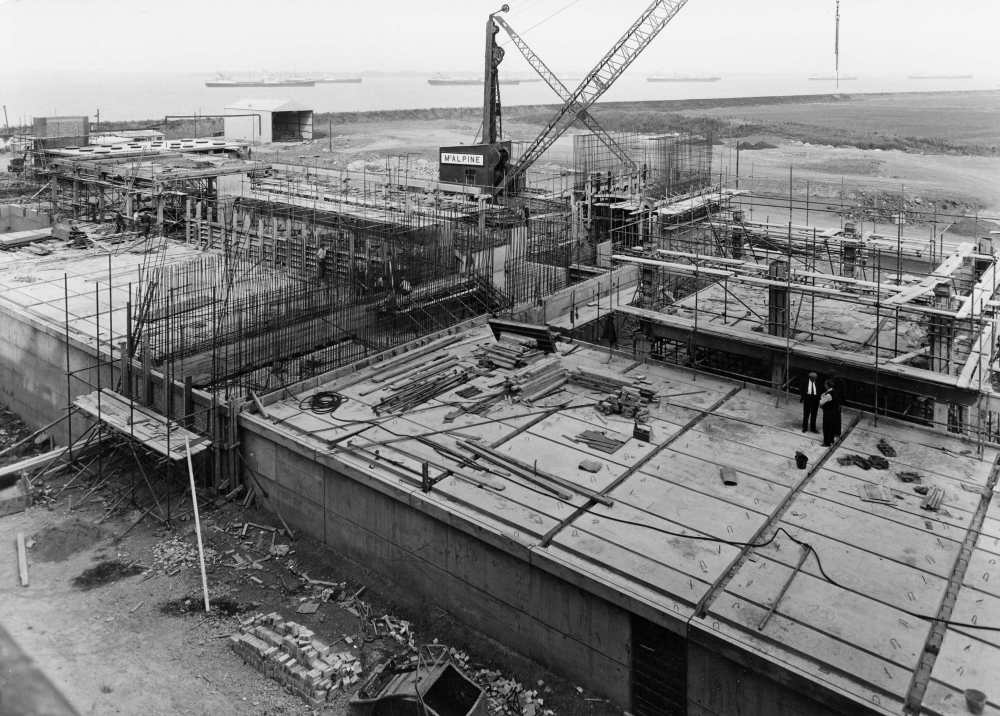
Hello all. I have a technical background as the day job. As quick rundown. I worked at Torness Nuclear Power Station in my late teens early twenties, then became a local builder for 20 years, that was when Chernobyle accident happened and the Ayrshire farmland got potentially contaminated, that was a worry, went to uni to become an Engineer. That was 20 years ago. My Master's degree group project was on energy, at that time Fuchishima happened. I got into cold formed steel and ended up designing a structure that sat over the cooling ponds on the Bradwell Nuclear power station at the decomissing stage. My litle bit was to do the structure that house the ventiulation units.. but it had to be lightweight.. but blast protected.. so a bit of a challenge, h3ence the cold formed steel. But for fun to design this building we have to look back an understand how it was built in the first place, how far we could drill into the lid to stop radiation getting out. Below is a photo of the cooling ponds during construction. Check out the bowler hats! When I was at uni I got a summer job for McAlpine as a project Engineer. I'm not going to go into my own political views but as an Engineer I think the UK is a bit (expletive deleted)ed as we are living from day to day essentially. We use to be an Empire, strong, we made war and more often than not we won, you don't go to war to lose! . But remember the British ended slavery for example, we paid for that as it was the right thing to do. For me national security has to come first. There are many countries in the world that do not share out values. Appeasment will not work, yes we would like it to, but lots of young folk just don't understand that there are a lot of bad folk in the world. So in the round. Yes we need to reduce our carbon footprint, reduce our usage but there those that say that our oil and gas industry is kaput are talking out of political nonsence. The West of Shetland fields contain lots of oil. There are plenty on BH that advocate this. I disagree with you on a strategic basis. You see lots of folk on BH that are really invested and have made a good go of making their houses "say a bit passive" but they have enough money to do this. They can afford to be that way! Your average punter is just trying to make ends meet! You have some on BH making eco arguments.. but do not look at how things work in the wide world and their actual carbon footprint. Many on BH are just enthusiasts, just like car enthusiasts when it comes to energy usage, there is no harm in that. But that comes at a price. I actually grew up in Africa..been in the middle east.. so I am not some daft "gammon" as many may assume I am. In the round I feel that UK energy policy should be driven by say a 50 year plan ( I wish) that means exploiting our own oil and gas, digging some coal! , using that money to innovate. The Chinese think we are all soft, trying not to offend religions, woke.. well we are let's face it, about half our politicial representatives don't know what a woman is! I despair as an Engineer and am very worried about the future of our kids. Anyway I hope the photo of Bradwell lets everyone see how a plant like this was constructed at the time. Even if you disagree with me then that's ok, just enjoy how these guys constructed a plant that operated safely and is still, to this day, getting decomissioned.. at losts of cost mind. But hey ho just admire what these guys did.
-
Assume this is a timber frame? Your cavity closing is going to be driven by your external leaf / cladding arrangement. https://envirograf.com/product-category/fire-barriers/cavity-barriers/ They have a good offering which I spec from time to time. BUT to be blunt.. if you are asking about this stuff on BH then please be careful before you swap materials out with your designers spec. To be safe by all means look for similar and cheeper products but ALWAYS check with your designer that it is ok to use an alternative material. Yes fire protection is expensive.. but it has to be implemented. Many think.. well we are young and fit so will exit the building.. but you put the fire service at risk and wallet wise.. your insurer may not pay out if you cut corners and are unlucky enough to have a fire.
-
Internal insulation for block cavity walls
Gus Potter replied to Julestools's topic in Heat Insulation
I disagree. You say inconsequencial.. but it's not! The way we assess condensation risk is not to say "it never happens" it does under certain conditions. What we do is to recognise this but say to ourselves say.. if it only happens say for a week or two in the winter things will dry out quickly before mould or fungie can establish.. In the long term timbers and other parts of the building fabric can live with that if the occurence is low. Cavity wall insulation increases the risk of occurence of condensation as you move the dew point inwards and water gas condensing. Also if you fill the cavity then there is less free air circulating. You are getting confused between water ingress and condensation. Your arguement is flawed. You either have a cavity or you don't. You say that water penetration is the most risk.. if you have an open cavity then the water drains down the inside of the outer leaf, that is traditional design. A fully filled cavity works in a different way and does shift the dew point inwards and it's how often that happens is what matters. Yes the cavity wall insulation providers claim their insulation will wick the water down to the founds safely.. but any way you want to cut the mustard a shift in the dew point inwards at times when considering water gas moving from the inside to the outside of the wall does occur. Now in some ways lets say you do hit the dew point in a "bad spot". The first thing to ask is does this matter.. are we argueing a moot point? Well it does matter if you are going to make timber /steel wetter more often. The other consideration is that this water needs to evapourate. This requires heat or lots of air draft or a bit of both. The heat can come from the inside of the building or from the outside free air. Remember that much of what we do when we are designing stuff is to seek the best compromise! Just to make things more complicated. Your house is cool inside, the outside air temperature increases and the humidity rises. So now every thing works in reverse! This happens quite a lot in Scotland and Wales. The humid air from the outside penetrates the walls. An easy way to get your head round this is when you have well insulated glazing. The temperature and humidity suddenly rises outside and you get condensation on the outside of the glass. -
Great example of what happens if you stand your ground! The info @saveasteading provides is your ammunition!


