
JohnMo
-
Posts
12465 -
Joined
-
Last visited
-
Days Won
179
Everything posted by JohnMo
-
Go on your local council website they should point you in the direction of all the rules. The Scottish rules are different from the rest of the UK. Ultimately the rules come from SEPA. But there are other agencies sitting beneath SEPA.
-

Is it possible for PV diverting the opposite way round
JohnMo replied to Gone West's topic in Photovoltaics (PV)
Could you use a Shelly EM plus 50A clamp on your inverter output. Once output equal to xx, switch power to immersion, when below xx switch off immersion. -
No different stuff. Use the excess DPM for covering sand etc to stop it blowing away or wood to stop it getting damp while waiting to be installed.
-
As Joe90 and ProDave say, DIY is the only way to go. Batteries way to expensive, cost per cycle still way to high. If you have an ASAP you can triple your useful output of your PV system. PV also covers your home background daytime electric usage for most of the year.
-
You will need a heat loss calculations to determine if the existing boiler is ok or otherwise. No need for actuators, you will need a pump, mixer valve and wiring center. Once thermostat is no longer calling for heat the pump will stop. Wiser thermostat looks an expensive way to control a couple of loops and you possibly need to use the UFH controller instead of a simple wiring centre. The mixing valves are designed for that.
-
Something like Rockwool flexi.
-
Option 1, you include a DPC below. An option maybe to apply DPC, insulation, the concrete. Attach UFH pipes to the insulation. 2. How deep are you floor joists and how much space below to ground. A better option would be to insulate between with a dense Rockwool, more forgiving to install than PIR. Use aluminium spacer plates to carry the pipes. 3. Similar to 2.
-
We should have installed air conditioning… now what?
JohnMo replied to Adsibob's topic in Other Heating Systems
Black is great at absorbing heat, not sure if you have a black coating out the outside face of the blackout blinds. We also have white internal blinds and they have a great effect at keeping the sun's heat at bay. Not as good as external blinds but can certainly keep the room cooler by 3 or 4 degrees when closed. -
Designing new flat roofs with PV from the start
JohnMo replied to low_and_there's topic in Photovoltaics (PV)
The issue with ventilation is, to get full output you need some airflow at the rear for cooling. GSE trays do include ventilation. Even without cooling it is at max output when you may loose a few percent in performance, so 20 or 30 days a year, for a couple of hours a day if facing south. Not something to worry about. -
Don't think my floor has seen over about 34 degrees, never saw the reason, house just got too hot at that temperature. Normal max temp is about 30 deg and that's for batch charging the floor. Think you really need to run to assist drying the screed. Not sure there is much point in the summer, especially with air temps in the 20s for a few months anyway.
-
What's wrong with my Extension?
JohnMo replied to Lift span's topic in House Extensions & Conservatories
Outer course of blocks/bricks replace with thermolite blocks, keep the 20mm compacfoam or just replace with PIR, not sure it's there for any structural reason at the threshold. Or replace the compacfoam/cast concrete details with a full depth compacfoam and thermolite outer skin. -
If the cylinder is unvented, that needs to be done. Not sure what gets done on ASHP other than making sure it's not full of of leaves etc. has no leaks or not making noises it shouldn't.
-
Avoid flexible, unless pulled taught. Use hard pipe and elbows, will give a better performance from fan and less noise.
-
Mine is 50mm which is way to thin, more the better.
-
Use your phone, instead of a router, or sit the the 4G router in you car, powered from your car.
-
Not good
-
As above, but think you meant to say is you have multiple loops on each floor and you want to operate each floor as a single zone. On the manifold, each loop will have a flow meter and isolation valve. You don't really need to have an actuator. The thermostat will call for heat and start the UFH manifold pump. The mixer valve will limit flow temperature. You need to then balance the system so each room is at the correct temperature, so to increase temperature you give more flow, to decrease temperature less flow. No need for floor sensors or that much complication.
-
Buying timber windows for Grade 2 listed house
JohnMo replied to James1459's topic in Windows & Glazing
Do you also have historic England/Scotland etc consent. We fell fowl on a house, where planning said go ahead, so I assumed they had talked with historic Scotland, but they hadn't. How big is large ish? Sash or different windows -
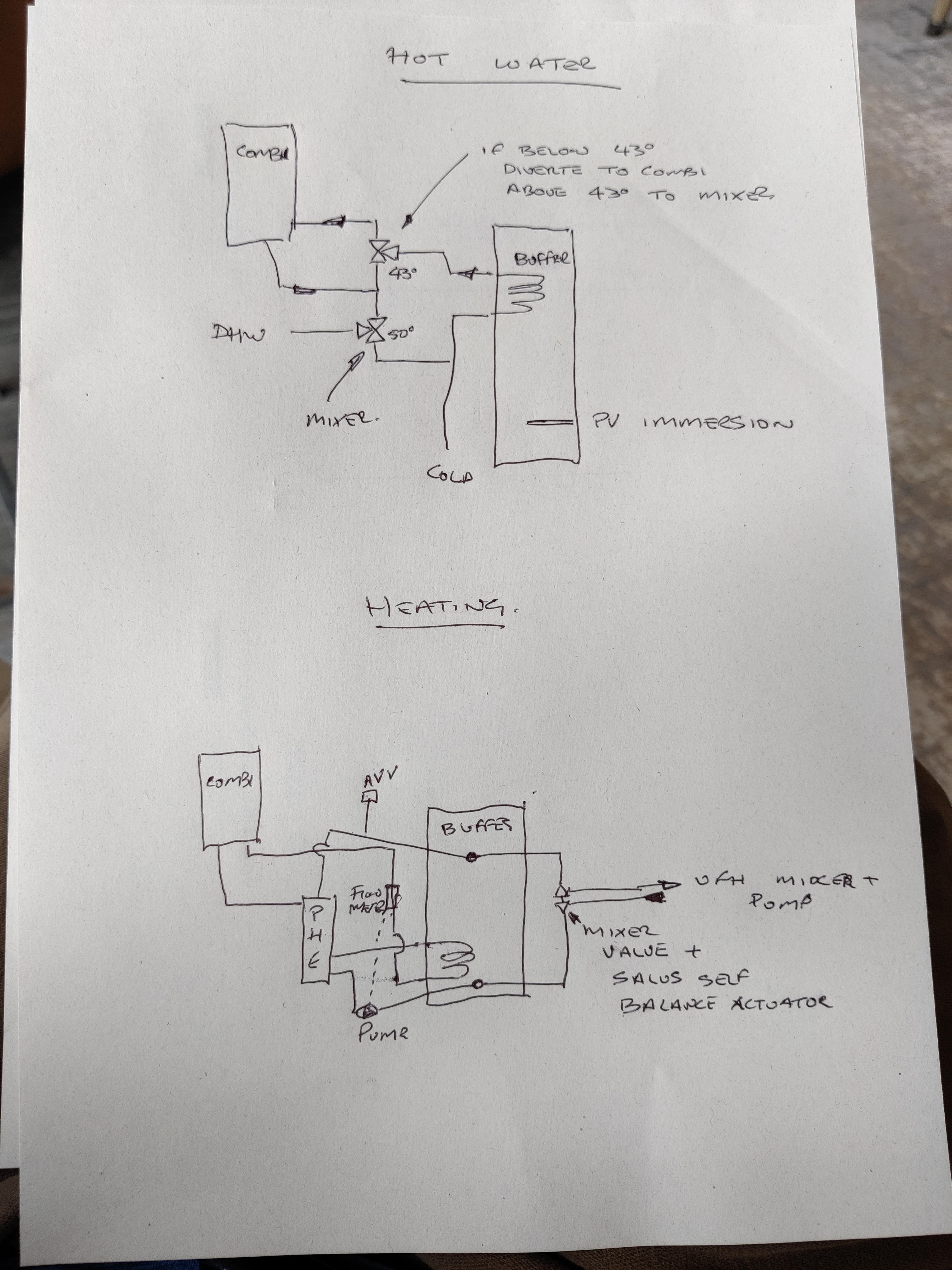
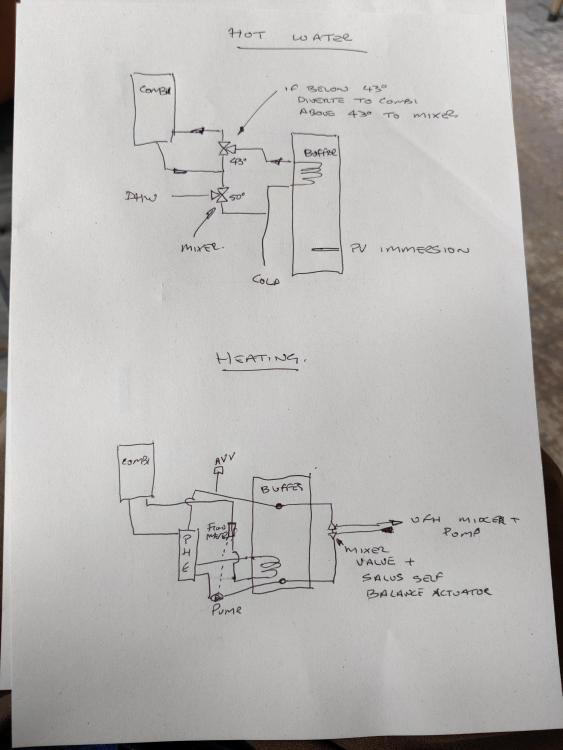
Quick rough sketch
-
Is there a reliable and fool proof occupancy sensor for WCs out there
JohnMo replied to MikeSharp01's topic in Lighting
Toilets normally have a quite high flow rate from MVHR in terms of air changes per hour, unless you have a huge toilet. Any smells are gone in minutes without boost. If really concerned, put a manual boost switch outside the door by the light switch. So if anyone feeling guilty about the smells they can hit a boost switch. -
Finland high wages and very high tax on earnings, same when buying vehicles - super high tax. But most other things like fuel not so bad tax. We have moderate wages, not that high tax on wages, but everything else is taxed to death, except vehicles.
-
Is it time to move to a fixed price tariff
JohnMo replied to JohnMo's topic in General Self Build & DIY Discussion
Moved to British gas, electric fixed tariff. Stayed Ovo variable rate tariff for gas as too expensive. -
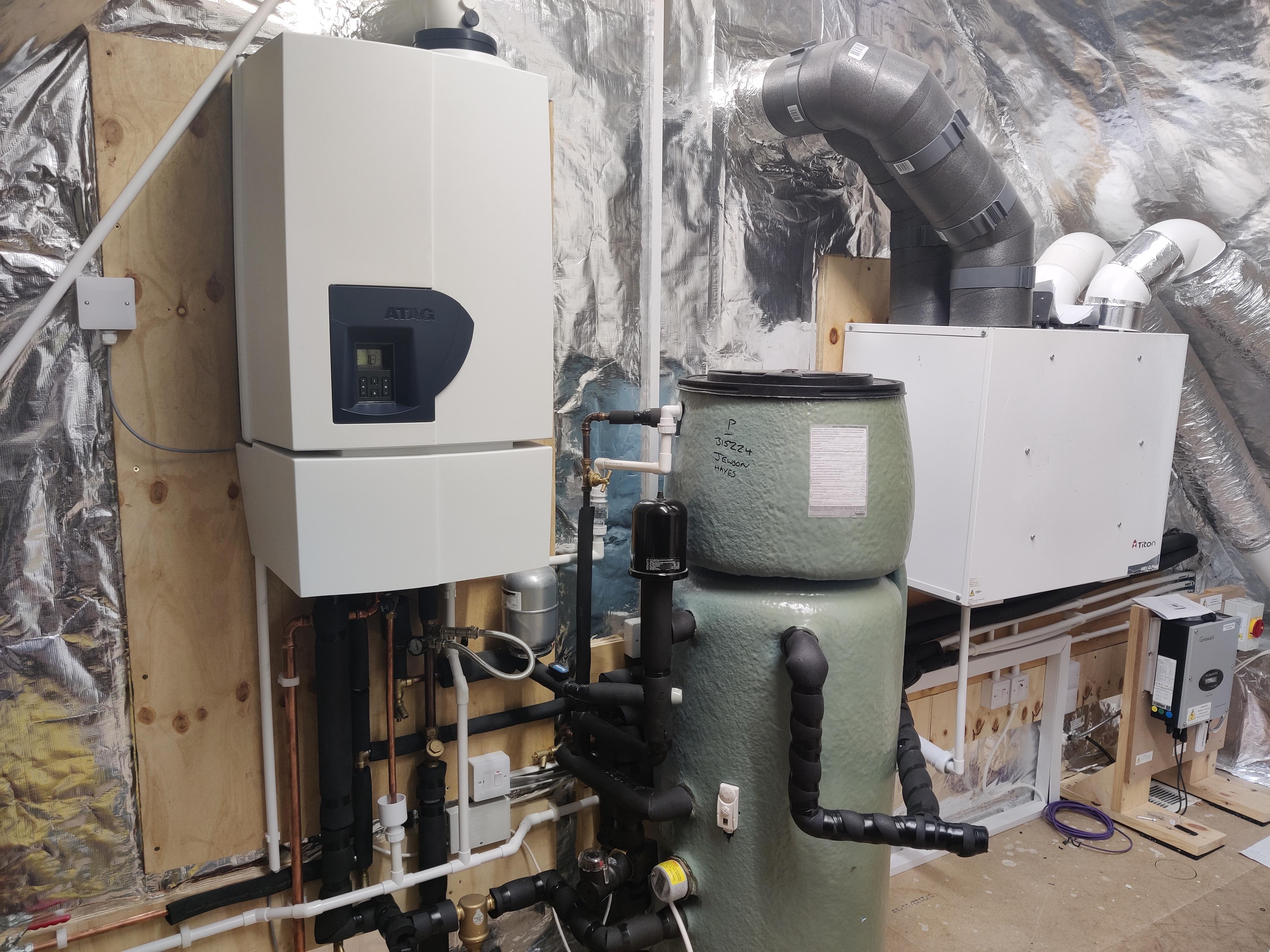
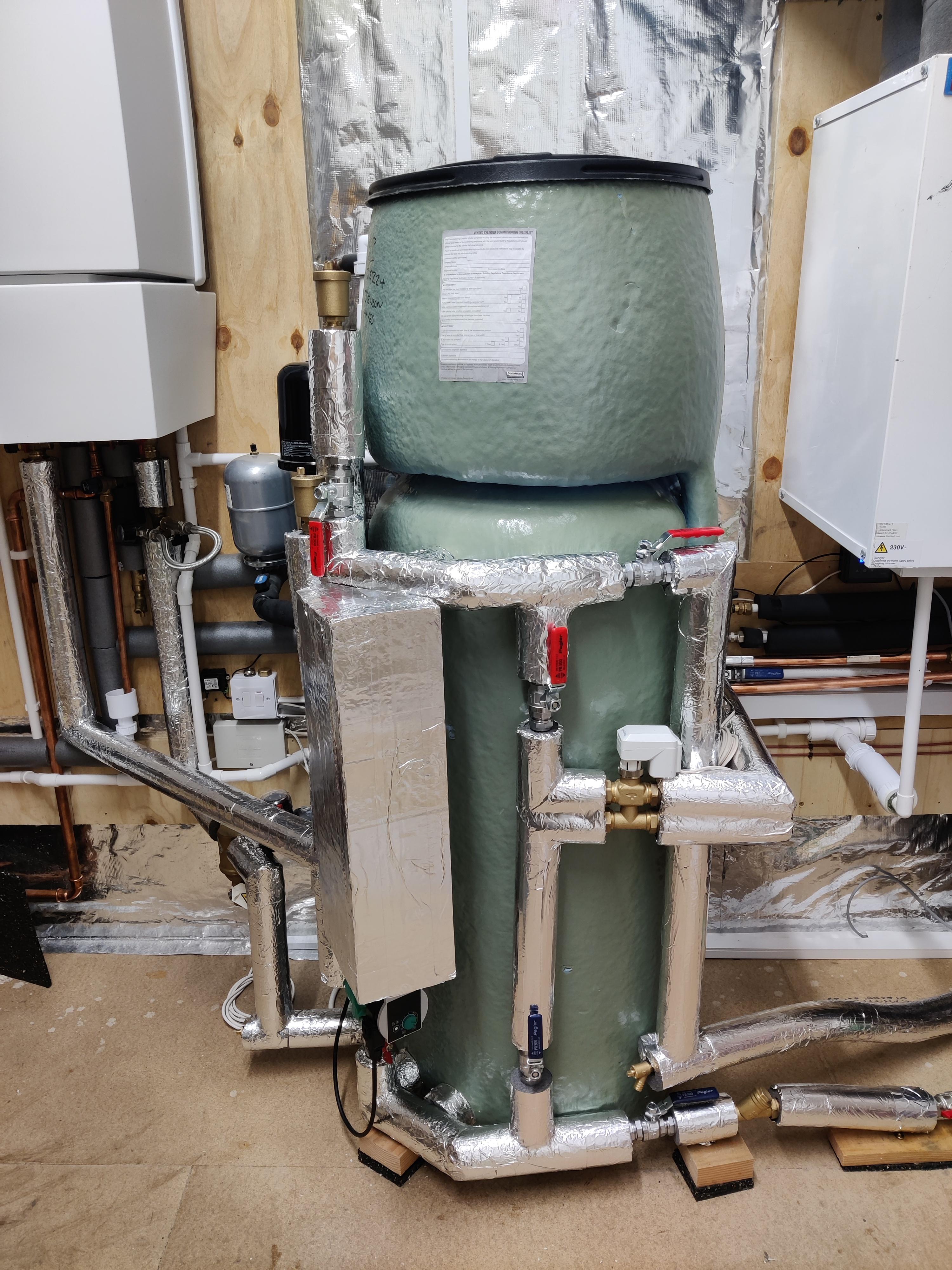
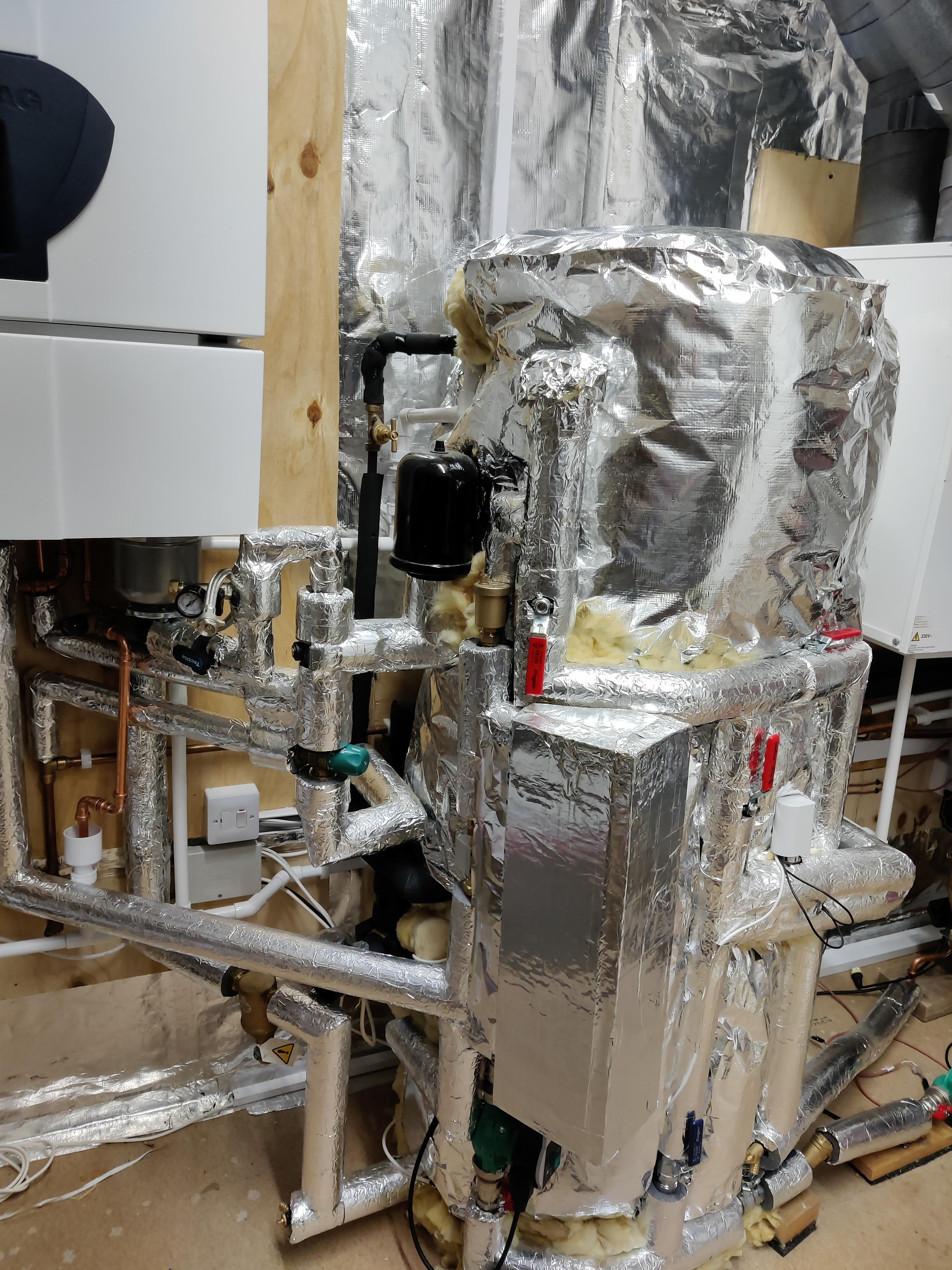
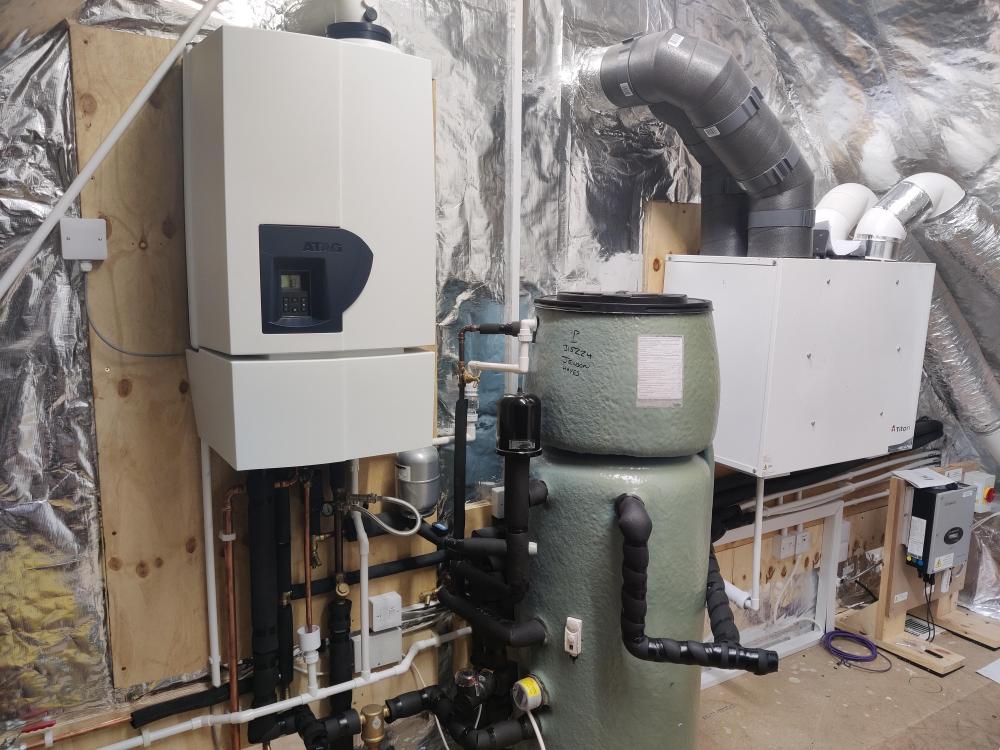
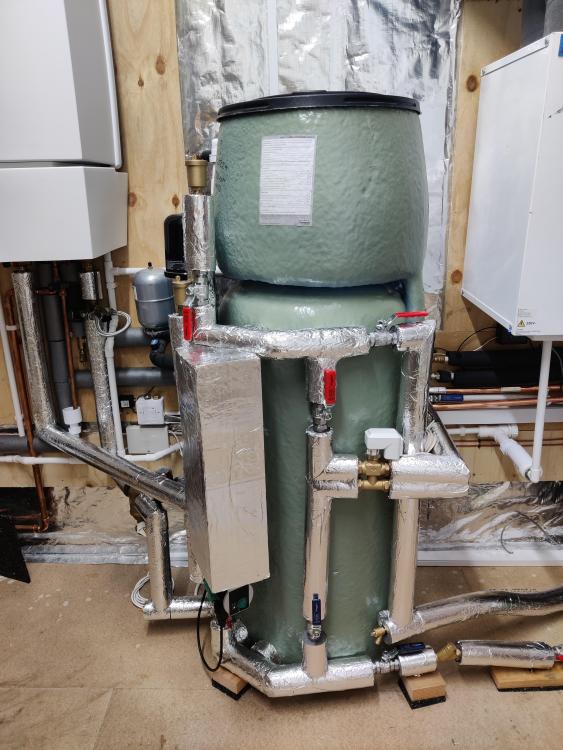
Basics. 190m2 single storey UFH throughout. UFH pipes at 300mm centres. House heat load max 3kW. Atag A325ECX combi boiler min turndown 6kW. 160l buffer, utilising an unvented thermal store with indirect boiler coil and DHW coil. Summertime use is for excess solar from PV to heat tank and use instead of boiler for DHW. Issue 1, when used at low temperatures the heating coil is way to small, had to turn boiler up to around 50 deg flow temp to get the buffer to 34 deg. Issue 2, a cold slug of water would enter the boiler with the tank hot in summer and the boiler would fire up, until the hot water came through, using gas. Issue 3 heat loss when heated by PV to 70 degs. Issue 4, could only get down to 30 degs at the UFH mixer. Fixes. Issue 1, large 40 PHE installed, with pump as well as being connected to indirect coil. Flow switch on boiler side, when it's pump starts the buffer side pump starts. First test had a temp delta of of boiler flow and return of 7 degs with a 30 deg flow temp. That kept boiler happy. An approach temp difference of 2 degs on buffer side. So boiler fired at 30 heating gets 28 deg. Issue 2, installed solar diverter valve and mixer. If flow from DHW coil is above 43 deg, water goes direct to taps, mixer valve ensures water is below 50 deg. If water below 43, goes to combi for further heating. Issue 3 loads of insulation., Had glass wool sound proofing 70mm thick laying about and vapour protection material laying about. Made suitable sizes cushion to insulate tank and pipe insulation. Issue 4 installed a bypass mixer and Salus self balancing actuator at the outlet of the buffer, this manages the delta T from UFH, so should give my lower temps at the mixer valve, which can now be a safety feature instead of actively controlling temp. See last image, second image is just a linear actuator. Photos show different states of mods.
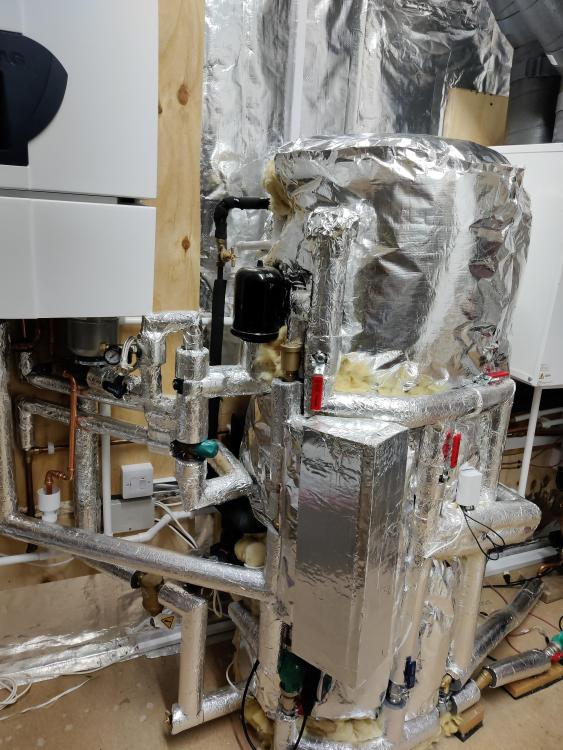
-
MVHR Unit placement
JohnMo replied to crispy_wafer's topic in Mechanical Ventilation with Heat Recovery (MVHR)
No issues, mine is also at the highest part of the system. -
Storage combi or UVC choices for new build
JohnMo replied to ruggers's topic in Boilers & Hot Water Tanks
Think the turndown on an ASHP is 3 - 4 to 1. If you have a 5 kW heat pump you getting down to 1.5kW. Think the best boiler can do 17 to 1. But it starts at 30 plus kW, so can come down to sub 2 kW. That's why it important not to over spec a heat pump.