
JohnMo
-
Posts
12467 -
Joined
-
Last visited
-
Days Won
179
Everything posted by JohnMo
-
Manage it in bite size chunks, make decisions once and stick with the decision. Changing your mind later costs money and time. Try to keep the design simple, complex can look good, but is a pain to construct. Use a build method that isn't much of a learning curve for the builder or you, if you are doing it yourself. Be careful you don't make rooms to big, it's very easy to do, watch out for evening heat gain from a low westerly sun. Good luck, but enjoy it. Try to get most the decision making done prior to build.
-
Not sure what you mean by a stop cock. The manifold should have a mixer valve and pump, the flow loops each have manual valve or actuator and a flow meter. The mixer valve set that to the flow temp you need. The manual loop valve, open fully. Set the flow to the flow required for the loop length. If all room get too hot the mixer valve temp needs reducing, too cool increasing. Once these are set you can fine tune the room temperature. Increase flow will give a smaller difference between flow and return and increase heat transfer to room, reducing flow to opposite.
-
Mine did similar, it was air in the system. Needs a good blow through with the hose pipe. Once air purged, worked as it should.
-
The mould is caused by moisture either coming in from the outside or inside trying to get out. How are your wet rooms ventilated? Do you have a good coss flow of air between rooms from dry to wet? New builds tend to have quite a bit of moisture trapped in the fabric and it wants to come out. Good ventilation by air movement is required. An open window is great when it's windy, when air is still no ventilation, or on a rainy day you will let 100% humidity in, which will not help. You mention you had no fans, assume you have now, what sort are they and how do run?
-

New build design & floorplan - Comments please!
JohnMo replied to jimmyharris80's topic in New House & Self Build Design
Your windows look messy, with the multitude of shapes and sizes. You seem to have lots of glazing on the north side, which isn't good for heat loss. On the kitchen diner you have two big sliding doors, I doubt if two would be opened at a time, so consider dropping to a single one and window in kitchen, this would also give more wall space. Your lounge looks small when you compare to the study which looks huge. Not sure why you have an external door in the playroom. Pocket sliding doors in a utility looks like an expensive solution in to what looks like a plant room. I would be moving things about to get a second en-suite. Do you need two baths? A lot of dead space on the landing. The recessed wall area at the front door seems a waste of internal space, you have two external walls to build, increase heat loss for little gain, as it doesn't appear to covered either, so would end up a damp area. Your heat heat pump is near the utility window and back door, it may be better around the corner and give less noise intrusion. -
You need plastic pipe cutter and a reamer, the reamer cuts the end square with a chamfer and re-rounds the pipe. The eurocones just slip in the end of the pipe. If your forcing it you may have the wrong sizes. The assembly is done dry, i didn't use or see the need for any lube.
-
It very slowly makes its way through the concrete as water vapour, I believe.
-
We managed to get a few soakings, in between phases. We had an extra stage of 150mm of concrete also below the insulation and above the DPM. It took an age to dry out (concrete dew point) as I think I had a puddle trapped below the insulation. You make lots of holes in the slip membrane as you staple the UFH pipes in place. So if it rains the water makes its way down.
-
I would ask them for clarity of what they would like to see, at what timescale, and if you can proceed without prior approval of the photos.
-
Why aren't you getting the capped rate? Which looks like your night rate, but all the time.
-
Assistance for oil burners
JohnMo replied to Gone West's topic in General Self Build & DIY Discussion
Are you sure that this isn't just a Northern Ireland thing? Not UK wide. -
I had my first set of structural engineering drawings and challenged lots. Ask why so much mesh and the reasons for it, with supporting calculations in writing (email). My wall rebar requirements almost all disappeared, apart from what looked sensible.
-
Boiler Upgrade Scheme Grant - Actions to Take Now
JohnMo replied to Green Power's topic in Air Source Heat Pumps (ASHP)
Joules and others do a cylinder with heat pump incorporated, that can do heating also. -
Any recommendations for Scottish electric supply?
JohnMo replied to IanP's topic in Electrics - Other
My permanent one went in when no building was even there. Just put in an external box on a post where it would be in the house. Altered the post and the box as the build progressed. -
I have just been to get my house insurance renewal, house is Durisol, spoke an adviser, explain ICF and Durisol, they said said yes it's a concrete wall box you tick. Thinking logically ICF is insulated formwork, to allow you to cast the house wall in concrete. The only difference with normal formwork is an ICF retains the formwork, instead of removing and using elsewhere.
-
Domus MVHR bubbling noise
JohnMo replied to jwpapi's topic in Mechanical Ventilation with Heat Recovery (MVHR)
That sounds the fan is hitting something. Switch it off at the mains, and take the front cover off. Have a good look inside. There will be a heat exchanger in the middle pull that out and that should give you access to the motors and fans - the heat exchanger will be a tight fit, mark which way is up and only put back in the way it came out. The fans should rotate freely and make little or no noise. If doubt film it and post someone will be able to advise. What are the two flashing orange lights? -
Hallways and corridors and stairs are part of the ventilated floor space, you may not supply air directly to these areas, but they have to be included.
-
Why are using imperial units on building in 2022?
-
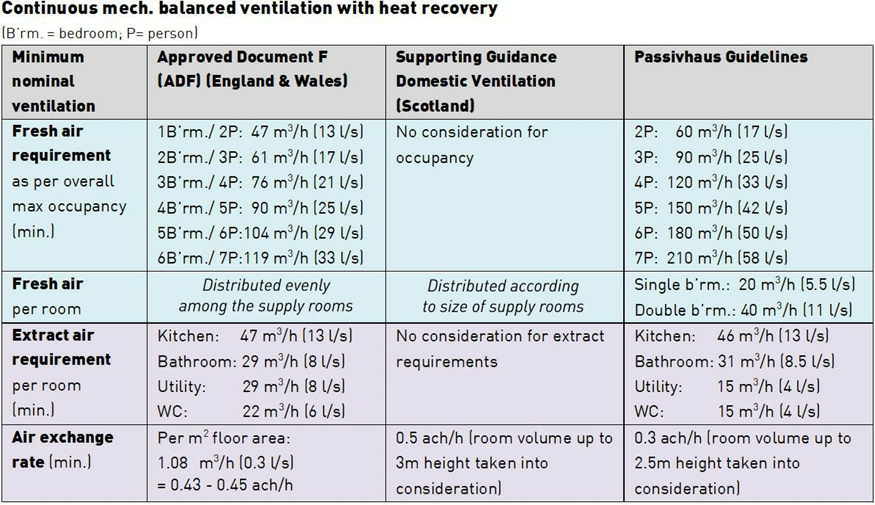
Use the attached will give you good starter for ten. You need your floor area in m2 for a start. Your flow into the house has to match the flow going out. Your inlets and outlets are already in place, so an easy reference for number of inlets and outlets. Inlet in dry rooms extract in wet rooms. Boost rate at 20% above normal flow. Humidity sensors are ok, but you end having to change the settings for summer and winter. So boost switch in wet rooms and kitchen are ok. Size MVHR unit at 50-100% bigger than your flow required, so unit is running almost silently. I have Titon MVHR units which seem ok.
-
So you are increasing the pump head, which is overcoming the set point of the flow meter. You should have a defined flow rate for each loop, why would you want to increase that? Increasing flow will reduce the delta T and increase the mean flow temp which will give an increased floor output. This cause temperature overshooting.
-
Our 100mm concrete with UFH pipes in it takes about 6 hours to heat up. Your heating the best part of 80mm. Individual loop flow speed is controlled by the flow meters, increasing the pump speed should have no effect. Your speed is set to cover the system flow and head requirements.
-
What energy rating is your HW cylinder?
JohnMo replied to Adsibob's topic in Boilers & Hot Water Tanks
But you may want to switch that around in winter, when generation is low. -
Building Regs requirement for height of balustrade fixed to parapet
JohnMo replied to LnP's topic in Building Regulations
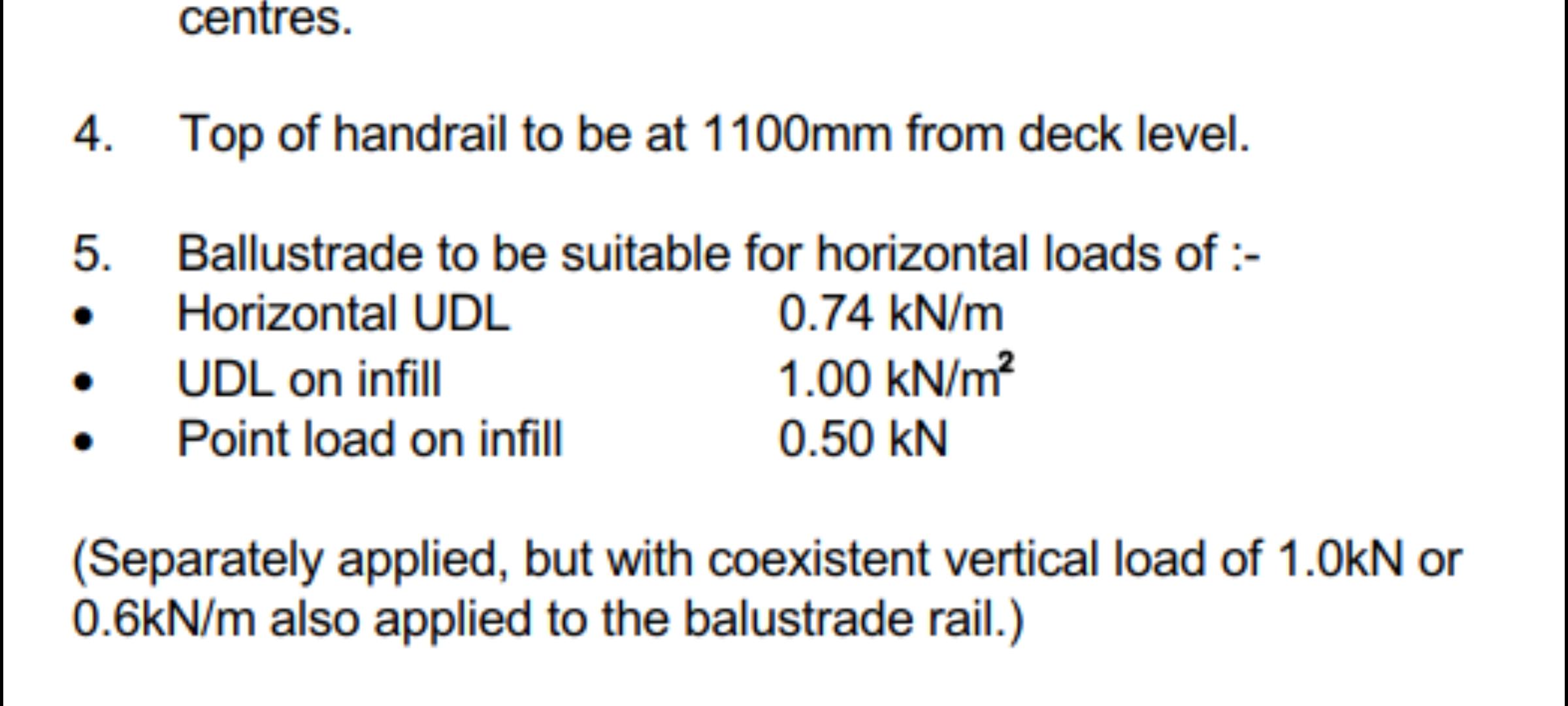
You will need to show you have complied with the following or similar.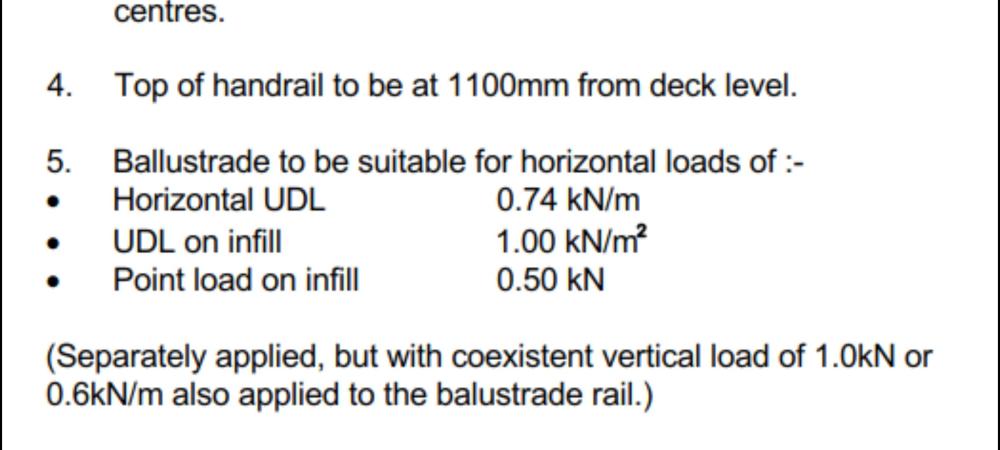
-
There is a slight drop in performance for both SEER and SCoP, but nothing major on the multi split. Two modes of operation to consider, all indoor units on at once or just one at a time. An example is installed in living room and bedroom, you may only on either or room not both at the same time, so in that case a small outdoor unit would be ok. Installed in two bedrooms you would want a bigger outdoor unit to service both at the same time. Single split, you get better overall performance)SEER and SCoP) but a few small units outsides, shorter piping runs that be may be easier to route and hide. Outdoor unit sized for optimal performance in any room.
-
Prices of building materials moving forwards
JohnMo replied to James Frome's topic in Costing & Estimating
I would say shop around, as soon as COVID started people started taking the p***, and it's just gets worse.