


JohnMo
-
Posts
13296 -
Joined
-
Last visited
-
Days Won
200
Everything posted by JohnMo
-

Advice on heat pump for under floor heating only
JohnMo replied to Ceridunn's topic in Introduce Yourself
Not all, but most do - read the instructions, if it shows an external pump between the hp and a buffer you need to add a pump. Pump can be in flow or return, whichever is easier, just make sure it's facing the correct direction. The power and control for the pump will come from the heat most likely -
Look in to BluMartin Freeair100 and FreshR, look at the principle of operation, how they cascade the air movement. You can apply the same principles to any MVHR system. Also look into Coanda effect supply nozzle, these will allow air to follow the ceiling to move from one side of the room to the other. Making supply nozzle placement easier.
-
From the looks of it if you want to run your UFH like radiators, there may be some benefits, running like UFH low and slow, not really seeing anything it can bring to the help out.
-
1st Floor Balcony - Glass Balustrading - documents for BC?
JohnMo replied to Conor's topic in Building Regulations
They were the best price I found. The quote starts from scratch once you make contact, they CAD up the drawings for our approval and make a full itinerary from there. -
Only really needed for a system with steel radiators. But don't see much difference once you get past the sales hype
-
1st Floor Balcony - Glass Balustrading - documents for BC?
JohnMo replied to Conor's topic in Building Regulations
We used made2measure web based company. All the design documents are on the website, our structural engineer accepted them and added to our structural design certificate. -
I had mould in our ensuite, started as a musty smell. Tracked it down to a very minor leak in a water pipe joint behind the plasterboard, which over a number of days resulted in damp plasterboard.
-
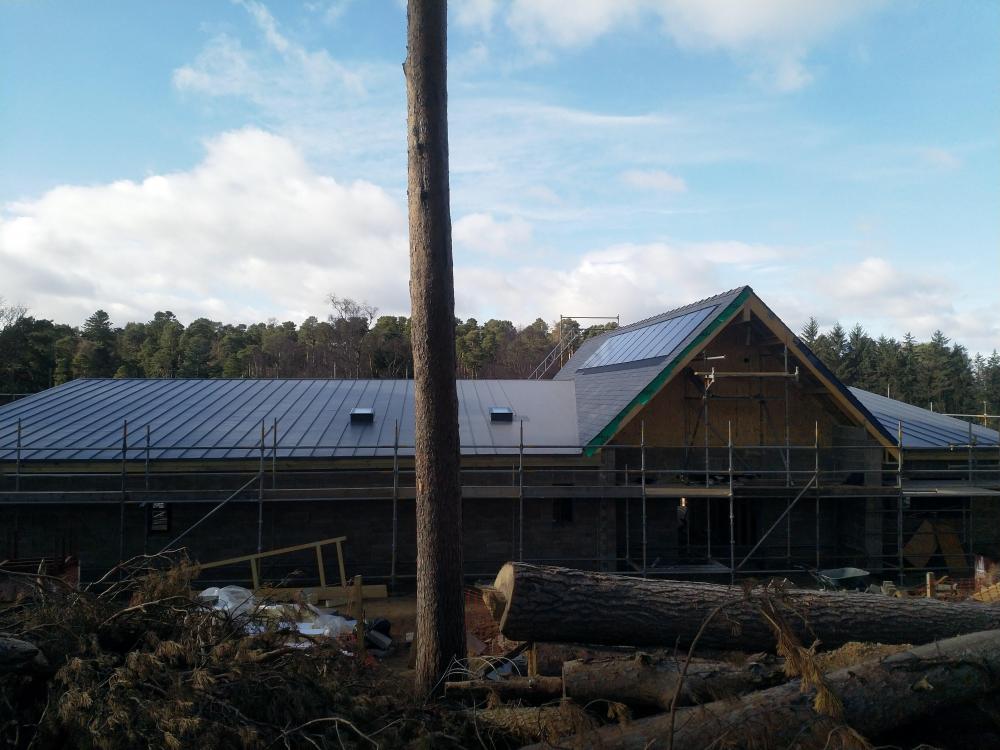
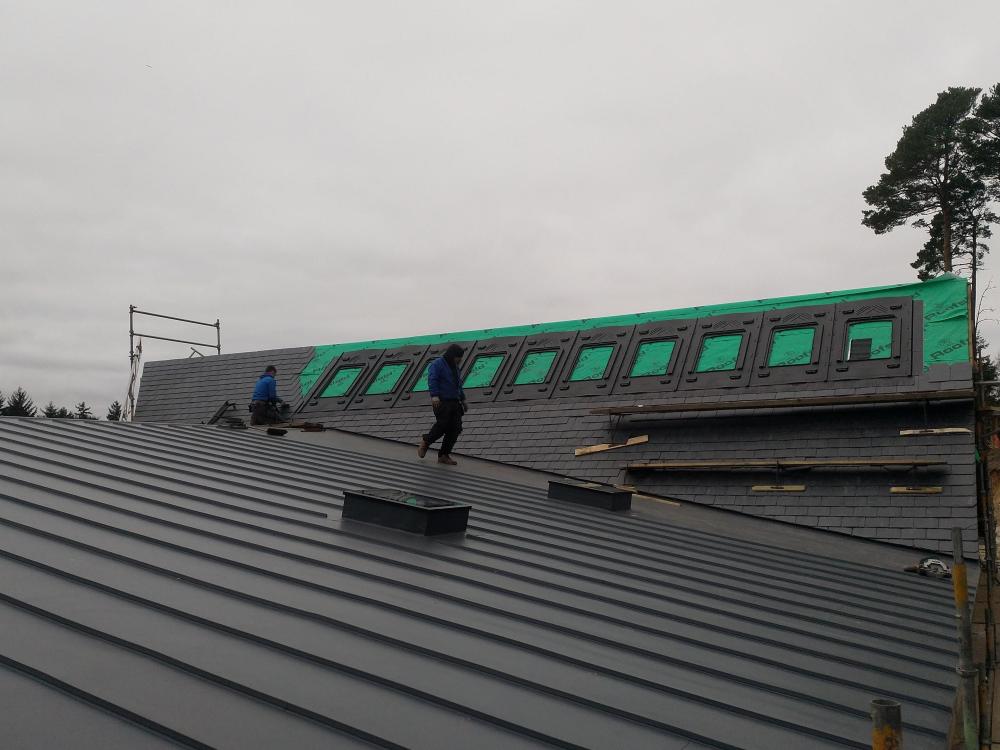
Solar panels are in a slate roof. The flatter roofs are sarnafil
-
Replacement of domestic steel gas pipe between gas meter and kitchen
JohnMo replied to DaveAF's topic in Gas Pipework
We just found a local plumber, use him to service and what ever else I need a plumber to do. Same plumber is used by a a house down the road. They had a burst pipe when it was -9 before Christmas, no insurance plumber was there in 20 mins at 9pm. Try getting that service from a call centre, that use a plumbers based miles away from you. You may find you are paying insurance and when the boiler fails, they say at that age it's fair wear and tear, your not covered anyway. -
I did a Sarnafil standing seam. EPDM the material mechanical fixed to 18mm ply, then seam welded and standing seam mouldings welded. Same effect way less money - 194m2 was £14.7k in early 2021. At the same time I was getting £30k quotes for both zinc and aluminium.
-
Maxa i32v5 ASHP. Too tempting to ignore?
JohnMo replied to Post and beam's topic in Air Source Heat Pumps (ASHP)
Yep -
Maxa i32v5 ASHP. Too tempting to ignore?
JohnMo replied to Post and beam's topic in Air Source Heat Pumps (ASHP)
The is/was a 9kW on eBay. -
If they are being hidden - practical question, how do you clean them? How do you know when they are overflowing and washing your walls?
-
Maxa i32v5 ASHP. Too tempting to ignore?
JohnMo replied to Post and beam's topic in Air Source Heat Pumps (ASHP)
Slightly simpler - they are same thing, except the sticker. Viessmann unit comes with an optional extra as standard, that being heat tracing on the heat exchanger and in the drip tray. All the control is built-in for the heat tracing if you feel the need. Mine is not installed yet, buying materials and work getting in the way. -
It's just illegal, so no issues really - that sort of temperature can kill a child and do adults no good either. 1 second at 60 to cause 3rd degree burns! Recent case where child had run a bath unsupervised and jumped in. Not sure if child died or just badly burned, but mom/dad ended up in prison I believe.
-
Pretty normal, it says to the fan someone is here and I have a reason to run. But if you're dimmed and the fan's are not coming on, that's why you have the mould. Put in lower wattage bulbs, so the dimmer switch has to at a higher setting. Dim lights and fan works.
-
"Modern" radiator design and controls?
JohnMo replied to mjsx's topic in Central Heating (Radiators)
Loads of zones, means your boiler just can't modulate low enough, lots of on/off cycling uses more energy. On off controls are no use, you would be better with a modulating Trvs, or better still no Trvs and just balance the radiators to match room heat requirements. Try to have just a couple of zones, bedrooms and living space. Manifolds, plenty out there, look for plumbing manifolds. Most the plastic pipe manufacturers make them. Or use an UFH manifold and use the flow meters to balance the flow to the radiators. -
Do you have a fan in the bathroom, if you don't the mould will just come back. Even if you do have a fan it is worth checking it's actually moving air. We had a mould issue in our last house, when I put a piece of toilet paper in front of the running fan it just fell off, almost no air movement. New fan required. Builder had just installed a cheap as chips fan, that a few years was good for the skip.
-
I was buying plumbing pipe yesterday and compared the price to 2020, it is double the price. Not sure how you can keep up with that rate of change and budgets.
-
I would install trickle vents that open and close automatically based on humidity. If the area is ventilated enough the trickle vents should close. They are pretty cheap, require no power. Example https://www.bpdstore.co.uk/glidevale-energy-saver-humidity-sensitive-trickle-ventilator/p/182 Q1, set the flow of the fans for the room the are in, the self opening/closing trickle vents will look after the rest. Q2 yes Q3 no Q4 yes
-
@IanR do you have a buffer? Do you have any real numbers to share? Everything mentioned above is good, when you have all zones open and are running in a steady state. Cannot see how it's true when the input and output of the buffer isn't balanced with respect flow or pressure. All the flow diverters in the world will not stop mixing, when the system is not balanced.
-
Better take my batteries out. +1 DeWalt. We got the red Lazer one, great inside rubbish outside. Green one would be much better.
-
The test was completed in steady state conditions there were no transitions to different temperatures; as far as the simulator house was concerned. So even if a load compensation was involved, it would do nothing. The graph of output temperature was very stable. There has been other sources of information on buffers, well prior to the Brendon test. Just go on to heat geek , as an example, they's been saying avoid a buffer and or LLH for ages. Even just having a second pump could be cost £50+ a year in running costs.
-
Guest house/ garden office or shed in a small garden
JohnMo replied to gambo's topic in Planning Permission
Look for a summer house, most are designed to take advantage of permitted develop. Even a u value of about 0.2 you only need about 6 to 700W to heat to 21. My sister has one and with two of them in it, and a few candles, it really warm. -
They probably aren't designed to mix when heat pump is delivering XX l/min and system is absorbing the same XX l/min. The mixing will occur when heat pump is still delivering XX l/min, but 1 or more zones have closed and the heating system is only taking X l/min. Or at any time where ASHP pump and secondary pump flow rates differ even slightly, then flow and return will take a direct flow path through the buffer as it becomes the path of least resistance.




