Gone West
-
Posts
4668 -
Joined
-
Last visited
-
Days Won
20
Everything posted by Gone West
-
God, that's grim. Mind you it's pleasantly warm compared to the temperatures in Calgary recently. I don't know how my daughter puts up with it, but she doesn't mind, that's youth for you.
-

Has anyone self installed Cedral?
Gone West replied to Post and beam's topic in General Construction Issues
I'm going to be installing Cedral Click T&G on the back of my place this summer and from what I've read it's pretty straightforward. -
Extension Cavity Insulation
Gone West replied to osprey's topic in House Extensions & Conservatories
+1 -
Thirty years ago I neatly cut the bricks out and mortared around the horns.
-
Felt really pleasant going out today. Mild breeze was a pleasant change from the recent cold. Shame it can't last.
-
We haven't had any snow but have had 43mm rain in the last 24 hours. It was 13C when I woke up this morning! My youngest daughter lives in Calgary where the forecast maximum temperature today is -10C. It got down to -30C last year.
-
I haven't fitted windows with horns since the early nineties.
-
Bungalow Chimney Removal
Gone West replied to Wolfman310's topic in General Self Build & DIY Discussion
We live in a bungalow and I took one of the chimneys down last summer. It went ok, so I'm taking the other one down when it warms up, and it will be a similar job to yours. I was going to cap it off in the loft after bricking up the opening and pouring insulation down the hole. I haven't decided what type of insulation yet, but probably EPS beads or expanded glass beads. Someone else might have a better idea about the insulation. -
Welcome to the forum. Self building can be very overwhelming at times but stick with it and BH will help get you through.
-
What you mean is, you, don't want a uniform temperature in every room. I designed and built my own house, to better than minimum PH standards, which resulted in a uniform temperature throughout the house. It was very comfortable. I now live in an old stone bungalow, and have the whole house at the same temperature. I could never go back to the old, uncomfortable arrangement where walking from one room to another meant a change in temperature.
-
The only potential problem I have with an in-roof system, is, if a PV panel needs replacing in the future, will the same size PV panels still exist.
-
Would you be able to rig up a Willis Solasyphon for something like that?
-
As a follow up, I couldn't get the cheapest programmer but got the cheapest from Screwfix last Sunday and it fitted ok. We were away over Christmas for a few days and when we came back yesterday the house and was nice and warm.
-
I would go for aluminium.
-
So there's not much depth to the reveal. I think I would have done it pretty much as in the video. As long as the cladding can oversail the reveal at the top to allow runoff and there is a, say 3mm gap, behind the cladding at the top to allow for drainage, it should be ok.
-
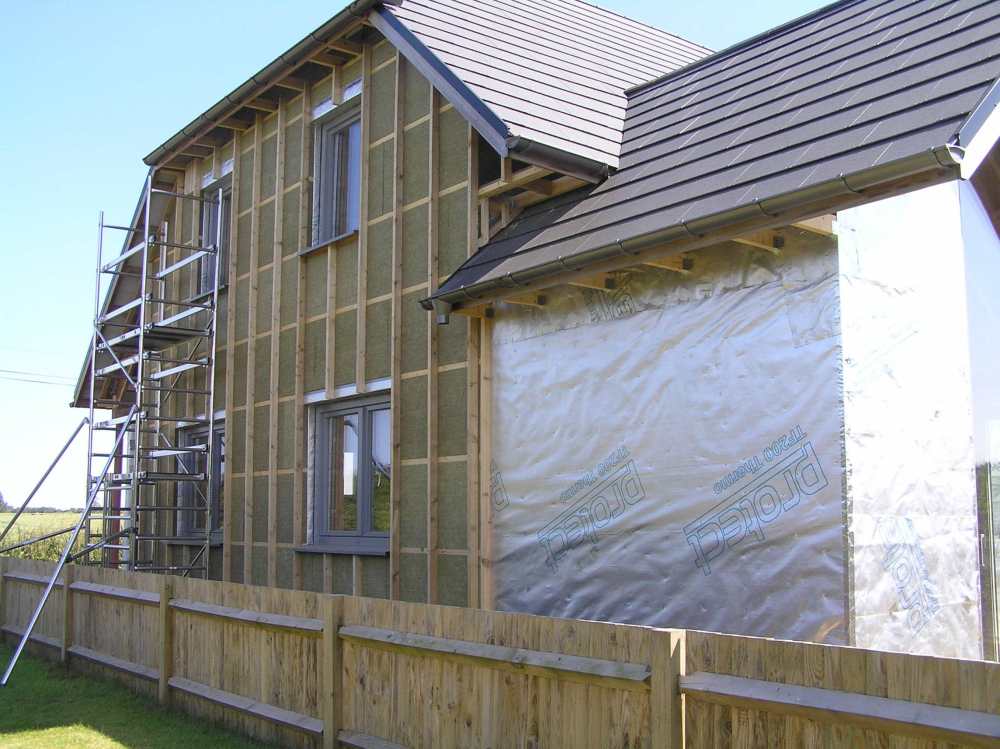
I found this one of the battening for horizontal cladding.
-
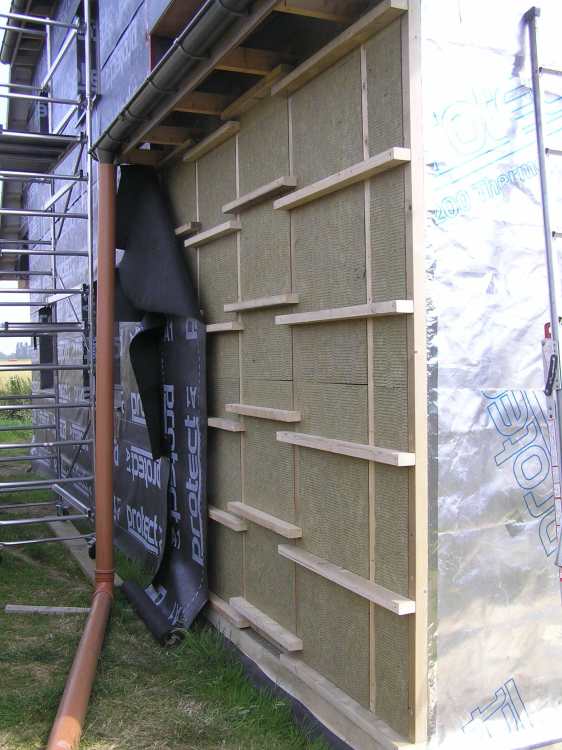
This shows the gaps in the battening for where I did vertical cladding. This is to allow for ventilation behind the cladding.
-
Are you saying there's not enough width to the frames? Have you a picture? After I clad mine there was still frame visible.
-
We had 4m high triple glazed windows in our gable and they flexed far more than I was initially pleased with, but years later they're still there.
-
Having seen the price of a replacement, and bearing in mind I will be replacing the whole CH and DHW systems next year, if I disconnect just the programmer from the wiring box, am I right in thinking the system will still work. Am I correct in thinking it will be controlled solely by the CH thermostat and the DHW thermostat without any timing control, but will be safe. As we currently have the CH on 24/7 it wouldn't be a great loss, with just the DHW being on a bit longer than at present.
-
OK, thanks for your time. I do have a multimeter and I have taken live readings before but I might just try a new programmer. It's just the wrong time of year. Have a good Christmas.
-
No. There is only a clunk from the programmer when the main CH/DHW power switch is turned off and on again.
-
Both. Yes Not by turning the CH or DHW off and on, on the programmer.
-
Nothing trips, it just stops working. The only way to get it working again is to turn the CH power switch off and on again.
-
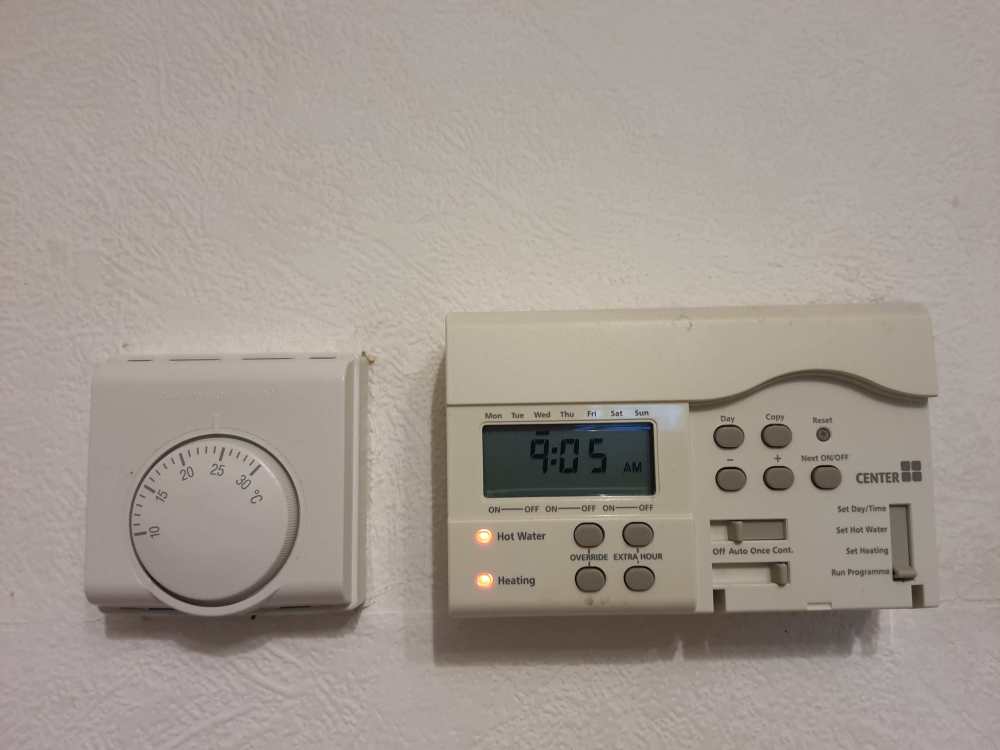
My central heating decided to stop working last Tuesday. I thought I found the problem when blowing through the thermostat seemed to clear the problem. It packed up again and I replaced the thermostat and it was ok for a couple of days. Switching the main CH power switch off and on clears the problem for anything from a couple of hours to a couple of days. When I switch the power back on there is a clunk from, I think, the controller/programmer. Any ideas what the problem could be. I have the heating running 24/7 and the DHW on twice a day.