PeterW
-
Posts
18480 -
Joined
-
Days Won
207
Everything posted by PeterW
-
That isn’t the point I’m trying to make - it will continue to reheat the water - due to losses - over that last hour until the timeclock stops the heating period. You need to be looking to optimise the heating cycle so it hits its peak temperature just before the last point in the time period, and only for as long as necessary. It saves energy and reduces system losses.
-
This is why using the immersion to boost the tank temperatures is well worth it. A lot of thermostatic valves need the higher hot water temperature to control the flow temperature through the wax capsule.
-
Yes but you turn it down to 10°C and go to bed..! And then wonder why it’s not warm in a morning ..?? My reasoning is that you may have to offset the temperature once things start to settle down due to location of the thermostat. It is very unusual to have the master thermostat in an upstairs room. It is normally in a downstairs living space. So your temperature unit may be reading high so it may be that you have to set the unit temperature higher than normal, and that will be your settings which are not the same as what someone with a different layout and install would be. So get them to do the settings and you can always use the dial to change things in exceptions, but that should be in exceptions and not to make it work.
-

Aftermarket filter material
PeterW replied to MJNewton's topic in Mechanical Ventilation with Heat Recovery (MVHR)
I found out the hard way, don’t forget to check the fly screens in the external terminals ...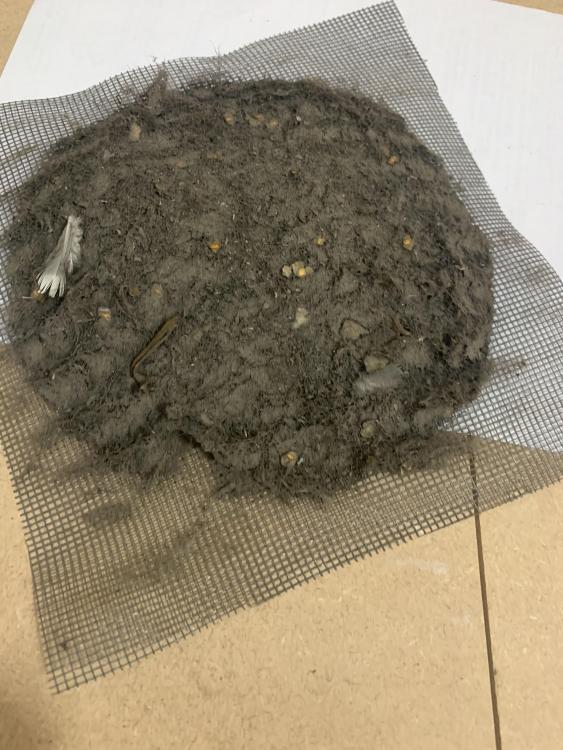
-
So you would normally do it the other way round - the buffer is direct and the UFH circuits would have coils. Each circuit would need a fill loop and expansion vessel, so that’s now a buffer with 2 coils and 2 expansion vessels - that’s more than the £60-70 of antifreeze and bringing in a lot of complexity for what could be very simple.
-
A lot of them don’t and they have a nasty habit of throwing over pressure errors and to be honest an automatic bypass and a pair of tees is change of £10 so why not just fit one and it’s done.
-
Stop turning it down manually ..! That will be part of the issue that you are over riding the control set points which could be causing issues...! If you’re setting it to 10°C it may not be coming back up to temperature as it’s expecting to come back from 16/18°C so will not be quick or warm when you get up. Get them to set the unit up to do the following ; 6-10am 22°C 10-4pm 18°C 4-10pm 22°C 10-6am 18°C 7 day programme, all the same. Also get them to show you how to change the set temperatures - not the times - for those 22/18°C periods above.
-
The overnight setting is the setback setting. Drop it to 16°C to begin with as you won’t get as rapid a reaction to the heating requirement in the mornings if you drop it too far.
-
Only need the 3 way or the zone valves not both Bypass is in the wrong place - needs to be behind the pump Can’t see your cold supply / control set - that’s how you get balanced hot and cold and the PRV for the UVC Buffer with a coil is debatable - for the cost of the coil, may as well just stick more antifreeze in the system. And yes, filter before the pump / ASHP And yes, PRV on the ASHP circuit but I would only run it at 1 bar so get a low pressure one.
-
Duty cycle on a heat pump is probably 75% so you won’t be doing it any damage long term or short term. I would get it to start warming the house then slowly turn the stat back down to a reasonable temperature, finally doing the setback overnight temperature when things have calmed down.
-
@Jamesessex just as an aside, the immersion is on for too long to get you from 45-60°C assuming this is a 210 litre tank. It will take an hour and 10 mins to get to 60°C which means from 5am to 7am it is cooling down and you’re not getting the full benefit of E7 overnight tariff. I would change the timing on the ASHP to 3:30 5:30am then the immersion from 5:30am to 7am. It may not save you much but it will be a start. When does the heating kick in ..?
-
prerequisites for steel beam calcuation
PeterW replied to dangti6's topic in RSJs, Lintels & Steelwork
UB is cheaper and easier to get hold of. -
The water temperature issue may not be one of any nasties in the water itself, but some showers do not work well with water that is below 48°C and 50°C for some of the digital mixers. @Jamesessex when is the heat pump / immersion timed to come on ..? And what is your heating ..? UFH or Radiators ..?
-
That UPS will do 15-20 mins on a good day ...
-
What is the PSU on the server..? And what UPS is it ..? RCD trip could be due to the UPS switch power supply floating the battery voltage every few days as a maintenance cycle - how old is it ..?
-
it is per K not °C above zero so the difference between 4°C and 8°C for example isn’t 100% more it is the difference between 277°K and 281°K which is 1.5%... The key is load shifting and being able to “store” the heat. UFH is good at this, radiators and building fabric less so due to heat capacity of air vs heat capacity of concrete etc.
-
Tips on reviewing roof truss design
PeterW replied to MortarThePoint's topic in Roofing, Tiling & Slating
Yes - check the regs, it’s all in there. -
Yep oversize is better than undersized but a lot of modern boilers already have them fitted. The issue of system volumes comes more into play when you compare rads with UFH. Standard 600mm high double rad contains about 7 litres per meter of radiator, so a standard 12 rad set up (4 bed / 130sqm) is about 18m of radiator or 120 litres - expansion vessel for that is most likely an 8 or 12 litre vessel. Compare that to UFH and 65sqm of pipe at 150mm centres is around 500m - that is just 8 litres of water per floor, or 16 litres for the whole house. The you now only need a 1 litre expansion vessel ..! Add in a buffer tank of 60 litres and you’re adding 4 times the volume to the system. This is also the reason some installers don’t like adding buffer tanks as it vastly increases the volume of antifreeze required in an ASHP system - at 25% volume, a direct to floor install will need around 5 litres, add the buffer and that jumps up to 20 litres and it’s not cheap. This is one single component you need to consider in a heating design - there are plenty more !!
-
what shall we do with existing roof conversion
PeterW replied to nina's topic in Lofts, Dormers & Loft Conversions
If you fail to declare the works and sell it as “completed unknown” and an issue comes to light it would be classed as fraud which is a criminal offence. Regularising works isn’t an issue and they do it a lot - will just be £4-600 of fees I expect. -
UVC is 10% and 99% of suppliers will provide you with the whole installation set of tank, stats, control group and expansion vessel. It looks like that graph is for heating systems which follows a rough 6% at 70°C and 4% at 50°C. Most tend to oversize them and it’s also worth understanding the minimum pressure the heat provider will run at as a lot of ASHP will run happily at 1Bar (0.1Mpa) and don’t need higher pressures. Putting 2-3Bar into a heating system isn’t really a necessity.
-
Pyrosorb is a self adhesive foam sheet that has a class O fire standard but is also quite dense so is good for the lower frequencies which is what I am trying to reduce. https://www.efoam.co.uk/Pyrosorb-class-0-acoustic-foam.php Plan is to both line the plenums using layers of 6mm and also to create a convoluted route through the plenum itself to increase the sound path. Will see next week if it works ..!
-
uValue is calculated by taking all the materials and their thicknesses and calculating their heat loss values. It’s not something you can “measure” with a meter or tool.
-
You size a heating system to the heat requirements, that’s why big old houses have large output boilers, and super efficient ones have small output boilers. A radiator puts in a finite amount of heat - the BTU or kW value - at a delta between room temperature and radiator temperature. A room loses heat through its walls, roof and floor and if the input exceeds the losses, the room warms up. So you do a heat loss calculation, and you size the rads according to the losses. That comes up with a kW requirement, and the boiler needs to be able to put in more than that value. And your ASHP can’t do that as it was designed wrongly. Your heat losses exceed your heat input - simple as that. Doesn’t matter if the rads get hot, you’re losing more than your gaining. The simple reason your downstairs room is warm is you taped the life out of it ..! You created a perfectly sealed roasting bag in effect and that’s why it traps heat - you have no convection losses through draughts and leaky walls. You can’t do that with the older rooms until you start stripping them back to insulate walls etc and reboard, but this is a big factor in the problem. In the attic above the bedroom ceiling should be 3-400mm of insulation at least. If you can get a hatch mid point in the ceiling you can add it in both sides - it’s not expensive to get either as a lot of places have it on offer and you won’t need much more than 2 or 3 big rolls as they do about 8sqm each. Also get an insulated loft hatch that seals properly - stop the draughts...!
-
The beams sit on the inside walls is what @Mr Punter means. If there is a supporting wall elsewhere then that just takes part of the load. Any reason for block on flat ..? You could save a lot of money using 140mm blocks.
-
I’ve got a couple of issues with noise due to having very short ducts from the manifolds to the supply valves so looking to use some sort of pyrosorb foam in the duct plenum to try and reduce some of the transferred noise but not lose the flow.