JFDIY
-
Posts
498 -
Joined
-
Last visited
-
Days Won
1
Everything posted by JFDIY
-
Dipping a toe into MVHR
JFDIY replied to Moonshine's topic in Mechanical Ventilation with Heat Recovery (MVHR)
Another option is ubbink insulated foam ducts, I used it and it's nice to work with and easy to remove and clean for servicing. -
I think you're right, It's very chalky and if you get under an edge it flakes off quite easily. The concrete underneath is quite a bit harder, but also rough. Not sure if I should try and chip it all off the surface (75m sq) or just try and make fairly flat. There's going to be 130mm or 150mm insulation and 50mm of flow screed with ufh. Tiles on top and I don't want it to crack.
-
Yes it's your OCD. I would just grout the lower one first, break the grout at an angle (say 30degrees) then do the upper colour, any water will have to go uphill to get in the different layers. Or grout it all in the light colour, but leave very low on the darker area, then put a layer of dark over it where needed. Perhaps do a trial panel with scraps first......
-
Sounds ideal, I was thinking of almost a neat cement mix, or at least a strong mix. I think the skin of 'fat' on the cement is what has been affected by being constantly disturbed by dripping water. The slab is 5" thick and otherwise sound, just needs a bit of levelling where the surface is flaky. Would you wet the area to promote adhesion, or use any special primer?
-
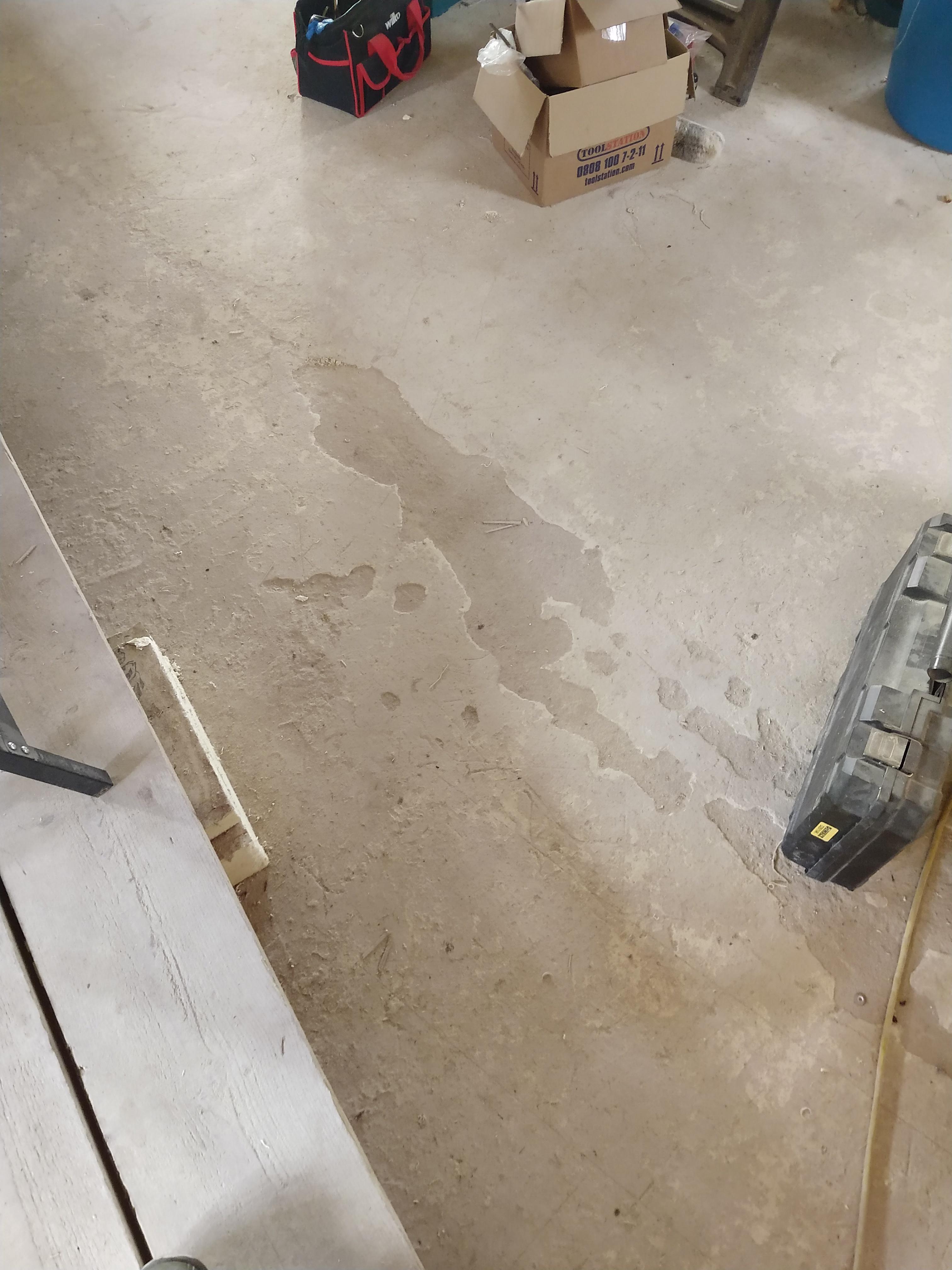
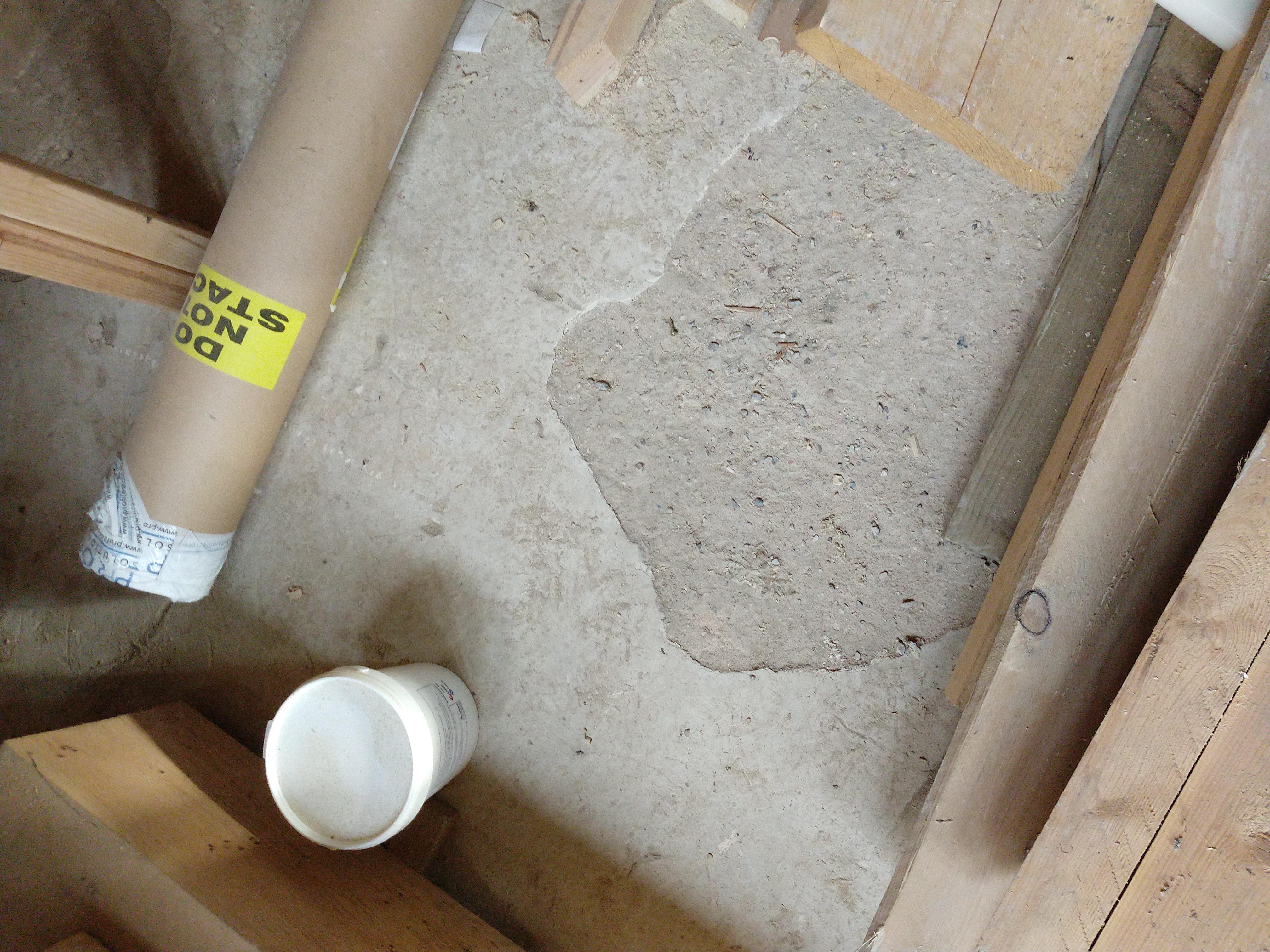
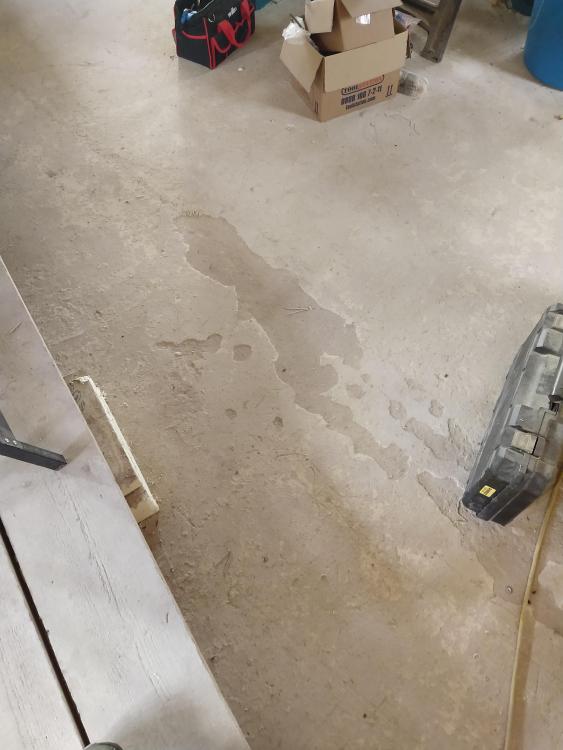
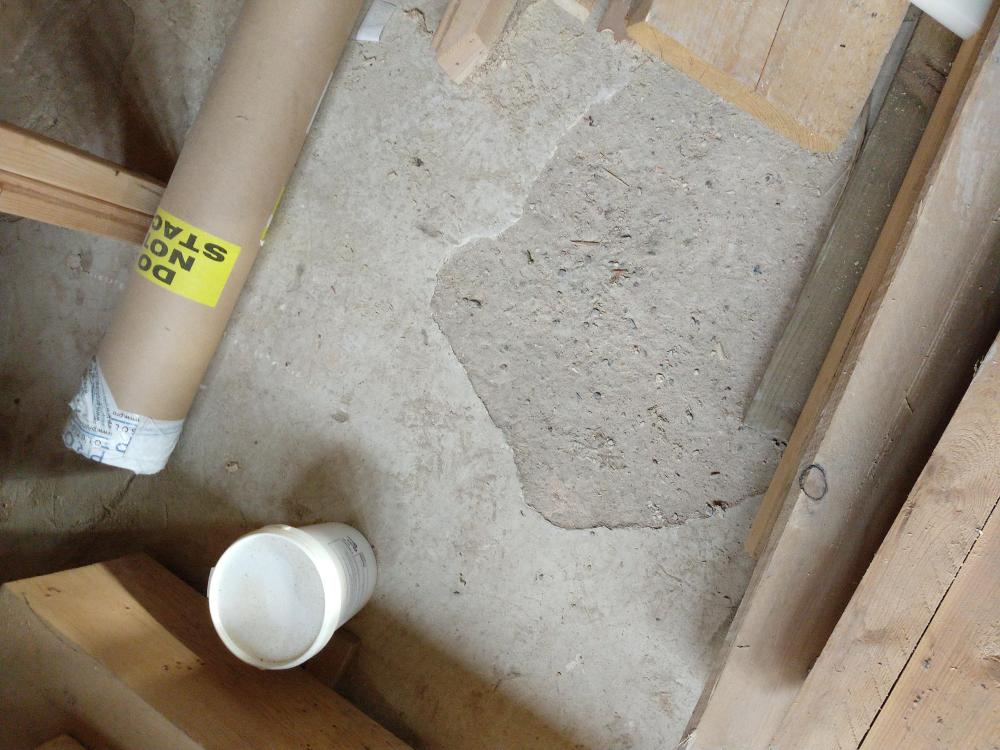
My Sub-floor slab was put down in less than ideal circumstances, it froze overnight on the days after and I covered it in sheets and bales of straw to protect it. The timber frame guys needed to work from it only a few days after and where timbers allowed water to run off/drip the surface layer has suffered with areas where the surface is loose and when cleaned away leave a 3-5mm lower surface which is rough Anyway two years on I'm getting ready to move on with insulating with PIR ready for underfloor heating pipework, screeed etc. My concern is that the sheets of insulation will be over the rough areas and not have full support, what do people recommend, should it be made good in some way, if so what with?
-
It'll be fine, the wall and sole plate above it will also brace it.
-
Are the manifolds actually hot? I'd take one actuator off and see if any flow occurs, could be the pump is goosed.
-
Keep the 3ph, damn sight cheaper now than as retrofit. I paid £500 extra to have it installed over single phase. Don't think we pay any more than a single phase on standing charge etc. But it's all we've ever had. My need was for garage equipment, not that I get in there much these days due to house build ?
-
The sides of a swept bend shouldn't vary much in flatness/profile compared to a straight pipe, the inside and outside would be obviously a different kettle of fish. Don't know if it'd be 100% to regs but it'll all be hidden anyway.
-
I think Russell is suggesting you can put a strap boss on the current pipe/bend and solvent weld it in place to serve the shower. Position at a height to suit you and not compromise.
-
condensation in extract manifold?
JFDIY replied to woodman's topic in Mechanical Ventilation with Heat Recovery (MVHR)
I was going to suggest a condensate drain, you'd have to make sure all sides slope to one point. That said there must be some areas of stagnant air to allow the moisture to drop out on a cold surface withing the manifold. Either insulate to prevent the cold spots or can you add in some fillets or even baffles to the internal shape to get the air moving across the surfaces? Perhaps a block of foam inside would shift the airflow and might even attenuate a bit of noise? -
I did no more than two at once and a couple individually, I turned the 'stats down on the zones I wasn't doing so they didn't draw heat from the manifold mid-way through calibration.
-
The calibration notes advise to run an increased manifold temp for the calibration exercise, so that the actuators always see a rise. If the manifold temp is falling it will fool the actuator as the supply will be dropping but the return stay the same briefly and it's looking at the difference between the two. Anyway, when starting the calibration I believe the actuator incrementally opens the valve until a temp rise is detected, then uses this as a base point for valve closure. On the flow rates being different; Each floor loop will have a different length and therefore heat loss, so the actuator opens to whatever point gives a 7c difference (assuming manifold temp over 30c) so understandably the flow rates for each loop will vary, it's the temp differential which it's driving for. So on a cold floor you will more flow than one that is already warm. I calibrated mine after being off for two hours initially- but I still have one with the same issue as you.
-
I've got one circuit doing the same thing, not shutting off. I've re-calibrated it about 5 times. My current situation is I've got it to work by calibrating it with the actuator nut about 1mm undone from the manifold, I then did the calibration, once completed I tightened down the actuator back onto the manifold. This fools the unit where the closed position is so it pushes the valve pin a bit further and shuts the loop off. Not ideal, but salus didn't even respond to my email about the problem, seems I wasn't alone in this issue.
-
Trimming the size of a scaffolding board.
JFDIY replied to epsilonGreedy's topic in General Self Build & DIY Discussion
Paint the ends to stop them drying out so much. They're not treated so the cut end will be no different. -
5mm or 6mm hammer in 'through bolts' or concrete screws/thunderbolts should do it.
-
The hose doesn't get air locked because the flow rate is sufficient enough to drive the air out. On a radiator circuit the flow will be a fair bit lower and could be insufficient to displace the air, it will take the easiest route and might mean that one of your rads will not be easy to bleed the air from. That said you can probably force the bleeding of it by closing off all other circuits and running each one at a time until the air is out. Personally I think I'd look at fitting the manifold at the highest point, even if in the roof space, then have an automatic vents on the manifolds and remote mount the pump if needs be for space constraints?
-
MVHR in large volume New Build
JFDIY replied to Triassic's topic in Mechanical Ventilation with Heat Recovery (MVHR)
Yes, you just need the total flow to be correct, doesn't matter if you one or ten outlets from a compliance point of view. -
As above, but if you must have a Y branch, Osma/wavin 4d492 and cap the redundant leg. Travis Perkins usually discount osma massively so don't believe the list price.
-
I've used them, similar to the Marshalltown ones, and they were a god send for laying 160mm wide 7kn blocks, they were very heavy, but these let you hold the block with two hands from above and prevent bending down on the lower courses. If I were buying i'd get the Amazon pair, two for the price of one, I'm sure they'll be just fine.
-
I did wonder, I guess I'm looking for some plastic barrier pipe to allow threading without work-hardening like the PEX Al PEX probably will. I did ask Wundafloor, but they didn't seem to offer anything.
-
It's a little bit more involved than suggested in the posts above. Certain models of the vent-axia range allow you to couple up a cooker hood, from what I can see, the hood is no more than a housing with greese filters and lights, its power is supplied from the mvhr unit, when the hood is switched on the extract speed increases to 100% (or your desired speed) and the inlet speed changes to 30% (again this is programmable ), the bypass is also opened to stop any fouling of the heat exchanger. I intend to build into my celling an extractor/hood arrangement with grease filters, and some electric actuated valves, so when this happens the increased extraction is mostly in the kitchen. I've wired the unit as a trial to test the mode switching which is pretty straightforward I've found the standard humidy controlled setting works so well the boost function doesn't really need hard wiring in at the moment, but it's there and might be better suited to when our next bathroom comes on line which is a lot further away from the unit so could be used to reduce lag. I also use the low mode (supposed to be when house is unoccupied), but I use it on an overnight timed basis to lower the noise (it's barely audible anyway) when sleeping. So work out the unit size you need and look through all the manufacturer documentation you can, there may be others, but I settled on the vent-axia one because of this and all the other features that come as standard, I guess there are other makes which may have similar, but they don't make it easy to find out, hence my closed shop comment in the earlier post.
-
Which pipe is that? looks flexible to go the route you have done. I'm looking for UFH and have got to thread through metal web joists a lot
-
Mine is a 100yr old barn, converted 10 years ago, by no means passive standards, I'm adding on a large extension and wanted to avoid the cost of a downdraft extractor for a kitchen hob in an island. We've always had issues with condensation and we've tried various things like keeping the place hotter and having windows on vent etc. I saw the £1k+ for a kitchen extractor and decided to put it towards MVHR, I'm yet to couple up the extension, but all the ducts are in. I've sited our unit above the bathroom in the original barn as this is the only place without vaulted ceilings. By comparison I was quoted £5.5k for an installed system, about £4k for self install but my own spec etc is going to run to about £3.5k with what I believe to be better hardware. Sure you can do it cheaper, but I wanted a self managing unit with humidity control, summer bypass and also a cooker hood mode, the last requirement only really left one option which was a vent-axia unit.
-
Snap, I was looking into MVHR and there seems to be a closed shop from installers and suppliers to some extent, this place has by far the most info, and real world experience. I've DIY'd my own install from scratch (as have many others) and while I don't have figures to back it up, I'd say it has transformed the feel of our house, no condensation at all, previously I'd have wet windows every morning and a stale feeling to the place. I've yet to balance it up and I'm about 50% over suggested rates at the moment based on a quick check when I got my anemometer. Enjoy the banter, the 'bogus' thread has some interesting views