Ian
-
Posts
751 -
Joined
-
Last visited
-
Days Won
3
Everything posted by Ian
-
@SKB I’ve seen that problem a few times over the years on my commercial projects and each time it happened it turned out to be an issue with a traditional sand cement screed which had been laid with insufficient water in the mix. When there’s insufficient water the chemical reaction can’t take place right through the thickness of the full screed depth so the surface typically forms a hard skin that is 10 - 20mm thick but the main body of the screed doesn’t cure and remains as a dry mix. The surface skin obviously can’t bond to the rest of the screed and it isn’t thick enough to take normal loads so eventually it starts to crack up just like your photo.
- 10 replies
-
- 1
-

-
- screed dips
- cracks
- (and 1 more)
-
Help me understand /m2 pricing better.
Ian replied to Ramaya's topic in General Self Build & DIY Discussion
Typically about 15% more. -
Then it’s a ‘no-brainer’ to go with the 2G version. Winter is coming
-
That all sounds very well organised - good luck to you!
-
That's not correct. For a normal 2 storey house the only internal door that would need to be fire rated is a door between a garage and the house.
-
I bought a load of treated decking planks and support joists a few weeks ago (north Cheshire) and only had to wait 1 week for delivery but the timber merchant told me that their warehouse was emptying as soon as a delivery arrived
-
Just for fun - build a house for £100k
Ian replied to Gav_P's topic in General Self Build & DIY Discussion
3 years ago I built a 71sqM 2 double-bed bungalow for £96k. Timber frame construction with cedar cladding. The site was difficult on a 1:8 slope with poor access on a remote site in N Wales. The only ‘work’ we did ourselves was the decorating + I did all the drawings, PM work and coordinated subcontractors. -
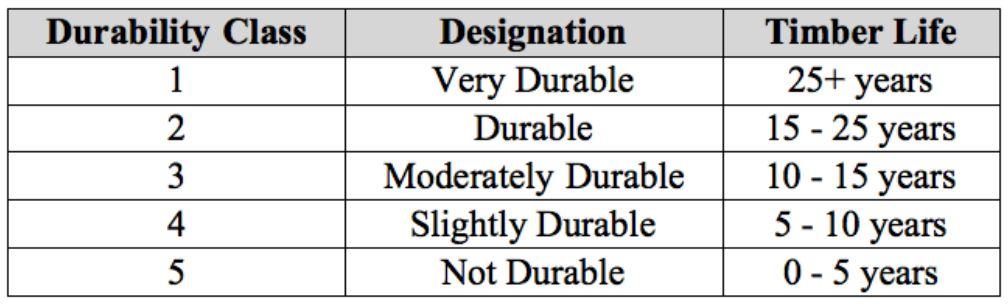
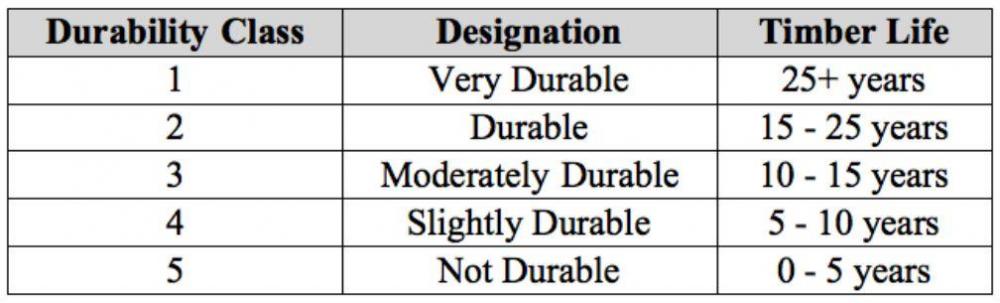
Untreated redwood is classified as 'slightly durable'. The (untreated) timber species classified as very durable are the tropical hardwoods such as Iroko or Teak. An example of an environmentally friendly treated timber which is very durable is Accoya
-
The main difference is durability. The chart below is Trada's guide and is measured using timber posts in contact with the ground. Oak is classified as durable and Siberian larch somewhere between slight & moderate durability. If you keep your fencing at least 150mm off the ground and it's used in an area where its well ventilated it will last a lot longer than indicated in the table.
-
A Strong Drink and a Peer Group
Ian commented on Ferdinand's blog entry in The BuildHub Gardening Blog
@Ferdinand Google do an App which is fantastic for auto identification: and this is a screen grab from the app after uploading the photo you posted:

- 32 comments
-
- 1
-

-
- ferdinand
- housekeeping
- (and 1 more)
-
Yes, you need to talk to them but I’ve specified lots of it from different manufacturers over the last 30 years or so with no failures. By dry’ they mean no standing surface water. Surface preparation of the concrete is very important
-
@Ann I’m an architect with 35 years experience. When it came to building our own house which had approx 65sq.m of ceramic floor tiles with UFH I specified the Schluter Ditra matting mentioned by @nod @Russell griffiths and @Pete We always specify it on our commercial projects and in my opinion it’s not worth the risk of not using it.
-
The best liquid dpm products are epoxy based. There are lots of different manufacturers but here’s an example from Tremco: https://www.tremco-europe.com/en_GB/product/es300-surface-dpm/ you’ll need to check with the manufacturers technical department that it’s okay to use with the type of concrete that @Onoff identified for you.
-
@Joe87 there are surface applied liquid dpm products available that you could use on top of that floor which would get rid of the issue of rising moisture affecting the new timber floor. There are also dimpled underlay mats that disperse any moisture to the edges of the room but I have less experience of those.
-
@SuperJohnG The main Risk with a ceramic tile floor over UFH is cracking of the tiles. Obviously with LVT this is less of an issue (although It can still happen in larger commercial sites with big expanses of concrete floor where the floor cracks at day-joints). Compared to ceramic tiles however, vinyl and wood flooring is much more vulnerable to damage from concrete or screed that has not been dried out properly before the flooring goes down. I’ve seen whole vinyl floors fail on commercial projects due to the water-based adhesive emulsifying due to water migrating from the screed.
-
for ventilated external rain screens the recommendation in BS5250:2016 is for a mesh size of 4mm.
-
Septic tanks are still legal as long as you're not discharging directly into a watercourse, however I installed a sewage treatment plant as I wanted to future-proof. The output from a sewage treatment plant is much higher quality so your drainage/leach field will last much longer before it clogs up. the downside of most sewage treatment plants is that they are noisy. Septic tanks are silent. The air blower on our sewage treatment plant costs about £25/year to run. Septic tanks have no running cost.
-
@epsilonGreedy Have you considered a pre-fabricated GRP chimney? You can't tell they're not real brick from ground level and it would completely get rid of the structural worry that you have. https://www.capvond.com/grpglassfibre_mockchimneys/mockchimneys.php#:~:text=Many types of GRP mock,smooth through to roughly texture. and there's also GRP ones which are designed to take a real brick slip facing in case you need it to match: https://ibstockbrick.co.uk/wp-content/uploads/2016/08/Ibstock-Kevington-Chimney-Brochure-July16.pdf
-
Our bungalow is only 765sq.ft nerve wracking waiting for the test results isn't it! With ours I 'needed' a result between 3 and 5 m3/h.m2 @50Pa so 3.7 was ideal (For the SAP design calcs I'd committed to a value of less than 5 but also needed a value greater than 3 as the building is naturally ventilated. It's a holiday home that only gets used at weekends and, unlike most new-builds on this forum, it is built to minimum building regs requirements however total heating, hot water and cooking costs for the last 2 years averaged just £140/year using bulk LPG + standing charge.
-
Most of the sewage treatment plants with air blowers use pumps that are also stocked by garden centre or online aquatic stores (the pumps are used for aerating garden ponds) That's where I bought the hose for ours and they sell it by the meter length.
-
For anyone who is reading this who may be wondering what order of airtightness is normally achievable on a new build if you don’t use any special tapes or air tightness membrane I achieved a value of 3.7 m3/h.m2 @50Pa on a new-build timber frame bungalow. That’s without taking any special precautions regarding airtightness as the building is naturally ventilated (no MVHR).
-
It’s certainly not a rubber stamp exercise if you’re simply aiming for min building regs compliance because failure to get the air tightness value set out in your initial design can really complicate things.
-
I did a similar project on our house 6 months ago except the wall between the kitchen and dining room was load bearing. Also, I didn't do any window alterations (so no requirement for Planning Permission required for us). Have you got drawings to show what you're planning to do?
-
I’ve got something similar in our house with a small change of level between the ceramic tiles in the kitchen and engineered timber floor in the adjacent room. I used an oak transition strip similar to this one: https://www.ambiencehardwoodflooring.co.uk/solid-oak-r-section-door-bar-threshold-ramp.html?gclid=CjwKCAjwrcH3BRApEiwAxjdPTSbKBoVh7D0zbKPVL2Kg7jpleCed4BVBKtD3bDZtbovpj3KSOLq9wRoCuUoQAvD_BwE
-
It’s okay - don’t worry about it!