
Conor
-
Posts
4165 -
Joined
-
Last visited
-
Days Won
12
Everything posted by Conor
-
That's the thing, I'm not really sure how air tightness class relates to air leakage under test conditions... Seems more of a wind resistance measure than anything else... Which is probably more relative to the real world!
-
IMHO, yes, they do. You end up with a much wider open area. Price wise, the doors I'm looking at seem to be the best in the market - triple glazed, 25 year frame warranty, class 4 airtightness, and looks like around £9k for a 4.6m opening. I know lift and slide for that size are around £5k - so almost double the cost. BUT, our doors will be 2.7m tall and I've yet to find a lift and slide locally that comes in anything taller than 2.4m. For comparison, our "standard" double glazed 3m bifolds in our last house cost £3250 including side windows and installation. I'm sure you can get a good product for aronud £1k/meter.
-
Not at all. We had them open on a daily basis from spring onwards. Even in winter we'd open them on a good day to blast fresh air through the house. They were certainly well insulated - condensation on the outsides. No issue re the view... It's only about 400mm over 3m. We're picking them for the new build for the "framing" aspect in order to match the fixed frames above. A lift and slide door would clash with the vertical frames above.
-
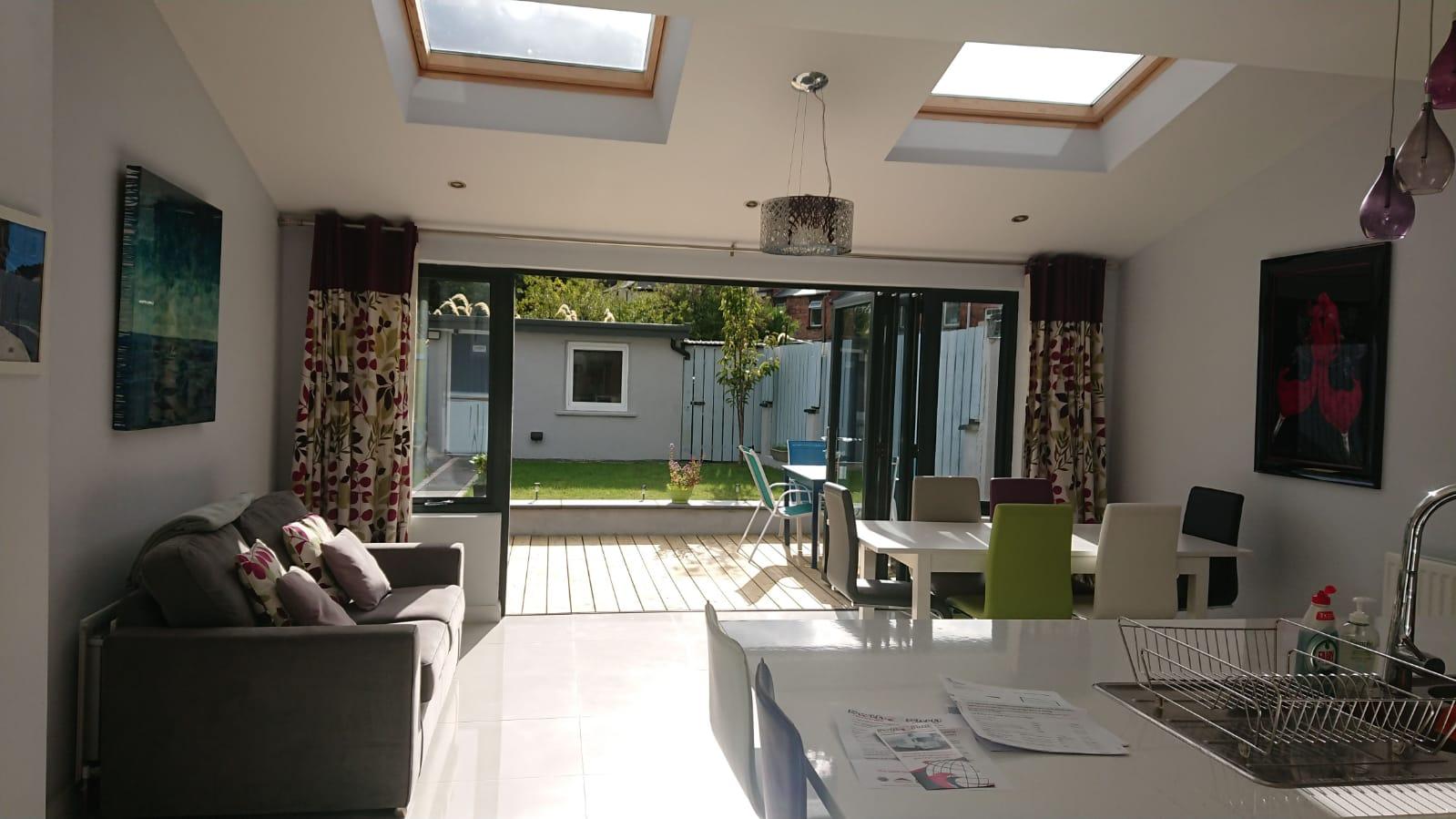
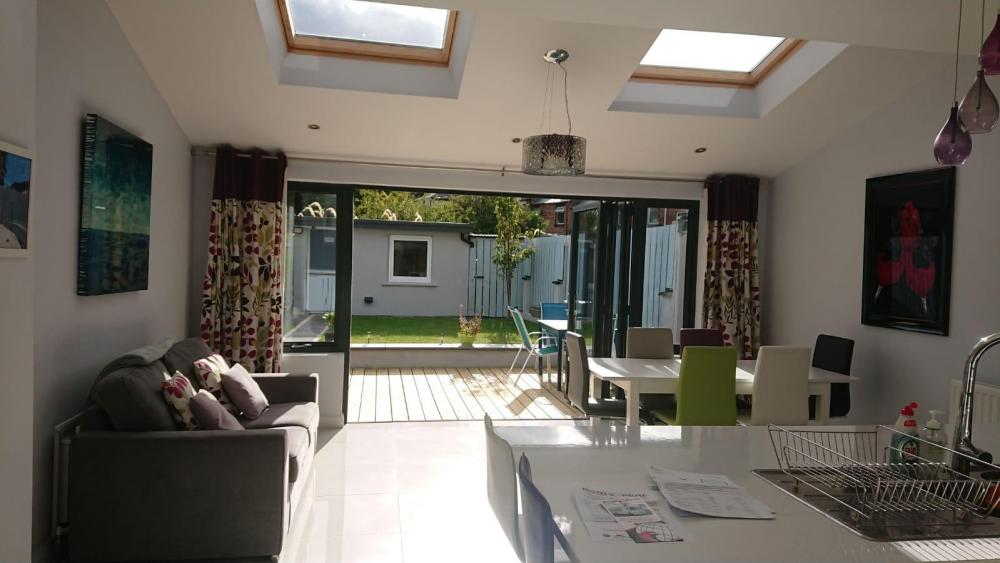
We put in 3m wide bifolds in our last house about 4 years ago. Loved them If you have an odd number of leafs you normally have a single opening door. Dead easy to operate. No issue with BC regs- fire or otherwise. Our 3m folds took up about 400mm at the end of the run. They open outwards so don't take up any space inside the house when open. The running gear is really solid, even on ours which was mid range. Didn't notice any issues in the 4 years we had them. Occasionally vacuumed the rail, and I think I greased the running gear once and adjusted the hinges once in those 4 years. Airtightness and U values aren't as good compared to lift and slide doors. But, there are some that are comparable. We're going for Lacuna, that have class 4 airtightness and use an top hung system so no stress on the floor channel seals. Also are triple glazed and really low U values. After living with biflods, I'd find it really hard not to have them in our new build.
-

Planning and Design Process - take your time!
Conor commented on Conor's blog entry in Holywood Passive ICF Build
Our architect has converted me. We've gone with ICF and an insulated roof panel system, which will mean minimal airtightness work... Just anywhere we cut holes through the building and around the windows. I've gone part time in work to manage the build, and will be doing the plumbing, ventilation, carpentry, kitchen, PV and roofing myself. That's the plan anyway.... -
Planning and Design Process - take your time!
Conor commented on Conor's blog entry in Holywood Passive ICF Build
Thanks. After seeing the site cleared, I can see some changes ahead of us! -
Good call re the velux @Bitpipe. We have five on the northern side, one of thick is middle of vaulted hallway and impossible to operate. I might see if we can u size this and automate as you say... would be greater for creating cooling cross ventilation.
-
Interesting. I'm planning a cinema / games room in our basement. Two of the four walls are ICF, so good sound dampening there. For the walls in ceiling, I'm planning on using old office partition walls. They are 18mm MDF covered in thick, soft blue fabric. We were moving offices last month and they were up for grabs, so took them all! Hope to use them to clad the walls and form the suspended ceiling. Between the joists and slab, I'll put in some rockwool. The kitchen and boot room are doextly above so I'm not that worried. I'll use a thick curtain to separate the cinema area off from the rest of the play by room. I think it will be about 4.3m wide and 6m long in the end. Not though much about AV, but not going too fancy projector and a couple big speakers will do the trick. You could have another void below your main floor structure? Insulate between the joists and counter batten to lower the ceiling and leave room for services, speakers etc. You don't need a high ceiling in a cinema room
-
A very simple thing I do is to put a value against my time. Let's say £10 an hour for low skilled work, like digging a ditch. Then say we have a job that will take a full week, say £400 of my own labour. But I could hire some equipment that would mean the job only took two days. Say £150 for equipment hire and my time meant that the real cost was £310. So you've not only saved some "money", you've freed up three days to do other jobs, more skilled work that's worth £25hr. That's how you save money on a self build.
-
Planning and Design Process - take your time!
Conor posted a blog entry in Holywood Passive ICF Build
Having never thought we'd be in the position of designing a house from scratch, we were overwhelmed by the prospect. Through a work colleague of my partner, we got in touch with an architectural technologist that specialises in passive houses and low energy homes. His style is quite simple and very much what we were after. We met up, got on very well, and spent the next 9 months designing our future home. We went through 12 drafts before we were happy. To say we're indecisive is an understatement! We had a few design challenges, namely being in a prominent conservation area, and working with a sloping site. Another factor was a relatively large size of the site, and the fact that the road is dominated by large detached houses (tho we are in a short row of Victorian semis and bungalows). This basically meant we'd have to build a 4 bed house over 200m² and with a garage in order to make any economic sense for resale. Anything smaller would likely not get us much of a margin. Coming from a 100m² semi, the idea of a 200m² house for two people was daunting! We went through various ideas and drafts, all attempting to make most of the sloping site and southerly facing rear and large garden. Split level was played around with, as did building up to match the front ground levels. Very quickly we decided on a basement. Sounds like an expensive decision, and may well end up being. But because of the slope, we would either have to build 2m high rising walls, or dig down one more meter and get another floor. After some calculations, the latter one one. Mostly because of simplicity of construction, a single insulted raft foundation and single, simple thermal envelope. Due to the slope, we knew the water table was significantly below even the basement level, and only two walls would be "below grade". Then, off to planning. A few surveys and back and forth with the historical monuments people... But no objections and no dramas. Yet... It still took a full year! Application went in Sept 2018, planning officer had completed all her work and was ready to write the final report in Jan/Deb 2019.... Ended up being July before this happened due to their own backlogs and to be honest, them cocking up and missing an external consultation relating to the river. So, end of August before we had planning granted! Construction wise, I was set on ICF from the start as made a lot of sense in terms of build speed and simplicity. We both really want a house that is always warm and needs minimal heating. I had never entertained building to Passive standard as pictured small, boxy houses with small windows. But our architect modelled the design and we came well within the parameters with our design. Would just need to use the thicker ICF blocks, triple glazing and mvhr were a given anyway. Basement: Not quite how it looks here, this layout is post-planning and not quite how it will be (bathroom is now beside utility, and there a door in to the plant room/store) For budget reasons, we will only be finishing the bedroom and bathroom, the rest will generally be unfinished and open. I have grand plans for a chilled store room, games room/ cinema etc... Phase 15 or so! Ground floor: A big sociable open plan area that made the most of the southerly aspect to the garden was always the priority for us. As you can see, this dominates the floor. A separate TV room or snug was also important. First floor: You may be able to guess, but at the time of design, there were just two of us in the picture! Hence the massive master suite. Another important detail, we are intending on having a washer and dryer in the main bathroom, to save trips up and down stairs - my partner has minor mobility issues. Now that we are three (in true self build style, having a baby seems to be compulsory), very little has changed, but the walk in wardrobe will likely be a nursery for the first year or two. -
Triple glazing with solar control coating, and currently a bris soliel over the whole lot. I'm thinking about having large external bifold screens made from punched steel or aluminium. Could be pulled across in the summer and block most of the light but still allow a view to the garden. Not sure how cost effective that will be.... The "outshoot" is fine as it's largely shaded by trees.
-
We were thinking that but there's nowhere for the rodding eye as it'll be a rough landscaped area and a steep bank... would just get buried or destroyed! Went for the 90 degree bend and MH chamber 3m U/S.
-
You'd normally encase in concrete. Look up the Part N booklet. Polythene wraps are used to protect against chemical attack, unlikely you'd need that.
-
Ordnance survey maps would be the first port of call and would often be used as definitive in a dispute. The boundary may have been a hedge or fence that's long since gone, but should be in an OS map. You can get your surveyor to peg out the missing boundary using OS digital maps.
-
Architect has just suggest we turn the 90 corner at that part of the house to two 45s so it would be within the building.... build up to floor level and stick on walk on glazing. Not sure if he's joking....
-
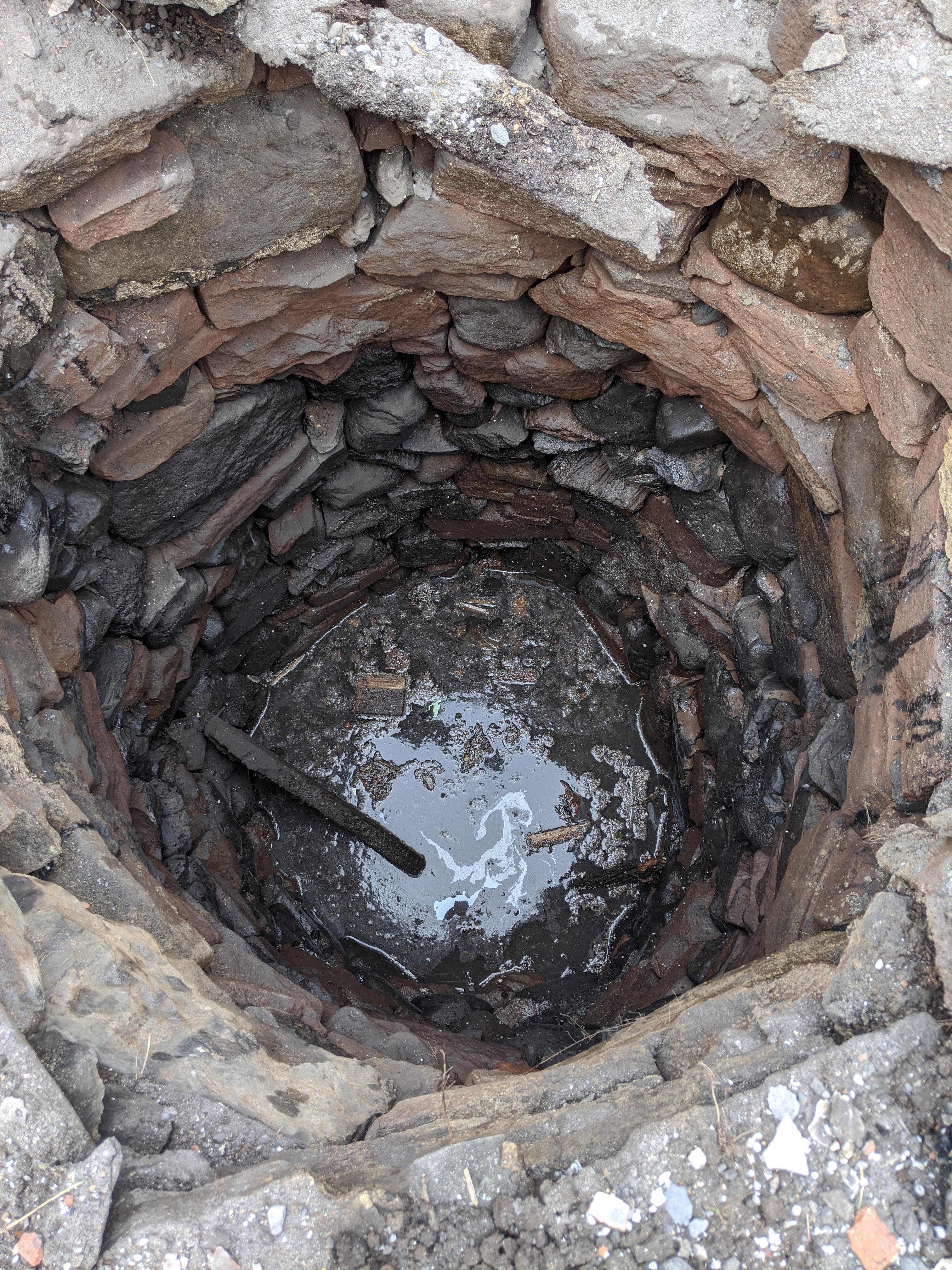
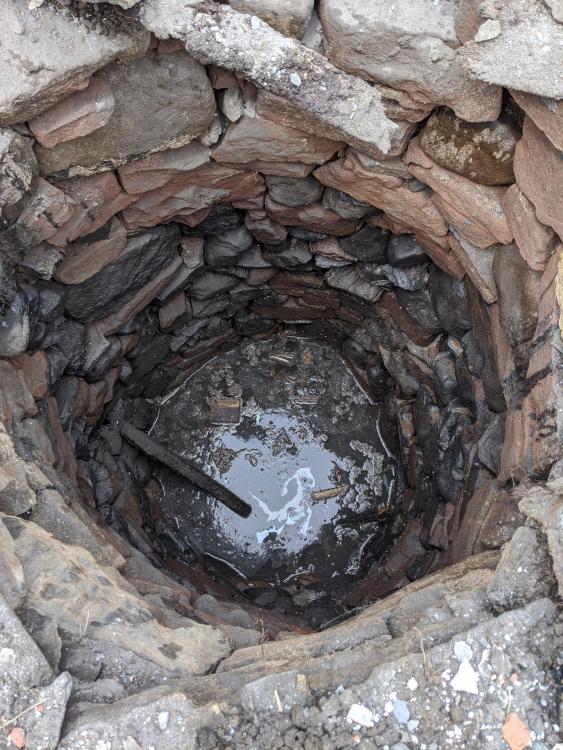
Oh fiddle sticks. Right where the rear wall of the house will be. literally transecting it. Who the hell builds a house over a well??!!! 1.5m across, 5m+ deep. Loose sandstone construction. Any advice welcome.... or just laugh at me Engineer says fill it right up to slab level with lean mix concrete. Any cheaper options?!
-
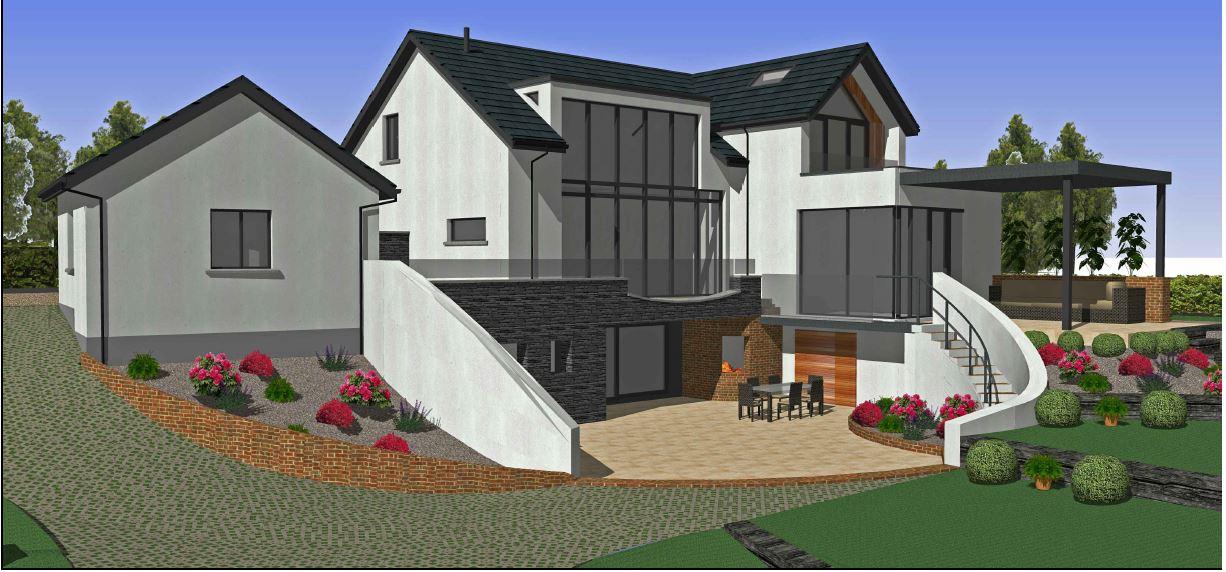
Back in June 2017 we found a house for sale close to us in Holywood, Co. Down - 4 bed bungalow, 115m2 on a large plot on one of the best streets in the town. Within our budget. Couldn't believe it! So we put in a offer at the asking price. Didn't hear anything back. Phoned the agent a few days later and bidding was going on way above our offer... developers with cash. Obviously they saw it a potential site. So, we accepted our loss and moved on. Then, two months later, it appeared back on the market! Issue with site lines meant you'd never get permission for additional units on the site. So back to our original offer, and it was accepted! It was a kip. We knew there would be serious renovation works and were budgeting to spend £80k+ on renovation and extension. Turns out we were very optimistic. Estimates started being bandied around that were double our budget... kind of in the new house build territory. So we took the plunge and looked in to financing a new build. Turned out more difficult than we thought - no local lenders would offer a product, luckily we got a recommendation for Ecology and they would allow us to convert our existing residential mortgage to a self build, once we had full PP. In Sept 2018 after a year of planning, we finally got FPP. Original house: The issues were much bigger than we though - no foundations, lime mortar was crumbling away. The brief of the new design was straight forward as we knew what we wanted - simple, 200m2, 4 bed, big open plan living area etc. The sloping site complicated matters a bit... so much so we ended up including a full footprint basement, rather than have split level living. The design at the front is deliberately simple as we're in a conservation area and didn't want to battle too much. Rear is where all the action is!! The design has changed since these renderings - no garage, and smaller courtyard and few retaining walls. These pushed us out of budget when the QS estimates came in at £340k! Almost £100k more than budget. Latest floor plans: Basement: Ground Floor: First Floor: As I type this, we have just started site clearance and ground works..... with an interesting find that could threaten to eat up our contingency already!!!
-
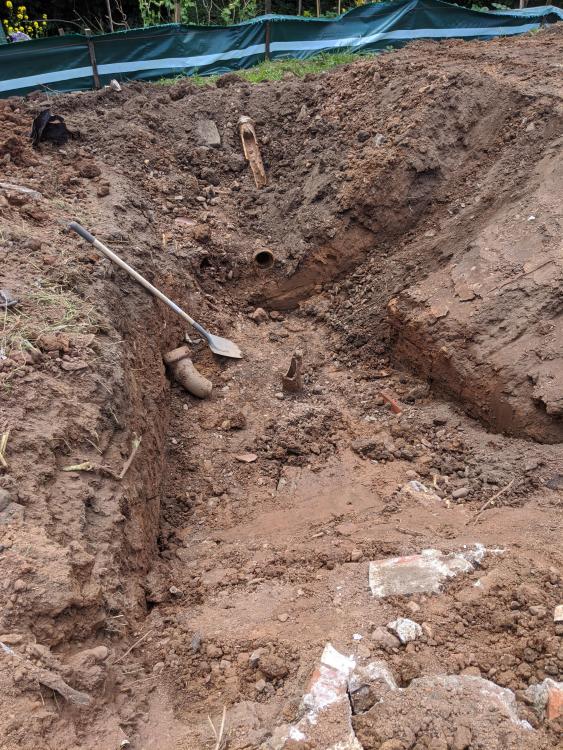
We started groundworks this week, and yesterday's job was to excavate and find the waste connection to the combined sewer in the back of the garden. As we're dropping the basement lever down over a meter below current house floor, we knew we'd have to remove the old foul line back to the sewer. Turns out the pipe doesn't connect in at the manhole as thought, it just drops in to the sewer vertically, using a top tee. The old line simply had a downward facing tee and about a meter of vertical pipe connecting down to the sewer. We need to connect our new foul line to this vertical connection. I'm not approaching the water company for a new connection and we're not touching the public sewer, just clamping on to existing clay pipe connection. What's the best way to do this? Our new waste pipe will be about 0.5m above the clay pipe stub I'm thinking a long radius bend directly on top, with a full manhole just upstream - just outside the 3m "no build" area of the sewer. This will allow rodding if required. Any issues with this? Would I be better off with two 45° bends? Or a Invert tee with pipe extending on to a rodding eye? Building control don't have guidence on this and their interest ends at the last manhole apparently.... Nb: public sewer is 400mm diameter and a fast flowing combined system. There's more water in it than the river at the bottom of the garden...

-
Newbie DIYer, help needed levelling garden
Conor replied to Kelvasco's topic in Landscaping, Decking & Patios
Think the best option is just to get a digger in for a day any simply scrape soil from the back the move it to the front. Only ever use soil under growing areas. Importing stones is expensive. Man with a digger for a day or two will only cost you about £600+£800. A stone base will act as a drainage channel and you'll end up with all the water following whatever gradient is under the stone layer -
I have the medium sized Titan from Scewfix - great job.
-
Mortgage companies and home insurance companies will likely ask for guarantees for that sort of roof, for the first 5 years anyway.
-
25mm MDPE is as tough as old boots. Just don't have massive pointy rocks in the trench. Feed into rainwater tank should be above the top water level, and designed like an normal surface water drain. The way you have it will mean it will be surcharging and acting like a pressurised pipe, which it isn't.
-
I've been shopping online for things like an ASHP and a PV setup... I'm waiting for the inevitable "we don't deliver to NI" I'm doing mostly DIY install... who locally would supply a ASHP and who would sell PV panels, inverts etc?
-
Good to know this, our plans currently have the ASHP and MVHR ducts a couple of metres apart. Phew.
-
How much electric do you all use and how to calculate storage
Conor posted a topic in Energy Storage
So, my PV install has escalated from a few panels on a garage roof to a 5pKw+ full in-roof system with panels on multiple roofs. I'm pleasantly surprised at the price of combined inverters/batteries and might take the plunge - e.g. https://midsummerwholesale.co.uk/buy/sofar-storage/sofar-hyd3600-us3000-kits I've been looking on line for typical electric demand calculators but not found anything that's relevant to a new EPC A build. Interested to see what you folk are consuming.... we'll be a household of 3 in a 200m2 house, 5Kw ashp, the usual appliances etc.... and now since COVID, likely somebody working from home each day. I know the savings are marginal... but here in NI we have a crap electric market with basically no choice, I see battery as a way to make bigger savings than selling back to the grid. Would the likes of a 3.5kWh battery be much use?