
Conor
-
Posts
4165 -
Joined
-
Last visited
-
Days Won
12
Everything posted by Conor
-
 He was saying this is the third time he's been to a unit in our block (20ish apartments) in recent years, all with the same problem.
 -
All sorted. Was, as I suspected, a failed bypass valve. Plumber just cut and capped the bypass pipe as there is a rad in the hallway with no TRV that will act as the bypass.
-
MVHR in large volume New Build
Conor replied to Triassic's topic in Mechanical Ventilation with Heat Recovery (MVHR)
We're in a similar situation, 300m² house (100m² of which is basement with only one room, but all needs to be ventilated). My neighbour designs and installs ventilation systems, and said to me I'd need two units. He says the performance figures and capacities of MVHRs are typically optimistic and while will pass building regs, won't perform that we'll in real life. Much better off with an oversized system running at 50% load most of the time, than a barely capable system running at 75% most of the time and struggles to meet boost demands. I can certainly understand his rational, but I can't justify another £2k so will be going for one unit!!! -
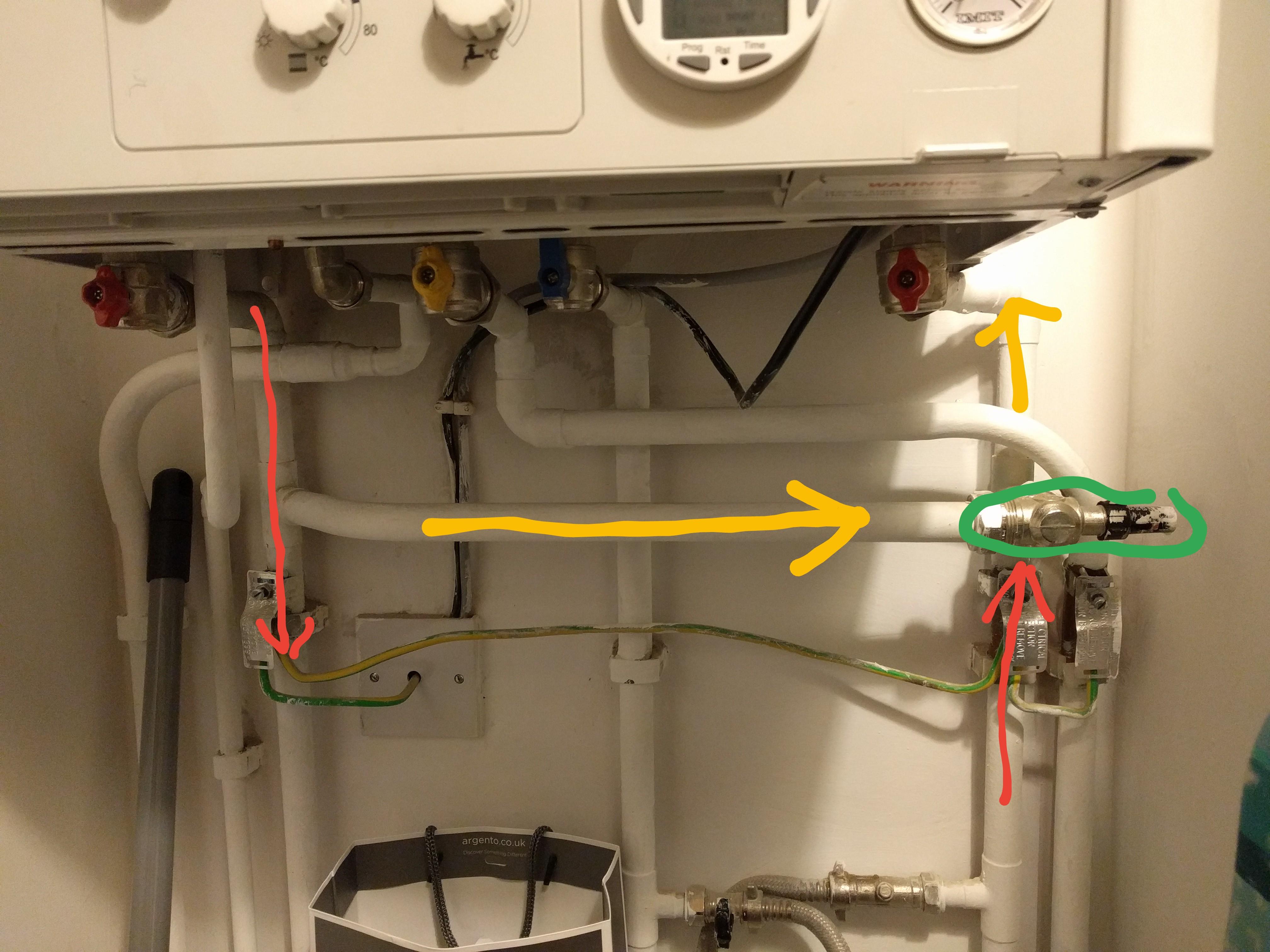
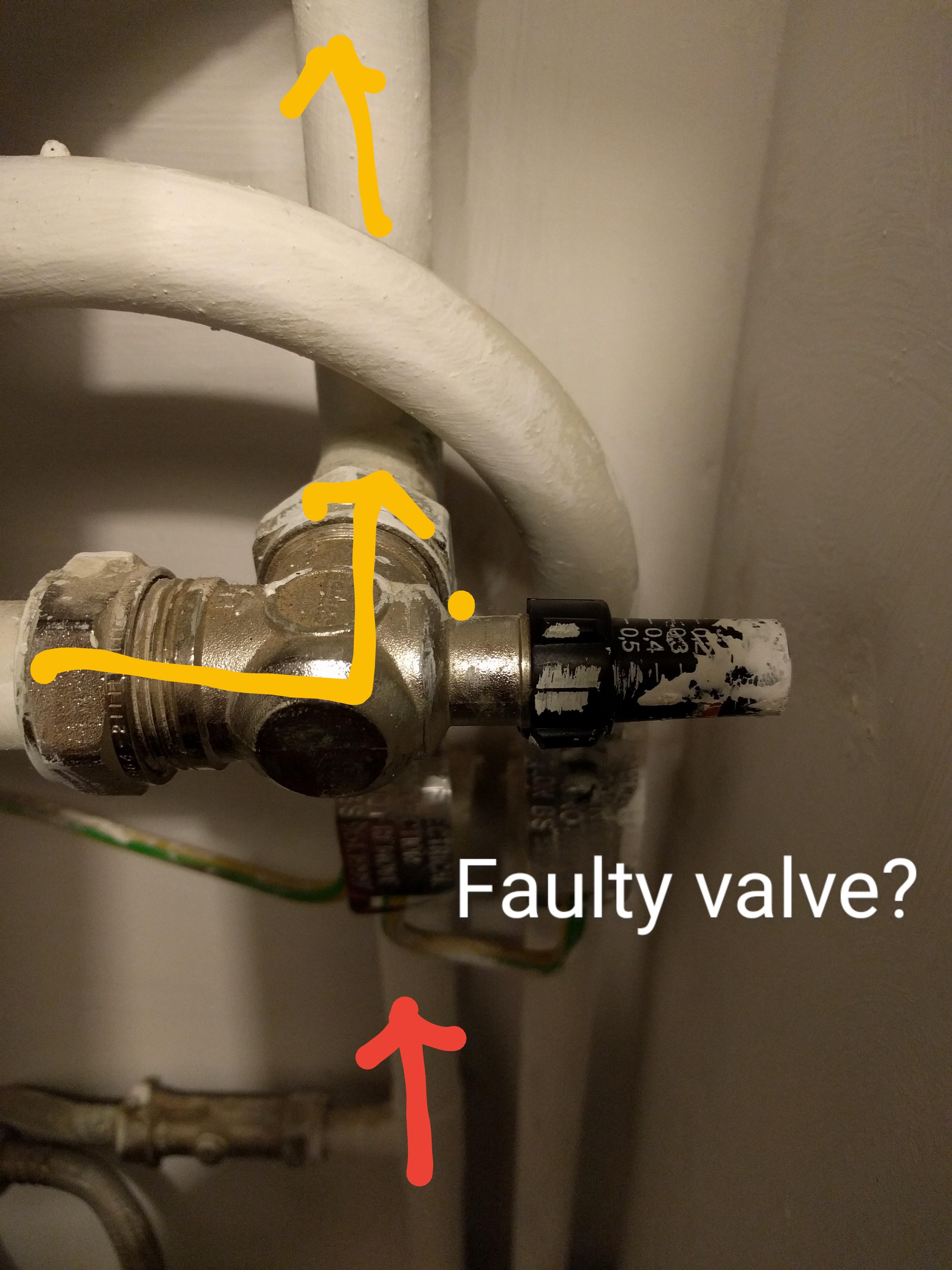
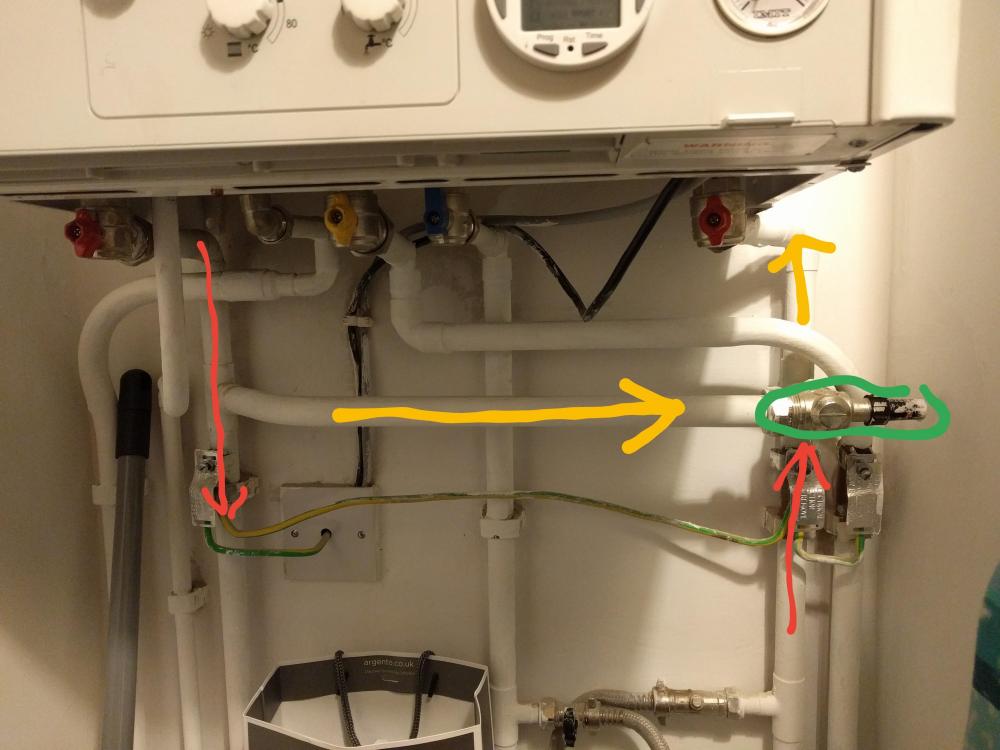
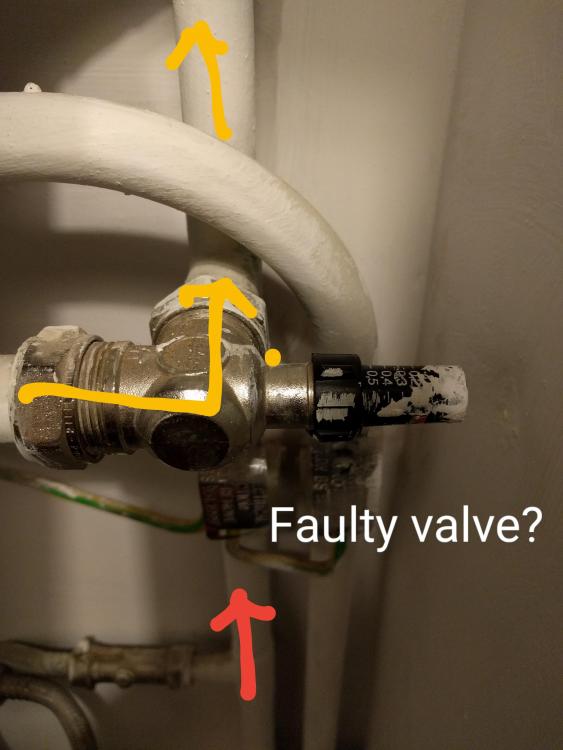
We've just moved in to our rental accom and the combi boiler has been dodgy since day one. Tripping out after just a couple hours of running. Last night, it failed to heat the rads at all. From what I can see, the boiler is heating the CH water as normal, but instead of circulating around the system (red arrows below), it's flowing through a bypass (yellow arrow) and causing the boiler to shut off after just a few seconds. I'm guessing this valve (green) is at fault? Is there anything I can do easily (like adjust it?). Valve ranges from 0.5 to 0.1, I'm guessing it's some sort of prv? Or am I going to have to ring the land lady?, Edit: from a quick search it seems to be a faulty automatic bypass valve. I tried it fully out (0.1) and fully in (0.5) and doesn't make a difference.... Oh, and it drops water now...
-
Our existing water supply is lead. I intend on getting it all replaced by NIW once we have the new build complete. But in the mean time I need to cut the pipe at the boundary and fit a temporary tap so we can finish the demolition of the existing house. I've measured it, and varies from 29mm to 32mm.... So it's either 9lb, 11lb or even 12lb! What's my best option, a universal coupler like this? Don't care it it's going to 32mm or 25mm PE. https://www.plastics-express.co.uk/water-service-pipes-fittings/mdpe-compression-fittings/mdpc-cf-32mm/32mm-mdpe-x-27-35mm-universal-transition-coupling-p-pw429?gclid=CjwKCAiAsIDxBRAsEiwAV76N8wI8JFHR6s6HM534HWcDUlMQs0Qd5Dj2XvgLt8MRNf-Jlq45t9T_4RoCINIQAvD_BwE https://www.gasandwaterpipelines.co.uk/philmacutccoupling/Q1054.html?kw=&ci=373568490451&network=g&pm=&cid=818862847&aid=76989141312&tid=aud-773078946374:pla-795314642341&dev=m&mt=&lim=&lpm=9045206&pos=1o1&dm=&fid=&mid=109646584&pid=Q1054&country=GB&source=google&gclid=CjwKCAiAsIDxBRAsEiwAV76N83C_y5bUI0LDzm2_fofGtmbakqMW1xxWXr_BF-LAy4z0qKlx1ScaqBoCn0YQAvD_BwE
-
There's pretty much no disadvantage to using 32mm over 25mm. Simply put, the larger the pipe diameter, the lower the fluid velocity, the lower the friction/turbulence between the fluid and pipe wall and therefore lower pressure loss. The fact that there will only be a 20 or 25mm pipe from the main to the boundary box isn't a huge issue, as it will be a short length and pressure drop will be low. Obviously, having 32mm from tapping to tap is best, but unless you're filling a swimming pool, won't be an issue. Easier way to step down diameters is to bring the 32mm pipe in to the house, reduce down to 25mm PE, fit a 25mm stop tap, then taper down to 22mm copper or PEX.
-
I hired a 4.2m working height alloy tower over the holidays. Bit of a pain to assemble (e.g. instructions didn't remotely match reality) but once it was up, it was great. However, it's a really big, bulky piece of kit that takes up a fairly big storage space. I think the hire cost me £40 for almost 2 weeks, for a tower that retails at over £1500. I'd consider rental for as and when it's needed, otherwise I think a small amount of traditional scaffolding would be a better bet if you don't need it to be overly mobile. Edit: to clarify, version I had was a double depth and width - so basically same size as a scaffolding bay -8ft by 4ft. So big piece of kit. You'd struggle to put it up single handed. I can see merit in a smaller setup for "light" tasks like painting etc.
-
Try flushing half a bag of crushed ice. The weight and abrasiveness of the ice scours the pipes clean.
-
Took about 6 weeks for us. Tho there was a couple week delay in the middle due to my employer not sending in details fast enough. So 4 weeks seems realistic. Yes, they do engage a surveyor to evaluate the land value, proposals and final estimated value of the project. It will be the same surveyor that comes round to do the stage valuations so it's important that they see everything from the start.
-
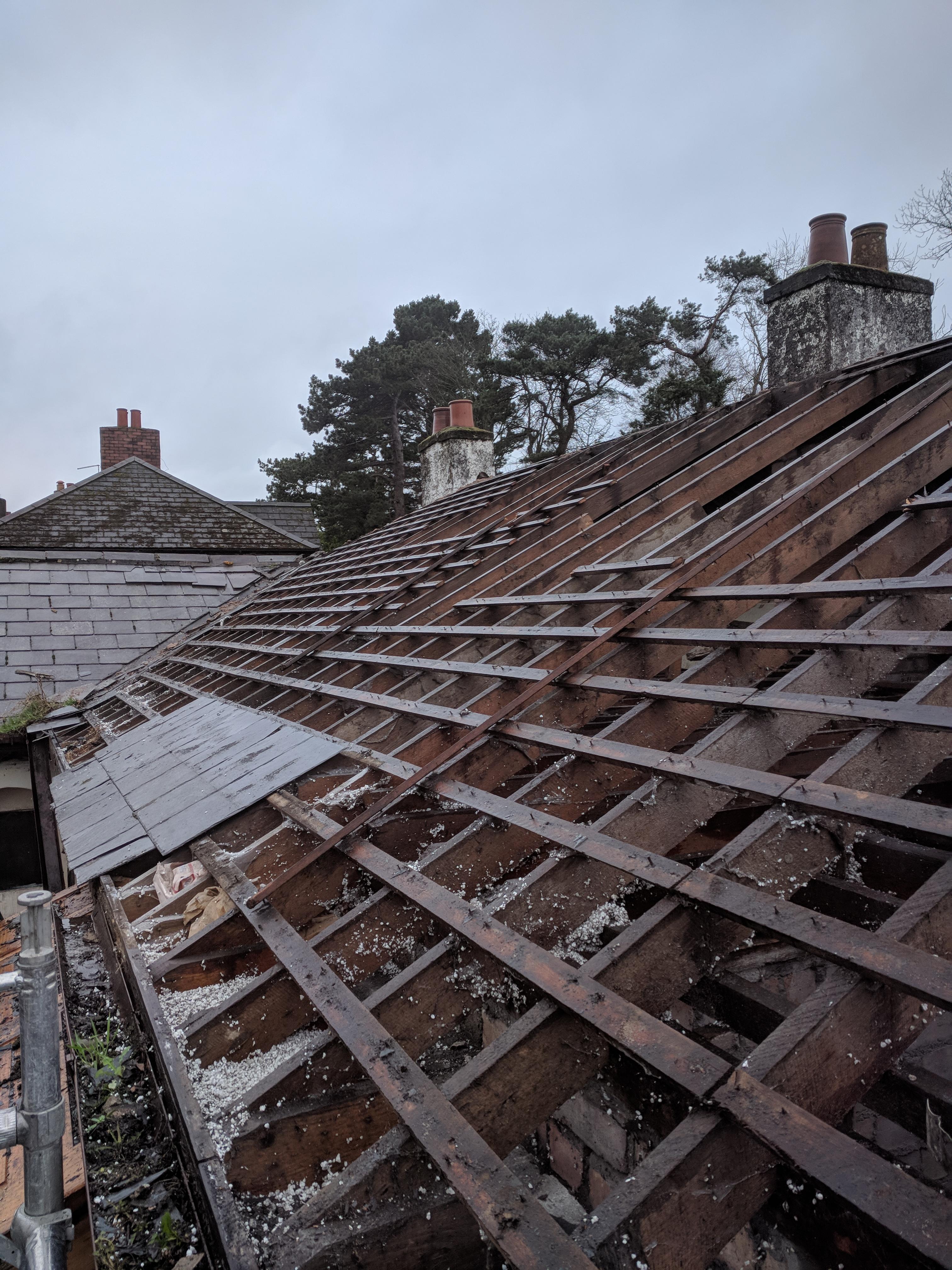
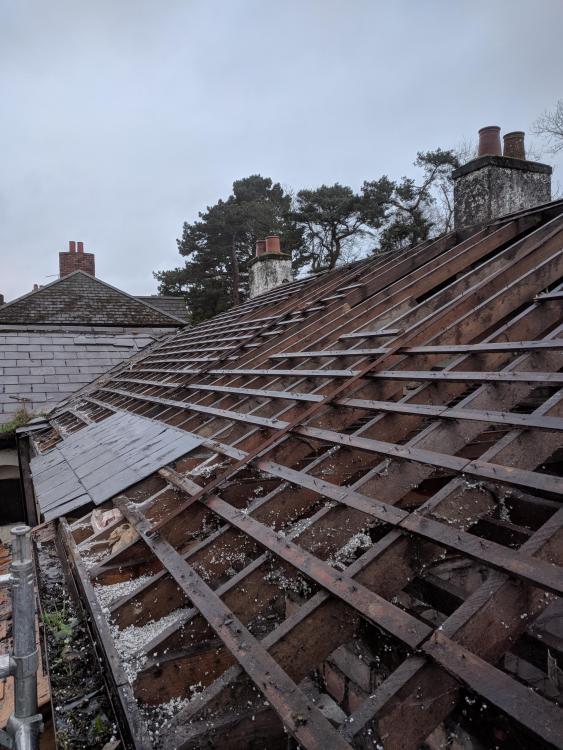
Progress so far. Rain stopped play today. I'm getting about half a roof side done per day. Doing it as a mix between inside the roof for the higher rows and climbing on the sarking for lower rows. Letting them slide down into a high sides pallet on the telehandler. Recovering more than half the slates. Hope it's worth it!
-
They did give me a VAT receipt, but had no way to put my name and address in it, which I understand you need when reclaiming VAT on a new build?
-
Yes, yes, I know B&Q is pretty much the most expensive place to buy materials, but we've one 2 miles from our site and of course only place open after 5pm during the week and on Sundays... I was buying floor boards today and they wouldn't give me a VAT receipt with my details though the normal tills. Said I had to have a trade account . But I'm not a business. What's the easiest and least fraudulent way to convince B&Q to give you a trade account?
-
Water pipe … dig-it-deep or through-the-roof?
Conor replied to Dreadnaught's topic in General Self Build & DIY Discussion
No issues at all. Just ensure you fit a shut off valve at the point where the pipe enters the house, and is easily accessible. -
Structural Engineer - Belfast/North Down
Conor replied to davidk's topic in House Extensions & Conservatories
We've been using Jane Leadon on our build, can recommend her. Think she's in Garvagh, but unlikely you'll need meetings or site visit so hardly matters. -
I mentioned to my architect the other day that I intended on bending and cutting the rebar for the passive raft slab and ICF walls myself.... Thought I was mad! How easy/difficult is it? And would this kind of tool be any use? https://m.ebay.co.uk/itm/Bending-Tool-Rebar-Bender-Round-Bar-GR-1-to-GR-6-all-types-in-one-listing/223373163843?
-
I've been on the phone to a few local hire centres and they are offering some great prices for plant and equipment hire over the Christmas shutdown. Basically I'm paying two days hire or weekend rate for hire between 20th Dec and 2nd January. 6m telehandler and 4m platform is costing £390 for nearly 2 weeks hire. Should be over £1k. If you are needing to hire a mini digger, telehandler, working platform, any tools, anytime etc in the near future, Then now is the time to call your local hire centre.
-
Top job! Hope nobody was underneath the falling slates....
-
That was my thinking. If I can get the ridge tiles and first two rows of slates off, I can do 80% of the work from the inside. Would just be the very bottom rows I couldn't do.
-
That was one night only deal!
-
Yep. Put in a new connection application. Mention that it's a site and ask them to install the boundary box with a 2m tail coming out of it so you can connect up your site supply. They may have some other requirements. You can never start these things too soon.
-
Do you need a ripper bar or could I lever them up with a normal crow bar once the ridge tiles are off? Have somebody coming round for a look on Friday. But I know he'll probably only offer 25p or 50p a slate.
-
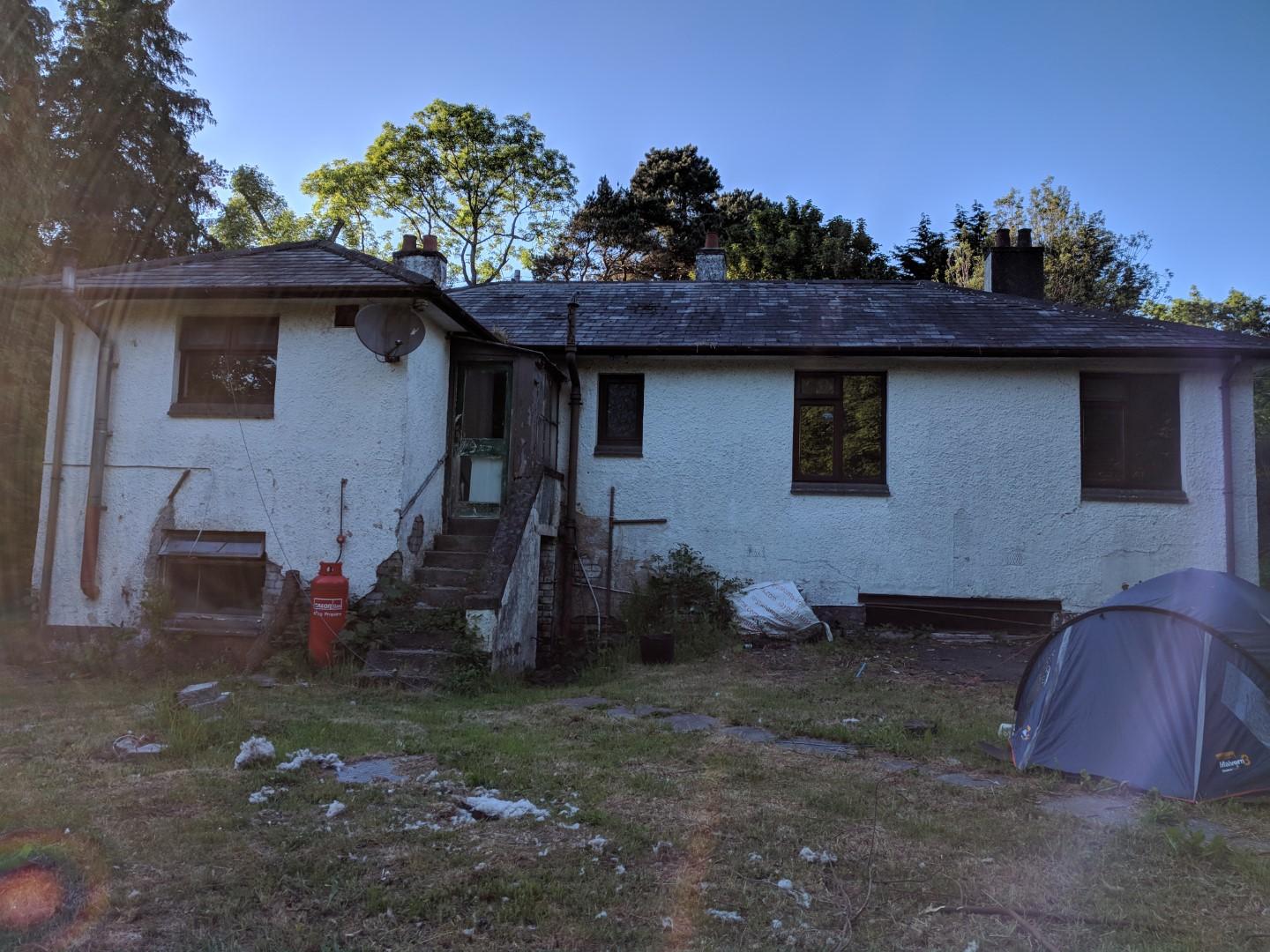
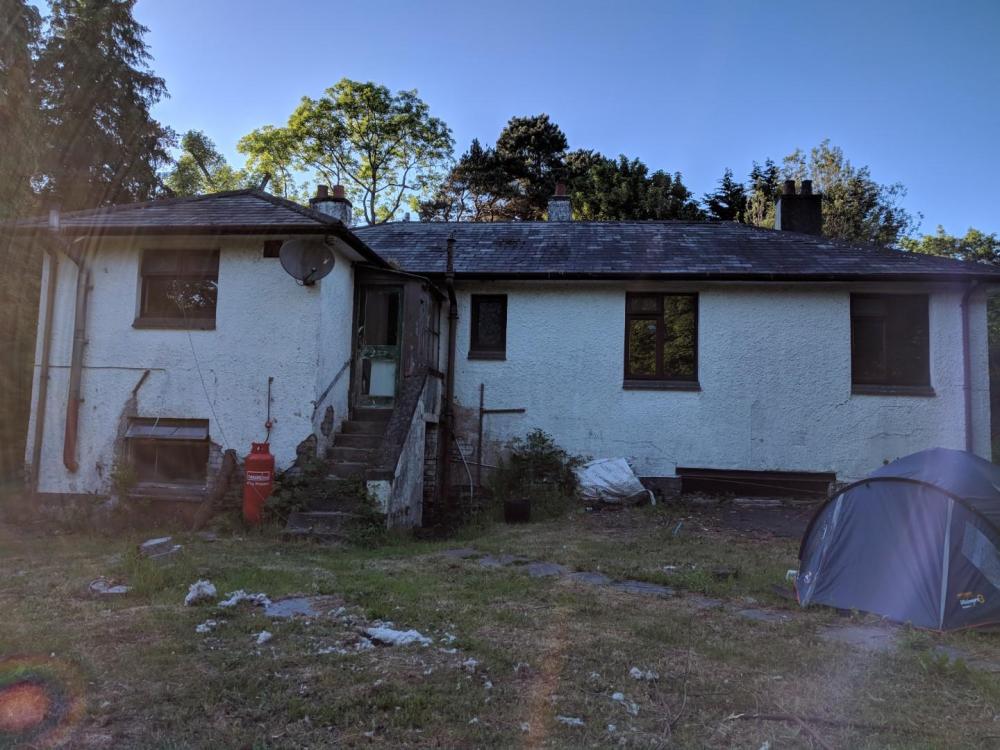
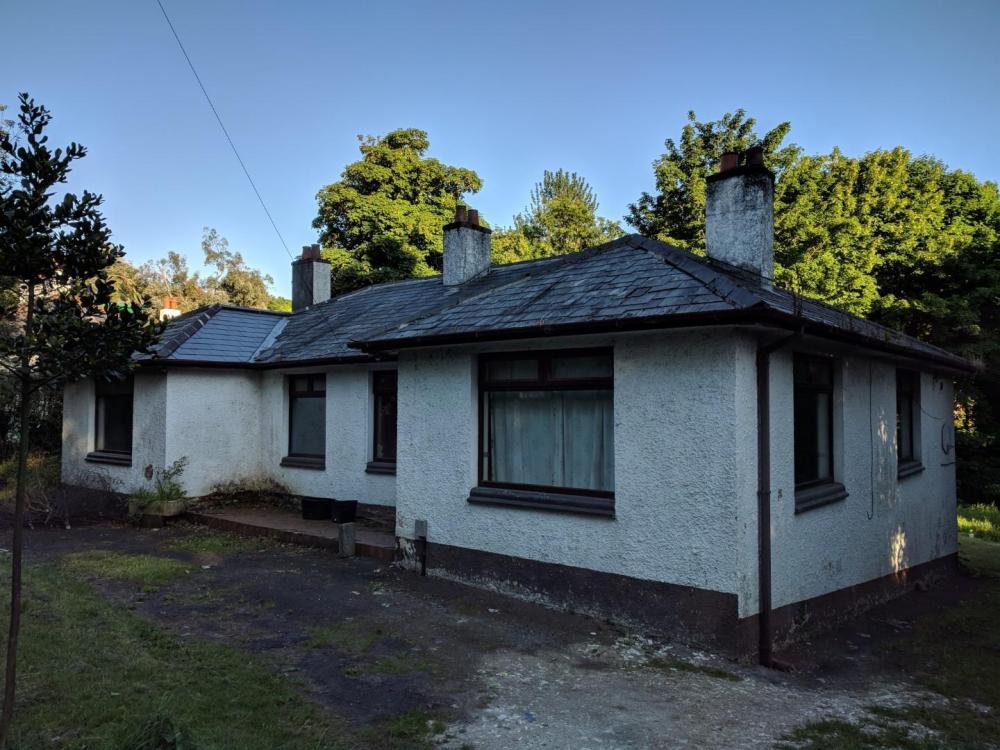
I'm struggling to find somebody to strip our 100m² slated hipped roof. Considering doing it myself with a working platform and telehandler to take the pallets. Intention is to reclaim the slates for either reuse or sale. Valued at £2 each. I've found guides for removing and repairing small sections of roofs using a ripper bar. Is that the same way you'd tackle a whole roof or can you just pull the slates up once you get going? Roof is in poor condition, I think the nails are iron rather than copper. Is it a big job?
-
Thermohouse and amvic are made in Ireland, along with integraspec. Nudura are imported from Canada.
-
I've priced a few different brands, ranges from £35-£45 m², amvic being the cheapest I've priced.
-
Structural Engineer Cost and Recommendations
Conor replied to Noah's topic in New House & Self Build Design
I'm using a local SE through my architect. £900 for site visit, raft foundation design, ICF design, flat roof, SIP roof steels, cantilevered steel beams for mezanine floor, 12m of RC external retaining walls, and probably a couple other things I've forgotten. I was expecting to pay closer to £1500 tbh.