joth
-
Posts
2918 -
Joined
-
Last visited
-
Days Won
5
Everything posted by joth
-

Fan Coil Units for use with a (cooling) ASHP
joth replied to ProDave's topic in Air Source Heat Pumps (ASHP)
LOL I had thought what I'd achieved was pretty discrete actually. Maybe I'm biased by what I sit underneath in the office: Now that's prominent!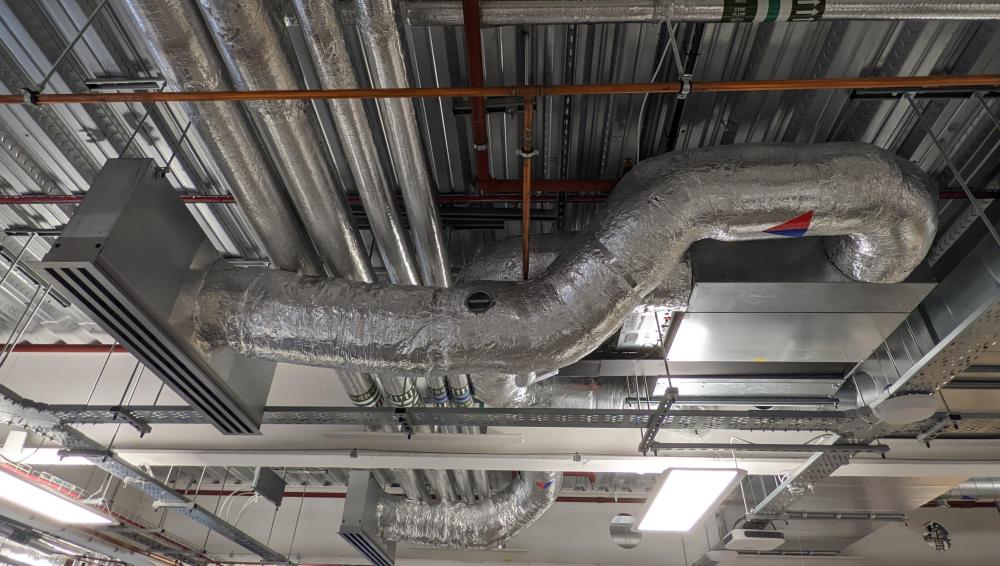
-
Fan Coil Units for use with a (cooling) ASHP
joth replied to ProDave's topic in Air Source Heat Pumps (ASHP)
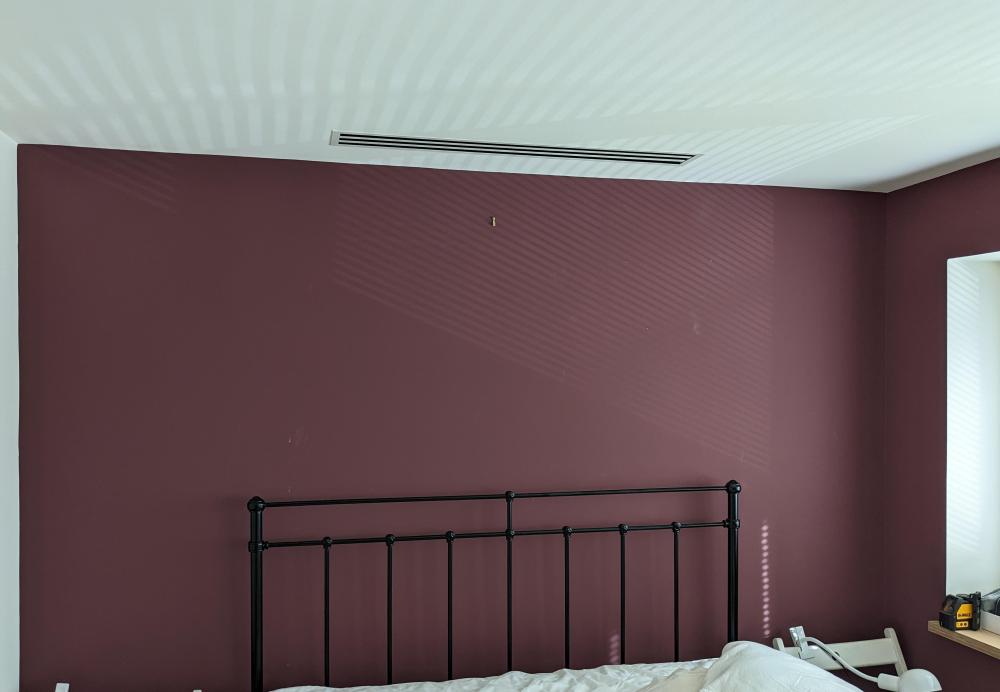
Small update on my FCU install: yesterday I finished installing one of the bedroom ducted plenums and grills. It was a pig of a job to do. Wish I'd done it during the build rather than thinking "oh that will be easy to retrofit". But I'm pleased with the result. Just 3 more to go!! This one: https://www.ventilationland.co.uk/product/35035/slot-diffuser-with-3-adjustable-slots-of-1000-mm.html - along with the plenum, costs more than the FCU 🙄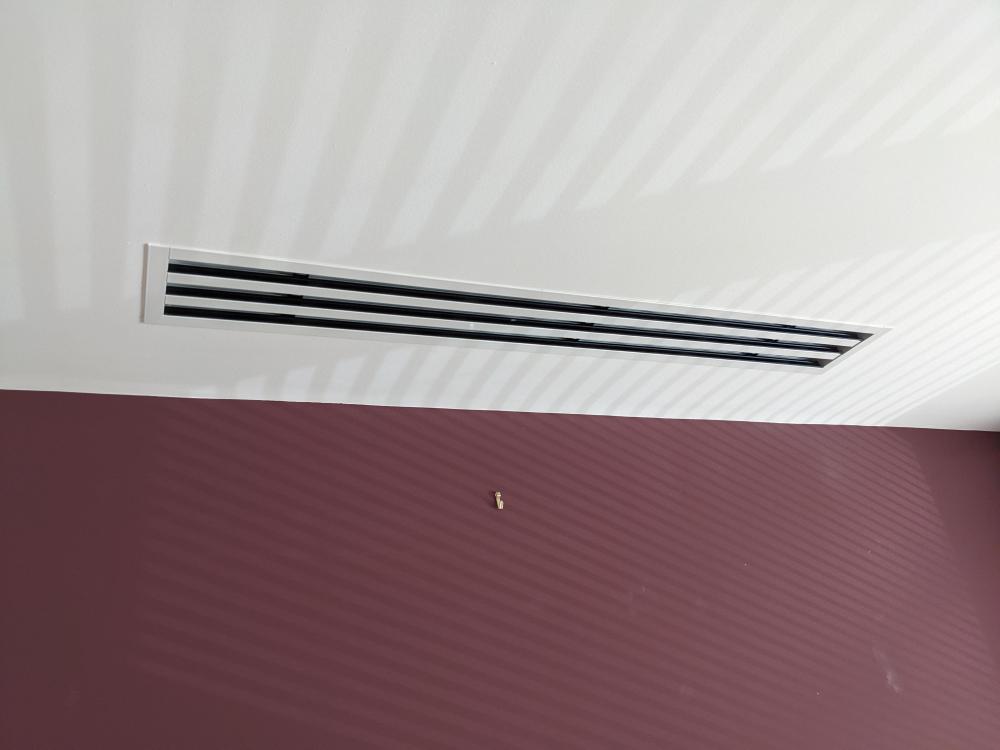
-
Feel like silly questions but may not be.
joth replied to MikeSharp01's topic in Networks, AV, Security & Automation
Cool, post photos when done. TBF I was bricking myself about drilling holes in the 3.2m long porcelain tile, and that backfilling them with resin will look sh1te and collect dirt, so I didn't put up a strong argument for this one. -
Thank you, I am. 6 years at university studying it. LOL we know you are! I was (perhaps ambiguously) addressing the OP. I should have said "unless one is a... [nerd] .."
-
Correct. So you should try to limit the rate of charging the SE battery until PW is full, otherwise you risk filling the SE first and then wasting energy due to the inverter limit. Did you try and get a G99 approval and denied? I'm really surprised that buying a replacement inverter and going for two batteries you'd stick with the default DNO limit.
-
Feel like silly questions but may not be.
joth replied to MikeSharp01's topic in Networks, AV, Security & Automation
CAT6 is not just for superfast internet. It's also a very useful medium for getting 8 cores of low voltage electrical signal to a location. For example, I've used it for motion sensors, light switches, temperature sensors, primary side of relays, low voltage power delivery, driving low wattage LED strips, charging my toothbrush, control of the "call for heat" dry contacts on the ASHP, 0-10V driver for the PV redirect SSR, powering the cat-flap, HD-BaseT for HDMI video distribution, and probably a bunch of other things that don't come immediately to mind. To the OP - I put 2x CAT6A to the kitchen island, but haven't used either so far 🙂 One possible idea was to install a Loxone Touch Surface into the worktop, but the boss wasn't having any of that. The other is controlling addressable LED strips around the plinth -- still waaay down the priority list! -
Personally, unless you're a real energy optimisation nerd (in which case you'd have done the research and wouldn't be asking on here, LOL), then I'd suggest signing up to a 1 year fixed rate flat rate tariff, measure how much energy you're using over a full season and what your usage/lifestyle patterns are living in it, and only then consider if a cheap rate overnight tariff would be more suitable. E.g. you may be able to to get all your required heat by only running the ASHP during the 4 hour overnight cheap rate on Octopus Go, but you may need to run it at a significantly higher flow rate (thus less efficient) to get sufficient heat delivery in the short time window. So maybe much better off leaving the ASHP on 24/7 at a lower flow rate and not trying to play the TOU juggling game (which let be honest is a lot of effort for a small reward -- well, unless your ASHP has a huge crankcase vampire load and you can power it off completely for 18 hours a day)
-
I doubt you'd need to do any, to be honest. For home users most interesting monitoring is in layer 3 and you do that in the router, not the switch. (Crap analogy: think of the router as your local post office and the switch as a letter box. If you want to snoop on who is communicating with who it's much more useful if you can monitor the post office rather than a letter box). Managed switches come into their own when setting up VLANs and segregated subnetworks, but IMO that's only interesting to do if you have a vlan aware router, which the VM superhub most definitely is not. You get the unifi WiFi radio monitoring regardless of which switch you use. You can even setup rudimentary guest SSID too. The following article confirms my stance that it's only useful getting a managed switch if you have a managed (unifi) gateway router too. https://community.ui.com/questions/Guest-Network-on-a-unmanaged-switch/f6a6f682-b0b6-435e-8ecd-a17abcf6cf27 IMO The only reason to buy a managed unifi switch now (without their router) is "future proofing", in case you think you might get hooked and want to upgrade to their router in future.
-
Ok if you have 8kW of PV this seems a bit more feasible. Only requires 3-4 hours of full sun rather than 8! To confirm you started yesterday with both batteries completely empty, and charged them both from solar? Nice. You can only charge the PW at 4kW (PV inverter rate limited) so yeah the logic needed to get them both charged up in the most efficient way is nontrivial.
-
@bertybuttface I sent them a ping and got this reply: "'' The SE8000H and SE10000H are still not officially compatible with the SolarEdge Home Battery. You can subscribe to our newsletter here: https://marketing.solaredge.com/newsletter-row Here is a link to the firmware page, where you can find the release notes for the latest version (updated with new versions): https://www.solaredge.com/setapp-inverters-firmware/ """
-
Is your PV oversized for the inverter? As it how many kW of panels do you have? Charging 23kWh of battery from a 3.8kW array sounds optimistic even for high summer, but I guess you're sizing all this for overnight cheap rate recharge. (Perhaps a brave decision as who knows if those cheap off-peak rates will last)
-
This is consistent with the product specification sheet I posted way back that says crankcase heater is N/A watts. Also the informational document tech support that said words to the effect "as ecodan does not have a crankcase heater, it uses the resistive method instead". I presume this means leaving a small DC current running through the coils of the compressor motor, rather than through a dedicated heating element, but my guess is as good as yours. (it's a stupid statement, in what way would a crankcase heater, if it had one, not be using a resistive method ?)
-
Slightly odd choice as that's sized to exactly be under the DNO limit, yet you have at least (?) 2 other inverters (original PV system and the PW?) so must be over the G98 limit. Unless all PV is going through this one new inverter? And the PW using G100 export limiting? Ah ok that might make sense
-
I was responding to your thought to buy a unifi managed switch to have everything controlled under one app/console. IMO the router is far more useful and important to have control of, and useful to be integrated into the same control surface, than the switch. If you're happy to keep the virgin media hub as the firewall router then I suggest just using unifi for WiFi and nothing else, in which case just get the cheapest unmanaged PoE switch that it's compatible with the APs and be done.
-
I’ll take a proper look tomorrow 🍷 Any idea what inverter model number / how many kW it is ?
-
Interesting. Slightly odd how they say support for "SolarEdge Home Batteries" rather than "Energy Bank" batteries. Is that the same thing? Last info I had was via a support ticket, which said support maybe coming in May, which does sound hopeful. https://midsummerwholesale.co.uk/buy/storedge/solaredge-energybank-10kWh still says 8-10kW inverters not supported. Weird how they don't make this more obvious. Like large systems are exactly the target market for battery customers.
-
Yeah I had a brief email chat with them about it a few months ago (checking how to get a condensate pump for it). It's still a tempting option to put in the office, even though I'm half way down a different path on the bedrooms. I think the drawbacks for me are cost, the rather inelegant need for a condensate pump (that's my fault for not pre-planning for them), and the control system in it looks way over complex for what I need. I just want a variable speed fan I can automate control of from Loxone, no need for any of the built in display and remote control is comes with. They do look a good alternative option though and probably work much better being housed fully in the room it's dedicated to.
-
yeah if these had been available when we were building in 2020 I might have future proofed with the option to add these in rooms which would work out much easier than installing them in the loft and ducting cool air into the rooms (a task I hadn't appreciated the complexity of retrofitting, now I've started down that route, quite a messy job and eats a lot of loft space!)
-
That doesn't solve all your needs, as you still need a way to run the Unifi OS Console, and (presumably?) you still need a router/firewall/gateway of some sort? Yes you can add more PoE ports at a later day by adding another switch. I don't know I'd both getting a managed unifi switch unless going all in with their ecosystem (so router gateway and OS console)
-
House light only has to travel a few meters, whereas mobile signal may need to travel many miles and multiple frequencies, and at 100s of Mb/s on today's networks. Is it a surprise a decent router (or even a mobile phone) may use more power than a light bulb.
-
So there you go. Buy: 1x UDM-SE-EU 2x U6-Lite (or other AP of your choice) Job done. "in for a penny, in for a few hundred pounds"
-
in for a penny, in for a pound 🙂 I do understand your logic. I know some people like to use the unifi Wifi APs without buying into any more of their kit, but it is an ecosystem so if you're happy to use some of it I agree for me it makes things cleaner & easier to use all their gear for all of it. You get some small benefits like seeing power usage and being able to force reboot (PoE power-cycle) the APs all from within the same management UI. (plus easily mapping SSIDs to VLANs, if you get into that) you can install and run the Unifi OS management console on a laptop (see "UniFi Network Application" on https://www.ui.com/download-software/) , but it's best if you run it on an "always on" machine of some sort, a server or such like. What firewall/router are you planning on using? Would you like that integrated into the Unifi management console too? If so, look at the dream machine https://eu.store.ui.com/products/unifi-dream-machine https://eu.store.ui.com/products/udm-pro unfortunately they don't have a PoE switch built in so you'd still need to add that, and of course the wifi APs.
-
As others, we ran ours with a single thermostat and no actuators and no underfloor sensors and that's fine. Obviously set the flow temperature low enough not to cause any issues with the food flooring. Couple more comments: - size the system so it can run okay with only downstairs zone active, if you're like us upstairs will be a few degrees warmer than down even with no heating on. - MVHR does not move heat around the house, at least not to any useful amount. We only have heating emitters downstairs (UFH) and they have to run a few hours per day in winter to keep living room above 20° but upstairs can easiy hit 23-24 I probably need to build a server room downstairs somewhere to get some of the electrical baseload and excess heat generated moved, lol.
-
Really? My 10yr old cheapo pos netgear wifi router had very reasonable support for a guest SSID with isolated networks. Google/Nest Wifi certainly does support the, I struggle to imagine any contemporary mesh wouldn't support this?? https://kb.netgear.com/31579/How-do-I-set-up-a-guest-network-on-my-Orbi-WiFi-System https://www.tp-link.com/us/support/faq/1460/ The benefit of doing this in a managed switch is you can have guest VLANs a even on the wired network, and then use 802.1X authentication on trusted devices, and any rogue unauthenticated device that is plugged into an RJ45 gets dumped onto an isolated guest VLAN. But honestly life is too short to be messing about with machine certificates on a home network, anyone that is doing this more power to you.
-
I'll let someone with a brood of kids answer that. From my side no I've never needed bandwidth limiting. And even if I did, you can do something like it in most internet routers so pushing this down to the switch seems OTT