joth
-
Posts
2918 -
Joined
-
Last visited
-
Days Won
5
Everything posted by joth
-
 I think the high temperature is more useful for old rads than for DHW One sales pitch would be install this ASHP now, and as you gradually upgrade rooms to larger rads or UFH it will eventually be able to perform better. The unit looks good. Scop 5.1 is at 35°C. Scroll compressor. It'd be good to know standby current, and what the modulation ratio is (minimum output without short cycling). Supports cooling down to 5°C. Does anyone have the link to install manual for their controllers? Curious if it supports multiple zones at different temps, or a local TCP or modbus API.
 -
Not sure how this is related? Even if you get no export rate (and no MCS certificate) it's still a legal requirement to go through G99 approval before connecting a larger sized inverter to the grid. That's what's at issue here. (the MCS reference is purely about getting them to add pressure to put it right, seeing as it's an MCS installation anyway) (But as others have said the oversizing here is very slight so in practical terms little risk, it doesn't justify not doing it on a paid installation)
-
I came here to make some joke about the Ministry of Sound having banging sound. But reading the post, sounds possible it's roof trusses shifting slightly as the temperature cools, and noise transmitting through to the walls. Is it more noticeable on hot days with cooler nights?
-
Hopefully doesn't come to it, but I'd suggest making yourself familiar with the MCS complaints process now so you can ensure your next steps support it if it becomes necessary. https://mcscertified.com/complaints-compliance/ "Non-compliance with relevant installation Standards" seems relevant. MCS don't add much legal clout to put stuff right beyond normal consumer rights, but fear of loss of their certificate is the main concern for the installer.
-
Local Electricity Bill... or fight to improve SEG
joth replied to Benguela's topic in Photovoltaics (PV)
Indeed. This is the economics of marginal pricing. Two things to remember: 1. For each additional kWh you generate and export, the supplier cannot immediately find an additional kWh of demand to sell it to. Quite the opposite, at the moment you are exporting the demand will be dropping because many with solar is self sufficient and no longer importing. So you're giving them a good at the time they have least ability to sell it to achieve marginal revenue 2. More broadly, the market rate for energy is going to be low at many the times you're exporting, so the cost savings of receiving exports is much lower than the fixed rate they sell it for. If you want to be exposed to market rates for your exports, maybe try Agile Outgoing? I agree with the intent of the Local Electricity Bill and think p2p innovation will only happen with policy and legislation that enables it. But it's futile in a capitalist economy to be relying on a single supplier to drive this unilaterally from their own good will -
Local Electricity Bill... or fight to improve SEG
joth replied to Benguela's topic in Photovoltaics (PV)
That doesn't sound right. Octopus were paying me 5p/unit when I signed up in 2020 and recently put it up to 7.5p https://solarenergyuk.org/resource/smart-export-guarantee/?cn-reloaded=1 Still not great, but it's almost double what you're quoting -
ASHP 'Service' - what exactly are they doing?
joth replied to gc100's topic in Air Source Heat Pumps (ASHP)
G3 checkup of the cylinder is the only statutory requirement, assuming it is unvented? Brush leaves / dirt out of the outside unit. Check pressure etc I'd be wary about this turning into upselling other services, but like a new car my hunch is I'd probably do one service at the main dealer just to get an idea what they're up to before shopping around next year. Others attitudes will vary wildly. -
Seems reasonable but the bus cable length could get very long and I'd be worried about cross talk, especially if not using S/FTP individually screened cat6. DMX has similar daisy chain requirements (both are RS485 derived??) and there the preferred workaround is to use an signal regenerator/splitter. Looks like something similar maybe available for modbus? E.g. https://www.se.com/us/en/product/LU9GC3/modbus-splitter-block-10-rj45-and-1-screw-terminal-block/
-
There's quite a bit of heat put out by the ubiquiti kit, especially their PoE switches, and when you add a ADSL or cable router, maybe any other AV gear (camera NVR, server, etc) ventilation and cooling become an important consideration. I wish I'd put our node 0 downstairs as excess heat there is more useful, upstairs is generally too hot even without this extra heat source. This may also be a +1 reason to go for TP-Link mesh network. It's likely easier to setup and more energy efficient.
-
Airtightness vs bugs
joth replied to puntloos's topic in Energy Efficient & Sustainable Design Concepts
Less bugs by far, for us. We have fruit flies around the chilli plants, and occasional ant invasion, but otherwise bigger bugs (spiders and flies etc) can't get in, or die off quickly if they do as there's nothing to breed and feed off. YMMV -
AIUI I think the options are: 1/ Phone up the installer and ask them to do it 2/ Find another installer and pay them to do it 3/ Ask SolarEdge?? 4/ Reverse engineer all the protocols so you can control this locally over modbus? As noted above, the portal seems to have lax security measures (I seem to be able to edit the settings for all the customers of my installer) so I won't be at all surprised if an installer declines to grant this access, and it certainly is a strong argument against going for such a cloud-tied solution as SolarEdge are offering.
-
Correct, charge profiles are all setup on the installer's web portal. You can do it yourself or have your installer do it via the instructions I linked. There's quite few premade profiles for octopus Go on the site, some say winter only. Drawback is I couldn't find out how to view exact details of how someone else's profile is configured, plus they may change it any time, so I just made my own. Ideally it would charge overnight to a capacity based on predicted sun tomorrow and usage patterns:) I'm sure they'll add something like that in future But I charge it fully every night, as I can sell PV for some price I buy it back overnight (7.5p) it's a wash so I may as well keep it topped right up every night
-
Been with them a year already, I was on the fence about renewing the year contract this month, vs move to a standard fixed rate that allows use of Octopus Agile Outgoing, but having the battery makes staying on Go a no-brainer
-
Does anyone understand how ADSL broadband actually works?
joth replied to ProDave's topic in Boffin's Corner
But we already subsidise the massive cost of installing and maintaining copper wires to every single home in the UK. The incremental cost of pulling in and maintaining fiber instead of copper is low, and once complete probably has lower overall costs and higher ROI for the country as a whole. So IMHO the 100% coverage target is where we should be heading, but accept it's going to take a long time (generations) to get there. (I'm in a town where everyone has FTTP except for our street, as on our street our copper is underground rather than overhead they want to charge me £8k for fiber install, so I'm equally cheesed off yet resigned to the fact this is now just a waiting game) -
Does the eco-worthy have G98 certification for grid tie? Can't see it mentioned on the website (only skimmed briefly) and the title of "off grid" system raised a flag. Seems a good deal if it does. Things to check: Can the batteries charge from AC? Can you schedule the mode (e.g. to charge from cheap rate over night in winter)?
-
Nit: isn't it hydronic separation (not hydraulic)
-
This sounds reasonable and like you're on a good track. Surprised you've found Aircon installers familiar with doing FCUs from wet ashp but it's only going to become more popular with time. Where are you finding the supplier for FCU? Not quite clear if you're talking one single big FCU splitting ducts via electric baffles into each room, or one FCU per room. The latter gives finer control per room, the former maybe cheaper, needs less condensate drains, but limits your options around duct routing as everything needs to come from a single central source. I'm doing a mix (2 FCUs each serving 2 rooms). I got cheap electronic 200mm duct baffles from AliExpress. Do you have a plan how to pull in this air from outside? Do you have MVHR? The extra penetration for this new air intake may unbalance it, and also it annoys me to think of bringing in extra cold air from outside during heating season. Otherwise I'd have done this too. (We almost installed a skylight in the loft space specifically for this use case Keep us updated!
-
We got there at last! "Just wait" is the solution. Looking forward to seeing a full battery on a few hours
-
Does anyone understand how ADSL broadband actually works?
joth replied to ProDave's topic in Boffin's Corner
Nit: that's not actually true for traditional ADSL (as the DSLAM is generally in what we call the exchange), but yes it is for any FTTC product like VDSL. But it's moot as with *any* internet connection if you go far enough upstream there will always be a shared link that may be a bottle neck. That's the whole premise of packet switched networks. -
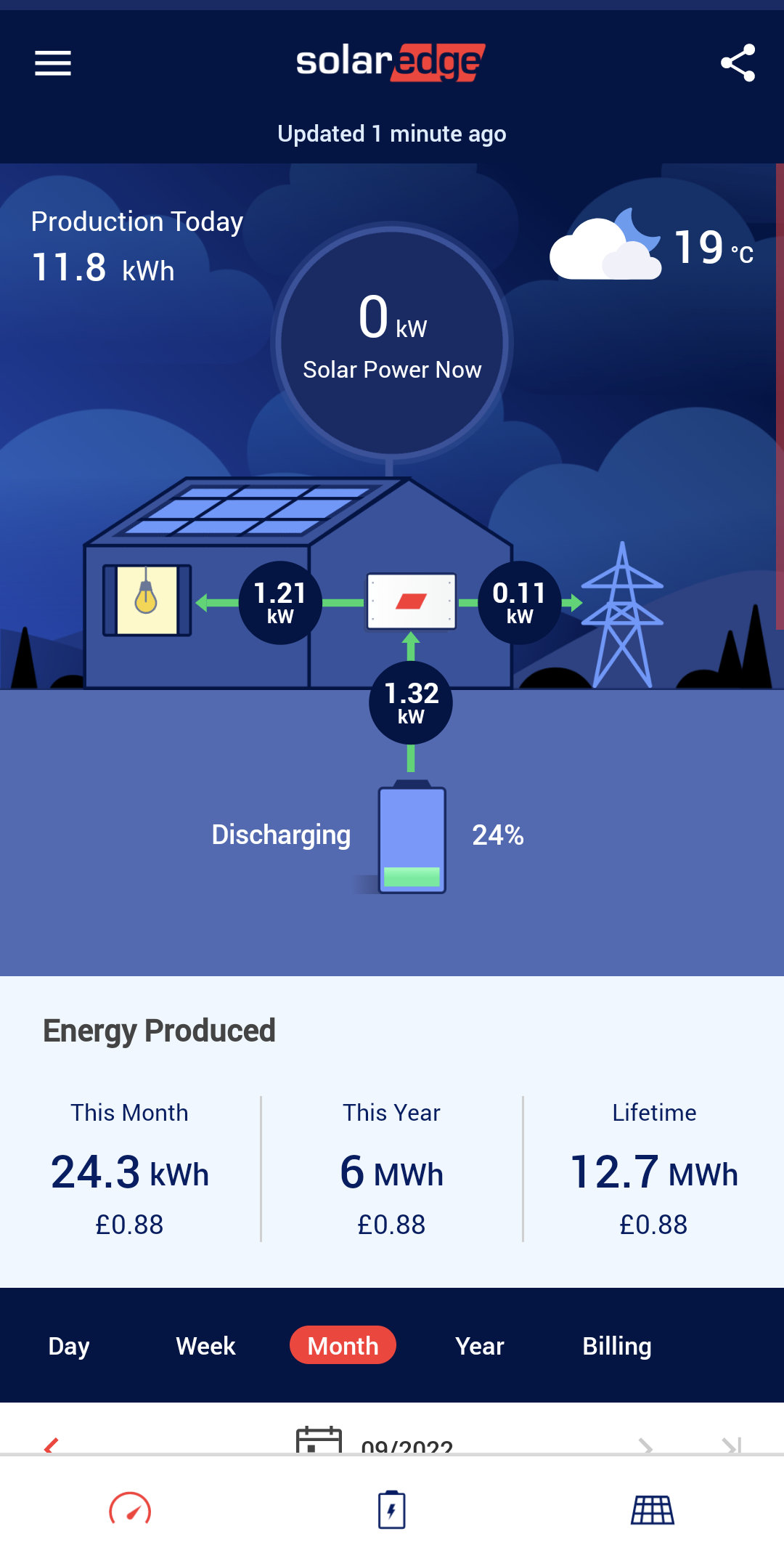
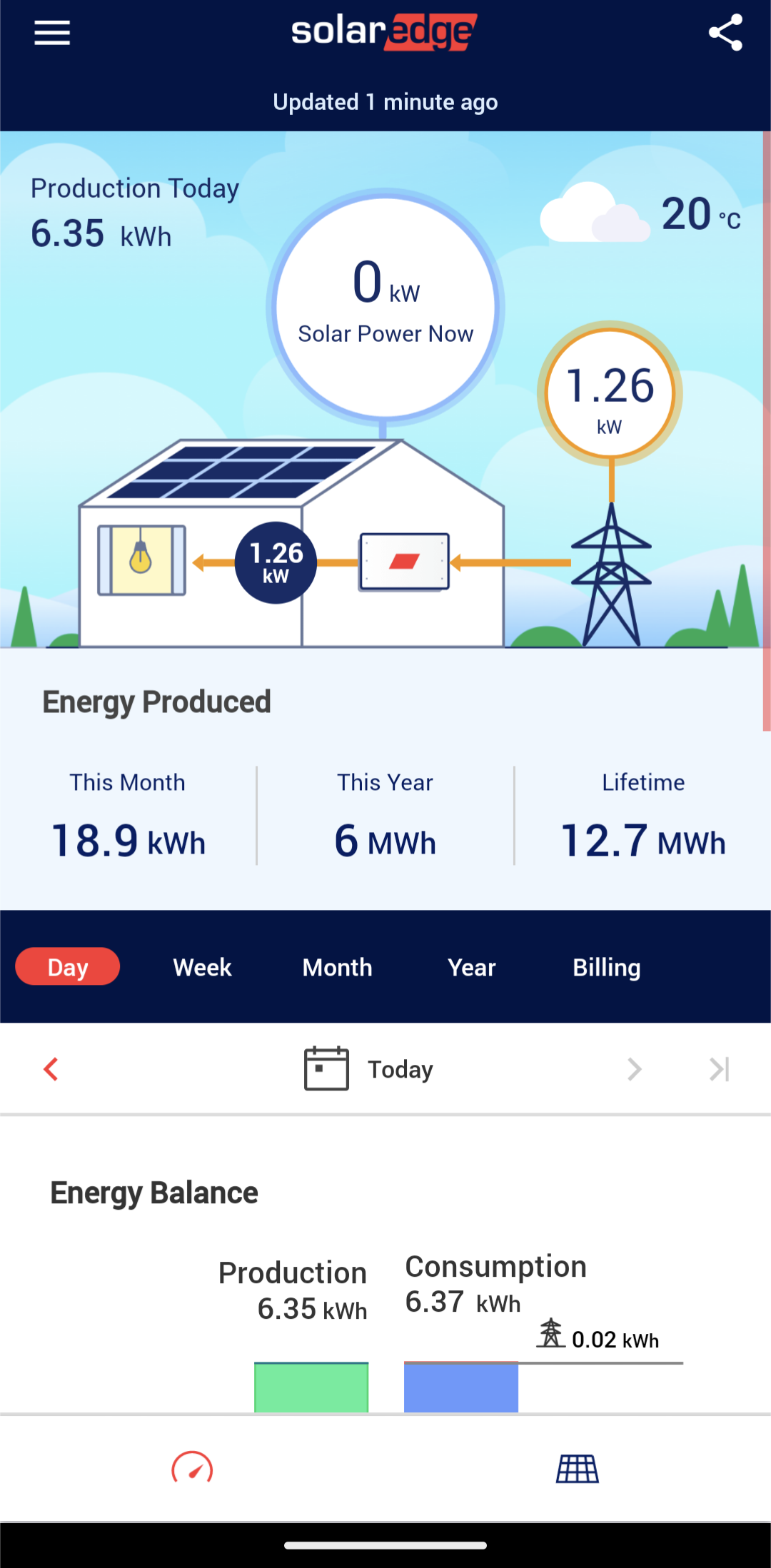
Fab! Yes the "Solar Edge" app is now working per your screenshot @bertybuttface but the mySolarEdge isn't quite. It now shows the battery, greyed out, and without a charge level or the arrow going in / out of it. Nevermind, hopefully it will pop up in the morning. (Or I can just switch to the other app). > What do you have fitted so far? Battery, inverter and meter? Yes, SE8000H inverter, Energy bank battery, and as of today the modbus EnergyNet meter. I've got admin access to my site on the portal, so I went in and setup a "Charge from AC overnight from Octopus Go" storage profile (per instructions) and assigned to our site, so hopefully in the morning I'll wake up to a battery full of energy 🙂 [[Interestingly, I now seem to have full admin access to my entire installer's company account, so can view all the other sites, and even edit the permissions of all the other employees. I think this must be a bug on the solaredge portal not enforcing the site-restricted admin settings as I couldn't see this before. So if everyone sees weird and unrequested changes to your accounts around now, it maybe similar power-users able to edit each other's sites problem. God don't you just love cloud-managed IoS]]
-
@pocster in your other thread I see the SE app should indeed show the battery independent of the PV production. How did you do it? Did it take some time or action to get the app to do this?
-
Install is fine, only snag is I'm not seeing the battery in the mySolarEdge app. We think I should be, but instead it just showing PV production zeroed out. (the sun is out so definitely not zero right now). Any ideas what I should see here?
-
How often do you get power cuts? We've not had one since we moved in 4 years ago, so I really don't care about this use case. If they do add support for it later I'm happy to wait. For someone in a rural location very different calculus I'm sure.
-
About the wall-hanging or about the modbus?
-
Going in now! They forgot to bring the modbus Energy monitor so they'll need to call in tomorrow to complete commissioning but so far so good. Hung up on the ply-faced stud wall in a jiffy with zero problems