


joth
-
Posts
2918 -
Joined
-
Last visited
-
Days Won
5
Everything posted by joth
-
I was briefly thinking this too, but see a couple potential snags - DNO likely requires a 3ph feed before fitting a second meter / MPAN. (Certainly UKPN only do this for 3ph) - ongoing cost of 2x standing charges.
-

Best ASHP manufacturer/model for new passive house
joth replied to markharro's topic in Air Source Heat Pumps (ASHP)
We built a (certified) Enerphit Plus passive house, and didn't use a certified heat pump. With respect to getting our project certification, I really don't think there was any issue with using a non-certified heatpump. For a vanilla (not plus) PH I'd pay no attention to that list. However you need to do something about your heating demand. 17 kWh/(m²a) is 13% over the passive house limit of 15. https://passiv.de/en/02_informations/02_passive-house-requirements/02_passive-house-requirements.htm -
Best ASHP manufacturer/model for new passive house
joth replied to markharro's topic in Air Source Heat Pumps (ASHP)
So not actually a certified Passive House then.... ? In which case, I'd avoid the list from the passivehouse database, it looks very unrepresentative of what's generally available in the UK, and likely paying premium for a PH certificate on a project that doesn't require it. Even if you're planning a certified PH, getting a certified ASHP doesn't help at all unless you're going for the higher (net zero) "plus" or "premium" ratings. A standard PH doesn't care what the heat source is - you could be burning newborn kittens and still be awarded the certificate. -
And you've wanted one for half a decade!
-
If the quote was requested by the MC then they could have added this to their demo spec, if they have some intention to use it in the build? That's really the point of the MC isn't it - so they can sub exactly what they want and dove tail it in with the rest of their programme. The subs don't quote against the main tender, they work to the MC's instructions.
-
Positive feedback comes up from time to time on this FB group https://m.facebook.com/groups/2351171578254146?group_view_referrer=search Yeah this is pretty reasonable way to look at. I think it mostly comes down to a idealistic view of running the whole lot yourself with uncertain setup and long-term maintenance time investment vs outsourcing it and having unknown future service price increases or risk of discontinuation
-
Ah yeah OK if you're at the stage of choosing Frigate vs Ring then Ring is probably the answer. The reason for Frigate is to avoid proprietary hardware that is locked into cloud dependency, so you can really use any IP Camera from Hikvision, Dahua, Amcrest, etc etc. and run the whole stack on your local network without it being dependent on a working internet connection. If you're not already planning to do that sort of thing then jumping straight in with Frigate will be a bit bewildering I imagine. If you want something to just plugin and use, Ring and Nest are you main choices, although if you want it integrated with a top rated alarm that also has a local API for integrations, I'm increasingly interested in https://ajax.systems/ (Ukrainian based company, hope they are doing ok, looks like they've just opened a manufacturing collocation in Turkey)
-
If it contains a 250W heating element, then (a) it should be listed on the service manual, and (b) I can't understand why mine has never drawn more than 25W peak. I mean, I'm happy I'm impacted but this is still very concerning. I'm frequently asked for recommendations and ecodan was high on the list, but the fact their own tech support says 6kWh / day standby is to be expected strikes them off the list completely, regardless of what version or reality that's based on)
-
https://library.mitsubishielectric.co.uk/pdf/download_full/4116 This document section 3 says: 1. It's a hermetic scroll compressor. 2. The crank case heater has a rating of "--" watts. I assume that means N/A, i.e. no crank case heater installed?? There's also mention of a drain heater, but no waiting of how many watts that might draw. So I'm still in disbelief at Liam's answer.
-
It's probably less about what you are legally able do and more about whether you want to keep on friendly terms with your neighbour after the project. If it's a single story extension you could consider going vertically up through the roof.
-
Be interested how that works out for you. I know from bulk buying 18650 batteries from AliExpress years ago it was awash with cheap cells salvaged from old laptop battery packs, re-badged and sold on. I imagine it's even easier to include refurbs and seconds in a rack mount pack like this. Environmentally this might be exactly what we should be doing with old cells, at these prices you can 50% oversize if needed and still save money. It'd just be sure exactly what you're getting before putting down cash on it.
-
Sounds like you plan to run Frigate under Windows? That's well off the charts of what I have tried, I have it on a Ubuntu workstation (mostly now just used as a server) I'd take a good look at this: https://docs.frigate.video/installation#operating-system Windows is not officially supported, but some users have had success getting it to run under WSL or Virtualbox. Getting the GPU and/or Coral devices properly passed to Frigate may be difficult or impossible. Search previous discussions or issues for help.
-
Yeah PHPP said peak load was 3kW, the MCS method said 5kW (because they're not allowed to believe our airtightness goal). We oversized it to reduce UVC reheat time. In retrospect that was probably a silly choice as it struggles to modulate down to deliver cooling in our FCU so I'm having to add a larger buffer tank. It's a puz-wm85vaa So is it a PUHZ Vs PUZ issue? If I understand their numbering scheme, yours is R410A, mine is R32.
-
I don't buy a word of this. In January this year my 8.5kW ecodan consumed 5kWh per day *total* on heating a 151m2 house plus all DHW. If it was spending 5kWh warming up the great outdoors with a compressor heater it would halve the efficiency.
-
Wow. The main thing this tells us is Cool Energy have absolutely no idea how Energy is measured. A constant 13W load is 312Wh per day, so let's go out on a limb and assume that's what they meant?
-
Have Mitsubishi given any explanation why some of their heatpumps have 5W background usage and others have 250W? Until they address that I frankly don't believe a word they're saying. The margin here is wildly beyond simple manufacturing or situational variation. What's particularly impressive is of that 3300 kWh, approximately 2000kWh of it was wasted on keeping the compressor warm. So it only used maybe 1,500 kWh on useful work, vs 21,000 with the old gas boiler. This is starting to sound like the discovery of cold fusion
-
Clean Air Act 2022 - Wood burner not compliant?
joth replied to Andeh's topic in Stoves, Fires & Fireplaces
This sort of thing? (Seems to me that's far easier to do with bioethanol than wood burner as there's less heat to deal with https://www.bio-ethanol-fireplace.co.uk/two-sided-bioethanol-fireplace-designs/ https://www.google.com/search?q=hole+in+wall+bioethanol+fires+two+way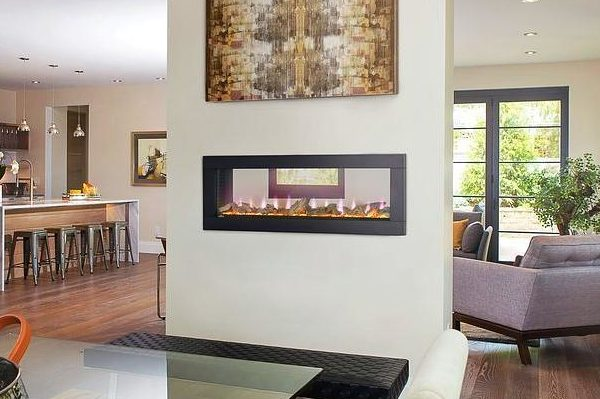
-
ASHP with large thermal store (for load shifting)
joth replied to apesort's topic in Air Source Heat Pumps (ASHP)
You sure that's not his old one?? -
ASHP with large thermal store (for load shifting)
joth replied to apesort's topic in Air Source Heat Pumps (ASHP)
Interesting. I'm about to add 150L buffer tank to my system which will need about £150 of additional glycol. Alternatively I could get a PHE and a pump for about the same amount. But then it's an additional 40W running an extra pump whenever I need to charge or discharge the buffer. Unless I make some more major (and unusual) schematic changes. Hmmmm. Where does one buy Hedonic gear? I see lots of Nordic Tec PHE (along with made to measure insulation boxes) on the eBay -
We use about 0.5kWh on DHW per day (for about 1.5kWh of heat delivered into the tank). So is we were one of those taking 6kWh just on ASHP standby, we'd save about £250 per year shutting of the ASHP completely for 6 months over summer and exclusively using the immersion heater instead.
-
@pocster Nah they all live down in the dungeon. The 48V on PoE is useful though as 5V sex toys tend to be a bit meh.
-
That's insane. That's 45 times more than my ecodan 8.5kW is using on standby. If it's true you need to get it fixed. Having a 250W heater permanently heating the compressor sounds both unbelievable and criminal.
-
Ah, ack got it. Sorry I sort of dropped into this without reminding myself of all the back story. So the flex switches are useless to you. They're intended to chain off the back of one of the full fledge or Lite switches. They don't need a main PSU and power themselves from the PoE coming down the line from the main switch. For a starter I'd suggest USW-Lite-8-POE or USW-Lite-16-POE It doesn't, it's just once you start putting PoE into every room it becomes very useful. Mains sockets aren't allowed in a bathroom but an ethernet socket is fine. So that's what powers my toothbrush charger.
-
For me the only driver for timing when the ASHP is on it cheap rate electric (PV on sunny days, or overnight cheap rate on octopus Go). My control system doesn't turn off the ASHP outside those times per-se, but adjusts the target temperature of both the house and the UVC, to make it work harder when the electric is cheap (and hopefully not have to do much at all the rest of the time). Aside from that I would leave it constant 24/7 One other thing to watch out for is you want as many rooms to call for heat at the same time. if each room calls in turn, then the ASHP is only ever driving a tiny emitter area, and will work harder and short cycle more. If you have a large buffer tank it minimizes this effect, but the best thing is have control system avoid running the ASHP until many zones are calling for heat. (For me I just drive the whole thing from a single "whole house" temperature, actually derived from the extract temperature on the MVHR, and I don't have any zone valves on the UFH loops)
-
Sort of. It's actually up to the client device's wifi stack to notice there's a stronger AP available and make the change over to it. So it depends what devices you use as to how well it works. Unlikely GSM there's no formal handover protocol (although some versions of ubiquiti tried to fake it by hiding the weaker API from a moving client to force it to reconnect to the stronger one, in practice I think that caused more issues than is solved, especially with the well-known Cupertino fruit products. I find my Android phones and Mac laptops move around the house fine. One tip: make a separate dedicated SSID for "legacy" devices, inc all 2.4GHz only devices, and turn on all the "legacy backward support" performance degrades on that. Those devices tend to be super cheap stuff that never get FW updates, but also rarely move around (e.g. light bulbs, bathroom scales, etc). Then have your main SSID track the very latest stanards and the high data consumers (phones, laptops, chrome cast) can generally keep up to date enough to stay compatible with that what exactly do you mean by WAP? A non-ubiquiti / non-mesh product, or a standard ubiquiti AP but using wireless rather than wired backahual? If the former, depends entirely what product you mean. If the latter, yes it still behaves like a mesh, but not as good. I'd try as hard as you can to get all APs wired. Two less-ideal placed wired APs are probably better than one perfectly placed wireless one. What do you intend plugging into the switch? Do those things need 802.3af PoE? If not I wouldn't bother. A five-port switch is pretty tiny, you really don't have more wired ethernet devices than that? but if it's just for the APs get one that supports the APs now and be prepared to swap out (or add additional to it) in future. FWIW: I find the ubiquiti stuff is good, but bit of a power hog. I'd hoped getting one big switch (I have the 48 port PoE) would give some efficiency in scale vs lots of little, but I'm not convinced. I have about a dozen PoE devices on it (cloud key, APs, CCTV cameras, a couple olimex esp32-poe, and a PoE-USB dongle for my toothbrush)

