


BotusBuild
-
Posts
1461 -
Joined
-
Last visited
-
Days Won
10
Everything posted by BotusBuild
-
Probably
-
I had 3 x 180mm holes drilled, about the same length. IIRC it was about £250. Whatever size you think you need drilled add 10mm, then foam the gaps after fitting the pipe. Don't ask why I know.
-
It was this bit in brackets that caused my response. Was it the secret police resistance to these or the German population? 🙂
-
You imply the US have strict privacy laws. You are kidding aren't you? They have the worst regulations related to privacy in the developed world.
-
The above item includes a link to the hot knife I bought. Not sure if still available
-
some pics and a video
-
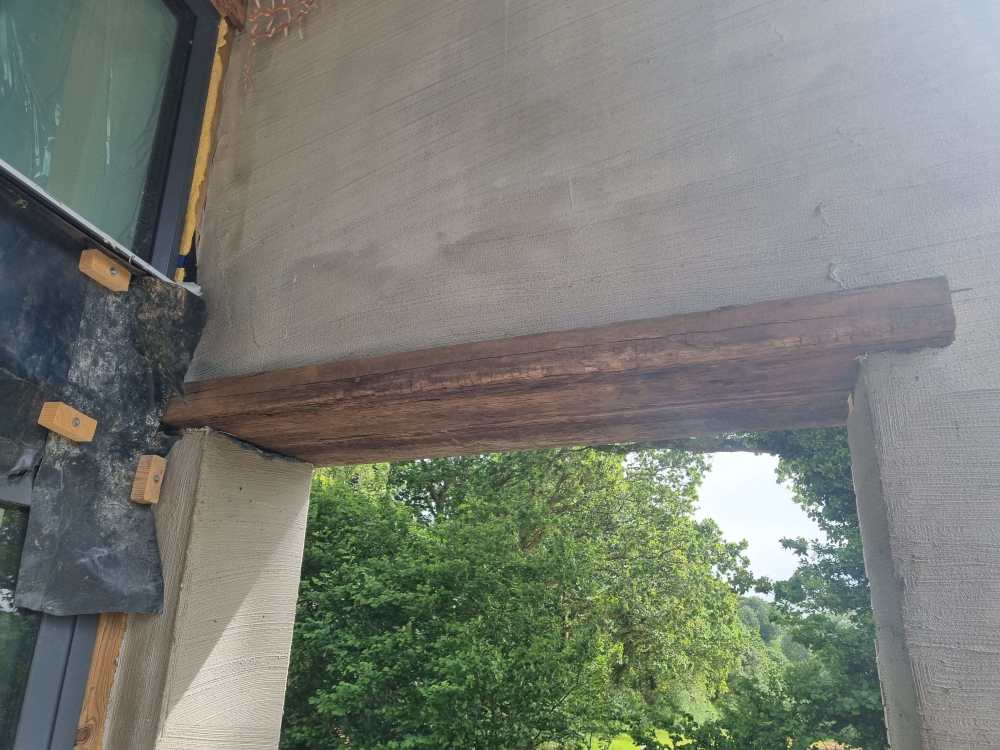
False lintel - what material and other questions
BotusBuild replied to BotusBuild's topic in Building Materials
Just thought I'd update what happened It's old wood from a dismantled railway viaduct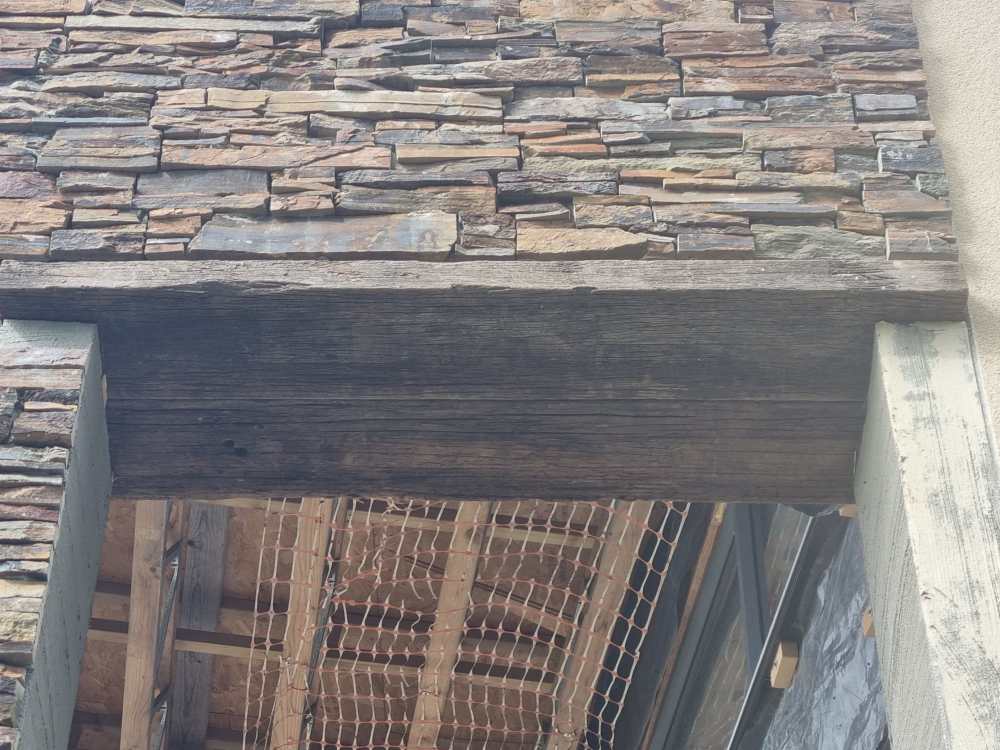
-
I got a hot knife which a blade you could bend to suitable shape, then cut channels for round conduit through which the wires were then fed. I'll be back with a link
-
How to insulate internal end of external wall
BotusBuild replied to Spinny's topic in Heat Insulation
Put some PIR in the gap. Then plaster board and plaster. If you want you could use the insulated board instead of plaster board, but then you'd be looking to run it all way along that L shaped wall at the top to maintain the same thickness (and a flat surface to plaster on). Might get expensive. You could use that insulated board for the reveals as well, if there's room. Good rawlplugs (or similar) will hold a roller blind. Usually you have the option to screw the brackets to the top reveal or the side reveals -
How many double check valves are too many?
BotusBuild replied to Super_Paulie's topic in General Plumbing
I've got a job for you 🙂 -
Openreach taking the proverbial for tree lopping
BotusBuild replied to BotusBuild's topic in Electrics - Other
Following the EE route, and so far so good, although they still want to lop more stuff off tree than I have already done. But, the key thing, they are not going to charge me for this, so I will let them get on with it. Spoke to these guys. Very helpful, but as there is already fiber in the lane, they said it would be better to just go with a "normal broadband provider" (their actual words 🙂 )- 16 replies
-
- 1
-

-
- tree lopping
- openreach
- (and 2 more)
-
The granite setts would be installed on your land, so knowing where this starts would be well worth knowing. You can have this installed, or install in yourself on your land. Are you set (no pun intended) on having this architectural feature? I don't think it would stop building control signoff if it was not there. The dilemma is whether to go to the council to confirm the boundary which may raise questions with the PP/BC, or just making a reasonable estimate about where council section comes to. Are there any other properties on the lane that may indicate where a reasonable line might be between the council and private land.
-
Don't be too afraid. Photograph what you are going to replace, particularly connections. Turn everything off, then check nothing is live. Replace the cable. Replace the connector. Make the connections (refer ro earlier photos) Tighten and tug test. Apply volts. You got this
-
If you are replacing the damaged contactor (bad screw) - you're doing that! - then replace the whole T&E at the same time. IMHO
-
She wants fitted wardrobes, she dips into her inheritance 🤣🤣
-
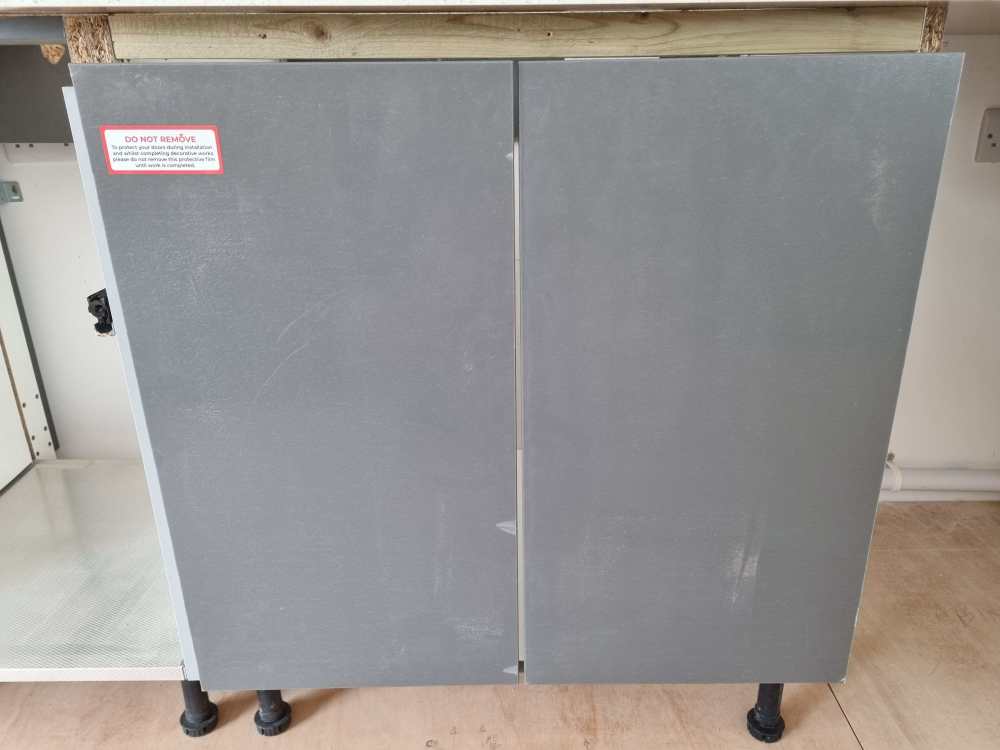
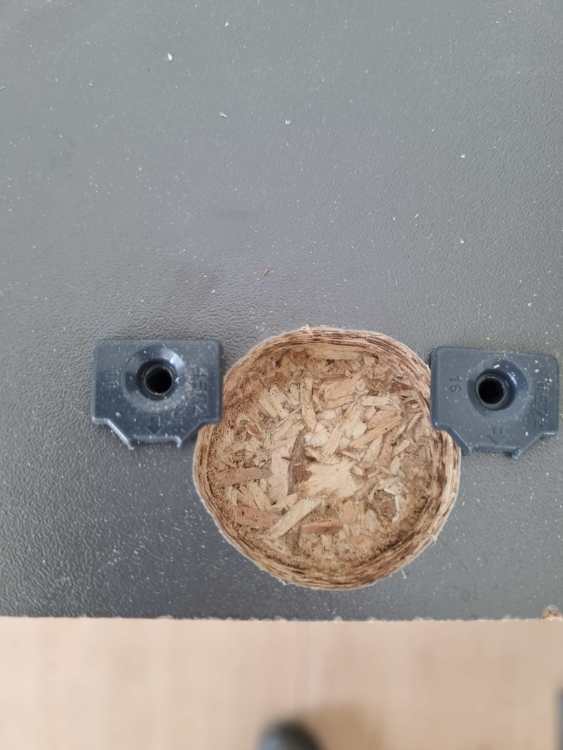
template made of three layers of wide masking tape. Original hole below Using a router freehand created the new hole. Note, door not cut to new width in case of a cock up, and it also supports the router Door cut to width and screw grubs refitted. And finished doors fitted. Worth a 🍺?
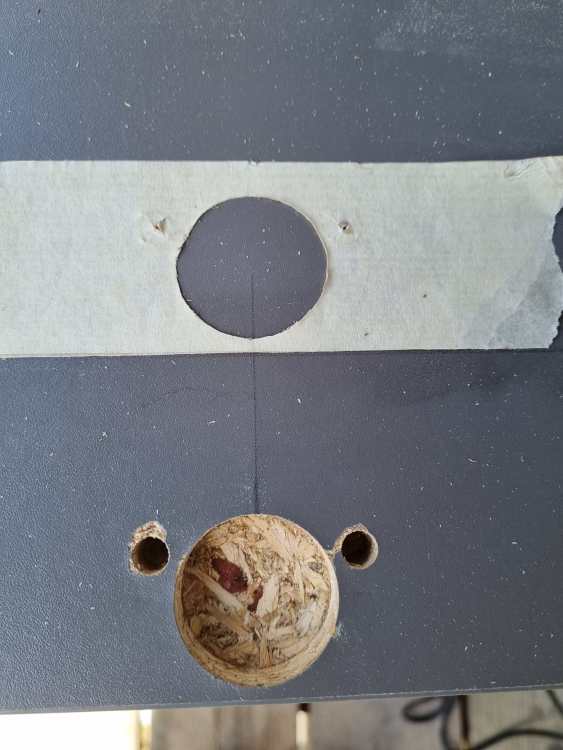
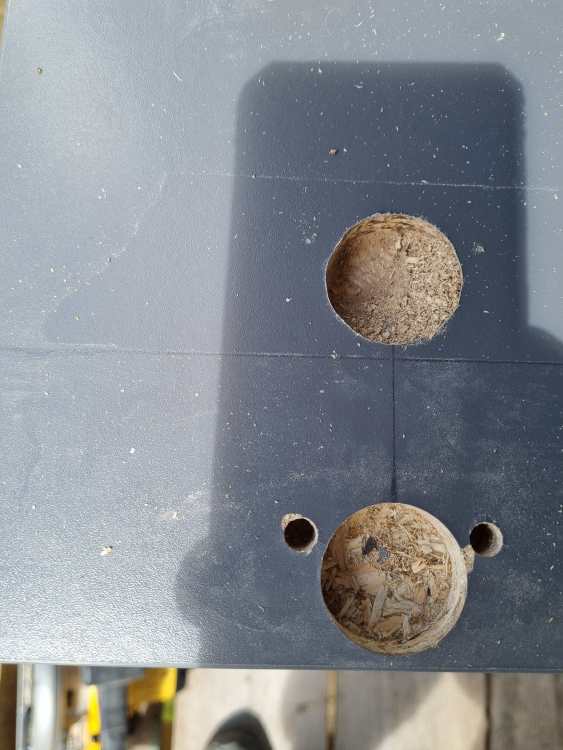
-
Follow up. Cabinet cut down and fitted, but now of course I have the trouble of the doors, which both need trimming down equally. Note: these doors of course match all the doors in this brand new kitchen. Initial option was to trim the centre edges, were they meet, bit that means apply new edging colour matched. Has anyone tried to remove edging and reapply it? Maybe heat it to melt the glue, then clean it up and glue it on the newly cut edge? Second option is to cut the hinge edges which means cutting those lovely big holes which I don't have a jig for. Bit that still leaves the cut edge without edging 🙃 Damn, I love DIY 😬 Any other options out there?
-
How many double check valves are too many?
BotusBuild replied to Super_Paulie's topic in General Plumbing
You could put the drain taps inline in those vertical pipes above the connectors if you have room. Also, you lose some joins by following the green lines below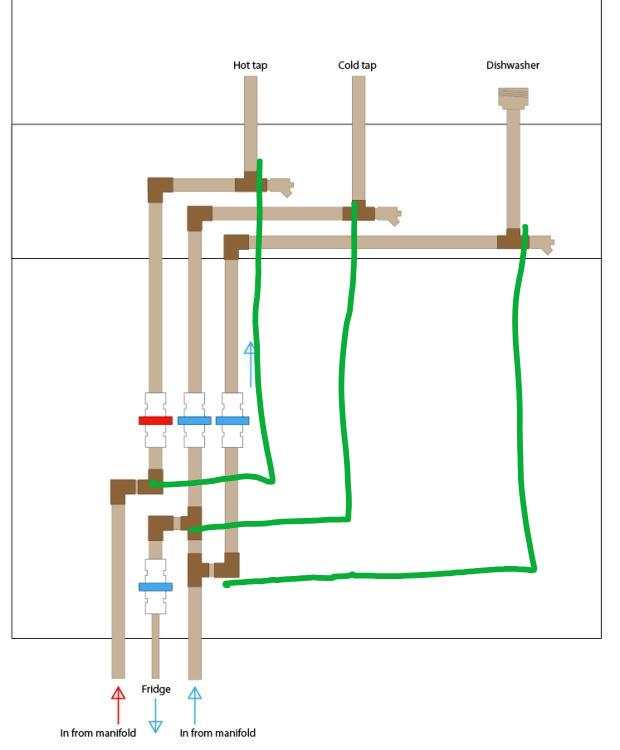
-
This stuff any good? Toupret wood repair filler ?
-
How many double check valves are too many?
BotusBuild replied to Super_Paulie's topic in General Plumbing
I don't think so. Isolator valves for future maintenance, sure, but not DCV's -
How many double check valves are too many?
BotusBuild replied to Super_Paulie's topic in General Plumbing
You only need one after the stopcock inside the house. We have one on the build tap outside which will remain in place, as it is direct connection back to the meter. -
I'm in the process of having to narrow a cabinet. Someone did not measure twice during the design and we cannot go back. So I have removed one end of the cabinet as carefully as possible but inevitably a couple of areas of chipboard from the cabinet end have come away and I need to fill the resulting uneven holes before fitting the end back on. What recommended product should I be considering?
-
Flat Roof with Parapet detail - correct fall
BotusBuild replied to Ay8452's topic in Roofing, Tiling & Slating
We have a GRP flat roof that pools in a couple of areas. GRP was done well. When the green roof goes on I will have to do something about one of the areas. The other is minor and should be addressed by the green roof makeup shifting the excess water to the outlets anyway. -
Flat Roof with Parapet detail - correct fall
BotusBuild replied to Ay8452's topic in Roofing, Tiling & Slating
That sir, is gorgeous. -
Hard & soft landscaping scheme planning condition
BotusBuild replied to flanagaj's topic in Planning Permission
Just don't mention knotweed





