


Mr Punter
-
Posts
8312 -
Joined
-
Last visited
-
Days Won
24
Everything posted by Mr Punter
-
Basement floor options and integrated garage access
Mr Punter replied to Moonshine's topic in New House & Self Build Design
I know it would take space but I would prefer a quarter landing in the hall and 2 steps. For the door use an external front door with all the correct security as other wise it is a weak point.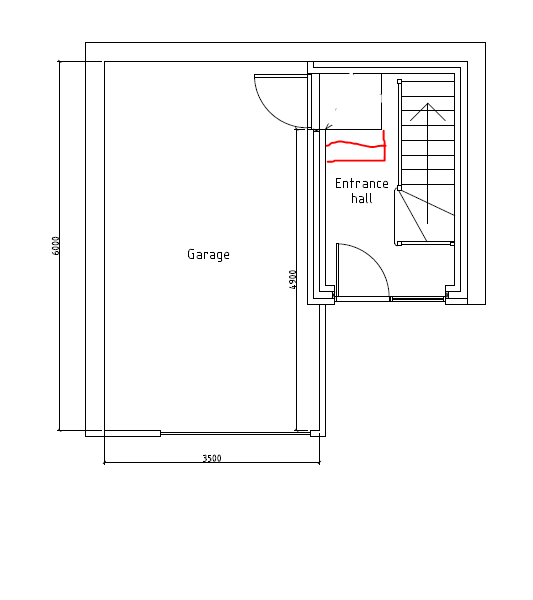
-
Can anyone tell me what are these pipes used for?
Mr Punter replied to BricksP's topic in Building Materials
I googled the rigid stuff and it is mostly used for highways drainage surface and stormwater. -
The connections don't feel too fragile, but I leave a fair bit of slack behind the plasterboard so i could remove and refit a cable if I had to.
-
I have used these patch panels flush mounted into plasterboard wall: https://www.amazon.co.uk/gp/product/B003SSX1Q6/ You need a punch down tool to fit the cables and you need to cut the plasterboard carefully.
-
I think the solid stuff is terminated in the punch down patch panels and face plates. It is for the fixed wiring in the walls. The stranded is more flexible and is for patch leads with crimped connectors.
-
Mine was glued. It has not scratched.
-
We have LVT in bathrooms and shower rooms. Warmer and more comfortable than tiles, easy to clean and looks excellent.
-
Paving unexpected additional cost
Mr Punter replied to ultramods's topic in General Self Build & DIY Discussion
The costs to distribute the hardcore should be similar as he already had the machine and driver, so it is extra material. Do you know the square area? Ask him for invoices for the hardcore. -
WiFi Speakers Not Wired for Sound
Mr Punter replied to Ferdinand's topic in General Self Build & DIY Discussion
I think my stuff is about 6 years old. Sonos are a bunch of crooks and I would never buy their products again. I hope their crappy business fails horribly. -
WiFi Speakers Not Wired for Sound
Mr Punter replied to Ferdinand's topic in General Self Build & DIY Discussion
I just got an email from Sonos to say that from May a couple of my products will be classed as "legacy" and I can either "Trade Up" with a 30% discount or get no further support. Apparently when you trade up they brick the old device. Cheeky American rip-off b*******s! Previous hi-fi lasted 25 years. -
Making our own window cills (sills)
Mr Punter replied to ToughButterCup's topic in Windows & Glazing
CT1 is fine as an adhesive / sealant but it is pretty awful as an exposed finish as it is very difficult to tool. You could have it under the render / plasterboard no probs. -
No the land is not part of the build cost.
-
Making our own window cills (sills)
Mr Punter replied to ToughButterCup's topic in Windows & Glazing
I think they would be good with a splayed reveal internally and externally, covering up at least half the frame. -
Acoustic property of large tiled area
Mr Punter replied to Lots2learn's topic in Floor Tiles & Tiling
If you are concerned about acoustics, curtains and sofas help a fair bit. Wood and Luxury Vinyl are preferable to porcelain. -
I have fitted a Vent Axia Sentinel Kinetic plus in a house. Simple enough to do but make sure you have decent access for servicing / filter cleaning. It was designed in the loft space but the house is 1 1/2 stories so it is stupidly tight. Doubt the new owners have ever cleaned the filters.
-
You could use 10mm thick flat bar for the vertical parts. You may even have enough room for stiffening where it joins the box section. You could have galv powder coated steel if the stainless was expensive to fabricate.
-
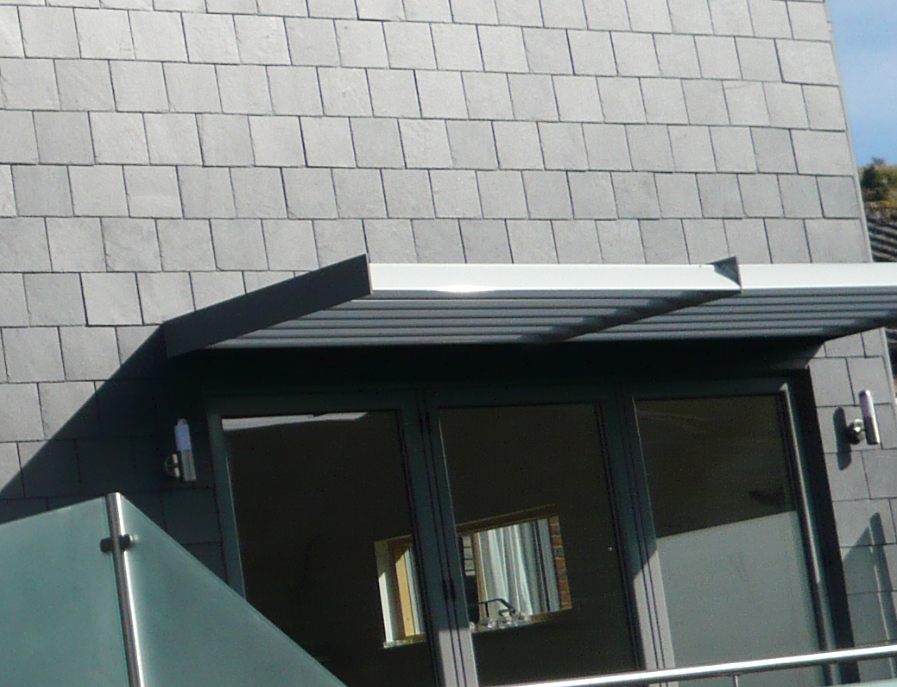
We did similar on a place with bris soleil with slate cladding on timber frame. The brackets have welded flat vertical sections either end screwed into the timber frame.
-
Can you not take off some cladding and screw onto the timber frame, then just cut a neat hold in each bracket and slot the cladding back?
-
Floor insulation is simple and cheap to install so you may want to go a bit thicker. The screed does not need to finish level with the bricks. You will normally have a 38mm thick sole plate plus the bottom rail of the timber frame so you could go 120mm insulation, 60mm screed and there will still be 46mm of timber at the bottom to fix your plasterboard. The timber frame firm should design the holding down detail. It could be metal straps fixed to the floor or screws and plugs. Ask them.
-
I understood that the condensate would form as soon as the exhaust air was passed through the heat exchanger and it would drip into the the condensate drain and be directed out. There should not be enough moisture in the now cooler air for condensation to form on the remaining length of duct.
-
If the neighbouring houses are connected to the same drain and they have vent pipes you could just have an AAV. If not, you will need to vent to atmosphere. If you have more than 1 soil pipe you will need either an AAV or vent to atmosphere at the top of each.
-
Not with any detail. Just showed a twin wall metal flue I think. This was 10 years ago.
-
If it is loose it is OK on a nice concrete base but a pain if it is not on a clean surface. Bricklayer will not thank you for mud and stones in the mortar. Even worse if it is used for render. I do find it much easier to shovel from a concrete slab than digging from a bag though.
-
I used this stuff https://www.stovesonline.co.uk/wood_burning_stoves/Selkirk-flue.html It is twin wall and I used the 150mm which has an external diameter of 200mm.
-
I don't think that HETAS registration is mandatory, just a way of showing compliance. I have done a metal flue in the past as part of a new build house, all to spec and Building Inspector was fine with it.

