

.jpg.c21f3ac78c9b7efd90cbdcb312744dc5.jpg)
jack
-
Posts
7460 -
Joined
-
Last visited
-
Days Won
41
Everything posted by jack
-
I can't help, but I'm interested to hear whether you get an answer. Ours died a couple of years ago after about 4-5 years of pretty infrequent use. I haven't had time to look at it (well, I had a quick look and concluded, as I nearly always do, that it was a bigger job than I had time for at the time, then never got back to it!)
-
.jpg.c21f3ac78c9b7efd90cbdcb312744dc5.thumb.jpg.7adcad4c0e384f5ecd7d56b0618df6e5.jpg)
Commissioning MVHR
jack replied to Ambaz79's topic in Mechanical Ventilation with Heat Recovery (MVHR)
Yes, follow the link @Bonner posted above and I'll add you to the list. It's been stuck with someone for a while but I've sent a reminder this morning. -
Advice on the Right Subsoil for My London Garden
jack replied to ronald_1978's topic in Landscaping, Decking & Patios
Hi @ronald_1978 I'm not sure whether you're aware (and hat-tip to @ProDave who spotted it), but this post can't be replied to by members. I can only reply because I'm a moderator. I think you may have clicked on the circled box when you set it up: I don't think the mods can change this after posting, so if you'd like answers to your questions rather than just poll responses, I'd recommend re-posting your question again as a new poll, without checking that box. Once you've done that we'll delete the first post. Thanks Jack
- 1 reply
-
- 1
-

-
Every switch in our (Loxone powered) house is a simple spring loaded switch. Two-way for blinds, one way for lights and other things. Works perfectly well. The main issue for me is that the return spring on the Definity Click switches we have is quite aggressive, to the point where it can be hard to click (and particularly to double-click) quietly.
-
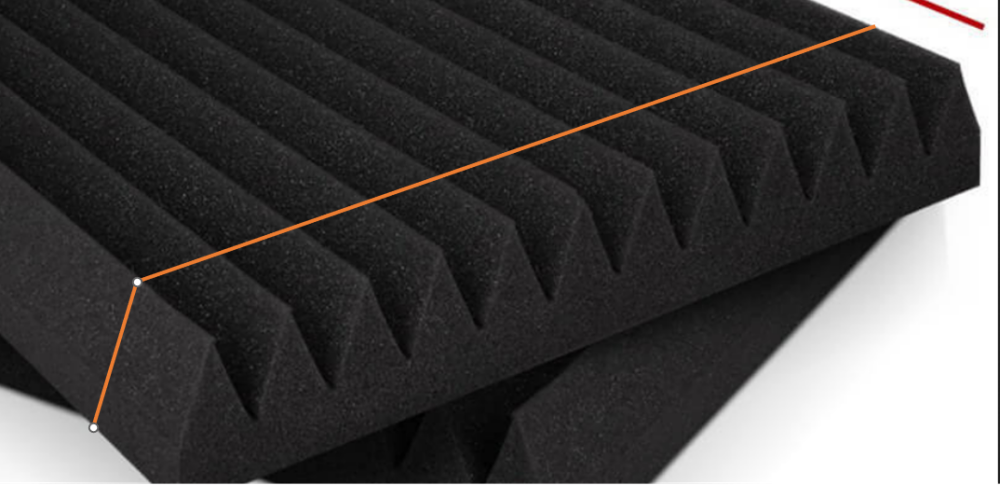
We did this. I left something like 40 mm of height between the doorframe and the wall frame, and lined it with a strip of something like this: (The orange line is where the strip is cut - I cut it slightly narrower than the studwork.) We aggressively chamferred the inner top edge of the door frame along the gap to maximise transfer. I've never particularly noticed any sound transfer through these openings. Noise-wise, I can't see any reason why it would be any worse than a 10 mm, unlined gap under the door.
-
Please continue the conversation here rather than duplicate the topic in this forum:
-
Just to be clear, satellite cable is one type of coax cable, so don't necessarily be put off if you see the word "coax" used in the description. Yes, I think that's right. Good discussions here:
-
TV, game console, and sky box wouldn't be an unusual combination.
-
I should add that the blinds that are under overhangs (800-1000 mm) aren't rained on and they're much dirtier than those that are.
-
Or this! https://www.amazon.co.uk/External-blinds-cleaner-Sunblind-LR-180-GTR/dp/B07SSB4MWV
-
I have them. They probably ought to be cleaned regularly, but I haven't gotten around to it in the 7.5 years since they were installed. We went with a shade of grey that we thought might hide the dust and it largely works! I was planning to do it - or, better yet, get my kids onto it - this summer. I was going to wait until an overcast day, hose them down, then use a pressurised pump sprayer to spray on some detergent (not sure what type yet) and leave it for a while before hosing it off. We have one of those car-washing brush attachments for the hose that I might try on the more visible ones (e.g., near the front door) once the detergent's done its work.
-
MVHR design help / feedback
jack replied to Ola's topic in Mechanical Ventilation with Heat Recovery (MVHR)
For context, our house tends towards being relatively cool in winter given its PassivHaus levels of airtightness and insulation. A lot of this is larger areas of glazing, especially to the north. We certainly seem to use a bit more energy for heating than some with similar sized PassivHaus-type houses. We went away for Christmas and most of January a few years back. The house was empty for a month. I turned off the heating, hot water, and every appliance other than the fridge and freezer. When we got back, the house was around 14 °C. If you add back in incidental heat from people, pets, cooking, hot water generation and storage, showering, appliances, downstairs heating (if you need it to maintain 19 °C), and anything else, there's no way you'll maintain anything like even 12 °C upstairs without active cooling even in winter. Where did you get the 10-12 °C idea? As others have said, that's a worryingly low temperature range in terms of house (and hence occupant) health. More to the point though, 10 °C is bloody cold. My wife complains if it's less than about 18 °C, and even I don't like getting out of bed in the morning if it's much below that sort of temperature.- 18 replies
-
- 1
-
-
- extract / ssupply points placement
- cascade effect
- (and 1 more)
-
Anyone using Intelligent Octopus....
jack replied to NSS's topic in General Alternative Energy Issues
I've been following this in the forum because we've been planning to get a Zappi for a while. I believe the Zappi is about to be added to the compatibility list for intelligent octopus. I believe they're in final testing. That's only for the 6 hours of cheap charging though. I don't know what that means for charging the car using solar. -
Anyone using Intelligent Octopus....
jack replied to NSS's topic in General Alternative Energy Issues
Have you tried the Myenergi forum? I've found it pretty good. -
You can run whatever you need. I can't remember the current ratings of the different extensions, but I vaguely recall that some are physical relays and some are solid state. I use some for zero volt switching and others for mains switching. You can also use low them to switch low voltage DC and use that to drive a chunky relay if needed.
-
Beat me to it! My small ASHP needed 300 mm or maybe even 350 mm space behind it.
-
I don't know what this is supposed to mean. If it's a dig at Craig, look back through his recent posts - lots of helpful content, no mention of his company. Incidentally, you're one of the "there are others" I was trying to think of when I wrote my reply.
-
Welcome, and thanks for being upfront about this. Several members manage to successfully walk the line between commercial presence and unacceptable business promotion. @craig comes to mind, but there are others.
-
I'll check tonight and get back to you.
-
How odd. My missus was exactly the same. I had firm opinions on nearly every detail of the house (admittedly mainly what I didn't want rather than what I wanted!), but aesthetically I couldn't have cared less whether there was a bar there or not. The screen does wobble a bit if you catch it on the way out of the shower. Not ideal, but none of the three shower screens set up like this has broken yet.
-
I think you're being too hard on yourself. Sounds like the seller lied about stuff being in stock, then provided utterly shite service, then effectively tried to steal your money when you cancelled. Glad you got the money back.
-
Insulhub Isotex Voluntary Liquidation
jack replied to Surfiejim's topic in Insulated Concrete Formwork (ICF)
Hi Jake. I'm not sure whether this thread is monitored much by the people who've posted in it. Best thing you can do is to send a private message to one of the people who mentioned the Facebook and WhatsApp groups earlier in the thread and ask them how to join. If you're on a PC, you can just hover over their icon and a popup will give you the option to send a message. Alternatively, click on their icon and the option will be on the next page. Good luck. -
Makes sense a longer job price would be lower than a one-off day, but are plumbers really still £30 a day less than painters?
-
MVHR for 335 m2 house
jack replied to GK22's topic in Mechanical Ventilation with Heat Recovery (MVHR)
Seems very expensive to me. Nearly three grand just for first fix ductwork labour? Without any previous experience, I installed all of my ducting (£289 m2 house) over an easy couple of days with occasional help from my wife. Even at £300 a day (which is a lot given it's a low-skill job), what are they doing for 10 human-days? And what "second fix" works? Surely that's just fitting inlets and outlets? Again, how much time could that realistically take? -
No way I can get a plumber onsite for a day for £210 around my way. Are they really only £30 a day more than a painter?
.jpg.c21f3ac78c9b7efd90cbdcb312744dc5.thumb.jpg.7adcad4c0e384f5ecd7d56b0618df6e5.jpg)

