FuerteStu
-
Posts
431 -
Joined
-
Last visited
Everything posted by FuerteStu
-
fitting seals on 300mm twin drainge pipes to bends
FuerteStu replied to scottishjohn's topic in Waste & Sewerage
He did a couple of circles around the pipe about a foot back from the end. Plastic isn't great for getting a grip on, but the tape is textured so the push and twist is easier. You don't have to squeeze as hard to hold onto it. -
fitting seals on 300mm twin drainge pipes to bends
FuerteStu replied to scottishjohn's topic in Waste & Sewerage
I saw an old ground worker put a couple of ribbons of duck tape a foot back from the end to give something to grip on. Seems like a really simple and easy trick that must do wonders. He put it on before getting down in the dusty trench though -
Fixing from the top with screws might actually make things worse. As you won't know if you're forming gaps by pushing the wood sections apart.
-
Take away the radiator completely. Cold shrinkage will make them have to sit down and then no mess.
-
So he's basically gone against all standard practices, the manufacturers recommendations and all logic.. Rather than do it properly Don't allow him near your house again. When it fails, which it will.. Get a proper tradesman in.
-
Depends on your location and family size. Lots of houses generate too much excess heat when cooking, if you're a couple on the Scottish isles then save the heat.. A family of 7 in a city down south, getting rid of the heat is essential for a comfortable house
-
Commercial kitchens have better equipment though. I don't have the space for a steam oven, Bain Marie and grill, so hobs for the veg, meat and gravy will have to do. Some people say that saucepan lids stop steam from being a problem, but they don't understand how the reductions increase flavour.
-
As someone who cooks very often and for a large family, downdraft cannot handle it. I know it's been discussed here before and most people barely use their hobs so wouldn't notice, but there is no substitute for a good old fashioned hood. If you've got 5 pans on the go regularly, the ceiling will be a mess without it.
-
Mains supply (water) distance from other services (electric)
FuerteStu replied to GaryChaplin's topic in General Plumbing
I seem to remember a BC guy saying that services should be at least a shovel width apart.. Logic being that if you need to dig one out to repair, you aren't hitting the other services. Makes sense -
Must be washing the gimp suit, funny you just hate it when everyone stares at your kinky laundry...
-
If we all fully insulated our homes, drove cars and grew food in our gardens.. Of still wouldn't save the planet. Not until all industries start changing their ways. Industrial scale resource wastage is taken for granted. Out of 12 aircraft Hangers I worked on last week, 6 of which were empty, yet still heated, one of which had the doors open 24/7 with the heaters on. Two of these have issues with their sprinkler systems not holding pressure and have mains pressure water pouring down the drain and have been for a year. That's drinking water. This is US/UK tax payers money covering the cost of these wasted $/£, and this sort of thing happens in ALL industries. As long as the mentality of fighting change is based upon short term economics, things won't change
-
Just my 2p worth. If it looks that bad from what you can see, it will be worse that's covered up. Think of the over all cost of repairing a lot more than just the trim of the epdm. Contact the guy (he's not a tradesman he's a chancer) and tell him your second opinion has confirmed the work is substandard, and that it he isn't willing to refund you the labour costs, then you'll consider legal action to recover the entirety plus costs of putting it right. You will have countless sleepless nights every time it rains hard, the wind blows strong, or there is snowfall sitting on it. No amount of cost would offset that. Get someone in to do a proper job. You'll be glad you did
-
I'd like to see a layout drawing of the lighting positions to before I suggest another option. Personally I prefer a wiska box than the inline connectors, unless it's in an obvious or difficult position. It gives you more options to check for problems or alterations.
-
Extractor Fan or Single Room MVHR?
FuerteStu replied to Onoff's topic in Bathrooms, Ensuites & Wetrooms
It always comes down to interpretation of localised isolation. Some define it as within the area it's installed, others count the breaker as such. -
I've not refurbished the kitchen yet.. But I've already fitted the three smokes in the utility (boiler and washing machine) and the upstairs hallway.. I left a loop in the middle of where the kitchen will be, right above where I've cut a hole that is temporarily plugged. When I fit out the kitchen, I'll pull the loop down and cut and terminate the head then. It means it's in one radial and they're all linked.
-
Well there is alarm bells.. Both these posts combined make me very concerned. Why was it strengthened on one side only? Has that strengthening caused the other side to bow (natural timber shrinkage prevented on one side)? Was that the original roofing material? Slate swapped for concrete tiles? Is there a history of problems on the rest of the estate? How is the ridge looking? Is it straight? Is the wall plate still in position, gap in the eaves? So many questions
-
Regular concrete isn't as runny. So it doesn't force itself into the gaps as much. Which is actually a blessing in domestic slabs which are usually only pinned at the edges with a few spikes into mud. "is only a thin pour, that will hold.." but it often doesn't Are the edges strutted diagonally on blinding? Or just staked?
-
For only 200mm only I'd use regular concrete and make sure its given a good flow into your voids with a mechanical poker. Powerfloating is just like plastering, it's an art and reliant upon timing as much as effort. Get someone very experienced to do it and the job will be much better
-
I've seen it used and because of its viscosity you need to pay extra attention to potential places where it can 'blow out' or leak. The last thing you want is thermal bridges everywhere because your 5mm gap at the edge stretched to 50mm with the weight of the very wet concrete above. As with most concrete pours, the people doing it will decide whether it's actually good or not. Not the architect who is selling the spec
-
I had a couple of plastic Spacers sitting proud when I did my bathroom floor and the first one I tried to remove left a little fink in the tile. So I used a soldering iron to melt the other two below the grout line
-
Slaying the demon chimney stack
FuerteStu replied to Nick Thomas's topic in General Self Build & DIY Discussion
This thread is like an episode of time team. Gradually digging deeper into the history of the chimney! At least there's no annoying artist impressions of what life was like when the chimney was first built 😂 -
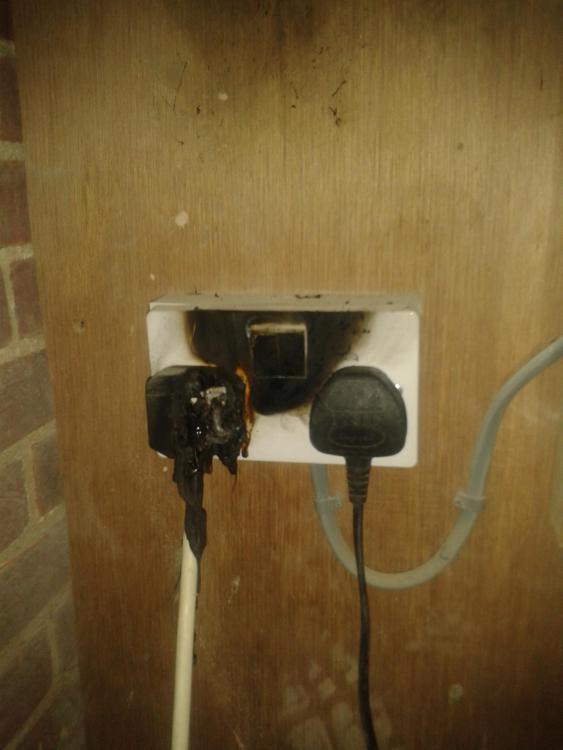
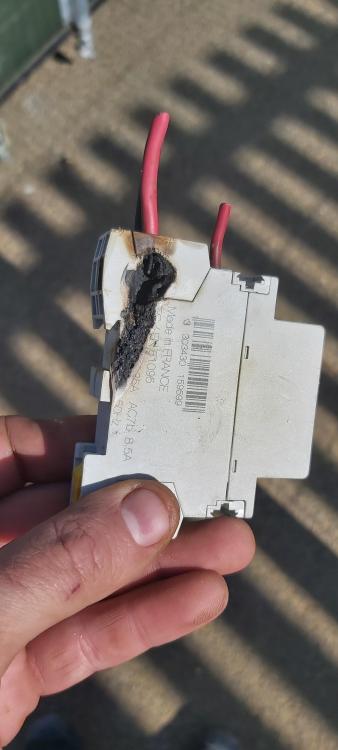
People just assume they can plug anything into a socket and it be OK because 'if there's a problem the fuse will blow'. Nope. Manufacturers instructions will always tell you how things should be connected and there are good reasons for it. Even the correct contactors need to be selected to allow for suitable loads.
-
Build a small house on a driveway....possible?
FuerteStu replied to Tokyorob77's topic in New House & Self Build Design
For the cost of the works, the gain, and devaluation if the property, why not just sell up and move further out. -
It doesn't matter about the size and the make up of the foundations. They were designed to take a small load (shallow wall and windows). It's unlikely they will be tied into the original foundations, which building control will insist upon checking all round. If your digging to expose them, may as well put new ones in.
-
To me this seems like a lot of work for very little gain. More than likely you will have to dig up the original footings for the porch and put better ones in, you'll need to spend a significant amount on planning and building control, demolition and redecorating for a relatively small amount of floorspace.. For the cost and effort you could gain a single story extension at the rear which would be five times bigger.