


Mike
-
Posts
1565 -
Joined
-
Last visited
-
Days Won
9
Everything posted by Mike
-
I agree that it looks like water splashing, mostly below DPC level so nothing to worry about. No harm adding drainage channels - it should reduce the splashing. They're just common bricks, intended to remain invisible below the ground level. The mortar was almost certainly never there in the first place, though if a tidier brickie had done it then it would be.
-
Maybe cladding + additional genuine Compriband between the cladding and the window?
-
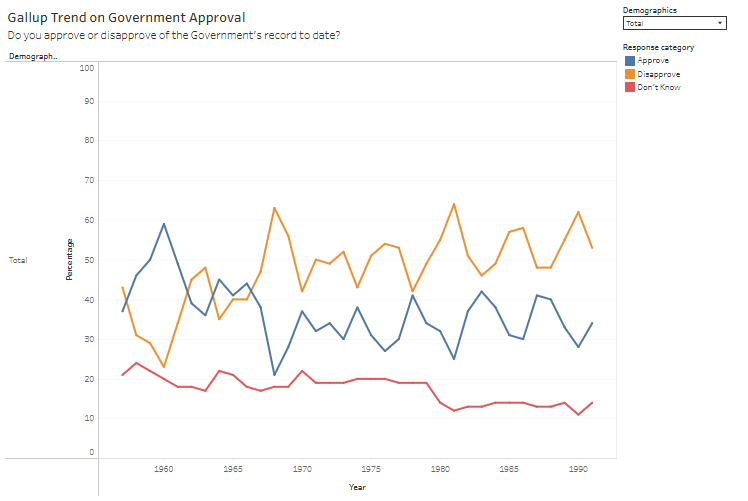
That's an interesting question. Just went hunting and came up with this chart, showing public approval & disapproval of Government between 1957 & 1991. The only periods when more people approved of the Government than disapproved, were 1957 to 1962 (Harold Macmillan, Conservative, Keynesian economics, prosperity, "You’ve never had it so good" - until the Profumo scandal), and 1964 to 1966 (Harold Wilson, Labour, low unemployment, economic prosperity, major social reforms, "white heat of technology" - until defeated at the polls). Source: Social and Political Change in Britain (1945-1991) | ROPER CENTER
-
The advantage of moisture permeability is that, should any moisture get into the structure, it has an easy escape route - for example to reduce the risk of rot in timber windows. That's why I chose to use it on my current project - though I had to rip the cheap stuff out of the installers hands and give them the genuine product!
-
It's fine for sealing membranes to each other or to adjacent surfaces - I've used it myself - but I wouldn't use it to seal plywood joints. If you're sealing ply for airtightness then I'd use an airtightness tape. BTW it does set, but it will remain flexible - to a point - and tacky.
-
I'd go further and suggest that everyone should be required to vote. Reports of the benefits of doing so in Australia - such as this one from the BBC - seem, on balance, to be be positive. In particular, it means that any party that wants to get elected / stay in office has to address the concerns of all segments the population, rather than just the demographic that habitually votes.
-
+1. There are a lot of inferior competitors that perform much worse - it sounds like you may have one. No; it's very good but, as mentioned by @SimonD, even genuine Compriband has limits. I recall calculating that their window strip is good for wind up to around 70mph. In an exposed position, it would therefore be a good idea to have a second line of protection. Either something to shelter it from the wind - your timber cladding might be enough do that - or vertical & horizontal 'cavity trays' behind it. For airtightness, add Ilbruck FM330 form (or similar) and/or an airtightness tape internally. Sealant would block Compriband's moisture vapour permeability, so if that property was one reason for choosing Compriband you'd loose it. If that's not a concern, then a suitable mastic is OK.
-
Unless the developer did something stupid, the chances are that if it's been standing for a couple of hundred years, then you'd be unlucky if anything major happened in the next 7. And if it's minor, then it's not going to be quick & easy to get anything fixed under the warranty anyway. In short, it wouldn't worry me - but if you're not familiar with buildings & what to look for, think about getting a Structural Engineer's report.
-
+1. You need to identify the problem(s) and fix them. The IR thermometer should help to identify any gross air leaks that are in line-of-sight if you poke it through a down-lighter hole, but probably not not all of them due to the restricted vision. Yes, unfortunately this is likely to be necessary.
-
That poses an interesting question. It seems that it's actually France that has the higher heating requirement; the mean heating degree days (average figures for 2019-2024) are 2,080.81 for France and 1873.53 for the UK. That assumes that both datasets are population weighted - the UK certainly is and I'd be surprised if France wasn't - and also that the UK is still calculating as it did when it was an EU member.
-
A lot of that presumably due to the costs of the grid - a bigger country to connect, most of it away from the North Sea, and more rural areas too far away to connect (where main options are electricity, oil or propane).
-
Ignoring the saving on standing charges mentioned by @JohnMo - in fact ignoring standing charges all together - I just looked up the domestic rates here in France (first half of 2025, including tax): Electricity: €260/MWh Natural gas: €134 /MWh Ratio: 1.94 in favour of gas Compared to the UK (October to December 2025, North West region): Electricity: £271/MWh Natural gas: £63/MWh Ratio: 3.4 in favour of gas Which is undoubtedly a key factor in the popularity of heat pumps in France. Not to mention that gas has been banned for new developments for several years, and that replacement boilers (but not heat pumps) are hit with 20% VAT. It certainly looks that way.
-
It is indeed strange that you seem to be in a group of 1 with this one, but good to have your feedback and a resolution. It's unfortunate that it didn't go as expected.
-
It should either fall towards the unit, or towards to the wall vent - but you can also have some falling one way, the rest the other. So maybe you create a high point instead of a dip? It's only the exhaust that's susceptible to condensation, so don't worry about the intake duct.
-
Roof vent - maintenance and insect mesh
Mike replied to sheeners's topic in Mechanical Ventilation with Heat Recovery (MVHR)
I don't have roof vents, but yes, they need course mesh - see also this thread: You need to access them for maintenance, but that could be from inside (e.g. though a filer box) or outside. Wall vents are may be easier, but I guess you don't have that option. -
You have an interesting building and some interesting challenges there! For the walls, consider lime-hemp (hempcrete), which can be applied directly to the wall in multiple layers, or cast against it using formwork. There are multiple examples of both on the internet, at least in French. Hemp handles moisture vapour very well, though not liquid liquid water, so you would need to make an assessment on the suitability and thickness. Your self-made insulating lime mortar sounds an interesting alternative. If you have lots of damp below the floor, you might want to consider laying ventilation pipes within the glass aggregate, connected to an extractor fan. If you search for hérisson ventilé you will find some examples. This may be enough to make the walls suitable for the hempcrete, if you think that it may be otherwise too damp. If the walls are still too damp for hemp, then your idea of expanded cork sheets sounds good, since cork won't be affected by moisture. I've used it myself in small areas - mainly on my chimney breasts - fixed with lime-based Isovit e-cork. You haven't mentioned how you are ventilating the building. I would suggesting using some form of continuous mechanical ventilation - dMEV / MEV / MVHR - to help control the internal relative humidity.
-
Not yet! Why not get some smoke pellets & test it yourself? Take a video of of any problems. And disable your smoke detectors...
-
Air tightness (gues)stimation
Mike replied to timhowes's topic in Mechanical Ventilation with Heat Recovery (MVHR)
Yes, that's the same 3m3/m2.h (and the same Lowe who first came up with the figure in 2000); it crops up in many places. The conclusion to that paper is interesting (though I know that it too has received some criticism): This paper has shown that previous analyses indicating that MVHR systems should only be installed in properties with an air permeability of 3 m³/m².hour @50Pa or less are based on outdated information and flawed assumptions using a modelling system which was never intended to be used to compare ventilation systems. A modern MVHR system will result in significantly lower CO2 emissions at any reasonable level of air permeability. However, an MVHR system’s primary function is ventilation and, in this capacity, it is far more effective at providing a good quality indoor air environment – regardless of external conditions – than natural ventilation. There is no clear up-to-date evidence behind the rule of thumb that says MVHR is inappropriate for dwellings with air permeability above 3m³/m².hour @50Pa. This analysis has shown that MVHR systems result in improved ventilation and lower carbon emissions for all levels of airtightness. There is a compelling case for MVHR systems to be fitted in all new dwellings and to be strongly encouraged in retrofits where significant reductions in energy demand are being targeted. It does underline, though, that the 3m3/m2.h 'guideline' is far from universally accepted and that it shouldn't be taken as definitive when deciding whether or not to install MVHR. Particularly if there are other reasons why MVHR might be desirable - to filter the incoming air or avoid external noise infiltration, for example. -
Air tightness (gues)stimation
Mike replied to timhowes's topic in Mechanical Ventilation with Heat Recovery (MVHR)
Yes, the translation's not very good (it's tricky translating technical language, for AI as well as humans). The original French version of the video is here; the ones 'that consist of a simple grid' are regular trickle vents, the 'adjustable air inlets' are humidity-controlled - two different types that sound like one in the English version. -
Air tightness (gues)stimation
Mike replied to timhowes's topic in Mechanical Ventilation with Heat Recovery (MVHR)
In a deep renovation that didn't warrant MVHR, I'd choose central MEV over dMEV. That is, one central fan that extracts via ducts from kitchen, utility bathrooms, WC (and potentially the hallway & elsewhere, depending on layout). The advantages include that the unit can be positioned somewhere noise-insensitive, there's only 1 exhaust duct to the outside (so no risk of a wind-tunnel effect from holes on opposite sides of the building), in refurb the disruption of installing the ducts likely isn't a problem, and a ceiling / wall vent is the only part you see in the rooms. You also have a single central control - which could be a pro or a con depending on your view point. This is where it's trickier. MEV has been common in France since rules brought in in 1982, and humidity-activated wall / window inlets were normally the go-to solution (a set-up known in France as VMC hygro B). However, now that new homes are more airtight (even those that are not class-leading), there there are reports that humidity-activated air entry is not providing enough ventilation for good indoor air quality - sometimes not enough to keep mould at bay either. Consequently some installers no longer fit them (e.g. see here on YouTube, in French). Instead, they favour permanently open trickle vents (VMC hygro A), so I'd suggest choosing that option. If not, be sure to get the CO2 sensor suggested by @JohnMo; it is, in any case, a good idea. The 3m3/m2.h is a guideline that originated from a paper published in 2000 that used SAP to consider the economics and CO2 emissions of ventilation strategies. Both the economics and the carbon intensity of electricity generation have changed considerably in the 25 years since then, SAP has been updated multiple times, and I doubt that it took into account the possibility of using heat pumps, so it's unlikely that an updated study would come up with the exact same figure today. I've seen 5m3/m2.h suggested in several places as the cut-off point, including on page 14 of this 2019 paper. -
Who has experience with graphene infrared underfloor heating?
Mike replied to JKami84's topic in Underfloor Heating
You're right not to get it - it's no different to any other underfloor heating. This has come up before: -
As mentioned in another thread, text from a PassivHaus MVHR certificate says that 'In case the unit’s moisture recovery rate is larger than 60 % its airflow rate must be controlled based on the indoor air humidity, in order to prevent temporarily elevated humidity levels.' So yes, it seems that there is a potential for excess humidity in some circumstances so, to avoid problems, the unit needs to automatically switch to boost mode if humidity gets too high. If it's not doing that, I guess that there are at least 3 possibilities: it could be there's a control problem; maybe it requires (an additional / replacement) humidity sensor(s); maybe some of the exhaust air is finding its way back into the supply. +1
-
mesh size for external MVHR intake
Mike replied to Tom's topic in Mechanical Ventilation with Heat Recovery (MVHR)
Yes, on the intake it'd definately easier to have one that doesn't need extra insulation. Mine was from Econology in France (site temporarily down). InovaTech in Germany sell a smaller one. So too does HomEvap, sold here in the Netherlands. -
mesh size for external MVHR intake
Mike replied to Tom's topic in Mechanical Ventilation with Heat Recovery (MVHR)
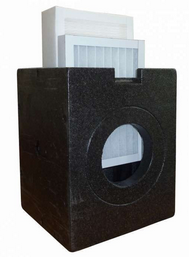
My Zehnder intake is around 10mm too - enough to stop leaves, bats & birds. I then have a filter box before the MVHR unit, with a large filter that can easily be changed, before the MVHR filter takes out anything that remains.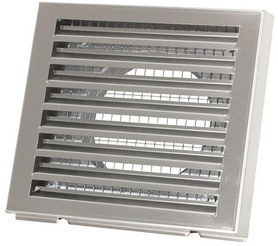
-
The deterioration of a fixed battery must have a negative impact on resale value; the economics of battery swapping might work if that is taken into account. Standardization would certainly help. The EU already has a directive (2023/1542) require that "batteries, as well as individual battery cells included in the battery pack, are readily removable and replaceable by an independent professional at any time during the lifetime of the product", so it wouldn't be a huge step to go further and specify standard battery pack sizes. A quick search also shows that the European Committee for Standardization is already drafting "Technical specifications for swappable battery system applied to L-category vehicles"

