Mike
-
Posts
1565 -
Joined
-
Last visited
-
Days Won
9
Everything posted by Mike
-
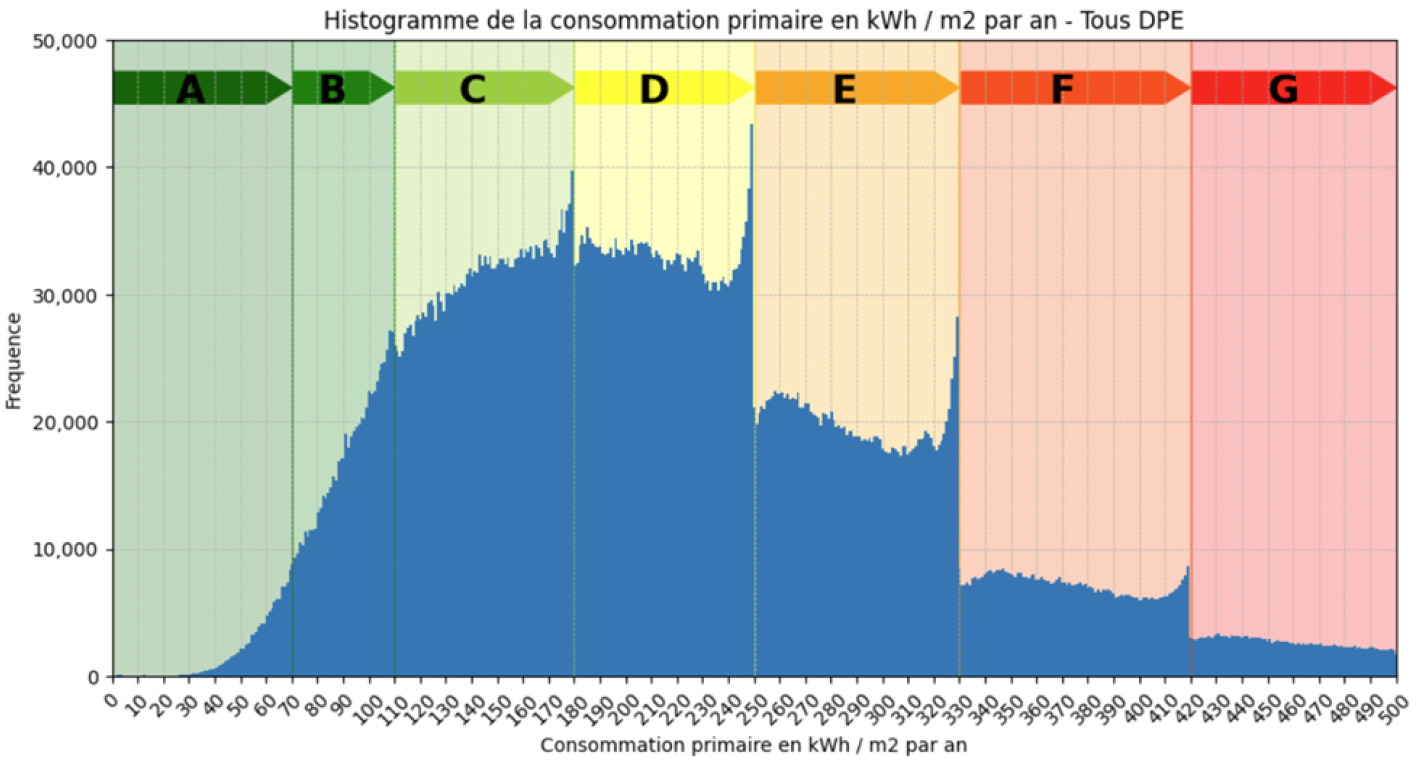
A similar one I did a couple of decades ago in a slightly smaller space. Overall 1880 x 1920, with a 900 x 900 corner shower. It looks tight, but wasn't in practice.
-
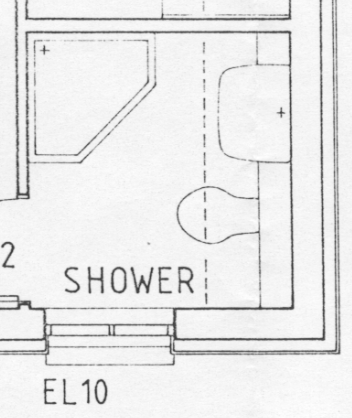
In France - where EPCs significantly affect property values & saleability - EPCs now have a legally enforceable status throughout their 10-year validity - the same status as asbestos reports and the like. That is, if an EPC is proven to be wrong, a buyer / lessor can take action against the seller / landlord for the cost of improvements to reach the EPC rating / extra central heating costs incurred + interest / loss of value / loss of enjoyment / potentially the annulation of the sale or lease. The seller / landlord can also take similar action against assessor (unless they provided false information, in which case there are very severe penalties). The assessor may also incur a fine of €1,500 fine in case of error, or €45,000 & up to 3 years prison for falsification. Of course you can't get an EPC for £35 in France. Previously, French properties were often falsely bumped up into the next EPC band, as per the chart below. Presumably this won't happen (much) going forwards. chart from an analysis by KRNO: étude KRNO sur la fiabilité du DPE, 28 novembre 2024
-
eBay. I've only bought a couple of tools, but hundreds of other items across a wide price range. But do check out how long the seller has been around, their reputation, plus what else they're selling to see if it all stacks up. For more expensive items, video the opening, unpacking and testing - all in one take - just in case.
-
Not entirely unwarranted; I'm not sure what the brand is, but I know of one that has indeed gone off-colour in the sun. I'd do it the traditional way, whether or not there's a fascia.
-
Sensible choice for multiway relay PCBs
Mike replied to MortarThePoint's topic in Networks, AV, Security & Automation
Yes, they sell 'smart' versions too - PDF here - controllable by app / Alexa / HomeKit, etc. -
Sensible choice for multiway relay PCBs
Mike replied to MortarThePoint's topic in Networks, AV, Security & Automation
They'll cost more - and you'll need to track down a supplier willing to ship to the UK - but they're widely available in France (and probably the rest of Europe). For example the Legrand 412404 (PDF in English). -
Replacement seems likely, but clay pipes are pretty robust so it will likely only be a localised replacement. At least they didn't tip it down an internal drain... A bit bleak :) I'm sure the end result will be worth it!
-
MVHR Design And Install
Mike replied to Adrock's topic in Mechanical Ventilation with Heat Recovery (MVHR)
This one, perhaps? -
What battery drill should I buy? The choice is bewildering.
Mike replied to jimseng's topic in Tools & Equipment
You may eventually also realise that it's useful if those boxes can stack together too. Most of the 'pro' brands must now have stackable boxes available with customisable foam inserts for non-standard tools; certainly Dewalt do in the Tstak range (a.k.a. Stanley Pro-Stack). Though at more than £5 each. -
What battery drill should I buy? The choice is bewildering.
Mike replied to jimseng's topic in Tools & Equipment
For the range of things you're planning, the Dewalt DCD805 you identified seems a decent all-round choice. You're not planning to put up rafters, joists, decking or the like, so no particular need for an impact driver. -
What battery drill should I buy? The choice is bewildering.
Mike replied to jimseng's topic in Tools & Equipment
I've got a non-hammer action version of this - the DCD791 - but that's because I have a dedicated D25133 mains hammer drill for heavy drilling and light breaking. As well as an ancient DW907 12V drill/driver that is ideal for driving regular screws. I've not yet had the need for an impact driver. My mains tools are a mix of Dewalt, Makita & Bosh but, as suggested by others, for cordless it's a good idea to stick to one brand and use the batteries between the various tools (though you can now buy converters to mix-and-match them). I have 5Ah & 5.5Ah versions for the extra duration, despite the extra weight. When I was without my tools a couple of years ago I did hire a Makita cordless drill/driver. It worked perfectly well but the motor made an annoying whine, so you might want to road-test a brand you're not familiar with. -
I'd be spitting off the oven (due to the potential load) and fridge/freezer (to protect the contents if the ring trips) onto separate circuits.
-
I've got some Collingwood GL040s ready to install but, as my new electrical installation won't be operational until later in the year I can only recommend them by the reputation of the company, not experience. They're not cheap but have a long theoretical lifespan. They're also not dimmable, but the output can be set at 300 or 530 lumens depending on the driver chosen. As @joth hints, choose where you put them carefully and use them to achieve a particular effect. In my case I cast tubes into the screed to hold them, so no problems with floor boards.
-
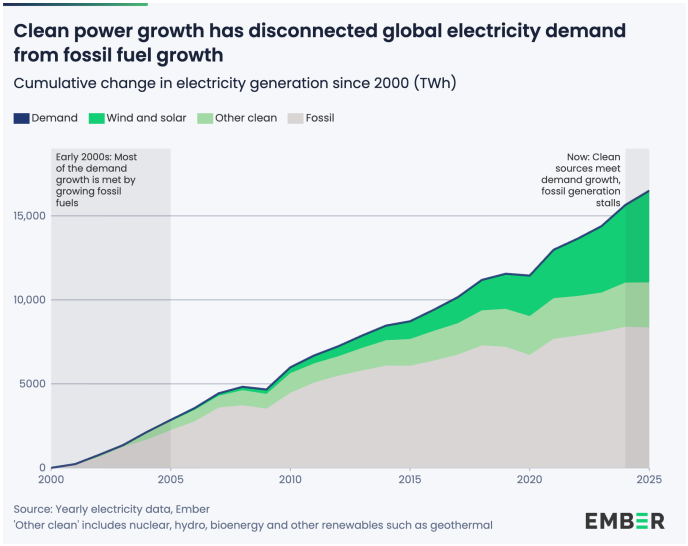
Some good news for a change - it seems that the use of fossil fuels for electricity production may finally have plateaued (dropping by -0.2% last year). This from an analysis by Ember that included 2025 data from 91 countries representing 93% of global electricity demand. Other highlights: Renewables overtook coal generation for the first time in 100 years Renewables have overtaken coal in every region except Asia Fossil fuel electricity fell in both China and India for the first time this century Fossil fuel electricity generation is predicted to decline from the early 2030's More solar generation was added in 2025 than could have been generated by the LNG exported through the Strait of Hormuz Grid battery storage grew by 46% as its cost fell so much that it can now provide electricity cheaper than building a new gas power plant Electric vehicles displaced 1.8 million barrels of oil per day in 2025 (=13% of US oil production), saving more CO2 than emitted by all the UK's power generation China accounted for 1/3 of global electricity demand for the first time In Australia, grid battery storage set the electricity price during the evening peak (18:00-20:00) 36% of the time (instead of gas & hydro), cutting wholesale prices by 44%
-
Update: the standard to look for is BS EN 13618:2016. But still plan on replacing them at regular intervals.
-
Yes, for internal wall insulation - or rather I've used their Optima Clips (which are good), with everything else from other suppliers, to end up with a similar finished result.
-
1 or 2 mvhr units?
Mike replied to lizzieuk1's topic in Mechanical Ventilation with Heat Recovery (MVHR)
Because if you run MVHR flat out the noise can be intrusive. Ideally run it at no more than 2/3 capacity, but maximum ¾ capacity. Preferably choose units from the Passivhaus database, which lists units have been independently tested to into account both the heat recovery rate (for which the standard way of measuring it is inadequate) and the electrical consumption of the fans (which will be running 24/7 for many years). Efficiency Ratio = overall performance (heat recovery & electrical consumption). -
Something may have changed in the meantime, but Ofgem concluded the opposite back in 1999: "Another result from the modelling was the observation by participants that gaming - seeking to exercise market power - was perceived to be easier under SMP pricing rules than pay-as-bid" "Under a pay-as-bid system, buyers have to go out and find the best deal available, which will increase the competitive pressures on generators" "These points are supported by the business simulation modelling that has been conducted by the RETA Programme, where prices under SMP came out higher than pay as bid" The New Electricity Trading Arrangements, Ofgem/DTI Conclusions Document, October 1999, page 91 (SMP = System Marginal Price) Not sure what subsequently happened that flipped the position in favour of marginal pricing. It would be interesting to know.
-
Was pretty much ruled out. All mandatory options have now been ruled out, not just pay-as-bid. Decisive Government in action / Decisive Government inaction. What you think the market will bear (for each half hour slot), knowing that if you bid too high, you'll get nothing.
-
Not Roger, but pay-as-bid is one leading proposal. In other words, if providers A, B and C offer their electricity at £60, £80, and £200 per MWh then, if they are chosen, pay them £60, £80, and £200, rather than paying all of them £200.
-
Having once worked in a hotel that experienced at least one connector failing every month - but sometimes every week or more than once on the same day - I can confirm that this is a problem. Twisting them during installation is a known issue, but they do have a limited life even when correctly installed. I tolerate them in a cistern, but have returned to using regular copper pipe elsewhere. Replacement every 10 years is advised if they've been installed. Only buy ones that are made to the relevant European / British Standard (sorry - I can't spot the number right now). The standard isn't very good, but it's better than pot luck.
-
It's not yet painful enough. The 70's Oil Crisis was painful and did, briefly, prompt Government action in the UK, even if it didn't turn out well - another expansion of nuclear followed by dependence on gas...
-
Yes, very useful. It's one thing that I wish we had here in France - instead we use regular sockets on a lighting circuit (2 maximum, unless a contactor or the like is used) & rely on intuition to distinguish them :(
-
MVHR vs Air Con - if you had to pick one?
Mike replied to Indy's topic in Mechanical Ventilation with Heat Recovery (MVHR)
Evidently not an original idea, but build to the Passivhaus standard (or close to it as feasible) and minimise the need for high-tech solutions. Though I'd now evaluate summer overheating against forecast climate data for the 2070s, now that it's available in granular detail for the UK. As for long term maintenance costs & durability, the 25-year evaluation of the original Darmstadt passive houses (occupied since October 1991), available here, is interesting. TLDR: Heating requirement: average for the 4 homes remains stable at 8.4 kWh/m²/year (compared to the 2016 German average of 138 kWh/m²/year) Glazing: gas losses from the triple low-e glazing units so low that these can be used for at least two additional decades Airtightness: after replacing the seals of the opening lights, airtightness returned to the as-built value (0.21, from 0.26 pre-replacement) MVHR: no significant contamination despite never having been cleaned, expected to last >50 years apart from filter changes and fan replacement (1 of the 4 MVHR units had 2 fans replaced in 2002 for about €500; all others were still original) -
MVHR vs Air Con - if you had to pick one?
Mike replied to Indy's topic in Mechanical Ventilation with Heat Recovery (MVHR)
You can probably add cooling to your heating system for much less than £7K, or to add it later, if you design it in now. In the meantime, MVHR is essential. Then change the design and avoid the problem. Upgrade your roof insulation using a product with greater decrement delay, add a brise soleil to the window, etc.