


MikeSharp01
-
Posts
5693 -
Joined
-
Last visited
-
Days Won
16
Everything posted by MikeSharp01
-

Size and layout of your networking cupboard?
MikeSharp01 replied to puntloos's topic in Consumer Units, RCDs, MCBOs
Don't forget that a lot of the components you are likely to be using are not 19" rack ready so you will probably need some shallower DIN rail panels for home automation / IoT stuff as well as the 19" rack. On the 19" rack you may well find that you do not need the full depth as you probably won't be fitting full depth routers / switches etc. The only really deep thing might be the UPS and you don't need 19" for a patch panel although I agree this is an industrial standard even they don't need it. +1 to ventilation. -
Welcome to THE forum for self builders. How is the weather in Toronto today?
-
Is there a Rule of Thumb for estimating the ....
MikeSharp01 replied to ToughButterCup's topic in Electrics - Other
I will get a pic tomorrow but it's two bits of OSB for the sides two bits of broom handle for the rolls. I went for two rails as I could Make it narrower and the pull angle was less. The two rows of drums are one above the other. -
What proportion of a kings ransom did you pay for it - may I ask?
-
Is there a Rule of Thumb for estimating the ....
MikeSharp01 replied to ToughButterCup's topic in Electrics - Other
I don't know how much cable you will need but I do know you need a cable drum frame. I made one that could hold 10 drums. Put it in the room where the wiring centre/ cònsumer unit is then pull the cables off the drums and out to their end points. I could run 2 or three runs of the same guage cable so, when I used it, I had a few drums of each. Although this did leave me with some ends of drums. It was much quicker than pulling one at a time. The only one I didn't do that with was the CAT6 for that it comes in boxes with a pull hole and you just pull it out of the box. -
Uv exposure of polyurethane glues does it go deep!
MikeSharp01 replied to MikeSharp01's topic in Timber Frame
That's an interesting link. -
We are using polyurethane adhesives in various places on our frame, while it is not being used structurally, mostly gap filling / joining insulation boards, I was wondering how it's structure gets damaged by UV exposure. I dimly recall from sleepy materials science lectures about 40 years back that surface changes of plastics resulting from various sources can penetrate beyond the skin although I cannot recall the process. Does this happen in PU adhesives or are the UV degradation effects limited to the outer surface? Any ideas?
-
Our plot was not expensive well under 150k including on costs. I do tend to agree with @PeterStarck that working it out this way is misleading but then most approaches are a bit wonky. VFM is very hard to work out as it is mostly a perception thing controlled by where you stand - literally, so I won't tile our roof and walls because I have a fear of heights so the roofer VFM is going to be high almost no matter what it costs if you get my drift. Also in our case the relative cost of the Architects is good VFM as neither of us are great with aesthetic challenges and we wanted a stand out design.
-
Perhaps I should add that the Architects bill will be about 7% of the cost total build cost (ex land) They took us through design all the way through planning and as far as building control we are on hourly rate now but so far have used 0 hours!
-
We included demolition of existing building and we are working on an all up cost - including land of about 1600m2 and ex land ( with derilict old house) of about 1000m2 We have 196m2 of build including the garden room. We had services but had to pay for new gas connection- which we probably won't need and to divert the electric supply. We are doing about 80% of the work ourselves.
-
Is the implication that 'lived can have different interpretations for each of you? IE I have lived here 20 years but you were asleep for the first 10 so you have only lived here for 10 years.
-
Getting old and bathroom grab handles:
MikeSharp01 replied to ToughButterCup's topic in Bathrooms, Ensuites & Wetrooms
Make sure you put the patresses in and that you know where they are and then just wait until you really need them. IE fit them about 24 hours before you would have fallen over for the first time were they not there. -
Architect or Architectural Designer??
MikeSharp01 replied to Mike_scotland's topic in Surveyors & Architects
This is a Venn diagram problem where th two circles overlap mostly but there are areas of no overlap. As I see it one area where there is little overlap is the Aesthetic training the Architects get which is not in the architectural technicians curriculum to anything like the same extent. This means that if you want anything more than a box with windows you probably need an architect if you know exactly what you want then an architectural technician will do it without challenging you to try other, in terms, 'better looking / proportional / composed' designs. On the reverse of the diagram is our experiance that Architects don't do money so probably won't provide a design to a budget unless you are very lucky. -
MVHR DiY install?
MikeSharp01 replied to gc100's topic in Mechanical Ventilation with Heat Recovery (MVHR)
Good idea - I will be running the ASHP connection pipework through and along inside the wall, suitably separated, insulation and bring them through the air tight membrian in the plant room I guess I could do the same with the feeds, and drains, upstairs. -
MVHR DiY install?
MikeSharp01 replied to gc100's topic in Mechanical Ventilation with Heat Recovery (MVHR)
A few days back I dimly recall you discussing taking a chilled water feed from your ASHP to provide upstairs summer cooling via the MVHR just to push the upstairs temp down a little on the hottest days. So not full AC but a contribution to cooling would you recommend this where you have a reversible ASHP. -
Sounds like a plan.
-
You need a solid backing.. if the board is less than 12mm I would use two layers unless the studs are a lot less than 400mm centres.
-
First Self Builders on Pilot Scheme in Glasgow!
MikeSharp01 replied to Joanna Susskind's topic in Introduce Yourself
Welcome to THE forum for self builders. In Glasgow recently and there again soon - sounds like a perfect spot. -
Done it thanks both got it apart with a hacksaw on rusty bolts just back from getting cistern no B&Q local but there was a diddy little plumbers merchant. will fit after lunch.
-
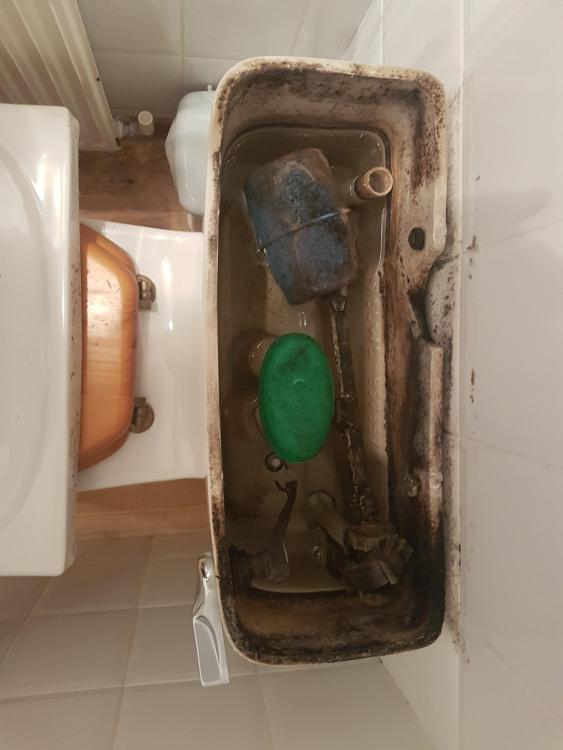
A friend has a problem with her flush, no pun intended, and I need to get a new siphon. What one do I need there seem to be various sizes none of which tie up directly with the dimensions of the existing unit. See pic any ideas and can I get new tank to pan studs as these are so rusted that I may have to saw them off. Any pointers as only got time for one trip to screwys and an hour to fix.
-
New member - looking to self build in Yorkshire
MikeSharp01 replied to Fly14's topic in Introduce Yourself
Welcome to THE forum for self builders - passed through Yorkshire yesterday - where are you looking? -
We are going with rationel.
-
Directly connecting IoT devices to the Internet
MikeSharp01 replied to TerryE's topic in Boffin's Corner
Have spent a portion of today working through a load of papers on industry 4.0 and the IOT with associated security aspects of it. It seems to me that there is considerable demand / opportunity for rethinking the security of such systems although I am reminded of the old joke about getting somewhere by not starting from here. However there are some interesting ideas about how it might be done so I feel that the time will come when, put succinctly, everything will be connected to everything else quite securely. -
That is a tough one but I cannot believe that the contract is so closely drawn that you can be forced to buy rubbish workpersonship. I assume the completion certificate must be signed off before payment- otherwise what would stop them just giving you a pile of bricks and broken tiles.They have you in a bind so you endeavour to turn the tables. Here is a thought experiment that probably needs refining but might have directional merit. Warn them now that you will sue the person who signs the certificate personally if it is signed off with the tiles as they are given that they knew they were defective when they signed them off. If they have any professional recognition Chartered or whatever you will process a complaint against them through that body / ask them to put their PI insurers on notice.. The individual cannot be protected by their employer in such cases other than by them paying for representation and all you need to do is show the investigating panel the picture of the tiles and how the person knew they were signing off defective workpersonship. If they offer to sort it ASAP after hand over you request a change to the contract at their expense to allow a hold back sum. If they refuse then the notice to sue continues. Now they are in a bind. Just a thought - bullying builders need challenging.
-
MCS installer stoops to new low.
MikeSharp01 replied to ProDave's topic in Air Source Heat Pumps (ASHP)
Yep - perhaps they don't understand their own business or maybe they understand the average punter too well.

