Jeremy Harris
-
Posts
26430 -
Joined
-
Last visited
-
Days Won
360
Everything posted by Jeremy Harris
-

mains water - how to bring it in and up through slab
Jeremy Harris replied to MarkH's topic in General Plumbing
Don't know where the idea that MDPE is attacked by concrete came from, but it's completely false. The only reason for putting a water pipe in a duct, rather than directly embedded in concrete would be if the water regs requirement for the pipe to be "accessible" was being enforced by someone who was absolute stickler for the meaning of "accessible". Having said that, I ran ours inside a bit of 50mm duct, just in case it ever needed to be replaced. -
Room air temperature/quality sensors
Jeremy Harris replied to dnb's topic in Networks, AV, Security & Automation
For those interested, the humidistat I used was the one in this post: -
My experience was that the local authority were completely ignorant of the case law that defines a rateable hereditament. I got referred to their legal chap, and after I passed him copies of the relevant case law he instructed the council tax lady to "cease and desist", from what I can gather. Her attitude certainly changed dramatically after that. I doubt that your local authority is any better informed. The people trying to gather as much council tax as possible are doing it to try and increase revenue, and my experience suggests that they aren't really interested in the finer points of law (which isn't that unusual, in my experience of dealing with local authorities). It isn't helped by the law being complex, and the definitions as to what is or is not a rateable hereditament are not that easy to interpret. Someone might just read the statute and believe that they understand the law, without realising that some definitions in the statute have been modified by subsequent case law. This old thread is worth a read, as it covers some of the law:
-
Room air temperature/quality sensors
Jeremy Harris replied to dnb's topic in Networks, AV, Security & Automation
Our MVHR is controlled via a humidity sensor in the extract duct. Works very well, as it switches the MVHR to boost when the humidity rises in that duct, so when the shower's running, or we're cooking. -
This has been discussed before, as I similarly had a local authority council tax snooper break into our plot (literally, climbed over the fences one evening) and then had a letter trying to charge me council tax. The law is pretty clear on when a council can and cannot charge council tax. It goes back to the old rates legislation, as that still underpins council tax. To be able to charge council tax two things are needed. The VOA must have carried out a valuation and placed the property on the register and the property must fulfil the requirement of being a rateable hereditament. The key is the latter requirement, as without certain things in place the property cannot be classed as a rateable hereditament, and so council tax cannot be levied. There is case law on this (linked to on other posts here about this) but one thing that stops a property being a rateable hereditament is no potable water supply. I used this as a way to avoid being charged council tax for two years, and when I quoted the relevant case law to the local authority (and threatened them with action over their illegal entry to our site - caught on CCTV) they backed off very quickly indeed, and completely changed their approach.
-
I was set on installing a GSHP, and did a fair bit of work getting prices, working out the most cost effective way of getting a ground collector in place, etc. The lowest price I could come up with, with me doing the GSHP installation work myself, was a bit over £8k. That was for a small Kensa GSHP (Kensa were very helpful at that time, BTW). Two things swayed me away from installing a GSHP in the end. We stayed at a holiday place that had a GSHP and found the noise from the unit very intrusive. The main thing that persuaded us to switch to an ASHP though was cost. The 6 kW ASHP we have cost about £2k, installed, compared with over £8k for the GSHP. Even though the GSHP was, on paper, a few percent more efficient, it would never have come close to paying back the additional £6k before it died from old age. I've really glad we opted for the ASHP, as it's extremely quiet, and in practice is performing better than the predictions we had for a GSHP. It was also very quick and easy to install, just a concrete pad for it to sit on, a flow and return pipe and the wiring. Took me less than a day to install it and get it running, and I'd never seen one before.
-
Out of interest, how have others gone about selecting an architect? I opted to use an outline brief, together with a site plan, topo plan and a short initial meeting, to try and get a feel as to how each might approach a design that met our needs. I found it a very disheartening process, TBH, as every one of the four practices I went to weren't interested in our most critical requirement, which was that the house should meet or exceed PHI Passivhaus energy use requirements. This created a lot of extra work for me, as I ended up pretty much having to design the house myself, which was something that was well outside my comfort zone.
-
I boiled our brief down to one paragraph and 8 key bullet points that had to be complied with. Anything over a single page is probably too long, IMHO.
-
How many people here bother to get an SE involved, or do any sort of foundation calculations, when they put up a shed in their garden? Looking at those concrete bases I'd say they are way big enough for the shed that's going to be partially resting on them. Heck, some just stand sheds on blocks or slabs laid on the ground.
-
Exterior Wood Fibre for SIPs
Jeremy Harris replied to davidc's topic in Structural Insulated Panels (SIPs)
The SIP panel manufacturers produce standard details for pretty much everything, so worth checking, but generally on walls you will need counter battens (not battens) against the SIP outer skin (with breather membrane behind) and then for vertical board cladding you will need to run battens across the counter battens to provide fixings. The counter battens are needed to provide ventilation airflow from the base to the top, although some manufacturers may allow the use of ventilation shims behind batten fixing points, rather than counter battens. Insect mesh or similar will be needed at the top and bottom of the ventilated cavity to keep bugs out, stainless steel industrial pan scourers work pretty well and can often be wedged in place, so a bit easier to fit than mesh. -
Vertical if you wish. There used to be a maximum slope many years ago, but the regs were changed when it was realised that there was no problem with having a steep slope. Things like backdrops are now no longer really needed, as you can usually just increase the gradient on the pipe.
-
Yes, that's existed since before the UK or Ireland joined the EEC. Even after the UK has left the EU we'll still have that reciprocal right to freely travel between the UK and Ireland without needing a passport, just as citizens of Ireland will retain their existing rights to work and vote in the UK.
-
I've no doubt that there will be an impact on exchange rates, but then there are many other things that equally impact on exchange rates, that have sod all to do with whether the UK is in the EU or not. Some of these are things we have no control over at all, either. As an example, a year or so before the UK joined the EEC in 1973, the exchange rate between the pound and the US dollar was around $2.50 = $1.00. This dropped continuously, and fairly rapidly, after 1973, and by 1976 it was down to about $1.65 = £1.00. Today, more than 40 years later, the exchange rate is a bit lower, $1.22 = £1.00, but that's a bit over a 25% change in over 40 years, whereas the change between 1973 and 1976 was about 35% over 3 years (I'm not implying that the UK joining the EEC was the cause of this, BTW, just observing that this happened to be the period when there was the biggest drop in the value of the pound that we've seen in the past 50 years). The media are making much fuss about the GBP/USD exchange rate dropping down to $1.22 = £1.00 in the past 24 hours (although it bounced back up within hours, and has since dipped a bit again), but back in 1985 the exchange rate dipped down to $1.12 = £1.00 and the world didn't come to an end. In terms of impact on the real cost of building, I'm inclined to think that the volume builders may be impacted a fair bit more than the smaller building firms that self-builders are likely to use. The loss of relatively cheap labour from Eastern Europe has as much to do with the change in the economies of countries like Poland as it does with Brexit. Last time I was in Poland there were some pretty big building programmes underway, including major road building works, and pretty strong efforts were being made to attract migrant building workers back home. As the economies of Eastern European states continues to grow then it's inevitable that there will be less economic migration. Brexit might accelerate this a bit, but I'm pretty convinced it would happen anyway.
-
I'd guess the impact on labour might be greater than any of the materials impacts, TBH. The labour market in the building sector was pretty massively impacted by economic migrants from within the EU, something that I saw first hand when working in Southern Poland around 15 years ago. Ryanair were flying twice daily flights to Rzeszów, with the flight from the UK being nearly empty and the flight from Rzeszów being full, usually with young men carrying levels etc. The translator that the company I was working with employed was a school teacher, who was about to leave himself to work for a building company near Hull. He was going to be earning about double his salary as a teacher labouring on building sites in the North of England. I've no doubt that that wave of economic migrants put a fair few British workers out of a job, as they tended to work harder for less money. Materials will likely sort themselves out, as there are almost certainly multiple suppliers from outside the EU, as well as those inside it, all competing to win our business. If barriers are created that negatively impact imports to the UK from the EU, then my guess is that some other companies from outside the EU will try to exploit the changed situation to their advantage. There may well be a fair bit of short term disruption, as new supply chains sort themselves out, but I doubt that this will last more than a few months. Things have a way of getting sorted if there's enough money at stake.
-
Has anybody tried the QuickBase pile foundation system?
Jeremy Harris replied to howplum's topic in Foundations
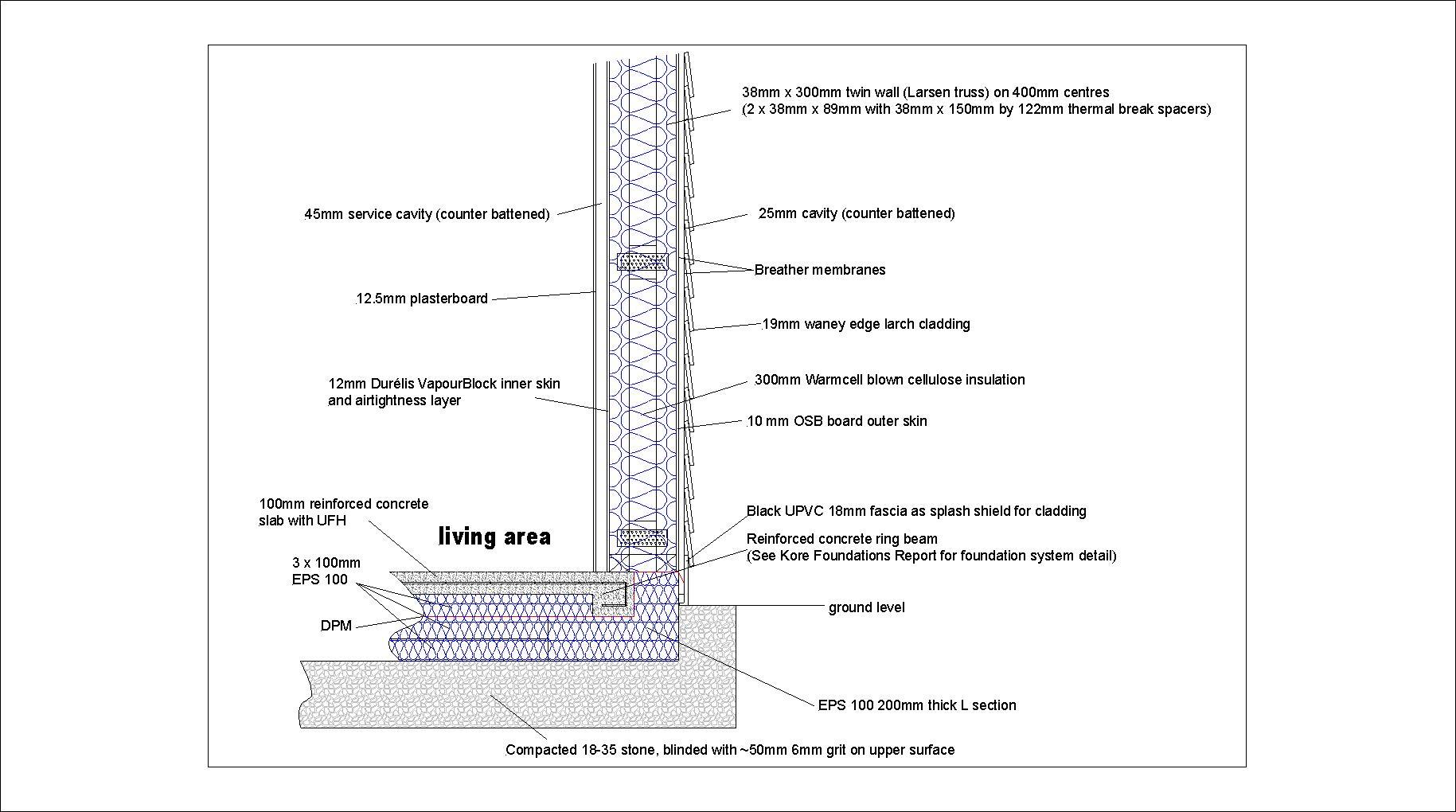
This section through the base of our build gives an idea of the relative levels: Because we'd stripped a lot of muck off our site to get it level, and we were left with just subsoil, I imported a fair bit of topsoil (none of the old stuff was re-usable, full of greenstuff and waste). This meant building up the drive level with crushed concrete as well, and when we paved around the house this raised the level by around 200mm above the level of the base of the insulation. We filled the drain area around the periphery of the house with similar coarse stone to the Type 3 used under the insulation, but with the top 100mm being a local decorative aggregate. Ground level ended up being a bit over the 150mm below finished floor level/DPM required (our DPM is at FFL).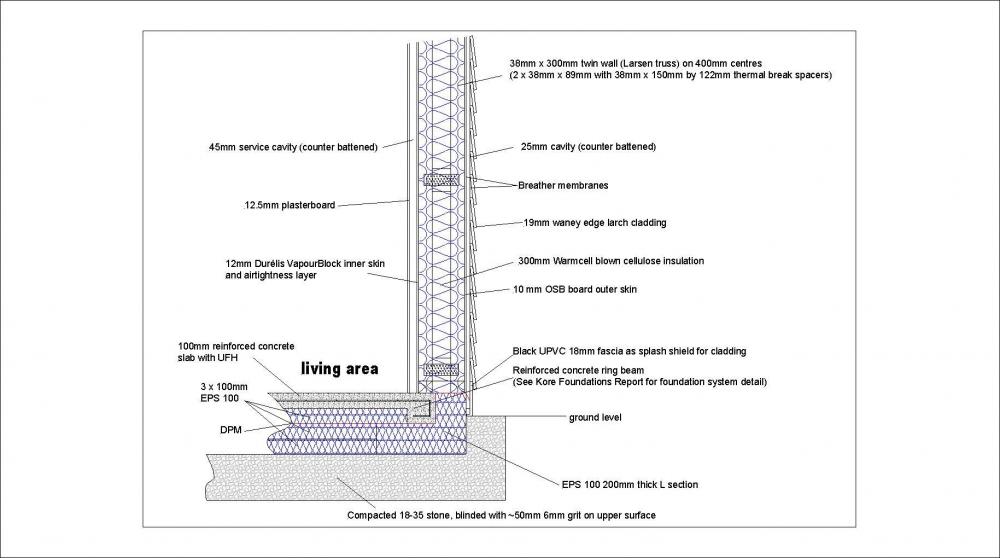
-
That video reminded me of the "calibrated human" (a.k.a. "Porton Man") that we use at my old place of work for testing a wide range of stuff : One thing that I'd be concerned about with ad hoc slip testing using people would be the variation in the coefficient of friction of the soles of the feet of the people used for the testing. My guess is that this varies a fair bit from one person to the next, just from things like the stiffness of the skin on their feet (a calloused foot may have a lower C of F than a foot that's just had a pedicure, for example), or the level of natural oils on the surface of the skin, as well as more obvious things, like the area of each sole and the mass of the person (force per unit area has a pretty big effect on sliding friction levels).
-
Room air temperature/quality sensors
Jeremy Harris replied to dnb's topic in Networks, AV, Security & Automation
I calibrated the sensors I bought, using a saturated salt slurry in a sealed plastic food container. You could probably check a unit in much the same way. I used a couple of different compounds, so that I had two calibration points. One check point would probably be OK as a test for accuracy, though. I found that the pre-calibrated HH10C sensors I bought were pretty accurate, better than 3%, which is pretty good for an RH sensor. The DHT11 sensors I bought were way out, though, so much so that I didn't bother to use them. To calibrate a sensor at a single point, just get some sodium chloride (salt) and mix it with a small amount of water to form a fairly thick slurry or paste. Put this in a sealed container along with the sensor, and place it somewhere where the temperature will be relatively stable for a few hours. After about 10 to 12 hours the RH will have stabilised inside the container to about 75%, so that's what the sensor should indicate. If you want to check it at the lower end of the scale, then instead of sodium chloride you can use magnesium chloride, using the same method. This should give an RH of 32.8%. When I checked the calibration on the RH sensors I use, I used this method, but with magnesium chloride for the lower calibration point and potassium chloride for the upper calibration point (this gives 84.34% RH). -
Do we know how much material imported into the UK from the EU goes into an average house? My guess would be that most significant material might well be timber, as a great deal of the timber we use seems to come from Sweden. I can't find a detailed breakdown, but it seems that we import around 2/3rds of the sawn constructional timber we use, and those imports have been increasing in recent years. A fair bit of the processed timber we use seems to come from North America, though, so if it starts to cost more to import from the EU my guess is that imports from countries like Canada might start to look more attractive. Blocks, brick, cement and sand/aggregate seem to be primarily produced within the UK (although some seems to come from the Far East, rather surprisingly), so probably wouldn't be a significant issue. Roofing materials seem to come from all over, with imports from both within the EU and from the rest of the world. Same goes for relatively high value stone and ceramics. The majority of imported electrical and plumbing stuff seems to come from the Far East, so nothing much would change there. There's also the strong possibility that other building materials from the Far East might end up replacing imports that currently come from within the EU; it's currently cost-effective to import cut stone from China, for example (notably the Scottish Parliament building and, more prosaically, the large expanse of granite paving on the market place/car park, in front of Salisbury Guildhall). The impact on imported kitchen appliances might be interesting, as I'm not 100% convinced that many of the components that make up some of the well-known German brands actually come from Germany, I suspect that the German companies may well either import components from the Far East, or even outsource manufacture completely. Looking around at general hardware, tools etc, then it seems that not much comes from either the UK or the EU, much of it seems to come from the Far East. If I get a spare few hours I might try to dig around and see how much of a typical house, in terms of cost, is made up from materials imported from the EU. If I had to guess, I'd say it might be around 10% to 20%. Whether this has a big impact depends on whether material imported from the EU is essential for housebuilding or not. Taking timber as an example, I'd guess that if Swedish timber becomes more expensive, then more Canadian timber might be imported instead. Hard to predict what impact that might have in terms of build cost here, as my guess is that there would be some sort of competitive balancing process - Swedish supplies might try to reduce their prices in order to stay competitive, for example.
-
Has anybody tried the QuickBase pile foundation system?
Jeremy Harris replied to howplum's topic in Foundations
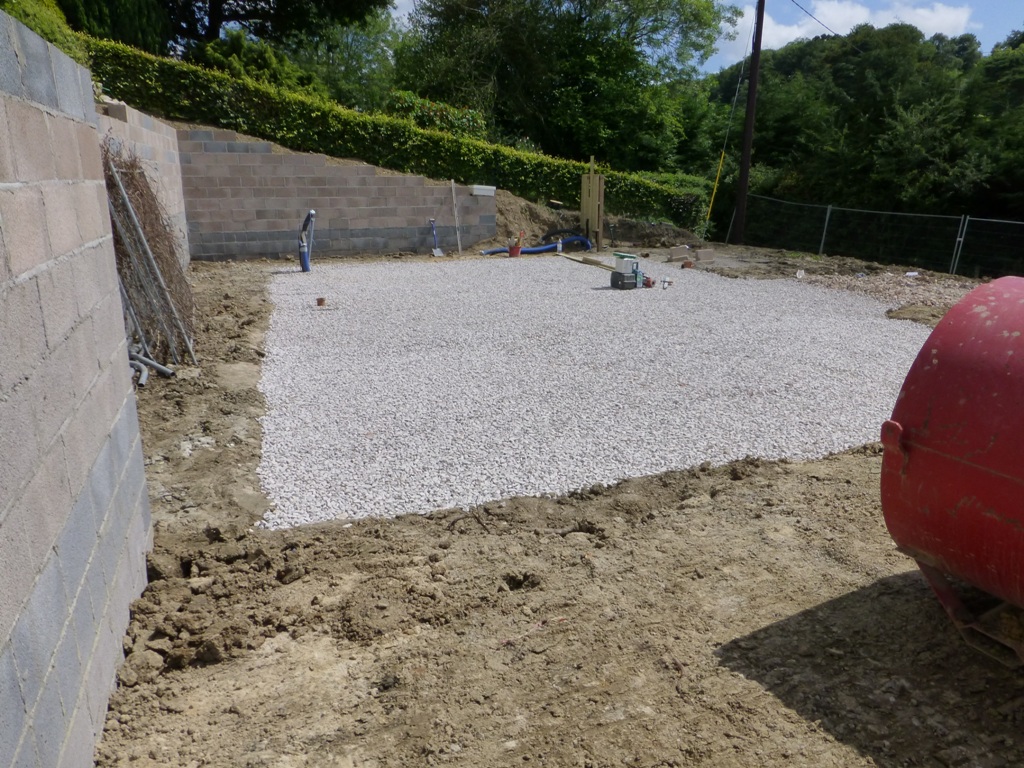
Ours was excavated 200mm below level ground from the site levelling work, and this 200mm was filled with compacted Type 3 stone, with drainage around the edge (just a buried 100mm land drain pipe). There wouldn't normally be a need to excavate as much as 600mm unless the ground conditions were particularly poor. This is the 200mm compacted stone layer which was blinded and levelled with grit for the insulation: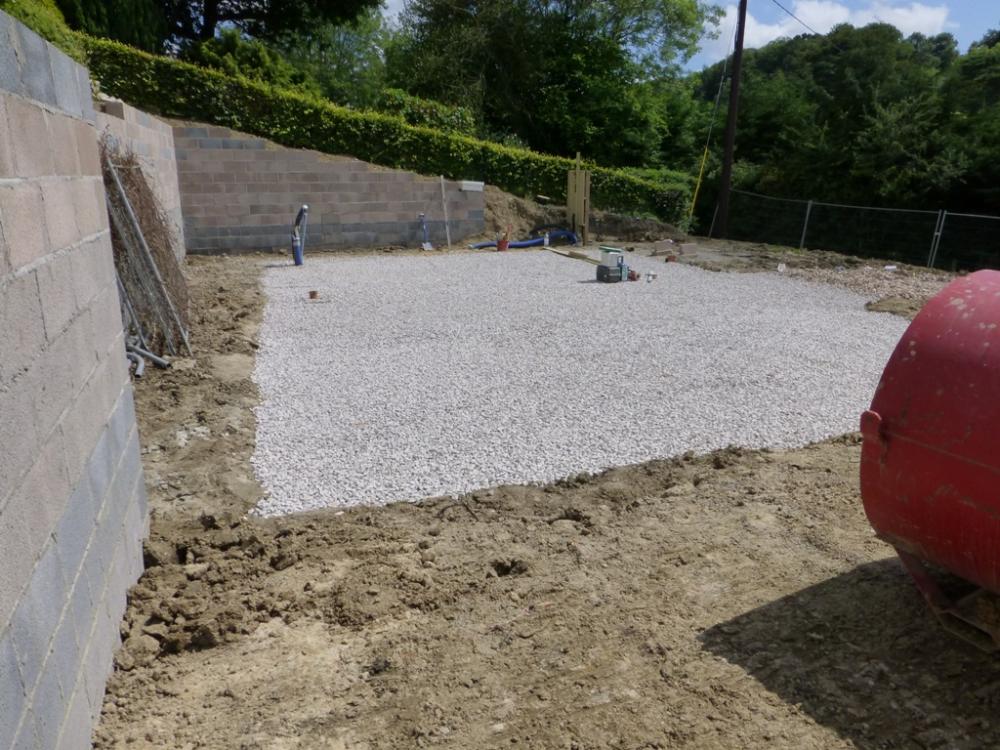
-
Room air temperature/quality sensors
Jeremy Harris replied to dnb's topic in Networks, AV, Security & Automation
Probably not, but I felt initially that it would be useful to know how much CO2 there was in the house. There's also an issue with the correlation between internal RH and CO2 not holding up well when the outside RH changes. For example, right now the indoor CO2 concentration is pretty normal, 517ppm, but the indoor RH is quite high, 51%. The reason for the high indoor RH may well be that last night was cool outside (about 11°C, it's currently 13.8°C and rising) and it rained heavily yesterday evening. Now there seems little merit, other than curiosity, in continuously monitoring CO2 concentration, as it tends to stay within a fairly tight range, from around 420ppm (if the house has been empty for some time) to maybe 700ppm or thereabouts if we've had visitors. Most of the time it sits around where it is at the moment, between 500 and 600ppm. -
Land executive, keen to learn more about building
Jeremy Harris replied to derobe's topic in Introduce Yourself
Here, pretty much every major green field development in the last decade or so has been argued and won on the basis of housing numbers. On two occasions that I witnessed first hand, volume developers effectively manipulated the delivery rate to enable the case to be argued for PP to be granted on more land in order to meet the target numbers (which are based on "deliverable", not "planned" house numbers). We ended up with a housing surfeit for a time, where the volume developers stopped all work for a couple of years, to allow sales to catch up with build numbers, yet during this time those same developers sought, and won, PP for more houses, in effect on the basis that, because they had stopped building houses on land they had already started to develop the target numbers of new houses wouldn't be met. -
Has anybody tried the QuickBase pile foundation system?
Jeremy Harris replied to howplum's topic in Foundations
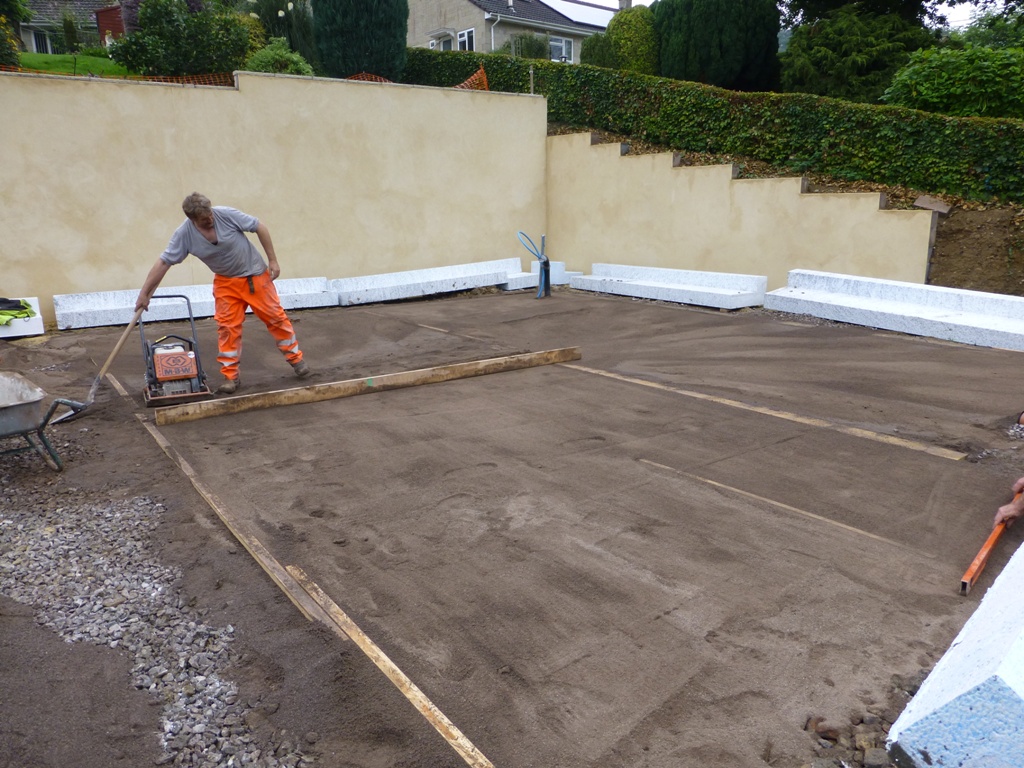
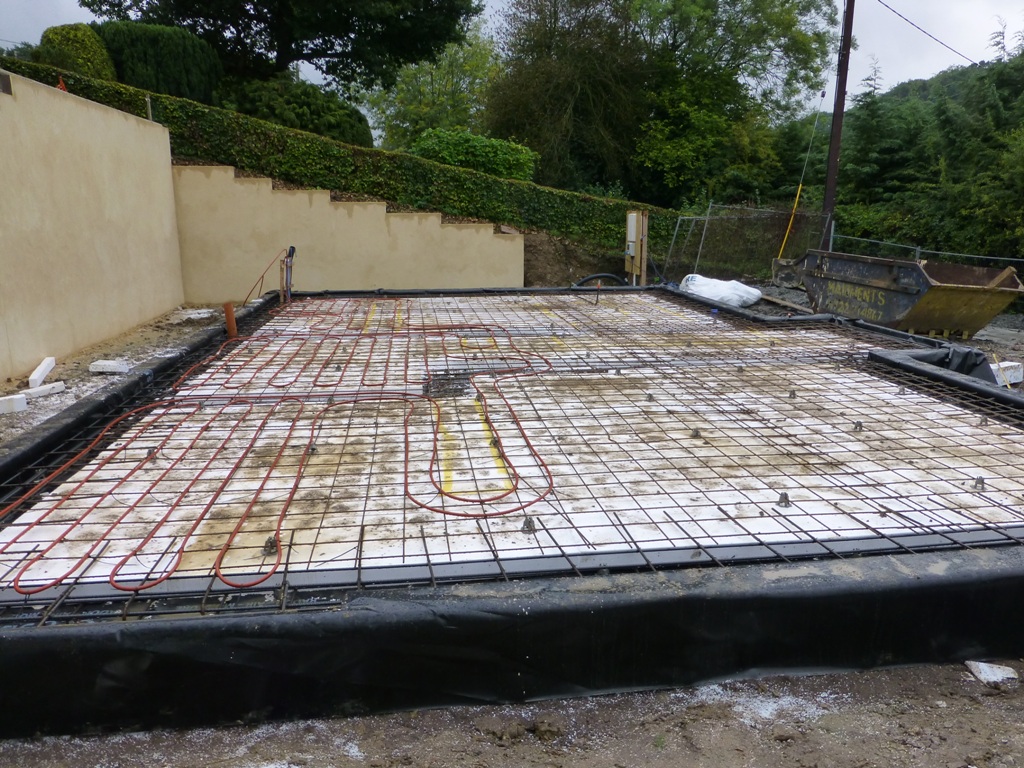
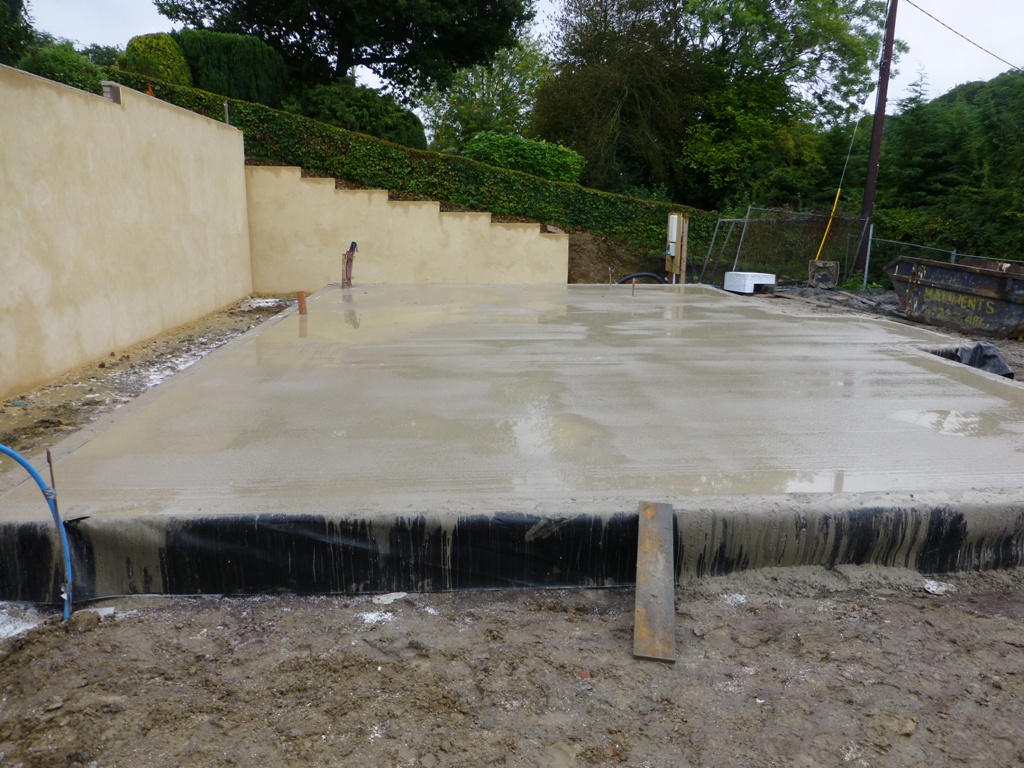
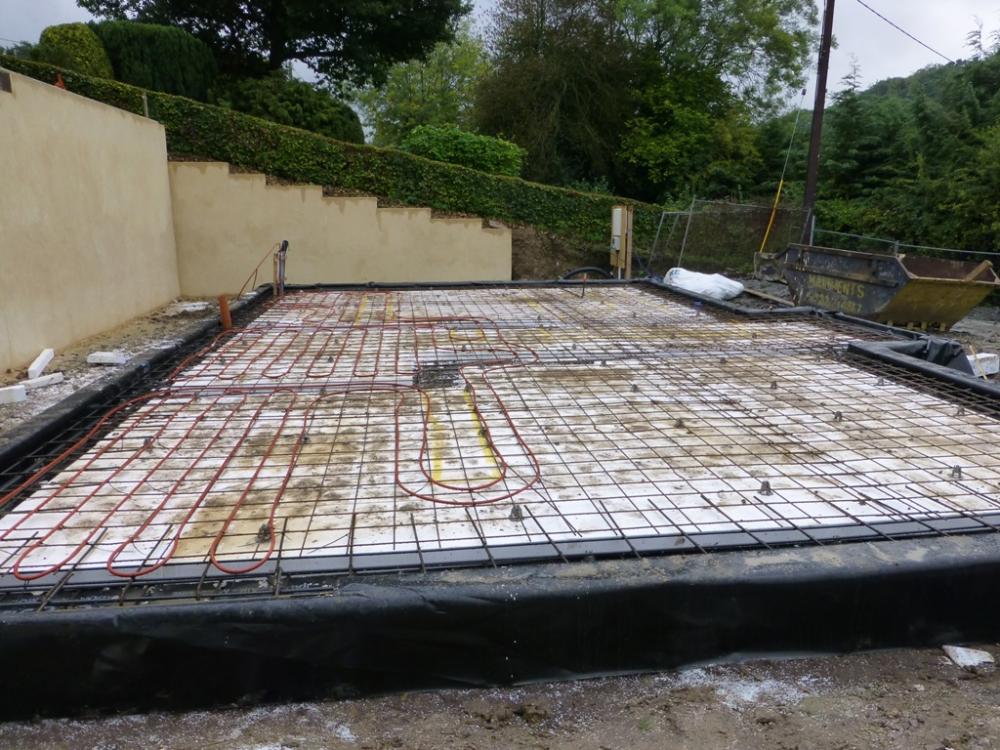
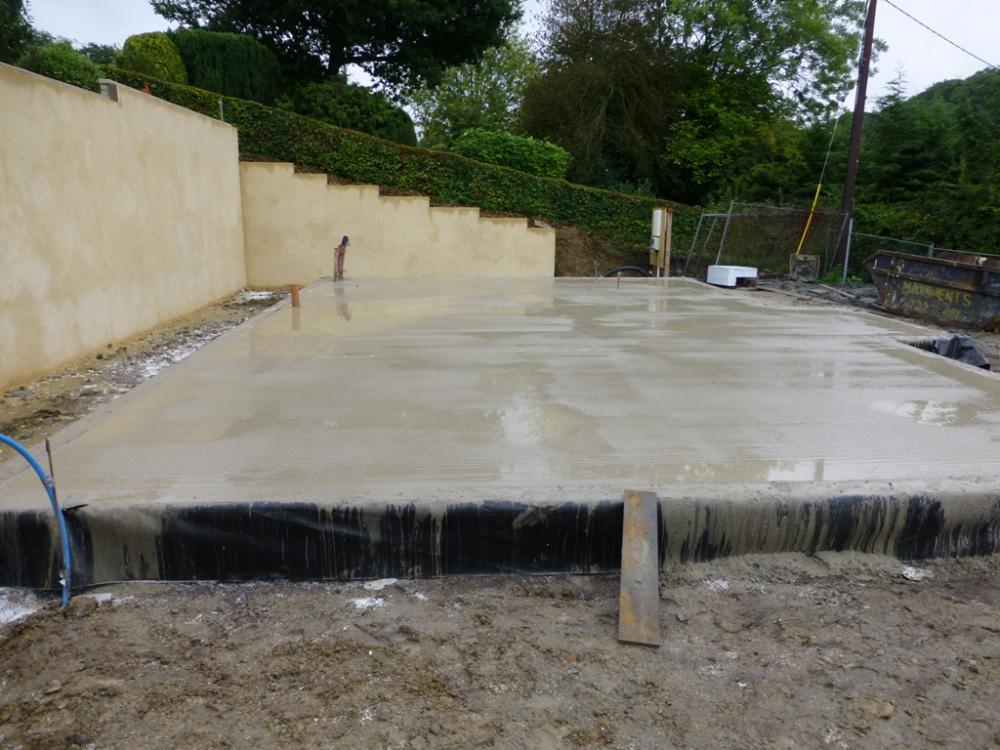
Nothing to do with Mark Brinkley, I'm afraid, I'd not heard of him when we contracted for our build. Our Kore foundation was a part of the frame package, so I don't have the exact cost to hand, but when I first got quotes for similar passive slab foundations the cost was around £10k +/- ~£1k for our 85m², including the UFH pipes etc. The companies I looked at were Supergrund, Kore and Isoquick, there are others worth looking at now that weren't around when I was looking. The guys blinded and levelled for the insulation on day one of the four days: Then laid the insulation, DPM, etc and tied in the UFH pipes by day three: The concrete was poured on day four, here it is before it was power floated: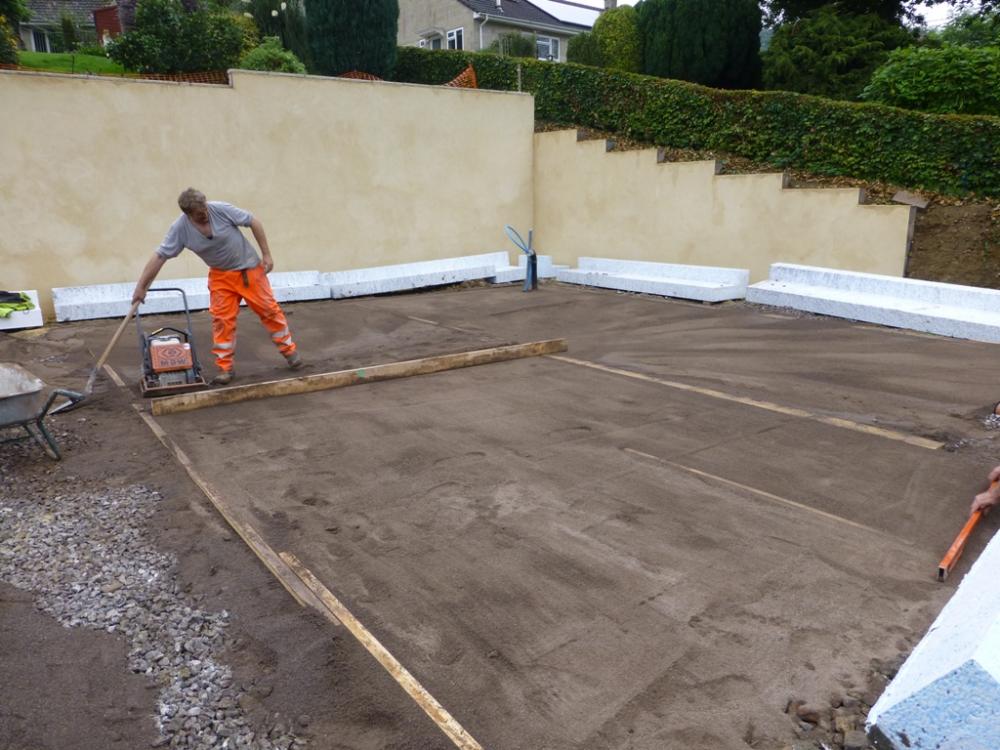
-
I think it's just lack of choice. If someone wishes to live in a particular area they pretty much have to take what they can get when it comes to a new house.
-
Room air temperature/quality sensors
Jeremy Harris replied to dnb's topic in Networks, AV, Security & Automation
I bought a box of NDIR CO2 sensors from the US and use these for measuring CO2 concentration around the house, together with DS18B20 1 wire temperature sensors and HH10D RH sensors. Each measurement station has a small microcontroller that takes the raw data from the sensors and sends it via a serial wired connection back to a central controller that both logs the data to USB, displays it locally (with GPS derived date and time, automatically corrected for BST) and sends it to a display on the wall in the hall. The whole system runs from a single plug-in power supply, with internal back up batteries that can run it for a day or so if the power goes down, as the whole system only needs a few tens of mA to run. I also bought an air particulate sensor a while ago, and keep meaning to incorporate that into an outdoor unit. This can bin particulates into three size categories, and sends the data out via a low voltage serial port. Some of the temperature measurements are probably the most useful, I've found. I measure floor temperature (sensor embedded in the slab), ASHP flow temperature, ASHP return temperature, buffer tank temperature, room temperature, outside air temperature and hot water flow temperature. Out of those, outside air temperature is the one we tend to check the most, as is the GPS-derived date and time (really just to check other clocks in the house). It's useful to know how cold it is outside, so as to know whether or not to remotely precondition the car if I'm going out. After being fascinated by all the other data initially, the novelty wore off a while ago, once I'd got a feel for the way that the house responds to changes. I don't think I've bothered to look at the logged data for a long time now, as it will only show stuff I've already found out. -
Unfortunately the light is fixed to a stone wall at the entrance to the drive. The problem is that there's a bend in the lane, so the light shines directly at any oncoming vehicle when it comes on. I suspect it's only a matter of time before someone loses control from being blinded and drives into the wall. That may end up being the thing that gets the light removed.