Jeremy Harris
-
Posts
26430 -
Joined
-
Last visited
-
Days Won
360
Everything posted by Jeremy Harris
-
Indeed we are. TBH we could do with some of the bigger builders popping in here from time to time, if only to illustrate how very different a single self-build on a solo plot is from building even a small development of barely-meets-our-crap-building-regs houses for profit. I think one big issue is that to make a decent profit means cutting costs to the very bone, and then some. In the main, self builders are cost-conscious, but rarely to the point where they will build something as bad as a typical new development (and I've got to see three of those, warts and all, over the past couple of years, and I doubt a single house actually complied with Part L1A in reality. The thermal survey I did earlier this week on one of them showed major construction flaws, and I'm not at all surprised that the new owners are complaining that their heating bills are massively greater than they were promised by the builder's sales guff.
-
You definitely did get the rookie team and the company learned a lot of lessons from it, perhaps one of the biggest was that using a different passive slab team, without oversight from their very experienced guys that usually lay slabs like billiard tables, was a big mistake. My experience with self-build is that mistakes aren't that uncommon. I have our window company coming back to fix one of theirs next week, a bit of a long-standing saga that I won't go into until it's resolved. The main thing is to get the problems resolved so that they don't cause issues later. I've looked at a few mainstream builds where the problems the new owners were having were due to fundamental flaws in the construction by shoddy workers, that were going to be costly and disruptive to fix on a finished house, with people living in it. Had those flaws been spotted early and rectified, the cost of rectification would have been a great deal lower than it ended up being.
-
We did find a change in the attitude of most of our neighbours once the long, noisy, dirty and road-obstructing phase was over. As soon as the house was up (which only took 4 1/2 days), things started to change. There was general amazement that a house could be up and weathertight in less than a week, which definitely caused a stir in the village, in a positive way. Once a few people passing started asking about the house, usually prompted by the way it had been built so quickly, a genuine interest seemed to develop amongst the hard core of "village elders", who seem to wield a lot of influence (they are all ladies over a certain age, that have formed an "independent ladies group" in the village). This peaked when I was asked if I would give a talk in the village hall about our "no bills" house, and that went down very well, it was standing room only at the back of the village hall. From then on, with the exception of one slightly awkward neighbour, we've had nothing but help and support from all those around us. So, I guess the moral is that there can be light at the end of the tunnel, and that disagreements and annoyance from the past can be forgotten before too long.
-
 Looking back over several years worth of posts on this forum and it's predecessor, there seem to have been very very few that have come in at £1000/m². There are some, people like @Declan52 that put in a back-breaking amount of his own labour in just about every part of his build, and built himself a very nice house, way above mass builder's standards, for a lot less that £1000m³, but his build really is an exception in many ways. Most self builders seem to come in at around the £1200 to £1600/m² area, with cheaper builds in areas where labour costs are lower, higher costs where labour costs are higher and the spec is higher. There are probably some here that have gone over £1600/m², out of choice, because they wanted a higher spec - it's pretty easy to soak up money inside the house. By using solid oak, rather than softwood or MDF joinery, we spent at least 3 times more on materials, plus the fitting time was a fair bit longer, as everything had to be spot on or else it would stand out with the plain oiled finish. The architect that looked through my costings reckoned that most of our cost over £1000/m² came from two areas, the high ground works cost (the ground works cost more than the insulated and weathertight house and foundation!) and our choice of internal finishes and fit out. We could have fitted a kitchen for £4k to £6k, but instead spent around £15k, for example.
 -
Thermally, block and beam is a bit of a nightmare. You have a higher ∆t to deal with, because the air under the floor can be a lot colder that ground temperature, so more insulation is needed to give good cold weather performance, designing out thermal bridging around the edges can be done but requires a lot of fiddly details that are probably costly in terms of labour, and overall it's a solution that's probably mainly of benefit to someone who just wants a quick floor and doesn't care that it needs a lot of extra work to get it flat, well-insulated and mitigate the thermal bridging at the edges. I can understand why it's used for some builds, but there are other, easier and cheaper ways to get a flat and well insulated floor for a lot of cases.
-
Offence taken, deeply, sorry, but I don't take kindly to the implication that I'm some sort of thick fool who, quote "can't see the wood for the trees". It is offensive to me, and was directed personally at me by being a quote, just like this is directed at you. You aren't looking at things from a self-builder's perspective, which is always going to be a fair bit different from a mass builder's view. Our site was like a fair few self-build plots, awkward, expensive to clear and level, and a solo plot with no mains water or drainage. Straight off we had to look for a build system that would cope with the clay soil that was remaining after we'd removed around 2.5m depth of soil and undergrowth above to level the plot. Trench foundations were a non-starter, because of the ground conditions. If we went deep enough to use something like this, with clay boards, we'd have been below the local water table. We're adjacent to a stream inside an AONB, and opposite a listed build, all of which put tight restrictions on what we could and could not do. That's not untypical, a fair few self-build plots tend to be like this in some ways - they are usually being sold for self-build just because they are too damned awkward for a small builder to take on as a job he could do and make a profit on. Our build is 130m² over 1.5 stories, with a 6m x 4m detached garage at the other end. The total cost for the foundations, UFH, insulated, weathertight, frame (including the garage), guaranteed to meet or exceed passive house standards, including an air test that was below 0.6 ACH (I think ours was around 0.43 ACH, or about 1.22m³/m²/hr in BC terms) was around £63k. Taking away the detached garage cost, the house foundations, UFH, insulated, airtight and weathertight house worked out at around £423/m². To that cost has to be added the external larch cladding (around £7k including labour), the 3G glazing and all the external doors (around £8.5k including fitting), and the slate roofing, guttering and downpipes (another £8.5k) Before going down this route I explored other foundation options, in particular, given the challenging nature of the ground, and we were looking at around £12k to £15k just to put suitable foundations in. A passive slab won hand's down, on price, speed, giving us a finished floor internally, with no need for screeding, inclusion of UFH, etc. One major advantage we had was that our power floated slab, because of the passive design and the need to be absolutely flat to get the frame to sit square with absolutely no packing (any packing would have messed up the airtightness a lot, and needed loads of work filling and taping up things that wouldn't otherwise need it) resulted in us having a very flat and smooth floor that we could tile and lay timber flooring on to with minimal preparation. Before tiling (with large format graded 12mm travertine) our tiler spent around 40 minutes going around the ground floor with his laser looking for the highest point. He couldn't find one, and concluded that the floor was flat. That saved us 9 bags of adhesive for the travertine, at over £20 a bag, so was another small saving. You say that saving 26 sheets of plasterboard over the original estimate that included normal cutting losses due to things not being dead square, or the actual size they are supposed to be, makes, quote "zero difference". To me saving over £100 to spend on something useful, is worth having. As another example of a side effect of building a house in a factory to tight tolerances, as ours was, I was looking to buy a corner desk a few weeks ago. I had the drawings handy and they gave the depth of the corner, from plaster skim to the plaster bead on the corner, as 962mm. I checked this with a tape and it was 962mm, the damned house is built exactly to the drawings, even down to the allowances for plasterboard and skim. That's been repeated time and time again with significant time savings on things like fitting out the kitchen and bathrooms, where all the dimensions were within a mm or so of the design, which meant cabinets etc all fitted exactly. FWIW, we have no energy bills at all. The only bill we have is the Council Tax, and that's partially offset by the ~£1000 a year we get paid for the excess energy we export. We wanted a house for our retirement that had no bills, and we've got one. Finally, let's compare values and see how they stack up. I agree that the zero energy bills means sod all to the average buyer, but we did fit the house out internally to a fair standard, with solid oak joinery everywhere, even the skirtings and architrave, solid oak stairs, solid oak fronted kitchen units, Silestone worktops and kitchen/dining room internal window cills, toys like comfort cooling in every room, an integrated boiling water tap etc, massive shower, solid oak bathroom furniture, etc, etc. Build cost was probably on the high side of average for most self-builders, based on costs we've shared on here, at £1380/m², including the cost of the insulated and lined garage, with electric door etc. The plot cost £90k, the ground works (not including the house foundation) cost £56k, the borehole for water cost £8k, the electricity connection cost £3.4k. The total build cost came in at £270k and the market valuation last year was between £330k and 345k. Being a passive house reduced the valuation by 5%, according to our valuer, because in his words, he felt that "an eco house is in a niche market".
-
Our passive build cost around 10% less versus a conventional build in the same location, according to a well-respected architect who came to look at it and asked me for the cost breakdown spreadsheet. There's a VERY big difference between the economics of building houses on a development and building a single house on a solo plot. Just about every cost associated with building a single house is higher, from no sharing of costs for things like services, ecological surveys, flood risk surveys, contamination reports, highways reports, you name it. Then add in that all of the mobilisation costs for every trade on site has to be borne by a single house, and it soon becomes clear that all these "fixed costs" significantly exceed the tiny difference that a bit more insulation and very much better airtightness costs. The latter two elements are way down in the noise of the overall build cost, and may well be recovered by other cost saving elements with some build methods. For example, because of the very much higher accuracy of our passive frame, there was around 20% less wastage on plasterboard and cutting . There was also a saving because the dead flat slab (which included the UFH pipes and next to no additional cost (around £300 IIRC) was so flat that all the floor coverings could be laid directly onto it, with no need for screeds or any labour to get the floor dead flat. Just those two aspects potentially saved around 3% of the passive frame and foundation system cost.
-
Mines a standard, off the shelf, Wunda manifold and low energy pump set. They have changed the design slightly since I bought ours, but I've recently discovered that this doesn't matter. The old design had a thermostatic mixer valve that would mix down to about 23 to 24 deg C, and would work well at around 25 deg C flow temperature. I've recently fitted (at @Nickfromwales suggestion) a faster, motor driven, head what had been a thermal actuator valve that switches the UFH on and off. This comes with two temperature sensors and in my case I've found that it holds a steady 5 to 6 deg temperature difference between flow and return, and that works so well that I now just have the thermostatic mixer would fully open, and don't actually need it. The Wunda manifold and pump set I have is this one: http://www.wundafloorheating.co.uk/wp-content/uploads/2017/03/M02-Generic-Wunda-Standard-Pumpset.pdf I'm using the Grundfos pump version, which seems to use very little power. The motorised head that I have on the return valve (bottom right on the illustration above) that turns the UFH on and off (and now regulates the temperature) is the one described in this post by Nick:
-
That sounds close. We faffed the scaffolders around a bit, as I had to keep getting them back to fix things that one of the guys on site had unbolted/moved. It may well be "normal practice" for people to alter a certified scaffold, but there was no way was going to take that risk, once I knew something had been messed with.
-
Still happens to me 6 years after I retired.................... Survey completed - seems pretty well-structured, too. I hope the results are helpful.
-
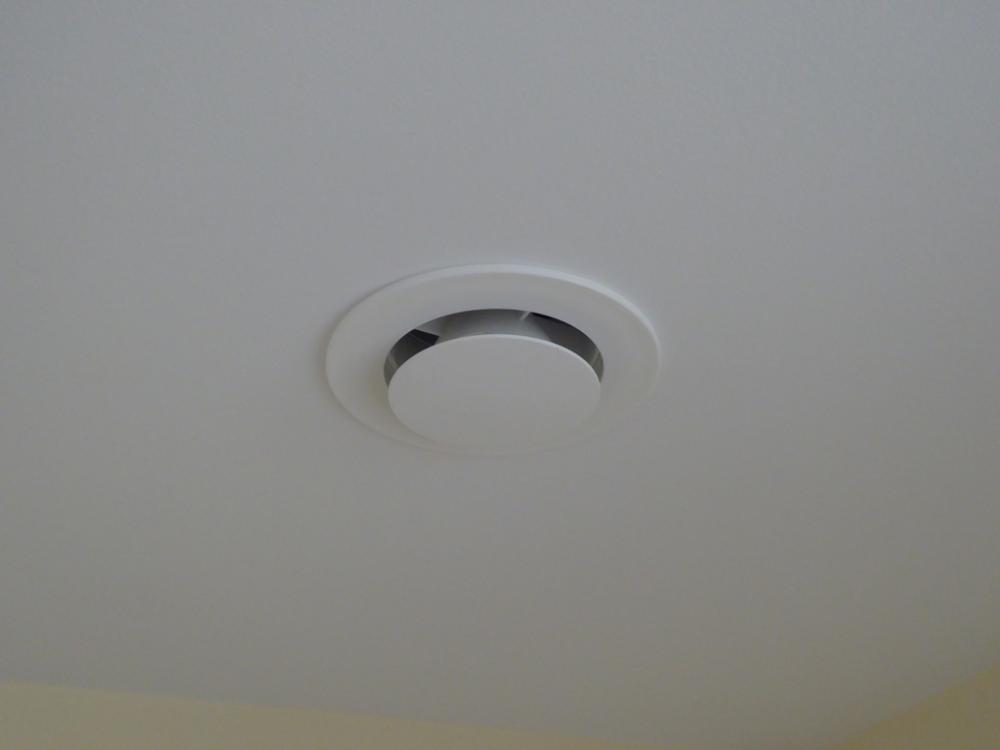
Sounds like a neat solution. Most of the flow adjustment systems are either clunky (like running around changing restrictor plates) or mean screwing the actual terminal in and out on the thread, so they all end up looking slightly different if there's a lot of adjustment. For a budget solution I think it's hard to beat the ones I linked to, as they are very unobtrusive, especially as so few people gaze up at the ceiling all the time, where 90% of them are fitted. Here's a view of one in the corner of one of our rooms, The outer ring that sits flush with the ceiling is around 150mm diameter:
-
Good point - I should have checked the location! Certainly the government have tightened up a great deal on the regs in recent years, following all the crap that was built during the boom, some of which will end up being demolished it was that bad,
-
Are they adjustable to balance the system, though, or do you have to adapt them to fit a system that has balancing valves/restrictors fitted elsewhere? I spent a fair bit of time looking around and found a fair bit of incompatibility between different manufacturers fittings, which could be tricky to get a work around for. I found that all our ducts needed some form of flow regulation to get the rates to comply with the regs and to ensure that the MVHR worked at best efficiency, and it was a pretty tedious task!
-
You get stuff like that every day, often from the same few correspondents. If you're lucky you can get the correspondent declared vexatious if they do it often enough, which then means you don't have to sort out a reply, you can just bin everything they send in. I had some really beauties, like the chap that invented holographic spy satellites. He argued at as lasers could create a 3D hologram that had all the visual characteristics of a real object, we didn't need to send up spy satellites but could create them when needed using 3D laser holography. The same chap invented a ground to air refuelling system, where a long hose was paid out from the ground and spun around in a big circle, getting higher and higher until an aircraft could catch the end of it and then fly around in a circle whilst fuel pumped itself up the hose using centripetal force. Another one was a chap that had invented kevlar sandbags, for greater protection, never mind the cost or the fact that you really want a round to penetrate the hessian outer of a sand bag as it's friction with the sand that slow it down and absorbs the energy. I could probably come up with a few dozen more like this, and they all have to be assessed, a recommendation written and sent on to the relevant minister or committee.
- 16 replies
-
- 1
-

-
- smart meter
- electric
- (and 1 more)
-
What's the government done that means you need an architect if building with a mortgage? CDM doesn't mean you have to use an architect for a self-build, we've been around that point here in some depth already. I've not seen anything that means you can't design your own self build, and have a self-build mortgage, in any legislation anywhere. There are still lots of architectural technicians around who seem to do OK with domestic scale work, too, and I remember reading something somewhere that the majority of UK houses aren't, or weren't, designed by an architect either.
-
Welcome. Using any of the 75mm OD duct systems pretty much locks you in to a limited range of terminals. We used these terminals which are pretty discreet looking and have the advantage that they can be just unplugged by hand and put in the dishwasher to clean them. The rear unit that takes a single duct is this one: https://cvcdirect.myshopify.com/collections/radial-ducting/products/airvalve-90-fitting-92duct-125mm-valve and the terminal that plugs into it is this one: https://cvcdirect.myshopify.com/collections/radial-ducting/products/conus-airvalve-125mm Where we had to fit fresh air vents into a vertical wall, we went for these directional ones, that can be turned to direct the airflow: https://cvcdirect.myshopify.com/collections/radial-ducting/products/turn-airvalve-125mm One consideration is whether you are using the HB+ system where the flow adjustment is at the plenum chamber, using restrictor rings, or one of the other systems where the flow adjustment is at the terminal. The former is quieter, has neater looking pretty flush looking terminals, but is trickier to initially balance and set up, the latter is easier to set up but does mean that you need to be careful when cleaning the adjustable terminals to not upset the set position (and you need to remember where each one has come from so it goes back in the same place!).
-
Ask for the "smart meter" to be taken out. They are pretty diabolical and have no advantages for the consumer at all, they are intended to ultimately allow the suppliers to use variable tariffs, to reduce their risk on the half-hourly wholesale market they buy from.
-
Undoubtedly Holmans just failed to foresee the need to adapt to face changing world markets, they did indeed rest on their laurels, as they took the view that they had always been world leaders in making specialist hard rock mining equipment, and as long as they continued to design technically superb kit they would naturally stay in business. In many ways their story echoes that of so many manufacturing companies in the UK that failed to adapt to the changing world market. Engineering companies seemed to be the worst, as there was a certain arrogance, that may well have stemmed from the Industrial Revolution. I know that from within my wife's family this is what happened, in that Guest, Keen and Nettlefold (she's a Nettlefold on her father's side) went from being the worlds largest manufacturer of fasteners to just being a part of a global corporation in the space of a few years (not helped by her great uncle Archie spending water like money on things like Burgh Island). Our motorcycle and car industries went the same way. Who can forget the appallingly dated and shoddily manufactured cars produced by BMC, for example? I am not convinced that BMC failed wholly because of government intervention, I think it was well on the route to failure long before that.
-
Pushing the boundary of temporary habitation.
Jeremy Harris replied to epsilonGreedy's topic in Building Regulations
As far as I know there's no law to stop you. It'd be like camping on your own land, but with the added cover that you have planning permission, so the principle of living on that site has been established. People have lived in houses for a long time before getting a completion certificate before now. There was one chap on (I think) Ebuild who only realised he'd not got around to getting a completion certificate when he came to sell, IIRC. -
I should have mentioned that ours were block paving kerbs.
-
Not sure, TBH. It was a cement rich mix, I know that much, with a fine sand and a touch of dye to better match the dark grey kerbs. One of the brickies here will almost certainly know far more than me about it, I just watched a chap doing it.
-
Should have been a plumber
Jeremy Harris replied to Declan52's topic in General Self Build & DIY Discussion
That article is a bit selective. He's working in Kensington and Chelsea, probably THE most expensive area in the UK as far as pay rates for trades. He's working long hours, too. Having glimpsed at the crazy prices that are charged in this part of London, I can easily believe that he's making this much money. -
Should have been a plumber
Jeremy Harris replied to Declan52's topic in General Self Build & DIY Discussion
I'm pretty sure this is how Pimlico Plumbers works. In essence it's a bit like a franchise, where the plumbers are offered jobs and can take them or not. Those that are prepared to take on a lot of jobs and work long hours, earn the most. I'm pretty sure it's a system that was well thought through, as the guy that runs it has made a mint, and seems to have a reasonable reputation. The advantage for the plumbers is that they get the "brand advantage" of being Pimlico Plumbers, with the livery etc, and they get to choose which jobs to take on. In effect they are all sub-contracted self-employed plumbers who need to maintain certain standards and response times in order to retain the rights to use the livery and get work from Pimlico. -
The chap that laid our dark grey, narrow, kerbs just bedded them down on mortar and then haunched them behind with concrete, leaving even gaps that were partially filled at the base and rear by the mortar bed and the haunching. The next day they were dry pointed to fill the joints, a bit as you would with patio stone. The pointing mix was very slightly damp, and pushed hard into every joint and then brushed clean. Using a relatively dry pointing mix reduces the risk of staining.
-
Pushing the boundary of temporary habitation.
Jeremy Harris replied to epsilonGreedy's topic in Building Regulations
You can pretty much camp in a house whenever you feel you can stand it. AFAIK, there's no legal reasons not to. It doesn't need to impact on your VAT reclaim, either, as you wouldn't normally put that in until after you've got a completion notice. You really only need a habitable bedroom, a working toilet of some sort (could be a chemical one if the drains aren't in and connected, and somewhere you can cook and make a tea (a microwave and a kettle would do for me............). Sorting out washing facilities depends on how well you can cope with roughing it, but I lived in a bedsit as a student sharing a bathroom with four others and often just relied on a "big wash" with a flannel from the sink in my room. I don't think you'll find that BC are the slightest bit interested, the only ones that will be after your money will be the council, and even then I don't think they can easily stop you from camping in your own house whilst you finish it. You are allowed to live in a caravan on site during a self build anyway, and many do just that. If you choose that option then they band it as band A for council tax until such time as the house is completed.