Jeremy Harris
-
Posts
26430 -
Joined
-
Last visited
-
Days Won
360
Everything posted by Jeremy Harris
-
I have a single sample point for sodium acetate in a hand warming pack. I came across this during our pre-move major clearout around Christmas time. I can pretty much pinpoint when it was last used, which was November 2004. I had charged it after use and put it in a drawer, where it sat at room temperature, in it's liquid phase, for over 12 years. When I initiated the phase change it worked normally, turning into a solid and releasing the same amount of heat as it always used to, as far as I can tell. The interesting thing for me was that it had stayed in it's higher energy state for that period of time. Looking at the basic chemistry, but not knowing the exact composition that Sunamp use, I would doubt if there are any purely age related degradation effects, as long as the seals are good on the heat battery containers. Be interesting to find out more, but I'm leaning towards the view that the thing will outlive me.
-
So you have no highways approved contractors, then? That's odd, as I had to provide a copy of our ground works guys highways approval, and it looked like a national one to me. I'll have a dig around later, as I think I scanned it to email it to the LA, so may still have a copy. He is based in Hampshire, and our build is right on the Wiltshire/Dorset border, and there was nothing I could see that limited the scope of his approval to work on roads, verges, pavements etc in one particular county. The contestable work for our electricity supply and phone connection included laying ducting across a lane and along a grass verge owned by the LA. All they needed was a licence fee from me for the work, plus emailed evidence that the contractor was highways approved (every company I approached for a quote was highways approved, as it was a thing I checked before asking them to quote).
-
I agree 100%, the snag is that there are a lot of people around who call themselves tradespeople who are either incompetent or don't care, or perhaps both. I suspect some of this is down to the poor standard of training that many have. I cannot see how a few month spent getting an NVQ makes someone competent enough to call themselves a tradesperson. My best mate from back when I was at uni, was an apprentice joiner. After his initial three years were up he opted to do an extra year, plus a year working with another master joiner, to become a master joiner. That was five years of training, a mix of on the job and day release. All the time he was an apprentice he was earning peanuts, less than me with my sponsored degree. Once he and I were both working, though, he was earning three times my pay, when I was just a very junior scientist and he was a proper master joiner.
-
Thanks for the kind words. As you may have gathered, I'm a retired scientist, so I tend to approach most things with a certain degree of scepticism until I've found enough reliable evidence to convinced me that it's correct. Sadly there is so much misinformation around, and the internet and social media make it so much easier for false information to be spread, as if it were true, that it's really tough sometimes to dig under it all and find out where the truth lies.
-
Worth looking at the Cochrane data if ever in doubt about the quality of health-related data. I've recently applied to become a Cochrane reviewer, primarily because I've been very impressed with the impartiality and sifting out of dodgy data from biased studies, or those that weren't conducted to a recognised standard protocol. This is an example of Cochrane's last review of the evidence available globally on the effect of reduced dietary salt on the prevention of cardiovascular disease: http://www.cochrane.org/CD009217/VASC_reduced-dietary-salt-prevention-cardiovascular-disease It's worth benchmarking the credibility of the Cochrane work with some of their other review, too, to get an idea as to their methodology. Each sub-group tends to operate semi-autonomously, but does usually include a number of people who are recognised in that field for their expertise. The main emphasis is in sifting out poor quality data from reasonably reliable data, then looking at what the best data available tends to show.
-
As someone who was diagnosed with essential hypertension when I was 34 years old, and who has been treated for it for over 30 years, I tend to agree. The first advice I had was to reduce dietary sodium intake, which I did. I periodically check (by reading the labels on stuff!) to see how much sodium I'm taking in each day. Even with the occasional packet of crisps I never exceed the 3g/day recommendation, which is half the current limit of 6g/day that seems to be the target for many countries. The softened water contribution to this is miniscule, and is hardly worth bothering to add in. There is some evidence that electrolyte balance can be affected by a diet that's high in sodium and low in potassium, but then I like things like bananas, sweet potato and watermelon, so tend to have a reasonable potassium intake anyway. BTW, massively reducing my sodium intake had zero impact on my blood pressure!
-
Best bet is to fit a "7kW" unit (in reality a 32 A unit, that may or may not deliver 7 kW at any given time) that has an IEC 62196 socket on the front. Every EV that carries a charging lead for the non-fixed lead public charging points will be able to use this. A lot of EVs don't come with this lead, it's an optional extra, but everyone I know with an EV carries on anyway. If you wanted to save the cost of buying an EVSE now, there no reason why you couldn't just run a cable to a sealed box. None of the AC charge systems commonly used allow more than 32 A per phase, but if you wanted to future proof you could always put the cable in a duct so that it can be swapped if need be if things change. My personal view is that I'm not convinced that many people really need anything bigger than a 32 A EVSE, unless they are thinking of getting something like a Tesla and need to be able to recharge at home quickly. That brings a whole host of other problems, though, like reinforcing the mains supply, so probably isn't a realistic option. Also worth noting that a fair few EV suppliers offer a free EVSE installation if you buy a new car. Might make the option of just running the cable to a box a more sensible one for you right now.
-
On a serious point (accepting that this thread is only a wind-up), when we were looking around for a main contractor we did go and look at a small development of 5 houses being built by a company that, on the face of it, seemed to be worth asking to quote. The first house on site was the most complete and whilst we were being shown around there was a chap busy applying airtightness tape. The boss was called away to the site office and we were left chatting to the chap doing the taping. His first words to us were something like "This one's already failed the air test twice, I'm wasting my time doing all this just to get it passed. I'm not faffing around like this with the other four". As only one house in the development needed to be air tested, then it's pretty clear that the other four weren't going to comply with Part L1A. From what I've seen since, walking around doing thermal surveys, this sort of practice seems pretty commonplace.
-
Personally I think that might be the best idea. Starting threads that are only intended to troll the forum isn't on, in my view.
-
I, and others here, must have had a real bargain deal in getting maybe 3 or 4 times that much muck shifted for a lot less than £15k, then. In the scale of things, even on our pretty hard-to-develop plot, muck away costs weren't that massive when compared to some of the other costs. If we'd wanted mains water that was going to cost us over £23k for example, so the less than £12k we paid to shift around 900 tonnes off site and dispose of it doesn't seem that high, and anyway it was factored in to the plot price when we bought it. Anyone who doesn't get separate quotes for the contestable element of any utility works, like moving a foul drain, is unlikely to get a good deal. The collective experience here is that a lot of the time using your own ground works contractor to do the contestable works and then only paying the utility company for the non-contestable element often saves a lot of money. Certainly we did this, and knocked at least £2k off the price that the DNO had originally quoted. Their costs for the contestable element were barking mad, but as they have to itemise them on the quote if you request it, there's no excuse for being ripped off by allowing them to sub-contract that element.
-
Probably a bit of both, I suspect. One big issue is that there has been a sharp increase in costs to builders, with a marked reduction in profit margins. Years ago, when I was engaged to a property developers daughter, he used to work on the old rule of thirds, a third for the plot, a third to build the house and a third for profit. That has changed a great deal, and now the profit part is probably around 1/3rd of what it used be . Lots of reasons for this. Land costs may have risen out of proportion to house prices, build costs have certainly increased, both materials and labour. It's easy to blame increased building regs requirements, but the reality is that those costs are in the noise if the house construction method is optimised for compliance. Sadly, there seems a reluctance to adopt new methods of construction, that could make meeting tighter building regs requirements cheaper and easier. I've lost count of the number of times a request for a change in method has been "but we've always done it this way".
-
Doesn't seem to be any speculation. The statement's clear: £40,000 quoted 200mm quoted (two bricks high) That's a house of well over 4 acres..........................
-
Strictly speaking these aren't water softeners, as they do not remove any of the calcium ions in the water at all, so all the issues that excessive calcium ions in water cause, like soap not forming good lather, tea tasting a bit funny etc will still be there. What these claim to do (and I have to say that the scientific validation of these is not that solid - I'm being polite here.......) is to reduce scale build up. There are ways of reducing scale from sticking to surfaces, and some work well. Most just cause the scale to precipitate out, rather than stick to a surface, and sometimes this may be effective. We used a unit that did this at our old house and it reduced scale in some areas, but didn't in others, and did have some interesting effects. Our boiling water urn didn't get scaled up, but instead filled up with fine scale particles, like dust, that built up as a thick layer of sediment, that still needed washing out every few weeks. Maybe it will work well enough for your purposes, it's hard to say for sure. What might work more effectively might be a phosphate dosing unit, as they do stop calcium carbonate from sticking very well. There is good science behind units like this: https://www.wrekinwatersofteners.co.uk/wrekinwatersofteners/category_final.asp?department=Scale Inhibitors&category=Phosphate Dosing
-
Thanks, that tallies with our costs for removing soil and muck, and makes the figure of £40,000 to remove 200mm from a typical self-build plot look seriously in error. IIRC, our muck away trucks could take around 18 tonnes per load and were loaded with one of the diggers on site, probably the 15 tonne JCB. Assuming that the broken up uploaded soil was around 1.2 tonnes per cubic metre (probably a bit reasonable guess) then 200mm off 5 m2 will be around 1.2 tonnes, so one muck away truck should be able to take away around 75m2 of a 200mm layer. Our plot total area would need around 10 truck loads to remove 200mm. IIRC, we paid around £180 per load, including taxes, so that's a total cost of around £1800. £40,000 to remove 200mm all over implies a plot size of well over 4 acres, and I doubt that there are that many self-builders that would need to take 200mm off an area this massive in order to get their house levels right. Something here just doesn't ring at all true, and seems a bit alarmist to me.
-
I think one problem is that a lot of people have become used to accepting sub-standard performance from a wide range of contractors, and so uneven slabs, rubbish insulation fitting, poor detailing etc have all somehow become "normal". We build houses in the UK that would be unacceptable in some other countries. In fact, a lot of mass built houses are total crap, built right down to the lowest price, with corners cut all over the place. I think Paul Buckingham summed this state of affairs up well, in this paper: https://www.aecb.net/publications/we-must-change-our-disgraceful-approach-to-build-quality-or-wave-goodbye-to-energy-savings/
-
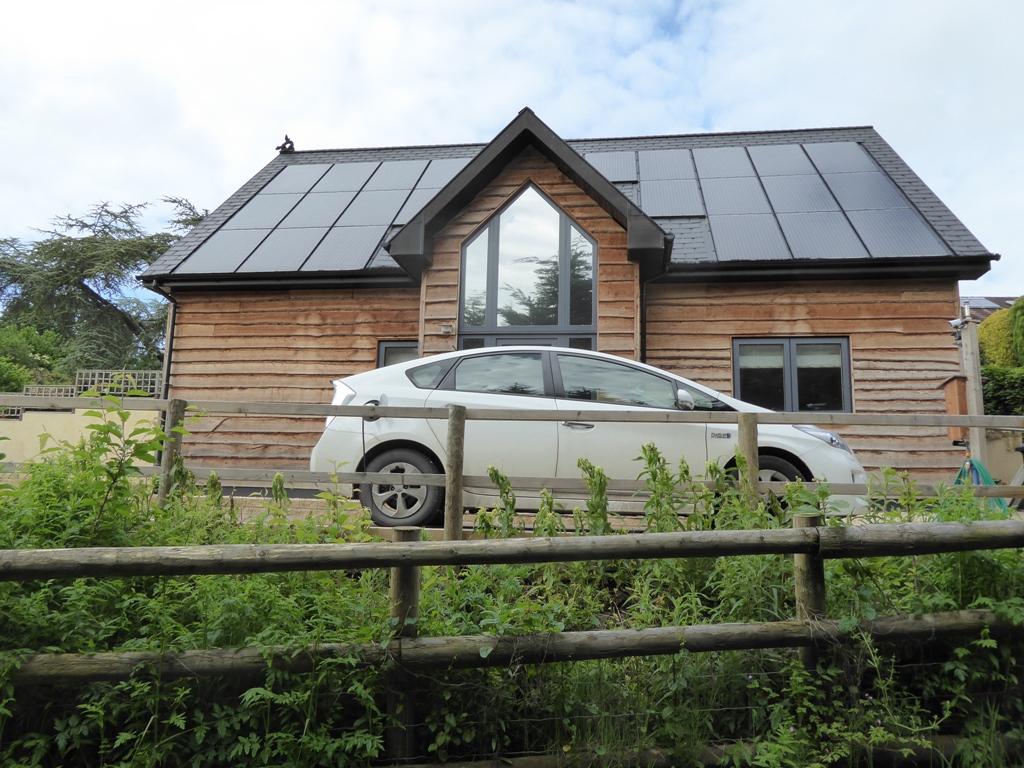
 Not true. All the in roof systems we looked at allowed either portrait or landscape fitting, you just choose which you want. Mixing a matching isn't easy, so best to stick to one orientation, IMHO. We used the GSE integration system, in portrait mode: A house in the next village to me has just had the same in-roof GSE system fitted to a barn with the panels all in landscape orientation. From what I recall when we were looking, the other major in-roof manufacturer, Easy Roof (near identical to the GSE system) also allowed landscape orientation.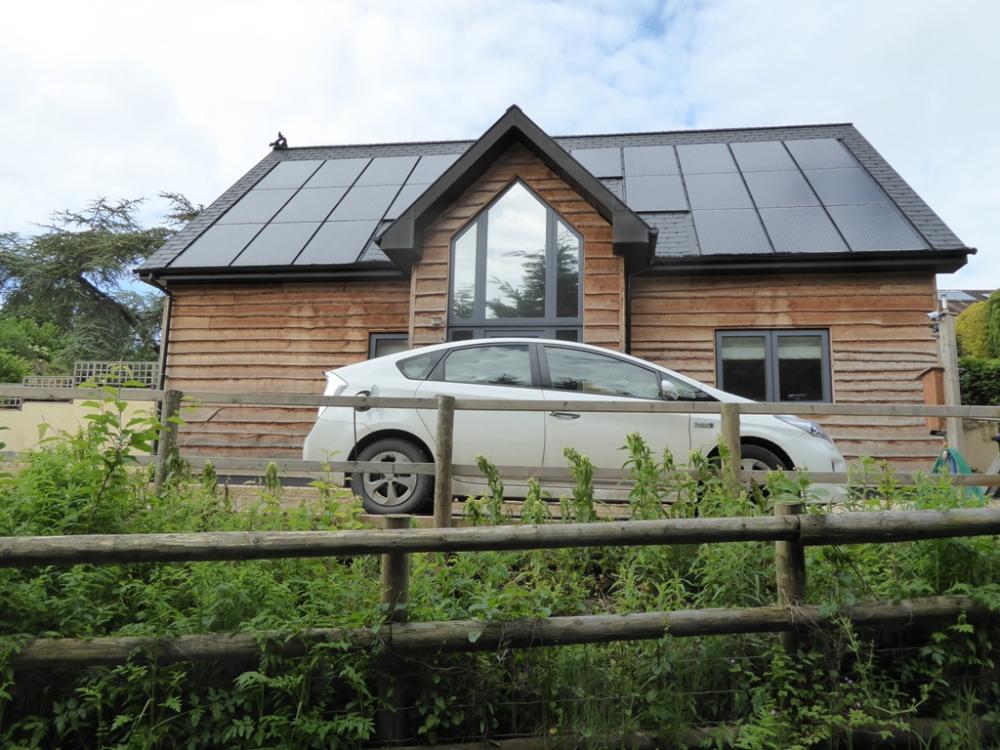
-
For us a passive slab was a complete no brainer. Cheaper than any other foundation. Included UFH pipes. Fantastic thermal performance. A surface finish that was like a billiard table, making life so much easier when fitting out. Plus it resolved our ground conditions problem completely, as the required soil max allowable bearing stress is far lower than with a conventional trench foundation.
-
I agree 100%. The Twintec (or the other badged Harvey units that have the same internals) are excellent, use very little salt, waste little water and give water that is really nice for washing and bathing. Everything from the washing up, through showering to the washing machine, works a great deal better with softened water. Well worth the money in my view (although I'd say that the hoses they supply are really far to small and need replacing with proper large bore flexis to get the best from it).
-
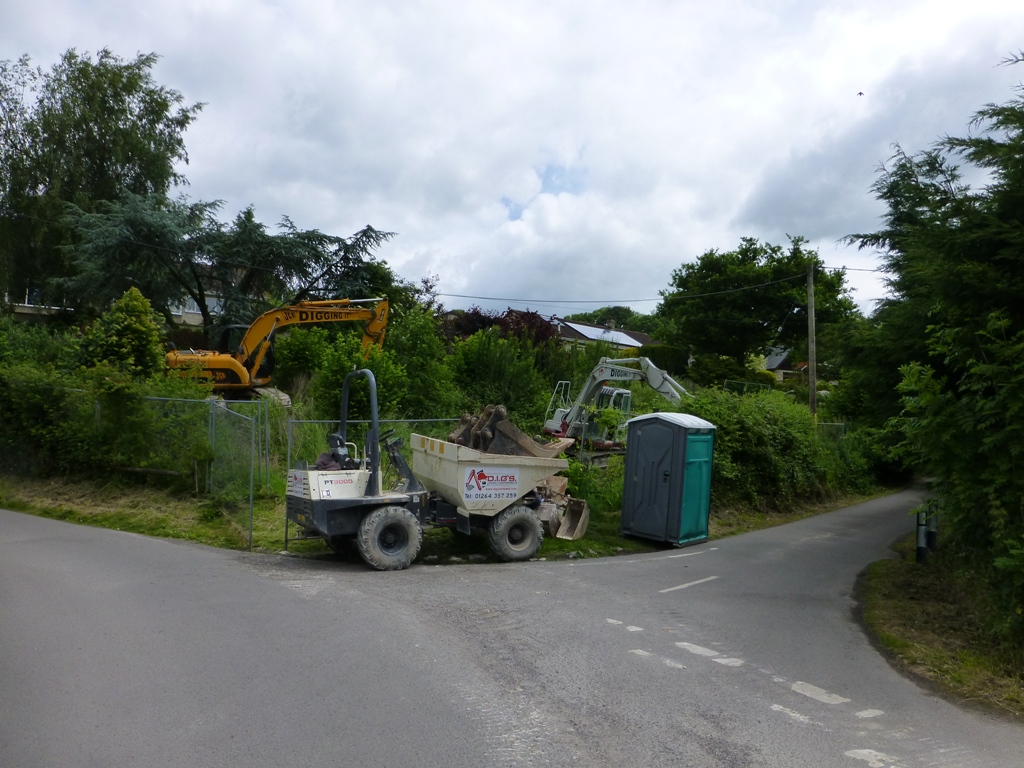
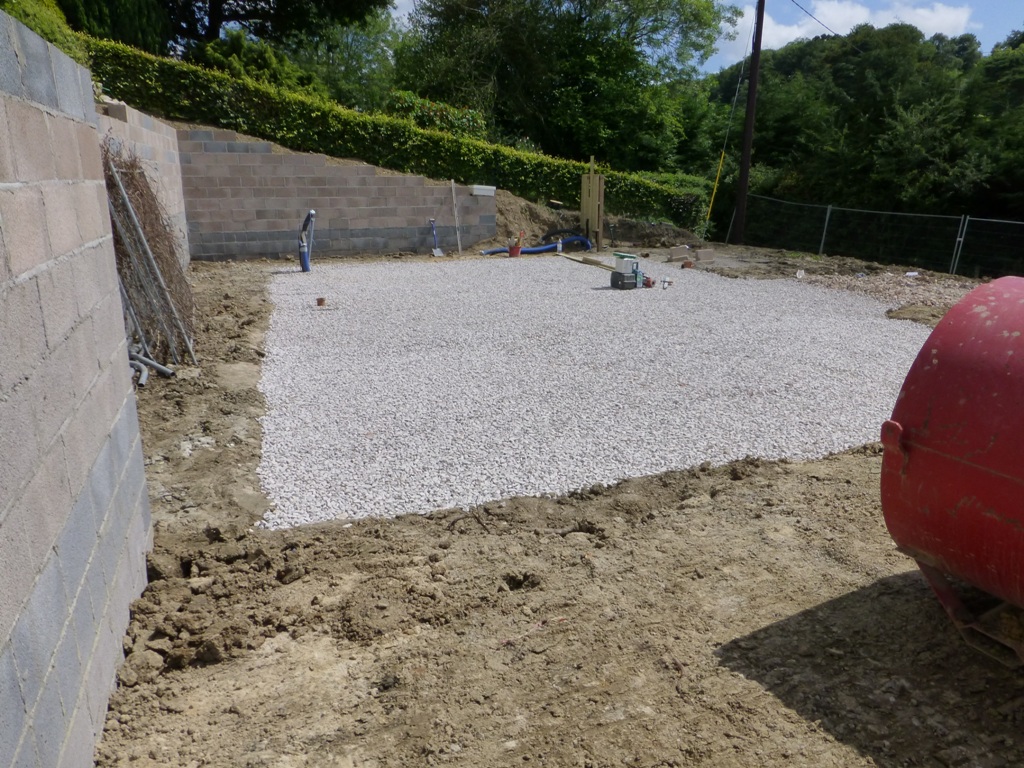
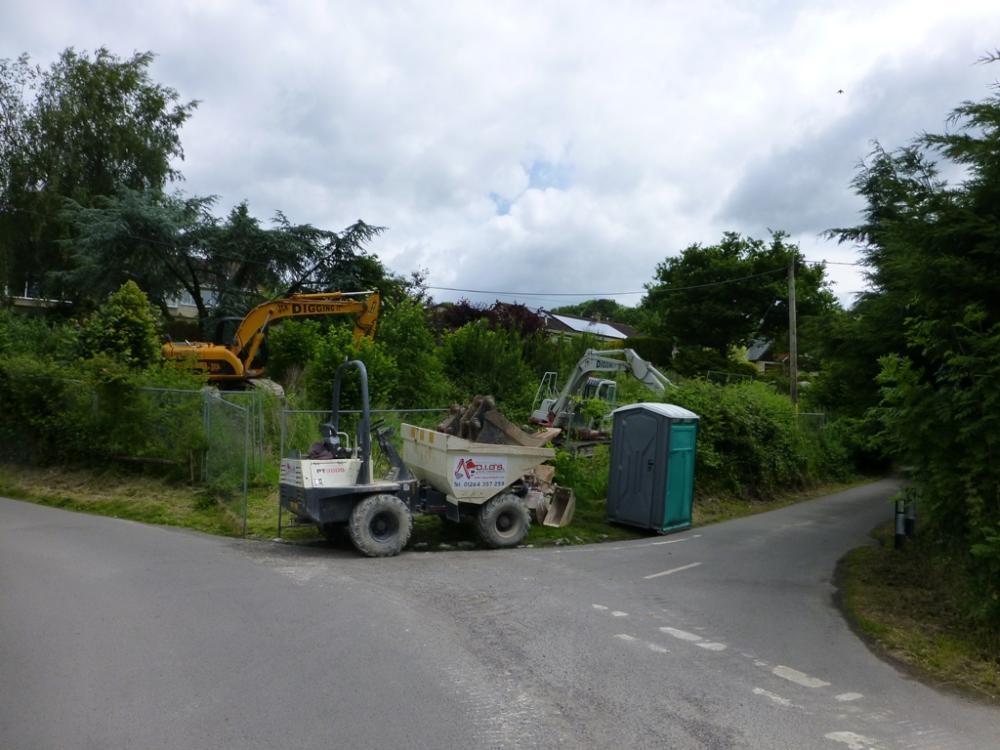
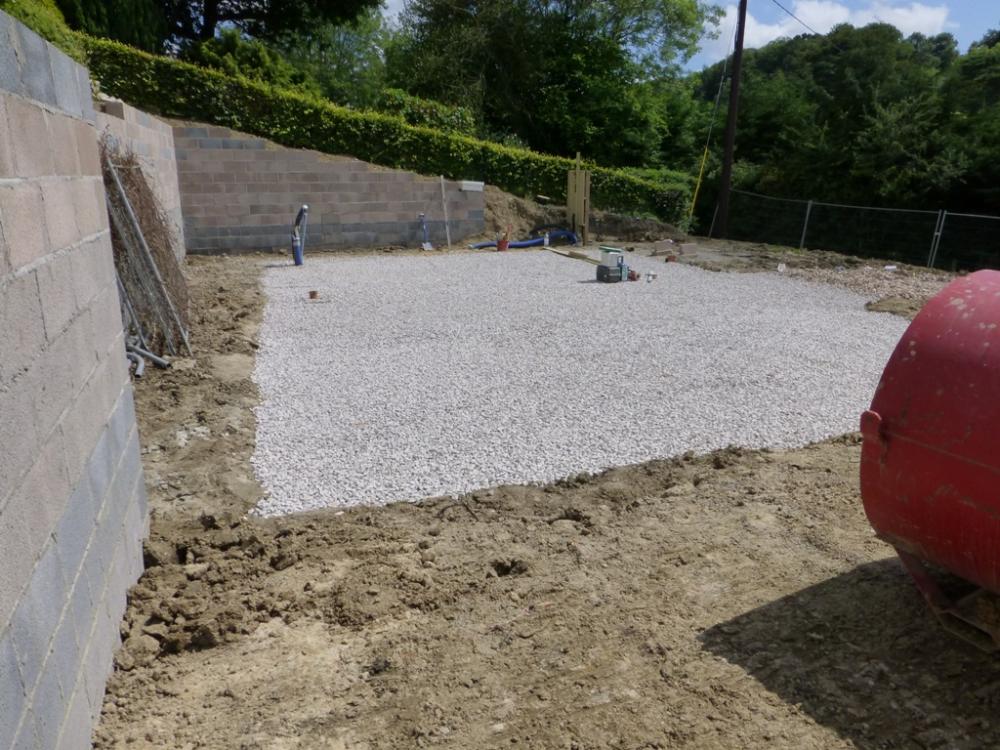
How can a 100 to 200mm difference in DPM level make a difference that is close to the cost of our whole house, inc insulation and airtightness? I just don't get it, personally, and don't see where the planning officer, or planning policy, has any bearing at all on this for a typical solo plot, such as a self-builder might be interested in. We had probably a worst case where levels were both critical and cost a lot of money. This is a photo of our plot on the day we finally started doing the ground works (which excluded the foundations, as they were a part of a the passive package from our main contractor): To the extreme right of that photo, under the overgrown hedge and to the right of the reflective marker, there is a mill stream, that runs through the whole village, rising from springs around 1/2 a mile away, and becoming a fairly large river about a mile or so downstream, where it joins the river Nadder. The Environment Agency demanded a flood risk survey (understandable, given recent major floods around the country) but rather than pay the demanded £4,500 from the only flood risk surveyors the local EA office would accept, I chose to do my own, using flood risk data obtained, free of charge, from the EA, by a mix of using their publicly available data and making an FoI request for more data (taxpayers pay for this, so are entitled to see it). What was clear was that there were going to be levels for certain areas that were mandated by current EA policy (nothing to do with planning, other than PPG25 placing an obligation on the EA to make a determination, in effect). The vehicle parking area and garage finished floor had to be a minimum of 83.1m AOD. There was no ability to negotiate on this at all, as this was the stipulated level above the 1 in 100 year flood event and everyone, from central government to insurance companies were taking heed of it. Furthermore, the EA stipulated that the finished floor level inside the house must be no lower than 83.5m AOD, and this level was, of course, only aout 13 to 14mm above our DPM level (the DPM being level with the top of the slab, as mandated by the build system chosen). The height of the DPM above the external ground level is determined by a few factors. Firstly there is statute law that sets the height of the DPM relative to the outside ground level, in the form of the Building Act 1984, with amendments. This law also stipulates elements that have made their way into Approved Documents (which are not law, but guidance) and these provide some clarification on how the law may be complied with. There are some potential conflicts that need careful work-arounds, as the law is very badly worded, especially the most recent amendments. For example, whilst stipulating the distance external levels have to be below DPM, the same law later stipulates a near level threshold for wheelchair access, which means being a bit canny and leaving a tiny vertical slot between the ramped entrance (in our case the rear door) and the house. The only thing planning were interested in was the ridge height, a common restriction, I understand. So, tying all the legal requirements together, we had to have a drive that was no more than 400mm lower than the house finished floor level, we had to have an external level around the house that was greater than or equal to 150mm (the required separation from the DPM to external level). Getting to the crux of the point being wildly exaggerated here, we had to level our site a lot, this is what it looked like just before the foundation team arrived, after all the ground works had been completed: We removed around 900 tonnes of soil and mixed surface waste by this point, and still had to remove a further 200 tonnes to get the drive and garden levels right. The total cost of all the earth removal, excluding the cost of the retaining wall, the putting in of service ducts and pipes, the installation of the sewage treatment plant etc is separately itemised on our ground works invoice. We dug down around 2.5 metres to get the site level, and got stung for the highest rate of landfill tax for the top layer, as it was classified as mixed waste, because of all the trees, shrubs etc in it. Even so, the total ex-VAT cost of lowering this site by 2.5m came to £11,170.80. Had we needed to take the site down by another 200mm, I doubt it would have added more than £1000 at the very most to the cost. So, how do you get a "saving" of £40,000 by not removing 200mm of soil from a typical self build site? That's 3.5 times the cost of our entire cost to remove 2.5m depth of soil! Frankly I just don't believe this figure, and think it is either made up, or refers to a multiple house development site, not a typical self-build plot.
-
You can't, it's an appalling way to line walls, especially on masonry which will always lack airtightness unless it is parged. Dot and dab should have been banned years ago, as there are better cheap ways of doing this, anyway. Pink grip is far quicker than dot and dab, still allows the cheap build technique of just quickly bonding plasterboard to masonry, but because the technique uses a continuous peripheral bead the infamous "plasterboard tent" effect is avoided. It always amazes me that cheapo builders put in the bare minimum level of insulation that can get away with (often fitted very badly, especially in cavity walls) and then allow that insulation to be completely bypassed by using dot and dab plasterboard, where cold air can just flow around behind the rear of the plasterboard, bypassing whatever insulation was put in the walls. They may as well have left the insulation out for all the good it does. There were examples of this on a thermal survey I did of several new build houses and apartments in a new development nearby, where the new owners are already complaining about the high heating bills they are getting, far higher than they were led to believe by the builders. Given the big gaps in the insulation and the generally dire overall build quality I can't say I'm surprised.
-
Insulation: performance equivalence table
Jeremy Harris replied to ToughButterCup's topic in Heat Insulation
as @Ian suggests, just look at the λ for the material and knock up a comparison table. For example, the majority of PIR foam insulation is around 0.022 to 0.023 W/m.K, where the lower this figure the better it is as an insulator. You can trade thickness for thermal resistance, too. Say you want a U value equivalent to using 200mm of PIR with a λ of 0.022 W/m.K. The R value (thermal resistance) of 200mm of this material would be the thickness (in metres) divided by the λ value. In this case that would be 0.2 / 0.022 = 9.091 m²K/W. To get the U vale you add all the R values in the various layers and then take the reciprocal. In this case there is just the one layer so the U value would be 1 / 9.091 = 0.11 W/m².K Most PIR and PUR foams are pretty similar, with a λ of around 0.022 to 0.023 W/m.K. EPS varies a bit but tends to have a λ of around 0.034 to 0.038 W/m.K. If you know how much room you have for insulation, you can pretty quickly do some trade-off calcs to see where the best value is for you in terms of material and thickness, bearing in mind that insulation with a higher decrement delay factor will tend to make the house feel more comfortable, and that insulation materials like PIR have a very low decrement delay and are far from ideal in roof and wall structures, particularly those that are exposed to the sun. -
There are thermal bridges for sure, as you can't eliminate them this way at all, only partially mitigate their impact on the peripheral heat loss. The higher heat loss rate because of the greater ∆t between the inside of the beam and block floor and the ventilated space underneath is another reason why beam and block is poorer in terms of real-world performance than an insulated slab. Even our foundation has a small amount of thermal bridging. That has 300mm thick EPS under a 100mm thick reinforced concrete slab, with the UFH pipes tied to the reinforcing fabric. There are 200mm thick EPS upstands all around the slab as edge insulation, and clearly this is both not as good as the main underfloor insulation, plus it's exposed to a higher ∆t for the above ground part (the ground stays at around 8 deg C, outside can easily drop well below zero). We have 300mm of blown cellulose in the walls, 400mm of blown cellulose in the roof, with fabric U values that are: Floor - slightly less than 0.1 W/m².K Walls - 0.12 W/m².K Roof - slightly less than 0.1 W/m².K Windows - 0.65 to 0.7 W/m².K Doors - 0.7 to 0.9 W/m².K If the house is heated to 21 deg C and then left with everything turned off, it initially loses heat at around 1 deg C over the first 36 hours, with the heat loss rate slowing (in accordance with Newton's law of cooling) at an exponential rate after that. With no heating at all I've never seen it drop below about 17 deg C, because even in the coldest weather there is usually enough solar gain to overcome the small heat loss rate.
-
When I was digging around for data shortly after the fire, I found many, many examples where materials, including those used on Grenfell, had been approved with no testing at all, just a desktop study. The problem with the latter is that some of the extrapolated data is so far removed from an initial test result on a different material as to be useless, yet this doesn't seem to be picked up by people like BBA at all. As long as they get a fee and are given a compliance pack that looks OK on the outside, they issue a certificate, it seems.
-
Sorry @Barney12, I missed this earlier, it was when I was laid up with the flu, I think. We also have the GSE system, and equally were not impressed with the flimsy aluminium flashing. Suffice to say that ours has additional fixings, as the installer and I looked at the instructions, rang GSE for advice, were told it was OK as the weight of the tiles above would help secure it, told GSE that our "tiles" are lightweight plastic slates. GSE called back and advised some additional fixings at the upper edge, under the slates...............
-
Our slab was dead flat and smooth, too. The blokes poured the slab, pokered it, trammelled it roughly level, let it sit and partially cure, then power floated it to get it dead flat and smooth all over. The build system they use means that the slab has to be mm level, or else the structural part of the factory made frame doesn't sit tight to the non-structural 200mm wide insulation upstand all around the slab edge.