


cwr
-
Posts
350 -
Joined
-
Last visited
Everything posted by cwr
-
Airtightness tape for windows and doors
cwr replied to Adsibob's topic in Mechanical Ventilation with Heat Recovery (MVHR)
Thanks Declan, that's good to know. So gonna need a lot of adhesive... I wonder if a parge coat would help reduce the amount needed much. -
Airtightness tape for windows and doors
cwr replied to Adsibob's topic in Mechanical Ventilation with Heat Recovery (MVHR)
Hi Declan Roughly how much adhesive did you use per roll of tape? (Or rolls of tape per tube of adhesive). -
Airtightness tape for windows and doors
cwr replied to Adsibob's topic in Mechanical Ventilation with Heat Recovery (MVHR)
Is the expensive primer from the tape manufacturer required though, or are there cheaper primers/methods of preparing the substrate? I'm looking at the Winflex-I which needs PHS Ottello Adhesive Sealant to bond to block work, which itself needs a primer. Suspect this may be the cheapest option. Alternative I'm considering are the Isocell Airstop products, or Pro Clima Contega Solido SL though I'm unclear if the latter requires a primer. -
Airtightness tape for windows and doors
cwr replied to Adsibob's topic in Mechanical Ventilation with Heat Recovery (MVHR)
Is the expensive primer from the tape manufacturer required though, or are there cheaper primers/methods of preparing the substrate? I'm looking at the Winflex-I which needs PHS Ottello Adhesive Sealant to bond to block work, which itself needs a primer. Suspect this may be the cheapest option. Alternative I'm considering are the Isocell Airstop products, or Pro Clima Contega Solido SL though I'm unclear if the latter requires a primer. -
Hey folks, Researching ethernet cables, so far I have concluded that cat 6 is probably the way to go. But what a choice of cat 6's there is, or at least there must be given the wide price range. But what should I look for, solid copper conductor, min size, shielding...? Or just buy the cheapest? What will it be used for is no doubt the first thing I need to establish, and to that all I can say at this stage is 'future proofing'. Apart from a smart tv or two i don't really used hard wired connections at the mo, but with the kids growing up who now what sort of devices they will want, etc, but I do recognise that now's the time to get the new house hopefully ready for most eventualities.. Also, coax cable. Again, go for cheapest or are there min standards to watch for? Thanks
-
Hi folks Currently chasing walls and wondering about future proofing. In one room we have the ring main in the floor insulation and tracked up to the sockets. No probs with these. Also installing ethernet and co-axial, and wondering wouldn't it be good to track them horizontally around the room at this stage as really no idea where we'll need them in the future. Problem is that the sills of the windows are low, about 450mm, so the horizontal track would have to cross over the ring main just under the sockets. Gut feel says this isn't a very good idea, and probably not easily done esp bearing in mind max tracking depths on a 100mm block wall. Or is there a good way to do this?
-
"The rest of the 220mm rafters have all been filled with 150 PIR then 50mm onto rafters then VCL and then counter battened with 25x50mm laths for service cavity." That's pretty much what I've done. The builders did the pir between rafters and used a machine to cut it, kinda like a table saw. Quick to do and gave neat square cuts. I'm using 22mm lath batten+ counter batten for service void, is about half the price of 25mm stuff. Will insulate the void once first fix is done.
-
I think you need to check your kJ to kWh conversion there...
-
Moving forwards with this. Next question is pitch of battens, is 400mm required or 600mm ok for suspending plasterboard off?
-
So, need to find a render than can be applied this time of year. Any suggestions? Either that or leave till the spring. Any risk with leaving blockwork exposed over the winter?
-
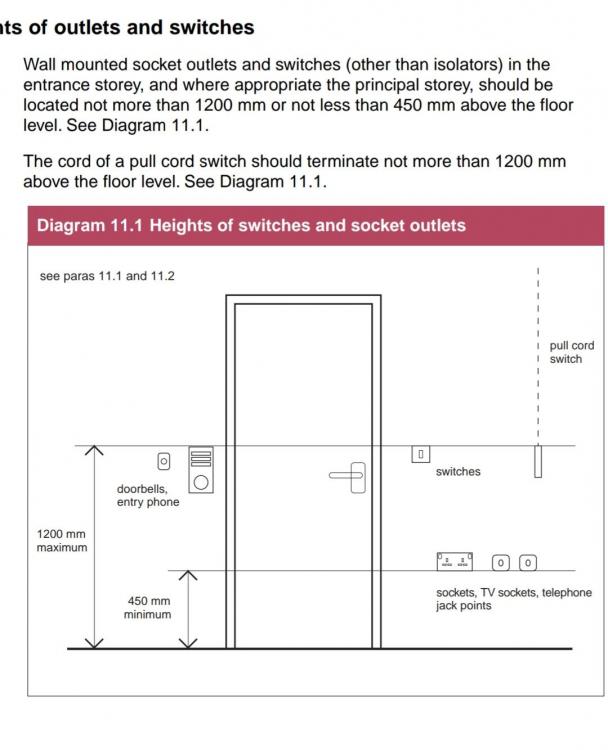
So, buildings regs are nice and clear regarding heights of sockets, light switches etc. This is good. The internet, great thing it is, is full of additional advice and recommendations... For example, there's a few sources that recommend min 350mm for sockets from corners. Is this a regulation or just good practice? I've tracked a few at 200mm, so hoping the latter. There's also various recommendations for heights of sockets above kitchen worktops. Keeping within the 1200mm limit of course, what would be advisable? Thanks
-
I phoned both Sto and K rend this aft, they both said just that, and advised leaving it a few months. K rend confirmed 4 to 5 wks lead time. Part of the reason for considering Weber was that you can apparently add some sort of accelerator to make it set quicker so less susceptible to the weather. Wonder what other options there are?
-
Hi Conor I'd be interested to know which Sto product you used, was it the silicone or acrylic? Is it very weather dependent?
-
After being told that K rend is getting hard to get, builder has recommended Weber's monocouche. We were just about to ok that but saw a house recently done in Weber chalk white and thought it looks too creamy. As far as I know that's the whitest they do. Now i know colours are very subjective... but what other options are there that can recommend?
-
How come you can only go to 200mm cavity, founds or footings already in?
-
Got this sorted. Plastics Express told me the brand is Aquaflow, so was able to source it elsewhere eventually and got the 50mm (10pk) from Toolstation, and some single lengths of 40mm and 3mm from eBay (not cheap, but Toolstation wouldn't deliver single lengths).
-
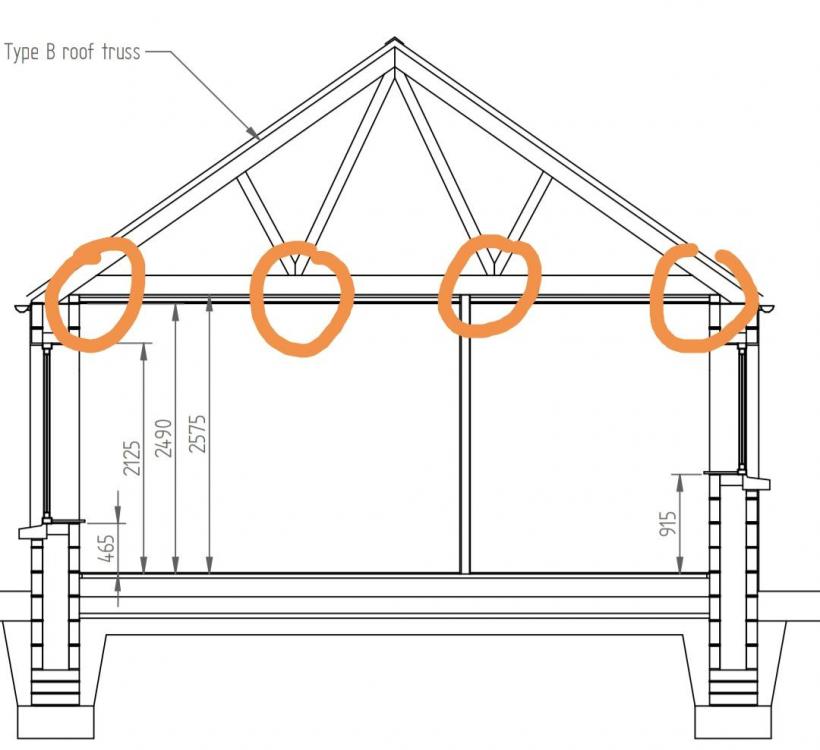
Thanks for the replies and for running the figures through Ubakus. So more insulation above the simplest way to go. Do you think a layer of PIR below the joists helps when considering the other members of the truss may create thermal bridging through the insulation, or is this not a significant effect?
-
Original plan for part out build was to have cold roof with fink trusses, 300mm mineral wool between and over at ceiling, 25mm PIR below, airtight membrane below that then service void (22mm battens and counter battens) then plasterboard. Wondering about no PIR and mineral wool stuffed in service void after 1st fix. Is the PIR layer worth it?
-
Good point. Unfortunately too late tho as the PIR is now mostly in. Dunno why I didn't consider that.
-
Riteo. Exposed side is done. 450mm wide strips between battens so the ends rest on rafters (one on inside of inner leaf, one in cavity) 600mm wide strip of membrane over it. Wonder what the roofers will make of it tomorrow... I'll do the other side at the weekend, not as much rush and might be a bit safer in daylight.
-
This sounds like my best bet. Thanks for the suggestion. For the side that the slate are on I could put in some 25mm pir from the end, though wouldn't be able to put any membrane above it. Still worth doing?
-
Min screed thickness to level over hollow core slabs
cwr replied to cwr's topic in General Construction Issues
I hadn't thought of that. Will check with the supplier. -
I eventually bought one of theses from Amazon and have been playing with it the past couple of evenings. Its branded Myobi, and by some coincidence is produced in Ryobi colours... It has a standard 13A moulded plug fitted with a 16A fuse, with some of the inner insulation showing at the strain relief. There's no sign of a CE mark, or any other safety standards. I put a round 16A plug on it before first go with it. It does chase walls though, and creates a serious amount of dust.There's a little water pump supplied, and after unblocking the jets and some futtering to get it primed it does reduce the dust. I wasn't so convinced about all the water that runs down over the motor housing past the vents, and wet dirt flung off in all directions quickly covered my face mask. So I put the pump back in the box. Next step was to try attaching a vacuum. £60 in Argos, if it survives the building work it'll do my workshop. Bit of tape round the 30mm nozzle fitted the vacuums hose nicely and off we go. It does suck up a bit of dust, though maybe not quite half of it so still not pleasant to use. Tomorrow nights trial will be with 3 discs fitted as opposed to 5. Two webs will presumably remain in place, so the SDS will be brought out to sort them. Will see if its overall less effort (and dust!).

-
Min screed thickness to level over hollow core slabs
cwr replied to cwr's topic in General Construction Issues
Yes I get that, however... the other half wants a built in wardrobe that's 2400mm tall, and wants it raised up 100mm on a plinth and set down form the ceiling by 100mm. At the mo the ceiling' height is about 2500mm, so every mm is a significant % of what I have to play with. Note that 2400 + 100 + 100 ≠ 2500 ..........= I'm already in going to be in trouble. One local supplier has said they have a liquid screed that is ok at 30mm. The floor varies within 20mm range, so 30mm to 50mm think is looking like the way to go. -
Sounds about right. And with UFH def do the perimeter strip.



