jamieled
-
Posts
639 -
Joined
-
Last visited
-
Days Won
1
Everything posted by jamieled
-
Assuming the sleepers are green, then they should shrink around your pegs to get a good fit as they dry out. In post and beam framing it would be normal to use tapered pegs rather than a consistent diameter. These can be whacked in reasonably tight, then trimmed.
-
Ours was dwanged to take the internal stud wall, using timber of the same thickness as the service void (38mm).
-
Warnings of COVID Power Cuts
jamieled replied to Ferdinand's topic in General Self Build & DIY Discussion
It does look better, but I thought DNO's were generally reluctant to bury OHP's as buried cables are more prone to faults/less reliable? -
@ProDave, might be a bit far for you but I picked up a load of stuff from HIS today. Phone and collect only, can't get into the stores.
-
MVHR install help
jamieled replied to Eric's topic in Mechanical Ventilation with Heat Recovery (MVHR)
I too have recently installed a vent axia unit. The instructions told me to ensure a slight fall from the unit to the inlet/outlet cowls on the outer walls. I assume to stop rainwater ingress and allow condensation to move away from the unit. -
Looks top notch, well done. We're also building a timber framed and clad house over near Cannich. Parents live in Archiestown though, so we pop over when the whisky's running low. The new macallan distillery building is also quite interesting.
-
There are 12v immersion heaters you can use with small p.v. setups. Haven't tried it myself.
-
Cluster flies can do this. Do they seem a bit dozy?
-
@ProDave I've used Cromarty timber for some bits, they'll be able to cut, plane etc what you need. Prices for what I needed were reasonable. Might be worth a call if you haven't already.
-
I can't link to anything directly, but it's definitely DIY able. It will be tricky if.you need.to go down.to.any depth, but it sounds like that isn't necessary. A screw auger or similar would allow you to create a hole. Sealing the well head can be simple - modify a manhole cover or something more basic - plenty of web diagrams. Preventing surface water ingress is key to minimise the treatment you need to do. Lining could use cheap perforated pipe. There are a few hand pumps around that should do down to 8m or so.
-
I reckon I have enough materials to keep me busy for a month or so now. We don't really have much of a choice - we're in a small touring caravan and funding this from our flat sale, so we have a clearly defined spending limit and a strong motivation to get it finished. It may well result in the house being worth less than the build cost, but we're too far on in the build to do much about that. The sparky was telling me today that he's not allowed into the electrical wholesaler he uses in Inverness, he stands by the door and shouts the order across the room and they bring it out.
-
Groundworks quote: prices OK?
jamieled replied to Dreadnaught's topic in General Construction Issues
I'd tend to the opinion that NEC contracts are overkill for a self build. They can work well on larger jobs, but from experience they undoubtedly involve more time and paperwork than other contract types. They need quite a lot of knowledge to execute correctly and protect both parties. I have never seen them used on self build jobs as they involve too much work relative to the typical fee. The general advice above related to allowances vs lump sum seems sensible, but if there is any uncertainty over quantities or effort a contractor is likely to price in some risk and pass it to you if you want a lump sum. -
Securing PV panels to shipping container
jamieled replied to NWGEAR's topic in General Self Build & DIY Discussion
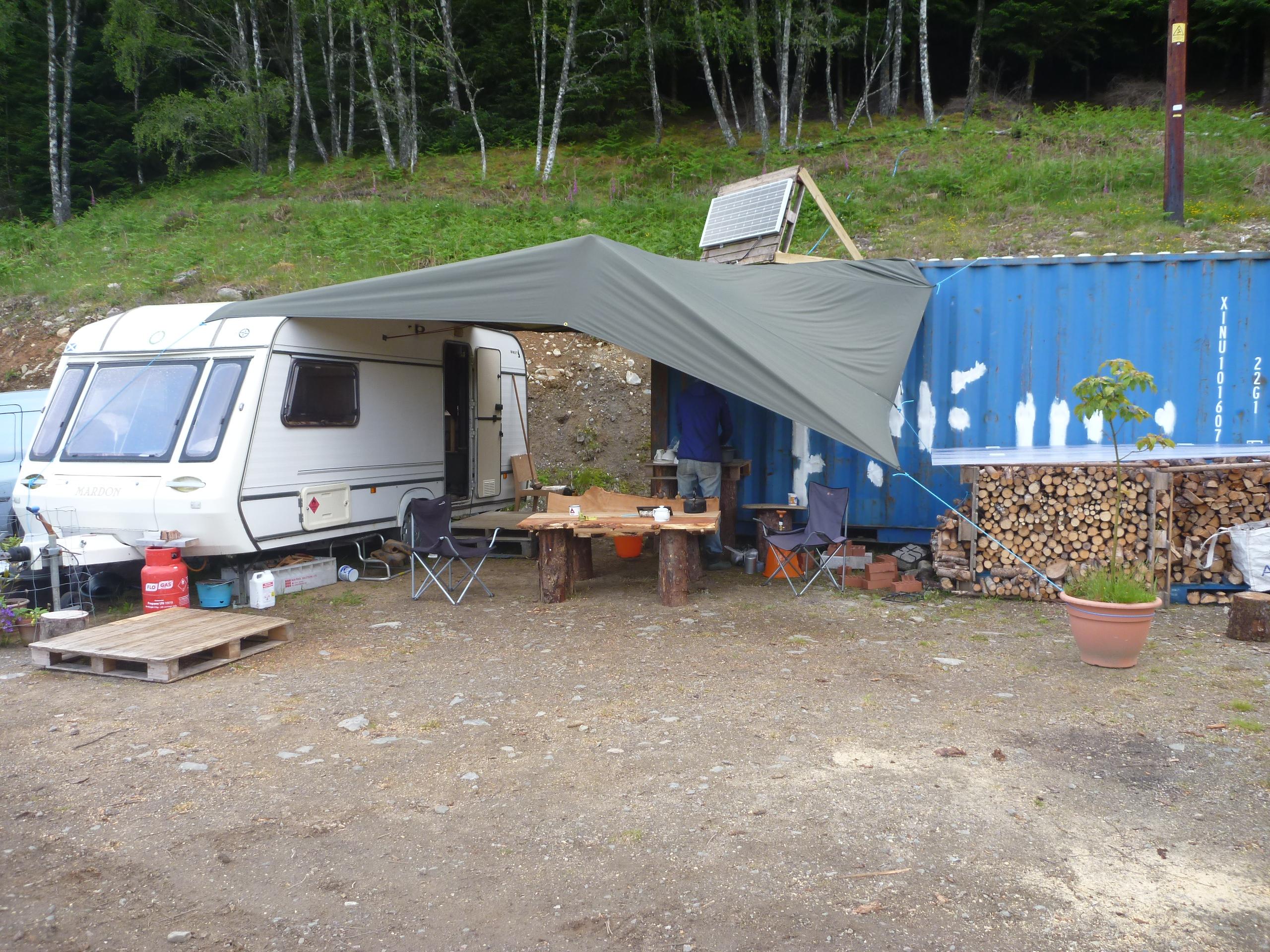
We used a couple of pallets, with a bit of 4 by inch to join them. They are the heavy type pallets. Tied to the edges of the container (the lifting holes) with some blue rope. Haven't moved an inch in the last year or so.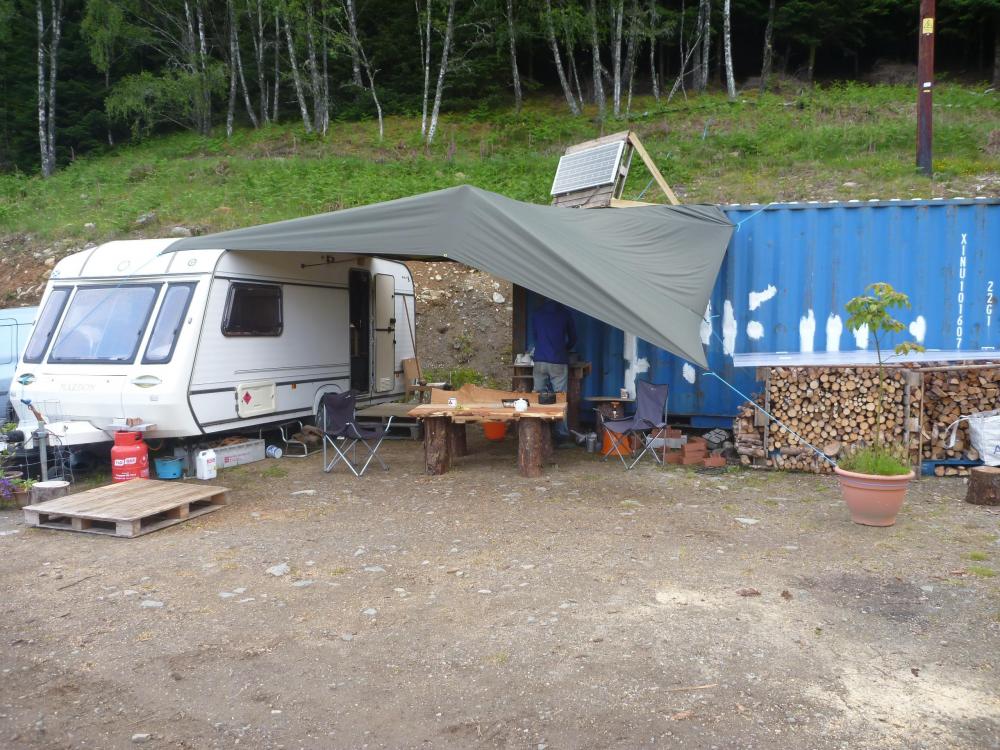
-
Newbie: Self Build in Dunlop, East Ayrshire
jamieled replied to Ayrshire_Bill's topic in Introduce Yourself
We have what is apparently known as 1 and 3/4 storeys. Not quite 2 but, the headroom is a bit better than 1.5. Architect reckoned it would be more acceptable to planning that way, so you could consider that if you can't get 2. -
Solar PV and immersion diverter advice please
jamieled replied to jamieled's topic in Electrics - Other
Thanks all for the recommendations. Will do a bit of research into the options and go from there. -
Solar PV and immersion diverter advice please
jamieled replied to jamieled's topic in Electrics - Other
Grand, thanks @ProDave. We need to feed both a shed and the treatment plant, I'm not sure whether that will be done from the external box or the CU in the house. To me it makes most sense to do it from the external box, so I may run a wire similar to yours once I work out what the immersion diverter needs. -
We're currently getting first fix electrics completed. As part of our plan for hot water, and also to meet SAP compliance, we are planning on putting in a small-ish (~4kw) solar pv array. I was planning to mount it on the ground on a wooden frame. My original plan was to use the electrician to deal with the electrical side of it - wiring up the inverter and then into the C.U. The electrician hasn't done this before and isn't keen. He'd pointed me in the direction of a few companies, but these are the types that want to charge £4k+, and I don't think it needs to cost that much as most of the work seems to be in the panel install which I can do. I have a bit of time to figure out a plan, but there's a few things that are not quite clear: 1) Are there electricans who can do this sort of stuff, or am I likely to be stuck with one of the 'installation' type companies? 2) Our current setup is a meter and temp electrical supply in an external (10m from the house) GRP cabinet. There will be a C.U. inside the house for all its loads. I wasn't planning on moving the meter, but I guess it could be done. What's the best way of connecting the solar p.v. to the main supply? 3) What, if any wiring do I need to put in now to allow an immersion diverter to work? I will probably use an off the shelf type as I don't have time to fiddle around with a DIY version right now. cheers Jamie
-
@Oz07, yes we will after first fix is in place. From inside: 12.5mm plasterboard 38mm ish service void 9mm osb, taped joints 300mm jji stud wall filled with blown cellulose. 13mm panelvent fibre board Tyvek breather membrane 25mm vertical and 38mm horizontal battens. 2 x 22mm board on board larch cladding.
-
It's been a while since I last updated this, but we're slowly making progress. Since the completion of the roofing in November, we've mostly been cladding, the joiners fitted the doors and windows, we boarded the inside and last week the cellulose got blown in. It's reassuring how well the house retains the heat from a small portable heater, unlike anywhere else I've ever lived! Bit of a delay in the cladding due to me underestimating both how much we needed and also how much we discarded (too much sap). Weather's made things a bit slower at times as well. Photos below. Cladding in progress (don't look too closely). The ends have all been trimmed and bevelled now but this is the only photo I have. The snow arrives, makes for cold hands when they're above your head hammering all the time. Boarding the first floor with OSB The insulation arrives. And disappears into the walls within a day.. Next up, try and sort the foul drainage as it's been a bit neglected, MVHR first fix and then ready for electrical and plumbing first fix.
- 2 comments
-
- 10
-

-
I've done quite a few through work, though unfortunately can't pass them on. A CEMP seems a bit overkill for a domestic self build, so I'd want to ensure they really meant to do this and it isn't just a cut and paste accident? If you're using a contractor, then the CEMP really needs their input, as they'll be bound by what's written in it. Otherwise, just stick to what they've asked for. I'd advice committing yourself to the bare minimum required and to make sure you understand the financial implications of what's written, as you can be held to it. CIRIA can be useful for guidance in relation to CEMPs. It doesn't need to be a big document.
-
Design of offgrid provision for Elec/DHW/CH
jamieled replied to Rendall's topic in Boilers & Hot Water Tanks
One thing that you should consider re the hydro, which I have come across on a couple of pico installations. Most energy projections for hydro use a flow percentile, typically the 95th exceedance percentile, to give an estimate of a reasonably low flow and therefore energy production. It is often assumed this occurs in summer, but depending on where you are in the country it can also happen in winter, typically during high pressure with very cold temps. This starts to freeze up water in the catchment and reduce flows. To cut to the chase, make sure your system can cope with a scenario where it is cold and the hydro cannot work at full whack. -
What accidents have you had while DIY'ing?!!
jamieled replied to mike2016's topic in General Self Build & DIY Discussion
You might already know this, but if you heat up a pin, use it to make a hole where the blood is, should relieve the pain quite a bit. -
@SuperJohnG AFT provided the design and supply of insulation for the slab. Groundworks and installation were done by a local groundworks firm with me keeping an eye! The SER was recommended by the architect, but appointed by me. They had previous experience of both passive slabs and engineered timber, both of which we used in our build.
-
Hopefully you won't need 3 engineering inputs. For our build, also in Scotland, the SER engineer did pretty much everything. They designed and signed off the timber frame and also signed off on the use and specification of the passive slab (designed by others, but as a design and supply contract).
-
Yep, separate shed, use a big bucket then when it gets full stick it on a compost heap. You probably could design something that would work from inside the static.