
Nickfromwales
-
Posts
31376 -
Joined
-
Last visited
-
Days Won
345
Everything posted by Nickfromwales
-
 The subfloor needs to be robust, so no loose screws / nails, and no excess movement. Nothing will survive a moving deck. If the deck is nailed down, then I’d punch a 5.0 x 60mm screw in where every nail is, right alongside it, and get the preparation done properly. Is the bounce because they’re original, smaller joists, or because the deck isn’t fixed down properly?
 -
Full house renovation and retrofit guidance
Nickfromwales replied to fisnik's topic in House Extensions & Conservatories
With a higher hot water demand I’d recommend staying on gas. Cheap reliable workhorses with a still very reasonable running cost. Oodles of hot water and a very small footprint for a decent sized system boiler. You can still divert solar or battery power into hot water all summer, so the boiler will do a lot of sleeping during that part of the year. Maximises longevity too. You’d have to have a big ASHP and cylinder and the SCOP would defo take a hit, plus you will hurt the ASHP longevity too imo, asking it to do DHW all winter, and heating. Ive done a good few heat pump installs, so I’m good with either machine, but the solution should always be about the remit, and the client. -
Electric instants are dire at best. The 3ph ones are amazing, but single phase are pretty shit and completely driven by cold water temp; in winter, they get soooo much worse performing.👎 Add the cost of a huge cable to supply it, electrician costs to supply / fit, and the eye-watering amount of electricity it will gulp whilst you are using it. Fit a hot return, and enjoy the benefits.
-
Heat pumps. Any negative points about 3 phase?
Nickfromwales replied to saveasteading's topic in Underfloor Heating
-
Heat pumps. Any negative points about 3 phase?
Nickfromwales replied to saveasteading's topic in Underfloor Heating
#victoriandad lol. -
Seems you’re off the hook mate
-
Oh Lordy 🤐
-
That's a very big "no".
-
Full house renovation and retrofit guidance
Nickfromwales replied to fisnik's topic in House Extensions & Conservatories
ASHP may not be the best for this, as there’s a lot of time taken to recover a cylinder fully, time where the heating isn’t serviced, as the heat pump will do one job at a time only. Are you completely averse to staying on gas for 10-15 years? A gas boiler install would save a chunk of change and still isn’t a ‘hideous’ idea / route to take. Depends on your priorities and aspirations I guess, and also if you have somewhere sympathetic to locate a heat pump? -
Not cheeky, just daft, sorry. You’d need a second circulating loop into a low loss header, and a re-plumb, as you’re reliant on the HP for circulating the water. Note that the Willis are 15mm too, so cannot simply ‘go inline’ as it would choke the flow. Whenever I fit Willis I always fit 2 so the 22mm flow goes through “30mm” of Willis heater(s), which some goons just don’t understand or appreciate. Some say 1x will work, yes it will, but 2 is less than £100 more, can go inline, and will offer redundancy and fail safe. Jet is to plumb them hydraulically identically so they both see the same throughput; so one doesn’t bypass the other and so both share the duty. Mike……”No” 👎. Not needed, and your COP will be 1.
-
Time for some new Makita goodies- any good deals on?
Nickfromwales replied to Crofter's topic in Tools & Equipment
If you’re cutting limbs off trees and are super-pruning, then defo go for a baby chainsaw. Milwaukee do a nice one, but if you’ve already got makita batteries etc then Link -
Two questions relating to UFH manifolds
Nickfromwales replied to Bancroft's topic in Underfloor Heating
Get the family to safety, immediately!!!!! -
Sarking boards on roof with built in solar trays
Nickfromwales replied to DannyT's topic in Scotland
Slates. Very expensive ones iirc!! -
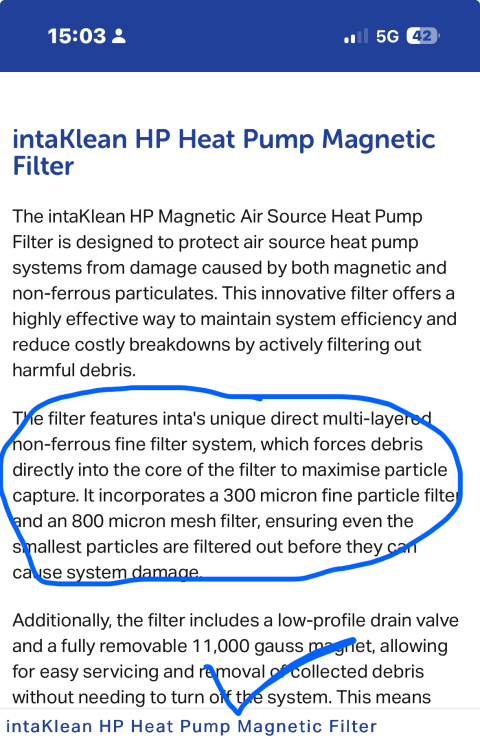
Is it heat pump specific? You need a particle filter as well as a magnetic filter to catch all types of debris.
-
What to repair this garage floor with?
Nickfromwales replied to Andeh's topic in General Structural Issues
Just lay a strip of hardboard and use duct tape to go up the outside of the profile and wrap it over the hardboard (or a good stiff cardboard) and lap the two ties over each other on top. Pour the SLC and leave to cure, then cut the tape with a sharp Stanley knife where the SLC stops and remove. -
Double check that Of there’s definitely not one, then yes it’ll need an auto air vent. Do as the good book says, because if you deviate you’ll be without warranty. Don’t ring their tech support to ask verbally, if you decide you’d like to explore this intensively, and ask them by email; if they say to use glycol in the book but say you can omit it, you’ll need that in writing.
-
Sarking boards on roof with built in solar trays
Nickfromwales replied to DannyT's topic in Scotland
I should have added this. Thanks! -
Seeking advice on replacing lead on valleys.
Nickfromwales replied to Munchincocopops's topic in Roofing, Tiling & Slating
It'll need to be OSB3 to be specific You can't use regular OSB externally. So will be 3/4" imperial, which means 18mm OSB3 is the thickness you need. Not sure why you suggest 9mm board? This should form the sarking, so kills 2 birds. Membrane over, and away to go. -
Based on what it's attached to, in such limited amount, basically. Provide a substrate that wont degrade, is impervious to moisture and movement, decouple them with a few mm of suitable mastic, and I don't see an issue. Happy for someone to tell me otherwise of course.
-
Time for some new Makita goodies- any good deals on?
Nickfromwales replied to Crofter's topic in Tools & Equipment
I use mine for tree lopping, cutting up scrap wood for the chimenea in the summer, and all sort of random stuff. Once you have tools, you use them. -
For just at the column? I'd say not.
-
Time for some new Makita goodies- any good deals on?
Nickfromwales replied to Crofter's topic in Tools & Equipment
Yup, just wasn't sure of how much of a tight-arse you were -
Sarking boards on roof with built in solar trays
Nickfromwales replied to DannyT's topic in Scotland
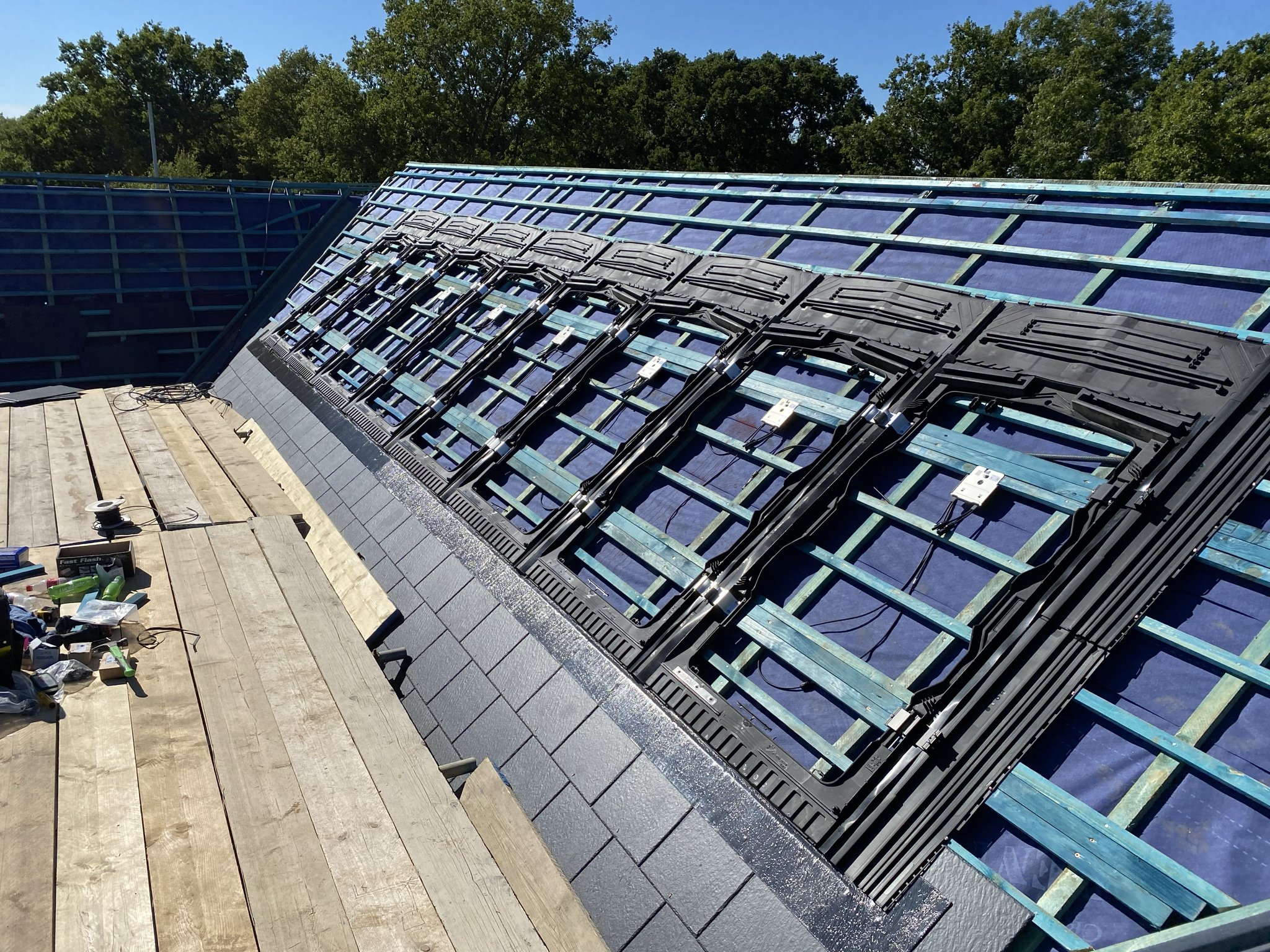
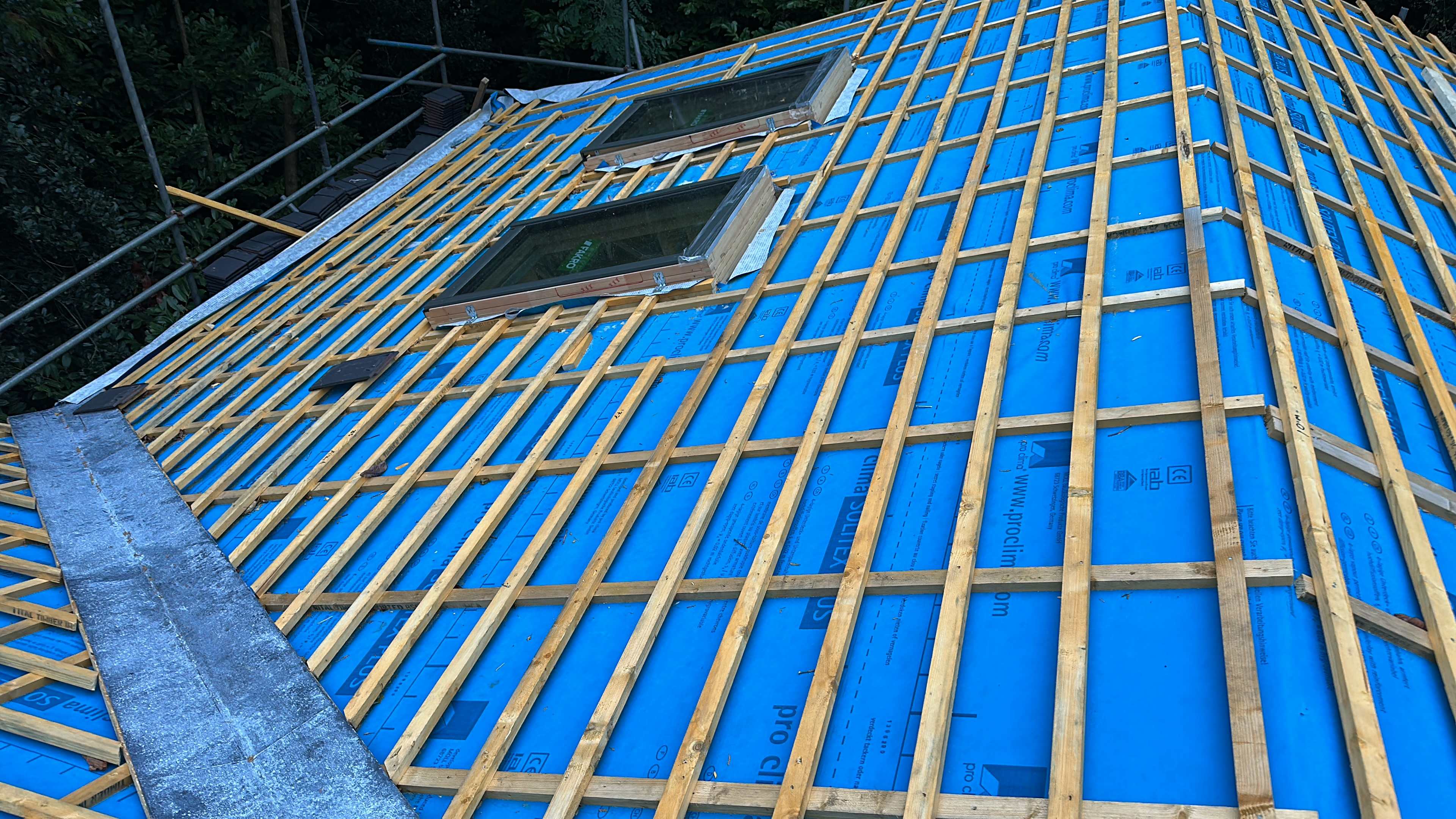
If fitting in roof, remember to have additional battens ready on site for the PV installers to utilise. They need to be stacked where the fixings on the trays are. See this for an example of a job we did, so you know what is needed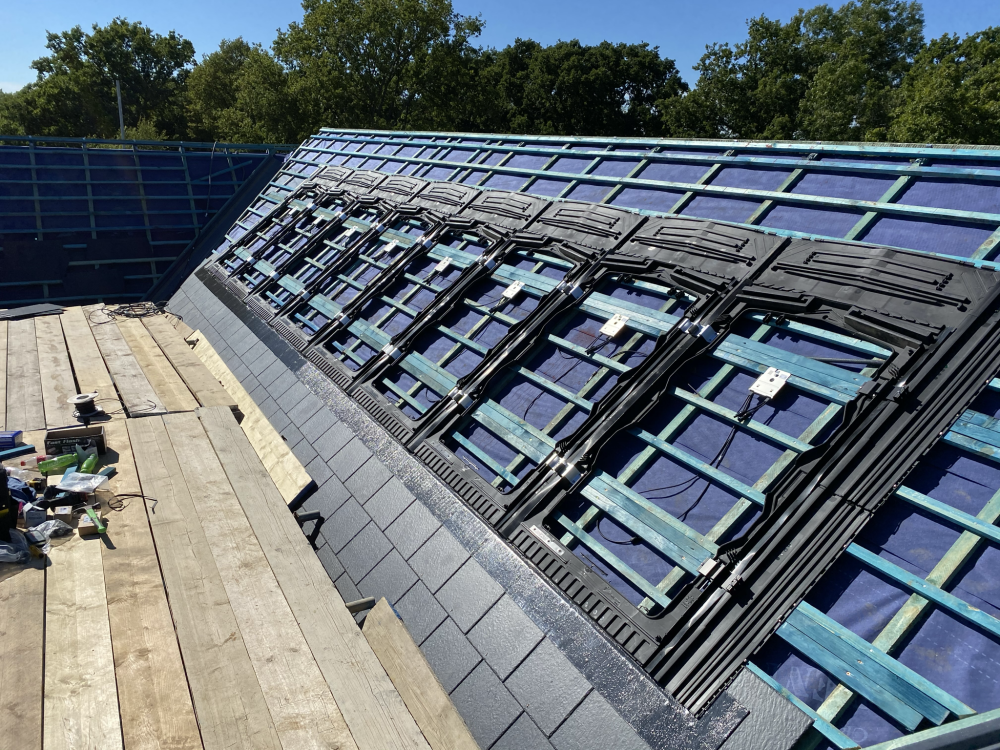
-
Sarking boards on roof with built in solar trays
Nickfromwales replied to DannyT's topic in Scotland
If you go for the terrible "droopy" option, I'm coming up there and there will be trouble "NO!". Whoever dreamt that idea up? Just done one project where it’s was sarking > membrane > counter batten > roofing batten. That is the way, and the light.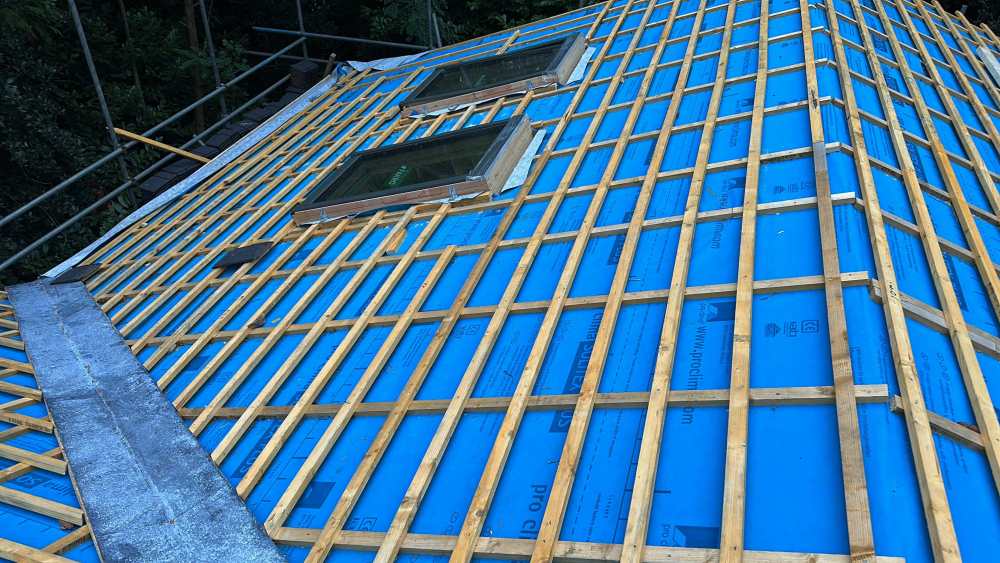
-
Whether we like it, or dislike it, agree or disagree, the manufacturers installation guide is the bible. Some dont stipulate, some do, some are happy with anti-freeze valves, which I opted for on the last ones where I had 'free reign', but we should make the OP aware that they need to check if they are OK to deviate. Me personally, I hate the thought of glycol. No need for it, but there is always the power cut in the arse of winter to consider as worst-case.