
Nickfromwales
-
Posts
31390 -
Joined
-
Last visited
-
Days Won
346
Everything posted by Nickfromwales
-

Calculating number of clip rails for UFH
Nickfromwales replied to Conor's topic in Underfloor Heating
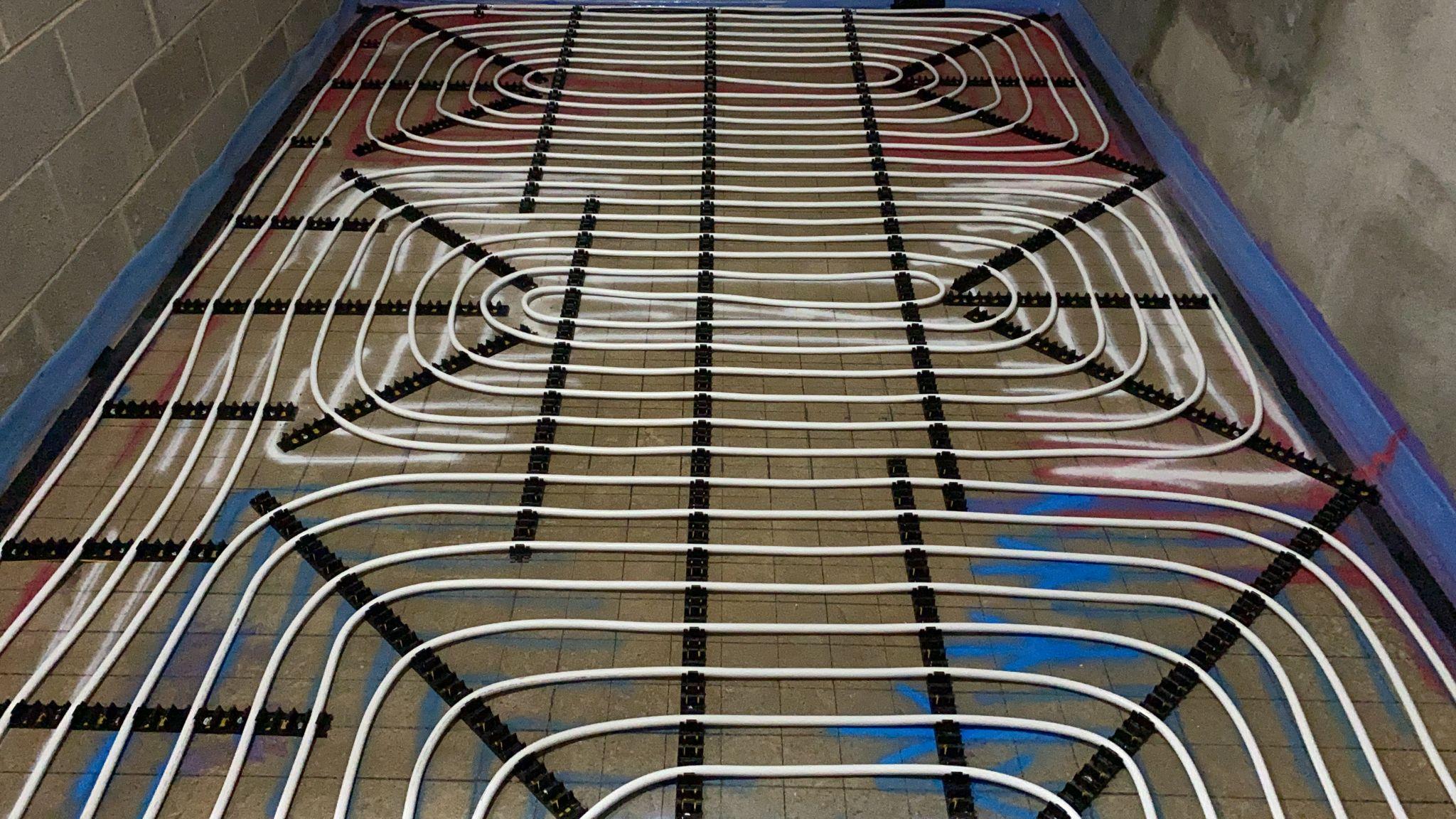
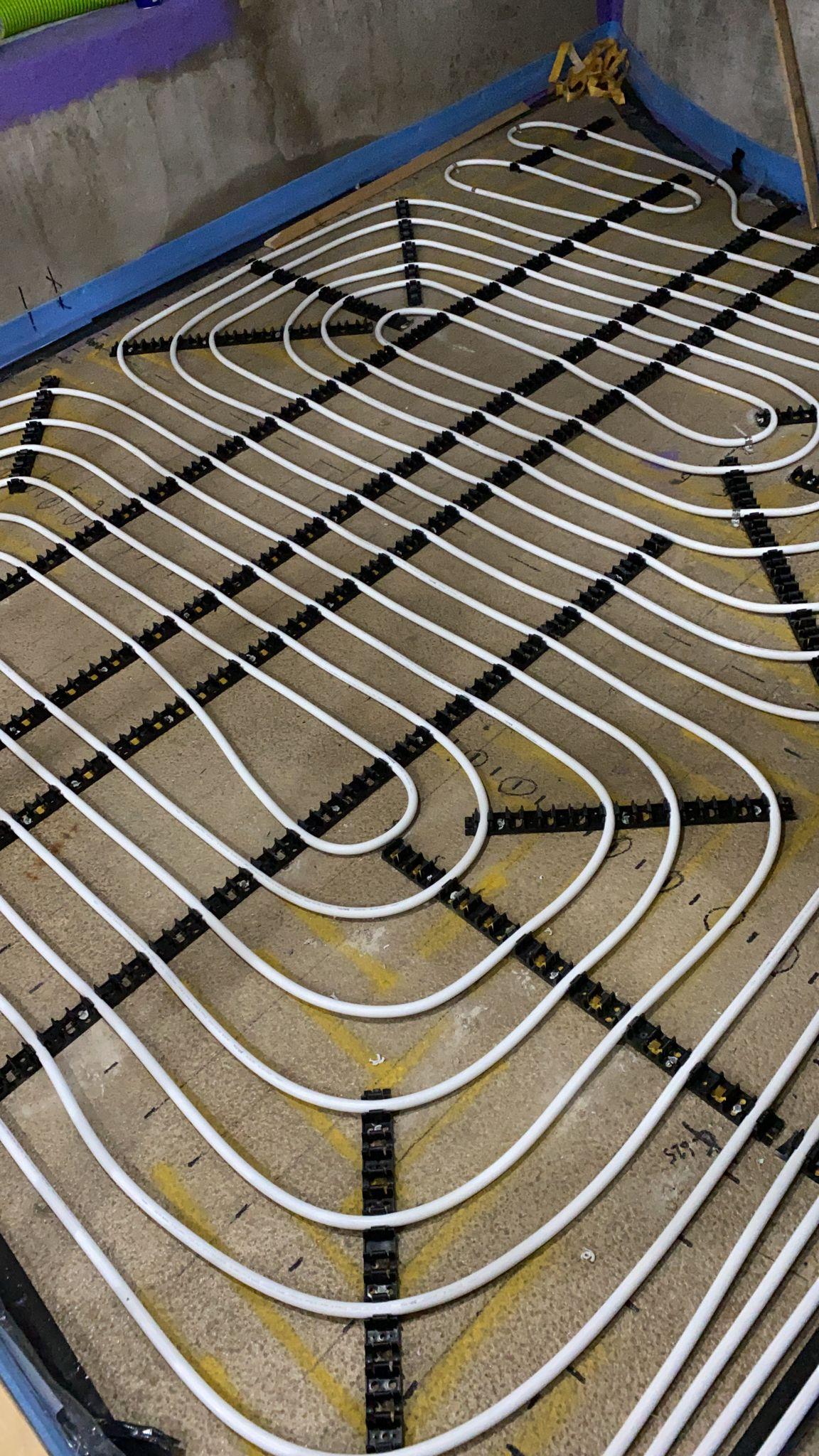
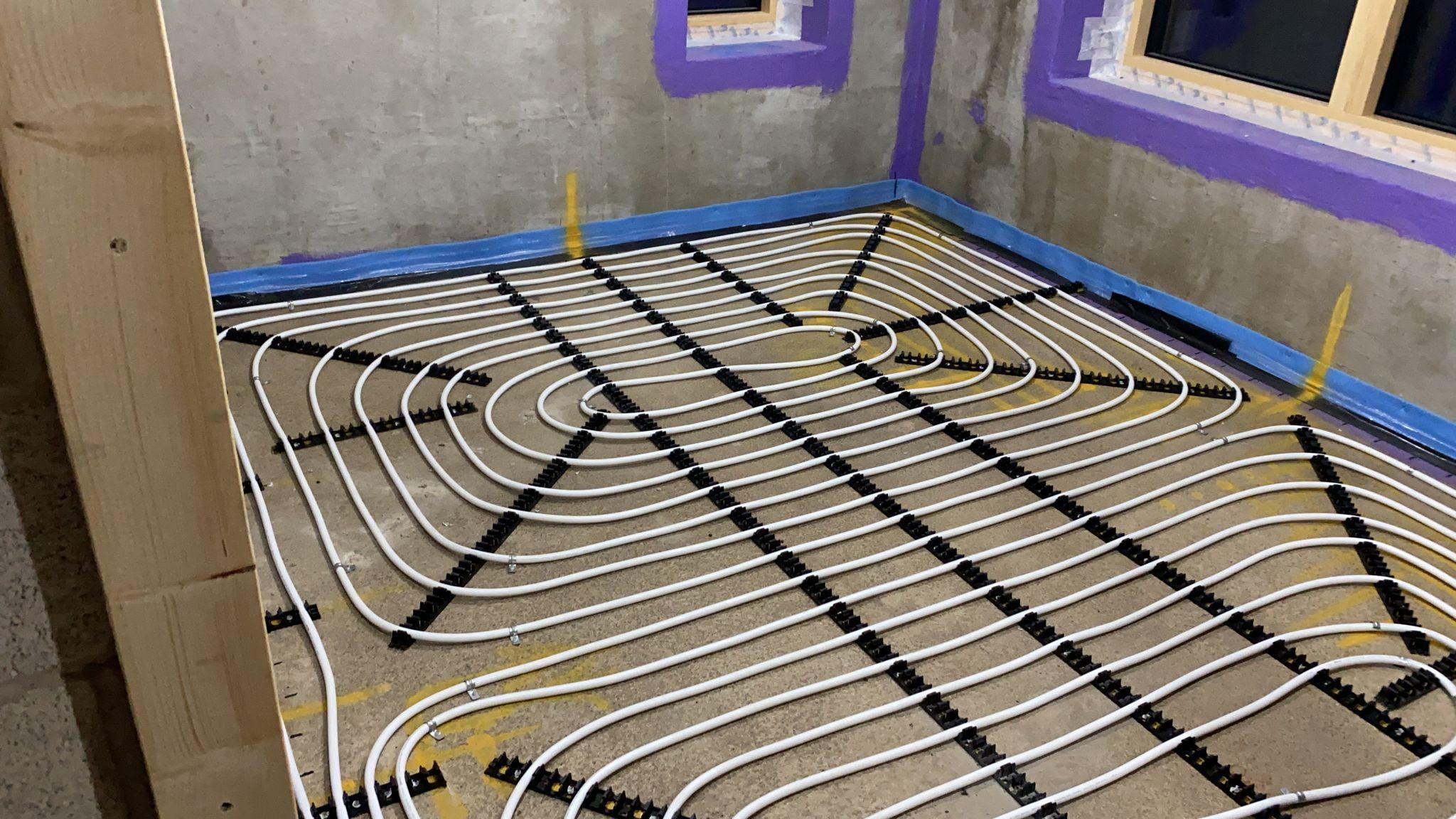
2 days with marker pens, then line marker paint, and more head-scratching than the pics show. That one was "measure 6 times, cut once" and I still had to 'improvise' with a few of the tricky areas. So you know, I literally painted a 100x100mm grid onto the floor in each room, in yellow paint, and then painted the actual pipe runs on with red / white / blue as the lines to follow when affixing the clip rails and laying. Anything less would have resulted in "work of art" being "looks like shart" A lot of hard work, head work, and time to get that down I assure you. -
MVHR Installation Issues
Nickfromwales replied to Nickw1982's topic in Mechanical Ventilation with Heat Recovery (MVHR)
It's probably best to focus on what NEEDS to be achieved here, ( and not to terrify the OP with things that are not 'real world' issues ). This probably needs a full day for 2 guys to rectify all of the internal stuff, plus whatever it takes to resolve the holes in the stone formed by the unsupervised use of TNT........... -
MVHR Installation Issues
Nickfromwales replied to Nickw1982's topic in Mechanical Ventilation with Heat Recovery (MVHR)
Manufacturers installation guidelines trump building regs in every instance. -
MVHR Installation Issues
Nickfromwales replied to Nickw1982's topic in Mechanical Ventilation with Heat Recovery (MVHR)
Given that the holes are now made in the OP's nice stone faced wall, I feel I should cool the heels on this a little and offer reassurance that a lot of the 'big names' are happy with vents being as close together as 1000mm if they are subject to no opposing gables / obstructions etc. My PH design guru ( I hope he never reads this or II will have to pay him more ) states this is perfectly acceptable if the aforementioned observations are observed. @Nickw1982 The supports ( lol ) holding the terminals eg the loose bits of wood are just a piss-take. Most competent DIY'ers would wipe the floor with that, much as they would with the scrapheap challenge cast-off that is used to "mount" the unit...... ALL of that needs completely re-doing afaic. Would be a few tenners of plywood / timber and a half day for one guy max. The use of flexible ducting directly off the unit is not a big issue, and given the height you have available, lets face it, you're never going to get that resolved unless you take the roof off I would, however, expect to see at least some rigid ducting off that unit, at least until the invert where the rigid exits away from the unit horizontally and the flexible gets adopted. That's just basic engineering where the weight of the flexible duct can clearly be seen collapsing under its own weight / lack of rigidity. A section of flexible duct is often used on the output ( fresh ) side of MVHR units to attenuate noise, but usually a slightly different material makeup where a non-friable 'fabric' internal surface is purposefully employed, only usually 1000mm in length and in conjunction with the rigid / strategically used flexible stuff. Bottom line, stand your ground and do not accept any wishy-washy resolutions. This needs a complete overhaul. -
Calculating number of clip rails for UFH
Nickfromwales replied to Conor's topic in Underfloor Heating
I bought a Spit Pulsa 40e gas nailer ( concrete and steel fixings ) for £499 and it paid for itself with this one job. All those rails and metal P clips for here and there fixed down with 25mm concrete nails. -
Calculating number of clip rails for UFH
Nickfromwales replied to Conor's topic in Underfloor Heating
@Conor That’s how I laid on my current full project. Hope that helps. ?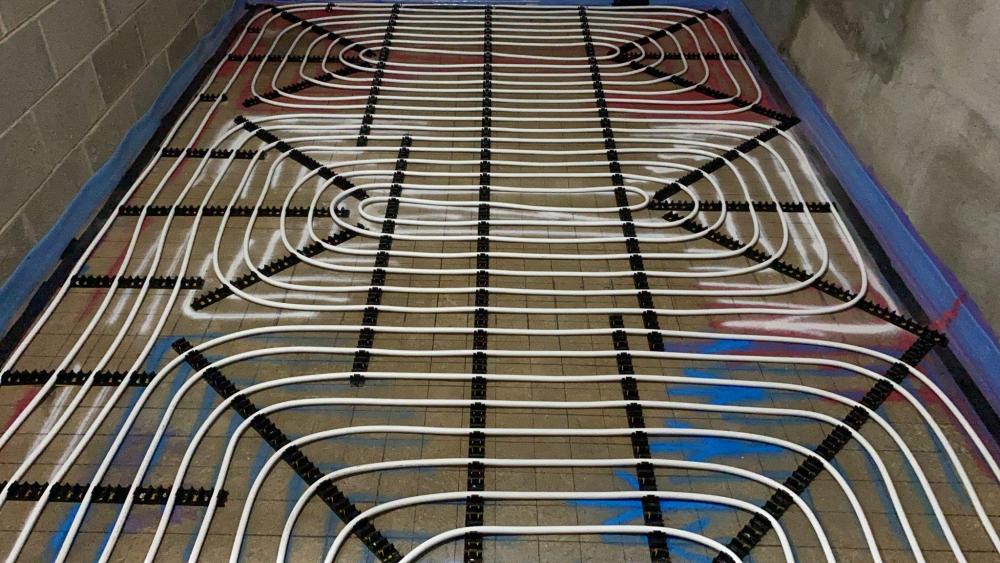
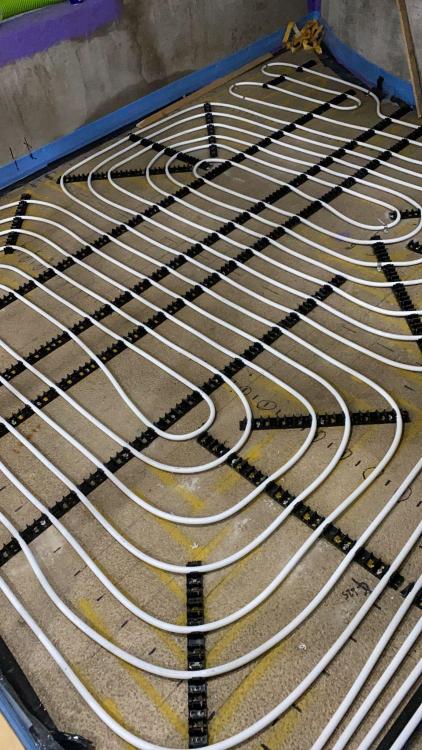
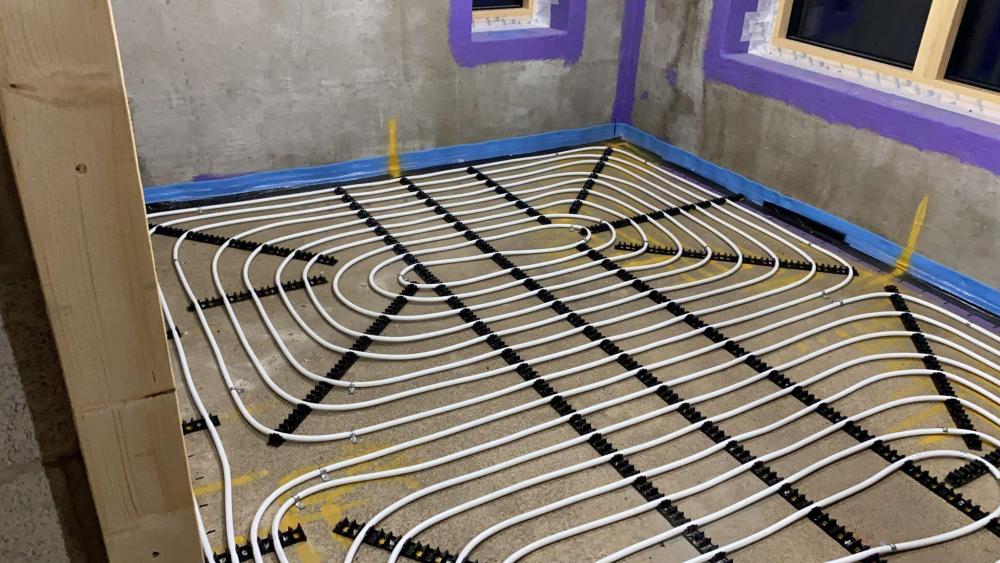
-
Unvented Cylinder Installation. Spot the Problem!
Nickfromwales replied to Iceverge's topic in Boilers & Hot Water Tanks
? Why are you fitting those monstrosities? They’re isolation valves not flow restrictors btw. Any form of throttle there will result in lots of noise when the strangled flow is squeezing past that valve. You want the WCs to fill as fast and as quietly as possible so get rid of those from your plans ASAP. Most modern cisterns will already be restricted flow by manufacture, so should be unnecessary there. You ‘can’ do the WC’s in 10mm but 15mm is fine if that’s what’s there already. -
Calculating number of clip rails for UFH
Nickfromwales replied to Conor's topic in Underfloor Heating
Are you laying serpentine or inverted ? I just laid 1.3km of pipe at 100mm c’s reverse / inverted ( snail ) and went through 250 m’s. It’s area rather than volume with you, but you’ll still do the 180 in or thereabouts. Boxes are available at x100 per box, so just get 2 boxes if I were you. They’re around a buck fifty a strip, so chicken feed, and recommend putting them at 800mm centres. Last thing you want is anything lifting ( floating ) during the pour. What are you fixing them down onto? -
You'll may also, then, benefit from some additional information re this DHW strategy. I have been routinely oversizing the DHW cylinder to create a larger 'cheap energy capacitor' which I have then designed around heating once a night at 5p/kwh and there then being enough DHW to get through a typical day without recharging. Options for interim recharge, where required out of off-peak times aka 'on demand' are; via immersion boost switch ( with a choice of 30 mins / 60 mins / 120 mins manual boost ) which I call "guest mode" or to set the immersion to boost midday where there is likely to be PV available, safe in the knowledge that the immersion will only call if the UVC is depleted and usually by not much ergo the UVC doesn't monopolise the PV production. Freezing ( or the need to defrost ( two very different things )) is a statement I made as assumed. It can be mitigated or minimised ( risk / cause ) with a bit of thought.
-
That strategy also extends the longevity of the HP, which is a strategy I adopt with my new clients, and also helps avoid any possible ‘freezing’ of the unit in the winter / adverse months. Off peak rates ( 5p/kwh ) can now be utilised quite advantageously and using that plus PV during summer sees the ASHP having a very easy ( therefore long ) life. Ive just done a couple of ASHP’s ( PV + Octopus GO! ) where we’ve not bothered with the wet circuit to the UVC at all. Helps a huge amount as both have cooling in the summer and I did not want the ASHP doing 180 degree turnarounds from cooling to heating for no ‘good’ reason.
-
You're probably scoring too heavily. Try one clean pass, contact from start to end, and one sharp snap to complete. After that, you're on a wet bed cutter.
-
?. “Probably?”
-
That’ll just be the tip of the iceberg, sadly.
-
All of the above. They all knew this would fail spectacularly in the event of a fire……
-
Just get a continuous rim diamond blade in a 4” grinder and chip away for 10 mins. Easy enough.
-
Are these the JA panels with micro inverters affixed? One less thing to buy ( other than the controller ) if so.
-
It differs from DNO to DNO, for no good reason. Some will accept written notification, but the last one we did ( 5.5kWp on single phase ) they asked to witness in person regardless. Also, you automatically provoke this when installing more than the obligatory ~4kWp as you then have to submit a full DNO application before installing, listing the equipment ergo to ask for limitations you’d need the correct equipment in the proposal.
-
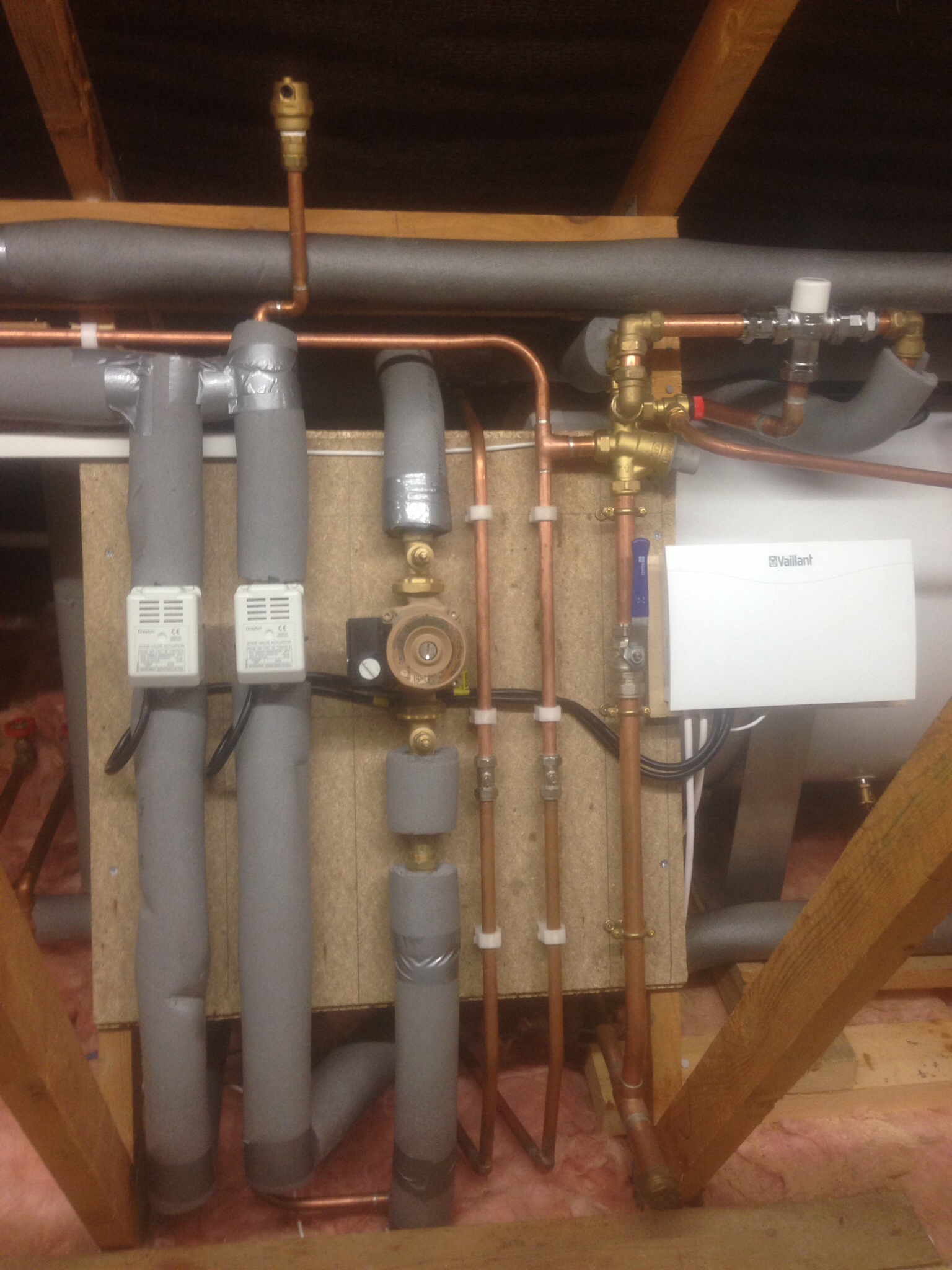
If you have at least one bypass radiator ( towel rad or back of airing cupboard ) plus each radiator has its own TRV, I would say there is a definite benefit to having the rad circuit left open, without a zone valve, so the UFH gains some additional system volume which should help with short-cycling when only one or two UFH zones are calling for heat. The UFH deffo needs a zone valve so the manifold and TMV don't act as a bypass for the radiator circuit, eg when the rads are selected on their own the UFH ZV stays shut. With 2 lots of heating and with them both adding their own percentages of bypass, I would seriously consider W-plan ( DHW priority ), unless this is an ASHP install which would give you that anyway. If it is an ASHP then you 100% need a 3-port ZV ( diverter, not mid-position ) or 3x 2-port to facilitate isolation for the heating circuits during the higher temp DHW cycle. What is the heat source?
-
Yes, by choosing one with Export Limitation software, but you still need to notify the DNO so they can come and witness this is operation / physical presence etc. OR, just fit DC batteries and then you do not need to inform the DNO, plus I see no reason why @MikeGrahamT21 cant add them to his FiT registered installation and mop up that eye-watering 75% export ?
-
Turn off both internal stopcocks and see if the tap still works. If it does, then it’s a rising main vs cold feed, so should really be dug out to a healthy bit of pipe and capped off with some fines around it to keep it safe from movement. In terms of a dead leg, the risk is minuscule as the fresh incoming ( chlorinated ) water will always pass this on its way to consumption. Do the above test first and then weigh up the pros and cons.
-
Have you checked the prices recently? They’ve gone up considerably. A similar size unvented cylinder will leave around £2k change in your back pocket.
-
None of this helped by vertical ventilation voids feeding fresh air as fast as the fire could suck it in
-
Is this an intermittent fault or a now permanent (albeit incorrect ) situation? Trying to narrow down a zone valve or stat issue. Doesn't sound like it's the ASHP at fault at a first glance.
-
Just saying hi, nothing to report yet!
Nickfromwales replied to lizardeatspaper's topic in Introduce Yourself
Which is exactly the right time to be asking a bucket-load of questions Welcome to a forum where such information, impartial, factual and honest, resides, ( warts 'n all ). -
The reference to adding more insulation was aimed at IWI ( internal wall insulation ) So basically applying say 30mm or more insulated plasterboards to the internal face of the dwelling, and then plastering over those. LINK EWI could also help but can be far more impactful.