
Nickfromwales
-
Posts
31382 -
Joined
-
Last visited
-
Days Won
346
Everything posted by Nickfromwales
-
I'm stuck at home, so can you all promise NOT to drink beer and have a great meet, please?
-

Makeup of a 70's prefab bungalow
Nickfromwales replied to Thorfun's topic in General Construction Issues
...and all you had to do for that to happen, was stand near it and clap loudly -
Given how much they get paid....why are a lot of architects quite so shit at their jobs? 🤷♂️
-
TOC (top of concrete) is what I’ve always seen as the top of raft / screed, and FFL is exactly that, your finished floor level (so not your unfinished floor level ) unless I’m going mad, which is possible.
-
Standard detail I’ve seen / done under every single EPS insulated raft, so the layers of EPS don’t become swamped and thermally ‘compromised’. In any instance where the clay / ground doesn’t promote good natural drainage, French drains made off to soakaways are also installed around the perimeter of the foundation. Compacted type 1 could be used to make a pond! Wouldn’t want my house sat in a pond?
-
Ok, thanks. I missed that. For accuracy, top of concrete is top of screed, and FFL is that inclusive of the floor covering, just to avoid confusion. So your FFL (the top side of the MC (microcement)) will be 305mm above b&b. If this was my build, just because how particular you’ll need to be with MC, I’d used cemflow (liquid cementitious screed) at 80mm and possibly consider some stainless anti crack mesh at the area of the top step for belt & braces. Ill try and draw a cross section of how I’d make the steps up a little later today.
-
Or you get another builder. Purpose of a VAT man (a qualified VAT advisor) is to give you advice covered by a professional indemnity, which you can reply on, vs random info on an internet forum which is essentially worth its weight in sausage meat. . With such a potential cash saving I’d not want it left to chance or for there to be even 1% ambiguity.
-
Apologies for the digression. So, I see the b&b flush to the top of ICF, and then in the background I see the opening for the doors / sliders(?), so what is the allowance for PIR over the b&b with an 75/80mm screed?
-
Where to lap DPM with Marmox with split floor level?
Nickfromwales replied to lookseehear's topic in Brick & Block
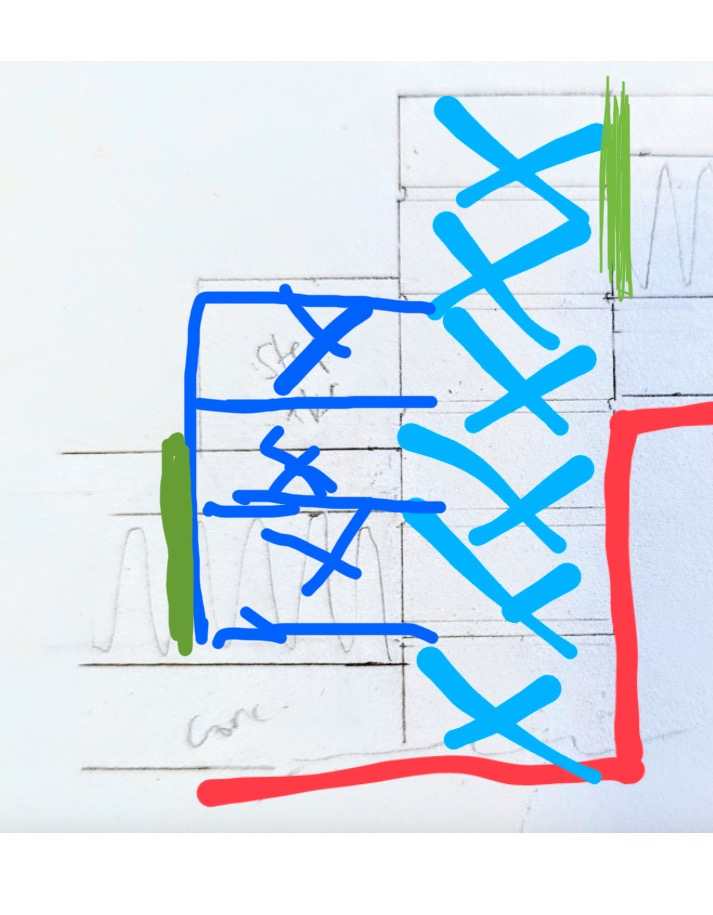
The step doesn’t want to be on the insulation and screed. Good advice above, but I’d do a second stack of TL blocks to create both steps. Would be good to get a bit of Marmox in front of the blocks of the steps, where the screed hits it, as they’re technically ’cold’. These are marked in green. 15mm will suffice there as they won’t be worlds apart temp wise.
-
Heating Soaking Tub - Hot Water Tank or Inline heater?
Nickfromwales replied to mike2016's topic in Boilers & Hot Water Tanks
210L of water isn’t much, assuming this is indoor? Is the tub insulated? I think the option to heat from the EAHP UVC via heat exchangers would drive the HP in the cylinder very hard indeed, and perhaps have an adverse effect on its longevity, for one, but also when you factor in the inefficiency of the PHE converting heat then it adds up against it further. Running the tub as a buffer would mean having it heated all the time you are running UFH, so you’d need to insulate it and deal with evaporation losses as humidity too, if kept above the ambient room temps. Likely you’d need dehumidification then too. -
Yup. Just re read this when not tired and ‘multi-tasking’…. Defo don’t put type 1 under it, needs to be type 3 clean stone without fines, and free draining. Time for a new SE? 1st year apprentice stuff emerging here. @zzPaulzz let me know if you want someone (SE) who does Kore etc in his sleep and can give you a quick turnaround….
-
The “reinforced concrete ring beam” needs to be subterranean, with the bricks disappearing into the landscape. You can’t have the top of that concrete exposed at finished outdoor landscape level…. That obvs doesn’t need as significant an amount of EPS under it, assuming it’s only carrying a few courses of bricks(?), unlike the amount shown under the ring beam, so dropping it will have little effect ‘structurally’. That shouldn’t be a major issue to amend, but another oversight is that the EPS defo needs to encompass the RCRB to stop it rolling / migrating outwards, eg it should be ‘sat’ in a kind of EPS recess (channel) vs sat on a shelf of EPS. The compacted layers outboard of the foundation should be pushing back against the EPS in front of the RCRB, vs directly onto the front of the RCRB. Not great currently! It’s wrong in a few ways as-is for sure, so add those points to the growing list of immediately obvious faux pas….

-
Do I need a pump on my manifold
Nickfromwales replied to ricardo100671's topic in Underfloor Heating
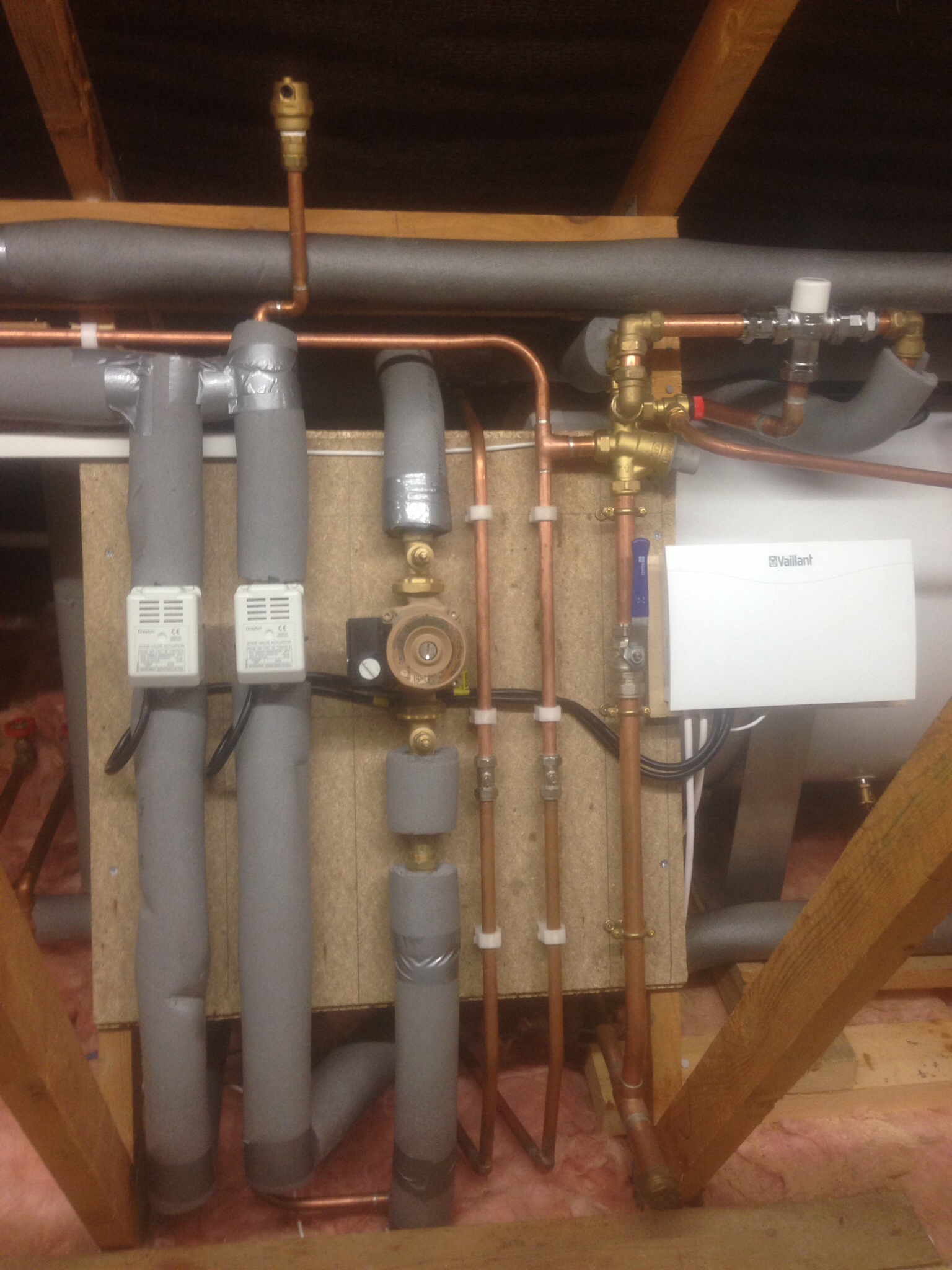
I think the UFH might struggle to get adequate flow when the rads are open path and flowing freely, as the pump potential will always choose the path of least resistance. The UFH loop smallest / shortest will get nice and warm, but the longest one will likely perform less admirably. If you can make all the UFH loops hydraulically similar then it may work, but any time the rads are all open, flow to the floor will take second place. Are you very sure the design is sympathetic to one flow temp from source? If so, I think a pump on the manifold would be wise, but obvs minus the TMV. With the second manifold pump, it will circulate the loops, vs pump flow and return to the manifold, so there will be hydraulic separation. The flow and return from the boiler & its pump would tee into that via 2 close coupled T’s, so the 2 pumps never conflict with each other. -
You could give Andrew Jones aka “The VAT man” a call and get some actual, dedicated advice about this. Best to find out everything you can claim etc in case random info on the net falls short and you miss out? Plus he’s Welsh so must be good 🤷♂️😀. lol. Mention my name and the forum and he’ll look after you 👍.
-
Yup. And nope, not on that job as it wasn’t necessary.
-
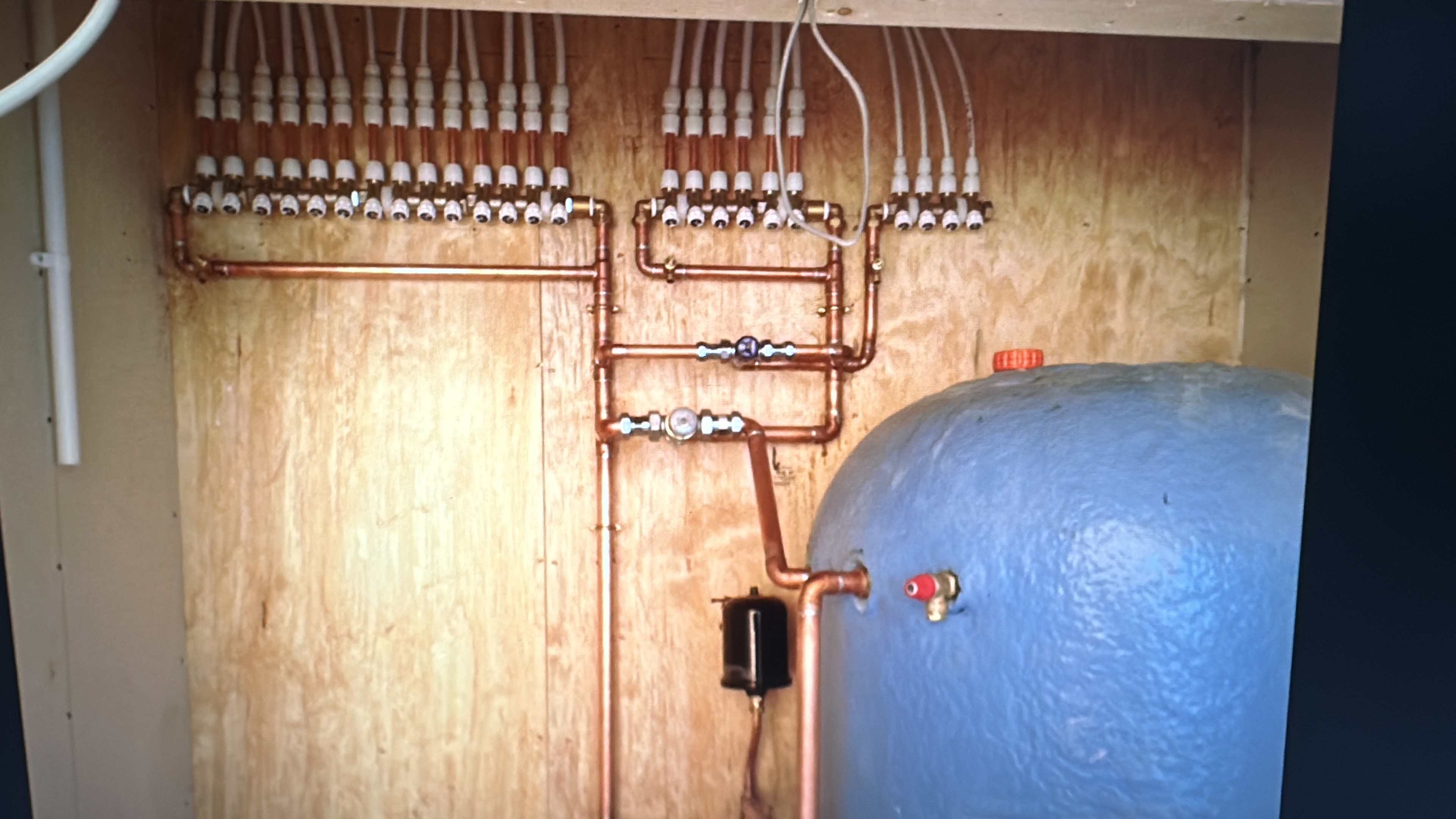
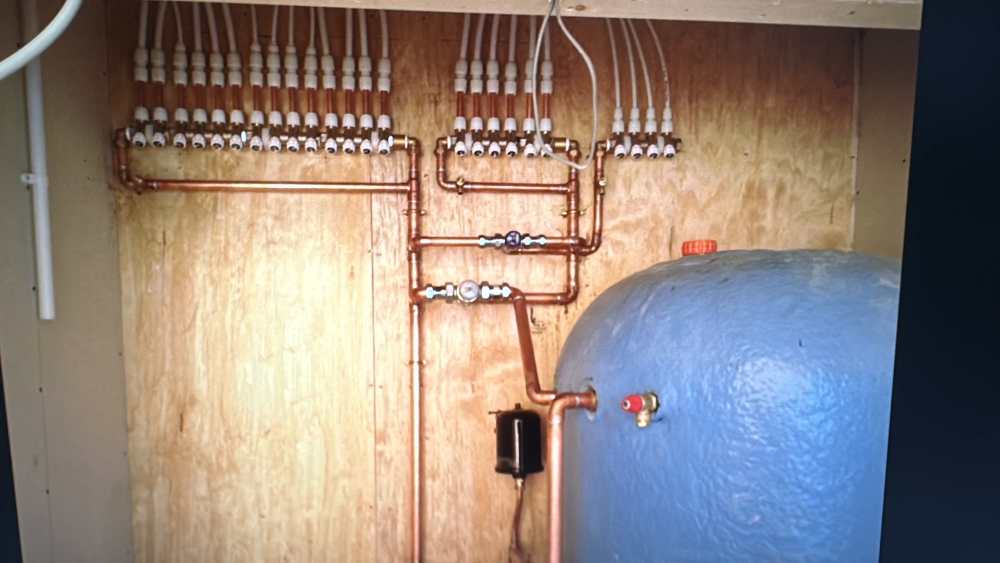
These were all short runs, kitchen and utility very close, most bathrooms directly above, so no hot return required. Furthest basin was piped in 10mm and was less than 5-6 secs to get premium temp hot water out of the tap. Far right manifold was 4x wash basins and if you follow the pipe work back you’ll see it is fed via a TMV to cap the max temp at the basins.
-
Nope. Radial runs from the hot water cylinder vs series run (which is what you have which sucks lol). So each hot and each cold has its own pipe from a hot or cold manifold at the cylinder.
-
Thermostatic mixing valve.
-
I do the showers, baths, and (if they’re less than 12m away) the kitchen and utility hot feeds all in 15mm on radials without the HRC feature. I then fit a second manifold via a TMV, which feeds to all wash basins ONLY, on 10mm flow (<12m) or 15mm flow (>12m) and always on 10mm returns to the HRC pump. This means the recirculated water is never over 46°c, so you can use Hepworth (without voiding their warranty) and the dT is much lower than sending 50-55° DHW direct off the primary UVC TMV, thus reducing losses to the point it’s not worth crying about; but obvs the pipes are all insulated too! An HRC is a brilliant luxury I would afford myself in a heartbeat, especially if I had solar PV > UVC all summer and an ASHP for cheap as chips DHW in the first place. Defo include!
-
Heating Soaking Tub - Hot Water Tank or Inline heater?
Nickfromwales replied to mike2016's topic in Boilers & Hot Water Tanks
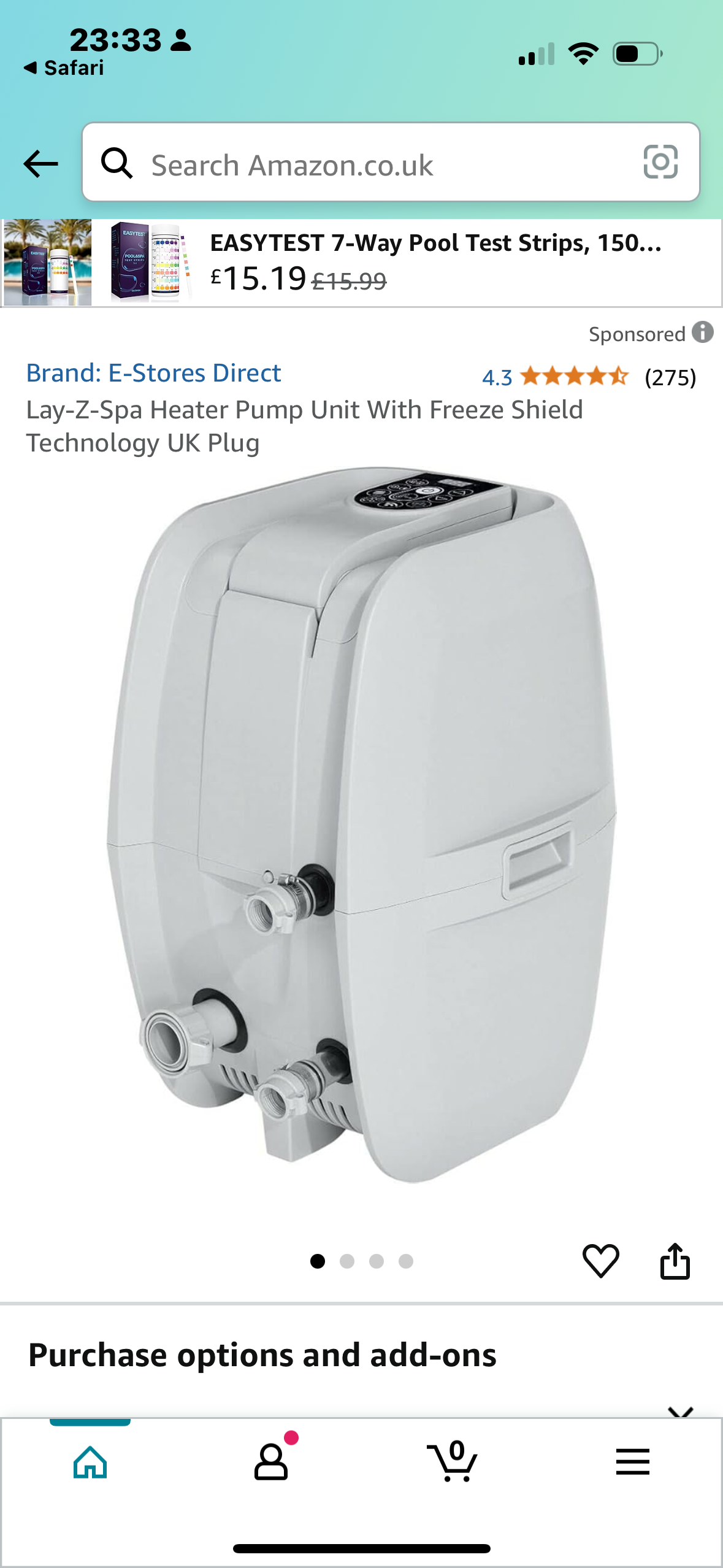
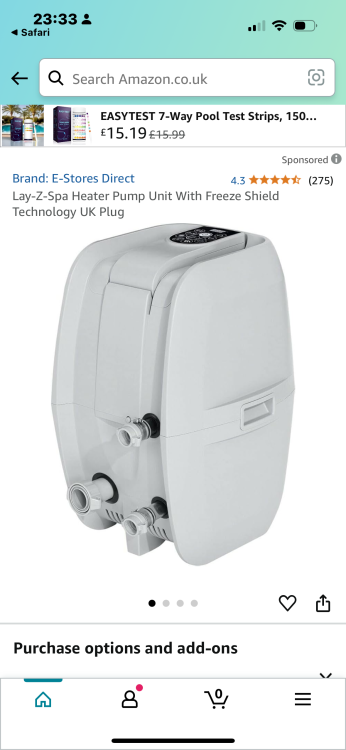
Heat direct with a small pool ASHP is a no brainer here, get a little portable outdoor unit and plug n play? or simpler again is: for change of £200, but direct electricity.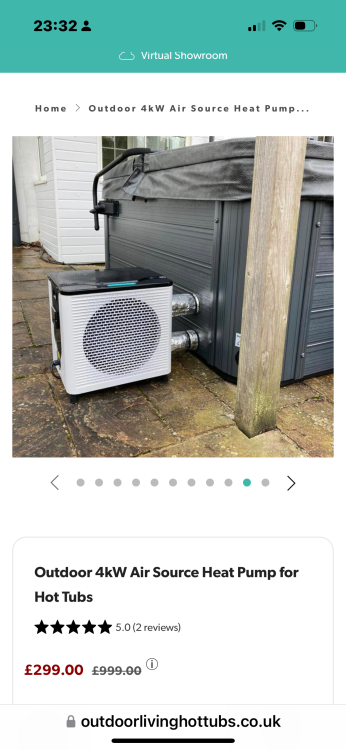
-
Heating Soaking Tub - Hot Water Tank or Inline heater?
Nickfromwales replied to mike2016's topic in Boilers & Hot Water Tanks
Top up or heat back up from ambient (cold)? Big difference, so how would heat be preserved to make you say top it up daily vs heat it daily? What’s the target temp of the then heated tub water? -
DIY’ing then? Probably better to discuss that on a new thread lol. Just trying to get an overview so heat loss and UFH picture is clearer. On that note, a full floor plan would help
-
Where to lap DPM with Marmox with split floor level?
Nickfromwales replied to lookseehear's topic in Brick & Block
FWIW, I prefer option 1 vs option 2, but with the DPC both meeting and lapping over, comes the challenge of bonding the mortar / adhesive beds under / over the plastic DPC. The other option would be to use a liquid DPM/C to separate at the mortar / adhesive joint. -
Where to lap DPM with Marmox with split floor level?
Nickfromwales replied to lookseehear's topic in Brick & Block
You can’t have the DPC up that high and under the tiles as they need to be bonded to the substrate with flexible tile adhesive. That needs to be dropped down under that upper block. Also, you won’t be able to tile that vertical PIR, so that’ll need swapping out to Marmox and you’ll need to set that back against the vertical sections with flexible tile adhesive. -
Oh and yes, defo sister new timbers both sides of every joist, extending as far under the preserved sections and perimeter as you practically can. Weight will not be a problem at the perimeter and sink, just focus on the shower area and WC.