


Temp
-
Posts
10690 -
Joined
-
Last visited
-
Days Won
43
Everything posted by Temp
-
They seem to be on the list here https://www.ada.org.uk/member_type/local-authorities/
-
Was the council a consultee when your planning application went in? Was the need to discharge mentioned in the spplication. If so I would write back to whoever asked for confirmation staring that "The LLFA is Cheshire West & Chester Borough Council who were a consultee during the planning process and raised no objections, comments or conditions". It they weren't consulted I would send the council details of your plans and PP by recorded delivery asking for approval. In the covering letter tell you comply with EA guidance will assume you have their approval if they raise no objection by some date (say two weeks time?). Suggest they ask for more time if they need it.
-
If the seller has started development can you still claim the CIL self build exemption (which has to be claimed before work starts on site)? I forget if someone has already found the answer to this.
-
Many of you will have heard of Goop, a liquid you put in tyres to automatically seal holes/punctures. Well it seems there is a similar tech for sealing houses... If you know why sealing is important skip to 2:21..
-
What soil type? Removing a tree can also cause foundation problems. Take proper advice before doing anything.
-
MT-TUA-17S-11-9240 not responding to input signal
Temp replied to readiescards's topic in Other Heating Systems
Usually there is some makers info and model numbers printed on the grey plastic somewhere but could be the side facing the wall :-( -
Will have a look and get back to you.
-
Both PLA and PETG are pretty rigid but I think 0.5mm should be plenty of wiggle room. My shower has a chrome plated stay to the top of the glass. There is a allen key bolt that clamps the glass. Bolt has some sort of nylon pad on the end.
-
White PTEG would be my recommendation as pretty sure I can get a 10m sample easily. There are few other colours are available but most are vivid colours you wouldn't want in a bathroom like lime green, translucent blue or black. Have a look on Amazon. I can print PETG or PLA. PLA is easiest to print and there are probably more colours but it's claimed to be biodegradable so not sure how long it lasts. PETG is a bit more fussy about the printer settings but should be stronger than PLA. Some black I printed recently came out OK.
-
Wouldn't do anything until you know its not blocked. Meanwhile you could measure the depth of water above the linear drain at various points. If you can find deeper water anywhere else in the same puddle that bit won't drain.
-
I have a single mid height stat on my thermal store set to 50C but I only have DHW and UFH (no rads). Seems plenty hot enough for showers and washing up.
-
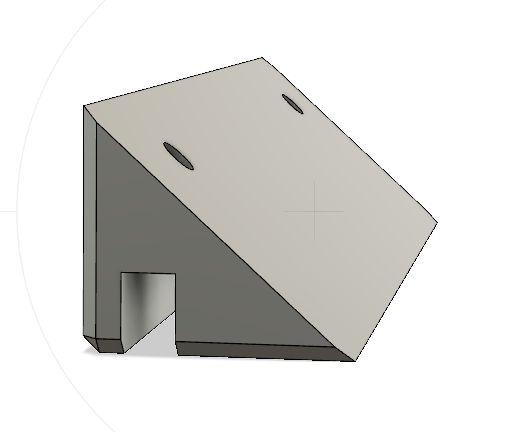
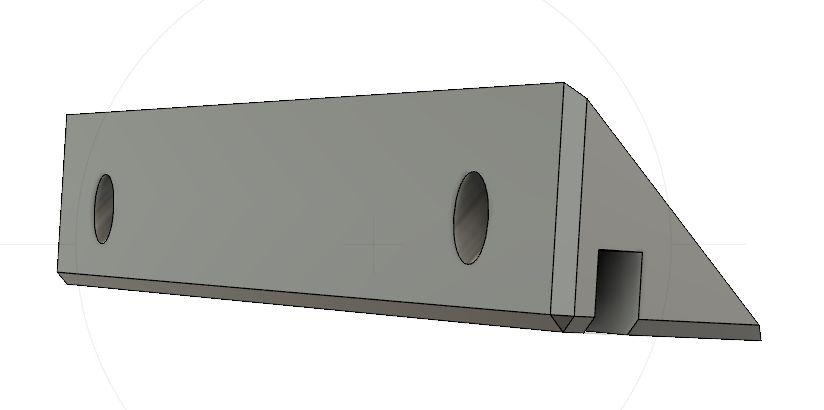
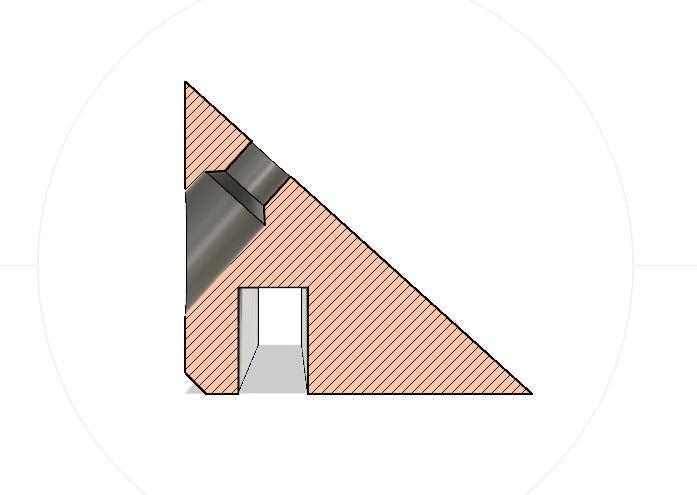
Just had a quick 15min play around with Fusion 360 over a cup of tea. At 150mm long and 25% infill Cura says it needs about 12m of filament which isn't much but more than a 10m sample. Holes might be better going up from underneath. Anyway have a think. I'm painting the church hall next door most of tomorrow.
-
I'm happy to have a go for a donation to BH. Currently I've only got Orange and Black PLA but have an idea... Does it need to be 150mm long? If it could be say 100mm long I think I could make one from a 10m sample of white PETG which would be stronger and possibly longer life. As drawn corners/edges would be quite sharp. I can easily add small bevel? Likewise could add fixing hole if you wanted to screw it to the ceiling. Just off to pick up my kids.
-
Amazon have one without handle for £71.. https://www.amazon.co.uk/OX-OX-P016612-Aluminium-Float-Multi-Colour/dp/B01M17S3SF/ref=sr_1_2?keywords=OX+Aluminium+Bull+Float&qid=1560425379&s=diy&sr=1-2
-
Magpies pulling silicone out from around PVC window frames!
Temp replied to Prof Tim Noakes's topic in Windows & Glazing
I think if its applied well they can't get it out. -
is it difficult to borrow if you have a deposit
Temp replied to Amateur bob's topic in Self Build Mortgages
Go ask them what sort of earnings multiple they are lending at the moment. Google found thus but it might be out of date?.. https://www.buildstore.co.uk/finance/selfbuildmortgages-article-6.html 3x joint income would mean they will lend you around £90K. 3.75x would mean they will lend you around £112K So you would have the plot and between £190-£212K to build the house. https://www.homebuilding.co.uk/average-self-builder-spend-report/ If you worked on £130 per square foot that's around 1400sqf/140sqm to 1600sqf/160sqm. Your mileage may vary as they say. -
Experiences with larch and cedar cladding
Temp replied to Nick1c's topic in General Construction Issues
If you go for T&G check if you should/shouldn't fully seat the T into the G. I had some doors made that used T&G. The folks that made it fully seated the boards so when the wood expanded the whole door bowed and looked pregnant. If they hadn't fully seated the T&G there wouldn't have been a problem.I'm not sure if the same applies to T&G cladding but I don't see why the same problem couldn't arise? Perhaps it depends on time of year/humidity levels when installed? -
Experiences with larch and cedar cladding
Temp replied to Nick1c's topic in General Construction Issues
I've only done horizontal oak cladding. Drilling was essential for that. Main issue is at the ends of planks. Lets say you have a joint between two planks. This is usually arranged to occur over a batten. If the batten is 2" wide each plank only has 1" over the batten. So you are nailing within 1" and possible less from the end of the plank. This makes it prone to splitting unless you pre-drill. Even then I drilled as far as possible from the end and at an angle into the batten. Use wide battens. Oaks also shrinks in length and having oversize hole helps stop the oak pulling the nails. Think about nail heads. You will most likely be using Stainless Steel or some other metal that doesn't corrode in a salty atmosphere. Some types are available with textured heads so that they don't reflect the sunlight quite as badly. Some timbers like oak also corrode nails if made from the wrong metal so check that. Unlike roof tiles oak planks aren't overlapped enough to prevent water going through joints between adjacent planks. So behind all butt joints I first nailed a 6" wide strip of DPM to the batten at the top and let the bottom end come out between the layers of planks. That way any water getting through a butt joint would be directed to the outside. Later trimmed off the exposed ends so you cant see the strips unless you look through a gap. -
Looks like the government might actually force a recall of Whirlpool tumble dryers... https://news.sky.com/story/whirlpool-faces-tumble-dryer-recall-notice-over-fire-fears-11739916
-
New quote from The Times today. Contrast that with yesterdays quote..
-
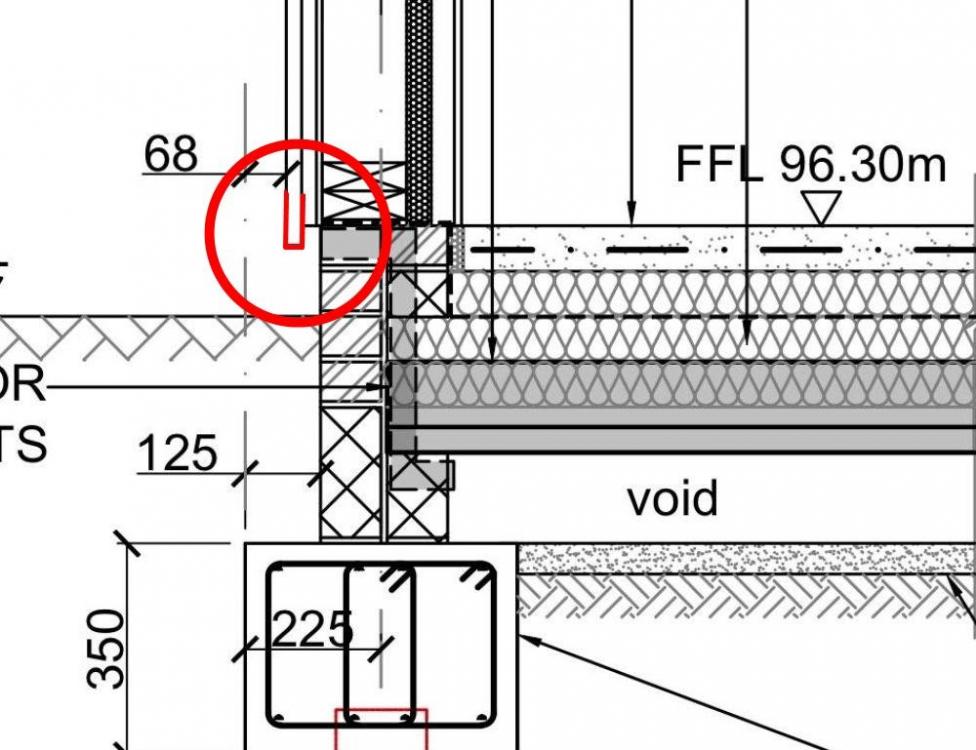
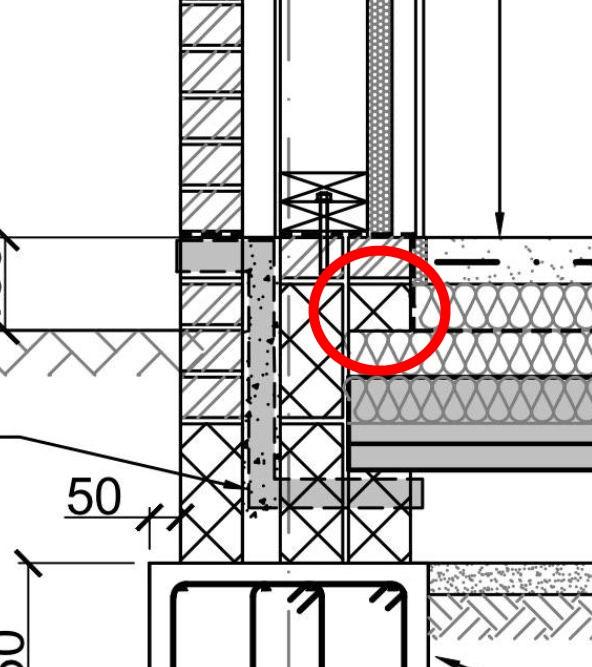
Regarding 3-3 Not very keen on the detailing. Shouldn't there be some sort of drip bead where I've shown to stop water running in under the cladding? Perhaps that's not shown because this is just the foundation detail drawing? Has the frame company provided any drawings? Again there appears to be a half block on the inside (see my earlier post).
-
Andrew - Cross section 1-1 appears to show a half block (?) resting on the insulation under the inner leaf? Not sure of the point of that. I recommend speaking to the frame company to see what they normally recommend. eg Ask if the full width of the frame must be supported or is a single width 140mm block enough.
-
Google reviews give Opun 3.7 out of 5. Worth a look at some of those reviews. I would question how anyone can offer a good quality national service as they will most likely be contracting the work to unknown local firms. I think always better to know who is doing the work and go to them direct.
-
Vertical wire balustrading tensioning
Temp replied to D Walter's topic in General Construction Issues
Perhaps I misunderstand but.. Why tension the wires at both ends? If I've understood correctly that's going to be limited by the upward force you are allowed to apply to the end of the "cantilevered" stair treads (before they start bending upwards). You might need to run the wires down to the ground and anchor them there, using a double ended adjuster at tread level. But then how much tension can you put on the top end/handrail? I think you need to get this properly designed. I doubt the strength of the swage is an issue. Google finds... http://www.ybw.com/forums/archive/index.php/t-270417.html http://www.cruisersforum.com/forums/f116/strength-of-cable-terminations-wire-rope-grips-vs-swaged-131788.html -
I don't think you have told us how much depth you have available and what sort of insulation you plan. How bad is the existing concrete? Given you want to tile the floor I think I would consider going for .. Tiles Screed (and perimeter insulation) Insulation DPM Sand blind Existing concrete floor No void so no need for air bricks to ventilate under it. Tiling wood floors is possible but it's best to get the thing as rigid as possible starting with adequate joists (perhaps not bare minimum) and possibly two layers of WBP on top screwed down (lots of screws). Then follow instructions for flexible tile adhesive.



