Temp
-
Posts
10641 -
Joined
-
Last visited
-
Days Won
43
Everything posted by Temp
-
Write to your MP by snail mail. In the first sentence of you letter say something like... "Please could you write to Scottish Water asking why it's taking so long to make a simple connection to solve the problem we have with lead in our water pipe" Then you can explain the problem as per your OP above. Provide the address for SW. Then all your MP has to do is read the first line and get his secretary to dash off a letter.
-
I wonder if the pump is stalled and somehow current limits so fuse doesn't blow? Repeat the voltage measurements. Measure voltage at the pump. At the output of the switch. Input to the switch. Check the neutral to the pump. With power off measure resistance/ continuity from neutral at the pump to neutral as far away from the pump as your meter leads will reach.
-
We have two similar flow switches. Have had one fail after 15-16 years. Did you mount it the right way up?
-
zero rating
Temp replied to steady's topic in Self Build VAT, Community Infrastructure Levy (CIL), S106 & Tax
The solution might be a sale into a company you set up (or a relative or spouse or child trust?) before they let it out. There would be stamp duty to pay but that will be less than VAT. The CIL might also be an issue if you claimed the self build exemption. Speak to an accountant that understands these issue. -
zero rating
Temp replied to steady's topic in Self Build VAT, Community Infrastructure Levy (CIL), S106 & Tax
This might be an easier read.. https://www.macfarlanes.com/what-we-think/in-depth/2017/build-to-rent-vat-issues/ -
zero rating
Temp replied to steady's topic in Self Build VAT, Community Infrastructure Levy (CIL), S106 & Tax
It sounds like you paid a builder to construct it? In that case he must zero rate everything to you. This is my understanding, I'm not an accountant... If you then let it out you could be required to pay the VAT that the builder did not charge you. In summary, there is a difference between "zero rated" and "exempt" for VAT. A new build is zero rated when sold. A lease is exempt. See section 2.3 and 2.3.1.. https://www.gov.uk/guidance/buildings-and-construction-vat-notice-708 -
I'm retired now but when I was project managing electronics projects we had this sort of problem all the time. It was near impossible to find people that thought about other aspects of the job. Its true in a lot of industries, I'm sure garages curse and swear about car designers for not thinking about servicing.
-
I think you will need to look at cable operated lever flushes to see if you can change the handle to one the right colour.
-
Cable operated lever flush. Replace lever with your choice? Not sure if compatible with your flush valve though. Perhaps replace the flush valve as well ? https://www.replacementbathroom.co.uk/cable-operated-dual-flush-outlet-valve---lever-operated-22631-p.asp Edit.. Actually the handle on that looks a bit non standard.
-
How to tie blockwork to a steel box column?
Temp replied to NRMartin's topic in General Self Build & DIY Discussion
+1 "Starter wall ties" fixed to the column?.jpg.f9860daaab3b743fa0c27f5c5929df07.jpg)
-
Some old tools for carding sheeps wool had very coarse spikes like that.
-
Yes they can fail and once they open they seem to open or leak more easily.
-
UH - Thermostat won't reach set room temperature in colder weather.
Temp replied to nathan656's topic in Underfloor Heating
Think I would try turning up the flow rate. -
What do you all think about the recent sea temps?
Temp replied to gavztheouch's topic in Environmental Building Politics
Hot Model... -
Only if they can convince the Vat man they are living in separate houses. Ditto for the CIL. Got any other relatives?
-
Levelling Garden - what to do by the fence?
Temp replied to machtucker's topic in Landscaping, Decking & Patios
Extend the retaining wall? -
No but the drains were pressure tested so they are air tight at least at the very low pressures of the test. Would a rigid adapter be better?.. https://www.plastics-express.co.uk/110mm-single-waste-adaptor-40mm-p-pte384?gad_source=1&gclid=CjwKCAiA0PuuBhBsEiwAS7fsNd5pdI_QWgEGsQK9BDJaplSn8aLIZC2QICfQYJdVtHmSE7pAMV4rqBoCWVEQAvD_BwE
-
No but the drains were pressure tested so they are air tight at least at the very low pressures of the test.
-
My understanding is that if you build then let out a house it's not eligible for zero rating. It something to do with the subtle difference between zero rating and exempt. Even if it could be zero rated I don't think you can use the self build reclaim scheme to recover the VAT on that house. See comment by @shuff27
-
We have same 110mm coming up through floor, rubber adaptor to 40mm and a trap under the sink. Been fine since 2007.
-
Building plot conveyancing fees?
Temp replied to flanagaj's topic in General Self Build & DIY Discussion
I agree that buying a plot is more work but good luck finding a conveyancer that will do that extra work. I wasn't able to find one familiar with conveyancing a plot and had to do all the due diligence stuff myself. -
Timberlok vs Coach Screws. is there a difference?
Temp replied to Thorfun's topic in General Joinery
Are you sure you want to use either? Both have exposed heads rather than countersunk if that matters. Timberlok and similar tend to have thinner shank and sharper threads. Coach screws tend to be fatter and more crudely manufactured. I'd suggest drilling a pilot hole with either. Make a test on scrap wood to avoid shearing off a bolt in the actual workpiece. Could go into screwfix or toolstation and ask to see some. -
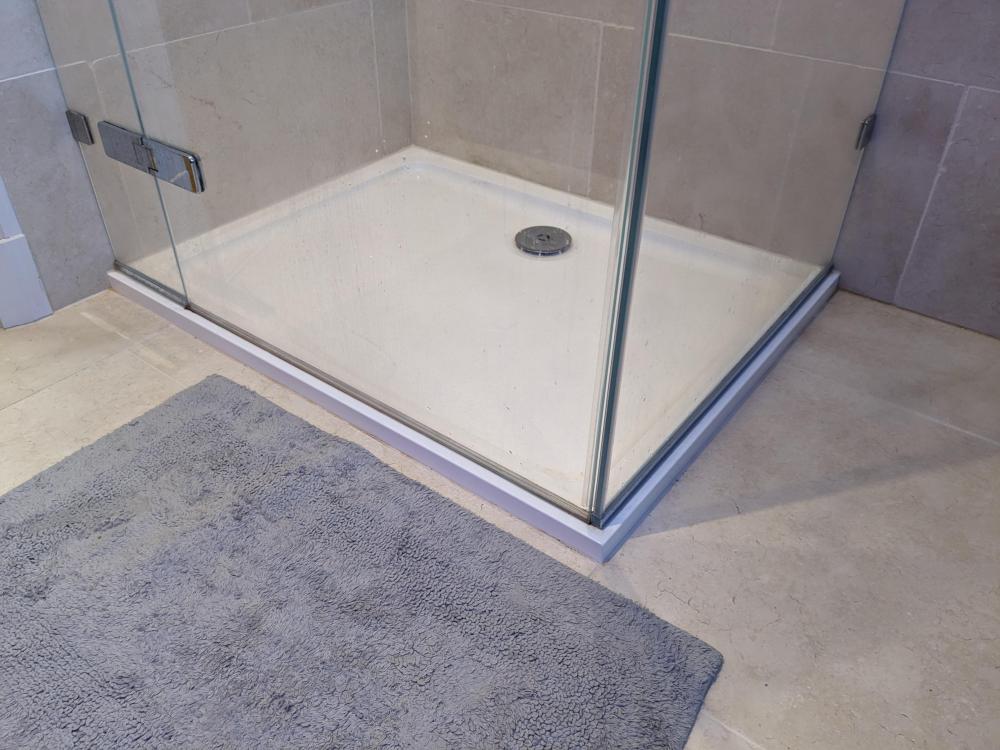
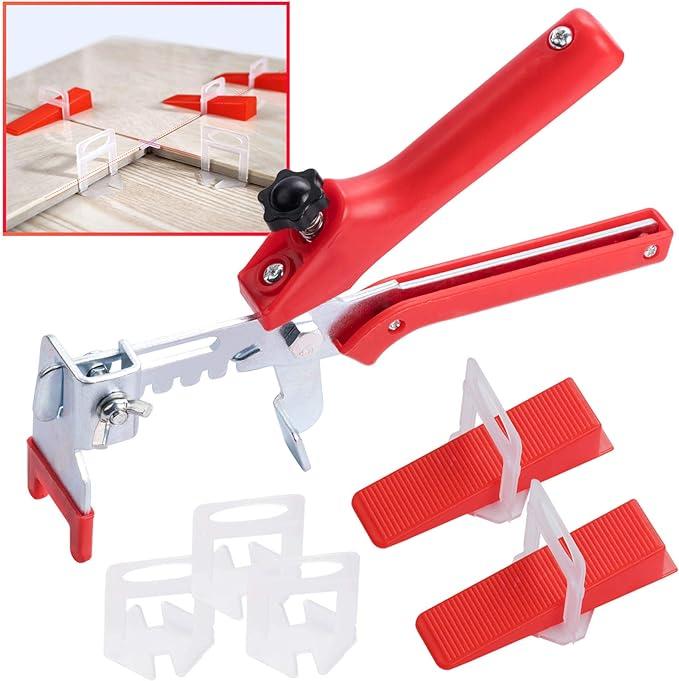
That will be interesting/challenging. I did a bathroom in travertine last year but they were only 600 x 400 in landscape/brick bond. I thought they were pretty heavy and yours will be three times heavier than mine. Have you got data? I estimate over 25kg each? More when back buttered with adhesive. This is what I did but its probably not the best approach for you... I use a laser level to fix a batten to the wall at about 3/4 of a tile height. Screw it to the wall well! The exact height depends on the height of the ceiling - I aim to avoid having a narrow strip of tile at either top or bottom. Usually you have about 1/2 or 3/4 of a tile. Then I tile up from the batten. I work pretty slow so I use regular or slow adhesive and did just one row a day. Once the walls are done I do the floor. Then remove the batten on the walls and cut the bottom row of wall tiles to fit. I think in your case I would do it differently... I'd use a laser level to find the highest point of the floor. Then draw a line at one tile height (1.2m) above that. Then you can pack under the tiles as required to get the tops all level. Then later the floor tiles should cover any gaps at the bottom. It was a struggle to level the stone I used because it wasn't a uniform thickness. The system I had (below) tries to level both front and back of the tile which isn't possible if they are different thicknesses. If your stone is nice and uniform thickness it probably works ok. In my case there was a lot of cursing and thumping with fists and a rubber mallet. I question if this system is strong enough to pull very large tiles in and out. More likely the plastic hoops will stretch.
-
PS: A common problem with changing to a pitched roof is that there are windows on the first floor that limit how high the wall plate can be, and tiles and slates have a minimum pitch. I think typical eaves height is around 2.5m. If you can set the wall plate end at 4m that's a fall of 4-2.5 = 1.5m over 3m. That's a pitch of Arctan(1.5/3) = 26 degrees. Many tiles are limited to 30-35 degrees. Some are OK down to 15 degrees (may depend on exposure).
-
It can sometimes get a bit tricky when you totally demolish something. I couldn't find a government source that explicitly covered this situation but.. https://www.hcrlaw.com/blog/demolition-when-is-planning-permission-needed/ However it sounds like you are well underway so I probably wouldn't bother. For safety I would check you comply with the rules for a new extension buried in multiple places in here... https://assets.publishing.service.gov.uk/media/5d77afc8e5274a27cdb2c9e9/190910_Tech_Guide_for_publishing.pdf I think the main issues might be the height. See top of page 17 which limits the height to 4m or 3m within 2m of the boundary.. and page 22.. Think there are also rules on the use of similar materials to the house.