


Temp
-
Posts
10641 -
Joined
-
Last visited
-
Days Won
43
Everything posted by Temp
-
Its all in VAT 708. In some cases (charity buildings?) HMRC require you to give the contractor a "certificate" which is basically a letter with your details, the plot details and your planning reference number. Also has words such as "I certify your supply relates to a non-residential building being converted to a dwelling and accordingly qualifies for 5% VAT". Think there is an example in VAT 708. I don't believe you need to give him a certificate but sometimes it can help. Several people on the forum have made up their own certificate.
-
Main Beams: The guide only covers main beams (eg the beam parallel with the wall) upto 3.4m (Table 3.1). If you want to use that guide you would need three posts to reduce span to 2m. In that case they suggest main beams are 195 x 44 C16 doubled up. Joists: Table 4 suggests 195 x 45 C16 for a 3m span. I don't know/think you can order oak to C16. May need to specify "Structural grade oak". I recommend any metalwork in contact with the oak is stainless steel as oak can corrode other metals.
-
I've not read all of this yet but it looks like it has the info needed and useful construction details... https://www.marley.co.uk/-/media/Files/Fixing-Instructions/TDCA-Raised-decks.ashx?la=en&hash=D5C139F512D2FF525C1A73044D89FA62 eg Beam Sizes and post spacing - Para 3.4 and Table 3.1 Wall plate - 3.6 Joist - 3.7 Bracing - 3.8
-
How old is it? Depending on how many leaks and how long its been like that the problem could range from just a few damaged slates need replacing to the whole roof structure needs replacing.
-
Paying for building regs (warrant) work at start
Temp replied to davidc's topic in Surveyors & Architects
What has the Architect been contracted to to? In England it's common to contract the Architect for work up to and including Building Control Approval. That means after the drawings have been sent to Building Control and Building Control have accepted them so work can start. In some cases the Architect is also hired to oversee the construction work for a fixed fee, or just provide time at an hourly rate to modify drawings if necessary during construction. -
Comments requested on proposed design
Temp replied to TomBee's topic in New House & Self Build Design
I actually liked the elevations but first reaction was it will be expensive to build. I agree ther is a lot of circulation space and effectively three separate living rooms on ground floor. None of which looks like a main/large living room. -
I think what will make this work is the 9mm OSB. It should stop air in the 50mm ventilated cavity getting around the gaps in the PIR. I wouldn't go for PIR without it or some other gap sealer.
-
We purchased a house from a surveyor. After having our own done by another surveyor we went back for another look. Chatting to the wife she explains our surveyor had been there ages, lifting manholes and getting her to run taps, going up in the loft etc. Turning to her husband she says "He spent far longer here than you do on a house". We made a mental note never to use his company.
-
Washing Machine / Dishwasher Cleaner
Temp replied to Onoff's topic in Kitchen & Household Appliances
We put cheap white vinegar in our dishwasher. Set machine going on a hot wash and wait for the initial pump out to finish. Then open door and pour it in. Can also use it as rinse aid. -
Does the site already have planning permission?
-
And perhaps use plumbers lube (except where planning to add sealer).
-
+1 Its quite likely there is a ventilated gap on the cold side of the insulation so if the insulation isn't tight fitting cold air gets through the gaps to the "warm" side. There are many ways a good design can be ruined by poor construction. You could also put another layer of insulation fixed to the rafters in addition to taping joints. However this only deals with the problem in the cupboards. Its likely you have same issue behind the plasterboard
-
It won't behave any different. After all the top layer is the same.
-
+1. There is a world of difference between.. Solid wood - not always stable, can be an issue with UFH. Laminate - A photo of wood stuck to something that might once have been near a tree. Engineered wood - typically 4-6mm of solid wood glued to 7-16mm of plywood. The latter is indistinguishable from solid wood once down. Its far more stable than solid wood so you can have wider boards with UFH with less risk of warping/cupping. You can even sand it as many times as solid wood because both fail once down to the groove (assuming T&G boards are used). Shop around as the quality of Engineered wood varies. You can buy it ready finished or use Osmo Hardwax oil. The good stuff can cost more than solid wood. Try asking this place for sample of ready finished.. http://www.woodsofwales.co.uk/ I have no connection other than as a customer some 13 years ago.
-
I stand corrected (but that's ok, I'm used to it, I'm married).
-
Any feasible method to reduce RSJ cold bridge
Temp replied to tanneja's topic in RSJs, Lintels & Steelwork
Re: Fire protection. I think this is still current. https://www.planningportal.co.uk/info/200130/common_projects/17/extensions/9 Re: Thermal Insulation: As much as you can get as per the cross section I posted. Ideally the roof members would rest on top of the beam rather than against the web so there is more room for insulation above the beam. Is there something (like a window on the first floor) stopping you making the roof thicker by putting the insulation above the ceiling joists? Edit: I see your diagram shows a "cold roof" construction that requires ventilation. Could you switch to a "warm roof" construction that puts the insulation above the rafters and UB and doesn't need ventilation? https://www.jtcroofing.co.uk/news/warm-flat-roof-cold-flat-roof/ -
Any feasible method to reduce RSJ cold bridge
Temp replied to tanneja's topic in RSJs, Lintels & Steelwork
It depends on the height of the roof/celiling. The beam is either "in the ceiling" or "in the wall" if you get what I mean. Ours are in the wall so the inside had vertical patches of plasterboard covering the beam and then the wall was plastered. It sounds like your beam is higher (or the ceiling lower) so the beam is best hidden in the ceiling as per that cross section. Either use taller ceiling joists and notch them for the bottom of the beam or fix battens to the underside so the plasterboard is a bit lower and covers the beam. -
I think it will have to be. If the Building Owner is to be given new responsibilities some legislation will be required so he can pass on the costs. In my relatives case the maintenance charge is nothing to do with the Freeholder. Until recently maintenance went into a fund (possibly a trust) managed by a residents association. The things they could collect funds for was limited by wording in the deeds. I don't think the freeholder has any powers to collect "maintenance". Indeed I have no idea how the freeholder pays for insurance given the ground rent for about half the flats is now £1 a year (which he doesn't collect). For another flat the leaseholders are shareholders (£1) in a company set up to administer maintenance. Again maintenance of that block is nothing to do with the Building freehold owner.
-
That's quite small. The table I'm using for my computer would fit in but it would probably have to be assembled inside unless one whole wall was a door. Plan the layout carefully and think about reflections off the computer screen as it will be hard to rearrange things later. I assume you mean between the studs. That's what I did. Outside clad with ply (for anti racking) then membrane, battens and weatherboarding. Inside lined with plasterboard or painted plywood. As for the electrics.. You should get an electrician to do it (and he will notify the BCO under Part P) but can probably save some money if you lay the cable yourself. There are several different options depending on the exact set up. https://electrical.theiet.org/media/1695/electrical-installations-outdoors-a-supply-to-a-detached-outbuilding.pdf I went for figure 3.. An underground cable from the CU in the house to a so called "Garage CU" in the outbuilding. This was laid in conduit but probably no need. The Garage CU has two ways (one for power and one for lighting). An earth rod is installed near the outbuilding connects to the garage CU. You might consider making the eaves high enough so you can attach a sun sail and sit outside under that in summer?
-
Presumably the "Building Owner" will be the freeholder not the leaseholder. Its not clear the freeholder has any mechanism to charge the leaseholder. The ground rent in many cases is fixed. For one flat I know about its fixed at £1 a year following a lease extension in 2013. There is a parliamentary report out.. https://commonslibrary.parliament.uk/research-briefings/cbp-8244/ I would agree with that. Only the government can sort out this legal quagmire. It may require retrospective legislation. The government has always been reluctant to do that though.
-
Any feasible method to reduce RSJ cold bridge
Temp replied to tanneja's topic in RSJs, Lintels & Steelwork
PS The BCO will almost certainly want the beam clad with plasterboard to meet fire regs. So no exposed inner edge should be showing. -
Any feasible method to reduce RSJ cold bridge
Temp replied to tanneja's topic in RSJs, Lintels & Steelwork
Unless I'm missing something the UB/RSJ won't be 300mm wide. Has someone specified a particular size UB/RSJ for a reason compared to something like an insulated lintel? Whats the span? Heavy doors? Here is a section google forund..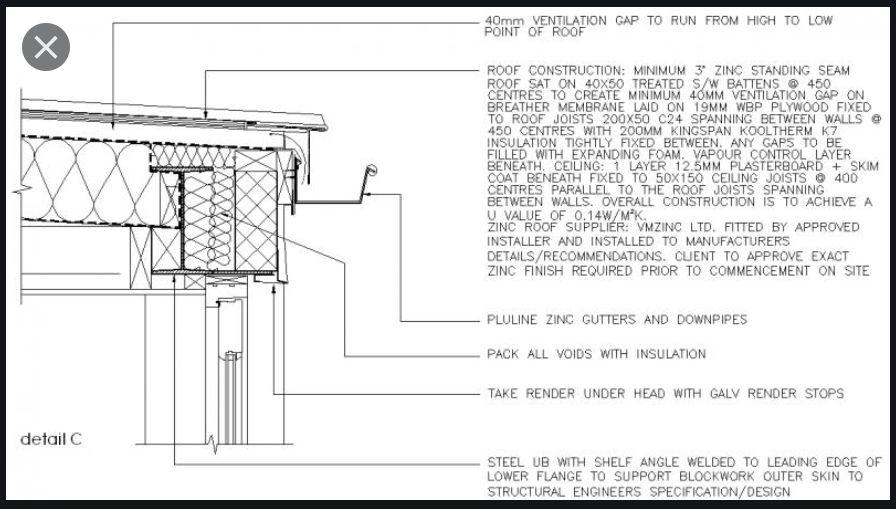
-
djh over on the Green Building Forum posted a link to this commentary on the the proposed Building Safety Bill.. https://www.insidehousing.co.uk/insight/insight/what-is-in-the-governments-building-safety-bill-seven-key-takeaways-67235 It proposes defining who is accountable for safety at various stages and a new regulator that will check project handovers between stages. After construction the owner becomes the accountable person responsible for safety certification. They plan to introduce it for existing buildings.
-
You probably already know but.. They will let you use a spreadsheet to add it all up provided you keep the headings the same as the forms. But as above they want a printed copy with the original receipts sorted in date order. I numbered mine to match a column I added to the spreadsheet.
-
During our final site inspection our BCO checked .. Every pane of window glass for a coating with some sort of meter. Every pane of glass that should be safety glass for standards marks (etched in a corner). Watched our builder pressure test the drains. Checked opening windows for clear opening width. Asked about ventilation for our wood burner.


