MJNewton
-
Posts
1354 -
Joined
-
Last visited
-
Days Won
1
Everything posted by MJNewton
-
As would resilient bars (I think) which I suppose is a form of counter batonning. It obviously helps with reduce noise transmission which is why I thought it worth mentioning. I learnt this having ripped my lounge ceiling down (boards and bars) and discovering a couple of joists were creaking when walked on. It turns out it was the nails used in the joist hangers - the joists were moving ever so slightly moving causing them to scrape on the metal. Replacing the nails with screws cured it, but then so would replacing the resilient bars (which I did eventually) given we didn't have the issue beforehand.
-

GRP (God-awful Rubbish Period)
MJNewton commented on canalsiderenovation's blog entry in Canalside Bungalow Renovation
Ha... Good question. To be honest I try not to dwell on it given we are where we are! I seem to have got increasingly picky - obsessive in fact - about detail and perfection and I really don't like it. It takes the fun out of everything and makes me feel so anxious. This extension build has really exercised this affliction but to the point now where actually I *expect* things to go 'wrong' (to my picky eyes!), and can almost laugh about it when it does given how predictable it has become. My Dad's the same so it could be result of nature, if not nurture. I hasten to add though that the trades have long gone... this is now me screwing up. For example I haven't done the best job of the final decoration of our new family room - or at least in my mind I haven't. Everyone else thinks it's amazing. I'm not pleased though. That said, having inspected the plaster/paint finish on the rest of the existing house I've realised we've been living in a right state without knowing it and yet for some reason it never bothered me one bit, and doesn't now! A comment in an American decorating column talking about perfection really struck a chord with me - something along the lines of 'you stop focusing/worrying about something when its no longer the newest thing in the room', which when you substitute the right words for the particular situation you're in is really true I think. Back to your question though; I am satisfied that our roof won't leak - or at least no sooner than anyone elses - and that's surely what matters given it's the sole job of the roof. My eye does get drawn to other people's flat roofs - even on drone shots on TV I find myself evaluating any flat roof I can see (and there's some shockers out there!) - so I think there's still a niggle in my mind about how mine stacks up against others. It also pleases me to see a small pool of water on someone elses roof and them seemingly being able to carry on with their lives. I don't regret not getting the whole thing ripped up and replaced. I think! It might be a bit different in my case as I am convinced the fall was just a mistake from a likeable, honest, respectable and otherwise competent builder. I can't bring myself to punish someone for that, but maybe I'm soft and not seeing it wouldn't actually be that happening. -
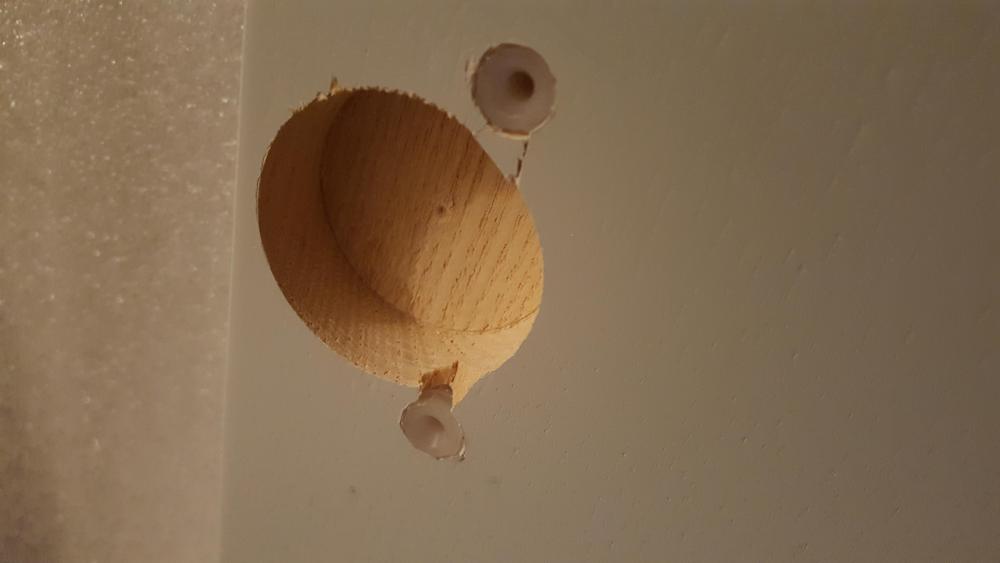
Another update to my experience a few posts back: Leaving aside the fact these damage/incorrect/missing item problems shouldn't really happen, DIY Kitchens have been really good in sorting out them out and I've never been left feeling I have to fight for a resolution; it's all just been about the nuances and options for each particular case. The missing items have all been sorted, as have the replacement of the wrongly-sent drawers. I've accepted the unit that I asked to be dry assembled but was sent fully glued and screwed (well, stapled!) and the cracked drawer front has been replaced. The cabinet door with permanent marker was sorted with WD40 and the one with a chip was replaced... but the replacement is also damaged! The pre-cut hinge hole screw holes don't look great: Those inserts are apparently Blum's 'knock-in dowels' intended to improve on chipboard screws (alone). I am assuming, however, there must surely be some compromise in strength in the situation above? I've calmly put my concerns forward but am awaiting a response (sometimes it's been instant, sometimes a couple of days - I think they're maxed out). Should I insist on (another!) replacement? Incidentally, this door will be connected to an integrated fridge/freezer door so I don't know if that causes more or less stress on hinges than a 'normal' cupboard would. For once I'm fairly relaxed about these issues and not in any rush as there's nothing stopping me from cracking on with the general installation (well, there is, but it's nothing to do with DIY Kitchens - just me being slow). It's definitely helped that there's been no resistance to resolution. I'm also really pleased with the quality of the rest of the kitchen. The Blum components - drawers in particular - are absolutely excellent, but of course they're not exclusive to DIY Kitchens. Incidentally, the replacement items arrived on a one-man delivery van who appeared to be basically driving round the entire South West dropping off and picking up remedial items and, presumably, one-off purchases that they allow from existing customers. As would be expected, all my stuff was right at the back of the van and I must say I felt sorry for the next customer on the round who thought he'd bought a shiny new oven but actually had bought a step/climbing aid for the guy to use to repeatedly clamber over everything. He was also being a bit rough with my stuff, but thankfully the packaging is really good and I ended up hopping onboard myself to give him a hand (actually, just to save my own stuff and that guy's oven!).
-
GRP (God-awful Rubbish Period)
MJNewton commented on canalsiderenovation's blog entry in Canalside Bungalow Renovation
This post gave me a sense of deja vu following similar issues I had a couple of years back, except in my case it was using a liquid membrane coating. Our roof had a fall issue although it did have a slight onel, just not as big/consistent a one as is generally advised as discussed above. The issue with our coating was also a case of arguably-shoddy workmanship in areas (combined with a fussy customer who panics about everything but I'm not suggesting that's you here!). We ended up not ripping the roof up given the potential risk of damage (known and unknown, noting there was also a very-well built and dimensioned roof lantern cutout taking up the majority) to the rest of the works and the fact that our roof coating was specified as being suitable for perfectly flat roofs anyway (and apparently this being a common installation in other countries that moved on from felt etc many years ago). The poor finish in some areas was something I could learn to live with given they gave it another coating for added reassurance (to me as I was the only one worried) regarding waterproofness. It also helped that whilst I didn't know the roofer I did trust and respect the builder who subbed him and so was willing to go along with the proposal following some input from the technical director of the company that supplied the product. I think you've had all the technical guidance you need already; all I would add is the advice not to let it consume you. I was really bothered by it - upset even - and just reading this thread reminded me how bad it was! Incidentally, our poor fall is something that still haunts me a little bit today... the roof gets really dirty and I've always wondered if a greater fall would've reduced this. Perhaps it's more to do with the grey colour and slightly sheltered location though, particularly as even the full-pitch roof on the main house gets moss, lichens and no doubt loads of dirt trapped on it and that doesn't seem to bother me. But then I can't see that 2m from a bedroom window... -
...and if the valve refuses to fully stop the water despite being closed then screw on a blanking cap. (I prefer to do that anyway with any unused valves for belt and braces)
-
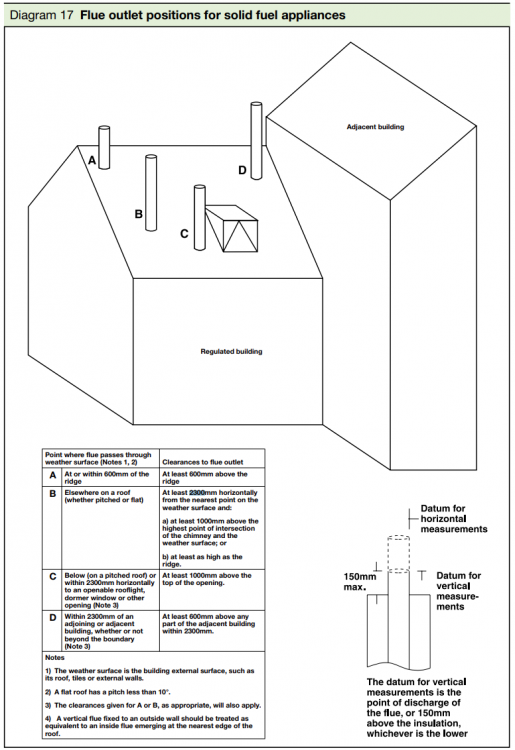
Sorry, yes, I agree it'd be B and so 1000mm above the surface. I thought you were suggesting/thinking 2300mm above the surface...
-
But you said 'tomato'!
-
I didn't see Note 4! Good that that's there as it makes your situation clearly covered by it. I'd say it means it should be 600mm above the roof surface though (not 2300mm which I suspect was said in error).
-
I can totally understand your position, and would myself be sick with the stress of both the poor quality and follow up. However, given the options with almost-guaranteed good outcomes are limited (pay by credit card next time!) I agree just take the £55 for your own pocket and deal with - perhaps even accept - what you've got. In time they won't be visible, particularly with a bit of filler. I wouldn't bother changing the hardware. Aim to look back on this one day and laugh (even hysterically if need be!). Life's too short. (Note: I don't practice what I preach but that doesn't make it any less valid!)
-
I think Diagram 17 of Approved Document J is relevant - or least helpful - here, however your flue doesn't technically pass through the roof as a 'weather surface'... Even so, I would expect it to be following the principles relating to being within 2300mm of a window (in which case it should be 1000mm higher than the top of it) or being within 2300mm of a building (in which case is should be 600mm above the highest part within that 2300mm). Hard to tell from the photos but is it within 600mm of the ridge too? If so, I would expect it to be following the rule about needing to be 600mm higher than it just as it would need to be if poking through the roof at the point. I'm no expert though - just a lay man attempting to interpret the guidance - but I would be expecting one of either 600mm or 1000mm rather than managing to avoid all of these rules entirely by virtue of it not actually poking through the roof as will surely still be similarly affected by it in terms of getting/keeping combustion products out of the building. Be careful what you wish for though as it might be perfectly safe as it is, and look better than if it were to be made taller!
-
Ah, I see what you mean. Ours was just screwed in place but then it was just a bog standard shower screen above a bath so was only hanging on the wall. You luxury bathroom outfitters may well have more complex setups and fixing requirements than this!
-
If you don't have an AAV what do you have? Or is the toilet connected straight in to the end of the soil stack (i.e. not branched into it)? An AAV serves to allow air *in* to the system (without letting smells out) and its absence could certainly lead to smells if there was just an open pipe (which doesn't appear to be the case here) or if any traps were being sucked dry because of negative pressure from flushing. I think you need to find the source of the smell - is it coming from the toiler, the sink, bath etc - rather than just pinning it down to the room. With it being so strong I would expect you to be able to pinpoint the source. Hopefully it's a trap being siphoned dry in which case an acceptable fix might simply be a deeper or waterless trap. Finally, they do say if you want a job doing well do it yourself so I think I'd be focussing on diagnosing/solving it myself in the first instance rather than allow the stress of chasing and poking plumbers to add to the stress of the problem itself.
-
Yes, I'm finding nearly all the appliances I shortlisted for consideration are showing stock issues - and these are all fairly run-of-the-mill models and so likely normally manufactured in bulk and readily available. I'm sure the prices have gone up since I was first looking (pre/early lockdown) too.
-
I may has misunderstood what you're talking about here, but I remember the installation instructions for our shower door frame emphasising the importance of only siliconing one side of the structure (the outside), presumably to allow any water that can get in to get out again. (Annoying when given dire warnings in instructions there is no explanation why)
-
We paid £300 to an Architectural Technician for a consultation and BR drawings for a fairly conventional 4.5m x 3m single-storey extension with knock-through, nearly-full-width sliding doors, flat roof and lantern. He specified the construction methods, insulation types, door lintel etc and did the calcs for the knockthrough beams. With such a simple design there was evidently limited need for original contents and so it was likely all a copy-and-paste from previous work and experience but even so we felt it very good value for money, and I did wonder how he even broke even given the the time to produce the drawings, answering questions and tweaking things for us. A bit slow mind; perhaps that's the price we paid, but we weren't in a rush and he was a nice chap which counts a lot for me. No BR application (I did that; £450) and the schedule of works was handled by the builder. Whilst the drawings were arguably not essential, we liked having them and all the builders providing quotes seemed to appreciate them too as it remove any ambiguity about what we wanted and were expecting. One also said it helped demonstrate commitment and that we weren't just kicking tyres like many do.
-
One for @onoff or @prodave: backbox trubbles
MJNewton replied to ToughButterCup's topic in Power Circuits
I've had success in the past just bending the lug in a bit. This presents a slightly smaller hole for the screw and also applies a bit of sideways pressure to aid grip on whatever thread exists. -
As above, but they might not be shown. Ours - for a house on a 2007-built estate - doesn't show them. Judging by who has replaced what fence over the years though there does however appear to have been a convention followed that you own the ones to the left when facing the house from the front. Don't know if that's a local thing though, perhaps very local! It also seems conventional to have the 'nice' face facing outwards from the owners property. I know some people don't like the idea of this, but something that's always stuck with me is one person's view that having your fence 'facing' outwards fits with the idea of you keeping other people out rather than them keeping you out, if you see what I mean!
-
To add: Whilst a bit late now, but maybe useful for the archives and others, I bought these from BPC which are half the price of the Airflow plenums and simply require a standard 125mm pipe (~£10/2m) to bridge the gap to the ceiling and vent: Is it too late to return yours? For £12 saving per plenum - not to mention a simpler life (got a 3rd old myself so I understand the need for that!) - I'd recommend doing so if you can...
-
I think you are doing it right, and as you say there are photos/videos of these type of plenums protruding through the ceiling (prior to trimming). Indeed it's effectively what most are like, even those that have a separate top section and pipe. Have you enquired with BPC? Maybe it is standard practice to cut with a 125/127mm holesaw and then trim further with a drywall saw to fit. A shame as holesaws make beautifully neat holes with ease!
-
Do i need structural calcs for a roof lantern?
MJNewton replied to carlosdeanos's topic in Flat Roofs
For what it's worth, our architect - who also did the structural calcs for other parts of the project - specified 47x170 C24 joists at 400mm centres for our 3.2m extension span and tripled them up either side of a 220kg(?) lantern. I don't know if there were any calcs behind this - could well have just been experience / rule of thumb. Building Control were happy, but that doesn't mean it wasn't over-specified. -
MVHR - Intake and exhaust ducts lenghts
MJNewton replied to NickK's topic in Mechanical Ventilation with Heat Recovery (MVHR)
I'd focus more on the straightness of runs rather than the length, and making sure they are well insulated. -
They're called Architectural Technicians if that helps you find one. (Or were you after a name individual? I wouldn't have thought that necessary as the service you require is mainstream and so there should be plenty local to you which can be helpful if there are any nuances with how your particular BC operates)
-
What plenums are you using, and are you sure they're not intended to be used with a short section of 125mm ducting between them and the ceiling terminal? (Thus meaning you'd be cutting a 125/127mm hole in the ceiling, which I thought was the de facto standard)
-
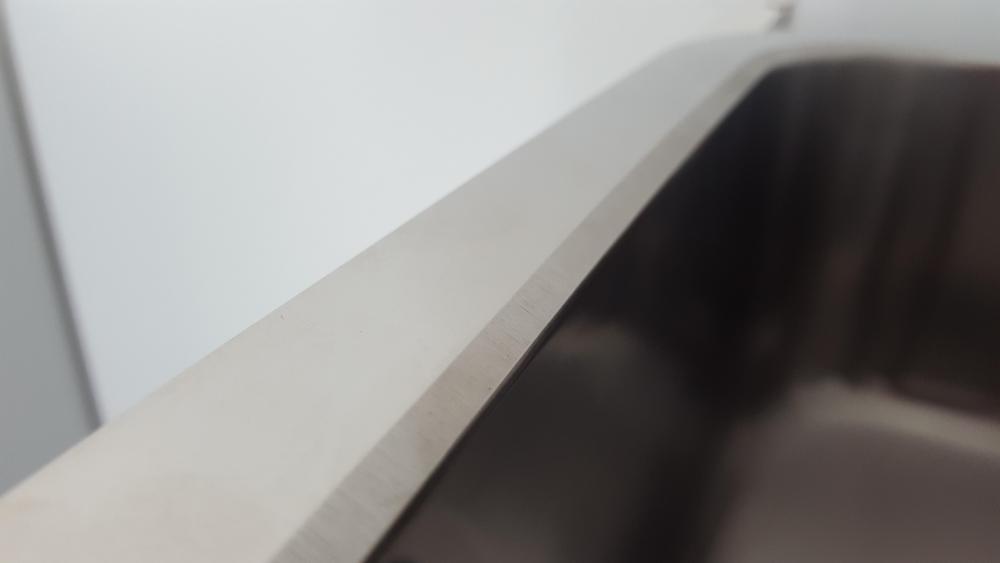
It was more the bevelled edge bit that I was thinking about, but I am sure that could be filled afterwards with a tube of silicone. The worktop supplier is fitting the worktop, but as you suggested earlier I'll check regarding their requirements/preference for how much flexibility they have regarding the sink.
-
Looking closer at the sink there is a bevelled edge which I am wondering might not lend itself well to having the worktop hanging over it due to the risk of it being a dirt trap? Perhaps it could be filled with silicone, although it'd have to be out of a tube or via another application method as a conventional gun and tube wouldn't fit inside the sink to get the right angle.