


CC45
-
Posts
1255 -
Joined
-
Last visited
Everything posted by CC45
-

What spaces between flow and return pipes in UFH
CC45 replied to joe90's topic in Underfloor Heating
Some areas are at 150, others 200 with us. Our manifold is under the stairs but we fed direct under the timber frame into rooms - you could do this to the lounge and dining room - shorter runs and less local heating under the stairs. CC -
I asked BC about falls when we did sewers - for 1:60 he advised 150mm pipe (less sag apparently). We stuck to 1:40. CC
-
OK, will that be still stuck on in a few years time?? I will mechanically fix as many of the joints as I can but still need to tape quite a few areas. Someone has suggested Ever build tape - the stuff that's used for jointing Dpm. It would be interesting to know what others on here have been using. Don't be shy! Cc
-
Hi, Need to think about the vapour barrier soon - the options seem to go from Visqueen up to far more expensive Tyvek airguard etc. The price of the latter scares me, so I'm considering using Visqueen - does anyone know of a good tape to go with it? What about tapes designed for dpm? Thanks CC
-
It will be well insulated in the upstairs floor void and will only have hot water in it when the ufh is running - so any heat loss that does happen will contribute to the space heating anyway. Boiler will be within 1m of the tank and associated pipework - it's only a longer run to the ufh manifold.
-
We are in the same position. Lot of pipework around the manifold and location of the tank so our plumber suggested going in upstairs floor void. Will probably need a vent to prevent airlock I guess. Cc
-
Xr4150 £37.89 8x4 sheet. Dec 2015 Ga4075 £20.61 8x4 sheet Dec 2015 Local merchant - on an 10k order SIG were £70 cheaper. Went local. Cc
-
I used xr4150 plus xr4075 under our floor. Worked fine, don't think you need the 'proper' floor equivalent. Held the ufh staples (65mm) no problem
-
Thanks for making me laugh Nick
-
Rip off. Ive paid sub 2k for what you describe. A technician should do all that for way less than what you've been quoted. Move on
-
Hi all, I've had the same experience with celotex. 140mm sheets were plus or minus 10mm. A right pain when they needed to fit into a timber frame. The second issue is that they aren't flat either - some of them are so bowed in both planes they rock an impressive amount. Over order and return the worst. Glad all that is over on our build! CC
-
2.5mm used - did some welding - all fine. Thanks for the advice. CC
-
Thanks Dave. Its going to get wired into my current consumer unit - length is ~ 2m so I don't think that will be a prob. Appreciate the reply. CC
-
Dear all, Some years ago I bought a gasless MIG welder - but due to an admin error (mine unfortunately) I bought one with a 16A plug like this not the normal 13A plug. I regret this but don't want to spend another £250 getting a replacement so I am about to sort out a female 16A plug so I can use the welder I've got. My query is this - can I safely use 2.5mm T&E to supply it? I think I can since the RCD is rated at 16A - why do this if it can't handle that. I am happy to buy some 6mm cable but I've got 2.5mm to hand. Any thoughts? Cheers CC
-
Straw is not nitrogen rich - quite the opposite in fact. I worked on farms when the straw ban went into action - we had to apply more nitrogen to the crops. It will tie up any nitrogen in the top soil as it rots down over a year or two. Mad idea for a lawn.
-
don't use ryegrass unless you want a rugby pitch. Fescue is the grass you want. It will grow like stink now with the soil temps & as long as the wet weather continues will be fine. Be ready to water if it doesn't. If you waited for approx. 6 weeks you should be less at risk of dry times & the grass will still grow well into the autumn. If it was me I'd do it now. Its pretty forgiving stuff.
-
Hi ProDave, interesting numbers. House is looking great with you - when we finish ours & I get back into the Scottish hills I must keep an eye out for it! Our build cost works out at £599/ internal m2 (house & garage m2) or if the garage cost is spread over the house m2 then its £734/m2. Ground works, all services connected, prof fees, timber frame, brick external, some external render, DG windows, roof on (expensive - but 4 gable ends & 5 dormers were never going to be cheap), all insulation, floor screed poured. Garage nearly done (another £2K should see it done). Nothing internal done & all externals yet to do. I'm hopeful to get it done for < £900 but wont be unhappy with £1k/m2. The BIG downside is that I'm doing the lot - so progress is slow - its going to be a 3 year build. Still enjoying it though. CC
-
PIR doesn't come 225mm thick so you're stuck with 2 layers. I put 75mm down first (with the sand to reduce rocking), taped it & then 150mm. GA sheets used for the lot, UFH was put down with 60mm staples & no issues at all. The second layer is quicker than the first. Our timber framed house insulation has come in substantially less than £8k (246m2) - PIR in walls & floors with fluffy in roof. U values are ~ 0.1 floor & ceiling with walls at 0.16. We will roast with the log burning stove on! CC
-
Hi Vijay, your floor make up is virtually the same as ours (now down & screeded). 2 layers of PIR is fine. Use sand to remove any rocking. Tape seams on both layers. Easy DIY job for me. We used 'normal' blocks for the B&B. I'm happy with it. CC
-
Wunda were good for me.
-
airtightness Challenges for you all to have a crack at.......
CC45 replied to CC45's topic in Ventilation
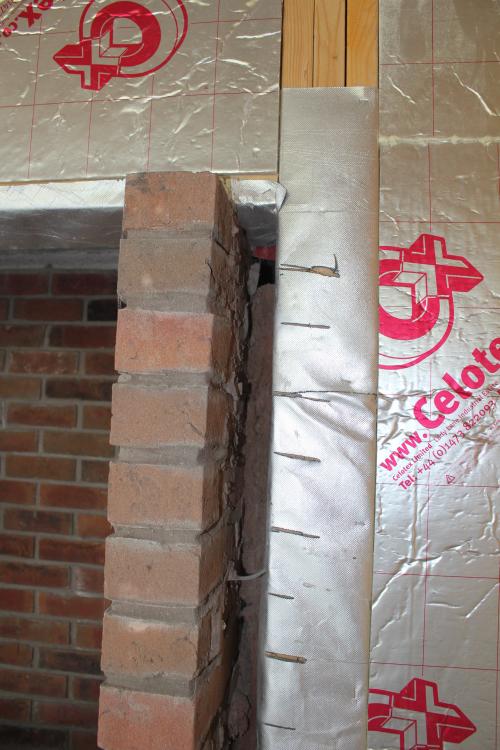
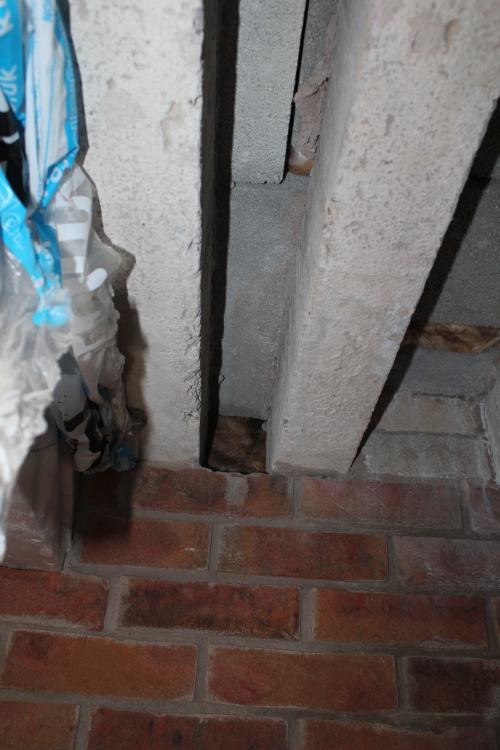
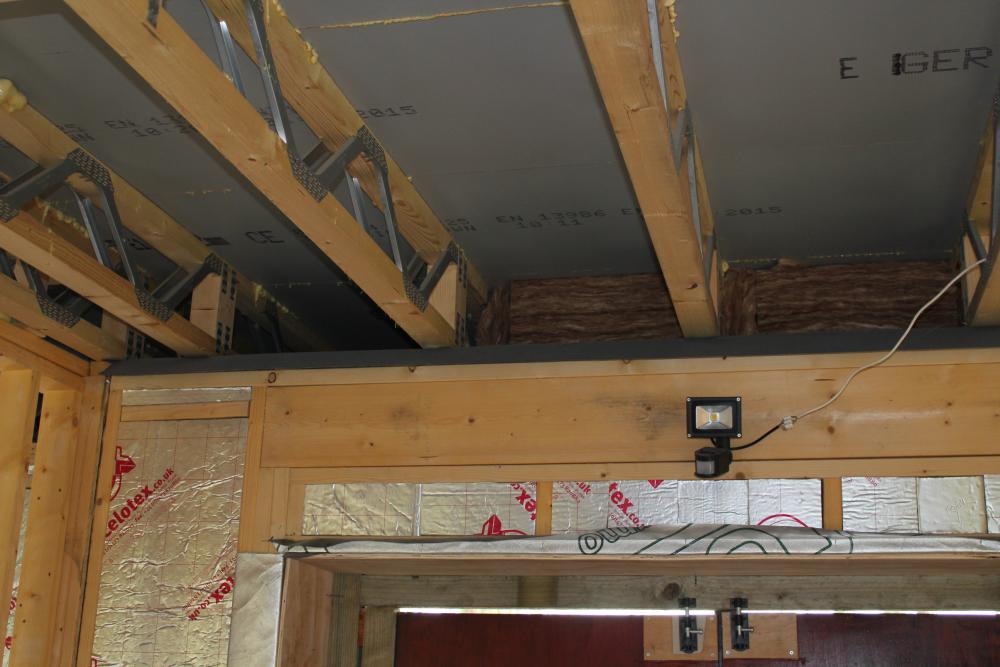
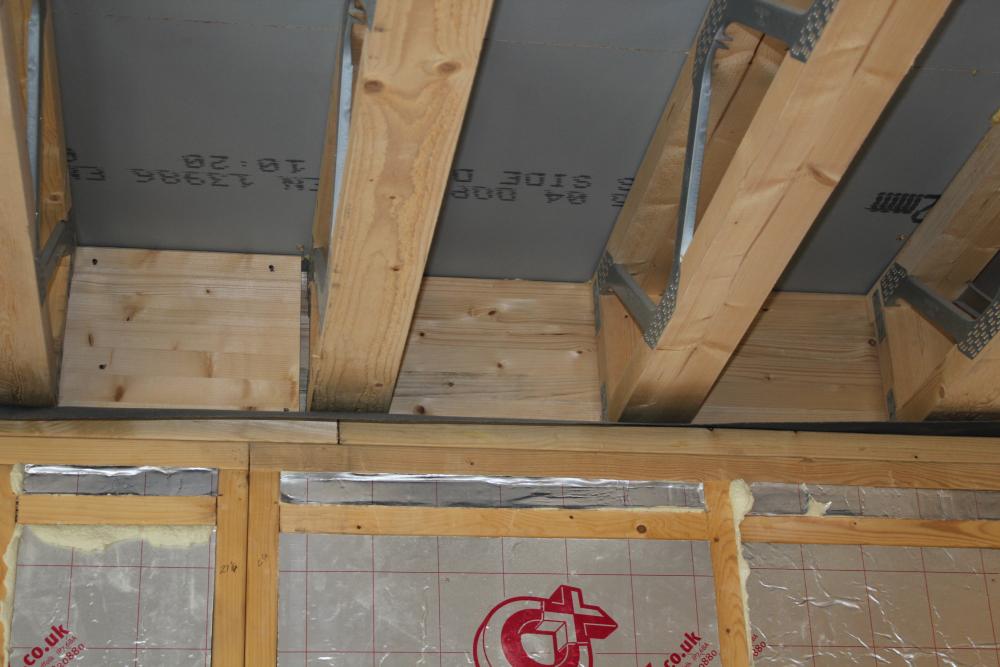
Hi Declan 52 & Trw144, Pic 1 - tape is one option I hadn't thought of - any advice with regards to which one? I was going to tape all joints iin the VCL anyway so its not really extra work. Pic 2 - and then skim the underneath to seal the chimney 'ceiling' I assume? Pic 3 - as I thought. Having insulated all the frame (which took ages) I expected that to be time consuming. There is a tony tray but since that overhang is ~ 4ft there are taped joins in there & I suspect it won't be airtight & I want a backup just in case. The insulation is under some dormers - the rest of it is under the roof so no point in insulating really. Pic 4 - will that provide adequate insulation? Pic 5 - how much pressure does the screed exert sideways? Thanks for the suggestions CC -
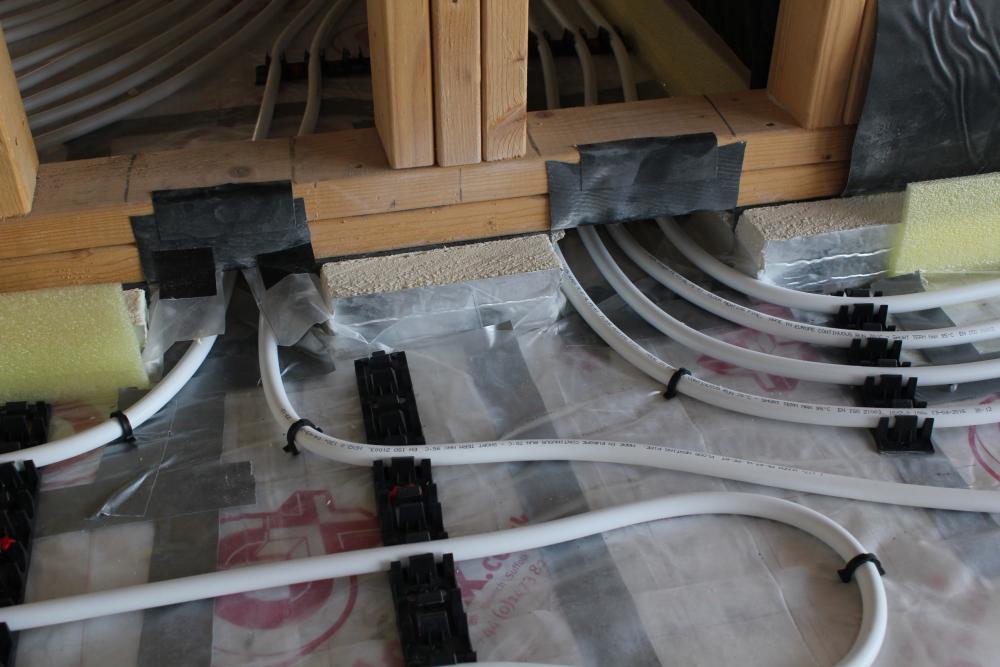
Dear all, A small number of challenges for a Tuesday evening...... Challenge No 1 Picture 1 The picture below is our fire place The gap between the timber frame and the brick wall is the cavity, so any suggestions how I seal this up so that its (permanently) airtight. Would like to achieve below 2 on the airtight test. I assume some sort of timber bonded in place but I am open to any advice. Challenge number 2 Picture 2 how do I make the chimney 'ceiling' airtight (obviously not the flue) - I know now that I should have poured a slab with the flue set into it rather than use the lintels - hindsight is a great thing, shame you only acquire it after the event :-( Maybe 'plaster' it? Maybe a neat job would be to somehow fill it all in, board & then skim it all? - would look neater. Challenge No 3 Picture 3 On a similar line, the picture below shows a gap that I need to close up. The house has overhangs on both sides - looks nice on plans but they need sealing from the rest of the house since in effect they are external space. I was going to screw some supports either side and then some 1/2" ply to close the gap - would some sealing tape then do the trick with regards to airtightness? Tempted to use some silicone in there as well just for a backup. Challenge No 4 Picture 4 This is the void below our first floor - it needs insulating (otherwise it will be a condensation trap) - but how much? I've got some 140 / 150mm celotex about but its a pain to cut and install & I'd rather send it back for a refund. The other option is to use some 3" celotex (a few sheets kicking about) or since I've got to sound proof it all do I just continue the soundproofing down over the wood? This would be the easiest but I'd rather do the correct thing than something easy! Final challenge! Picture 5 Laid the UFH a week ago - the design required some cutting out - I was going to foam these when I suddenly wondered if it would react with the pipe work (Wunda pipe) - am I being OTT or should I play it safe & put something around them first. I'd prefer that each room screed is separate - hence why I want to fill the cuts up. Cheers for any help / guidance. CC
-
Hi all, figure 3.3 is how I'm planning on doing ours. Why don't you all want to put an insulated service void in? Obviously where elec runs I will leave the insulation out. Will put 34mm battons in & then 30mm celotex. Saves space. cc
-
We used LABC & they've been great - not seen the chap since before windows went in about a year ago & he doesn't want to see anything until first fix starts. Depends so much on individuals really. cc
-
Hi Dave, been following your progress - really like the idea of your cladding (said this on my last forum reply on ebuild ), in fact it looks a great house. Our next one will be all our own graft - foundations the lot. I've spent a lot of time climbing & walking in Scotland - you are a lucky man living up there......... Fitting our build (246m2 + garage of ~ 60m2) around a full time job is hard - 4 evenings a week I try to get 2 -3 hrs/ evening in + virtually every weekend. I'm very lucky to have a missus who does all the cooking, cleaning etc etc - obviously not told her this! The upside of a job is the income of course and this along with slow progress means I just about keep up with paying day to day materials out of income (ignoring the big items of course). Enjoy your cuppa cc




