SteamyTea
-
Posts
23866 -
Joined
-
Days Won
201
Everything posted by SteamyTea
-

Thermal Solar Panel V LPG Boiler To Heat Water Costings
SteamyTea replied to s2sap's topic in Boilers & Hot Water Tanks
Why I suggested some online calculators on the site -
Is that someone that does painting for a living (possible not for long). If so, then they should know better.
-
Well not that hard really, just wish I had better eyesight and I would spot the mistakes. Now let us see if I have managed to load it to 'somewhere' and it works. https://steamytea.wixsite.com/watercalculator
-
I initially thought of that, but then it is best to discourage random downloads. I am just playing with a bit of HTML5 output code that seems to 'do sums'. Got the input side sorted, just struggling to get the output showing, probably as simple as a ; instead of a :
-
Can't you just have a default message to say, "Update your browser dickhead" Is there any non javascript way to do it? I know next to nothing about coding, it is all a bit messy to me. But the arithmetic behind it is simple enough.
-
The trouble with external links is that they don't drive traffic here particular, more drive it away. How much maintenance is there really? These would be simple calculators i.e enter volume, power and get out energy and time, maybe an extra to add in kWh price.
-
Thermal Solar Panel V LPG Boiler To Heat Water Costings
SteamyTea replied to s2sap's topic in Boilers & Hot Water Tanks
Would the capital costs and service of an LPG system not be greater than the imported power of an electrical system? -
After the silly mistake I made working out the energy needed to heat some water (it was late and I had just finished work), I got to thinking about how hard would it be to add a few calculators onto this site. I had a quick look around and there seems to me dozens of example about using javascript to process 'stuff'. But to be honest, it is all Greek to me. So two birds could be killed with one stone. Calculators to work out frequently asked questions and an easy to follow tutorial about how they are made and integrated into webpages. What do people think?
-
Thermal Solar Panel V LPG Boiler To Heat Water Costings
SteamyTea replied to s2sap's topic in Boilers & Hot Water Tanks
Is there any reason why you cant put a small immersion heater in a buffer tank? -
Thermal Solar Panel V LPG Boiler To Heat Water Costings
SteamyTea replied to s2sap's topic in Boilers & Hot Water Tanks
As an example, during the summer, I use 3 to 4 kWh/day (excluding washing days, which adds another 1.5 kWh). Now I have relatively high base load as there is only me in the house. You could try and work out your DHW usage, it is not hard, just tedious to do. -
I chickened out......until
SteamyTea replied to ToughButterCup's topic in General Self Build & DIY Discussion
I was in PZ earlier and found a bit of Ian's welding for sale. £2500 it was.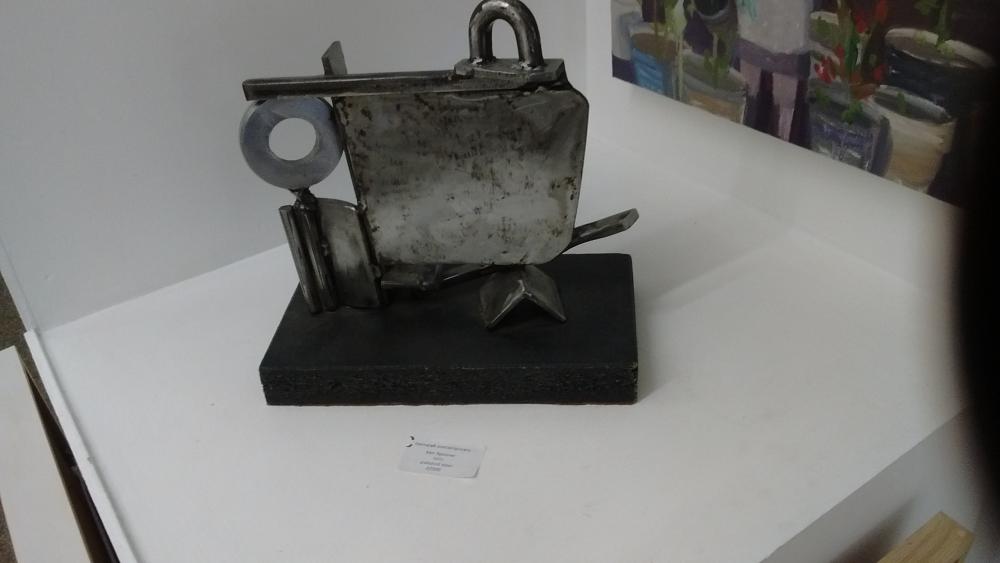
-
Drill hack. quite clever really :)
SteamyTea replied to Construction Channel's topic in Tools & Equipment
- 11 replies
-
- 1
-

-
- drill hack
- drill trick
- (and 1 more)
-
Single Room MVHR
SteamyTea replied to Crofter's topic in Mechanical Ventilation with Heat Recovery (MVHR)
may be worth someone that is living in a caravan on site to try it out. -
Is this garden room affected by building control, if not, why not just make a GRP roof with a few timbers in it as mounting points for the PV?
-
A quick look at PVGIS shows that for a 1 kWp, south facing, system in Milton Keynes, there is only 3.4 kWh/year difference (73.7 kWh/year @17°, 77.1 kWh/year @40°). So really just random variation and statistically insignificant.
-
Thermal Solar Panel V LPG Boiler To Heat Water Costings
SteamyTea replied to s2sap's topic in Boilers & Hot Water Tanks
Yes, it was late. So 16 kWh times 6.7p/kWh is £1.1 I agree, why annoys me about quoting efficiency sometimes. Once you add in all the losses the figures often look dreadful. Just easier to remember 3 zeros after the decimal point and then a 3. But when put into its mechanical equivalent it is only a tiny difference and probably lost in 'noise'. -
Boots, shoes, trainers: steel, composite, which?
SteamyTea replied to ToughButterCup's topic in Tools & Equipment
I wear cheap Dunlop steel toes trainers at work, last about 6 months, but they are only 22 quid. Grip well on a wet floor though. Steel toe caps are useful as I work with a clumsy, messy, ginger, inbred, Cornish oaf. Walking is different matter, just bought a pair of boots at the Millets sale, Peter Storm ones they have StormGrip soles that seem to fit me better than most. -
Thermal Solar Panel V LPG Boiler To Heat Water Costings
SteamyTea replied to s2sap's topic in Boilers & Hot Water Tanks
I would have PV if it was free You can check PVGIS for estimated yield from a system http://re.jrc.ec.europa.eu/pvgis/apps4/pvest.php# That will give you an idea of what can be generated, but yet again, is only part of the story as it relies on mean kWhs and not instantaneous power (watts). Actually, just had a look at PVGIS and it does now do estimated mean power. -
Thermal Solar Panel V LPG Boiler To Heat Water Costings
SteamyTea replied to s2sap's topic in Boilers & Hot Water Tanks
Really depends on how much DHW you actually use. And for bathing, anything below about 30°C is useless. -
Thermal Solar Panel V LPG Boiler To Heat Water Costings
SteamyTea replied to s2sap's topic in Boilers & Hot Water Tanks
1 lt of water takes 4.2 kJ of energy to increase by 1°C. 1 kJ = 0.0003 kWh (near enough). So to raise 250 lt of water from 10°C to 65°C will require: 250 [lt] x (65 - 10) [°C] x 0.0003 [kWh] 4.125 kWh The boiler has an efficiency of 90% (near enough) 4.125 kWh x (1/0.90) = 4.58 kWh (LPG needed) The cost of LPG 48p/lt There is 7.1 kWh of energy per litre of LPG, which works out at 6.7p/kWh (cheaper than E7) So cost is 4.6 [kWh] x 6.7 [p] = 31p (near enough). I often make mistakes in my arithmetic (statistics is so much better), but someone will be along to correct me I am sure. This is only a very small part of the calculation. You then have to take into account the real life performance of the boiler i.e. it is starting from cold and may only be running at peak performance for a short while. Then there are the thermal losses from the 250 lt cylinder, over a day these may easily be 50% of the stored energy. Then there is the maintenance costs of a gas boiler, and for that matter a solar thermal system. And this is before looking at the volatile price of LPG and any fixed costs for the storage tank. The main question you need to ask yourself is what you are trying to achieve? -
I chickened out......until
SteamyTea replied to ToughButterCup's topic in General Self Build & DIY Discussion
Your a sick man Ian, well done -
Yeah right, so great for Christmas lunch for all the extended family, as long as you start at Harvest Festival. These things really should be banned.
-
Or Oscar Pistorius
-
I chickened out......until
SteamyTea replied to ToughButterCup's topic in General Self Build & DIY Discussion
Don't tell Ian about cutting rods, he will have the lid off in no time. -
What Berkshire, it is 250 miles away, unless she is on holiday and a dressed as a Pirate to help keep up the Cornish tradition of failure.