


SteamyTea
-
Posts
23377 -
Joined
-
Days Won
190
Everything posted by SteamyTea
-
Yes. I have managed to get my day (non space and water heating) usage down a winter average of 1.5 kWh/day and 1 kWh/day the rest of the year. I one had a shock when my usage went up by 3 kWh/day, turned out to be a faulty fridge that was always running. Two things to note about inbuilt ASHP monitoring, most are not very accurate as I suspect they used some fixed parameters i.e. electrical power consumption assumption, rather than actually measuring it. Also, so ASHPs have a crankcase heater that may be activated if the OAT is too low. I take it your Legionella cycle is not coming on, or the cylinder is using direct heat at any time.
-
Welcome While it depends on many other things i.e. how well set up, you can use the Seasonal Coefficient of Performance (sCoP) number to get a very rough idea. But always remember that running a low temperature heating system is not like running a high temperature combustion heating system. Some other will laugh at this, but it is kWh, a measure of energy. Not kw/h which is a nonsense unit. To satisfy that 18500 kWh of energy, an 8 kW heat pump would be running for roughly 2300 hours/year (but only at full power, which it will not). A lot of that will depend on how well your original boiler was working though. If the efficiency was, in real life, only 70%, then you only need 13,00 kWh.
-
Buy what you can on a credit card to get the Section 75 protection. I have, in the past, renovated while living in the property. It can be horrible. Make sure you have at least a decent working shower and bog at all times. A shed is useful as well.
-
Welcome Sounds like it could be an interesting project. I am of the mind that it should not be too hard to build a net energy zero house without getting bogged down complicated design modelling and technology. As an architect you must be used to dealing with unachievable goals and entrenched practices.
-
There will be at least a 5mm gap around all the modules, and generally, there is an airpath below them. Fitting them just slightly proud of any other of covering generally makes them 'disappear', it is not as if you are looking down on them. I cannot see my roof from the street at the front of my house, so I would not have a problem with just having them bolted on rails.
-
Small turbines tend to be a bit noisy. And a VAWT at South Crofty, well the now bankrupt heritage centre.
-

Solar PV, Immersion diverter and EV Charging
SteamyTea replied to JamesPa's topic in Photovoltaics (PV)
Good point. If they have charge in them, they will contribute to EV and DHW charging, so may need to be locked out, or set to charge at the same time. All becomes a bit of a balancing act. -
Solar PV, Immersion diverter and EV Charging
SteamyTea replied to JamesPa's topic in Photovoltaics (PV)
Why don't you play the number's game. Have a look at your past PV generation, find the period, that on average, has the greatest generation, then just charge the car during those times. Heat the water either side of those times as I suspect that the water will take less current and react faster to changes. -
Getting frustrated with heating suppliers.
SteamyTea replied to MikeSharp01's topic in Other Heating Systems
I went to school near Brize Norton, now that could get noisy, especially when Concorde was doing low level sound tests. 06:05 AM every morning a VC10 would pass overhead, that was our alarm clock. -
I used to work for a small turbine manufacturer, while they had a good reputation, they still went bankrupt, and like all small turbines, the performance was only a small fraction of the Betz limit. It is why turbines are large. VAWT are even worse. Can you not get any extra modules on the hip ends.
-
I had a snobbish girlfriend 40 years ago, she was from Tiddington, just outside Stratford on Avon. She always referred to it as near Oxford. She now lives in the same village as our old mate Jeremy Harris. Bet she is causing trouble there.
-
Must be pretty close to Birmingham then.
-
You will almost certainly need planning permission, which will almost certainly be refused. But if you do get it, then you will have to find a suitable turbine than can meet the sound regulations. Will your DNO allow you to fit more capacity. Then if you do find a suitable one, you will quickly learn why you do not see many small turbines, let alone VAWTs. Do you have room for more PV?
-
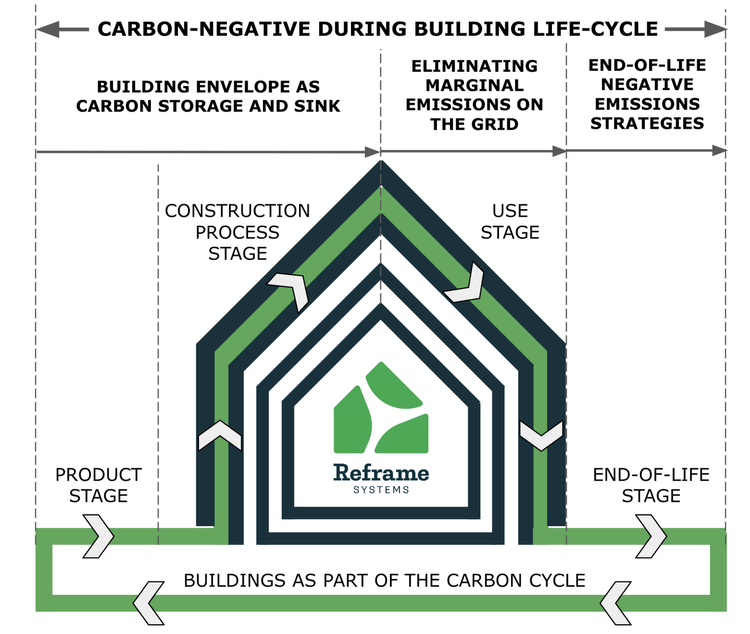
Worth having a look at Boxabl to see how it is already done, not. https://en.wikipedia.org/wiki/Boxabl Reframe has this image on it's website. Now where have I seen something similar.
-
Yes. I am always amazed that the Italian's like to live in 2000+ year old buildings because 'the cement is stronger'. Here is Milan

-
Breathable membrane required?
SteamyTea replied to alayton's topic in Insulated Concrete Formwork (ICF)
Seems strange that a breather membrane would be needed, as that is to control vapour getting out, but to stop liquid water getting in. You may find that a water screen of some sort is needed between the ICF and the cladding and a breathe membrane is the easiest and most familiar. -
Robots are a very misused term. I think most bricks are made with them. And steel, glass, plastic...
-
If the batteries are charged either side of noon, then the PV will all be swallowed by them. The car will take about 7.2 kW (32A). But apart from start up, the heat pump is probably not pulling more than 5 kW (22A). The voltage drop could well be caused by the HP starting up. Not sure if you can easily get around that, maybe be possible to modify it by adding a soft start system. Why does he want to change it to an air source?
-
boiler behaviour,please let me know your thoughts.
SteamyTea replied to Post and beam's topic in Boilers & Hot Water Tanks
Did it show an error code? And just as importantly, did it not show one? -
We need a chemist: Portland cement and Lime.
SteamyTea replied to SteamyTea's topic in Research Resources
Prompted by something @tuftythesquirrel said in another thread. I went looking for the mechanical properties of lime v cement mixes. I found this for concrete. https://eurocodeapplied.com/design/en1992/concrete-design-properties Copy to Clipboard Concrete Design Properties according to EN1992-1-1 (γc = 1.50, fyk = 500 MPa) Symbol Description C12/15 C16/20 C20/25 C25/30 C30/37 C35/45 C40/50 C45/55 C50/60 C55/67 C60/75 C70/85 C80/95 C90/105 fck (MPa) Characteristic cylinder compressive strength 12 16 20 25 30 35 40 45 50 55 60 70 80 90 fck,cube (MPa) Characteristic cube compressive strength 15 20 25 30 37 45 50 55 60 67 75 85 95 105 fcm (MPa) Mean cylinder compressive strength 20 24 28 33 38 43 48 53 58 63 68 78 88 98 fctm (MPa) Mean tensile strength 1.57 1.90 2.21 2.56 2.90 3.21 3.51 3.80 4.07 4.21 4.35 4.61 4.84 5.04 Ecm (MPa) Elastic modulus 27085 28608 29962 31476 32837 34077 35220 36283 37278 38214 39100 40743 42244 43631 fcd (MPa) (for αcc=1.00) Design compressive strength (for αcc=1.00) 8.00 10.67 13.33 16.67 20.00 23.33 26.67 30.00 33.33 36.67 40.00 46.67 53.33 60.00 fcd (MPa) (for αcc=0.85) Design compressive strength (for αcc=0.85) 6.80 9.07 11.33 14.17 17.00 19.83 22.67 25.50 28.33 31.17 34.00 39.67 45.33 51.00 fctd (MPa) (for αct=1.00) Design tensile strength (for αct=1.00) 0.73 0.89 1.03 1.20 1.35 1.50 1.64 1.77 1.90 1.97 2.03 2.15 2.26 2.35 ρmin (%) Minimum longitudinal tension reinforcement ratio 0.130 0.130 0.130 0.133 0.151 0.167 0.182 0.197 0.212 0.219 0.226 0.240 0.252 0.262 ρw,min (%) Minimum shear reinforcement ratio 0.055 0.064 0.072 0.080 0.088 0.095 0.101 0.107 0.113 0.119 0.124 0.134 0.143 0.152 Has a lot of useful numbers. I would like to see some for lime mixes as it would be really good to give a definitive, or at least well informed, answer to this long standing debate. A bit more digging and I have found this. https://www.intechopen.com/chapters/63429 It is a long read so may have to come back to it. Mortar composition fflex (MPa) fcpr (MPa) fccy (MPa) GF (N/m) ft (MPa) Ecy (GPa) Epr (GPa) lch (mm) NHL09C04M Mean 1.3 3.2 2.0 12 0.39 5.0 5.2 390 Std. dev. 0.1 0.1 0.2 3 0.02 0.2 0.5 NHL08C04M Mean 1.3 4.2 2.7 13 0.51 5.4 6.0 260 Std. dev. 0.1 0.3 0.3 1 0.01 0.6 0.2 NHL11C04M Mean 0.89 1.7 1.4 4.9 0.24 2.8 3.8 240 Std. dev. 0.04 0.1 0.1 0.8 0.03 0.7 1.0 NHL09C04W Mean 1.7 3.5 — — 0.57 — — — Std. dev. 0.1 0.1 0.05 NHL09C02M Mean 1.1 3.2 2.0 12 0.49 4.6 5.1 220 Std. dev. 0.1 0.2 0.1 1 0.05 0.2 0.6 NHL09R04M Mean 0.96 2.3 1.5 10 0.38 4.2 4.4 280 Std. dev. 0.06 0.1 0.1 2 0.03 0.2 0.4 NHL09C04MA Mean 0.91 2.4 1.5 8 0.34 2.8 3.2 190 Std. dev. 0.02 0.1 0.1 1 0.03 0.4 0.6 Table 3. Mechanical properties of NHL mortars at an age of 56 days. -
Doubt it. Just a thin film on the car windscreen. There was snow once, it layed on the ground for a few hours. I have just commented on the rain while buying a coffee. Most of our rain comes when the West Indies is warm and has extra evaporation. The Caribbean must be almost dry now, there cannot be much left.
-
We have had 2 frosts this winter. How would you deal with the rain, we have had 2 days without any this winter.
-
Water management solution and completion
SteamyTea commented on Jenki's blog entry in The Windy Roost
Like ducks to water then- 6 comments
-
- 1
-

-
- the windy roost
- highlands
- (and 2 more)
-
I don't think you will get very far with this, only thing worth looking at is the legal definition that the LA uses for "lodgers". I got caught out on a similar thing and my LA (Cornwall) uses the term 'Boarder' (well we are a surfing area). They claimed that it is all explained in the Housing Act. As it was, they had made a mistake and I got my cash back (was when I was a student and except council tax, but my lodger was not, so they claimed the full amount not the 75%) by putting up the lodgers rent. Took 7 years though. This may seem harsh, but the CIL is there to pay for local infrastructure caused by an increase in local population, the 'self build' exception is a bit of a political fop and probably comes about as councils are meant to offer a number of plots for self builders.
-
I obviously don't have a room stat as such, just input and output stats are in the storage heater, but they are not brilliant for sensing actual room temperature. It did cross my mind that as the ΔT decreases, the heat pump can modulate the power downwards a bit.
