


SteamyTea
-
Posts
23836 -
Joined
-
Days Won
200
Everything posted by SteamyTea
-
The behavioural science that can help us choose more sustainable foods Sophie Attwood is working with the food industry to promote some surprising psychological tricks designed to make environmentally friendly choices more desirable By Graham Lawton 28 May 2024 Natalie Foss What we eat has a huge impact not just on our health, but also on that of the planet. This is common knowledge. Yet despite a smorgasbord of studies telling us which foods we should and shouldn’t consume, many of us find it hard to do the right thing. Sophie Attwood’s research takes a different approach: rather than presenting the bare facts on diet and its contribution to climate change, she uses behavioural science to persuade people to choose greener options. In May, she and her colleagues at global sustainability think tank the World Resources Institute released a major report on how the food industry can nudge people towards more sustainable fare. The aim isn’t to browbeat consumers, but to increase the appeal of plant-based options and reduce our desire to choose meat. Graham Lawton: How much of a problem are unsustainable diets for the climate? Sophie Attwood: Massive. The type of food people eat is the biggest cause of climate change related to diet. A lot of people think it’s stuff like food miles and pesticides. It’s actually not. It’s beef, for multiple reasons, the main one being that cattle often get fed on soya. Soya is usually from deforested areas, so you have to cut down the rainforest. And then you need around 20 kilograms of soya to produce 1 kilogram of beef. It’s a highly inefficient way to produce calories. Aside from that, the cattle themselves emit a lot of methane from gut fermentation and nitrogen from manure. There are greenhouse gases along the entire chain. We simply cannot continue to eat the way we do, be able to feed everybody and keep the natural environment. We’re at the point where we need to do everything very quickly. So what is a sustainable diet? It’s not necessarily a meat-free diet. It’s just a radically reduced amount of meat – especially beef. The average level of beef an individual eats in high-consuming regions, such as Europe and America, is somewhere around [the equivalent of] three burgers a week. We need to get that down to about one and a half. How can your research help? We work with lots of companies in the food service sector – restaurants, takeaways, canteens and catering companies. They are a really strong entry point into influencing people. We find all the different behavioural science techniques that can be done, everything from marketing and product placement to nudging. We work with the companies to implement these and see if we get a change in consumer choices. And then we conduct a lot of experiments so we’ve got evidence that it works. What are the most effective tools to encourage consumers to shift their diets? In 2018, we published a huge review looking at everything that had been done in behavioural science to try to shift diets. We found 57 behaviour change techniques. Using indulgent, taste-focused language came out as the big one. So don’t talk about plant-based food being vegetarian or vegan because it really puts people off. Ignore the fact that it doesn’t contain meat, just talk up the positive attributes. I haven’t seen a study where it doesn’t work. Have things moved on since 2018? We’ve just redone the exercise, and this time around we found 90 techniques. Language still comes out quite strongly. Another is menu engineering. The way you structure a menu and the content and the design have a massive influence on what people choose. The classic one is that things at the top left of the menu get chosen more. People’s food choices are quite easily influenced. Where food is placed on a menu influences how often it is chosen, which can help people to reduce their meat consumption FGTrade Latin/Getty Images What other techniques are there? Take any images of meat off the menu because they prompt people to choose meat. And put the plant-rich dishes into the main body of the menu, as meat-eaters will tend to ignore a veggie section. One that works all the time is taking meat off the menu. Restaurants present a plant-based-only menu and you have to ask the server for meat, a bit like what we did for cigarettes when we put them behind the counter. That one works a tonne, but for businesses trying to sell food and stay in business, it’s seen as not that feasible. Or you do things like a pre-order form for events, so when you go to an event, you have a default plant-based menu unless you opt in to meat. Menu language and menu engineering have worked really well. It’s about a 10 per cent shift in choices, which is pretty substantial. Does health messaging also work? This is quite interesting. Something like 80 studies in our review look at health messaging. Researchers have spent years looking at it. Just don’t bother. It doesn’t work. What’s the most surprising nudge? Natural sounds like birdsong calm people down, and people make more considered choices when they are in a calmer rather than an emotionally aroused state. What about making plant-based meals cheaper? Yeah, people are sensitive to price. We know incentives work, but industry needs to find a way to implement them that doesn’t dent their business. There’s also a point at which you need to ensure that you’re not signalling it’s a worse-quality product. If you want people to change, you have to offer good-quality, really tasty plant-based options. Restaurants need to get on board with doing a lot more product redevelopment and offer chefs training in plant-based foods because, at the moment, they don’t get trained in that. A sustainable diet isn’t necessarily vegetarian, but we should radically reduce the amount of meat we eat, especially beef Susan E. Degginger/Alamy How receptive are food service companies to this kind of approach? It usually lands very positively. Chefs are creatives. It’s basically saying to chefs, please be creative. And they really would like to be the conduit for healthier and more sustainable choices. How do you respond to a business that says, what’s in it for us? A lot of the Gen Z cohort [born from around the mid-1990s to early 2010s] – and probably a lot of everybody else – are now becoming much more aware of the link between diet and climate, so demand for more and better-quality plant-based foods is really growing. It does make good sense for businesses to be ahead of that curve. They also have the benefit of being able to sell environmental credentials. One thing you’re fighting against here is the meat industry, which has been lobbying hard to rebrand itself as sustainable. How do you push back against corporate might? I’m not sure we can. You can’t push back against massive budgets. To be honest, the industry is not pro-environmental and it never will be. They can make positive changes, like trying to get cows to emit less methane, which is welcome. But the big thing people need to do is cut some meat out of their diet. Can individual choices really shift the dial? That’s a good point. But think about the accumulated impact: 8 billion people are eating three meals a day. So if you can get even a slight change, it scales up. It’s actually one of the most substantially important things you can do, and it’s not a big thing, it’s not costly, it’s not a huge time investment. It’s basically impossible to get where we need to go without it. El Niño is ending after a year of driving extreme weather The warm El Niño pattern in the Pacific Ocean combined with global warming and other factors to create the hottest year on record – and this year may not be any cooler By James Dinneen 23 May 2024 Bolivia’s second-largest lake, Lake Poopo, has largely disappeared Aizar Raldes/AFP via Getty Images The El Niño climate pattern in the Pacific Ocean is coming to an end after boosting record temperatures and extreme weather across the planet over the past year. But it is uncertain how soon a transition to a cooler La Niña will bring respite from the heat. “La Niña should stop that streak of record-breaking temperatures,” says Pedro Dinezio at the University of Colorado Boulder. “If it doesn’t, are our models wrong? Are we underestimating global warming?” El Niño conditions are characterised by above-average sea surface temperatures in parts of the tropical Pacific. These waters usually oscillate between a warm El Niño temperature pattern, neutral conditions and a cool La Niña every two to seven years, a cycle that is one of the strongest factors influencing the global climate. El Niño is associated with hotter average temperatures and a distinctive pattern of weather conditions in much of the world. The current El Niño first appeared in June 2023, following a rare three-year-long La Niña. Temperatures in the Pacific Ocean are now expected to return to neutral conditions within the next month, according to the latest forecast from the US National Oceanic and Atmospheric Administration (NOAA). Cool La Niña conditions are then very likely to appear between June and September. “You can already see [La Niña] emerging,” says Dinezio. “You can see it there in the Pacific right now.” Early last year, researchers were alarmed that the developing El Niño might reach historic strength, comparable to the powerful ones of 2015-2016 or 1997-1998. A very strong event could have an outsized influence on weather around the world. What emerged was a strong El Niño – the temperature anomaly in the Pacific reached 2°C above average at its peak – but not a record-breaking one. However, combined with background global warming from human-caused climate change and other factors, the outcomes of this year’s El Niño were unprecedented. The heat pouring out of the Pacific helped make global average temperatures in 2023 the hottest on record, with shocking heat anomalies on land and in the oceans. Each of the past 11 months since El Niño emerged has also been the hottest of that month on record, according to NOAA. Many of the regions that normally see weather influenced by El Niño also saw those effects amplified by background warming. For instance, drought and heat drove intense fire seasons in South America and Indonesia. In Central America, low water levels linked to El Niño created a traffic jam in the Panama Canal, disrupting global trade. Heavy precipitation caused flooding from California to Afghanistan. Is climate change accelerating and is it worse than we expected? With temperature records tumbling, it is only natural to worry about cascading tipping points, but the reality is far more nuanced Not all these effects were entirely negative. In the Horn of Africa, for instance, the rain helped ease a drought that has contributed to near-famine conditions in the region. But the overall damages of this El Niño will probably be significant and last for years, says Christopher Callahan at Stanford University in California. Past El Niño periods have been linked to trillions of dollars in damages and persistent economic losses, especially in poor countries in the tropics. “This was an El Niño superimposed on global warming in a way we have never seen before,” says Callahan. “A lot of the global impacts we saw, it’s still hard to disentangle.” Even as a usual pattern of El Niño’s influence emerged, other places saw extreme weather that fell outside the norm. For instance, the Mediterranean isn’t sensitive to El Niño, but last September, it saw torrential rain that led to a catastrophic dam collapse in Libya. And ocean temperatures in the Atlantic reached record high temperatures even before El Niño developed. Dinezio says this suggests the impact of background warming on the climate may be growing to match the influence of the El Niño cycle for the first time. “Last year, those two had equivalent influence,” they say. There is some evidence these forces were actually working against each other in certain locations. The rapid shift to La Niña conditions, which is not unusual following a strong El Niño event, could help moderate global average temperatures – although this won’t happen immediately. “There’s still going to be a lag in the climate system, and certainly in the global oceans,” says Karin Gleason at NOAA. Historically, the year after El Niño develops is hotter, and 2024 is still expected to break 2023’s heat record. But the end of El Niño will help researchers understand how much of the past year’s heat can be attributed to its influence, as opposed to background global warming or factors such as the 2022 eruption of Hunga Tonga-Hunga Ha’apai. This could help resolve an ongoing debate among researchers about whether 2023’s off-the-charts temperatures suggest climate change is accelerating faster than models projected. “A clear answer from La Niña should help us tease that out,” says Dinezio. “Is there something off or not?”
-
Don't be fooled by El Niño's end – net zero is more urgent than ever The El Niño climate pattern has contributed to a year of record-breaking temperatures. We must bend the curve of carbon emissions before the next one arrives 29 May 2024 md zakirul mazed konok/Alamy The past few years have seen a significant rise in inflation in many countries, driven by a range of factors from pandemic-fuelled shortages to the war in Ukraine. But even now, as inflation is falling, prices are still rising, albeit more slowly. This subtlety is often missed, intentionally or otherwise, by politicians seeking to claim victory over inflation. Don’t worry, you haven’t accidentally started reading The Economist. The point is that we may soon see a similar effect in the global climate. As we report in “El Niño is ending after a year of driving extreme weather“, the El Niño climate pattern is about to come to an end. Just like the recent inflationary period, El Niño has seen graphs soar, with a nearly year-long streak of record-breaking temperatures. The trouble is, just as prices continue to rise when inflation falls, the carbon dioxide we have pumped into the atmosphere will keep pushing up temperatures, even without the influence of El Niño. While coming years may be cooler, overall, the planet is still warming at an alarming rate. Precisely how close we are to exceeding 1.5°C above pre-industrial temperatures, a key limit to avoid the worst consequences of climate change, is hard to assess. Traditionally, climate scientists look at this over decades, meaning we would only confirm a breach in retrospect. There is some good news here at least, as a new analysis shows that we can simply count the number of years in which average global temperatures exceed 1.5°C (see “Three years of high temperatures will mean we have breached 1.5°C“). It found that just three years above 1.5°C is enough to confirm a breach. The bad news is that 2024 may be the first. As we have said many time before, despair isn’t the answer. Unlike inflation, climate spikes are somewhat predictable. The next El Niño is likely to occur between two and seven years from now, so almost certainly within this decade. Before it comes, bringing yet more heat, the world should use this period to finally bend the curve on carbon emissions with a proper push for net zero by 2050. We will all benefit – and politicians might have something real to celebrate. Zero-carbon cement process could slash emissions from construction Cement production is a huge source of carbon emissions with no green alternative, but a new process that uses waste from demolished buildings could dramatically reduce its climate impact By Madeleine Cuff 22 May 2024 Cement being produced in an electric arc furnace at the Materials Processing Institute, UK, for the first time Materials Processing Institute A new technique can produce cement using waste from demolished buildings, which researchers say could save billions of tonnes of carbon by 2050. “We have definitely proved that cement can be recycled into cement,” says Julian Allwood at the University of Cambridge. “We are on course for making cement with zero emissions, which is amazing.” Producing cement is highly polluting – responsible for 7.5 per cent of total greenhouse gas emissions – but until now there was no known way to produce it at scale without impacts on the climate. Making cement requires “clinker”, which is made by heating a mix of raw materials, including limestone and clay, to 1450°C (2650°F). Both the heat requirements and the chemical reactions involved in making clinker result in carbon emissions, and clinker production accounts for 90 per cent of cement’s total carbon footprint. Allwood and his colleagues have developed an alternative process to make clinker, which involves reusing cement paste from demolished buildings. This paste has an identical chemical composition to lime flux, a substance used to remove impurities from recycled steel. As the steel melts, the flux made from old cement forms a slag that floats on the top of the recycled steel. Once ground into a powder, the slag is identical to clinker. It can then be used to make Portland cement, the most common form of cement. If the recycled steel and cement are produced using an electric furnace, powered by renewable or nuclear energy, the process is almost entirely free of emissions. “The idea is really simple,” says Allwood. Laboratory trials have proved the process works. It offers a “drop in” solution that could be used with conventional equipment, and a global switch to this process could save up to 3 gigatonnes of carbon dioxide a year, the team calculates. The research team is now working on industrial trials via a spin-out company, Cambridge Electric Cement, with partners such as construction firms Balfour Beatty and Tarmac. “Within the next few weeks, we are starting a set of trials which will be producing batches of 30 tonnes per hour,” says Allwood. Scaling up the new cement-making process depends in part on the growth of recycled steel-making, which currently accounts for about 40 per cent of global steel production. Allwood says production rates will at least double over the next 30 years, and most likely treble, as the industry decarbonises. Yet some challenges lie ahead. The recycled cement process requires furnace temperatures of 1600 to 1750°C (2900 to 3200°F), slightly hotter than traditional cement production. This will increase power costs, says Leon Black at the University of Leeds, UK. Other hurdles include establishing supply chains for waste cement, attracting the necessary capital investment and convincing a notoriously cautious industry to adopt a new process on a large scale. “They have overcome one barrier in as much as they have made a material that has the same composition as Portland cement,” says Black. “The devil is in the details: the energy requirements, the logistics, the scaling up.” Journal reference: Nature DOI: 10.1038/s41586-024-07338-8
-

Moths in my MVHR?
SteamyTea replied to Chris2's topic in Mechanical Ventilation with Heat Recovery (MVHR)
Like rats? -
And Muffing the Mule is still illegal in most countries
- 18 replies
-
- 1
-

-
- air tightness
- airtight
- (and 3 more)
-
A gram of tritium produces about 0.36W. You can find tritium in most water, needs to be centrifuged out. So to make a small 10 kW generator, you would need about 28 kg of tritium. And lead lined panties, which you have already.
-
If you root a square, you get rid of the negative components. So. √(230²) = √(-230²) = 230
-
You try to do the right thing and then…
SteamyTea replied to Alan Ambrose's topic in Environmental Building Politics
Why we have launched, after a 30 year delay, a new satellite to look at the lower atmosphere. It will help establish the link between particulates and cloud types/cover on the global temperatures. Will be posting some stuff up about it later in my Weekly Reads. -
Who says Timber Frame buildings don't last!
SteamyTea replied to MikeSharp01's topic in Timber Frame
Does it have thermal mass? -
Depends on your electricity tariff. As I use about 1 kWh a day for cooking and very occasional fan heater usage, being in E7 is worthwhile to me. I could 'save' about £0.20/day, so about £70/year.
-
What to do with Excess/Cheap Power?
SteamyTea replied to puntloos's topic in General Alternative Energy Issues
This one has the greatest utility value as your home is quite energy efficiency already. You don't mention charging and EV? -
@onoff’s been on the silicone again
SteamyTea replied to Pocster's topic in General Self Build & DIY Discussion
My butthole always clenches when I pass Bristol. -
@onoff’s been on the silicone again
SteamyTea replied to Pocster's topic in General Self Build & DIY Discussion
And a finger of fudge. -
Was thinking of just running a heater. Thinking a bit more about it, I wonder how well a panel heater wired into a battery would work. A 230 V, 1 kW heating element would be 53 ohms. But only 2 W at 12 V, so not very good. Would need just 0.15 ohms to get 1 kW at 12 V.
-
@onoff’s been on the silicone again
SteamyTea replied to Pocster's topic in General Self Build & DIY Discussion
Makes me want to eat greens. -
@onoff’s been on the silicone again
SteamyTea replied to Pocster's topic in General Self Build & DIY Discussion

-
Why not a cheap 2 kW inverter and a leisure battery. Probably less that 200 quid and no refueling, fumes or noise.
-
Melts when the heat is on to.
-
@onoff’s been on the silicone again
SteamyTea replied to Pocster's topic in General Self Build & DIY Discussion
They spelt the name wrong. The N needs to be an M. -
Delhi, India has recorded (unofficially) 52.9°C OAT.
-
If you live in a power cut prone area, get a portable gas fire or two. 80 quid
-
Get some silvered mylar (think Space Blankets) and stick them on the top sections (contact adhesive). Then see how it goes.
-
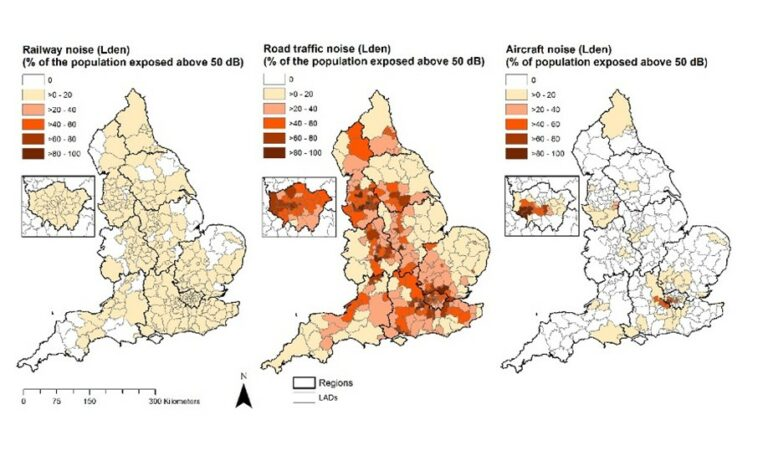
Before installing an ASHP, it is worth checking the background noise levels. Even quiet roads can be quite noisy.
-
Be interesting to plot wood burning stove preferences against political persuasion.
-
Your best bet is probably blown cellulose. Ask anyone that has it.
-
Have a look at my blogs, I cover it a bit. The biggest problem is there is so much prejudice in the UK against anything that is not brick, block or concrete. Makes me wonder why we have such thermally inefficient housing.

