pdf27
-
Posts
387 -
Joined
-
Last visited
-
Days Won
1
Everything posted by pdf27
-
Burning a Range Rover every month is apt to get expensive though!
-
 This scheme? https://ecab.planningportal.co.uk/uploads/1app/guidance/guidance_note-larger_home_extension.pdf An adjoining neighbour has objected, so you need prior approval. Fair enough. However, that only means the planners need to determine that the effect on adjacent properties is not "acceptable" to refuse you. What reasons did they give for this?
-
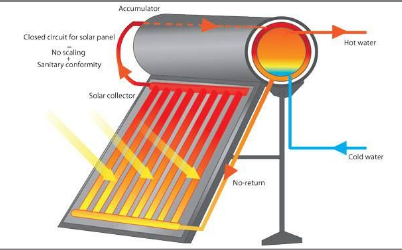
Does it actually need hot water, or is it just a case of "would be nice"? If it's a bit optional then an all-in-one solar system is probably a good bet. I'm assuming that most scout camping is in reasonable weather, and it'll be shut down in winter - this would be a doddle to drain down and cover over for the winter. Edit: clearer image
-
As a rule of thumb, you can normally replace an existing house with something up to 25% bigger without issues and the planning consultants, etc. should only come in if the design is contentious or you're trying to go much bigger. If it's no longer habitable then you start taking on more risk and may need support, depending on what you want to do with it.
-
His current house was also designed from scratch to be off-grid, based on decades of experience of living off-grid at the time he designed it. It's a seriously impressive piece of work. He's on the Navitron forums as Camillitech - I'm pretty sure he's got full details of his build on there as well as his blog.
-
Some disjointed thoughts: If you're relying on family for support, they're almost certain to want you to be funding a big chunk of it yourself - it turns the conversation from "please buy me a house" to "please help me buy a house". My family have been astonishingly supportive, but there is no way that they would have been if I hadn't been driving myself hard to pay for as much as I could. If I'd come out and asked them for that much money (particularly straight out of university), I think there is no possibility at all they would have given me it and it might well have damaged our relationship. Your family may well be different, but it's a key point: your relationship with your family is vastly more important than any dream house. Unless you have a massive trust fund you haven't mentioned, this means a job and a mortgage. Given that housing costs more or less track average earnings in an area (or commutable from it) and the amount you can borrow is a multiple of your earnings, you're unlikely to be able to afford a very big mortgage in the area you want. The only way to square this with the first point is to significantly reduce your ambitions and budget. Do you have any experience of building work at all, or relevant skills? If not, get some before taking on a project of this magnitude. In my case (and I'm certainly not alone on here) I started by buying the worst house on the street and renovating it. In no way does this make me an expert, but I learned a vast amount all the same - trying to take on a far bigger project without this experience would have most likely led to me making several very expensive mistakes. I'm sure I still will, but fewer of them. After a couple of years of living on a building site and working on the house as well as working two jobs and having bought at the right time (2010 in my case), we were able to sell it for enough to buy our current wreck - with an even bigger mortgage supported by the new, better paying job. £500k is a huge amount of money - it's taken me 15 years working in a pretty well-paid field (engineering) to be able to save & borrow enough for a £500k house, and that has only been possible with a lot of support from family plus increased equity from a renovation. That also means a big mortgage, which means I've got to live in the south-east for the job rather than anywhere rural. Just for some perspective on what you want to do, the average age of a first-time buyer in the UK at the moment is 34, and they average spending £230k on their house. You want to do so 10 years earlier with twice the budget. Not impossible, but really tough.
-
One additional thought not mentioned yet - are you in an urban or rural setting, and do you already have services to the plot? If you're in an urban area and don't already have a connection, it's worth trying to get a 3-phase one which should let you export 12kW without problems, and makes other things like a future electric car connection easier. Lark Rise used a battery because they are in a rural area with a pretty terrible grid connection - a large PV connection therefore needs to be badly throttled, wasting huge amounts of energy and making them a good candidate for a battery. By comparison I'm only about 10 miles away from them, but have 3-phase going right past my door and would need to move the connection anyway - the incremental cost of going for 3 phase (basically a slightly more expensive bit of cable) is trivial and well worth while.
-
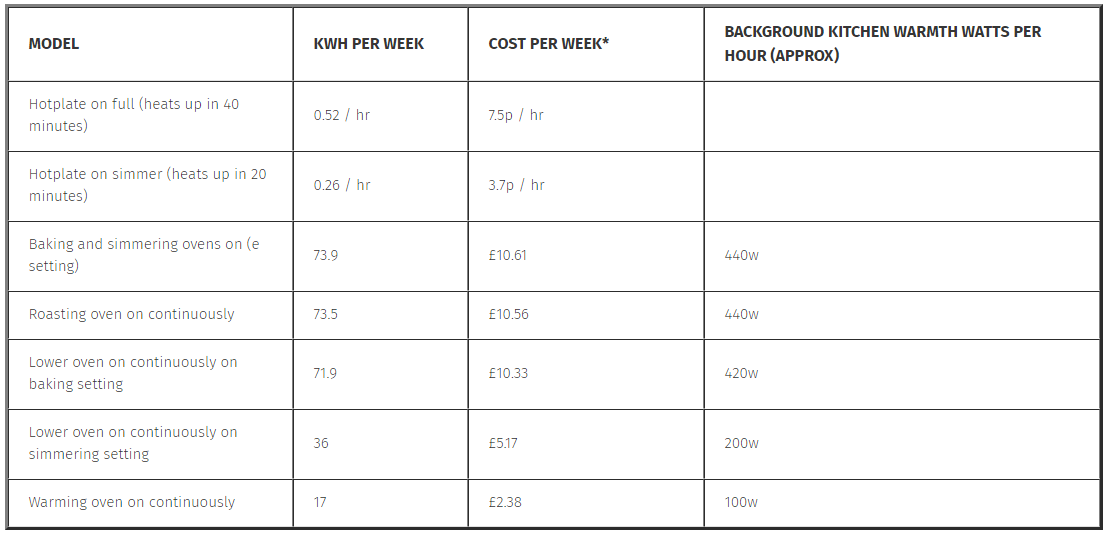
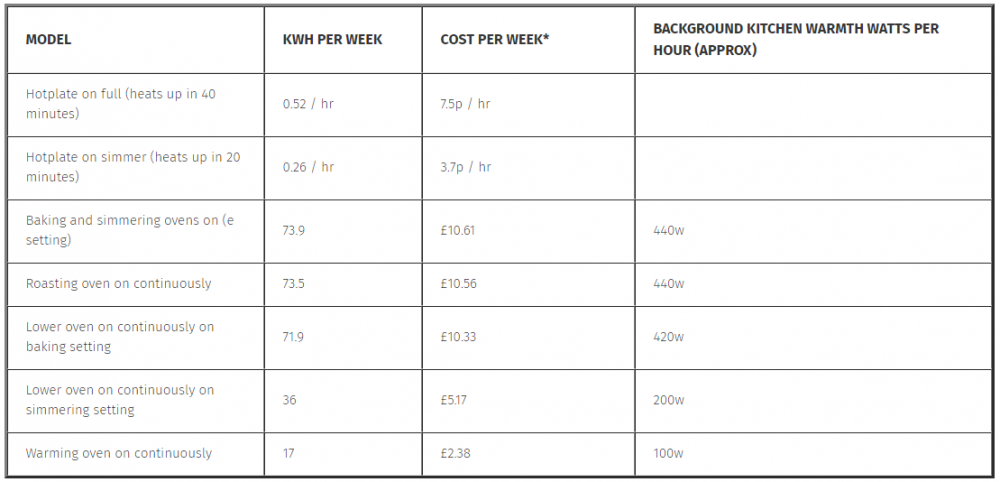
Working out the heat loss isn't too difficult: the 0.35 W/m2K is the critical number. Multiply this by the area of the floor slab in square metres and the temperature difference between the slab and ground underneath. For example: (0.35) x (60 x 8 m2) x (35°C-15°C) = 0.35 x 480 x 20 = 3400W (3.4 kW) For what it's worth the insulation levels don't look all that bad - Roof is probably ~0.17 W/m2K and wall is probably similar. They aren't great but significant improvements would be hard work so I'd be more interested in other loads: The Aga and trace heating are ~16 kWh/day by themselves (6000 kWh/year: 20% of your total consumption), and the Aga could easily hit 10kWh/day without breaking a sweat. My suspicion is that this is a very large chunk of your consumption. The usual way of dealing with long dead legs is to fit a circulating pump and a return line, so hot water gets pumped around a loop on a regular basis, and the draw-off line is quite short. Depending on how accessible your pipes are this may not actually be that hard a fix, it won't reduce the heat consumption of the pipes (insulation is needed for that, which you could do at the same time) but it should reduce the bill substantially as the heat comes from a heat pump rather than electric resistance heating. The additional 16kWh the day before your son left suggests something is going on more than just "a couple of washing machine loads" since most washing machines would use less than 1kWh per load. Large amounts of hot water use, electronics, cooking, something like that - that's another 6,000 kWh/year.
-
Do you know how big the ground connection for the heat pump is? A 20kW heat pump should need roughly 200m of trenches (slinky, dependent on soil conditions) or multiple boreholes. If undersized the efficiency can fall off a cliff. How bad are the draughts? Is the building uncomfortably cold on a windy day in winter? They're potentially a huge heat loss for a building that large - assuming that the building is 60 x 6 x 3m and the temperatures are 5°C outside and 20°C inside with 1 air change per hour then you're going to be needing 5.5 kW of heating just to counteract the drafts. Making some assumptions about heat pump efficiency and the like, that's potentially 40 kWh of electricity consumption per day even before allowing for any heat going through the walls or floor directly.
-
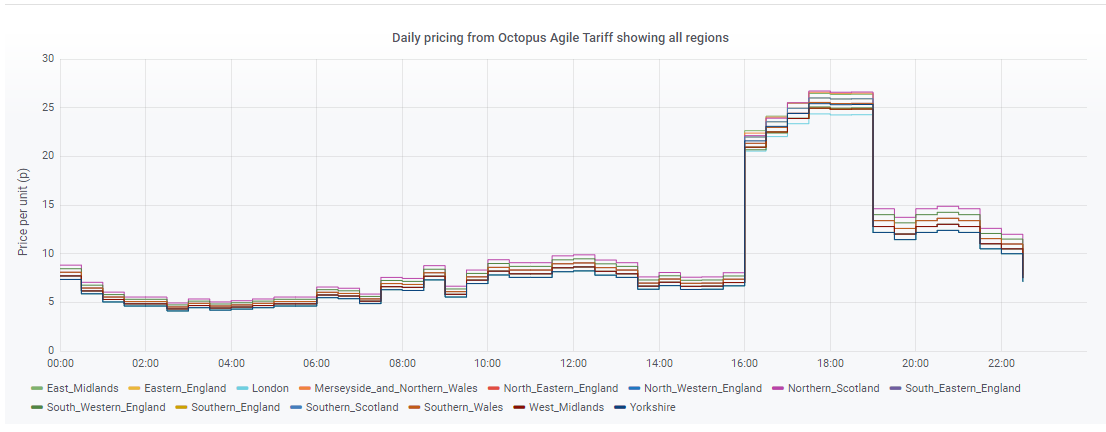
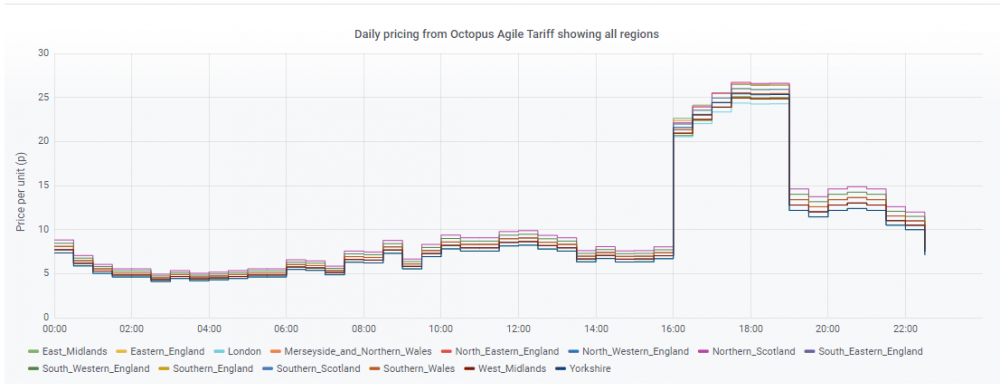
https://octopus.energy/blog/outgoing/ - the wholesale price is multiplied by the M_tariff figure, plus the B_tariff fixed rate all the time and the C_tariff number between 4 and 7pm. Back calculating from the tariff graph above to work out the wholesale rates, exports after 4pm yesterday would have been paid about 12p/kWh. Before then it would have been about 4-5p/kWh: a bit lower than the import rate, but virtually identical to the overnight cheap rate. Essentially that means there is no benefit to using PV when produced as opposed to exporting it outside the 4-7pm window and using overnight cheap rate electricity. Within the 4-7pm window, there is a positive incentive to export as much as you can. Values are based on the South Eastern region where I am - the logic is probably quite a bit different in Scotland for instance.
-
Is that still true? In a world with fixed tariff rates which don't change with demand then it makes economic sense, but from an environmental point of view it doesn't and smart meter tariffs mean it makes economic sense to shift demand too. They're also quite a bit easier to deal with than self-consumption as they've got a far larger applicable market at the moment. To give an example, you need 10kWh for water heating at some point over 24 hours and are on Octopus Agile/Outgoing: Using this between 2am and 4am will cost 50p. If you have a PV array producing the same amount of power between 11am and 1pm you could export it for about the same price. However, if you've say got a west-facing array which still produces after 4pm today you're much better off exporting than self-consuming: you'll be paid about 12p/kWh to export compared to the ~5p/kWh you would pay for the same electricity overnight. It's also significantly cheaper and easier to use a smart time clock to shift the demand rather than batteries - and price is a pretty good proxy for environmental impact since the low emission forms of generation all have essentially zero fuel costs and so will want to generate whenever they can. It's not perfect, but with increasing amounts of wind on the grid the odds are that this will work out best over the course of a year. Certainly the cost difference isn't big enough to justify spending very much on load shifting - at most you could justify something which uses weather forecasts to predict daily PV generation and load shift based on expected exports and export/import prices.
-
I'm rather less detailed than you, really just trying to get an understanding of roughly what we can afford to build and if we'd be happy with it. Tweaking walls and the like isn't a major issue once it's roughly right, and to be honest I don't think I've really got the skills needed to do it well. At this stage that isn't really an issue though.
-
Flat rate payment? That would be a significant improvement for anything with halfway decent insulation.
-
Bet you don't have "space underneath the floor is enough to stand up in" though!
-
I'm attempting to do both sequentially - This thread is part of the wishlist -> design -> price loop, which I'm trying to do myself as a reality/sanity check. Accuracy isn't critical, but I want to ensure that the wishlist is a sensible one (i.e. cut out the things we can't have early) and that the budget is realistic for the wishlist. Essentially this is a GO/NOGO decision and the costing can be quite approximate. If (1) is a go, we then set a budget and a wishlist and go to an architect with it to get as much as we can of the wishlist. This is actually proving to be a very valuable exercise in showing me that I don't necessarily know what my requirements actually are That's more or less the plan, the only difference is that I'd like to do a slightly more detailed cost breakdown so that I understand what is the main cost drivers are - I'll bet that there are several things on the wish-list that are far more expensive than I currently appreciate, but unless I go through this exercise I won't really know what they are. It does rather. I'll have a think about that - 95% of the stuff can happily go to the loft (with a proper staircase) or a large shed in the garden (much cheaper than a garage), it's really about the cars. Having them in a garage is something I want, but it isn't necessarily something that it's a good idea to want.
-
It isn't that I don't believe that more could be done with the site - I'm quite certain of that. What I'm struggling with is what **I** could do with it. We had an architect involved first time around (with the refurbishment/extension) and the process of finding out that we couldn't have what we want was pretty painful, both emotionally and financially. What I'm trying to do here is slightly backwards: work out what we want, and then decide if it would fit into the budget or not. If it doesn't, then it isn't going to happen - given that the whole process would be both expensive and painful then it isn't worth doing for us if we end up with something more than slightly compromised to fit our budget, we'd probably just move house and end up with a different set of compromises. The shape of the design in my head has certainly changed noticeably during the thread, albeit not massively so. A lot of it is reconciling what we want with what others are likely to want in future if we ever need to sell (e.g. if moving jobs) so that we don't build something nobody else would want. The upstairs/downstairs balance of the house is a good example of this. That was the intention, and all the comments are certainly massively appreciated even if I'm not necessarily adapting to them yet. I tend to spend quite a bit of time mulling things over before I act on them, and we don't have a drop-dead date to make a decision by. I was once described by a crusty old RAF Flight Sergeant as someone who "could tell you the square root of a jar of pickled eggs but couldn't get the f***ing lid off". I think that's quite apt here - what I have is a design that I know inside out, but the lid is still on...
-
Hmmm... I've done that at a fairly high level: the rooms link to each other as we want them, more or less, and are mostly biased towards the garden which we also want. I've not really done anything to link them to thinks beyond the house though (patio area, where the other houses are, etc.). One thing I'm wary of is that I'm not trying to be the architect here - I've got the wrong mindset, frankly. What I'm trying to do is - cheaply - generate a design which from a size and complexity point of view roughly matches what we would end up with. I can then cost it out to see if what we want to do is feasible or not. Thing is, I've already done that - or at least I thought I had. From the reactions, I'm starting to suspect that either my requirements are non-standard (entirely possible - my wife for instance will happily work all day long in a darkened room) or that my translation of the sizes on the plan to the real life experience of living in them is flawed.
-
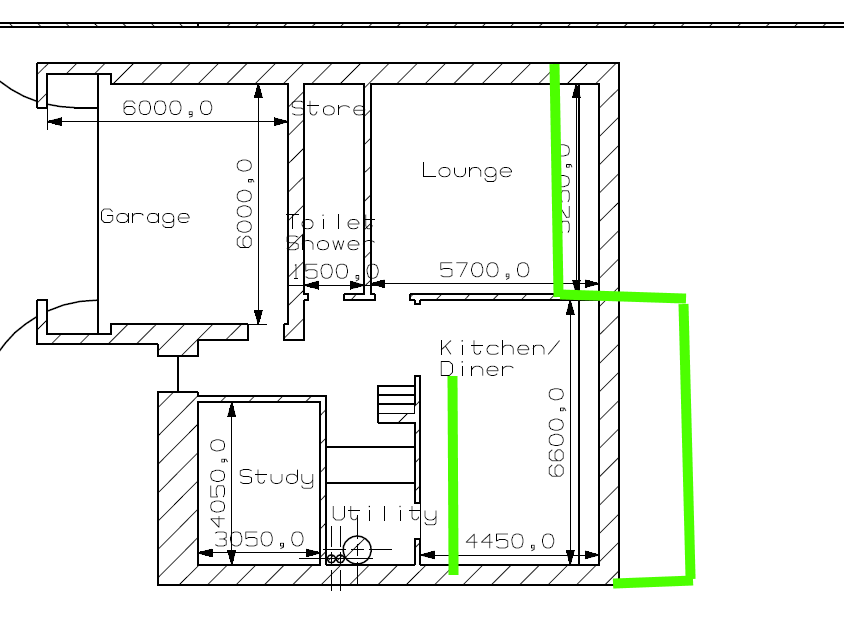
Something more like this, with the extension being ground floor only, possibly with a skylight over? That would give the dining area a SW facing window and make the lounge a little less dark as it wouldn't be quite as deep. Would also allow me to open up the staircase a bit wider to act more effectively as a light well from the skylight. It would also potentially concentrate the patio area in front of the lounge, tying everything together a bit better and not increasing the intrusion of the house into the garden. The NE wall would be facing an ugly concrete garage and an old shed (both right on the boundary), so unlikely to be an issue. I've not really even started thinking about glazing yet, assumption so far is that rooms which need natural light on the end faces can have obscured glazing (en suites and probably the utility) but that I'd prefer to use it for light only as the view out is pretty fugly by comparison with the front and rear.
-
Sadly there's a problem with that. As an engineer, there is delight in a rational, efficient solution and you're extensively trained to think in a particular way. That spills over in all sorts of ways - including lifestyle to some extent. <example of engineering thinking> The bit I think I'm struggling with is that there are views to the front (on the upper level anyway - on the lower level it's whatever I can salvage of the garden from being turned into a car park) and a big garden to the back, but nothing to either side. That means the glazing needs to be orientated towards the front and back (anything to the side is looking at a fence or a blank wall), and the house needs to use as much of the width of the plot as it can (currently I've left 1m to either side). That then means scaling the volume is a matter of making the house shallower or deeper. </example of engineering thinking>
-
I suspect it might well already use ventilation rather than a dehumidifier to remove water from the air in that case.
-
Partly because I'm an engineer so naturally try to optimise surface area/volume ratio, partially because the current house is an L shape and utterly disfunctional. I suspect that is leading me to design it to solve a particular set of problems, but those problems might well be the wrong ones Views are really only front and back, but light is potentially from the side. Next door is an L-shape (sideways garage at the front, with a room over) - it's a bit smaller, a 3 bed Potton kit from memory. Only real difference is that it's shorter front to back, otherwise they're built up to the sides of the plot. 2 doors down is much larger, upper floor is only Velux windows to the side though so much more light but no views at all.
-
Big swimming pools use heat exchange ventilation to control humidity (https://www.dantherm.com/gb/technologies/swimming-pool-dehumidification/how-to-choose-the-right-dehumidifier-for-indoor-pools/), with dehumidifiers used for small ones due to the lower capital cost. Max water carrying capacity of air is 0.025 kg/kg at 28°C (https://www.engineeringtoolbox.com/humidity-ratio-air-d_686.html), so 0.015 kg/kg at 60% humidity is about right in the exhaust air. 40m3 pool suggests a surface area of about 30m2 and an air volume of about 150m3. That suggests the most the air could absorb before it's saturated is a couple of litres (150m3 of air weighs ~180kg, at 28°C it takes 0.01kg of water per kg of air to saturate it -> 1.8kg of water). I'm guessing your run the dehumidifier multiple times per day for short periods? Best I can find is energy efficiency values of 0.5 kWh/l, so you're looking at 16 litres of water to remove from the air per day (less if it's less efficient). Assuming the outside air is 20°C and 60% humidity, every m3 of air ventilation would remove ~0.1 l of water, so you would need ventilation at ~160 m3/day which is pretty minimal. Pretty much any MVHR unit would do that, although you'd need an external humidistat to prevent the humidity going too low. There might be a couple of days per year when it isn't enough (very hot and humid outside), but there would be no need to remove the existing dehumidifier, just turn it off normally. Looks like payback time for a cheap MVHR unit (DIY installed) would be 12-18 months to me...
-
That's astonishingly high. Any chance you could address the problem differently, for instance by fitting an appropriately sized MVHR system running off a humidistat?
-
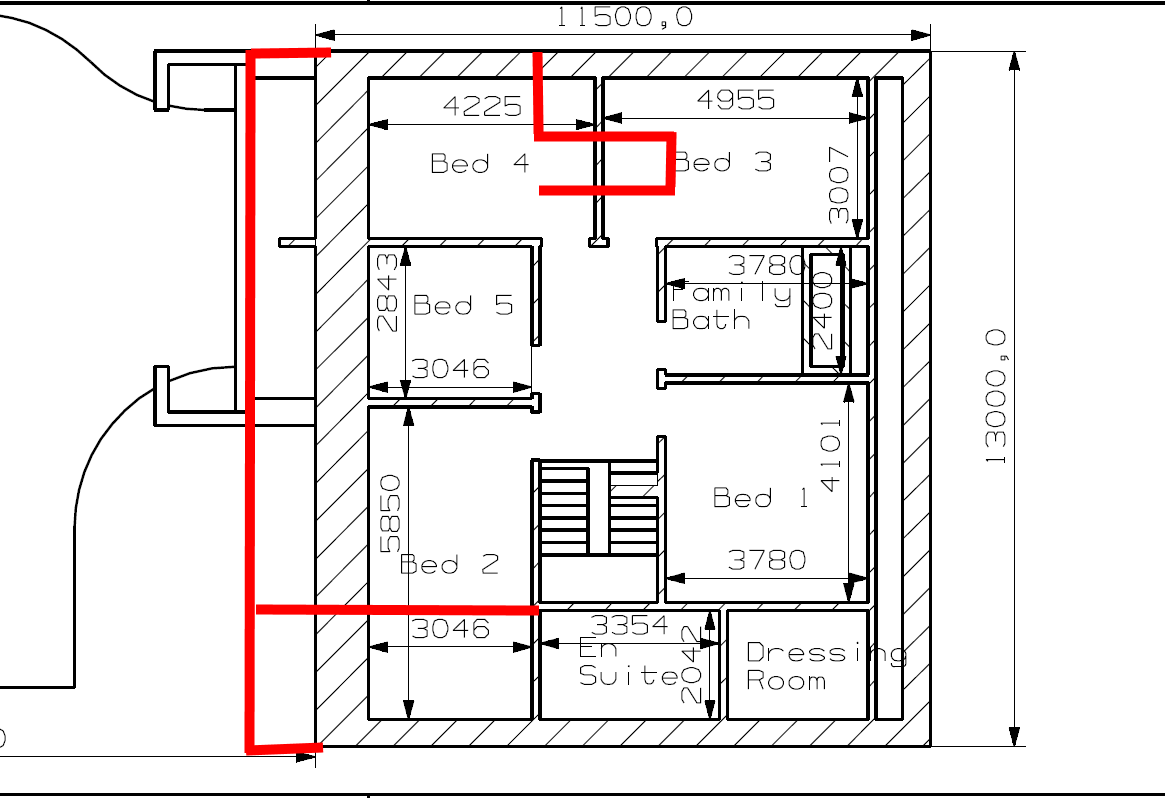
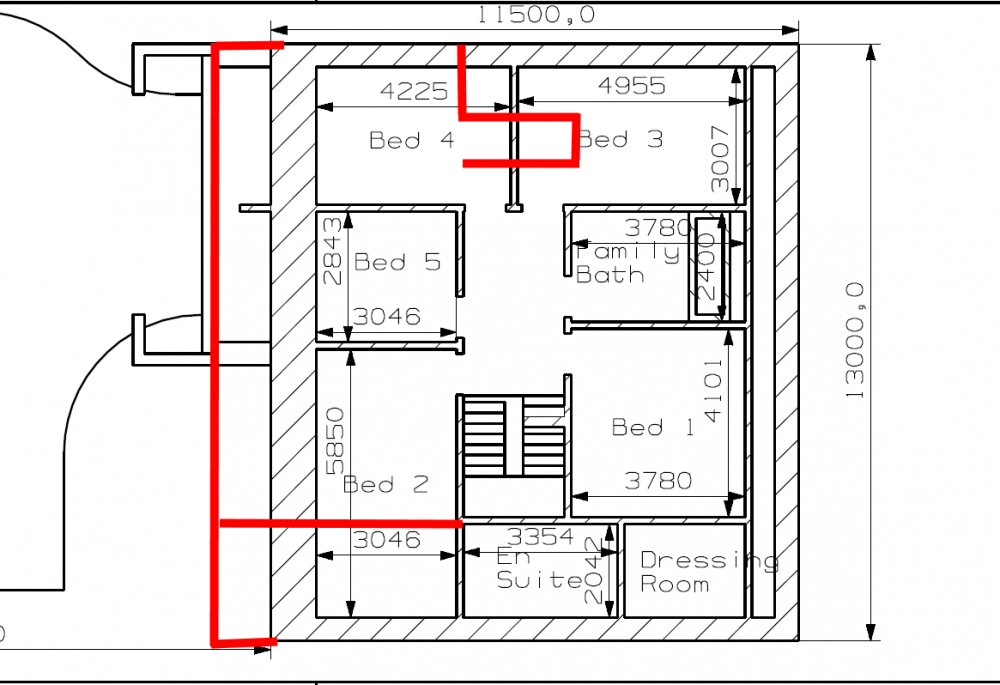
Garage being placed for the best light is unfortunate but unavoidable if I'm going to have one - if self-driving cars ever become a thing then it's getting converted into another living room! I think it's pretty much unavoidable, and since the plot isn't all that wide it pretty much has to be in front of something if we're going to be able to get either car out on demand. That's a major irritant at the moment. Initial design had the kitchen and lounge swapped, with the utility behind the garage and shower. Problem was that only worked with a significantly deeper house - otherwise the kitchen is just "too small" according to my wife. We also want the house facing towards the garden so far as possible - it's a choice of light+road view or a bit dim+garden view. Like anything else, you can't get everything you want. I'll have a think, but I suspect a kitchen/living room/diner combined is what you'd need for a dual aspect and that probably wouldn't suit the way we live. Modification to upstairs shown below based on suggestions so far - push the front wall forward ~700mm bringing the design closer to a square (excuse the not-to-scale lines). That evens out the size of Bed 3 and Bed 4 and allows a ~2 x 1m space to be created - initially that would probably be wardrobes for each room, but it's above the downstairs shower/store so providing water and drains should be a doddle in a few years if needed. I've flip-flopped a few times about flipping over which of Bed 1 and Bed 2 is the master - at this stage it doesn't really matter because shifting a partition wall slightly is really all that is needed to change over, if that, and that will have no cost impact.
-
Already doing that - stairs continue to loft level, and I've got a Velux in the top (cathedral ceiling). There's a ~300mm gap in the middle for the light to come down - should also help with stack effect in summer.