


markocosic
-
Posts
979 -
Joined
-
Last visited
-
Days Won
1
Everything posted by markocosic
-
Heating & hot water for temporary accommodation
markocosic replied to SuesieG's topic in Boilers & Hot Water Tanks
If there's that much pv on the roof there's already a fat electricity supply/ submain to it -
HELP: insulated Twin wall flue, connection with ceiling
markocosic replied to Adsibob's topic in Stoves, Fires & Fireplaces
You may need the euro standard (in en for English) that the twinwall is made to. That's best from evs.ee in my experience. (the Estonians sell the euro standards for less than most standards bodies including bsi) -
FWIW triple wall exists to ease this issue.

-
HELP: insulated Twin wall flue, connection with ceiling
markocosic replied to Adsibob's topic in Stoves, Fires & Fireplaces
To might also like triple flue fwiw. Makes air fed stoves easy and further reduces clearances in some cases. https://www.sauresta.com/en/triple-wall-chimneys-system-npnpnp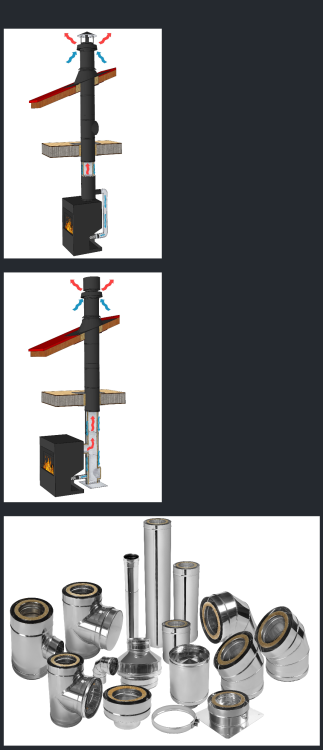
-
HELP: insulated Twin wall flue, connection with ceiling
markocosic replied to Adsibob's topic in Stoves, Fires & Fireplaces
Twinwall can go through a certain amount of non combustible insulation before it risks getting dangerously hot and you need to make a counterbore in the top side of the insulation to cool it. Mineral wool = insulation and smoke barrier around flue Stretchy silicone flashing = airtightness layer 50 mm gap to plasterboard or joists or floorboards Stainless trim plate to hide that 50 mm gap. Nice details in this are essentially from the EN standard: https://www.sauresta.com/static/files/3/54/354/Dumtraukiu_instrukcija_EN_Rasu_2018-10-26_No7.pdf evs.ee for EN standards cheaper than elsewhere fwiw. https://www.sauresta.com/en/double-wall-chimney-system-npnp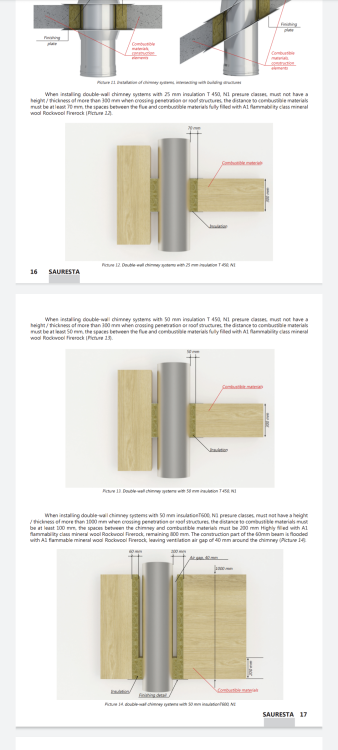
-
Sand is like water. It will move. If you put 10 mm everywhere then you get an even compression everywhere. If you put 5 mm in some places and 25 mm elsewhere you'll have a mess. Sub-base needs to be level. Sub base needs to be laid in layers (say 50-75 mm thick; 100 is probably too much) and whacked. With a wacker big enough to settle it (200 kg diseasel jobbie) not the little wacker (70 kg petrol jobbie) that's just for "vibrating the blocks smooth/vibrating the sand between the blocks to lock them" https://www.speedyservices.com/hire/building-site-works/18_0109-h-Wacker-Neuson-DPU3050HE-500mm-Reversible-Plate-Compactor-Diesel-206kg Hard to fix without digging out the lot.
-
Heating & hot water for temporary accommodation
markocosic replied to SuesieG's topic in Boilers & Hot Water Tanks
How high is the roof? What will the finished ceiling be? Can you make it a cold roof and put 30 cm of insulation on top of that not 30 mm? -
Heating & hot water for temporary accommodation
markocosic replied to SuesieG's topic in Boilers & Hot Water Tanks
On second thoughts (the cost of those 50/80 litre cylinders in the UK) then subject to distances what @Nickfromwalesdescribes with a buried DHW recirc loop from the main house that isn't recirculated unless the room is occupied would make more sense. You're buying the power cable and cold water feed anyway so you might as well bung a pair of pipes with closed cell insulation on them in a duct in the same hole. Provided that the usage truly will be intermittent that is. I wouldn't plumb in an unvented cylinder on a "temporary" basis though. Lots of faff if you're paying somebody else to do that. I'd chuck in a cheap electric shower instead even if it's just for handwash / dishwash / toolwash use. In ongoing operation you PV > Heatpump > Cylinder in house > Undergound pipe OR PV > Minisplit. If it's a long way from this outbuilding to the house then I'd still chuck in an 80 litre wall hung cylinder. https://www.waterheater.shop/en/products/electricwaterheaters/80-liter/eldom-spectra-80-liter-boiler-manual-control/ https://www.modernheat.co.uk/product/80-litre-tesy-bi-light-electric-hot-water-cylinder/ If you were a European / American you'd rely on the safety valve to discharge a bit of cold water as the tank heated up instead of installing an expansion vessel to take up that water. Not legal in the UK but...for a shed on a building site... 😇 -
Heating & hot water for temporary accommodation
markocosic replied to SuesieG's topic in Boilers & Hot Water Tanks
Minisplit for heat / cool and small 50/80 litre unvented cylinder with small immersion mounted at high level in bathroom if not in a cupboard. PLenty for a single shower. Small immersion helps keep it all on pv. Gives you a redundant system Vs main house for some resilience. Avoid burying pipes IMO unless the shower is stupidly powerful. Avoid electric shower as that won't make good use of pv. Wood burning stove is a pita and pollution. -
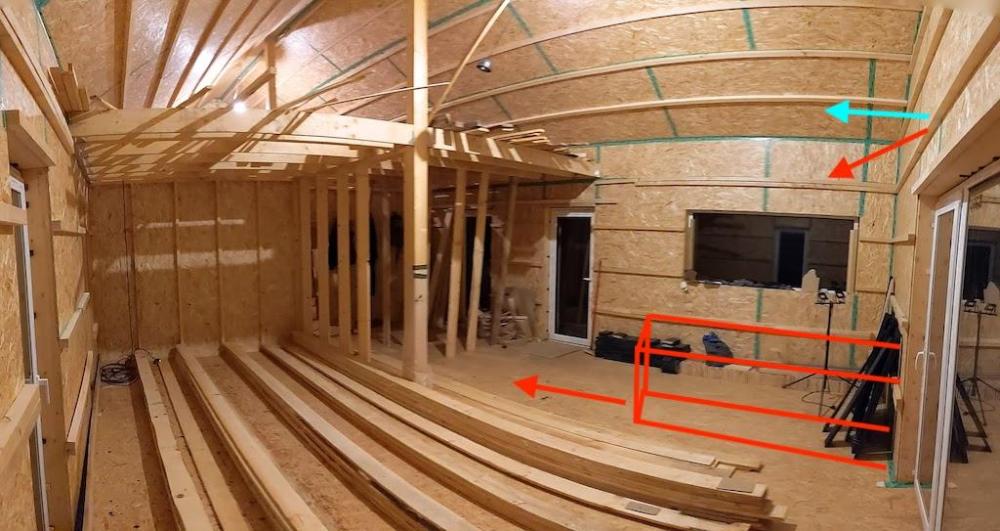
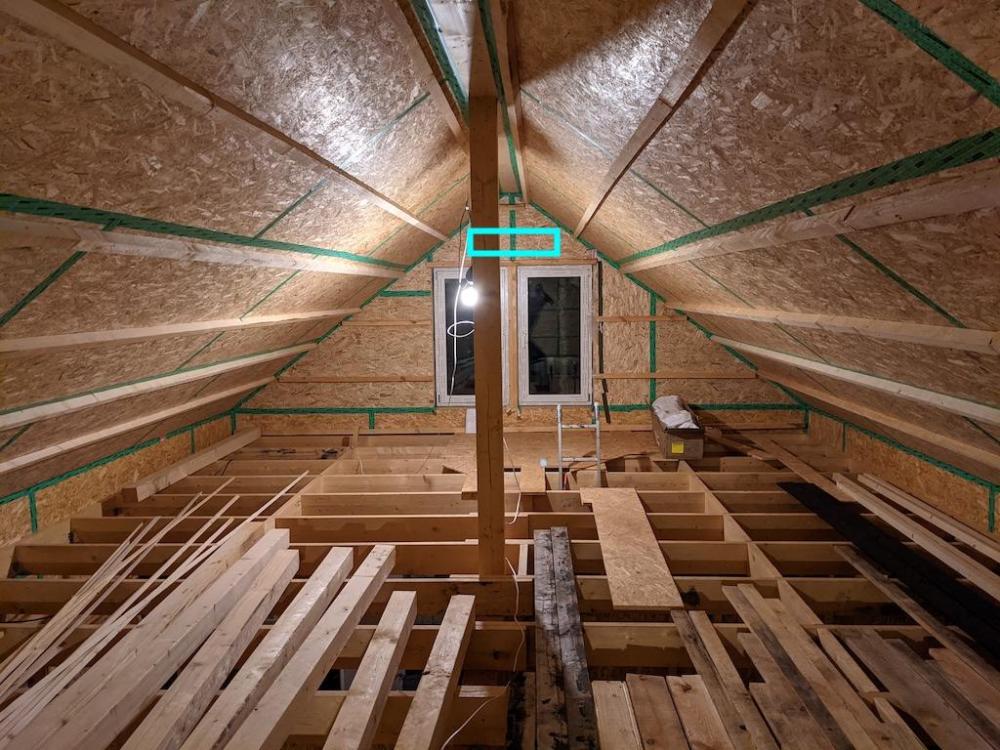
I'm flip-flopping between a wet system and a ductless system for heating / cooling. Space is 12x6m; with 8x6m covered by a mezzanine; and 3m to eaves / 5.5m to ridge I could shove the indoor head of a mini split above the main south facing window and try blow hot air across "up" on to the mezz and warm air "down" onto the floor but I think this will be lousy for both heating (it'll shoot straight up) and cooling (it'll not cool the mezz) If I had two heads then cooling from the window above the mezz is sensible. That's well out of the way (and sight most of the time) and the air will flow along the mezz and fall onto the floor ok. How about heating from a kitchen island? Would it be nuts to install a unit in an island and have it blow across the floor towards the bedrooms / spread out "under" the mezz (the living room area) before rising up through the kitchen and dining area and heating the mezz? Anybody ever seen fan coils for heating in a kitchen island that aren't just the little plinth kickspace heaters?
-
Before plasterboard - onto underlying blockwork or noggin
-
What are the thoughts on this style? https://www.screwfix.com/p/contemporary-bar-valve-fixing-kit-chrome/76919 (bombproof mechanically as far as the physical strength of the bar mixer mount is concerned) I guess that's more off a pita to get the depths set vs sticking copper tails out and trimming to suit after tiling?
-
We should have installed air conditioning… now what?
markocosic replied to Adsibob's topic in Other Heating Systems
Floorplan? AC on landing is nice. Performance of splits materially exceeds performance of portable units. Don't oversize; do check the detail performance docs; question units without docs available. What is background "hotel load" that your gizmos and gadgets are contributing? Air2Air Performance.xlsx -
If you're ever passing Cambridge you're welcome to borrow my pressure tester. 10 bar will find any fittings that you forgot to nip up. You'd be surprised what will hold at 1 bar then potentially pop off later! I bought it for testing / prestressing some underground district heating mains - take to something like 20 bar, wait for it to stretch, then take back to 20 bar and hold overnight / verify that the drop is as specified. Only then do you trim to length and make the final connections. (it stretches it bucketload and it you don't do this then when it's warm and at normal operating temperature you'll find it creeping into the houses...)
-
For sure it's busy as can be starting about April onwards; shortages of both bits and of labour; now that it's fashionable to reduce energy bills.
-
Air movement makes you feel cold. IME: Insulated wall / triple glaze / UFH / 18C - feels a bit like - less insulated wall / double glaze / radiator / 21C - feels a bit like - less insulated wall / double glaze / A2A / 23C. Not as comfortable for a given air temperature; even if you are not in the direct stream; but being in the direct stream makes it worse. Shoving it downstairs and relying on it running up the stairs and through the bedroom doors during the day does work. You wouldn't want to sit downstairs as the air is running past you and up the staircase though. You wouldn't want to walk around downstairs with it wafting past your face either. Better insulation and higher ceilings and more open spaces all help. A ceiling plenum would be interesting but adds fan power and question marks on dust etc. A landing could function well as a plenum for reducing airspeeds and letting the cool air into landing / hot air into rooms. Our layout doesn't suit this - unit currently blows across an open plan space before shooting up the staircase. Noticeably warmer air and no draughts probably means a unit operating with a hotercondenser and lower fan speed. Comfortable but not as efficient. The unit we have offers decidedly lukewarm air at quite the rate of knots if operating at any meaningful output.
-
They're lousy for heating. Anything less than 37C feels cool to humans. The air leaving these will be at more than say 21C setpoint but less than 37C (for efficiency reasons). It'll make you feel cold. It will annoy you. They're great for cooling. Anything less than 37C feels cool to humans. The air leaving these will be at less than 21C setpoint. It'll make you feel cold. It will please you. it will still not please you as much as still air at 21C would please you. There is a MATERIAL variation in performance between units. It is DIFFICULT to work out what it is. Explore here: https://www.eurovent-certification.com/en/advancedsearch/result?program=AC&product_type=AC1%2FA%2FS%2FR&keyword=&champ_23=3-4#access-results Or look at the attached spreadsheet where I compare five units. Row9 = standard bracket Midea, €650 for the 3.5 kW / 12000 BTU kit. Row11 = basic bracket Panasonic, €650 for the 3.5 kW / 12000 BTU kit. Row12 = standard bracket Panasonic, €1300 for the 3.5 kW / 12000 BTU kit. Row13 = premium bracket Panasonic, €2600 for the 3.5 kW / 12000 BTU kit. Row15 = premium bracket Panasonic, €2200 for the 2.5 kW / 9000 BTU kit. The ratings are built around cooling mode. The 3.5 kW class units provide ~2.5 kW of cooing at 30C ambient. COP4.75 for a basic one, 6-6.25 for a standard one, 7.5 for a premium one. Not much difference you might think. In the more common condition we see 1.6 kW of cooling at 25C ambient. COP7.25 for a basic one, but 10.5-11 for the standard one, and 12.25 for the premium one. That's a material efficiency bump. The differences get even more spectacular in heating mode. When it's 2 degC out the premium unit manages 2.25 kW at COP 5.75, but the standard unit only do 1.5 kW at COP 4.5-5.25 (that COP falling off a cliff if you push them harder), and the basic unit just 1.25 kW at COP. The premium units also come with more defrost / snow / ice type equipment protection than the standard units. That premium unit will still be giving you 4.2 kW at -10 degC with a COP of 2.75+ which is damn impressive for heating. You definitely want these units if it's your only source of heat. Standard class units will probably do if you're only cooling or only operating in the shoulder seasons. 2.5 kW class units work even better. 2 kW at COP 6 when it's +2C out, 1.25 kW at COP 8 when it's +7C out, 3.6 kW @ COP 3 when it's -10C out. You're better off with two of those than a single larger unit. One upstairs one downstairs. Downstairs takes more of the heating load than upstairs but both are available in limit conditions. Vice versa for cooling. Multisplits don't work as efficiently unless you ONLY use the one head at a time and you undersize the outdoor unit. (i.e. you have the 2.5 kW outdoor units with two 2.5 kW heads) That's due to the operating range limitations of the outdoor units. It only has one sweetspot if you're going for the ultimate performance. I threw in a standard range 3.5 kW Panasonic unit in the UK in a fit of heat induced insomnia rage a couple of years ago. Works adequately for shoulder season use. Not worth paying double for the premium unit. I wouldn't use it in preference to the gas boiler in winter for comfort reasons though. The XtremeSave Midea performs decently for the money. (standard panasonic performance for the basic Panasonic price) Don't buy the Midea Blanc etc for €50-100 less. That extra €50-100 makes an enormous difference to the performance. For ~€999 fitted we're going to pop one in the apartment to take the edge off in summer and the edge off in spring/autumn when it's the odd cool day but the district heating hasn't started up yet. You won't justify the step up to premium if it isn't the main source of heating / cooling. The basic range is never worth it for cost of ownership reasons. I am still seriously tempted to use an air to air unit in the cabin build instead of a ground source heat pump. COP 3 ish at -10C is approaching what the ground source unit does anyway. Heat distribution and comfort from a lack of drafts swings me back to wet heating systems though. MoreDetailPerformance.xlsx
-
- Something seriously wrong with the plumbing that's essentially connected the mains water to the primary circuit - Filling loop left connected / open without check valves / with failed check valves - Failed primary coil in the DHW cylinder Issue may have been there for a while without you realising until you went way for a while or there was a shutdown in the water mains etc that depressurised those whilst you were away. I wonder how many domestic systems (without bright green bitter tasting dyed-and-bittered glycol in them) have failed this way without folks realising?
-
Appropriate shading first if possible / acceptable. That kills overheating due to sun but not overheating due to a sustained hot spell. Veluxes are fairly horrible from this point of view! 5 kW ASHP will heat the place with ease. 5kW (?) mini split AC to the upstairs landing (quieter than in bedroom and will pre-cool all upstairs rooms plus spill downstairs if allowed to do so; plus backs up the ASHP if it dies and can be run in parallel to reheat aggressively in a "just got home from hols" scenario) How bad will overheating be as is? Do you intend to cool it or just take the edge off hot spells in order to sleep? (with the window shut to keep the heat out) Immersion can be used for faster reheat if guests rinse the hot water. On that odd occasion that you use loads. No need for dual cylinders. To what degree is budget important? That probably dictates equipment choice as much as anything else. "Forever" house?
-
A fabricator would knock those out in no time. Couple of plates. Couple of holes. A weld. No need to try finding them off the shelf?
-
I think I'd float it. You'll want the framing to be fairly rigid so that it doesn't twist along it's length if you do this though; with good anchoring at the land end.
-
Why is there a buffer tank at all? The UFH controls are controlling the slab temperature in order to control the room temperature. You want this to be zoned. Ok. You can supply 35C into the UFH the deepest darkest depths of winter. 30C when it's mild out. 25C when you need virtually no heat etc. If this is "tuned" correctly then the "runtime" of the UFH (how long the zones call for heat) should be about the same throughout the heating season. Allowing the heat pump to set the slab temperature by changing its flow temperature, rather than always filling a buffer to 35C and then using the runtime of the UFH to set the effective temperature, would improve efficiency. If you fed the heat pump from the "pump" call on the UFH controls then it is "on" whenever a zone is calling for heat. When the heat pump is "on" it will decide how hot the supply water is based on the outdoor temperature. (or it could/should) It will run until the target flow temperature is reached then modulate down to maintain that target flow temperature; before eventually it cycles whilst the UFH pumps run continuously. You just need some open system volume to allow for defrost. Is there a single large zone that can be "always on" but throttle back a little so that it always takes longer to warm up than the other zones? e.g. in my (regular gas boiler house) the open plan downstairs is 3 rads all without TRVs, then upstairs are 3 bedrooms with TRVs. The rads downstairs are setup so that downstairs always takes longer to heat than upstairs. Therefore any time the boiler pump runs it can access the water in the downstairs rads to avoid cycling. You could do the same for your main living space to allow the heat pump to access that water for defrost purposes.
-
Cracking project! Wookey told me about this one at the pub. Reading your writeup I can't believe that he didn't "just" copy rather than buying a little Vaillant unit off fleabay... 😂 Thoughts: - Serious props for JFDI-ing it. Was it as much fun as it looks? 🙂 - Can I come take a look one day? (I live 50/50 Cambridge/Vilnius) - Agree on W2W units being far simpler operationally - I think the reason that ground source units tend(ed) not to bother with inverter drives is their operating envelope. Unlike air sourced units our input temperatures are far more stable. And unlike air to air units (which must modulate else hot/cold draughts) you tend to be coupled to some thermal mass (so can cycle without adverse effect). Also unlike air source units you have to keep the water going through the ground loop fast enough to achieve turbulence / mixing (else heat transfer falls away) yet not so fast that the pressure drop is excessive (and you burn too much power pumping the water). This extra constraint means that their sweetspot (in terms of power output / sizing) is narrower; and given that cycling is ok; why bother to introduce a costly element with a design life of less than 30 years (high power inverter drives) and suffer all the hassle of ensuring that your oil distribution / refrigerant distribution still works at a variety of flowrates and your noise isolation works at a variety of operating frequencies etc? - MCS actually has some good docs on ground loop sizing for turbuleant flow etc. Glycol will make a material difference. - 5C and 40C are perhaps a bit tight for a ground source heat pump. I'd expect refrigerant at -5C (for brine at 0C) - Running raw water was brave. Yes Ethylene Glycol is poisonous but it breaks down quickly in the environment. Propylene glycol is too sticky / too harmful for operating efficiency to be worth considering IMO. Alcohol is also an option...but difficult to source cheaply by the barrel for obvious reasons! - Good idea allowing the ground loop to equalise for a while then kicking the pump and measuring the temperature in order to get an idea of ground conditions. Like the modelling. - In brazing pub CO2 is often nitrokeg (mostly nitrogen, a little CO2) and dirt cheap. Rubbish for MIG welding but might be ok for your use. Could also use welding argon. Readily available. If anything like soldering then it's better to get hot fast and braze fast than it is to heat slowly. Less time for things to oxidise. So may be easier work with oxy. Or just a big mapp torch. There's a torch and then there's a torch. - Compressions on aliexpress heat exchangers at 13 bar working pressure. Yikes thinks me. (both the compressions and the aliexpress) Good job it's outside! - For practicing this kid of thing is useful for testing joints: https://www.toolstation.com/testing-pump/p36395 - Getting even liquid distribution after the throttle and into the plate is supposedly quite difficult. If you're boiling in the tube entering the heat exchanger who knows what the distribution within that is like. - Pukka digital gauges / temperature clamps are not too dear these days. Pair with an app to do all sorts of lookup. £200 new; £170 used. I have a set (used for district heating actually - measuring differential pressure on water...) that's borrowable in Cambridge fwiw. Wookey has a matching airflow sensor. https://www.amazon.co.uk/dp/B07W62L1DR?ref_=pe_27063361_487360311_302_E_DDE_dt_1 - Like the perf drain over the ground look. I'll pinch that and run the guttering into it. Perhaps greywater even. Warm in addition to wet. - Like the automotive header tank. I'll pinch that idea too. - I like the control logic on the (otherwise dumb as a rock) Danfoss unit that I need to finally fit this year. Rather than using an air stat and a fixed flow temperature it's targeting a flow temperature based on the weather and using integral control to decide when to run the compressor. That should drop your flow temperature at conditions other than design condition and bump your COP vs running at full temperature on a hysteresis stat. https://manualzilla.com/doc/5637761/danfoss-general-user-manual?page=13 https://www.manualslib.com/manual/903511/Danfoss-Dhp-H.html?page=50#manual - I'll definitely pinch the mesh+basecoat+mineral wool construction method for an insulated box. Not for a heat pump but for the services entering our cabin build. (need to stop the potable water freezing between the 2 metre buried depth (where it won't freeze) and the ground level (where it will freeze) and the floor (a metre above that) Ideas: - Drop the flow temps by running longer at a lower temperature. Air temperature by hysteresis isn't ideal. - How are your radiators balanced / how do you manages flowrates in those? Any additional total output (at a given flow temperature) to come from revising this? - Suspect you may have liquid distribution issues in the evap. Ideally this wants a straight shot from your throttle device into the plate; perhaps with additional distribution device poking into the plate: https://www.swep.net/refrigerant-handbook/6.-evaporators/asas5/ - How much superheat do you actually have and how much does it vary? Is it worth trying to do an electronic expansion valve at the same time as tweaking the distribution into that evap; or is the operating window so small that it doesn't much matter anyway? https://www.hvacknowitall.com/blogs/blog/371661-adaptive-vs-fixed-expansion-valves https://www.danfoss.com/en-gb/about-danfoss/articles/dcs/evaporator-injection-algorithm/
-
Depends on backfill. I'd use ~22 mm drill bit on hammer mode; hoping that it displaces or smashes up whatever the backfill is; then whack your 40-50 mm posts in using something to protect the tops of them from burring over. They will move the lumps out of the way You will feel it if you're "drilling through a rock" instead of smashing the rock/ moving the rock. If they still won't go in then find something bigger/heavier (e.g. scaff pole) and a close fit, REALLY bash that in with a sledgehammer, then cut the mullered top of it off and slide your fence post down the centre of it.
-
Drill unless you have reason to believe there's something special there. One metre drill bit: https://www.screwfix.com/c/tools/drill-bits/cat12140001?productlength=1000_mm&ptashanktype=sds_plus_shank That's how dad usedto plant daffodils in pembrokeshire clay / sandstone...





