


markocosic
-
Posts
979 -
Joined
-
Last visited
-
Days Won
1
Everything posted by markocosic
-
Slow chain speed and no power vs petrol ?
-
Thanks!
-
Link for more info?
-
I'd stack them horizontally such that you can and chainsaw them in situ. Lidl grade chainsaw. Let it bite into the top log and kick it into the stationary teeth on the saw body. Cut through and into the lower two logs that you're using as a sacrificial cradle. Then split the 20 cm lengths easily with a big axe. You'll then be warm. No need to light the stove. 😂
-
Avoid. Chains on chainsaws. Electric ones pretty benign. Chains, flails, cutting teeth etc on angle grinders are inviting injury. Soft start unnecessary on grinders. If you haven't the muscle / posture / anticipation to hold the thing at startup (without a soft start) then you haven't the muscle / posture / anticipation to catch the thing when it snags. So shouldn't be using it IMO. Stick to battery electric 4.5" grinders with lightweight blades that can't snatch badly.
-
Fun stuff! We are building a 6 x 12 m folly on screws overseas. (because fun, because trying to avoid concrete, because concrete can't be done easily when below zero in winter, and because trucks couldn't get there when soggy in spring and autumn) Timber framed and floored though. And unmortgegable. If intending to have a concrete slab anyway I'd question the screws. If the ground is really iffy they use concrete-on-foam-on-stone-on-whatever as foundations here. There's a even Swedish/Canadian model where they bury air tubes in the slab...initially so that they can pour it in the winter and use an air blower to keep it heated long enough to cure properly when it's minus many outside...later ti use for UFH. http://www.legalett.ca/frost-protected-shallow-foundations-icf-floors-air-heated-radiant-systems-passive-house-passivhaus-net-zero-energy-buildings-leed-concrete-slab-on-grade-insulation-homes.html Or if you're suitably bold and building a bungalow with internal load bearing walls perhaps you make the exterior walls only for keeping the rain out (i.e. non loadbearing) and sit the interior walls on wood on foam on gravel on mud...
-
Outdoor furniture- what you got?
markocosic replied to SuperJohnG's topic in General Self Build & DIY Discussion
The parents have cast aluminium tables and chairs with cushions. 20+ years old. Lived on the coast before moving inland. Look the same as they did new. Cost the same as a reasonably priced car I'm sure. -
Do you have a sketch of this in cross section that I could wrap my head around please?
-
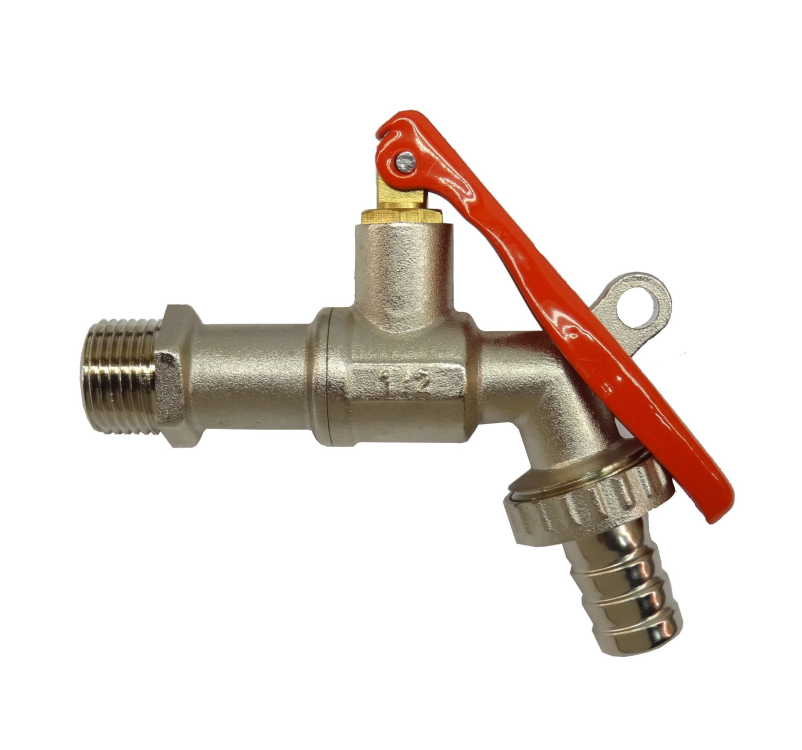
"Lockable lever taps" (search term) outdoors and a noddy combination code lock? I have these on the cold water outside taps because once upon a time nuisance kids and water meter.
-
(UK) I'm after a door / french door (occasional use door) for a narrow opening. (cutting bricks out under an existing window) 1480 wide. ~2100 high. Probably one fixed pane, one opening pane. Side hinge only and outward opening. Perhaps some huffing great single that has a frame not made of wet spaghetti. Keen to avoid the opening being entirely made of frame. White uPVC for self install. House is not a looker or a long term keeper. This would open up some space for access though. Previously I bought some windows from https://www.modernupvcwindows.co.uk but was distinctly unimpressed - the frames have all the structural integrity of wet spaghetti and are as airtight as lace underwear. What profiles/suppliers would you consider?
-
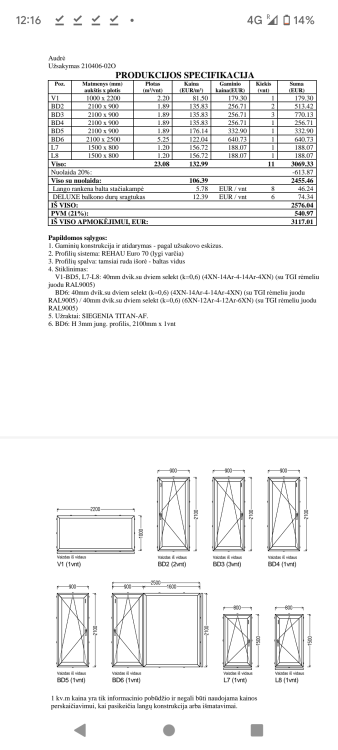
Even if security is meh I wouldn't do it. I think you'll also wear them out as doors if used too often. Fine for a balcony door that stays shut in winter, then gets tilted during shoulder seasons, then gets left open for most of the summer. You'll wear them out / the frames will turn parallelogram on you if used regularly. People also get confused as to how "to open the door" what with it looking like a pull down to open multipoint locking door but operating as a "lift handle to horizontal then open" window. We used rehau euro 70 in 2100*900 everywhere because cheap (€250 in triple glazed tilt/turn flavour) vs a real door. Was a mitake in hindsight. Too much of a cheapskate to change it now though so will just stock up on hinges...
-
The pukka stuff (e.g. series 2 insulated rehau) will last longer with lower heat loss. Pig to work with though. Armacell on 28 mm Hep2o is adequate if you can be sure of the duct remaining dry (not below water line with a slight nick to duct or "U" shaped with exposed ends etc - heat loss from pipe will tend to dry residual moisture for most setups)
-
Meeting your maker aside... (somebody else will be using this even after you're gone) I think in a UK climate the time that the air is COOLER than the river will be small; and you may well have LOWER efficiency on the ground than with an air source unit if your load is mostly DHW. Different if it snows a lot or you're space heat dominated.
-
1) Pop it on a stand to clear it of snow/leaves, said stand sat on the ground, just outside the masonry wall. Run the pipework up to your actual house. Avoids transmitting vibrations. Spend the savings on insulation and getting emitter temperatures as low as possible 2) Ground source in the river probably not worth the faff / cost for a newbuild where space heat demand is low and the reduced DHW performance in summer doesn't offset the increase space heat performance in winter.
-
Enclosure or longer piping run for split ASHP system
markocosic replied to Jonshine's topic in Air Source Heat Pumps (ASHP)
Are you subject to a non disclosure agreement/gagging order? That would be both unusual and out of order. Unless expressly prohibited from publishing you're not prohibited from publishing even if they decline to formally sanction it. -
Enclosure or longer piping run for split ASHP system
markocosic replied to Jonshine's topic in Air Source Heat Pumps (ASHP)
It doesn't matter. Phase change. Phase change. Phase change. The refrigerant evaporates at whatever temperature the expansion valve tells it to. Heating run hours are not 8760, deltaT won't be as high for much of the year, and pipes not exposed to wind lose less heat, loss won't be 200W, and COP won't be 3. (Try 100W and COP 4) The losses are not ideal but not deal-breakers. Yes it would be nice to have all the important gubbins inside. Keeps refrigerant warm too and avoids crackcase heating etc. They put the compressor outside, on rubber feet, in an outdoor unit, on the top of a frame, set in the ground, for noise reasons I understand. Keeps it quieter indoors. Do the lines even need to be buried? -
Enclosure or longer piping run for split ASHP system
markocosic replied to Jonshine's topic in Air Source Heat Pumps (ASHP)
We can debate line sizes and operative temperatures etc but you're not an order of magnitude out. Pipework outdoors is indeed a crap idea. Particularly so in heating applications. Look at installs in hot countries, for cooling purposes, and they don't give too much thought. It's mostly to avoid condensation. Look at installs in cold countries, for heating purposes, and they try hard to minimise the external pipe runs. Outdoor unit typically on the other side of the wall to the indoor unit that does refrigerant:water and has the hot water tank in it etc. Picking the Armacell range: https://local.armacell.com/fileadmin/cms/singapore/products/en/ArmaflexClass1/202110_PDS_ArmaFlex_Class_1_SG_EN_web.pdf "Standard" for a monobloc would be ~20 mm of Class O Armacell type insulation on pipework between 22/28 mm "Standard" for an air:air split would be ~14 mm on pipework between 6mm and 13 mm OD Let's say temperature difference of 40C for a winter condition and bung it into a calculator for exposed pipework: 5.8W/metre for 1/4" and 14 mm insulation (92W loss @ 16m) https://kalk.pro/en/heating/pipeline-heat-loss-calculator/?ab_a=1&r_a=1&s_a=6.35&t_a=14&u_a=47&v_a=7&w_a=0.04&x_a=0 8W/metre for 1/2" and 14 mm insulation (128W loss @ 16m) https://kalk.pro/en/heating/pipeline-heat-loss-calculator/?ab_a=1&r_a=1&s_a=12.7&t_a=14&u_a=47&v_a=7&w_a=0.04&x_a=0 9.7W/metre for 22 mm and 20 mm insulation (155W loss @ 16m) https://kalk.pro/en/heating/pipeline-heat-loss-calculator/?ab_a=1&r_a=1&s_a=22&t_a=20&u_a=47&v_a=7&w_a=0.04&x_a=0 11.3W/metre for 28 mm and 20 mm insulation (180W loss @ 16m) https://kalk.pro/en/heating/pipeline-heat-loss-calculator/?ab_a=1&r_a=1&s_a=28&t_a=20&u_a=47&v_a=7&w_a=0.04&x_a=0 For 16 metres (actually 32 metres) of refrigerant size pipe outdoors vs 8 metres (actually 16 metres) of water size pipe there is a difference/uplift but you wouldn't cry too much about it. You also have to offset there not being a heat exchange and circulator pump; fat hoses; antifreeze valves etc all busy dumping more heat on the refrigerant based installation so the uplift would be lesser in reality. When outputs are of the order 10 kW 200W is material but not deal breaking was my point; and with the relative ease with which you can run fridge pipe vs water pipe I'd not give a second thught to spending £0.20 on some longer fridge pipe vs £5k on a hulking great enclosure. Can't really comment on noise. The units are very difference in timbre and source of noise. Vaillant monoblocs have silent fans and compressors but stupidly noisy (high pitched whine) inverter drives - must have been designed by a deaf old man using cheap audible frequency components. @Radian could elaborate on switching frequencies for inverters etc. Panasonic A2A compressors are noisy in the rotating frequency sense rather than the inverter drive sense. Midea A2A actually pretty quiet. Need to see a unit running really to decide if it's noisy and objectionably so. -
Enclosure or longer piping run for split ASHP system
markocosic replied to Jonshine's topic in Air Source Heat Pumps (ASHP)
Smaller pipe smaller losses. The liquid line will be 1/4" OD (6.35 mm) for say a 5 kW unit. Teeny tiny vs say 22 mm for the equivalent in water with a 5 degC deltaT. The liquid<>gas phase change transfers massively more heat than simply heating/cooling in the liquid state. Also a piece of pish to route pipework vs hulking great water pipes and the associated insulation. Also no concerns with regards freezing. You'll find that cold country installs prefer all the water to be kept inside the house; with only the refrigerant that can't freeze outside the house. Monoblocs are for only for convenience (not needing to make high pressure gas tight joints with clean pipe) and toxicity/flammability/explosive limits/refrigerant leaks (can't use masses of propane inside a building, but you can pipe water around inside; can't avoid HFC leaks inside a building, but you can pipe water around inside) -
Splits... Try to ensure that duct stays dry. 90 mm plastic duct will be plenty for a small pair of refrigerant lines in closed cell lass "o" insulation. Check the units for maximum line length. Cheaper ones might only be 15m. Spendier ones that can tolerate more receiver volume internally etc can often do longer (e.g. 30m) runs. Fitting is a piece of pish. Pull lines. Flare ends PROPERLY. Attach ends. Vacuum down to remove air and boiler off moisture etc. Verify that it holes vacuum. Open up and you're away. F-Gas bod won't like vacuuming down lines installed by A N Other unless they know that the ends were crimped shut (extra length left) and there are no kinks in the lines. 1/4" and 3/8" lines are easy to bend. If you can run 15 mm Hep20 without kinking it you can probably run those. 1/2" and 5/8" lines require more care. Have you ever run copper brake lines on an old car? Very similar.
-
Enclosure or longer piping run for split ASHP system
markocosic replied to Jonshine's topic in Air Source Heat Pumps (ASHP)
I'd go option 2. Losses from refrigerant lines won't kill the performance. Vacuuming the gas down into the outdoor unit and extending the lines is child's play. Option 3. Something more premium than an old Samsung split If the indoor unit is annoyingly noisy AND the outdoor unit is annoyingly noisy...perhaps you should ask to see other units in operation? Separates perhap? A quiet monobloc delivering the heating and hot water directly using water; plus a more basic air to air for cooling? Only the latter requires planning/can be objected to. If it's used in summer daytime whilst windows are closed for the heat anyway it's less likely to annoy neighbours. The PD / MCS monobloc there's less they can complain about especially if the hot water is timed during noisy hours. (generally the unit should only be audible at higher compressor frequencies whilst preparing hot water) -
Making OSB air tight
markocosic replied to MikeSharp01's topic in Environmental Materials & Construction Methods
I wouldn't do taped OSB as an airrtight layer again. Fine in theory. If your builders are ace. And care. And the OSB is smooth rather than rougher than a badger's backside. And yes survives being beaten up. But in a practical application I think it's easier to achieve airtightness with larger rolls of soother membrane and fewer taped joints. -
Methanol fuel cells as midwinter peakers aren't entirely daft.
-
It's not really an appropriate refrigerant. CO2 operates transcritical. You need a large deltaT on the output side (e.g. 70C supply/30C return) to get meaningful performance with CO2. That's not useful for heating domestically. The output from radiators would be about the same as at 52/48C. The COP would be lower. It could be kinda useful for domestic hot water. But the much higher operating pressures and heavier components that result mean it's really not worth the effort vs straight propane. Communal heating schemes that operate at say 60/30C (to keep distribution pipe sizes low and to allow production of domestic hot water on demand via plate heat exchangers are another matter. Those play very nice with the operating temperatures of CO2. Bigger ones will just use ammonia though. It kicks butt as a refrigerant but isn't practical at small scale for safety reasons as much as anything else.
-
What building regs apply to a wooden garage,?
markocosic replied to joe90's topic in Garages & Workshops
You'll get 30; 50; or more years of our a boggo basic wooden shed with 12 mm tongue and groove if it's kept dry. Could you lift these up on a course or two of blocks; and get a sectional garage door that you can adjust the height of the horizontals on relative to the roof? -
Floorboards above the joists. Spray the bottoms white. LED strip lights (the equivalent of florescent tubes) in the "bays" between the joists. Sockets on the sides on the joists. That'll give useful spread out diffused light (unlike downlights that bounce off what you're working on and blind you) and sockets in places such that you don't need to run extensions everywhere. Plus you can put lightweight bulky crap on top of the floorboards.



