

ETC
-
Posts
1673 -
Joined
-
Last visited
-
Days Won
9
Everything posted by ETC
-
I see house floor plans every single day that have been drawn by someone who has absolutely no idea of space planning. And guess what - developers are building them and the public are snapping them up. Shocking.
-
You’re missing the point - there is no such thing as part qualified architect. Until you register (with the ARB ) you’re not an architect. And I wouldn’t say being a member of the RIBA is really anything to write home about - (with all due respect for the bow-tie wearing brigade) probably great if you live in central London and can take a few hours off at lunchtime to swan over to HQ for a bit of (mainly unless) CPD given by some obscure product placement manufacturer but living outside London all you get is a glossy magazine every month for your subscription fee - bit of a waste of money really - just saying.
-
“I did employ a part-qualified RIBA architect.” No such thing. It’s like saying that someone is part pregnant - you either are an architect or you’re not. I’m presuming that this confusion is part of the perception of who or what an architect is. The RIBA does not control the registration of architects - the ARB does. I come across this confusion every day where anyone who can draw a straight line is referred to an an architect. Architects are registered with the ARB (in the UK) and can choose to join the RIBA if they so choose.
-
Lol…..
-
It’s not hard to locate a manhole on a site plan in relation to an existing house or to lift the manhole cover and measure the depth.
-
It’s been quite rare for me to see an architectural technician who thought about how people used the building, they seem to be really good at understanding how to make something work technically, but they seem to not really care too much about how people live in spaces. It’s a fantastic thing to find someone who can do it all. In my opinion an architect (A) should be able to come up with a good design and do the construction drawings. I see so many drawings and have been on so many sites where the houses have tiny rooms that can’t accommodate proper furniture. What ever happened to planning out a room with furniture?
-
I think it is a shame that many on here have had a bad experience of using architects. There are good and bad architects as well as good and bad architectural technicians and I have met, worked with, been employed by and assessed both. In my experience many - architects and architectural technician s are arrogant, ignorant and wouldn’t know how to draw a straight line with a ruler. However, there are many very good architects who will actually listen to their clients and will design something that they want and within a budget that can be built. I recently experienced the design of foundations on site having to be changed from strip foundations to mini piles because the “architect” didn’t survey the site properly and didn’t see the 3m deep manhole and drainage run just outside the back door of an existing house where an extension was to be placed. As an architect (A) I would always listen to any client and come up with something they want - not something I think they want - and I would always make design suggestions making the process a collaboration between designer and client.
-
-
btw if you are qualified, you should use Capital A. One thing I am jealous of. @saveasteadingWhat are you jealous of?
-
Lift it up and build underneath it in block.
-
…….or thicken up the inner leaf…….
-
You’ll need a tested framed system to give you 1HRFR.
-
Move the wall to comply or build the wall in masonry.
-
Semi-final plans --- feedback/critique welcome!
ETC replied to RK6's topic in New House & Self Build Design
I do like the front door - unassuming and quite hidden - almost apologetic. I also like the idea of a reflecting pool between the wings of the house - nice and calming. I’m not sure about the roof wings - very “statementy” but I’d need convinced they were more than aesthetic. Boiler/plant in the garage should be fine. Bins at the end of the driveway - for such a lovely house the first thing you’ll see is bins and your heart will be broke running up and down to the bins from the house. If your house is anything like mine you’ll have the empty coke tins, milk cartons not to mention the odd pizza box. You should really consider a dedicated bin store close to the house - perhaps incorporated with the plant. No washing line - my missus wouldn’t be without one and I’m sure with the wind you’ll get you’d be getting free drying. You can’t have enough storage. I do think your shower rooms are a wee bit tight - you might want to think about making them very slightly bigger - not massive - but decent space between the appliances. The design slightly reminds me of a house just outside Belfast - similar plan form with a swimming pool and partially underground. If I can find a link I will post it. I think with the corten steel the house will taken on a monumental feel - almost like a Neolithic structure- but the roof could detract from that unless the roof “floated” above the walls. Take a look at the Giant’s Causeway Visitor centre - see how the architects created something monumental but simple at the same time. -
Semi-final plans --- feedback/critique welcome!
ETC replied to RK6's topic in New House & Self Build Design
This is no doubt heading for a Grand Design and will most certainly have a “wow” factor. However: Where will the bins go? Where is the boiler? Is there any fuel storage? Where will the washing line be located? Is there adequate storage - Christmas decorations and tree? The hoover and ironing board? Some thoughts: Have you thought about handing the plan so that the Kitchen is next to the Utility Room and the Study is next to the bedroom block? Perhaps think about reducing the size of the Master Bedroom en-suite and/or reconfiguring the layout? -
Depends how old the house is.
-
What’s your SAP assessor say about that?
-
Map / template for creating a location plan
ETC replied to Anthony Crown's topic in Planning Permission
Just be careful photocopying anything with copyright. Land Registry are not keen on having their maps photocopied. -
With all due respect - this is not a contract dispute. It’s bad workmanship which does not comply with the Regulations. The spray foam is just a sticking plaster and should be avoided.
-
The BCO should tell the builder to do it right. It’s his job to make sure the build satisfies all regulations including those relating to thermal efficiency.
-
You should read the wording of a Completion Certificate very carefully. There’s a big caveat in the text.
-
The BCO will not “sign” anything off and should not tell you how to design or build your roof - your BCO is an inspector, not a designer or a clerk of works. The onus is on the applicant to comply with the Regulations and to ensure the construction complies with all relevant standards including the BBA Certificate for the material. The BBA certificate needs to be complied with otherwise the manufacturer will not accept any liability for the materials use if used differently from its intended use. The BCO should never change construction methods detailed on a BBA Certificate.
-
It’s not as simple as that. Check the caveats on the BBA Certificate. Not up to the BCO - they will take their steer from the BBA Certificate and BS.
-
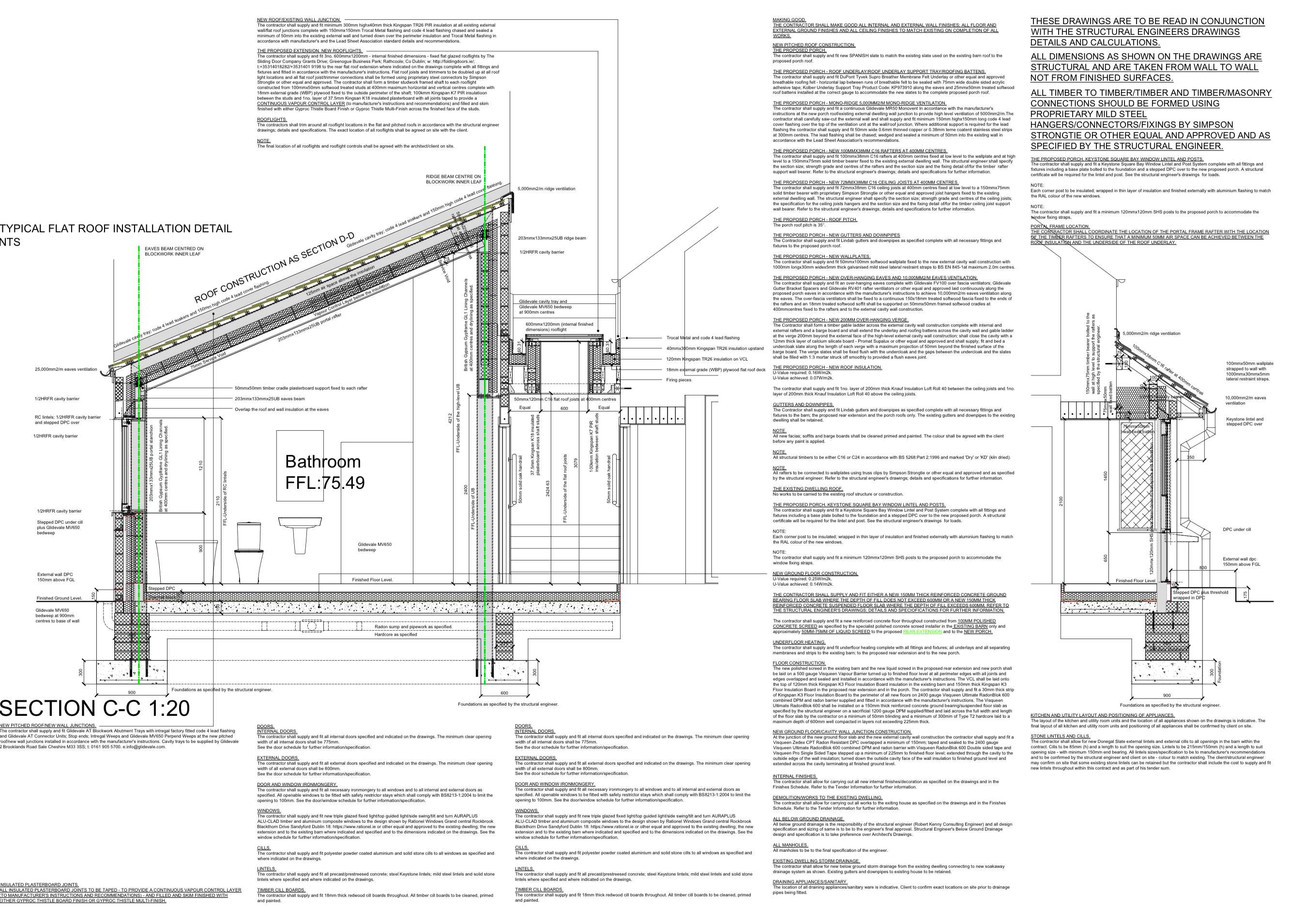
Your rafters must be 200mm deep to allow a 50mm ventilation void behind the 150mm thick insulation along with 25mm over-fascia vents. The rest of the build-up including the thicknesses of all insulates should correspond with your SAP Calculation. Double check the location of the VCL - with Kingspan - I’m no expert but I would normally expect it to be below all insulation rather than between insulation boards but this can be checked with your designer and Kingspan. Don’t be afraid to ask your BCO or any materials supplier for help with the correct technical advice. You may even wish to send the photographs to Kingspan to see what they would say. If this was on any of the sites I visit I would tell them to do it properly.
-
Too many gaps. The boards should be tight fitting. It’s not difficult - show this to your BCO and get BC to tell him to fit them properly if you’d rather not tell him yourself. Foam is only a sticking plaster and won’t have the same thermal resistance as Kingspan. I presume you have a ventilated gap above the insulation and that you will be installing insulation or insulated plasterboard across the face of the rafters?
