
ETC
-
Posts
1673 -
Joined
-
Last visited
-
Days Won
9
Everything posted by ETC
-
Agree with @Declan52You’ll need about double the amount to get the same u-value. Check with your SAP assessor before you set your ground floor build-up to make sure you’ve left enough sub-floor depth. You’d be surprised how easy it is not to lay floor insulation properly. Where pipes are placed below the insulation the back of the insulation is - in many cases - hacked out to let the pipes sit comfortably within the insulation and in some cases the PIR insulation is fixed through the DPM to the floor slab. Solutions I see use two or more layers of insulation so that a single layer is cut between the pipes and the remaining insulation installed above and flush with the top of the pipes. But where there are placed pipes below the insulation there will always be some gaps in the insulation. I have also seen insulated pipes installed above the floor slab and then just enough insulated floor screed put down to cover the pipes then PIR insulation put down on top. Granny and sucking eggs but don’t forget: That the insulated floor screed will not replace your sub-floor slab. A DPM needs to go down before the insulated screed - and it needs to be 1200 gauge. You will need a VCL and perimeter insulation. Don’t fix any pipes through the DPM. Don’t fix the PIR insulation through the DPM.
-
That’s the best advice you will get. Retain the existing front door, redecorate the door and possibly think about some new brass period door furniture. You may even think about a stained glass panel in the door but if the glass is original it should be kept.
-
Don’t see the big deal. Put the sockets in at the required BC height.
-
A Building Regulations application will be required for the works irrespective of when it was carried out. It’s called unauthorised works and it always comes out in the wash. Don’t hide it - get proper advice from your local BCO.
-
-
How to reduce thermal bridge / draughts with RSJ beam
ETC replied to WWilts's topic in Heat Insulation
Wouldn’t worry too much - you’ve a massive window right next to it leaking heat. -
How to reduce thermal bridge / draughts with RSJ beam
ETC replied to WWilts's topic in Heat Insulation
Pump it. -
Our regulations ask for reasonable sound resistance to be provided between a room containing a WC and any other room AND a bedroom from any other room. Sound resistance is not required to en en-suite or to a wall containing a door.
-
All this to clean a roof light? Jeez - dump the roof light and put in a light bulb!
-
Advice Needed - Cold Bridge Behind Full Fill PIR Insulation
ETC replied to Johnny Jekyll's topic in Heat Insulation
Having looked at the photographs it doesn’t look that bad. Have you tried pulling it in? Could you drill a few holes at say 1200mm horizontal and 900 mm vertical centres in the inner leaf from the ground floor up and pull the insulation towards the inner leaf and mechanically or glue fix to the inner leaf? Just a thought. what breed of insulation did you use? -
Advice Needed - Cold Bridge Behind Full Fill PIR Insulation
ETC replied to Johnny Jekyll's topic in Heat Insulation
Remove as much of the cavity insulation as you can and pump the cavities. Or discount the insulation already installed, speak to your SAP assessor to run a new SAP with internal wall insulation. Guessing an insulated plasterboard thickness is a waste of time - the TER/DER needs to work with this new thermal element. As an aside I’d be a bit concerned if the boards were - at some time in the future - slip, touch the inside of the outer leaf and act as a bridge for moisture/water to pass across the cavity. -
Seems like a lot of energy spent on this thread. Simple answer - remove the access to the roof! Why on earth would you you need access anyway? If you need to to maintain it (once a year) get a specialist cleaner in with a cherry picker.
-
Advice Needed - Cold Bridge Behind Full Fill PIR Insulation
ETC replied to Johnny Jekyll's topic in Heat Insulation
Get the brick/block layers to take it down and rebuild it with the insulation tight against the inner leaf. They should have been using wall ties with retaining discs on them. Not acceptable to you or to Building Control. -
New build floorplans - opinions welcome
ETC replied to Indy's topic in New House & Self Build Design
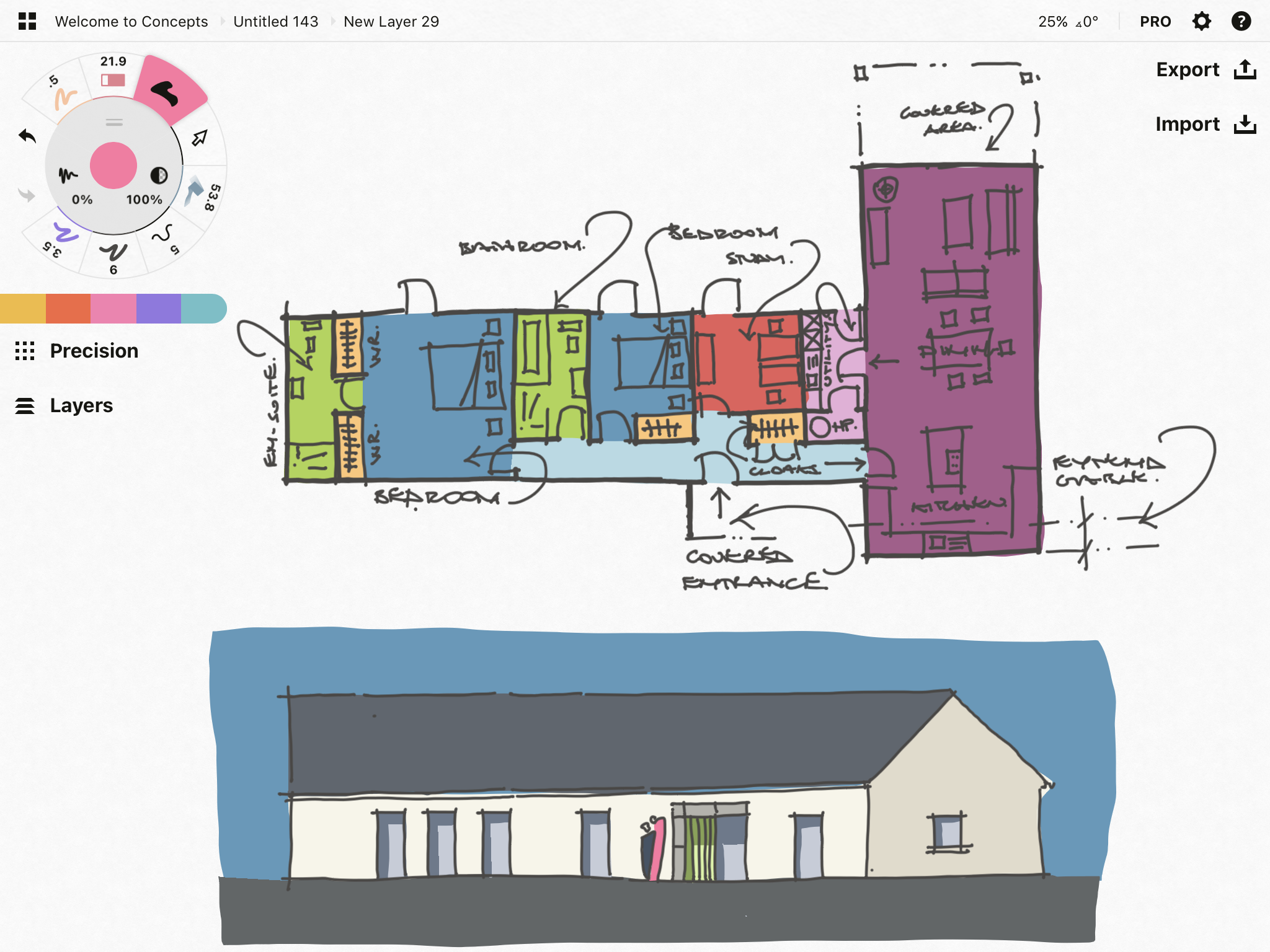
@IndyAnother option with a symmetrical front.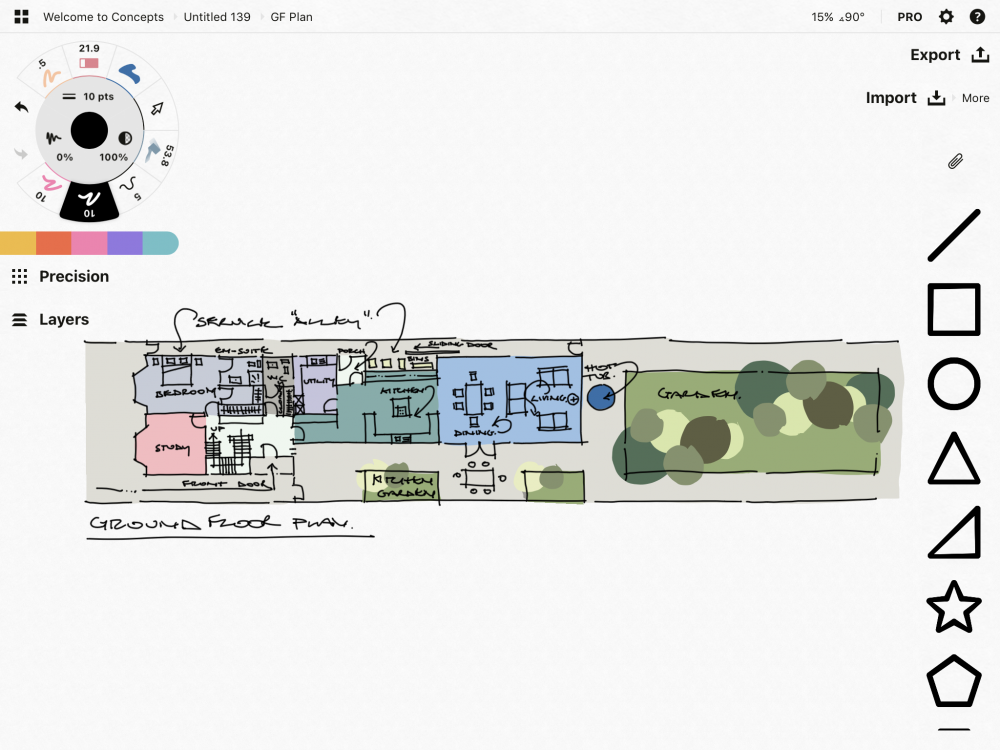
-
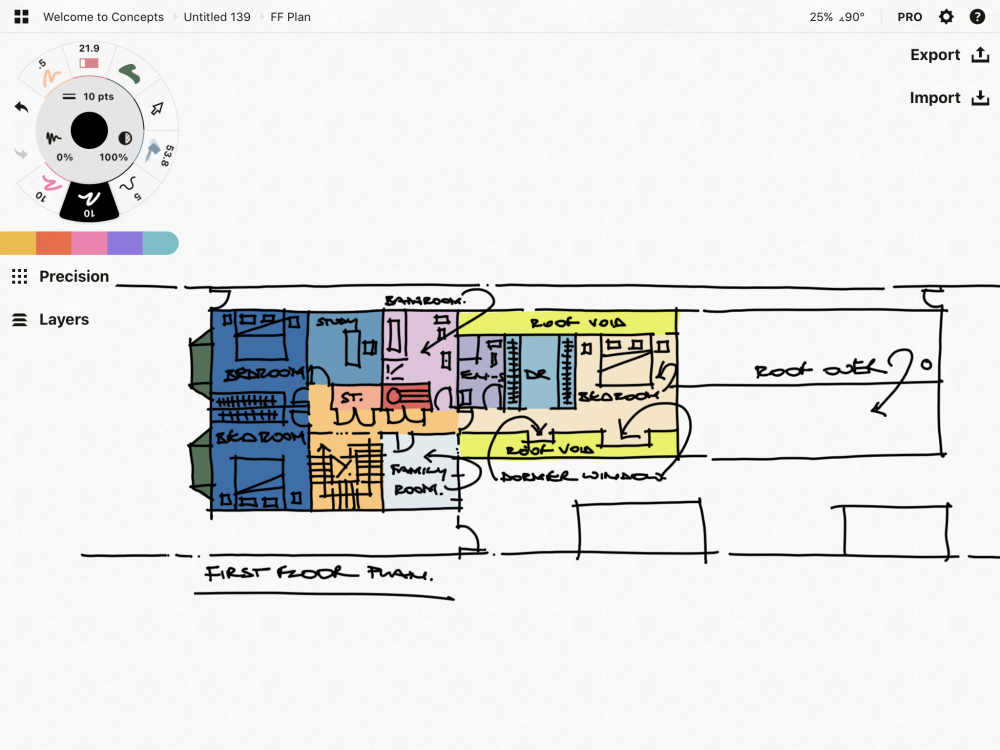
Glad you like it. Please let me know how you get in with your architect and please post your final design. I’ve suggested moving the front door and providing a small flat roof L-shaped canopy in zinc over the front door which I think could be a nice contrast the rest of the house.
-
Have you thought about the office as part of the entrance hall/circulation space or do you want it behind closed doors?
-
That’s a big house.
-
Have you thought about the office as part of the entrance hall/circulation space or do you want it behind closed doors?
-
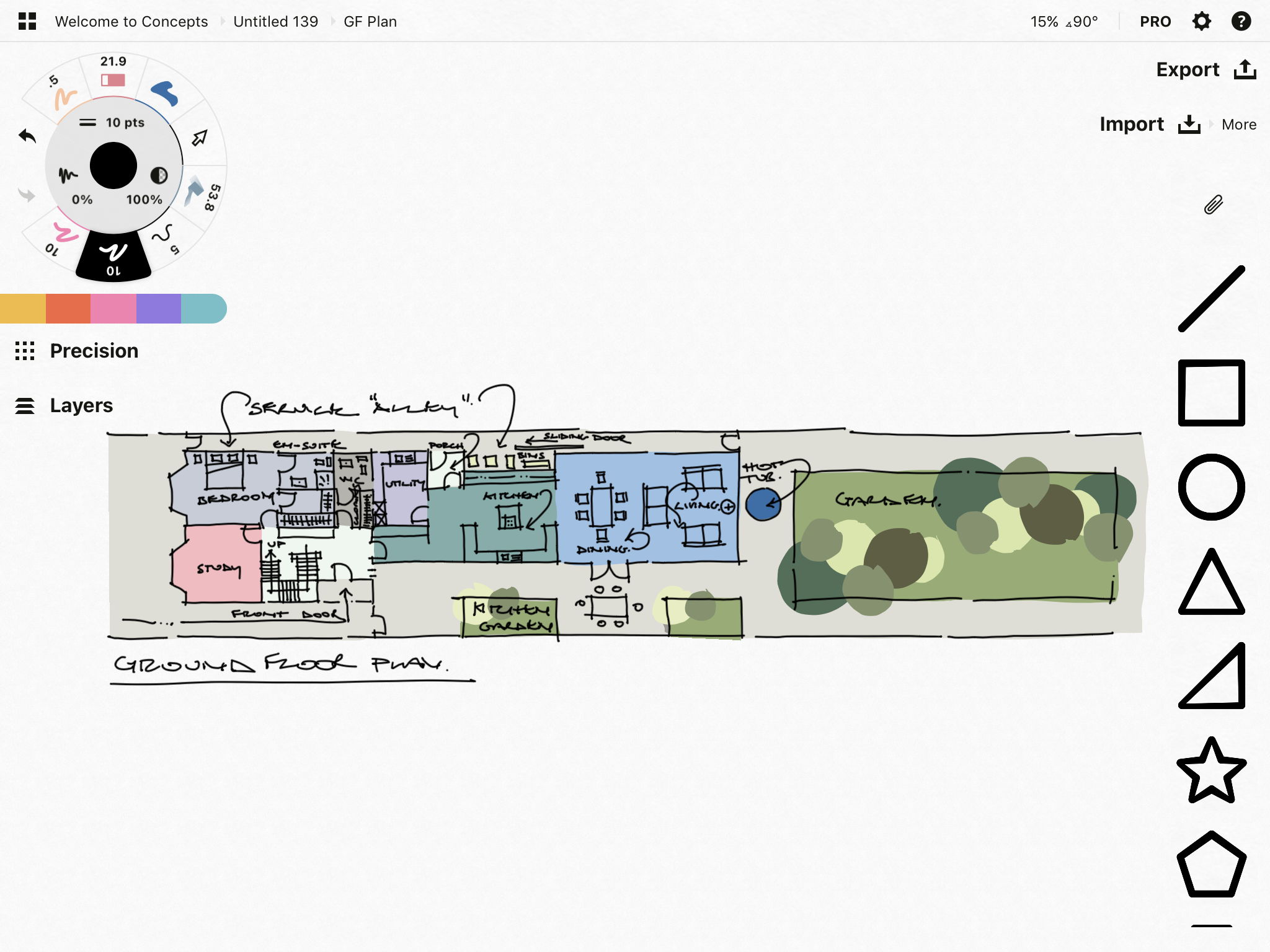
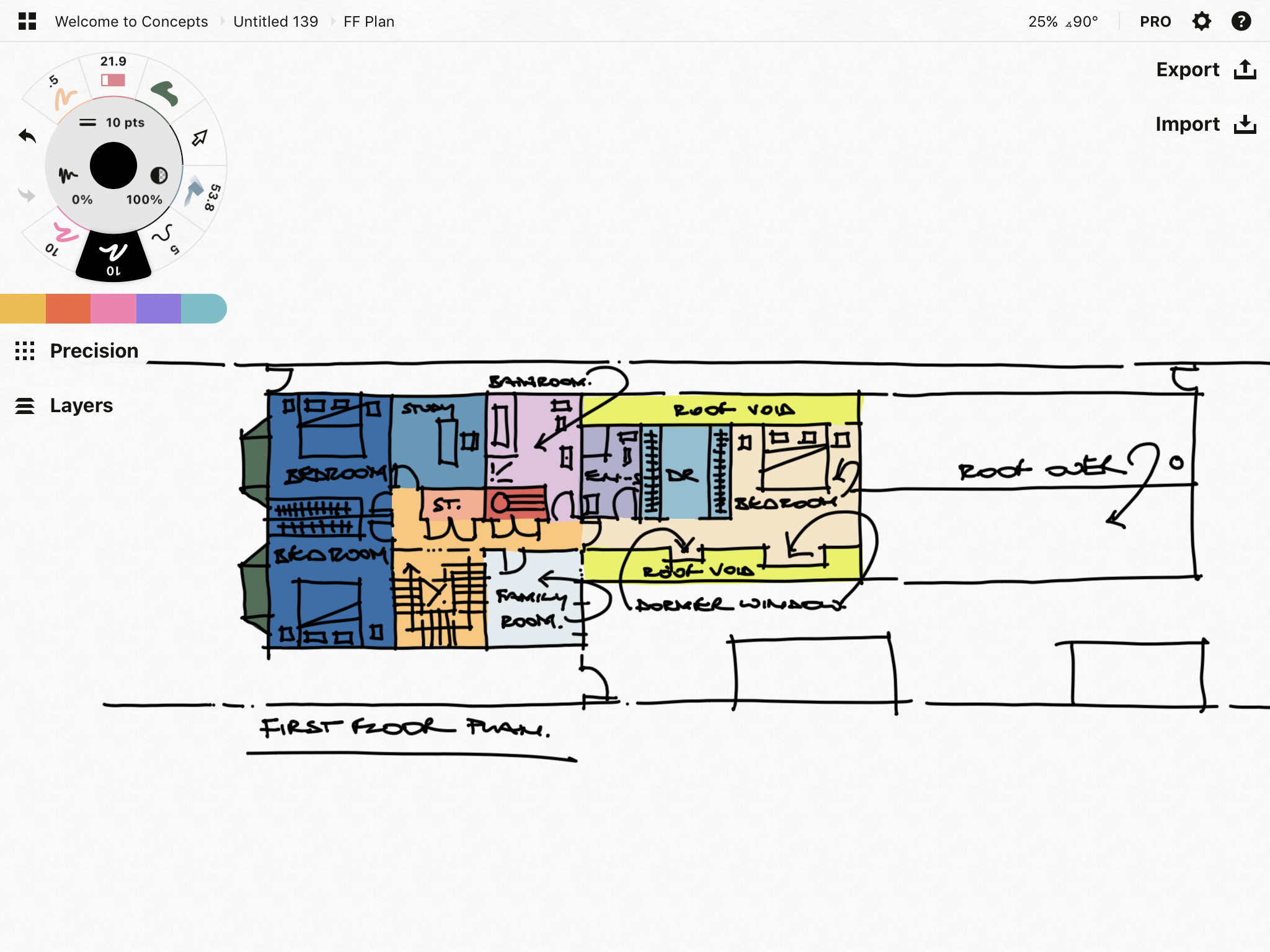
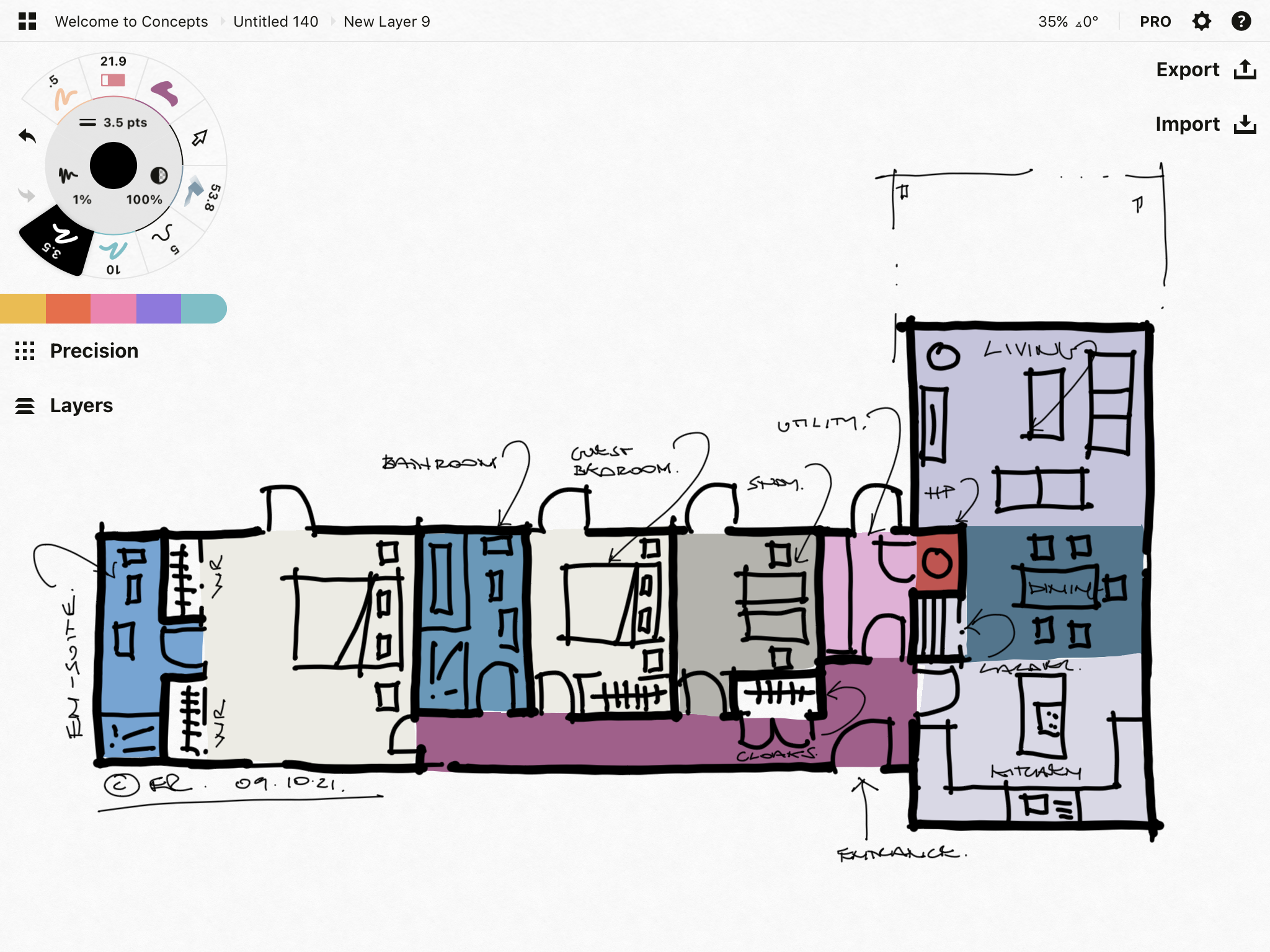
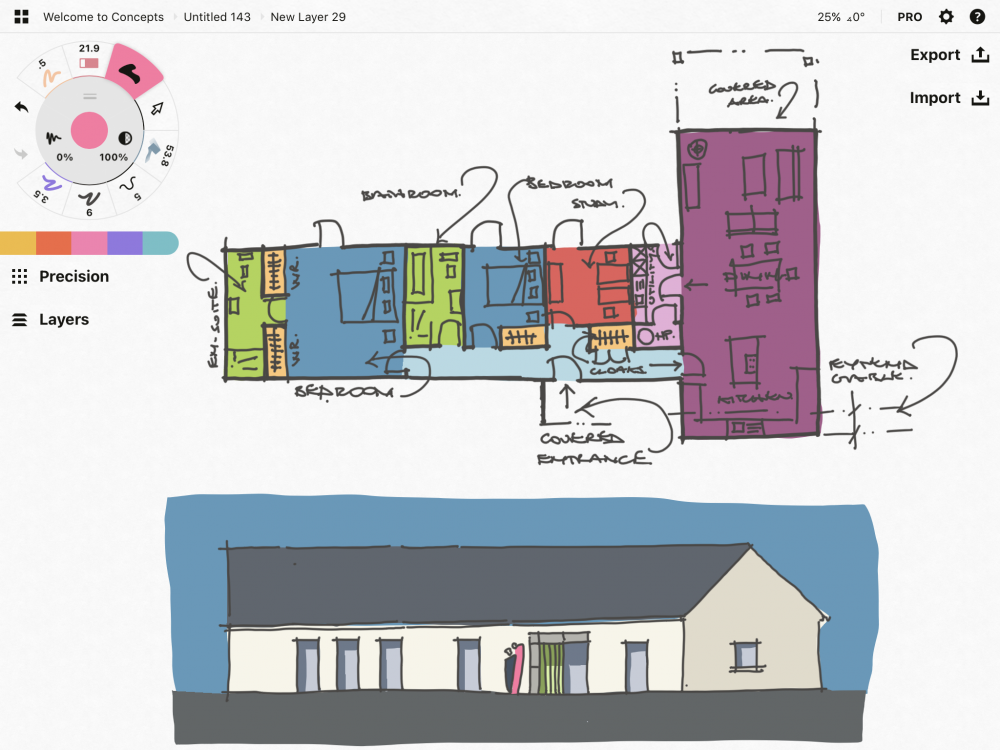
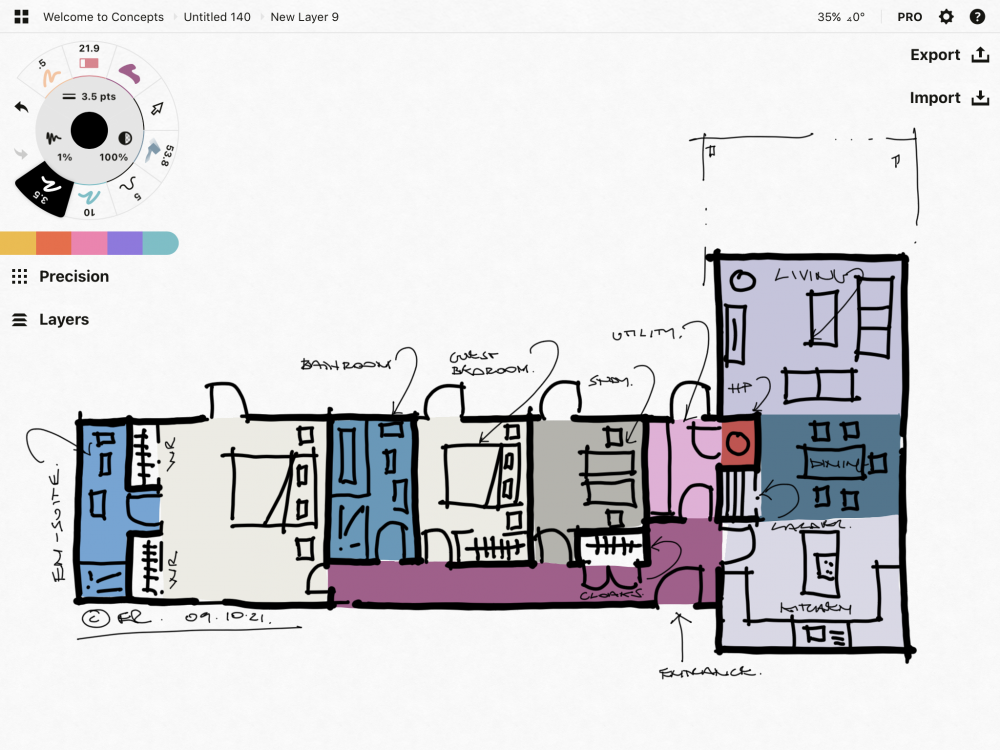
Leave it with me. ? Personally I like the shape and the overhang - somewhere to put the hot tub! I also played with the position of the second bedroom, the bathroom and the study to get the cloaks closer to the front door. Did you ever think of a porch? I wasn’t keen on the bath being across the window in the bathroom - difficult to open/clean the window - although if you’ve got a great view and a bath eye-level window I’d keep it there. From your comments it looks like you have thought of the design and orientation of the house. The only other comment I would make is about the size of the bedrooms and study - they seem a bit small and I do appreciate what you’ve said about being nearly minimalist but I normally make bedrooms capable of accommodating a double wardrobe (tick), a dressing table and a chest of drawers. This is what I was taught many years ago when designing housing association homes. You may also wish to consider making your bedroom and en-suite wheelchair friendly - I’m not talking about grab rails - just in terms of wheelchair accessible - unfortunately a linear en-suite doesn’t really lend itself unless a wee bit wider. I’d also make sure the study was big enough to accommodate and additional storage - perhaps a set of shelves or a filing cabinet. I think the design quite easily lends itself to being “future proofed” - something to consider? Thanks for reading.
-
A very quick sketch.
-
The original reports you commissioned will only relate to and should only be used for the site they were prepared for much in the same way a set of plans prepared by an architect for a certain site should only be used by the client for the site they were prepared for and not used again and again. Although some aspects of the original reports may have relevance for the new site I would be wary of recycling them not only because a few years have passed since they were prepared and the information contained within them may have changed but also because the original consultants may not be too pleased that you have recycled the work they prepared for a particular site only for it to be used again without their consent on a totally different site a few years later. This is similar to asking and paying an architect for a set of plans for a house for one site and then running down to your local copy shop, running off another set and submitting an application for a totally different site. You may wish to ask the consultants if you can use their reports for your new site.
-
New build floorplans - opinions welcome
ETC replied to Indy's topic in New House & Self Build Design
Norn Iron all the way! -
New build floorplans - opinions welcome
ETC replied to Indy's topic in New House & Self Build Design
Thanks for the reply - I do like to do a sketch or two from time to time - keeps me from going stir crazy. I have no doubt that your own designers will come up with a fabulous design but If you don’t mind I’d like to do a symmetrical version for you - just for fun - what’s the width of the site? FYI - just watch the distances of your external walls from the boundary - the closer you are the less “unprotected area” (openable non-fire-rated windows and doors) you can have. -
New build floorplans - opinions welcome
ETC replied to Indy's topic in New House & Self Build Design
All copyright ETC. -
New build floorplans - opinions welcome
ETC replied to Indy's topic in New House & Self Build Design
Just need to look at the amount of glazing to the side elevations where the boundary is quite close to the house.