
ProDave
-
Posts
30862 -
Joined
-
Last visited
-
Days Won
427
Everything posted by ProDave
-

Loft roof lift without dismantling the roof?
ProDave replied to Dylan121's topic in Lofts, Dormers & Loft Conversions
Bonkers idea. If you are making such an extreme alteration to a house to add an extra floor to make it full 2 storey, just jacking up the existing roof would give you the wrong roof for the property. I would take the opportunity to do the job properly, completely new roof designed for the new job and take the opportunity to detail it and insulate it properly. The best you could hope for is to re use most of the roof tiles on the new roof if they are in good condition. -
I recall this being discussed before. If an average EV does 200 miles to a charge, and the life of the battery pack will withstand 1000 charge / discharge cycles, then you have a car that will do 200K miles before the batteries are worn out, Not to dissimilar to what you can get from an average IC engine before it requires some serious work. But plug it into the grid and give them free reign to charge and discharge it at their whim, how much is your battery life going to be used up? Why would anyone choose to let the grid discharge your car battery, unless you are paid properly to compensate for the fact it may not always be full when you want to drive off and it may shorten the battery life?
-
Didn't I mention the deflection space requirement about 4 posts above?
-
I think the one I had had a PEAK rating of 7KVA, but that is loading all 3 phases. So the peak load on one phase was about 2.3kVA not even enough to run a kettle. And that was the peak load, not continuous. If I recall it had a copy of a Honda engine powering it. as @Nickfromwales says dispose of it and buy the best single phase generator you can.
-
That generator is less useful than you think, unless you want to drive a 3 phase load. I bought one from a man selling it out of his van, brand new, identical to that but a different silly name. Each of the 3 single phase outputs are a surprisingly small rating and you CANNOT connect them on parallel to get more load, so unless you are going to rewire the caravan with a 3 phase board to split the loads it will be very limiting. Once I realised how rubbish it was I advertised mine on Gumtree and sold it for more than I paid the man with the van.
-
This is a BUILDING CONTROL fail for not checking they were not being hoodwinked. Then having found this deception, crawled over every mm of every single house on the developments looking for other breaches of building regs.
-
Yes it is heavy. Getting the parts up to upper lifts is hard work.
-
I am watching with interest as I too have render issues (remedial work about to start very soon) Are you footing the bill for the remedial work or is the original supplier paying for the rework?
-
If this is a wide sliding door, I would want at least 8mm spare clearance to allow for sag in any lintel above the door.
-
Our relatives in Australia get ALL their water from rainwater and use it for everything including drinking. The big difference is they have a "wet season" and get a lot of rain in a short time. when it rains they let it run off for a bit to clean the bird muck etc off the roofs, before diverting it to the tanks. It is never going to work so well here when so much of our rain is short showers or drizzle so no chance to clean the roof before starting collection.
-
The other concern of Rationel, particularly if rendering, is they do not want the gap between the timber frame, and the aluminium cladding, getting filled up with render if you render straight to the window and squash it down against the window. I don't see a problem with timber cladding up to the front of the windows ali cladding, that is exactly what I have done. There is no risk of blocking the gap between the ali cladding and timber window frame and it is in a ventilated space,
-
Just what are you hoping that will achieve?
-
The "problem" coming up is the government have decided to outlaw fossil fuel boilers to decarbonise home heating. A very worthy aim given the need to reduce / eliminate CO2 emissions. But I don't believe it has actually been thought through. It is just an ambition, and a stick (banning new fossil fuel boilers) but no actual plan of how to achieve it. Sticking an ASHP in every house is not the solution. It needs a LOT more than that to much of the UK housing stock to properly insulate it and draught proof it etc. I don't believe government subsidised schemes will deliver well engineered solutions that offer good value for money for either the home owner or tax payer. And then, when all the homes are heated with heat pumps, all the new generation capacity installed to power them must not use fossil fuels otherwise you have failed in reducing CO2 emissions, just moved it. And all this happening when transport must also move to non fossil fuels. Just where is the plan for all this non fossil fuel extra electricity generation and upgrades to the distribution network to make it all work?
-
As I understand it , for a "level threshold" you are allowed a 15mm step. What I am reading is you will have an 8mm step down followed immediately by an 8mm step up. I don't see an issue with level access regs, but what stops it filling with water?
-
Vehicle Access Via Someone Else's Private Drive
ProDave replied to minskin's topic in Planning Permission
I think the same applies. For a new property the access has to meet requirements and turning space etc. -
Vehicle Access Via Someone Else's Private Drive
ProDave replied to minskin's topic in Planning Permission
Yes. I know someone who built a house served by a shared private road already serving 2 houses, and to add his 3rd house to the same private road, he had to update the visibility splay to current requirements. Also up here if it gets to 5 properties, you are expected to upgrade the road to highways standard and it is then adopted. -
Compared to what? A combi boiler? Sure it has limitless hot water but I am staying in a property served by a combi and it is lousy, the variable temperature of the hot water, and the loooooong time it takes to delver hot water when first turned on. Give me a hot water tank full of 48 degree hot water that arrives at the tap quickly and is a constant temperature regardless of flow rate any day. I think the big issue with ASHP's is there are a lot of people (and cowboy installers) expecting to swap a gas or oil boiler driving radiators for an ASHP and expect it to work. It won't. This is going to lead to a lot of people disappointed with ASHP's and plastering the internet saying how rubbish they are rather than how rubbish the system design (or lack of design) was.
-
The bottom of the tundish should connect to a 22mm or larger pipe leading out of the building to a drain. So being polite, this is "unfinished" thought you normally install this drain pipe early on before all the boxing in.
-
Can you photograph the bottom bit with the tundish in more detail please?
-
If that is the "waste" from building work, then sack the brickies. 3/4 blocks should be used for the cuts not just slung on the ground and what's the betting the next cut they needed was taken from a full bock.
-
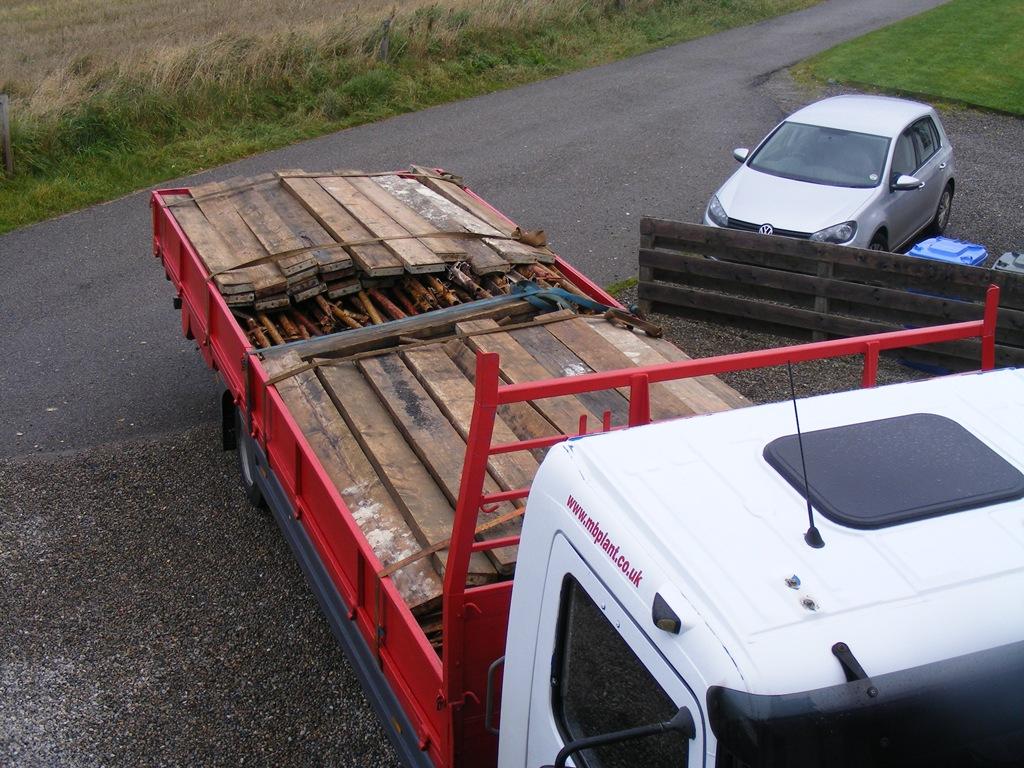
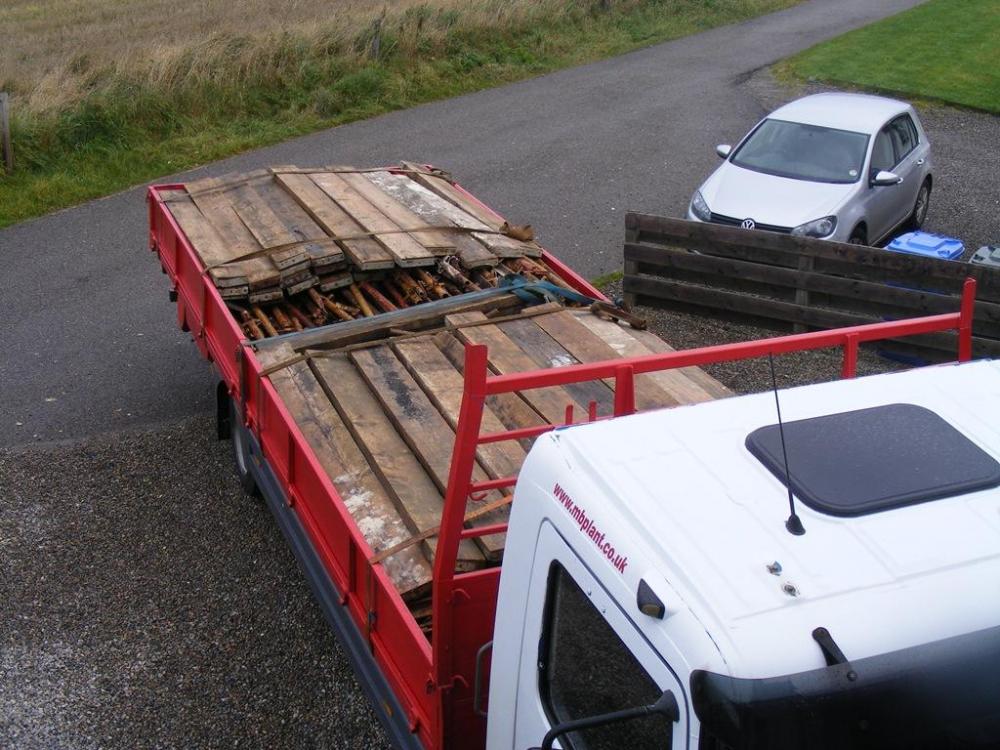
When I bought my KwikStage, from ebay it came from England. I just could not find any for sale locally at the time. I hired a 7.5 ton flatbed and made and epic 23 hour round trip to go and collect it. Even allowing for a weekend truck hire and fuel,. it was still cheaper than I could get from any of the companies selling refurbished kits once you add on their delivery charges. Kwikstage would be my first choice as it is so versatile and readily available, second choice would be CupLock but they are not interchangable in any way. You say you only want a "tower" Well Kwikstage will do that but will do so much more as well. Several lots on ebay around 300 miles from here which is within range of a weekend truck hire.
-
What do they call high electricity costs? That is probably cheap developer house and lack of insulation rather than anything fundamentaly wrong with ASHP heating.
-
This reminds me of a case where I lived as a boy. Someone built a garage without PP and the access was refused. They did not enforce demolition of the garage, but they did concrete some cast iron bollards into the footpath to prevent access. I guess you could still get a motorbike into it.
-
Insulation between joists then UFH (spreader plates or pug mix is another choice. Engineered fllooring chosen to be thick enough to be structural direct onto joists with secret screw or nail fixing.
-
Installing Consumer Unit into my shed
ProDave replied to Al80's topic in Consumer Units, RCDs, MCBOs
Then you should be following the Irish wiring regs, I don't know how they differ to the UK regs.