
ProDave
-
Posts
30688 -
Joined
-
Last visited
-
Days Won
424
Everything posted by ProDave
-

Discount Offers of the Week
ProDave replied to Ferdinand's topic in General Self Build & DIY Discussion
I assume so, but I don't think you have to prove you have (or have not) got a TP account. Just enter that code for the discount. -
Discount Offers of the Week
ProDave replied to Ferdinand's topic in General Self Build & DIY Discussion
No idea how long this lasts for.
-
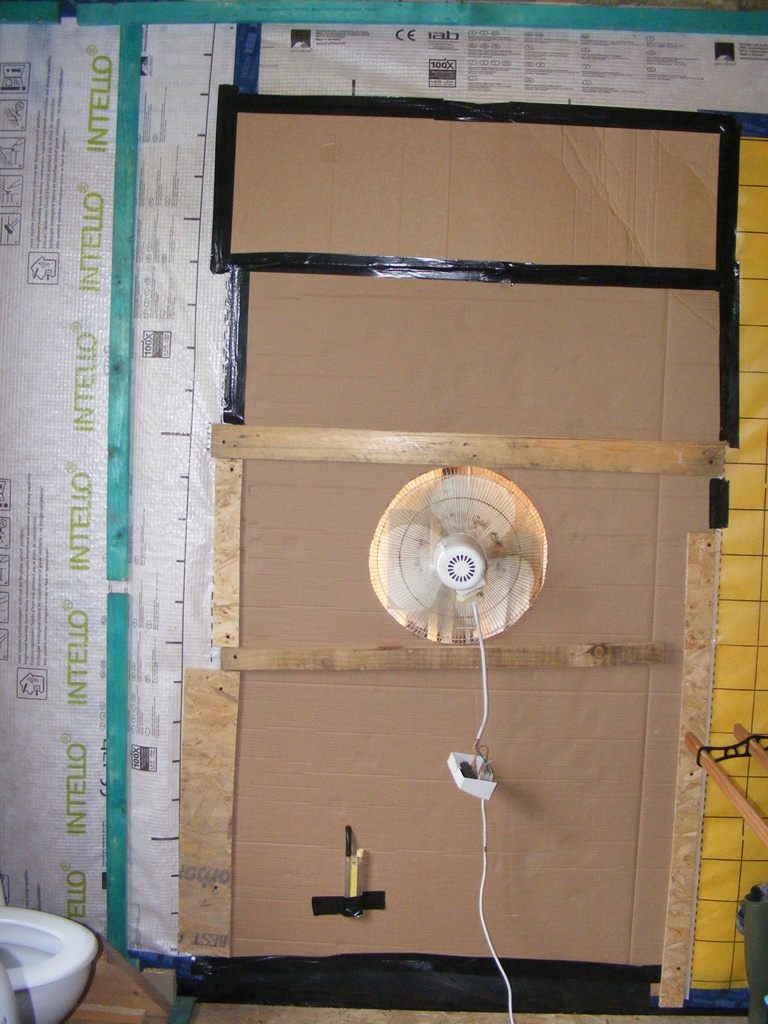
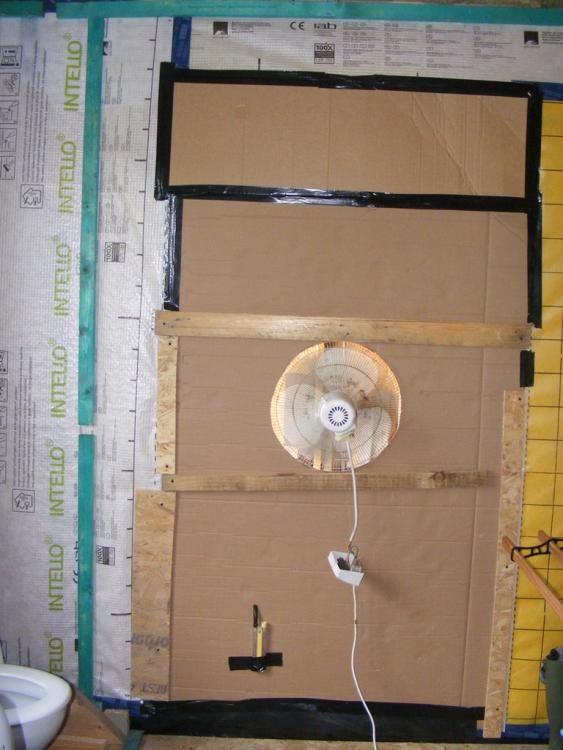
This was my DIY air blower test, an old office desk fan, some cardboard, a few bits of OSB and a roll of duct tape. You won't gat a calibrated result from it, but you will be able to go looking for leaks and fix them before it all gets covered up.
-
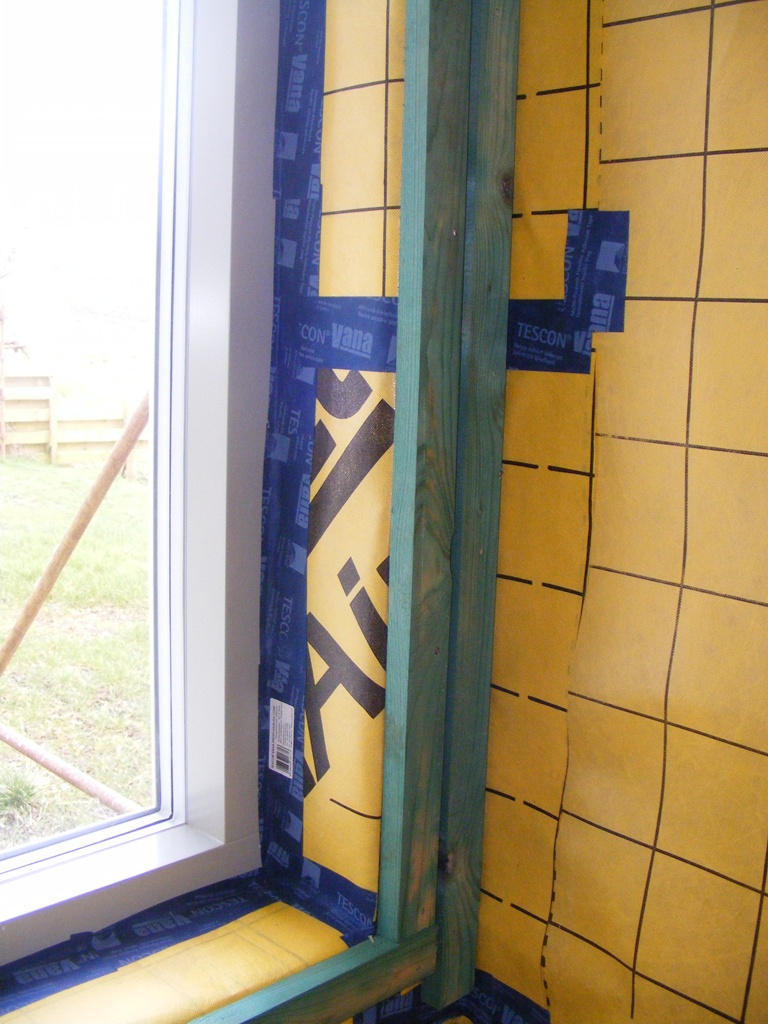
I used 25mm battens almost everywhere. 25mm battens and 12mm plasterboard is a near perfect match for a 35mm back box. I even managed carefully to run 15mm copper pipe in a 25mm service void. I only used 45mm battens in the utility room where I had 22mm copper pipes to fit, and those, with fittings, simply would not fit a 25mm void.
-
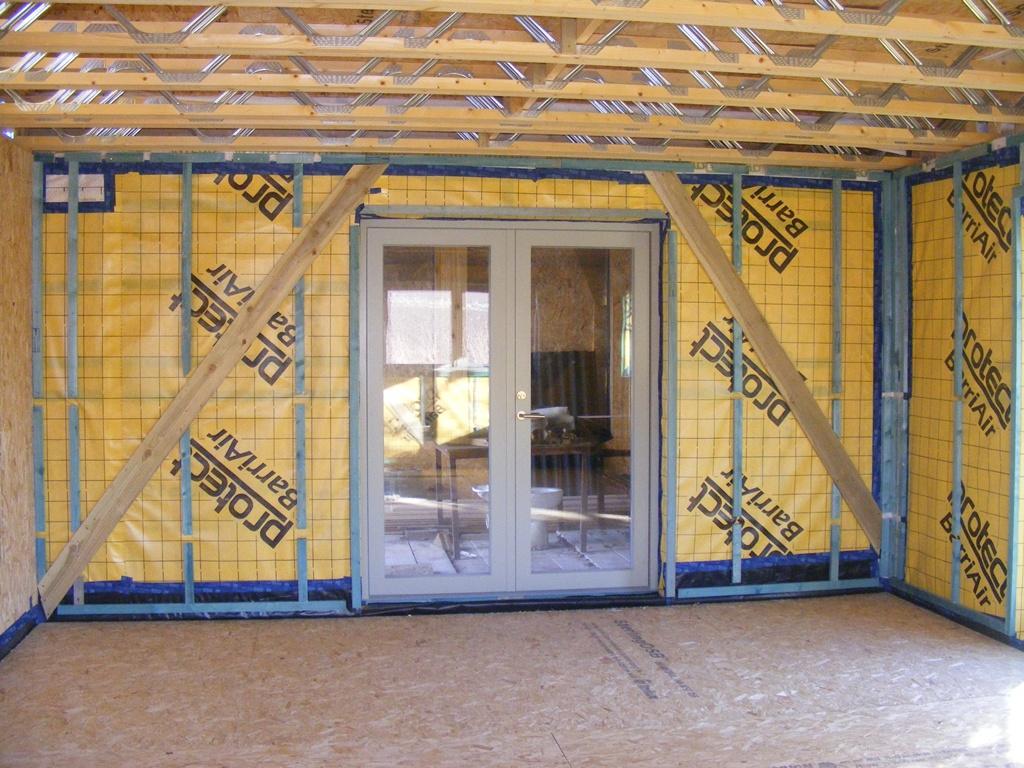
Tell the joiners to stop being lazy. CUT the battens and leave gaps at 450mm above FFL and 1150mm above FFL as you can see in my first picture. Those are socket height and switch height are where you are most likely / be allowed, to run cables horizontally. Cutting battens as you fit them and leaving that small gap gives space for cables, and no danger of damaging the VCL when drilling the battens. and if the gaps end up not being used then no harm is done. It also makes it easy to use all your battens with no waste.
-
Since you don't have any solar PV it would be wasted on you. I will look after it and "keep it warm" for you.
-
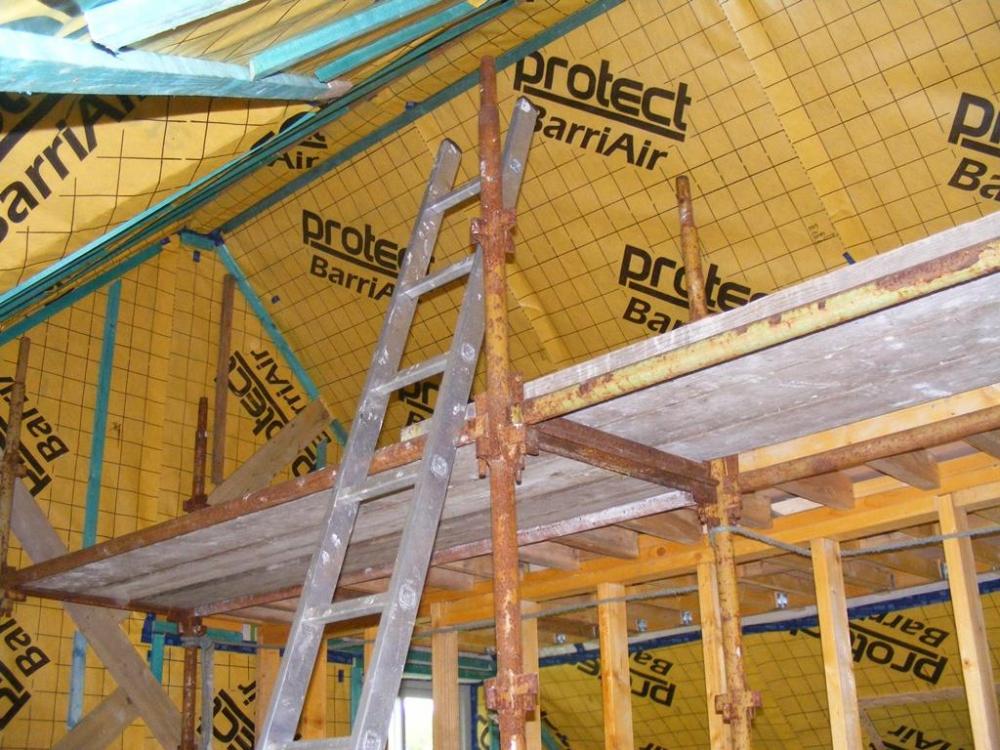
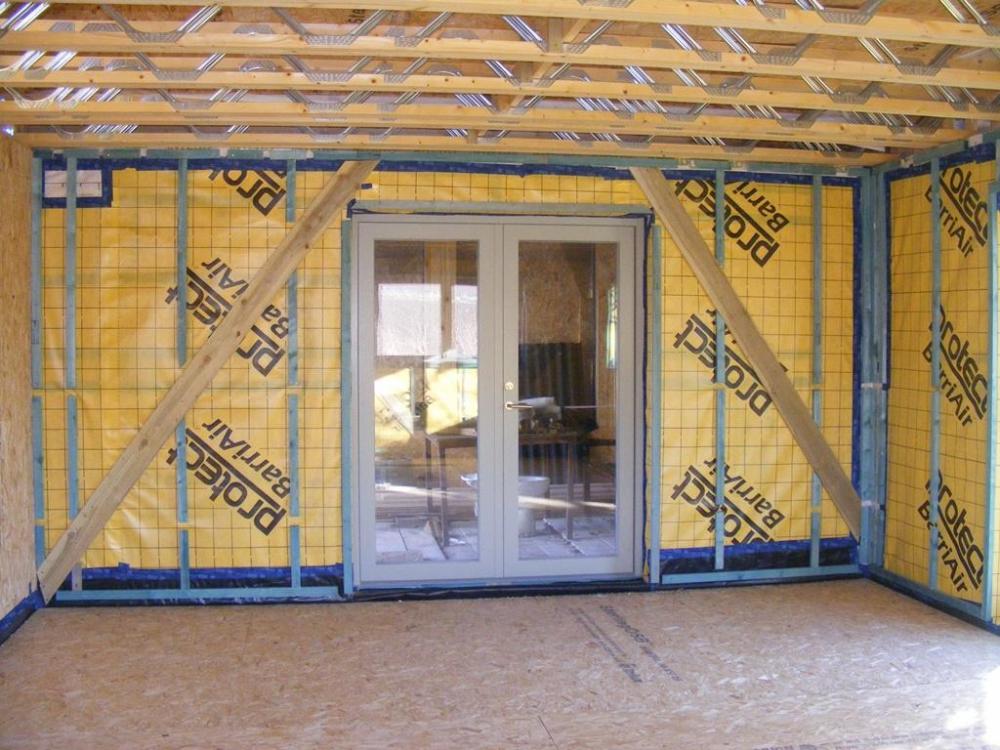
My No 1 tip, since you didn't mention it, is a service void. So as you line your entire house, with the air tight membrane, and all joints taped, you fix vertical battens at 600mm centres. This gives you a void to run cables and pipes without any of these penetrating your air tight layer. Only services that must exit the building penetrate the air tight membrane and are sealed where they do so. Some examples:

-
Metal back boxes? Loose neutral touching the back box would trip an RCD. Otherwise likely a pinched wire, and by removing and re fitting all the switches you have unpinched it.
-
Yes if they want it to perform well, 75mm is woefully poor for a floor with UFH. Many of us find it sad that people are still building like this, and the customer is probably not aware of the poor job they are getting and not been advised that more insulation = lower running costs and a warmer house.
-
How well insulated are you planning to make the house? Many of us find in a house that in insulated to near passive house standards and properly air tight, there is no such thing as cold rooms anywhere, and many of us have no heating upstairs because it is simply not needed. We have UFH in the en-suite and main bathroom, not because the rooms needed any heating but "someone" wanted warm tiles to walk in in the morning.
-
That's a storage water heater, not instant. That will do it but will maintain a tank of water all the time which might not be very efficient if only used occasionally.
-
A tankless / instant water heater needs water flowing before it can turn on the heating element or the small amount of water in the tank will quickly boil. You might be able to implement something yourself with a low power heater in or under the heater operated by a frost thermostat? or even some trace heating tape?
-
That is a possiblility. Do you know where I can find a simple description of this ITLC algorithm?
-
Problems with Baumit.com thin coat render system - part 3.
ProDave replied to ProDave's topic in Plastering & Rendering
When re working some of the failed bits, I did observe what appeared to be pin holes in the top coat, I pictured those before. So my current speculations is wind driven rain drives water through these into the base coat, and if it freezes very soon after the moisture expands and causes the delamination. Freezing weather on it's own does not seem to cause an issue. Whether this is an inherent fault or limitation with respect to this product and this climate, is the big un answered question. In the absence of any input or interest from the manufacturer, then only time will answer that. i.e. if all the re worked areas now stand up okay without further problem then it may have been bad workmanship or a bad batch of materials. If the re worked areas fail again, then there must be more of an inherent issue with the product. I keep saying this is where I really really really want some technical input and interest from the manufacturer to work out what has happened and this is where they are woefully lacking and disinterested. Who would buy now from a company with such an attitude? -
With the cost of living going up, I expect most trades like me are now putting our prices up, first time for number of years for me.
-
At home, how much more electricity are we consuming
ProDave replied to ToughButterCup's topic in Power Circuits
Given that most houses heat with gas, so this is mostly not a measure of reduced heating requirements, I would say the 2 big changes since 2005 has been the almost universal replacement of CRT televisions and computer monitors and the not quite so universal replacement of filament lamps with CCFL and now LED. As someone said, that is the low hanging fruit for electricity saving taken care of. That would be our continuing decline in making things? and would there be a significant reduction in electric train travel due to work from home, so fewer trains running? I could be cynical here (what me?) We are constantly told how green electric train travel is, but reduce it during the pandemic and we are STILL burning fossil fuel to power the country. So working that the other way, each new electric train put into service is burning FOSSIL FUEL to power it as there is simply not enough renewable power going spare to power them. The pollution has just moved from the engine to the distant power station. -
If say the buffer stat is set to switch off at 70 and the boiler stat was set to 75, the buffer would continue heating up. But with only 5 degrees difference the rate of heat actually going into the buffer would be slow, so it might take a long time to get there. And during that time, the boiler would fire occasionally to keep it's flow temperature to it's set point. That is a case where under that situation you would have to check if the 230V was present on terminal 10, i.e. is the temperature difference controller operating as expected.
-
At home, how much more electricity are we consuming
ProDave replied to ToughButterCup's topic in Power Circuits
That is an interesting question. For us, I doubt you would see much difference. The house is warm 24/7 with most of the heating being done in the daytime by the ASHP. So no additional heating needs. And using electricity in the daytime for say a computer, would mostly just be a means of helping to self use solar PV generation, so apart from the depths of winter on one of those grey days, there would not be much increase in electricity costs. However, compare to a more typical UK house, a Victorian semi that leaks heat quickly, you would have additional (gas) heating costs as the house would normally be left to go cold if empty in the day, and additional electricity costs if you don't have PV. BUT anyone working from home would save on the cost of the usual commute. In some cases that will be a significant cost. -
Problems with Baumit.com thin coat render system - part 3.
ProDave replied to ProDave's topic in Plastering & Rendering
Well, the latest on this, is I did some googling, found the name and contact details of the managing director of Baumit (I found his contact details on Linkedin) and sent another email to try and get some help in resolving what has actually gone wrong here. This, I am very sad so say is his reply.
-
That is still a statement I don't entirely agree with. Probably more so on a new build when you can assume (dangerous word) that you have decent unhindered access to everywhere you need and you are not going to turn up to do some wiring and find they have started boarding before you are finished etc. Most of my work is on existing houses and you simply do not know until you start trying to peel back carpets and lift floorboards what you will find, so I am afraid if someone wants a fixed price for that, it will be an expensive price, because I have to assume that every difficulty WILL be present and the job is going to be difficult. And I hate fixed price work like that so much I don't care if I don't get the job.
-
Lots of food for thought. I won't rush into a solution and will probably be a summer project to test next winter. Simple frost thermostat won't do it, on an extreme cold day that could potentially leave the heating on most of the night. so would still need to be some combination of temperature probe(s) and some timer logic so all it is doing is varying the turn on time in the morning. I do like the idea of a programmable thermostat with an "optimum start" function. If anyone knows one still available offering that, let me know.
-
I tried to explain how 2 independant control loops were working in an earlier post. The boiler will shut off (stop firing the burner) when the water leaving it reaches the set temperature. That is normal. to do otherwise would boil the water. So the boiler will NOT always be firing when you get 230V on terminal 10. If the buffer tank thermostat is set to turn off at 75 degrees and the boiler temperature is less than 75 degrees, then the buffer thermostat will NEVER turn off. Why has the thermostat for a buffer feeding UFH been set so high?
-
Yes please do yourself a favour and don't use Baumit. I will be posting another post on that thread with a shockingly poor response from them that should put anyone off ever entertaining their product. @Nod If you wanted to waste some time, you could get the Baumit rep to look at your job, then quietly mention my thread and their total lack of interest in even coming to have a look to try and work out what went wrong and then let him know you have ruled out using it on your job because of their lack of interest when things go wrong.
-
Yes. All I think i want to achieve is variable start time in the morning. My objective I guess is the set time, wants to be the time it reaches the required temperature, not the time it starts to warm up. Internal temperature would be a good measure of that and would be a lot simpler than trying to get a connection to an outside temperature probe. My little gizmo could just sit on the wall next to the existing programmer, or even hidden behind it inside the wall.
-
Well obviously I have been unlucky. Before you commit to something, you want to make sure the product is suitable for your location and the weather exposure you are likely to get, and be sure it has up to date certification and a manufacturer that has some interest in customer satisfaction. I would NOT under any circumstances recommend the Baumit.Com render that is the subject of my woes and documented already